
A reliable LifeStraw water filter turns almost any stream, lake, or questionable tap into safe drinking water, which is exactly what a hiker, traveler, or emergency kit needs. The LifeStraw water filter built its reputation on a simple promise: pull water through a hollow-fiber membrane and leave the bacteria, parasites, and microplastics behind. That promise has made it one of the most trusted names in backcountry hydration, and the reason it shows up in so many packs and glove boxes around the world.
This article reviews the full LifeStraw range, from the ultralight Peak Series straw to the stainless-steel Sip and the Go filter bottle, and explains how each model fits a different style of trip. It breaks down exactly what hollow-fiber filtration removes, where its limits lie, and how to keep a filter flowing for its full lifespan. A contaminant table and a model comparison make the differences easy to scan before you buy.
Hikers heading into the backcountry, overlanders crossing remote regions, and families building an emergency supply will each find a clear recommendation here. Every model is judged on flow rate, lifespan, weight, and the kind of water source it handles best, so the final pick matches the trail rather than the marketing. The aim is safe, simple hydration you can trust on any route, without batteries, chemicals, or a long wait.
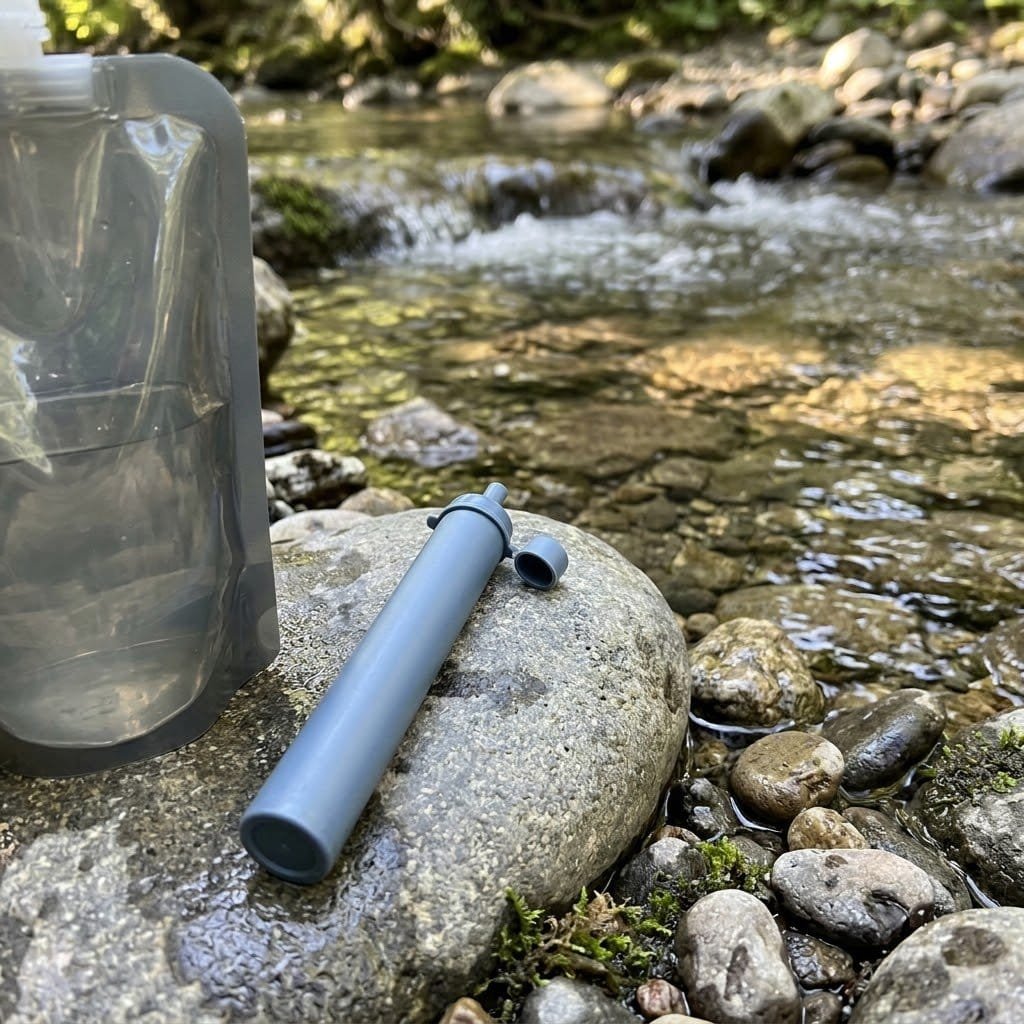
1. How the LifeStraw Water Filter Works
At its core, the LifeStraw water filter is a physical microfilter rather than a chemical treatment. It relies on a membrane riddled with microscopic pores that block contaminants while letting water pass, powered only by your suction or a gentle squeeze. There is nothing to charge, no tablets to wait on, and no aftertaste to mask. Understanding how that membrane behaves, and what it can and cannot catch, is the key to using one safely and choosing the right model for the water you expect to drink.
1.1 Hollow-Fiber Membrane Filtration
The heart of the filter is a bundle of hollow fibers, each a thin tube whose walls are perforated with pores around 0.2 microns wide. When you draw water through, it is forced across those walls, and anything physically larger than the pores is trapped on the outside while clean water collects inside the fibers. Because the barrier is mechanical, it does not weaken in cold water or lose potency over time the way chemicals can. The filtering happens instantly, so there is no holding period before the water is safe to drink.
That mechanical design is also what makes the filter so low-maintenance on the trail. There are no moving parts, no electronics, and no consumable doses to run out of. Over time, trapped debris slows the flow, but a quick backflush — pushing clean water back through the fibers — clears the pores and restores the rate. The main vulnerability is freezing, which can crack the wet fibers, so the membrane rewards a little care far more than it demands constant upkeep, which is part of its lasting appeal.
1.2 What It Removes and What It Cannot
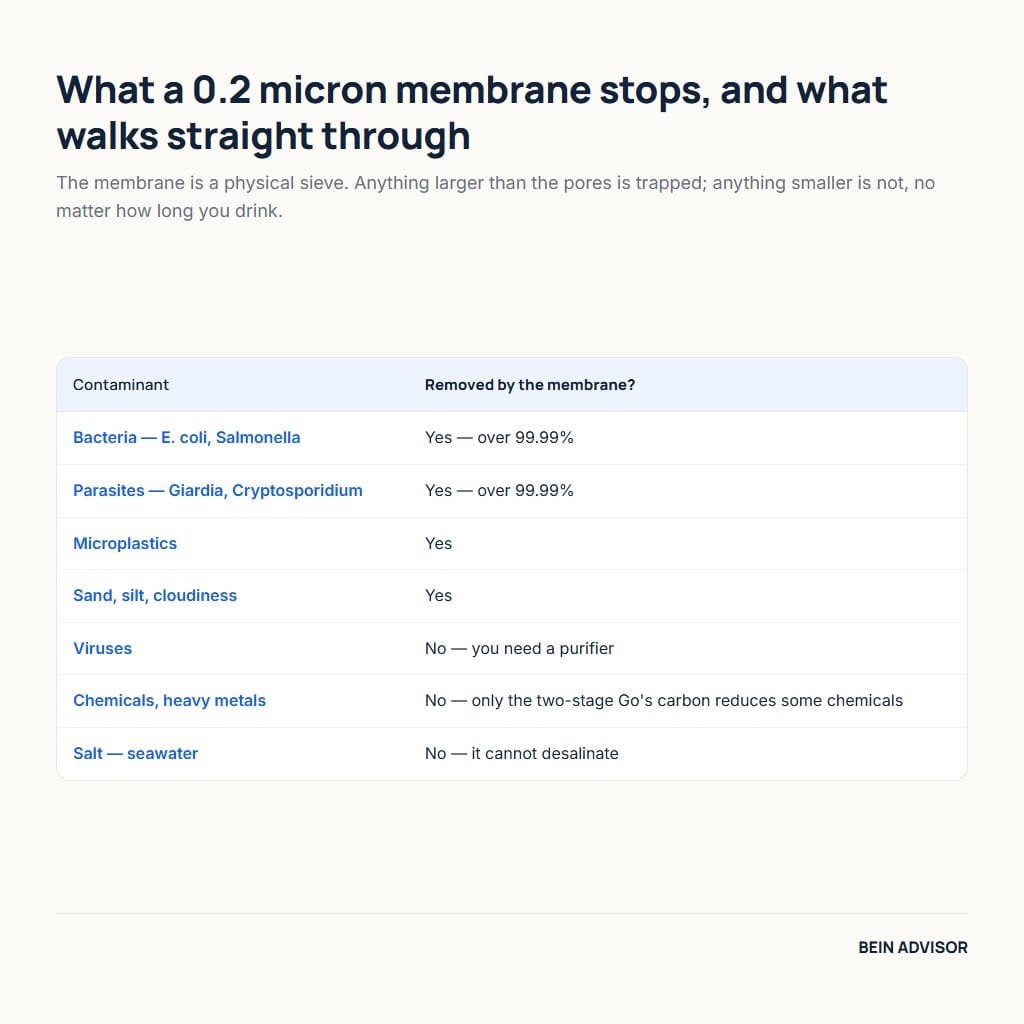
Within its design limits, the membrane is highly effective. It removes well over 99.99 percent of waterborne bacteria such as E. coli and Salmonella, the great majority of parasites including Giardia and Cryptosporidium, and microplastics, along with sand, silt, and cloudiness. These are precisely the threats most common in streams, lakes, and unreliable taps, which is why a basic LifeStraw water filter handles the typical backcountry source so well. For broader context on treating wild water, the CDC guidance on water disinfection is a useful companion read.
The limits matter just as much. A 0.2-micron membrane does not catch viruses, which are smaller than its pores, so in regions where waterborne viruses are a genuine risk a dedicated purifier is the safer tool. The bare membrane also does nothing for dissolved chemicals, heavy metals, or salt, and it will not desalinate seawater. The Go bottle’s two-stage version adds activated carbon, which reduces chlorine, bad taste, odor, and some chemicals. Even so, no LifeStraw water filter removes every contaminant.
| Contaminant | Removed by the membrane? |
|---|---|
| Bacteria (E. coli, Salmonella) | Yes — over 99.99% |
| Parasites (Giardia, Cryptosporidium) | Yes — over 99.99% |
| Microplastics | Yes |
| Sand, silt, cloudiness | Yes |
| Viruses | No — need a purifier |
| Chemicals, heavy metals | No — only the two-stage Go’s carbon reduces some chemicals |
| Salt (seawater) | No — cannot desalinate |

2. The 5 Best LifeStraw Water Filter Models
As an Amazon Associate, BeIN ADVISOR earns from qualifying purchases.
The LifeStraw water filter comes in several forms, and the right one depends on how you collect and carry water. Some models are bare straws for drinking at the source, others squeeze into bottles, and one builds the filter into a bottle you sip from all day. The five picks below span that whole spectrum, from the lightest possible option to a filter bottle with an optional carbon stage, so you can match the format to your trips rather than forcing one shape to do everything.
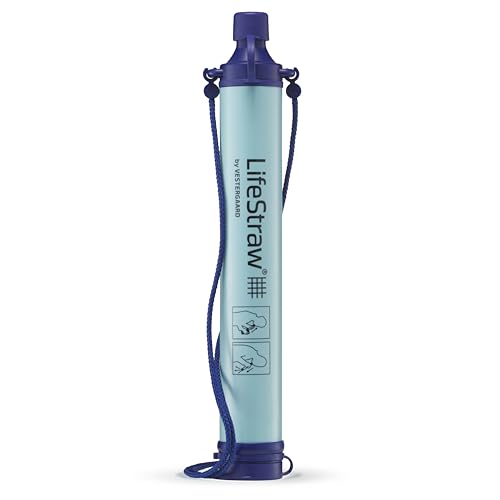
2.1 LifeStraw Peak Series Straw
The Peak Series Straw is the modern flagship of the LifeStraw water filter line and the model most people picture. It is an ultralight personal straw built around a 0.2-micron hollow-fiber membrane, designed to drink directly from a stream, lake, or water bottle. Compared with the original, it improves flow, durability, and versatility, and it shrugs off the rough handling of a long trek. For hikers who count every gram, it delivers trusted protection in a package that disappears into a side pocket.
Its real strength is flexibility. The straw drinks directly from the source, screws onto most standard bottles and hydration bladders, and works inline within a gravity setup. The membrane removes bacteria, parasites, and microplastics, and backflushing with a few squeezes of clean water restores the flow rate in seconds. There is no carbon stage, so it does not target chemicals or taste, but for clear mountain water that is rarely the concern. With no moving parts, very little can go wrong far from help.
This model suits ultralight hikers, trail runners, and anyone who wants the simplest possible safe-water solution. The trade-off to weigh is that drinking directly from a shallow stream can be awkward, and without a carbon element it will not improve the taste of treated or chemically affected water. For clean backcountry sources and minimalist packing, though, the Peak Series Straw is the easiest LifeStraw water filter to recommend and a natural first purchase.

2.2 LifeStraw Peak Series Squeeze
The Peak Series Squeeze pairs the same hollow-fiber membrane with a collapsible bottle, turning the LifeStraw water filter into a flexible squeeze system. Water goes into the soft flask, and a squeeze pushes it through the filter either straight into your mouth or out into a separate container. This makes it far more practical than a straw when you need to carry filtered water rather than drink on the spot, which is the reality of most multi-hour hikes between reliable sources.
The collapsible design packs down small and weighs little, yet it handles real volume. It drinks directly, fills bottles and reservoirs, and can hang as a simple gravity filter while you set up camp. Like the rest of the Peak line it strips out bacteria, parasites, and microplastics, and it backflushes quickly to keep the flow strong. The soft flask doubles as storage, so a single piece of gear covers collecting, filtering, and carrying water through a long day on the trail.
It fits hikers and backpackers who want to filter into a bottle and keep moving, as well as campers who value a quick gravity option. The trade-off is that the soft flask needs reasonable care, since a puncture retires the container even though the filter itself survives. For travelers who want one versatile, packable LifeStraw water filter that does more than a straw, the Peak Series Squeeze is a strong middle ground between simplicity and capability.
2.3 LifeStraw Personal (Original)
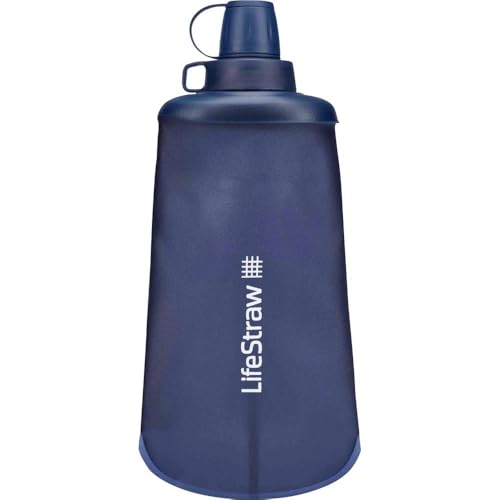
The LifeStraw Personal, the original straw that made the brand famous, remains the budget benchmark of the LifeStraw water filter range. It is a bare, no-frills straw with the proven hollow-fiber membrane and almost nothing else, which is exactly its appeal. Rated for up to roughly four thousand liters over its life, it carries one of the longest membrane lifespans in the lineup and a price low enough to justify stashing one in every car, bag, and emergency kit.
Its function is deliberately minimal. You place one end in the water, draw through the mouthpiece, and drink — there is no bottle, no squeeze, and no carbon. It removes bacteria, parasites, and microplastics to the same standard as the newer models, and a quick backflush keeps it serviceable across a remarkable volume of water. The simplicity means there is essentially nothing to break, which is why it endures as a default emergency-kit filter long after fancier gear has failed.
This model is best for tight budgets, emergency preparedness, and travelers who only need occasional direct-from-source drinking. The trade-off is convenience, since drinking face-down at a stream is less comfortable than squeezing into a bottle, and it cannot fill containers on its own. For anyone who wants the core LifeStraw water filter protection at the lowest possible cost, the Personal is still genuinely hard to beat.
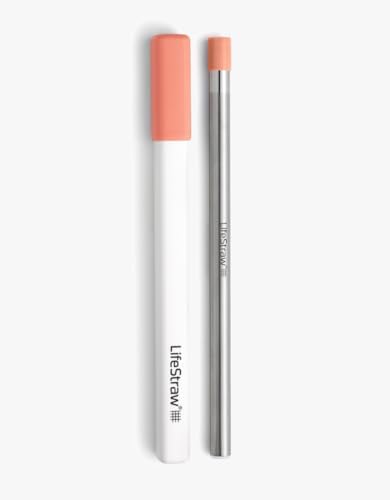
2.4 LifeStraw Sip Stainless Steel Straw
The LifeStraw Sip brings the same filtration idea to everyday life. It is a reusable straw made of food-grade stainless steel, with a silicone mouthpiece. Inside, a 0.2-micron hollow-fiber membrane removes 99.999999% of bacteria, 99.999% of parasites such as Giardia and Cryptosporidium, and 99.999% of microplastics, silt, and sand. That makes it a practical way to drink more safely from a glass of tap water or a refilled bottle.
The straw is 10 inches long, weighs about 1.8 ounces, and comes with its own leak-proof carry case. One straw filters up to 1,000 liters, which LifeStraw rates at more than a year of daily use. You cannot replace the membrane, so when the flow slows sharply, it is time for a new straw. LifeStraw also advises against drinks hotter than 140°F (60°C), carbonated drinks, and pulpy juices.
It suits travelers, commuters, and anyone who wants a filter that fits in a bag. The trade-off is that it does not remove chemicals, heavy metals, or viruses, and with no carbon stage it does not improve taste. For lightweight, reusable protection against bacteria, parasites, and microplastics, the Sip is the easiest LifeStraw water filter to carry every day.
2.5 LifeStraw Go Series Bottle
The LifeStraw Go Series builds the LifeStraw water filter straight into a reusable bottle, which is the most convenient form for everyday and travel use. You fill the bottle from almost any source, and the membrane microfilter cleans the water as you sip through the mouthpiece. The Go pairs that membrane with an activated-carbon capsule in its two-stage version, so it both protects against microbes and improves taste in a single grab-and-go container that looks like an ordinary bottle.
As a bottle, it is the easiest model to fold into daily life. There is no separate straw or pouch to manage, since collecting, filtering, and drinking all happen in one motion. The membrane removes bacteria, parasites, and microplastics, while the carbon reduces chlorine and odors for better-tasting water from a tap or a trailhead spigot. Durable bottle versions shrug off drops and pack straps, and the filter is replaceable, so the bottle keeps working for years on fresh cartridges.
The Go fits day hikers, commuters, and travelers who want filtered water without thinking about gear. The trade-off is weight and bulk, since a rigid bottle is heavier than a straw and holds a fixed volume. For anyone who wants the LifeStraw water filter in the simplest possible everyday format, the Go Series bottle is the most effortless choice and an easy one to actually keep using.
| Model | Format | Carbon stage | Best use |
|---|---|---|---|
| Peak Series Straw | Personal straw | No | Ultralight hiking |
| Peak Series Squeeze | Squeeze + soft flask | No | Filtering into bottles |
| Personal (Original) | Basic straw | No | Budget and emergency kits |
| Sip | Stainless steel straw | No | Travel and everyday sipping |
| Go Series | Filter bottle | Yes (2-stage) | Everyday and travel |

3. Using and Maintaining Your LifeStraw Water Filter
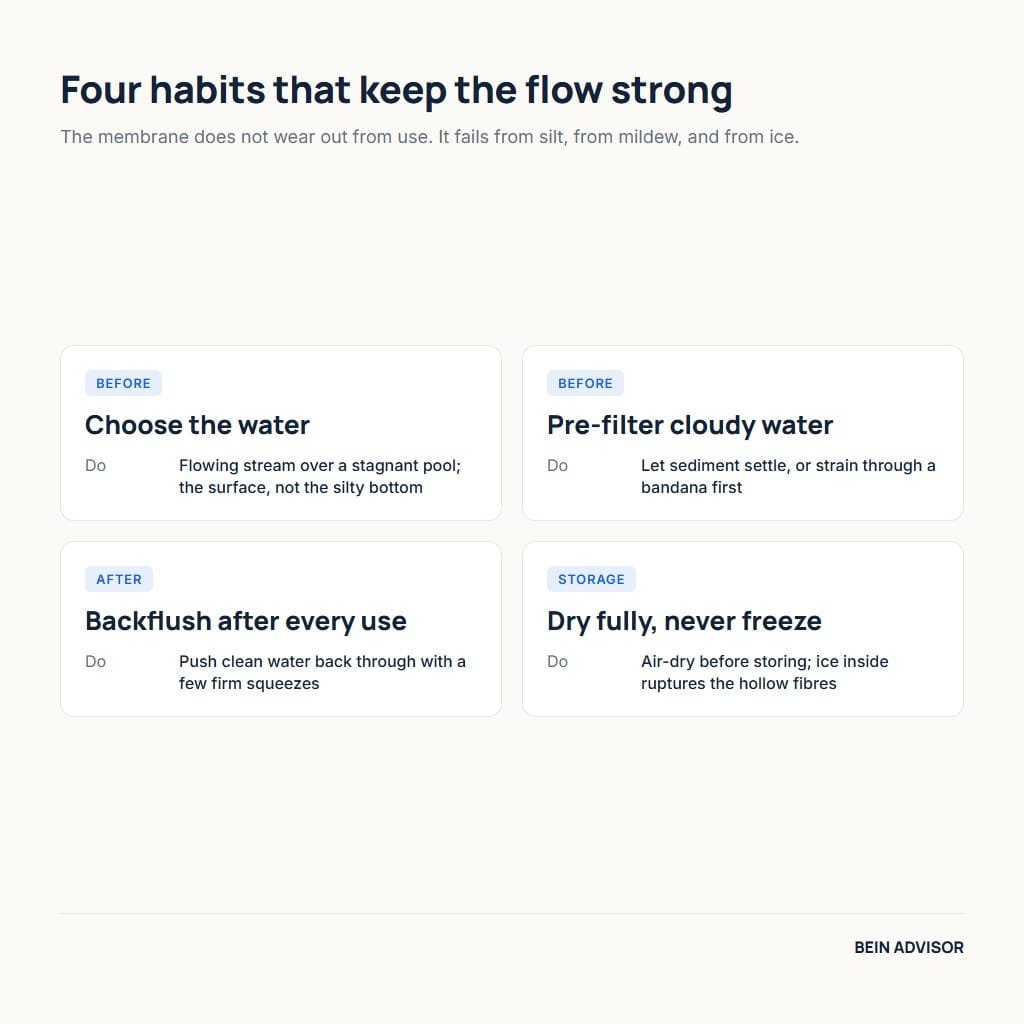
Getting the best from any LifeStraw water filter starts with choosing the clearest water you can find — a flowing stream over a stagnant pool, and the surface rather than the silty bottom. When the water is cloudy, let the sediment settle or pre-filter it through a bandana or cloth so the membrane is not overwhelmed. Then use the model as designed: drink directly through a straw, squeeze into a bottle, run it inline on a hydration pack, or hang it as a gravity filter. Matching the method to the source keeps the flow strong and the effort low.
Maintenance is simple but essential. After each use, backflush the filter, if your model allows it, by pushing clean water back through it with a few firm squeezes or blows, which clears the membrane and restores the flow. Let the filter air-dry completely before storage, because sealing it away damp invites mildew. Never let a wet filter freeze, since ice forming inside can rupture the hollow fibers and quietly destroy the filter with no visible sign. On the two-stage Go, replace the carbon capsule on schedule, and retire the membrane only when a thorough backflush no longer brings the flow back.
Frequently Asked Questions
Does a LifeStraw water filter remove viruses? Standard hollow-fiber models remove bacteria, parasites, and microplastics, but not viruses, which are small enough to slip through a 0.2-micron membrane. In regions where waterborne viruses are a real risk, choose a dedicated purifier rated for virus removal rather than a basic filter.
How long does a LifeStraw last? The membrane microfilter lasts from 1,000 liters in the Sip to roughly 4,000 liters in the original Personal straw. The activated-carbon capsule in the Go’s two-stage version has a much shorter life and needs regular replacement to keep improving taste and reducing odor.
Can it make salt water drinkable? No. A LifeStraw water filter does not desalinate, because removing dissolved salt requires reverse osmosis or distillation, not a hollow-fiber membrane. It also will not remove most dissolved chemicals unless the specific model includes a carbon stage.
What happens if it freezes? Freezing a wet filter can crack the internal fibers and create gaps that let contaminants through, often with no outward damage at all. Always dry a filter fully before cold-weather storage, and keep it close to your body on freezing trips to protect it.
Our Verdict
Every model here uses the same trusted membrane, so choose by format. The Peak Series Straw and Peak Squeeze suit ultralight hikers, and the Personal is the low-cost pick for tight budgets and emergency kits. The Sip is a reusable stainless-steel straw for drinking from a glass or bottle while traveling. The Go Series bottle suits anyone who wants to carry and filter water in one container every day, and its two-stage version adds a carbon filter that improves the taste of tap water.
Conclusion: Choosing Your LifeStraw Water Filter
A LifeStraw water filter remains one of the simplest ways to make wild or uncertain water safe, and the range covers nearly every style of trip. The Peak Series straw and squeeze keep ultralight hikers protected, the Personal anchors budgets and emergency kits, the Sip covers travel and everyday sipping, and the two-stage Go bottle adds carbon to improve the taste of tap water. Each shares the same trusted membrane, so the choice is really about format rather than core safety.
Match the model to your water and your pack, learn the quick backflush-and-dry routine, and a LifeStraw water filter will deliver safe hydration trip after trip. Pair it with smart planning and the right gear, and remote routes feel far less daunting. For more on getting outdoors with confidence, see our guides to budget-friendly destinations and memorable travel adventures.