A single flock of chickens can grow from a day-old chick to market weight in roughly six weeks. That short cycle is exactly why broiler farming attracts so many first-time livestock entrepreneurs. Fast turnover means capital returns to your pocket several times a year, rather than staying locked up for seasons. However, speed alone does not guarantee profit. Feed prices, mortality, and market timing ultimately decide whether a cycle ends in the black or the red.
This article breaks down the real economics behind broiler farming, from startup capital to net profit per cycle. You will see how the feed conversion ratio quietly controls your margin. Additionally, you will learn how to calculate a break-even point before buying a single chick. Each section pairs plain explanation with the kind of numbers a bank or a feasibility study would expect. The goal is practical clarity, not hype.
Broiler farming rewards operators who treat the barn as a production line and track every input. Therefore, the figures below use conservative, evergreen assumptions you can adapt to your own market. By the end, you should be able to sketch a simple profit model for a flock of any size. Moreover, you will be able to judge whether the venture fits your budget and your appetite for risk before committing real money.
1. Why Broiler Farming Turns a Fast Profit
Profit in broiler farming comes from volume and velocity rather than a high price per bird. Each chicken sells for a modest amount, yet a barn cycles several flocks through the same space every year. As a result, thin per-bird margins multiply into meaningful annual income. Understanding this rhythm is the first step toward a realistic business plan. Moreover, the model scales cleanly, since the same routines that run five hundred birds also run five thousand. Before diving into costs, it helps to see why the biology and the market align so well. The two drivers below explain the underlying economics in simple terms.
1.1 The Short Production Cycle
Modern broiler breeds reach a market weight near two kilograms in about thirty-five to forty-five days. That pace is striking compared with almost any other livestock. Consequently, a well-run barn can complete six or even seven flocks in a single year. Each finished flock frees the capital tied up in chicks and feed. In turn, you reinvest that money quickly instead of waiting a whole season. This rapid recycling of cash is the real engine behind broiler farming returns. For example, a barn earning only a small margin per bird still produces strong yearly cash flow. Short cycles also limit your exposure to any single price shock in the feed market.
The short cycle carries a second advantage, namely faster learning. Because you finish many flocks per year, mistakes surface and get corrected within weeks rather than seasons. Meanwhile, feed remains the largest recurring cost, and a short window keeps that spending tight and predictable. However, speed cuts both ways for the unprepared. A disease outbreak or a ventilation failure can erase weeks of growth almost overnight. Therefore, tight daily management matters far more here than in slower livestock systems. Operators who monitor weight gain, water intake, and mortality every single day tend to capture the full benefit. In contrast, absentee owners often watch their thin margin vanish before market day.
1.2 Steady Demand and Healthy Margins
Chicken is among the most widely eaten meats worldwide, and demand stays steady across seasons. This consistency gives the business a reliable sales floor that many ventures lack. In addition, poultry meat is affordable next to beef or lamb, so buyers keep purchasing even when budgets tighten. As a result, a farmer who produces a clean, uniform flock rarely struggles to find a market. Local restaurants, wholesalers, and live-bird markets all absorb steady supply. The FAO tracks poultry as one of the fastest-growing protein sources globally. That structural growth sits behind every well-planned flock.
Margins, however, depend on discipline rather than luck. The gap between feed cost and sale price is narrow, so small efficiencies compound into real money. For instance, shaving the feed conversion ratio by a few points can lift cycle profit noticeably. Similarly, cutting mortality from ten percent to five percent adds saleable birds at no extra feed cost. Consequently, the most profitable operators are not those who sell at the highest price. Instead, they are the ones who control inputs most tightly. That focus on efficiency is a recurring theme throughout this article. It also anchors any serious feasibility study a lender would take seriously.
2. Startup Capital for Broiler Farming
Startup capital for broiler farming splits into two clear buckets. Fixed costs build the production environment, while variable costs feed and protect each flock. Separating the two is essential for any feasibility study, because it shows what you spend once versus every cycle. Furthermore, the balance between them shifts with scale. A small backyard unit leans heavily on variable costs, whereas a commercial barn carries larger fixed investment spread across many birds. As the flock grows, the fixed cost per bird falls, which improves the margin. The breakdown and table below outline typical categories so you can build an estimate for your own market prices.
2.1 Fixed Costs: Housing and Equipment
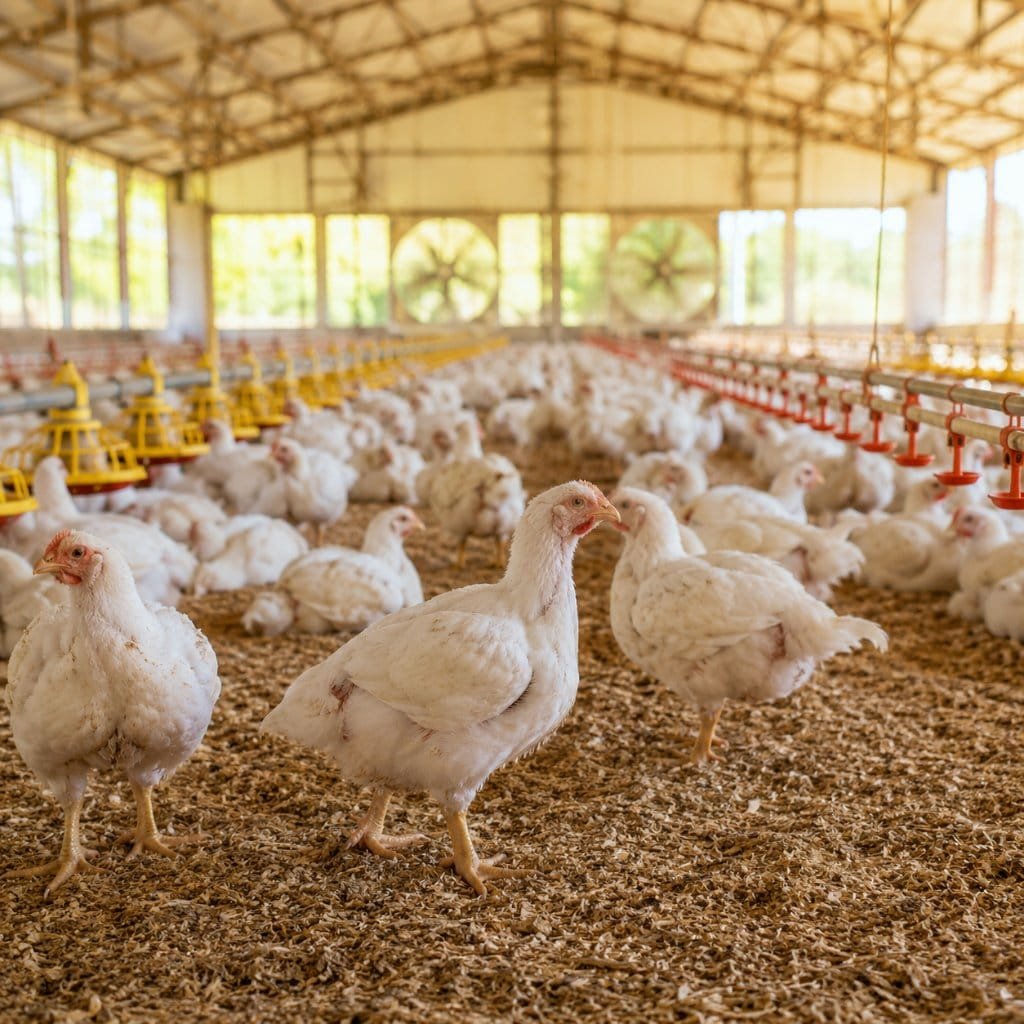
Fixed costs cover the shelter and the durable gear that serve flock after flock. The main items are the house itself, feeders, drinkers, brooders, and a ventilation setup. In colder climates, a reliable heat source for the brooding stage is non-negotiable. Additionally, you may need lighting, curtains, and a simple biosecurity footbath at the entrance. These assets are bought once and then used across many cycles. Therefore, their cost should be spread, or depreciated, over their useful life rather than charged to a single flock. A tin-and-timber house may last years, while good drinkers last even longer with basic care.
The key insight is that fixed cost per bird shrinks as the flock grows. For example, a house that shelters two hundred birds and one that shelters two thousand may cost a similar amount to build per square meter. However, the larger flock divides that investment across ten times as many birds. Consequently, commercial units enjoy a structural cost advantage on every chicken sold. Meanwhile, a beginner can start small and reinvest profits into better housing over time. This staged approach keeps early risk low. It also lets you learn the daily routine before scaling up the fixed investment.
2.2 Variable Costs: Chicks, Feed, and Medication
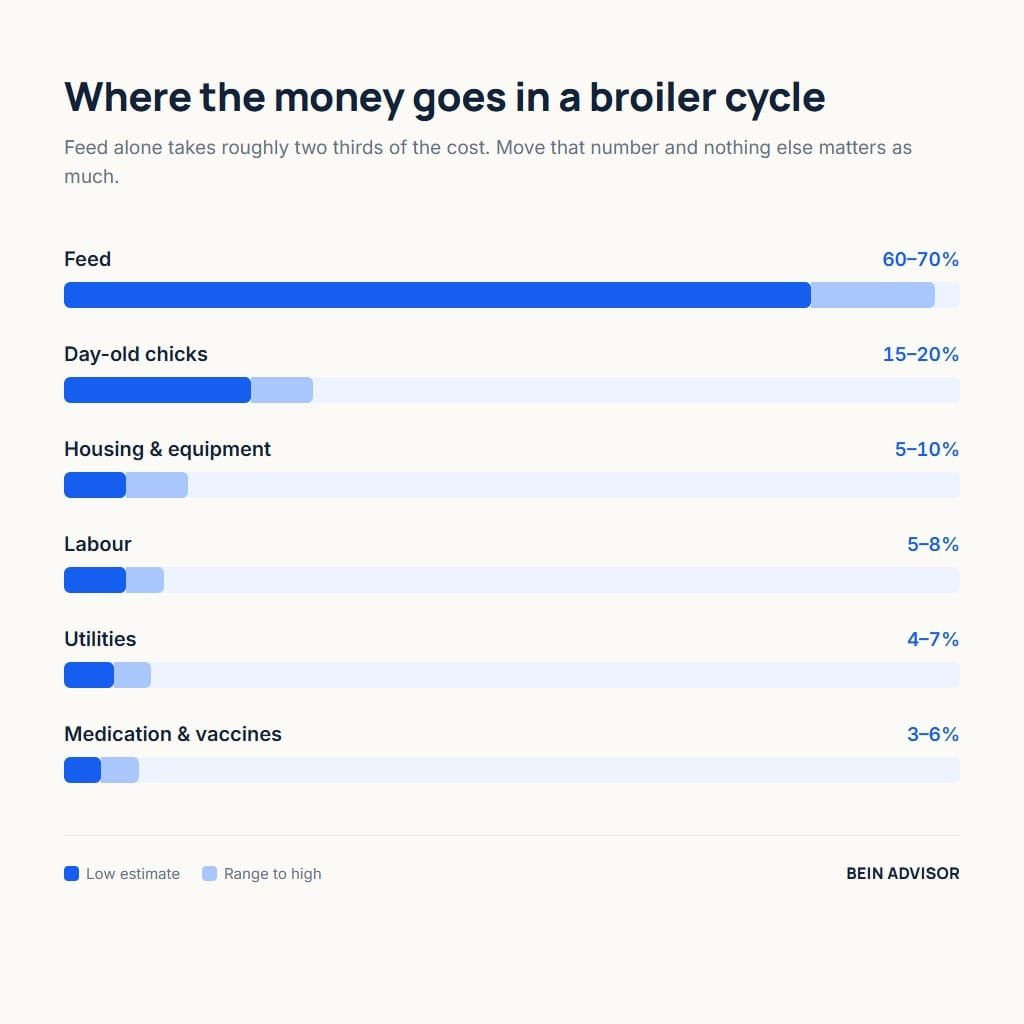
Variable costs recur with every flock and rise directly with bird numbers. The big three are day-old chicks, feed, and the vaccine-and-medication program. Feed alone typically swallows sixty to seventy percent of the total cycle cost. Chicks form the next largest slice, followed by litter, labor, and utilities. Because feed dominates, its price swings drive your profit more than any other single factor. Therefore, buying feed well and storing it properly protects the whole venture. Smart operators also lock in vaccine schedules early, since prevention costs far less than a mid-cycle disease crisis. The table summarizes how a typical cycle divides.
| Cost category | Type | Approx. share of a cycle |
|---|---|---|
| Feed | Variable | 60–70% |
| Day-old chicks | Variable | 15–20% |
| Labor | Variable / fixed | 5–8% |
| Utilities (heat, water, power) | Variable | 4–7% |
| Medication & vaccines | Variable | 3–6% |
| Housing & equipment (depreciation) | Fixed | 5–10% |
Feed volatility deserves special planning because it can turn a profitable plan into a loss. Grain and soybean prices move with weather and global trade, often without warning. For instance, a sudden rise in maize prices squeezes the margin on every bird in the barn. As a result, prudent farmers keep a small cash buffer for feed shocks. Buying in bulk during low-price windows can also smooth the cost. Meanwhile, poor storage invites mold and pests, which quietly waste money you already spent. In short, disciplined feed management is the single most important variable-cost skill in the entire business.
3. Feed Conversion Ratio: Broiler Farming’s Core Lever
If one number decides profit in broiler farming, it is the feed conversion ratio. This single figure links the biggest cost, feed, to the product you sell, live weight. Because feed dominates the budget, even a small change in conversion moves the bottom line sharply. Furthermore, the ratio is easy to track with a scale and a feed log. Operators who watch it weekly catch problems while there is still time to fix them. In contrast, those who ignore it often discover a thin margin only at market day. The sections below define the ratio and show how to push it lower.
3.1 What FCR Means in Broiler Farming
The feed conversion ratio, or FCR, is the kilograms of feed needed to add one kilogram of live weight. A ratio of 1.7 means the flock eats 1.7 kilograms of feed for every kilogram gained. Naturally, a lower number is better, since it means less feed for the same meat. Modern broilers under good conditions often reach an FCR between 1.5 and 1.8. However, poor ventilation, disease, or wasted feed can push it well above 2.0. Because feed is the dominant cost, that gap decides whether the cycle earns or loses. In broiler farming, therefore, FCR functions as a live scorecard for management quality.
To calculate FCR, divide total feed consumed by total live weight produced. Suppose a flock eats 3,400 kilograms of feed and yields 2,000 kilograms of birds. Dividing gives an FCR of 1.7, a healthy result for most systems. Meanwhile, tracking the figure across cycles reveals trends that a single number hides. For example, a slow creep upward may signal feeder waste or an early health issue. Consequently, recording feed and weight every week is more useful than one final calculation. This habit turns FCR from a report card into an early-warning system. It also gives lenders confidence that you manage the barn by real data.
3.2 Practical Ways to Improve FCR
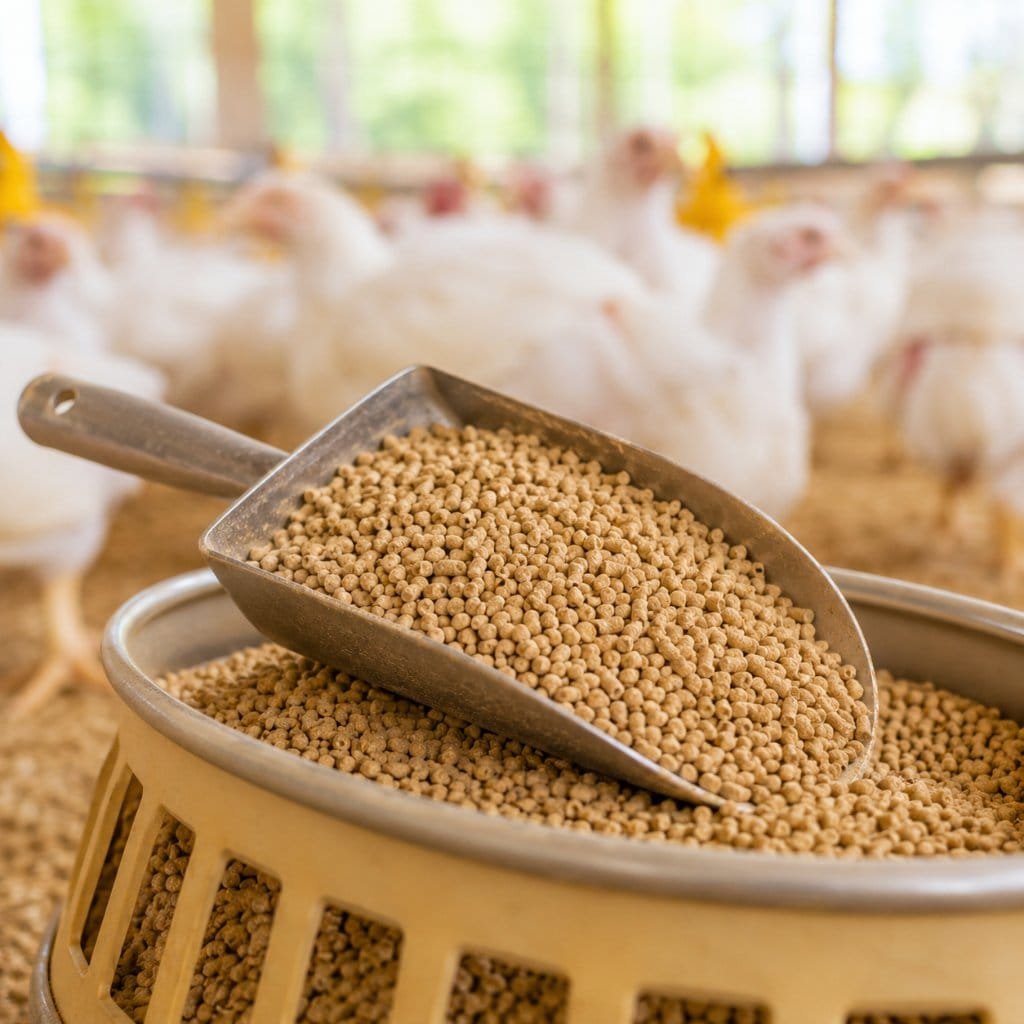
Improving FCR starts with feed quality and feeder design, since wasted feed never becomes meat. Feeders set at the right height reduce spillage, and clean water supports efficient digestion. Additionally, matching the ration to the bird’s growth stage prevents overfeeding of costly protein. Starter, grower, and finisher feeds each serve a different phase for a reason. Meanwhile, comfortable temperature keeps birds eating for growth rather than burning energy to stay warm. As a result, good ventilation and heating pay for themselves through a lower ratio. Small habits, repeated daily, compound into a meaningfully better conversion by market day.
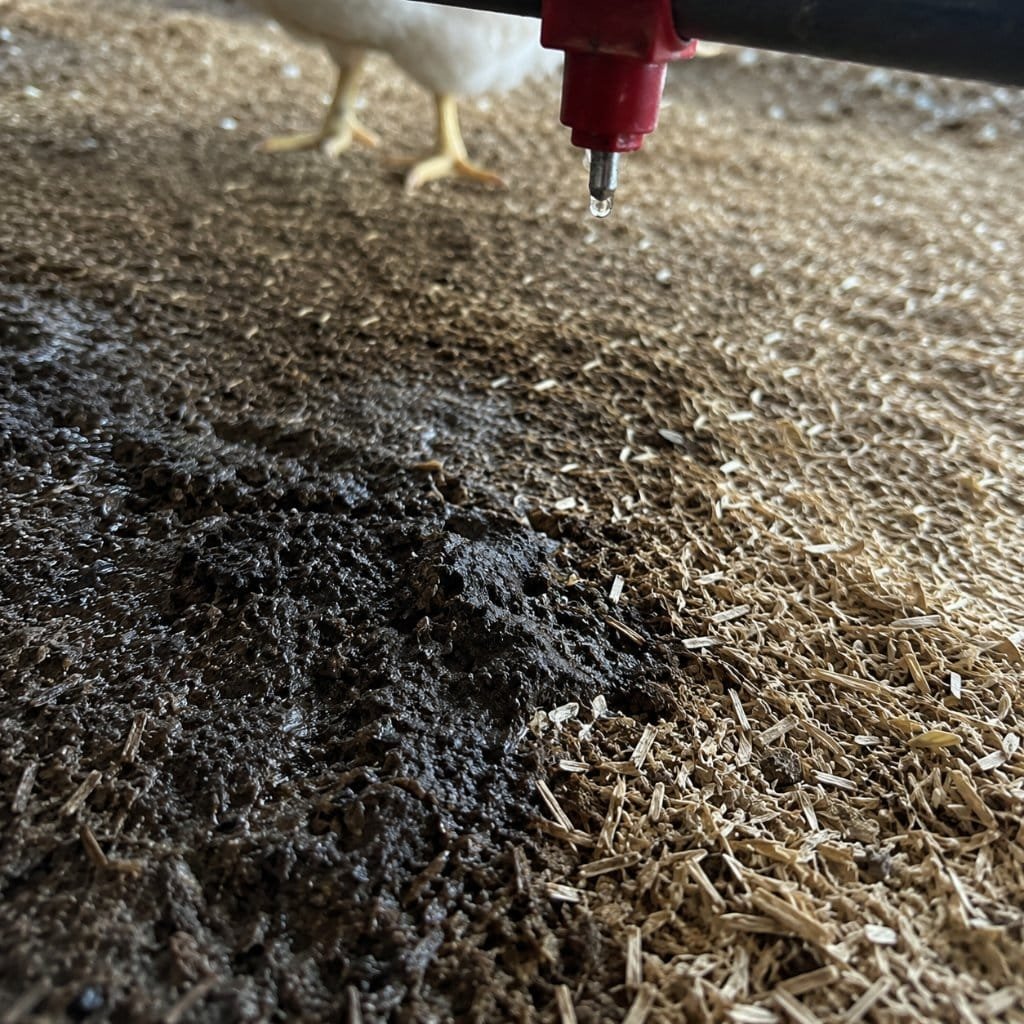
Health management is the other half of the FCR equation. A subclinical gut infection can raise the ratio long before any bird looks sick. Therefore, a solid vaccination plan and clean litter protect efficiency as much as they protect welfare. For example, controlling coccidiosis keeps the gut absorbing nutrients properly. In contrast, damp, ammonia-heavy litter damages the lungs and slows growth. Consequently, ventilation, dry bedding, and biosecurity all show up indirectly in the feed log. The lesson is that FCR reflects the whole system, not just the feed bag. Manage the environment well, and the ratio follows.
4. Calculating Break-Even and Net Profit
A feasibility study is only convincing when it ends in clear numbers. Two figures matter most: the break-even point and the net profit per cycle. The break-even point tells you the sale price or weight at which the flock covers its costs. Net profit then shows what remains after every input is paid. Together, they turn a vague hope into a testable plan. Moreover, they let you stress-test the venture against a feed-price spike or a weak market. The worked example below uses round, evergreen numbers you can replace with local prices. Treat it as a template rather than a fixed forecast.
4.1 Finding Your Break-Even Point
The break-even point is the level of sales that exactly covers total costs. To find it, first add every cost for the cycle, both fixed and variable. Next, divide that total by the number of birds you expect to sell after mortality. The result is your cost per bird, which is the price you must beat to profit. For instance, if the cycle costs a certain amount and you sell 950 birds, the math is simple. Dividing gives the minimum acceptable price for each chicken. Below that figure, the flock loses money; above it, every extra unit is profit.
Break-even analysis becomes powerful when you test it against bad scenarios. Suppose feed prices rise or mortality climbs above your estimate. By recalculating, you see immediately how much cushion the plan really has. Consequently, you can decide whether to proceed, delay, or renegotiate feed supply. This habit separates a serious operator from a hopeful one. In addition, lenders and partners respect a plan that names its own risks in numbers. A break-even figure you can defend builds far more trust than an optimistic guess. It also guides day-to-day choices, since every saved cost lowers the price you must reach.
4.2 A Worked Broiler Farming Profit Example
Consider a modest flock of one thousand day-old chicks as a working model. With careful management, a five percent mortality rate leaves 950 birds to sell. At an average live weight of two kilograms, that flock yields 1,900 kilograms of saleable meat. Assuming an FCR of 1.7, the birds consume roughly 3,400 kilograms of feed. From here, the economics are just multiplication against your local prices. Revenue equals your sale price per kilogram times 1,900 kilograms. Meanwhile, the largest cost is feed price per kilogram times 3,400 kilograms. Net profit is simply revenue minus every cost, as the table lays out.
| Item | Assumption / formula | Result |
|---|---|---|
| Chicks started | 1,000 day-old chicks | 1,000 |
| Survival rate | 95% (5% mortality) | 950 birds sold |
| Average live weight | 2.0 kg per bird | 1,900 kg total |
| Feed conversion ratio | 1.7 | ~3,400 kg feed |
| Revenue | Sale price/kg × 1,900 kg | Set by market |
| Main cost | Feed price/kg × 3,400 kg + chicks + other | Set by inputs |
| Net profit per cycle | Revenue − total costs | Your margin |
The example reveals why efficiency, not price, usually drives the outcome. Push mortality down to three percent, and you gain twenty extra birds for free. Similarly, trim the FCR to 1.6, and you buy less feed for the same meat. Both changes flow straight to net profit without any rise in sale price. Therefore, the model rewards better management more reliably than better luck. Multiply the per-cycle profit by six or seven cycles a year, and the annual picture emerges. That yearly figure, not a single flock, is the true measure of the venture. Build the model once, then refine it each cycle with real data.
5. Choosing the Right Scale for Broiler Farming
Scale shapes almost every other decision in the business. A small flock limits risk and capital, while a large flock unlocks lower cost per bird. Neither choice is universally right, since the best size depends on your funds, market, and experience. Furthermore, scale interacts with location, labor, and biosecurity in important ways. A beginner who overreaches can drown in feed bills before mastering daily routines. In contrast, an experienced operator who stays too small leaves clear profit on the table. The two subsections below weigh the trade-offs so you can match ambition to reality.
5.1 Small-Scale Versus Commercial Flocks
A small-scale flock of a few hundred birds is the classic starting point. It needs modest capital, forgives early mistakes, and teaches the daily rhythm at low cost. Additionally, a small unit can often sell directly to neighbors and local buyers at retail prices. That direct channel lifts the margin per bird, which offsets the higher cost base. However, the small operator still pays more per chick and per bag of feed. As a result, total yearly profit stays limited even when management is excellent. For many, the small flock is a school rather than a final destination.
A commercial flock of several thousand birds flips the equation. Bulk buying cuts input prices, and fixed costs spread thin across many chickens. Consequently, the cost per bird drops, which widens the margin even at wholesale prices. Meanwhile, larger volumes attract steady buyers who value reliable supply. This scale, though, demands stronger management, more labor, and tighter biosecurity. A single mistake now affects thousands of birds at once. Therefore, most successful operators grow into commercial scale gradually. They reinvest profits, upgrade housing, and expand only after the routine is second nature. For a deeper look at feeding at scale, sound broiler feed fundamentals apply across species.
5.2 Site Selection and Biosecurity Basics
Location decides how easily you can protect and supply the flock. A good site sits away from other poultry units to reduce disease spread. It also offers clean water, reliable access for feed delivery, and decent drainage. Furthermore, some separation from dense housing keeps odor complaints and disputes to a minimum. Choosing well at the start avoids costly relocations later. Meanwhile, the same site should allow future expansion if the business grows. For practical siting and flock-health guidance, the Poultry Extension resources offer evidence-based checklists. A thoughtful site is quiet insurance against many common problems.
Biosecurity is the daily practice that keeps disease outside the house. Simple measures do most of the work, starting with a footbath and clean boots at the door. Limiting visitors, controlling rodents, and resting the house between flocks all cut risk. Additionally, buying chicks from a trusted hatchery reduces the chance of importing infection. Because a single outbreak can erase a cycle’s profit, these habits pay for themselves. Meanwhile, clean water lines and dry litter block the most common health threats. In short, biosecurity is not paperwork but a routine that protects your margin every single day. For the illnesses biosecurity guards against, see our guide to poultry diseases and prevention.
6. Broiler Farming Mistakes That Erode Profit
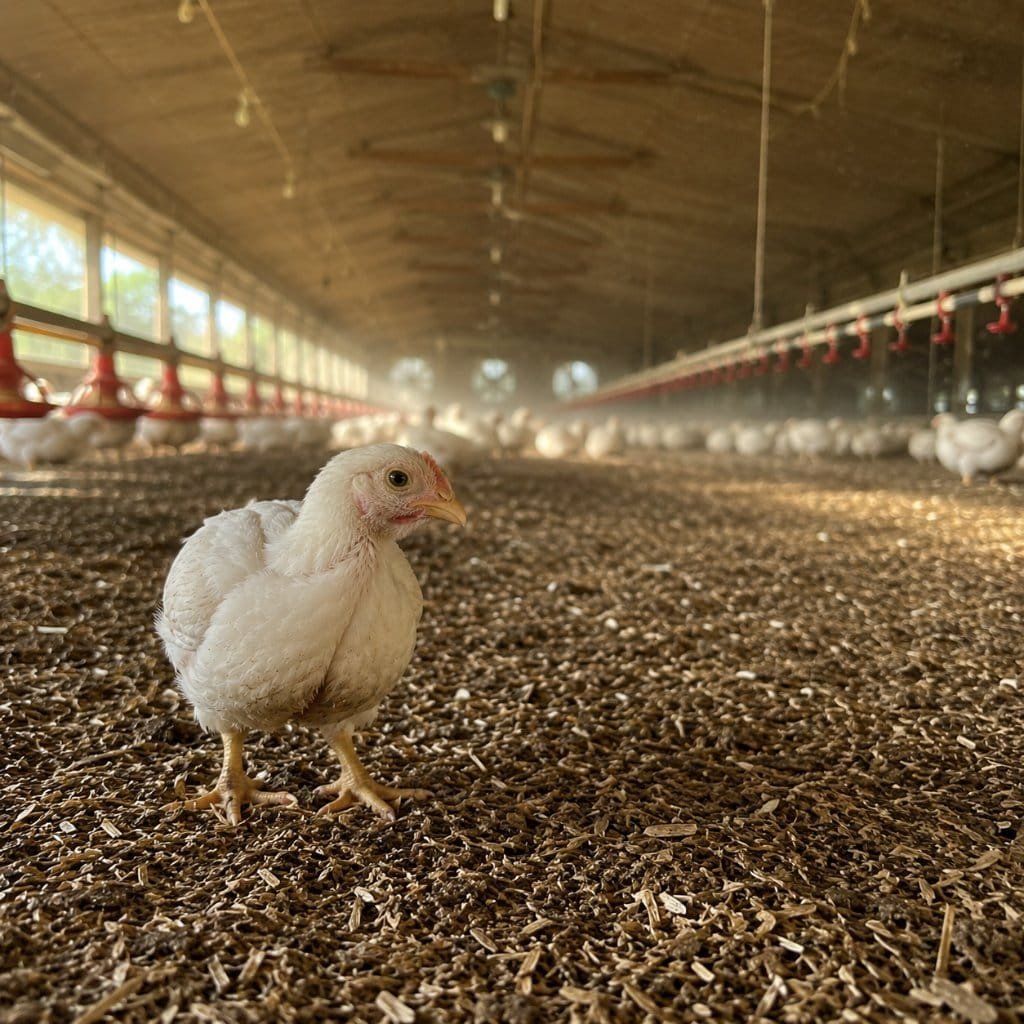
Most losses in broiler farming come from avoidable mistakes rather than bad luck. Because margins are thin, a single oversight can turn a healthy cycle negative. The good news is that the common errors are well known and easy to prevent. Furthermore, catching them early costs almost nothing compared with fixing them late. Two mistakes stand out for how much money they quietly drain. The first is underestimating mortality, and the second is neglecting records. Both hide in plain sight until the final tally disappoints. The subsections below explain each and offer a simple defense.
6.1 Underestimating Mortality and Culls
Optimistic plans often assume near-zero mortality, which reality rarely allows. Even good farms lose a few percent of birds to weakness, heat, or minor disease. Culls, the underweight or injured birds you cannot sell at full value, add to the loss. Consequently, a plan built on a perfect survival rate overstates its own profit. A safer approach budgets for five percent loss and treats anything lower as a bonus. Meanwhile, the feed those lost birds ate is money already spent with no return. Therefore, reducing mortality protects both the bird count and the feed already invested in them.
Preventing mortality is cheaper than replacing lost income after the fact. The first week is critical, since chicks are fragile and depend on steady brooding heat. Clean water, correct temperature, and gentle handling in those early days save many birds. Additionally, prompt removal of sick birds stops disease from spreading through the flock. For example, isolating a few weak chicks early can prevent a barn-wide outbreak. Because prevention compounds, small daily attention yields large end-of-cycle gains. In contrast, ignoring early warning signs lets a manageable problem become a costly crisis. Watchful care in week one often decides the whole flock’s result.
6.2 Neglecting Records and Cash Flow
Farming without records is like driving with your eyes closed. Simple logs of feed used, weight gained, and birds lost reveal exactly where money leaks. Without them, you cannot calculate FCR, spot a rising death rate, or judge a cycle honestly. Furthermore, records turn vague feelings into decisions you can defend. A notebook or a basic spreadsheet is enough to start. Meanwhile, the discipline of writing figures daily keeps you engaged with the flock. As a result, problems get noticed while they are still small and cheap. Good records are the least glamorous yet most reliable profit tool in the barn.
Cash flow is the other blind spot that sinks otherwise sound plans. Feed and chicks must be paid up front, while sales arrive only at the end of the cycle. Consequently, a farm can be profitable on paper yet run out of cash mid-flock. To avoid this trap, plan for the gap and keep a buffer for the lean weeks. Additionally, staggering flocks can smooth income if your housing allows it. For readers building a broader home operation, our guide to poultry house setup shows how routine tools reduce labor. Managing cash carefully keeps the whole venture alive between paydays.
Broiler Farming FAQ
How long is a single broiler cycle?
Most flocks reach market weight in about thirty-five to forty-five days. Adding a short cleanup and rest period, a full cycle runs roughly six to eight weeks. Therefore, a barn can complete six or seven flocks in a year with good scheduling.
What is a good feed conversion ratio?
Under good conditions, an FCR between 1.5 and 1.8 is a healthy target. Values above 2.0 usually signal feed waste, poor ventilation, or a health problem. Because feed is the biggest cost, lowering the ratio directly improves your margin.
How much space does each bird need?
A common guideline allows around ten to twelve birds per square meter on deep litter. Overcrowding raises stress, disease, and mortality, which quickly erases any space savings. Consequently, giving birds adequate room usually pays back through better growth and lower losses.
As an Amazon Associate, BeIN ADVISOR earns from qualifying purchases.
Run the Numbers Properly — The Complete System
Everything this article summarises is worked out in full in The Broiler Blueprint: 200 pages and 31 chapters that take you from your first chick to your first steady profit. Inside you get ready-made tables for temperature, feed and vaccination, worked calculators for FCR, break-even and cycle profit, colour diagrams, printable record templates, a symptom-to-solution troubleshooting guide, a glossary and an index.
Conclusion: Broiler Farming as a Numbers Game
Broiler farming rewards the operator who treats a flock as a production line, not a gamble. The short cycle, steady demand, and thin margin all point to the same lesson. Efficiency, measured through FCR, mortality, and honest records, decides the outcome far more than sale price. Moreover, a simple feasibility study built from real numbers protects you before you spend a cent. Start small, learn the daily routine, and scale only when the model proves itself.
The path to profit in broiler farming is clear and repeatable for anyone willing to track the details. Build your cost breakdown, calculate your break-even, and refine each cycle with the data you collect. As a result, thin per-bird margins compound into a dependable annual income. Treat every flock as a chance to improve one number, and the profit follows naturally. With patience and discipline, this fast-moving business can become one of the most reliable ventures on your land.