Feed accounts for sixty to seventy percent of the cost of raising a flock. That single fact makes broiler feed the most important lever a farmer controls. Spend well here, and thin margins widen into real profit across the cycle. Waste feed or choose it poorly, and even a healthy flock loses money. Therefore, understanding feed is not optional for anyone serious about the business.
This article lays out six practical rules for feeding a flock to its full potential. You will see why feed phases matter, what goes into a quality ration, and how to cut waste. Each rule connects directly to the feed conversion ratio, the number that decides profit. Additionally, the guidance stays evergreen and adapts to both small units and larger commercial barns. The aim is steady, efficient growth without overspending on the feed bill.
Getting broiler feed right rewards the farmer at every stage of the flock. Better feeding lowers the conversion ratio, which means less feed buys the same weight. Consequently, small improvements repeat across every cycle and compound over a year. Moreover, good nutrition supports health, which cuts mortality and medication costs at the same time. By the end, you should be able to plan a feeding program that grows birds fast while protecting your margin.
1. Why Broiler Feed Decides Your Profit
Broiler feed sits at the center of the whole profit equation. Because it is the largest cost, its efficiency matters more than any other input. A small change in how well birds convert feed moves the bottom line sharply. Meanwhile, feed quality also shapes health, growth speed, and flock uniformity. As a result, decisions about feed ripple through every part of the operation. Understanding this central role is the first step toward feeding for profit rather than habit. The subsections below explain feed as a cost and its tight link to the conversion ratio.
1.1 Feed as the Biggest Cost
No other expense comes close to feed in a broiler operation. It routinely consumes sixty to seventy percent of the total cost of a cycle. Because the share is so large, feed decisions dominate the profit calculation. For example, a modest saving on the feed bill outweighs cuts almost anywhere else. Meanwhile, the price of grain and soybean can swing with weather and trade. As a result, both the amount used and the price paid demand close attention. Treating feed as the main cost, rather than a background item, changes how carefully a farmer manages it. That mindset is the foundation of a profitable feeding program.
Managing this cost starts with treating every kilogram of feed as money. Spilled, spoiled, or wasted feed is cash lost with nothing in return. Additionally, feed eaten by birds that later die is a pure loss to the cycle. Therefore, reducing waste and mortality both protect the feed investment directly. Buying wisely and storing properly guard the price side of the equation. For the full cost picture, our article on broiler farming economics breaks down every input. Seen this way, feed management becomes the single most powerful profit tool on the farm.
1.2 The Link Between Broiler Feed and FCR
The feed conversion ratio, or FCR, measures how efficiently feed becomes weight. It is the kilograms of feed needed to add one kilogram of live weight. A lower number is better, since it means less feed for the same meat. Broiler feed quality directly shapes this figure across the whole cycle. For instance, a well-balanced ration lets birds grow on less feed than a poor one. Meanwhile, wasted feed inflates the ratio without adding any weight at all. As a result, both nutrition and handling show up in the conversion number.
Because FCR links feed to weight, it turns feeding into a measurable skill. Tracking feed used against weight gained each week reveals how the program performs. A rising ratio signals waste, a health issue, or a ration that no longer fits the stage. Consequently, the number acts as an early warning long before market day. Modern flocks under good conditions often reach an FCR between 1.5 and 1.8. Values above 2.0, by contrast, usually point to a problem worth investigating. Watching this figure closely lets a farmer feed for efficiency rather than guess. In short, broiler feed and FCR are two sides of the same profit coin.
2. The Three Broiler Feed Phases
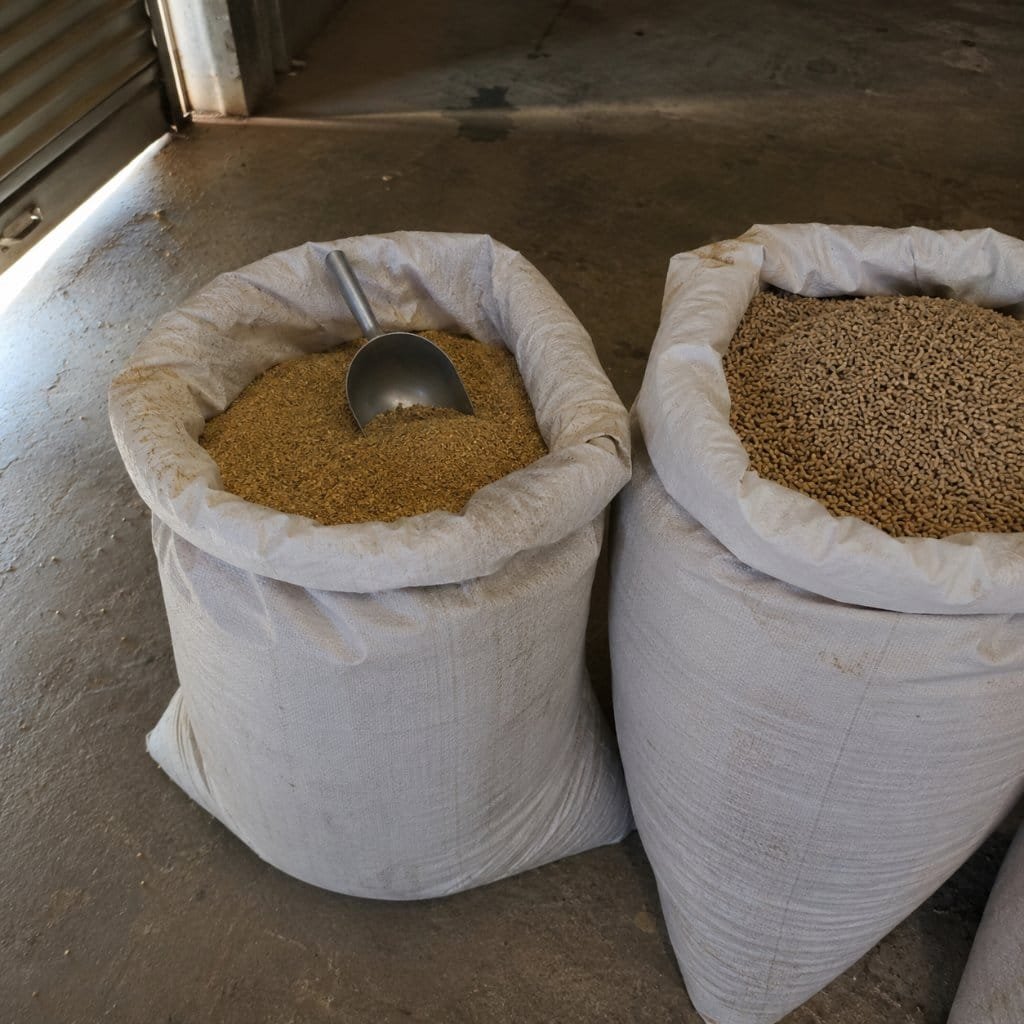
Birds do not need the same feed from day one to market. Their nutritional needs change quickly as they grow, so the ration must change too. For this reason, broiler feed comes in three phases: starter, grower, and finisher. Each phase matches the bird’s stage, balancing cost against the nutrients required. Feeding the wrong phase wastes money or slows growth, depending on the mismatch. Therefore, following the phase system is a simple way to feed efficiently. The subsections below cover the starter phase and then the grower and finisher stages.
2.1 Starter Feed
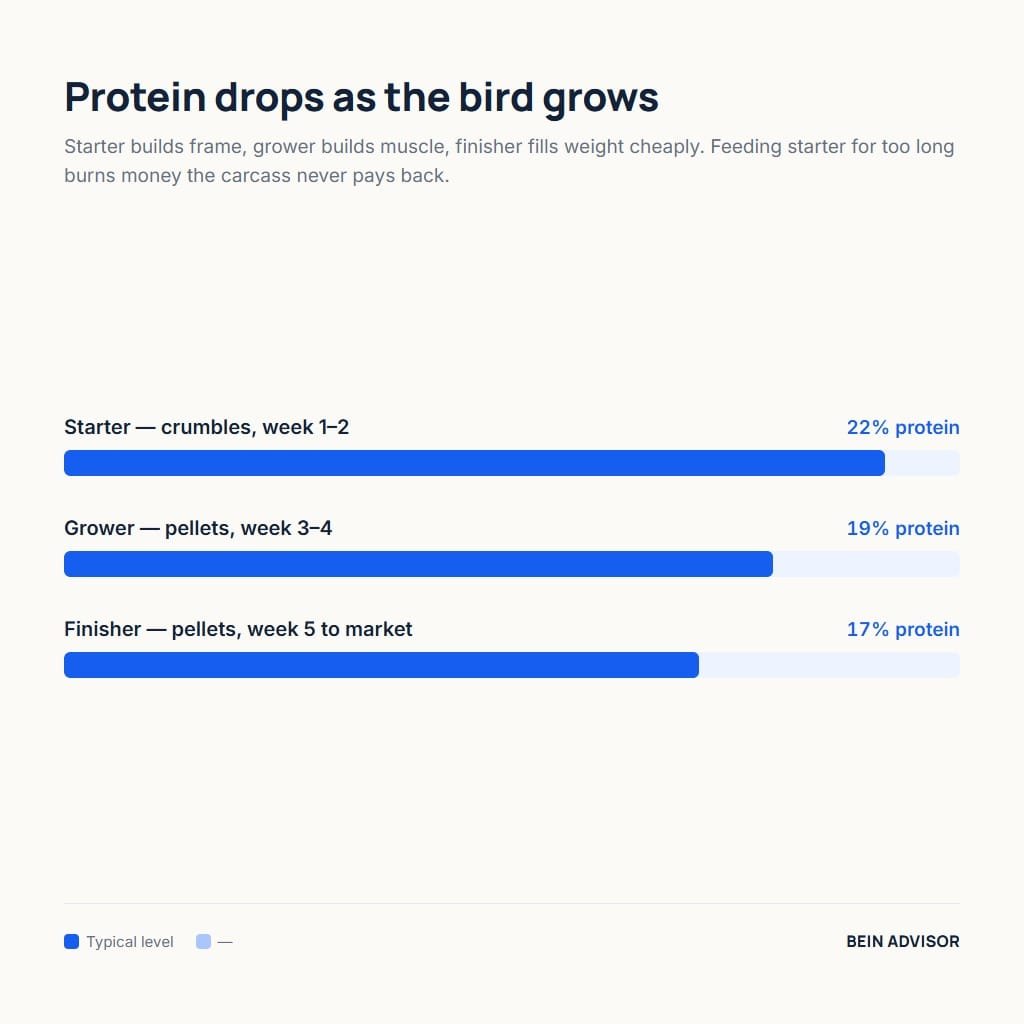
Starter feed fuels the critical first weeks when chicks grow fastest relative to size. It carries the highest protein level of the three phases, often around twenty-two percent. This protein supports rapid muscle and frame development in the young bird. Additionally, starter feed usually comes as small crumbles that tiny beaks handle easily. Because early growth sets the ceiling for the whole cycle, this phase deserves the best quality. A weak start is hard to recover from later, no matter how good the finisher. Therefore, farmers rarely economize on starter feed, since the payoff appears in final weight.
Getting the starter phase right involves more than just the bag. Feed must be available and fresh from the moment chicks arrive to encourage early eating. Spreading feed on paper or trays in the first days helps chicks find it quickly. Meanwhile, clean water beside the feed supports digestion and appetite. As the chicks grow through the first weeks, intake climbs steadily each day. Watching that intake confirms the flock is off to a strong start. Because this phase is short but decisive, close attention now prevents uneven growth later. A confident start makes every following phase easier to manage.
2.2 Grower and Finisher Feed
Grower feed takes over once chicks pass the starter stage. Its protein level drops slightly while energy rises to support fast, efficient weight gain. This balance suits birds that are building body mass rather than just their frame. Meanwhile, the feed form often shifts to pellets, which reduce waste and improve intake. Because most weight is added during this middle stage, grower feed drives much of the final result. Matching it to the bird’s age keeps the conversion ratio low. As a result, the grower phase is where efficient feeding pays off most visibly.
Finisher feed carries the flock through the final stretch to market weight. It offers the highest energy and a lower protein level than earlier phases. This mix supports the last push of weight gain at the lowest feed cost per kilogram. Additionally, finisher feed must respect any withdrawal periods for medications before slaughter. Because birds eat the most during this phase, small efficiencies here add up quickly. Therefore, keeping feeders full but not wasteful protects the margin at the finish line. Managing the transition into finisher smoothly avoids any dip in growth. Together, the grower and finisher phases turn a strong start into a profitable sale.
3. What Goes Into Quality Broiler Feed
Quality broiler feed is a careful balance of several nutrient groups. Energy and protein form the bulk, while vitamins and minerals fine-tune health and growth. Each component plays a role, and shortfalls in any one can slow the flock. Understanding what goes into the ration helps a farmer judge feed value beyond price alone. A cheap bag that lacks balance often costs more through poor conversion. Therefore, reading feed quality is a practical money skill. The subsections below cover energy and protein, then the vitamins and minerals that complete the ration. The table summarizes typical nutrient targets by phase.
| Phase | Typical protein | Feed form | Rough age window |
|---|---|---|---|
| Starter | ~22% | Crumbles | Week 1–2 |
| Grower | ~19% | Pellets | Week 3–4 |
| Finisher | ~17% | Pellets | Week 5 to market |
3.1 Energy and Protein in Broiler Feed
Energy and protein are the two heavyweights of any broiler feed. Energy, supplied mainly by grains like maize, powers growth and daily activity. Protein, from sources such as soybean meal, builds the muscle that becomes saleable meat. The balance between them shifts across the phases as the bird’s needs change. For example, young chicks need more protein, while older birds need more energy. Getting this ratio right keeps growth fast and the conversion ratio low. Meanwhile, an imbalance wastes costly protein or starves the bird of building blocks. Therefore, the energy-to-protein balance is the heart of a good ration.
The quality of these ingredients matters as much as their quantity. Fresh, well-stored grain delivers its full energy value to the flock. Meanwhile, quality protein sources supply the specific amino acids birds require. Poor or spoiled ingredients, by contrast, reduce nutrient value and can harm health. As a result, feed made from sound ingredients converts better than a cheap alternative. Because birds cannot compensate for a weak ration, ingredient quality shows up in growth. For authoritative nutrition guidance, the Poultry Extension resources explain ration balancing in detail. Sound ingredients, properly balanced, are the foundation of efficient feeding.
3.2 Vitamins and Minerals
Vitamins and minerals are small in quantity but large in effect. They support bone development, immune function, and the countless processes behind growth. Calcium and phosphorus, for example, build strong legs that carry a fast-growing body. Meanwhile, a range of vitamins keeps the immune system ready to resist disease. Because deficiencies appear as weakness, poor growth, or leg problems, balance matters. Good commercial feeds include a premix that supplies these micronutrients in the right amounts. As a result, birds on balanced feed grow evenly and stay healthier. These small additions protect the value of the energy and protein around them.
Micronutrient balance also interacts with the bird’s fast growth rate. Modern broilers grow so quickly that their skeletons must keep pace with their muscle. Therefore, adequate calcium and phosphorus prevent the leg weakness that fast growth can cause. Additionally, certain vitamins support the gut, which drives how well nutrients are absorbed. A healthy gut means more of the feed actually becomes weight. Because these effects are hard to see directly, trusting a balanced commercial premix is wise. Skimping on micronutrients to save a little rarely pays off in the end. Complete, balanced feed keeps every part of the bird growing together.
4. Building a Broiler Feed Schedule
A feed schedule turns good ingredients into a working daily routine. It decides how much birds get, when, and how the phases change over. A clear schedule keeps feeders full enough for growth without inviting waste. Meanwhile, smooth transitions between phases avoid digestive upsets that slow the flock. Because feeding is a daily task, a simple, repeatable plan beats a complicated one. Consistency here supports steady intake and a low conversion ratio. The subsections below cover feed amounts and timing, then how to transition between feeds. Together they form the practical rhythm of feeding a flock.
4.1 Amounts and Timing
Most broiler programs feed to appetite, keeping feed available throughout the day. Birds allowed to eat freely grow to their potential, provided the feed is balanced. However, free feeding does not mean careless feeding, since waste must still be controlled. Filling feeders only partway and topping up often reduces spillage from overfull trays. Meanwhile, checking that feed is always present prevents growth-slowing gaps. As birds grow, daily intake rises, so feeder space and refills must keep pace. Watching consumption each day confirms the flock is eating as expected. This balance of plenty without waste is the core of good feeding.
Timing and access shape how well birds use their feed. Feeding during cooler parts of the day can help intake in hot weather. Meanwhile, a short dark period supports rest and healthy development between meals. Enough feeder space ensures every bird eats without fighting for a spot. Because uneven access creates uneven birds, spreading feeders matters. Additionally, raising feeders as the flock grows keeps them at the right height. Small daily adjustments to amount and access add up to a smoother growth curve. A thoughtful routine turns feeding from a chore into a reliable growth engine.
4.2 Transitioning Between Feeds
Changing from one feed phase to the next needs a gentle hand. A sudden switch can upset the gut and briefly slow growth. Mixing the old and new feed over a few days eases the change for the birds. This gradual blend lets the digestive system adjust without stress. Meanwhile, timing the switch to the bird’s age and weight keeps nutrition on track. Because each phase serves a purpose, moving too early or too late costs efficiency. Therefore, planning transitions around the flock’s development protects the conversion ratio. A smooth changeover keeps the growth curve steady through the whole cycle.
Good transitions also depend on planning feed supply ahead of time. Running out of the right phase forces a rushed, disruptive change. Keeping the next phase ready avoids feeding the wrong ration in a pinch. Additionally, coordinating the finisher switch with any medication withdrawal keeps birds market-ready. Because the finisher phase uses the most feed, getting its timing right matters for cost. Meanwhile, a settled house during transitions helps birds keep eating steadily. For the housing side of steady growth, see our guide to the poultry house setup. Planned transitions keep both nutrition and growth on schedule.
5. Reducing Broiler Feed Waste and Cost
Because feed is the biggest cost, cutting waste is one of the surest ways to protect profit. Feed lost to spillage, spoilage, or pests never becomes weight, so it is pure loss. Small leaks add up across a cycle and quietly inflate the conversion ratio. Fortunately, most waste comes from a few common sources that are easy to fix. Feeder setup, buying habits, and storage together decide how much feed is lost. Managing these well keeps more of every bag in the birds and out of the litter. The subsections below cover feeder setup, then smart buying and storage.
5.1 Feeder Setup
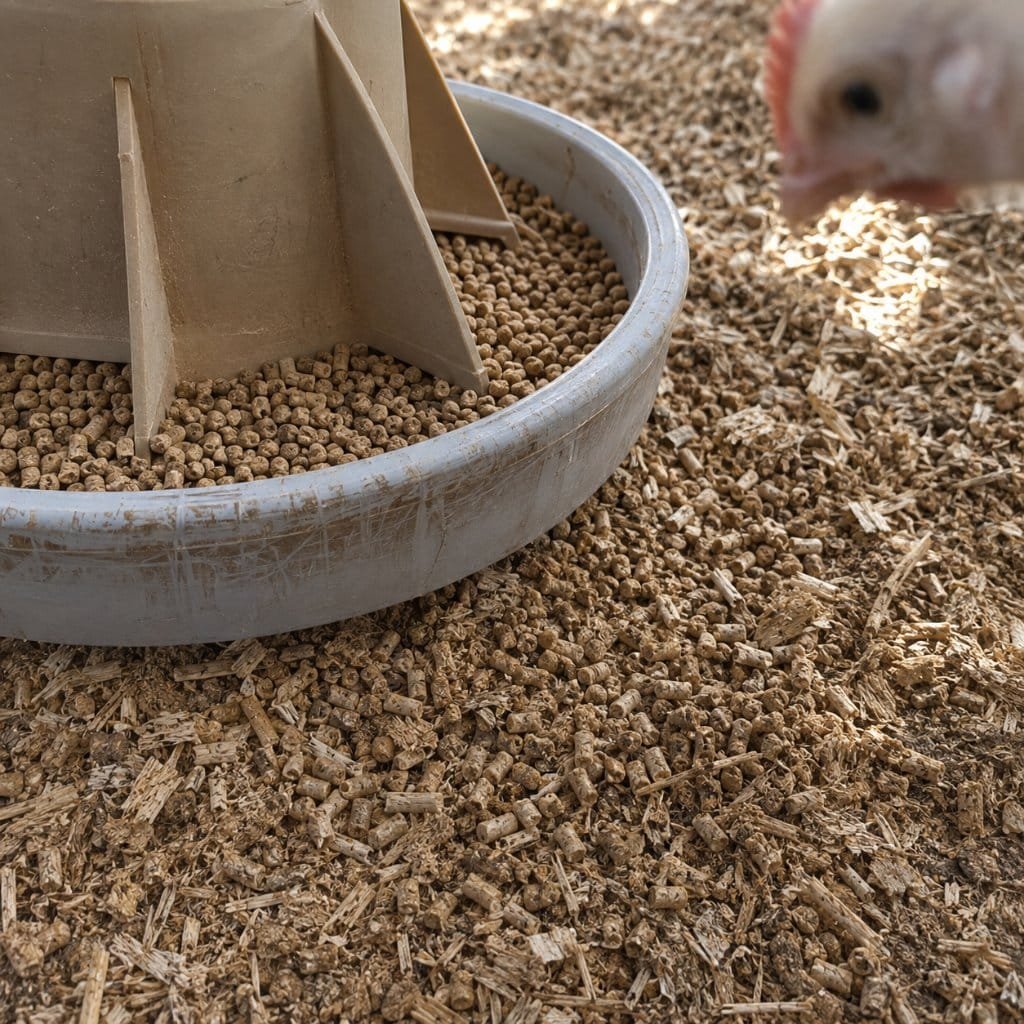
Feeder design and setup have a direct effect on how much feed is wasted. Feeders filled to the brim let birds bill feed onto the floor as they eat. Filling only partway, by contrast, keeps feed contained and cuts spillage sharply. Setting the feeder lip level with the birds’ backs also discourages scattering. As the flock grows, raising the feeders maintains this ideal height. Meanwhile, enough feeder space stops crowding that pushes feed out of the trough. Because these adjustments cost nothing, they are among the cheapest profit gains available. Simple feeder discipline protects the largest expense on the farm.
Regular attention keeps feeders working efficiently throughout the cycle. Checking daily for spilled feed reveals problems before they grow costly. Cleaning feeders prevents stale or moldy feed that birds refuse to eat. Additionally, well-maintained equipment avoids leaks and breakages that scatter feed. Because pests are drawn to spilled feed, tidy feeders also support biosecurity. Automated feeding lines, where used, deliver feed evenly and reduce hand-spillage. For a look at reliable feeding tools, our guide to automated feeding equipment shows the principles. A little feeder care returns steady savings every day.
5.2 Smart Buying and Storage
Buying feed well protects the price side of the cost equation. Purchasing in bulk during low-price windows can smooth out market swings. However, buying more than you can store properly invites spoilage that erases the saving. Therefore, matching purchase size to safe storage capacity is the balance to strike. Meanwhile, building a relationship with a reliable supplier ensures consistent quality. Because feed price swings with grain markets, timing purchases pays off. Planning ahead avoids the trap of buying small, expensive lots in a rush. Smart buying turns the feed bill from a shock into a managed cost.
Storage protects the value of feed after it is bought. Feed kept dry, cool, and off the ground resists mold and holds its nutrients. Damp storage, by contrast, breeds mold that can sicken birds and waste money. Additionally, sealed containers keep out rodents and insects that eat and foul feed. Rotating stock so older feed is used first prevents spoilage from long storage. Because feed loses value as it ages, buying only what you will use soon is wise. Meanwhile, a clean, pest-proof store supports the whole biosecurity effort. Good storage ensures the feed you paid for actually reaches the birds.
6. Common Broiler Feed Mistakes
Most feeding losses come from a handful of avoidable mistakes. Because margins are thin, a single error can erase a cycle’s profit. The good news is that these mistakes are well known and simple to prevent. Catching them early costs almost nothing compared with the losses they cause. Two errors stand out for how often they drain money quietly. The first is switching feed too abruptly, and the second is poor storage. Both are easy to avoid once a farmer knows to watch for them. The subsections below explain each and how to prevent it.
6.1 Switching Feed Too Fast
Changing feed suddenly is a common and costly slip. A quick switch between phases or brands can upset the birds’ digestion. As a result, growth stalls for a few days while the gut adjusts. This pause may seem minor, yet it lengthens the cycle and raises the feed bill. Blending old and new feed over several days prevents the shock entirely. Meanwhile, planning ahead so the right feed is always on hand avoids forced changes. Because the gut drives conversion, protecting it protects the margin. A gradual, planned switch keeps growth smooth and steady.
Sudden changes in feed quality cause the same disruption as changing phase. Switching to a lower-grade feed to save money often backfires through poorer conversion. The birds eat more of the weaker ration to meet their needs, erasing the saving. Additionally, inconsistent feed makes it hard to judge how the flock is performing. Therefore, keeping quality steady is as important as easing the phase transitions. Because birds respond quickly to feed changes, consistency pays. A stable, reliable feed supply supports a predictable growth curve. Avoiding abrupt changes is one of the simplest ways to protect efficiency.
6.2 Poor Storage and Contamination
Poor storage quietly destroys feed value before birds ever eat it. Damp conditions breed mold, which can produce toxins harmful to the flock. Pests such as rodents and insects eat feed and contaminate what they leave behind. As a result, careless storage wastes money and threatens health at once. Keeping feed dry, sealed, and off the ground prevents most of these losses. Meanwhile, using older stock first avoids spoilage from feed sitting too long. Because contamination is often invisible at first, prevention beats reaction. Clean, controlled storage protects both the feed budget and the birds.
Contaminated feed carries risks that reach far beyond wasted money. Moldy feed can cause disease that spreads costs into medication and mortality. Therefore, inspecting feed for smell, clumping, or pests before feeding is a wise habit. Discarding suspect feed is cheaper than treating a sick flock later. Additionally, a clean storage area denies pests the shelter and food they seek. Because feed is the largest input, protecting its quality protects the whole operation. Regular checks and tidy storage make contamination a rare event. Careful handling from purchase to trough keeps feed working for you, not against you. Because contaminated feed is a common disease trigger, review the main poultry diseases and how to prevent them.
Broiler Feed FAQ
How much feed does a broiler eat?
A broiler grown to about two kilograms typically eats roughly three to four kilograms of feed. That total reflects a feed conversion ratio near 1.7. Actual intake varies with breed, feed quality, and house conditions.
Can I mix my own feed?
You can, but balancing energy, protein, and micronutrients correctly is demanding. Many small farmers use commercial feed for consistency and reliable results. If you do mix your own, follow a proven formula and quality ingredients.
When do I switch to finisher feed?
Most programs move to finisher feed in the final week or two before market. Always respect any medication withdrawal period tied to the feed. Ease the change over a few days to avoid slowing growth.
As an Amazon Associate, BeIN ADVISOR earns from qualifying purchases.
Master Feed — The Complete System
Feed is the biggest number in your business, and The Broiler Blueprint takes it apart in full: the three feed stages with protein targets, how to read a feed label, storage and mycotoxin control, seasonal adjustments, and the seven places feed quietly leaks away. Across 200 pages and 31 chapters you also get worked FCR and break-even calculators, printable record sheets and a troubleshooting guide.
Conclusion: Broiler Feed as the Key to Profit
Broiler feed is where most of the money is spent and most of it is either saved or lost. The phase system, a balanced ration, and tight waste control all serve the same goal. When they work together, birds grow fast and the conversion ratio stays low. Moreover, good feeding supports health, which trims mortality and medication costs too. Treat feed as the central input, and the whole operation grows more profitable.
The path to efficient broiler feed is practical and repeatable for any farmer. Match the phase to the bird, protect feed quality, and cut every source of waste. As a result, small daily gains compound into stronger margins across every cycle. Watch the conversion ratio, and let it guide each feeding decision. With steady attention to these six rules, feed becomes the reliable engine of a profitable flock.