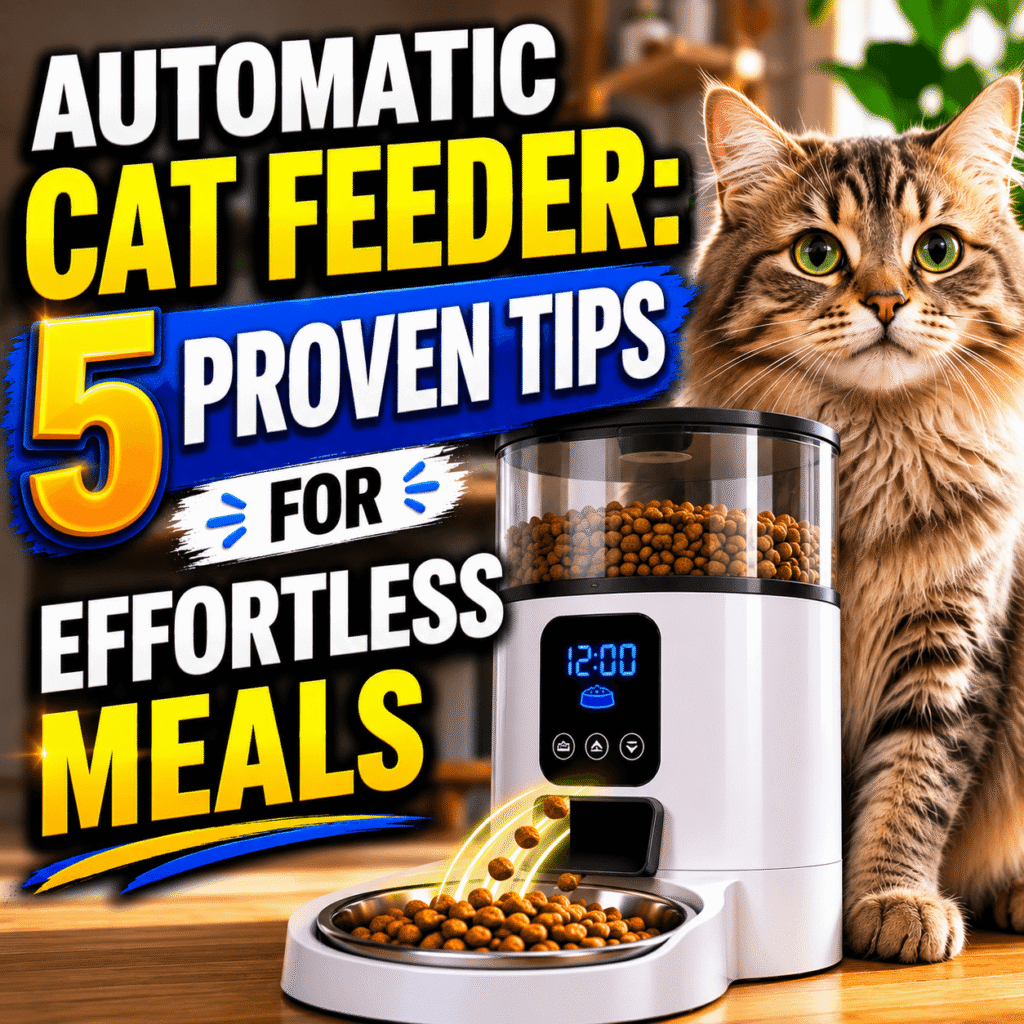
An automatic cat feeder keeps your cat fed on time, even when life gets busy. With the right automatic cat feeder, meals stay consistent whether you are at work or away overnight. Reliable portions also help prevent the overeating that leads to feline obesity. For many owners, this one device removes a daily worry and a common health risk.
This article explains the types of feeders and how to choose well. You will learn the benefits, drawbacks, and key features that matter most. Moreover, it covers wet versus dry options, schedules, and safe setup. Each point helps you feed your cat reliably and healthily.
Our guidance focuses on portion control, reliability, and food safety. Therefore, you can choose a feeder that supports your cat’s health, not just convenience. By the end, you will know exactly what to look for and how to set it up. The basics come first, because they explain every later choice.
1. How an Automatic Cat Feeder Works
Understanding the types helps you choose the right automatic cat feeder. The main designs are gravity feeders, programmable dispensers, and smart app-controlled models. As a result, each suits a different budget, schedule, and cat. Gravity feeders simply refill a bowl as food empties. Programmable models release set portions at scheduled times. Smart feeders add app control, cameras, and meal tracking. This section explains how each type works and who it fits.
1.1 Gravity, Programmable, and Smart Feeders
Gravity feeders are the simplest and cheapest option available. They use a hopper that refills the bowl automatically as your cat eats. As a result, food is always available, but portions are not controlled. This suits disciplined eaters but risks overeating in greedy cats. Programmable feeders solve that by releasing measured meals on a timer. Therefore, they give you control over portions and timing. For most owners, a programmable model is the practical sweet spot.
| Type | Portion Control | Best For |
|---|---|---|
| Gravity | None | Disciplined eaters, low budget |
| Programmable | Yes, timed | Most cats and schedules |
| Smart (app) | Yes, plus tracking | Travel, tech-friendly homes |
Smart feeders add convenience and monitoring through an app. They let you schedule, adjust, and dispense meals from your phone. As a result, you can feed your cat remotely while traveling. Many include a camera and alerts when food is dispensed or running low. However, they cost more and depend on Wi-Fi and power. For busy or frequently absent owners, the extra features can be worth it. Match the type to how often you are home.
1.2 Wet vs Dry Food Feeders
Most automatic feeders are designed for dry food only. Kibble flows easily and does not spoil quickly in a hopper. As a result, dry-food feeders are the most common and affordable type. However, wet food needs a different design to stay safe. Specialized wet-food feeders use sealed trays and ice packs to prevent spoilage. Therefore, they typically hold only a meal or two at a time. Choose the feeder that matches your cat’s diet.
Diet matters because wet food supports hydration and urinary health. Cats benefit from moisture, as our article on cat hydration explains. As a result, many owners use a wet-food feeder for timed canned meals. Others combine a dry feeder with separate wet meals by hand. Meanwhile, always follow safe time limits for wet food left out. A feeder should fit your cat’s nutrition, not force a compromise. The right match keeps meals both convenient and healthy.
2. Benefits and Drawbacks
An automatic cat feeder offers clear benefits alongside a few trade-offs. The big advantages are consistency, portion control, and convenience. As a result, feeders support both your schedule and your cat’s health. However, mechanical failure, cost, and cleaning are real considerations. Some cats also need time to adjust to a machine dispensing food. This section weighs both sides honestly. Knowing them helps you decide if a feeder fits your home.
2.1 Why Owners Love Them
Consistency is the standout benefit of any feeder. Meals arrive on time even when you work late or sleep in. As a result, your cat is not left hungry or begging at odd hours. Portion control is equally valuable for managing weight. Measured meals help prevent the overeating behind feline obesity. For diet guidance, see our article on cat nutrition. Together, timing and portions support a healthier cat.
Convenience extends well beyond your daily routine. A feeder covers meals during long workdays or short trips. As a result, you can travel overnight without a pet sitter for food. Smart models even let you check and feed remotely by phone. Scheduled small meals also reduce early-morning wake-up calls from a hungry cat. Meanwhile, multi-meal feeding suits a cat’s natural grazing pattern. These conveniences make daily life noticeably easier.
2.2 The Drawbacks to Weigh
Mechanical reliability is the most important drawback to consider. A jam or power failure could leave your cat without a meal. As a result, a feeder should never fully replace human checks for long absences. Battery backup and jam-resistant designs reduce this risk. Cost is another factor, since smart models can be expensive. Therefore, weigh the price against how much you will use it. Reliability matters more than fancy features.
Cleaning and cat adjustment are practical concerns too. Food residue can build up, so regular cleaning is essential for hygiene. As a result, hard-to-clean designs may grow stale or attract pests. Some cats also find the dispensing noise startling at first. Therefore, a slow introduction helps a nervous cat accept it. Clever cats may even learn to raid a poorly secured hopper. Choosing a sturdy, easy-clean model avoids most problems.
3. Choosing the Right Automatic Cat Feeder
The right features make an automatic cat feeder reliable and safe. Portion accuracy, capacity, power backup, and easy cleaning all matter. As a result, knowing what to check prevents a frustrating purchase. A feeder that jams or overfeeds defeats its whole purpose. Moreover, the design should suit your cat’s eating style. This section covers the key buying criteria. Careful choosing ensures the feeder truly helps.
3.1 Key Features to Compare
Accurate portion control is the most important feature to check. The feeder should dispense consistent, adjustable amounts every time. As a result, you can fine-tune meals to your cat’s needs. Capacity matters next, since it must hold enough for your absence. A battery backup is essential so power cuts do not skip meals. Look for jam-resistant dispensing and a secure, chew-proof hopper. These features separate a trustworthy feeder from a risky one.
Ease of cleaning and stability round out a good choice. Removable, washable parts keep the feeder hygienic with little effort. As a result, food stays fresh and safe between refills. A stable, tip-proof base stops clever cats from knocking it over. Stainless steel bowls are easier to clean than plastic ones. Meanwhile, quiet operation helps nervous cats accept the device. Prioritize reliability and hygiene over flashy extras.
3.2 Matching the Feeder to Your Cat
Your cat’s habits should guide the feeder you choose. A greedy eater needs strict portion control, not a gravity feeder. As a result, a programmable model protects against overeating. A determined cat may need a chew-proof, tamper-resistant design. For multi-cat homes, microchip feeders ensure each cat gets its own food. Therefore, consider how your cats interact at mealtime. The best feeder fits your cat’s personality and appetite.
Household needs also shape the right pick. Frequent travelers benefit most from large-capacity smart feeders. As a result, they can monitor and adjust meals from anywhere. Homes with reliable routines may only need a simple programmable model. Consider counter space, power access, and Wi-Fi for smart units. Meanwhile, factor in the cost of any subscription or app features. A feeder matched to your life gets used and trusted.
4. Feeding Schedules and Portions
A feeder is only as healthy as the schedule you program into it. Correct portions and timing protect your cat’s weight and digestion. As a result, the device should follow good nutrition, not replace it. Cats do best with small, frequent meals that mirror natural grazing. Moreover, the right amount depends on age, weight, and activity. This section covers setting healthy schedules. Smart programming turns convenience into real health benefit.
4.1 Setting Healthy Portions
Start with the feeding chart on your cat’s food package. It gives a daily amount based on weight and life stage. As a result, you have a baseline to divide across meals. Then adjust to your cat’s body condition over a few weeks. You should feel the ribs easily under a thin layer of fat. For exact needs, your vet can calculate precise calories. Measured portions are the heart of healthy automatic feeding.
Divide the daily amount into several small meals. Programming four or five small portions suits a cat’s grazing instinct. As a result, your cat stays satisfied without overeating at once. Keep treats in mind, since they add to the daily total. Meanwhile, weigh your cat regularly to catch slow weight changes. Reduce portions slightly if your cat gains unwanted weight. Consistent, measured meals keep digestion and weight steady.
| Cat | Meals/Day | Portion Approach |
|---|---|---|
| Kitten | 4–5 | Small, frequent; kitten formula |
| Adult (active) | 3–4 | Measured to body condition |
| Adult (indoor) | 2–3 | Watch weight closely |
| Senior | 3–4 small | Easy-digest, vet-guided |
4.2 Transitioning to Scheduled Feeding
Switching from free-feeding to set meals takes a short adjustment. Introduce the feeder alongside your cat’s normal routine at first. As a result, the cat links the device with familiar mealtimes. Begin with the same total food, just delivered on a schedule. Gradually shift fully to the programmed portions over a week. Meanwhile, watch for begging, which usually fades as the routine sets. Patience makes the transition smooth and stress-free.
Hydration should not be forgotten during the switch. A feeder handles food, but cats still need plenty of fresh water. As a result, pair the feeder with clean water or a fountain nearby. Wet food at one meal also boosts moisture intake. Keep the water station separate from the feeder, since cats prefer that. For more, see our article on complete kitten and cat care. Good hydration completes a healthy feeding setup.
5. Setup, Safety, and Maintenance
Good setup and upkeep keep an automatic cat feeder safe and reliable. Proper placement, secure loading, and regular cleaning all matter. As a result, a little care prevents jams, spoilage, and escapes. Food safety is especially important to avoid illness. Moreover, a backup plan protects your cat during failures. This section covers setup and maintenance basics. Smart habits keep feeding both effortless and safe.
5.1 Safe Setup and Placement
Place the feeder on a stable, easy-clean floor surface. Avoid carpets where spilled food is hard to clean and attracts pests. As a result, a tiled or hard-floor spot stays more hygienic. Keep the feeder away from the litter box and water for comfort. Load only fresh, dry food and secure the hopper lid firmly. Test the schedule for a day before relying on it fully. A careful setup prevents most early problems.
Safety planning protects your cat during any malfunction. Always keep batteries fresh so a power cut does not skip meals. As a result, your cat still eats even if the outlet fails. For longer trips, have someone check in regardless of the feeder. The ASPCA’s cat care guidance stresses never leaving cats truly unattended. Test the feeder before every trip to confirm it works. A backup plan turns convenience into genuine peace of mind.
5.2 Cleaning and Keeping Food Fresh
Regular cleaning keeps food safe and appealing. Wash the bowl and removable parts every few days with mild soap. As a result, you prevent stale residue, mold, and bacteria. Dry everything fully before refilling to avoid clumping. Empty and refresh dry food in the hopper regularly, not just on top. For wet-food feeders, clean trays after every meal without fail. Clean equipment protects your cat from foodborne illness.
Food freshness depends on storage as much as cleaning. Use food within its best-by date and store the bag sealed. As a result, kibble in the hopper stays palatable and nutritious. Avoid overfilling, since food can go stale before it is eaten. Keep the feeder out of heat and direct sunlight. Meanwhile, check that food is actually dispensing on schedule. Fresh food and a clean feeder keep mealtime healthy.
Automatic Cat Feeder FAQ
Are automatic cat feeders a good idea?
Yes, for most cats they support consistent, portion-controlled meals. They help with busy schedules, weight control, and short trips. However, never rely on one alone for long absences without a human check. Choose a reliable model with a battery backup for safety.
Can I use an automatic feeder for wet food?
Yes, but only with a feeder designed for wet food. These use sealed trays and ice packs to prevent spoilage. As a result, they hold just a meal or two at a time. Standard dry-food feeders should never be used for wet food.
How long can a cat be left with a feeder?
A feeder can cover a day or an overnight trip for a healthy adult cat. However, cats still need fresh water, a clean litter box, and checks. Therefore, arrange a visit for any absence longer than a day. Never leave a cat alone for extended periods on a feeder alone.
Conclusion: Choosing an Automatic Cat Feeder
An automatic cat feeder makes feeding consistent, controlled, and convenient. Pick the type that fits your schedule, then prioritize portion accuracy and a battery backup. Meanwhile, program healthy portions, keep water available, and clean the feeder often. Always have a backup plan for longer absences. Together, these steps make automated feeding both easy and genuinely healthy.
Start by choosing a reliable feeder with the right capacity for your cat. Then program measured meals and test it before you depend on it. When weight or appetite changes, your veterinarian can fine-tune the plan. With the right device and setup, your cat eats well no matter how busy you are. A smart choice protects both your schedule and your cat’s health.