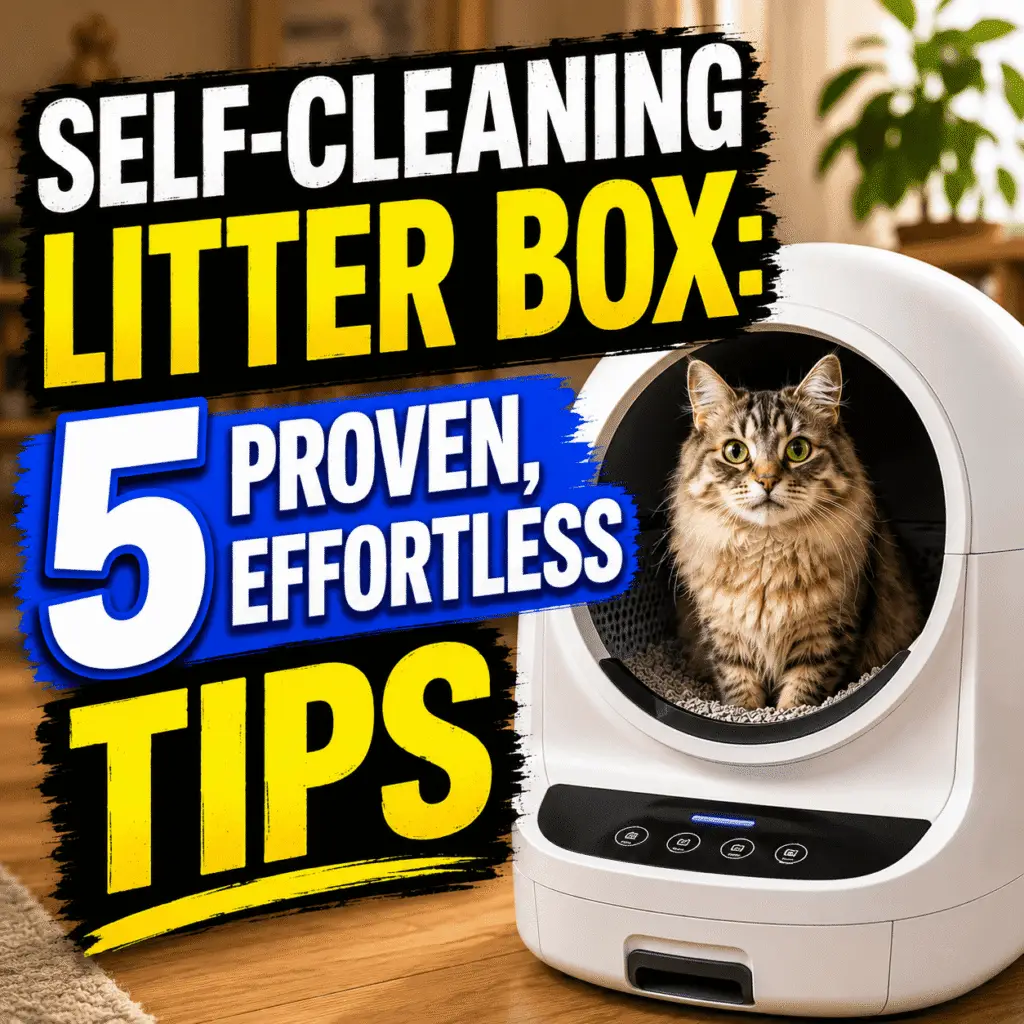
A self-cleaning litter box promises to take the worst chore of cat ownership off your hands. By scooping waste automatically, a good self-cleaning litter box saves time and controls odor. For busy owners or multi-cat homes, that convenience can be genuinely life-changing. Still, these devices are an investment, so choosing the right one matters.
This article explains how these boxes work and how to pick a good one. You will learn the real pros and cons, key features, and safety concerns. Moreover, it covers introducing the box to your cat and keeping it running well. Each point helps you decide if automation is right for your home.
Our guidance focuses on safety, reliability, and cat comfort, not hype. Therefore, you can weigh the benefits honestly before you buy. By the end, you will know whether and how to choose one wisely. The basics come first, because they explain every later recommendation.
1. How a Self-Cleaning Litter Box Works
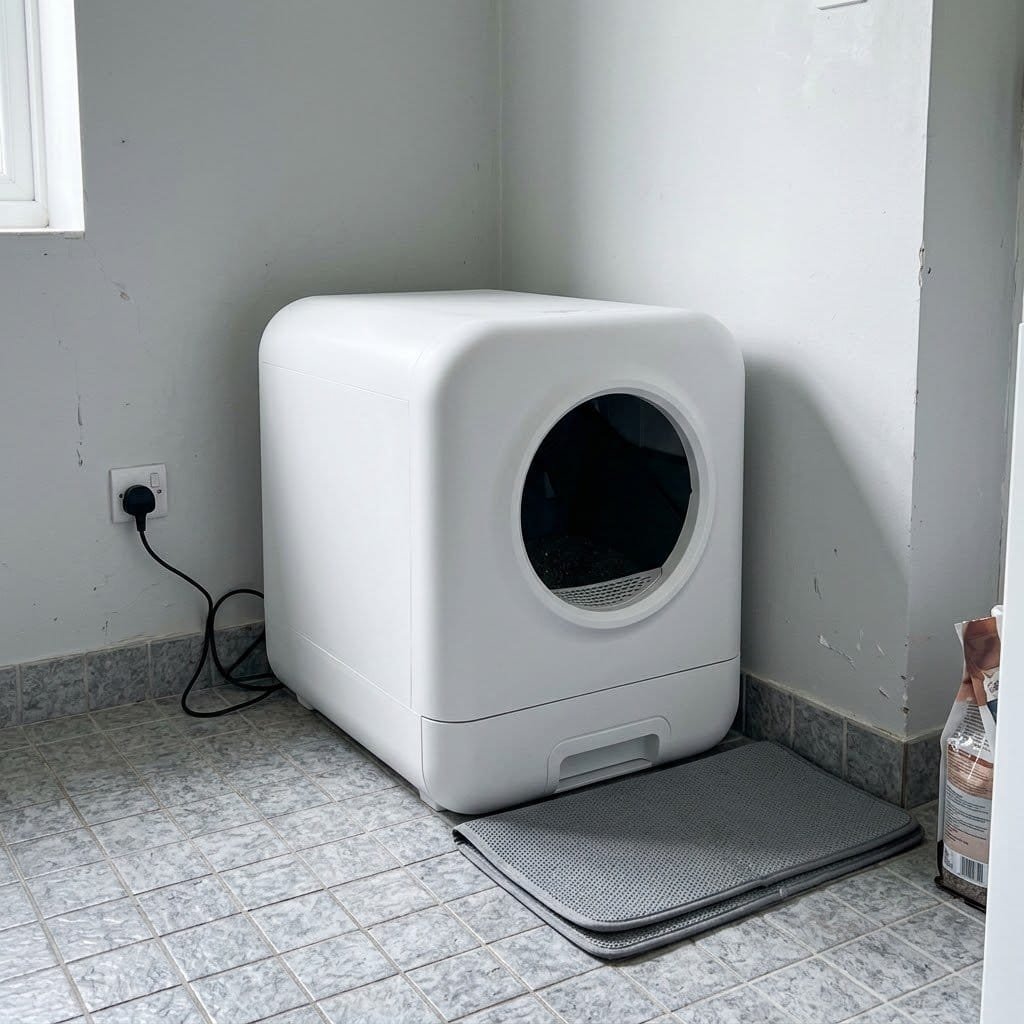
Understanding the mechanism helps you judge any self-cleaning litter box. Most models detect when a cat leaves, then automatically separate and store waste. As a result, clumps are removed within minutes, leaving clean litter behind. Different designs use rakes, rotating drums, or sifting systems to do this. Moreover, sealed waste compartments lock away odor between cleanings. This section explains the main types and how they differ. Knowing the basics makes comparing models far easier.
1.1 Common Mechanisms and Types
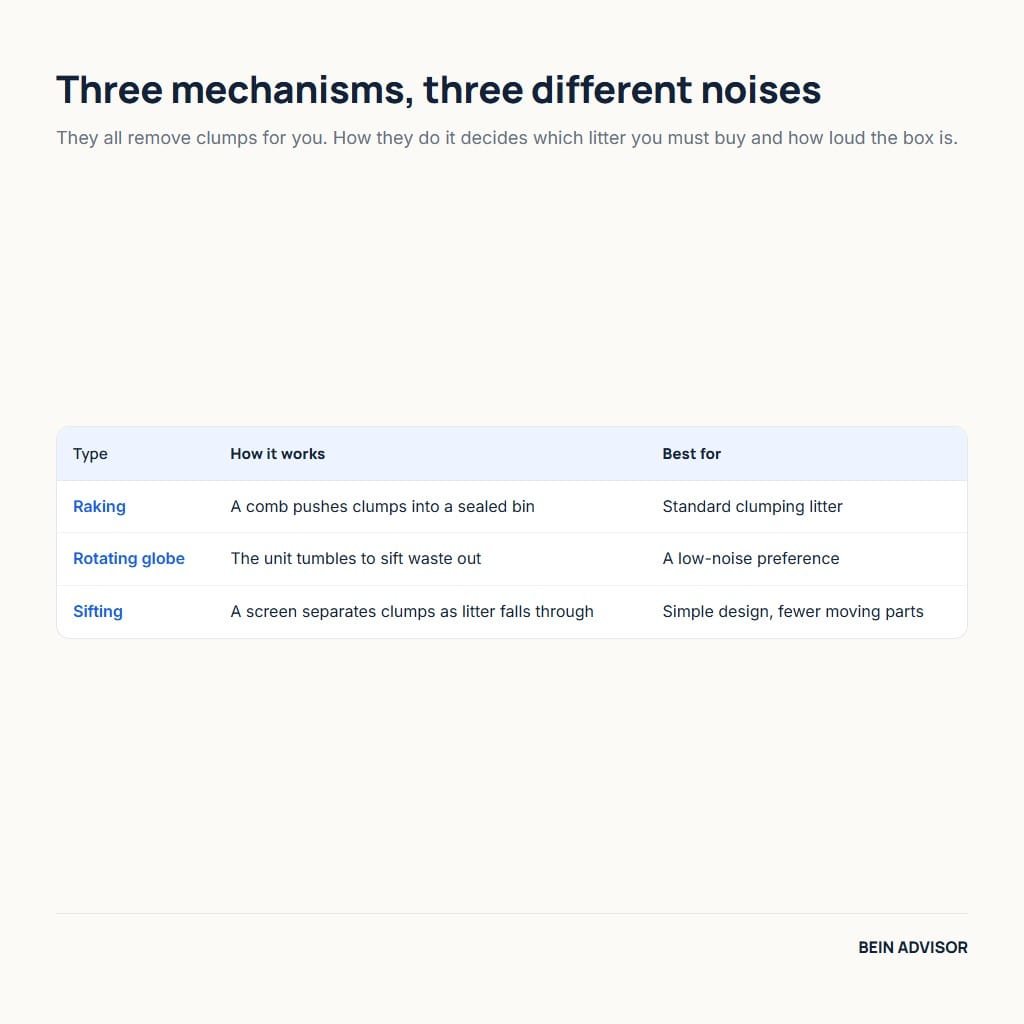
Self-cleaning boxes generally fall into a few main designs. Raking models drag a comb through the litter to push clumps into a bin. As a result, they work with standard clumping litter many cats already accept. Rotating or globe designs tumble the litter to sift out waste. Sifting models drop clean litter through a screen while trapping clumps. Each type has a different footprint, noise level, and litter requirement. The table below compares these common mechanisms.
| Type | How It Works | Best For |
|---|---|---|
| Raking | Comb pushes clumps to a bin | Standard clumping litter |
| Rotating globe | Tumbles to sift waste | Low-noise preference |
| Sifting | Screen separates clumps | Simple, fewer parts |
Most automatic boxes share a few helpful features. Sensors detect the cat and delay cleaning until it leaves safely. As a result, the box never activates while a cat is inside. A sealed waste drawer locks away odor until you empty it. Many models also offer app tracking of your cat’s bathroom habits. However, these extras vary widely between brands and price points. Understanding the shared features helps set realistic expectations.
1.2 What a Self-Cleaning Litter Box Replaces
An automatic box changes your daily routine, but not all of it. It replaces the daily scooping that most owners dislike most. As a result, the litter area stays cleaner with far less effort from you. However, it does not remove the need for occasional full cleanings. You still empty the waste drawer and wash the unit periodically. For the fundamentals of any setup, see our cat litter box article. Automation reduces work, but it does not eliminate it entirely.
It helps to set realistic expectations before buying. A self-cleaning box excels at convenience and odor control. As a result, it suits busy schedules, travel, and multi-cat homes well. Still, it is a machine that needs power, upkeep, and the right litter. Some cats also need time to accept the new device. Therefore, view it as a helpful tool, not a hands-off miracle. Clear expectations prevent disappointment after the purchase.

2. Pros and Cons of a Self-Cleaning Litter Box
Every self-cleaning litter box brings clear benefits and real trade-offs. The advantages center on convenience, odor control, and consistency. As a result, many owners find the time savings well worth it. However, cost, noise, and maintenance are genuine downsides to weigh. Some cats also dislike the movement or noise at first. This section lays out both sides honestly. The table below summarizes the key pros and cons.
2.1 The Benefits
Convenience is the headline benefit of any automatic box. It removes the daily scooping that owners most want to avoid. As a result, the litter stays fresh even on your busiest days. Consistent cleaning also means stronger, more reliable odor control. A clean box at all times encourages cats to keep using it. Additionally, app-enabled models track bathroom habits that can flag health issues. For many households, these benefits genuinely improve daily life.
| Pros | Cons |
|---|---|
| No daily scooping | Higher upfront cost |
| Strong odor control | Motor noise |
| Always-clean box | Needs power and upkeep |
| Health tracking (some) | Some cats need adjusting |
A consistently clean box also supports good litter habits. Cats are fastidious and may avoid a dirty manual box. As a result, automatic cleaning can reduce accidents in some homes. The benefit is greatest for owners who struggle to scoop daily. Multi-cat homes especially gain from constant cleaning between visits. For shared-box households, our multi-cat household guide adds useful context. Reliable cleanliness is the device’s strongest selling point.
2.2 The Drawbacks
Cost is the most obvious drawback to consider. Automatic boxes cost far more than a simple tray upfront. As a result, they are a real investment, not an impulse buy. Many models also need specific litter, adding to ongoing costs. Noise is another factor, since motors and raking can startle some cats. Therefore, a nervous cat may avoid the box entirely at first. Weighing these costs honestly prevents an expensive mistake.
Maintenance and mechanical issues are practical concerns too. These boxes still need emptying, washing, and occasional repairs. As a result, a broken unit can leave you without a working box. Power outages also stop the cleaning cycle until restored. Some designs are tricky to clean fully, trapping odor over time. Therefore, reliability and ease of cleaning matter a great deal. Knowing the drawbacks helps you choose a model that fits.
3. Choosing the Right Self-Cleaning Litter Box
The right features make a self-cleaning litter box a joy rather than a headache. Size, safety sensors, noise, and litter type all matter. As a result, matching the model to your cat and home is essential. A box too small for a large cat will be rejected outright. Moreover, strong safety sensors are non-negotiable for your cat’s protection. This section covers the key buying criteria. Choosing carefully ensures the device actually gets used.
3.1 Key Features to Compare
Safety sensors are the most important feature to verify. The box must detect a cat and pause cleaning instantly. As a result, your cat is never at risk during a cycle. Size comes next, since the entry and interior must fit your cat comfortably. Large or multiple cats need a roomy, high-capacity model. Litter compatibility also matters, since some boxes require specific types. Comparing these features prevents a frustrating purchase.
Noise, capacity, and cleaning ease round out the decision. A quiet motor is gentler on nervous cats and your household. As a result, low-noise models often get accepted faster. A large waste drawer means fewer trips to empty it. Look for removable, washable parts that make deep cleaning simple. App features and adjustable timers are useful but optional extras. Prioritize safety and size first, then convenience features.
3.2 Matching the Box to Your Cat
Your cat’s size and personality should guide the choice. A large cat needs a spacious model with a wide entry. As a result, measuring your cat prevents buying a box it cannot use. Timid cats do best with the quietest, least intimidating designs. Kittens may not be safe in some models until they grow. Therefore, check the manufacturer’s age and weight guidance carefully. The best box is the one your specific cat will accept.
Household factors also shape the right pick. Multi-cat homes need high capacity and frequent cleaning cycles. As a result, a small single-cat unit may quickly become overwhelmed. Consider where the box will sit, since some need space around them. Power access and noise tolerance in that spot matter too. Meanwhile, factor in ongoing litter and filter costs. A box that fits your home and cat is money well spent.
4. Is a Self-Cleaning Litter Box Safe?
Safety is the top question for any self-cleaning litter box. Modern models include sensors to protect cats during cleaning cycles. As a result, a quality box is safe when chosen and used correctly. Still, introducing it slowly is key to your cat’s comfort. Some cats need patience to trust the moving device. This section covers safety features and a calm introduction. A careful approach keeps your cat both safe and willing.
4.1 Safety Features and Cat Comfort
Reliable safety sensors are essential in any automatic box. Weight or motion sensors detect a cat and pause the cycle. As a result, the box cannot activate while your cat is inside. A delay timer adds a safety margin after the cat exits. Look for models with proven, well-reviewed sensor reliability. Avoid older or cheap units without trustworthy detection. Strong safety features are worth paying extra for.
Comfort matters as much as mechanical safety. A box that feels safe encourages confident, regular use. As a result, low noise and a stable base reduce a cat’s anxiety. Kittens and very small cats may not trigger some sensors reliably. Therefore, follow weight minimums and supervise early use. For general care standards, the ASPCA’s cat care guidance is a helpful reference. A comfortable cat uses the box without fear.
4.2 Introducing the Box Slowly
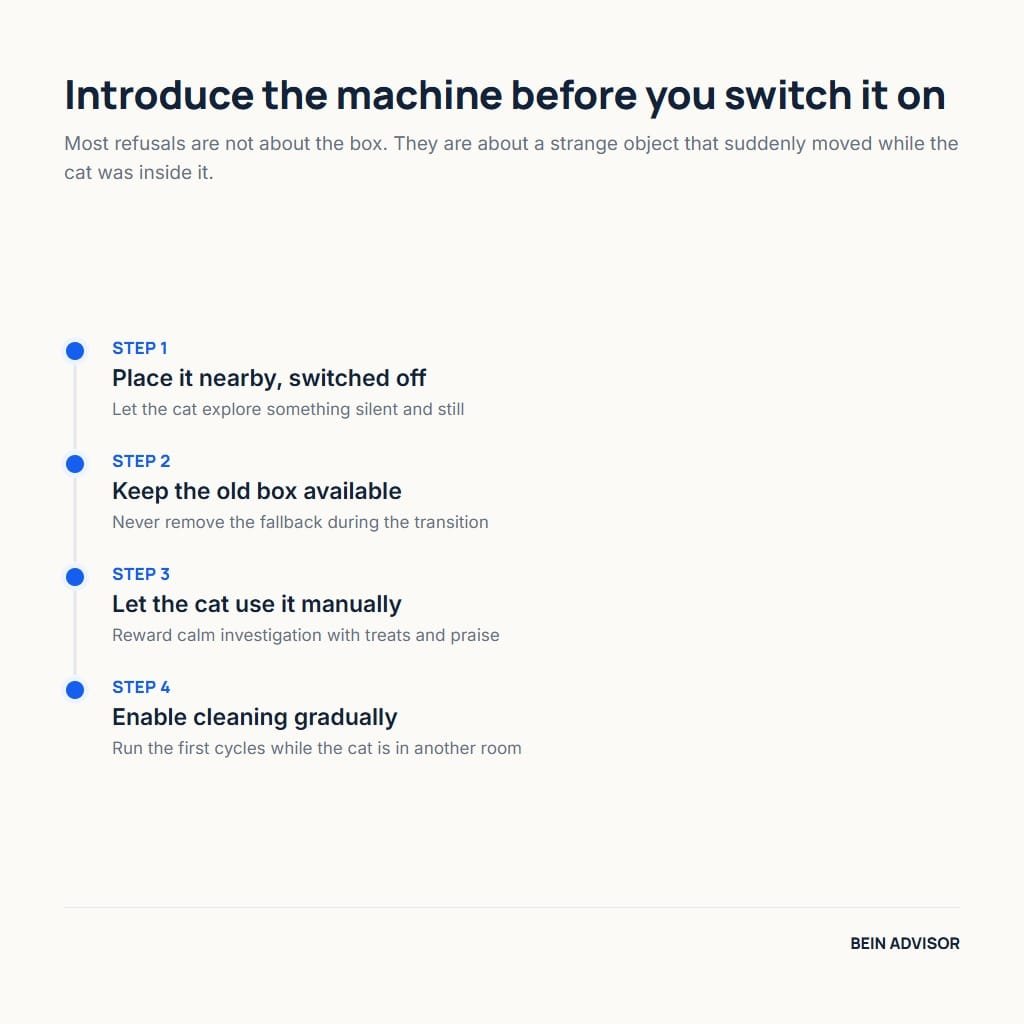
A slow introduction helps your cat accept the new box. Start by placing it nearby, switched off, so the cat explores it calmly. As a result, the device becomes familiar before it ever moves. Keep the old box available during the transition period. Let your cat use the new box manually before enabling automation. Reward calm investigation with treats and praise. Patience turns a strange machine into a trusted spot.
Once your cat uses it freely, enable cleaning gradually. Run the first cycles when your cat is in another room. As a result, the cat hears the noise without feeling threatened. Watch for avoidance, and slow down if your cat seems wary. Never remove the old box until the new one is fully accepted. If your cat refuses entirely, automation may not suit it. A gentle transition protects both habits and trust.
5. Maintenance and Troubleshooting
A self-cleaning litter box still needs regular care to work well. Emptying, washing, and refilling keep it hygienic and reliable. As a result, a little upkeep prevents odor and breakdowns. Most problems trace back to skipped maintenance or the wrong litter. Moreover, knowing common fixes saves time and frustration. This section covers a simple care routine and troubleshooting. Steady maintenance keeps automation truly effortless.
5.1 A Simple Care Routine
Even automatic boxes need a basic upkeep schedule. Empty the waste drawer every few days to prevent odor buildup. As a result, the sealed compartment stays effective and fresh. Top up litter to the recommended level so cleaning works correctly. Every few weeks, wash the unit fully according to the manual. Replace filters and worn parts on the maker’s schedule. A short routine keeps the box running smoothly for years.
Using the right litter is central to good performance. Most raking models need clumping litter that holds together firmly. As a result, the wrong litter can jam the mechanism or clean poorly. Follow the manufacturer’s litter recommendations closely. Keep the litter at the correct depth, not too shallow or deep. Meanwhile, avoid mixing incompatible litter types. Correct litter is the simplest way to avoid problems.
5.2 Common Problems and Fixes
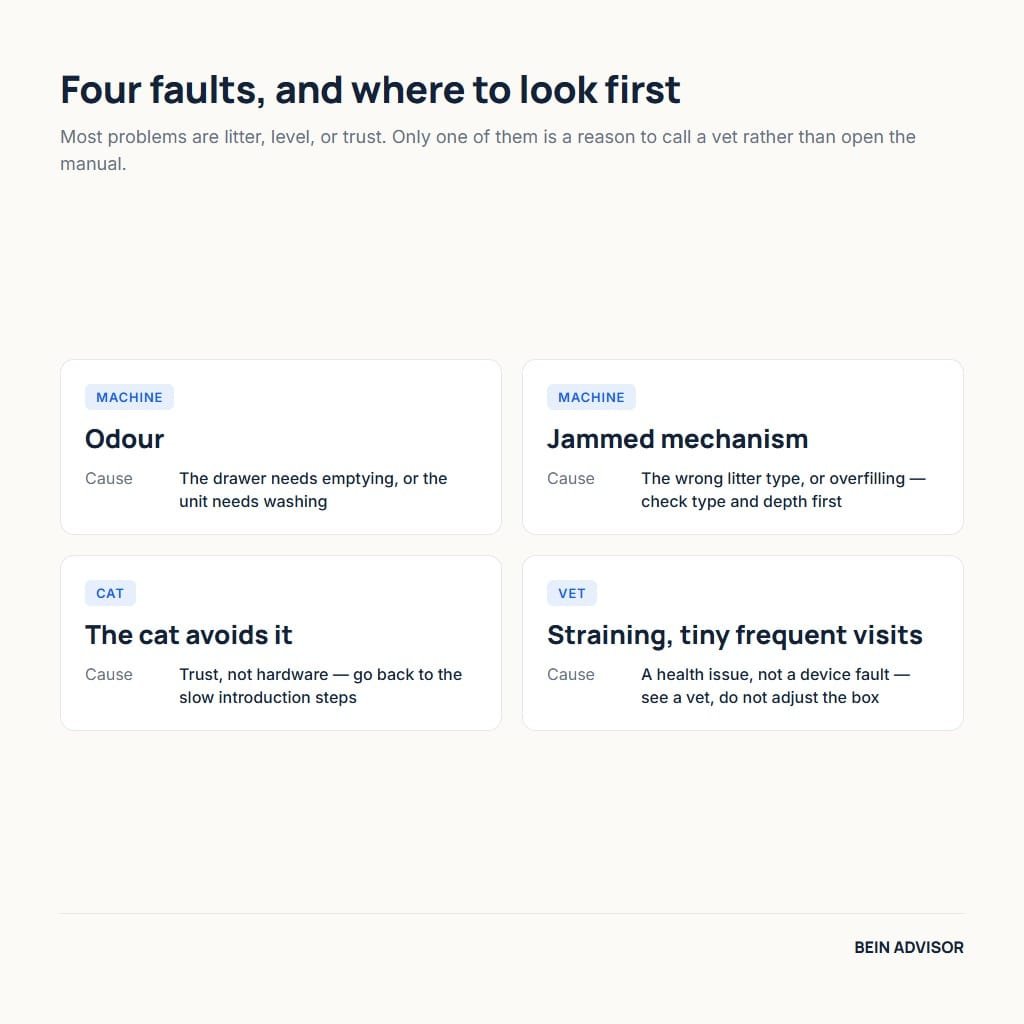
Most issues with these boxes have simple solutions. Odor usually means the drawer needs emptying or the box needs washing. As a result, a regular cleaning schedule prevents most smell complaints. A jammed mechanism often comes from the wrong litter or overfilling. Therefore, check litter type and level first when cleaning fails. Sensor errors may need a reset or a clean sensor surface. Working through the basics resolves most common faults.
Some problems point to your cat rather than the machine. If your cat avoids the box, revisit the slow introduction steps. As a result, you rebuild trust before expecting full acceptance. Straining or frequent tiny visits signal a health issue, not a device fault. In that case, see a vet rather than adjusting the box. Keep the old box handy as a backup during any trouble. Matching the fix to the cause solves problems for good.
Self-Cleaning Litter Box FAQ
Are self-cleaning litter boxes safe for cats?
Yes, quality models with reliable safety sensors are safe when used correctly. The box should detect your cat and pause cleaning instantly. Additionally, follow weight minimums and supervise kittens and very small cats. A slow introduction keeps your cat both safe and comfortable.
Do you still have to clean a self-cleaning litter box?
Yes, but far less often than a manual box. You still empty the waste drawer every few days and wash the unit periodically. Additionally, you top up litter and replace filters on schedule. It removes daily scooping, not all maintenance.
Will my cat use a self-cleaning litter box?
Most cats adapt with a slow, patient introduction. Keep the old box available and let your cat explore the new one first. Meanwhile, run cleaning cycles away from a nervous cat at first. Some shy cats may never accept the noise, so watch their response.
Conclusion: Choosing a Self-Cleaning Litter Box
A self-cleaning litter box can transform litter care when chosen well. Understand how it works, then weigh the convenience against cost and noise. Meanwhile, prioritize safety sensors, the right size, and easy cleaning. Introduce it slowly and keep up simple maintenance. Together, these steps deliver the effortless, odor-free litter care these devices promise.
Start by measuring your cat and listing your must-have features. Then choose a well-reviewed model with strong safety sensors. When your cat hesitates or shows health concerns, your veterinarian can help. With the right pick and patient setup, scooping becomes a thing of the past. A smart choice rewards you with a cleaner home and more free time.
Free printable resource
The Cat Owner’s Toolkit
Great cat care comes down to a few steady habits. Keep them all in one place — 6 printable checklists & trackers you can stick on the fridge.
- New-cat checklist
- Vaccination & vet-visit tracker
- Feeding quick chart
- Daily & weekly routine
- Litter-box troubleshooter
- Emergency cheat sheet
Want the full guide? The Complete Cat Care Handbook has all 18 chapters with their own checklists — get it on Amazon as an eBook or Paperback.