

A peaceful multi-cat household is absolutely possible with the right setup and patience. Many conflicts in a multi-cat household come from poor introductions or scarce resources, not bad personalities. Cats are territorial by nature, so they need space, choices, and a sense of control. With a thoughtful plan, even strangers can learn to share a home calmly.
This article shows you how to build harmony between two or more cats. You will learn how to introduce cats slowly, share resources, and lay out territory. Moreover, it covers reducing tension and spotting stress before it turns into fighting. Each step works with feline instincts rather than against them.
Every recommendation reflects mainstream feline-behavior guidance, not guesswork. Therefore, you can trust these steps for kittens, adults, and nervous rescues alike. By the end, you will have a clear plan to keep the peace long term. The reasons come first, because they explain every choice that follows.
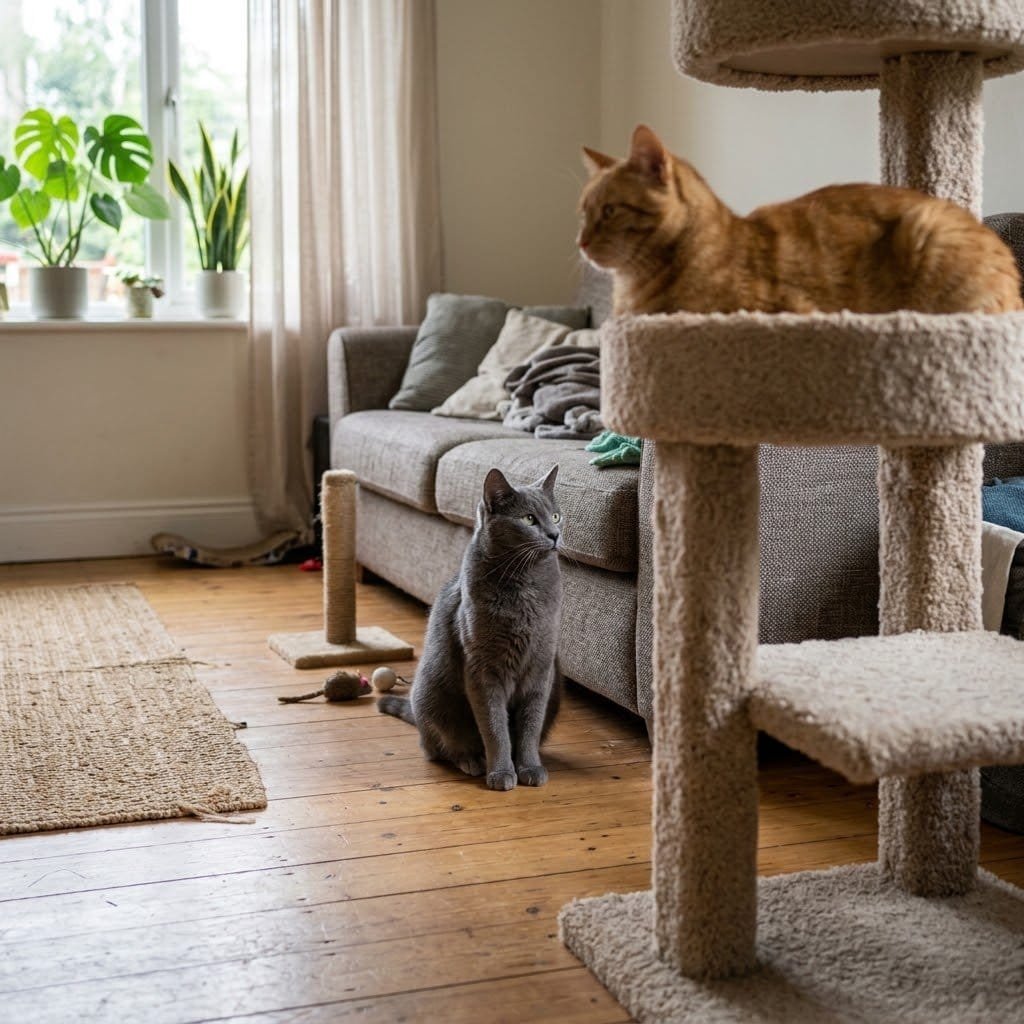
1. Why a Multi-Cat Household Needs Planning
Cats are not naturally pack animals, so living together takes adjustment. In the wild, cats hunt alone and guard their own territory. As a result, a multi-cat household asks them to share space that instinct says is theirs. Good planning gives each cat enough resources and room to feel secure. Without it, competition breeds stress, bullying, and litter box problems. Therefore, the effort you put in early prevents years of tension. This section explains why structure matters so much with several cats.
1.1 How Cats View Shared Territory
Cats divide a home into territories and time-share favorite spots. Each cat wants safe places to eat, sleep, and watch the room. As a result, crowding those resources forces unwanted, stressful encounters. A confident cat may guard a doorway, blocking a shyer one from food or litter. Meanwhile, the blocked cat grows anxious and may act out elsewhere. Understanding this territorial mindset is the key to preventing conflict. When every cat has its own secure zones, peace becomes far easier.
Scent is central to how cats share a space. Cats recognize family by a shared group smell built from rubbing and grooming. Therefore, a new cat that smells unfamiliar can feel like an intruder. Conflict often rises when that scent balance is disturbed, such as after a vet visit. Swapping bedding and scents helps cats accept each other over time. Additionally, calm routines keep the group scent stable and reassuring. Respecting scent dynamics smooths almost every multi-cat relationship.
1.2 Common Multi-Cat Household Mistakes
The most common mistake is rushing the first introduction. Putting two unfamiliar cats together immediately almost guarantees fear and fighting. As a result, first impressions sour and can be hard to repair. Another frequent error is too few resources for the number of cats. When cats must compete for one bowl or box, stress is inevitable. Therefore, scarcity, not personality, drives much of the trouble. Avoiding these mistakes prevents most long-term conflict.
Ignoring early warning signs is another costly error. Subtle tension, like staring or blocking, often precedes open fighting. Owners who miss these signs let small issues grow into entrenched feuds. Additionally, punishing a cat for hissing only adds fear to the mix. Instead, read body language and adjust the environment early. For a calmer home overall, our article on indoor cat enrichment helps. Catching problems early keeps a multi-cat household happy.

2. Introducing Cats the Right Way
A slow, patient introduction is the foundation of a peaceful multi-cat household. Cats need time to accept a newcomer’s scent before meeting face to face. As a result, rushing the process is the top cause of lasting rivalry. A staged introduction over days or weeks builds positive associations. Meanwhile, food and play turn a stranger into a familiar, safe presence. This section walks through the introduction step by step. Done well, it sets up a lifelong friendship.
2.1 Separate, Then Swap Scents
Start by housing the new cat in its own room with everything it needs. This safe base gives the newcomer security and protects the resident cat’s space. As a result, both cats relax before any direct contact happens. Keep them fully separated for the first several days at minimum. Meanwhile, let them hear and smell each other under the door. This gentle exposure begins the bond without any pressure. Patience at this stage pays off enormously later.
Scent swapping is the heart of a calm introduction. Rub each cat with a cloth and place it near the other’s food. Therefore, each cat links the new smell with the good feeling of eating. You can also swap bedding or rotate the cats between rooms. This lets the newcomer explore the home while the resident investigates its room. Gradually, the unfamiliar scent becomes ordinary and unthreatening. Only after this step should you try a visual meeting.
2.2 Gradual Meetings and Positive Associations
Begin face-to-face contact with a barrier between the cats. A cracked door or a baby gate lets them see each other safely. As a result, they meet without the risk of a frightening chase. Feed both cats near the barrier so the sight of each other means good things. Keep these sessions short and calm, ending before any tension rises. Over days, increase the time as both cats stay relaxed. This measured pace builds trust steadily.
Move to supervised, barrier-free time once both cats seem comfortable. Use play and treats to keep the mood positive during these meetings. However, never force interaction, and always give each cat an escape route. If hissing or stalking appears, calmly separate and slow down. Some pairs bond in days, while others need weeks, so follow their pace. Setbacks are normal and not a sign of failure. Consistent, positive meetings turn caution into acceptance.
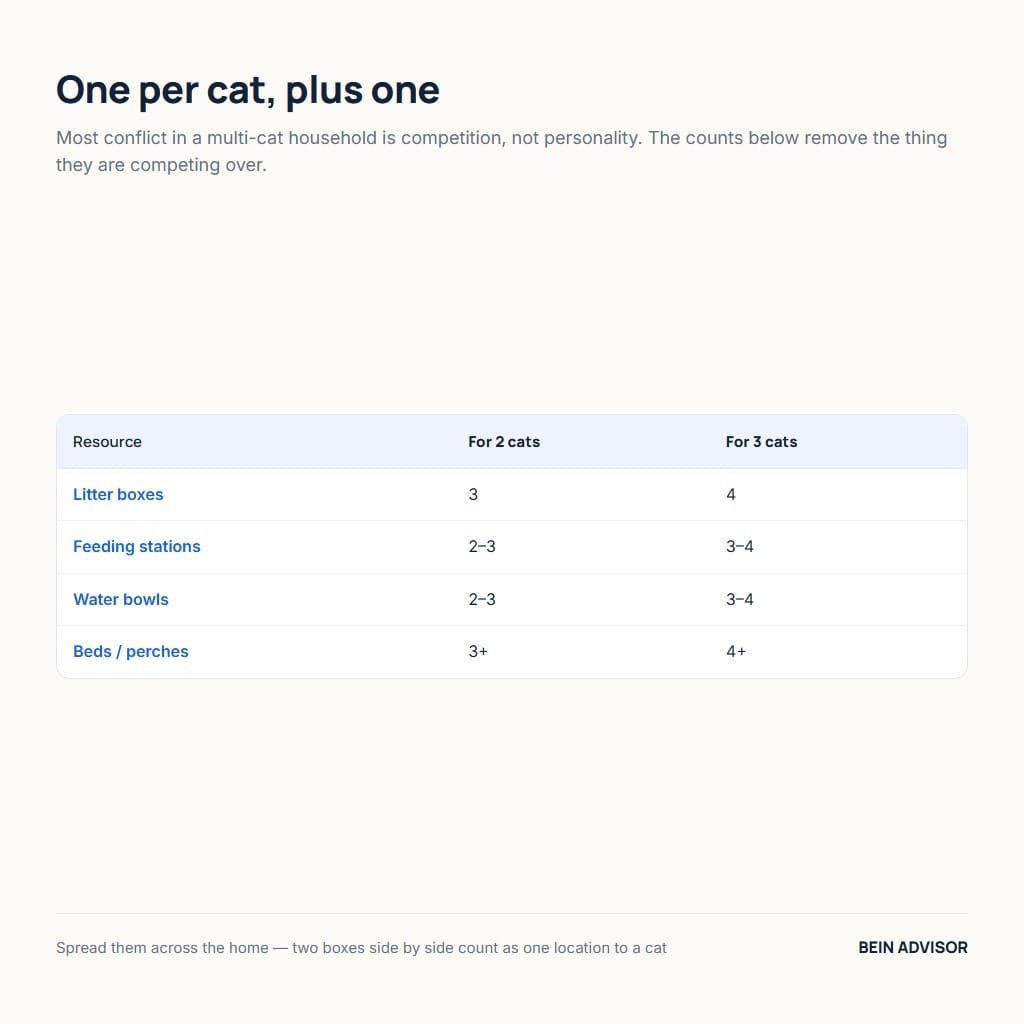
3. Resources and the One-Per-Cat-Plus-One Rule
Plenty of well-placed resources prevent most multi-cat household conflict. Cats compete when food, water, and litter are scarce or clustered together. As a result, the simple fix is more resources spread around the home. The golden rule is one of each resource per cat, plus one extra. Moreover, separating these stations stops one cat from guarding them all. This section covers how to provide and place resources. Abundance, not rationing, is what keeps cats calm.
3.1 Litter, Food, and Water Stations
Litter boxes are the most important resource to multiply. Provide one box per cat plus one spare, placed in different rooms. As a result, no cat can block another from a clean box. For deeper setup advice, see our article on the cat litter box. Spreading boxes also reduces stress-related accidents around the home. Avoid lining boxes up in one spot, since cats see that as a single station. Enough separated boxes solves most multi-cat litter trouble.
Food and water deserve the same generous, separated approach. Offer multiple feeding spots so cats never have to eat shoulder to shoulder. Therefore, a timid cat can eat in peace without being chased off. Place water stations away from food, since cats prefer separate drinking spots. Additionally, raised or quiet feeding areas help nervous cats relax. Microchip feeders can protect each cat’s food in tricky cases. Plentiful, spread-out stations remove the daily friction of mealtime.
| Resource | For 2 Cats | For 3 Cats |
|---|---|---|
| Litter boxes | 3 | 4 |
| Feeding stations | 2–3 | 3–4 |
| Water bowls | 2–3 | 3–4 |
| Beds / perches | 3+ | 4+ |
3.2 Beds, Hideouts, and Scratching Spots
Resting spots are resources too, and cats guard them fiercely. Provide several beds, hideouts, and perches so every cat has options. As a result, cats can choose to rest near or apart as they prefer. Cozy hideaways give shy cats a safe retreat from bolder ones. Meanwhile, multiple scratching posts let each cat mark territory acceptably. Spread these around the home rather than grouping them together. Abundant resting and scratching spots ease daily tension.
Quality and placement of these spots matter as much as quantity. Put hideouts in quiet corners and perches near windows for variety. Therefore, each cat can pick a spot that suits its mood and rank. Rotate or add options if you notice one cat always losing out. Scratching posts near sleeping areas satisfy a natural waking stretch. Sturdy, well-placed furniture prevents squabbles over prime real estate. A home rich in safe spaces is a calm home.
4. Territory, Space, and Reducing Conflict
Smart use of space keeps a multi-cat household calm and flexible. Cats avoid conflict when they can share territory across time and height. As a result, vertical space and clear pathways reduce daily clashes. Adding levels effectively makes your home bigger without moving walls. Moreover, calming aids can ease tension during stressful periods. This section covers space design and conflict reduction. The right layout lets cats coexist comfortably.
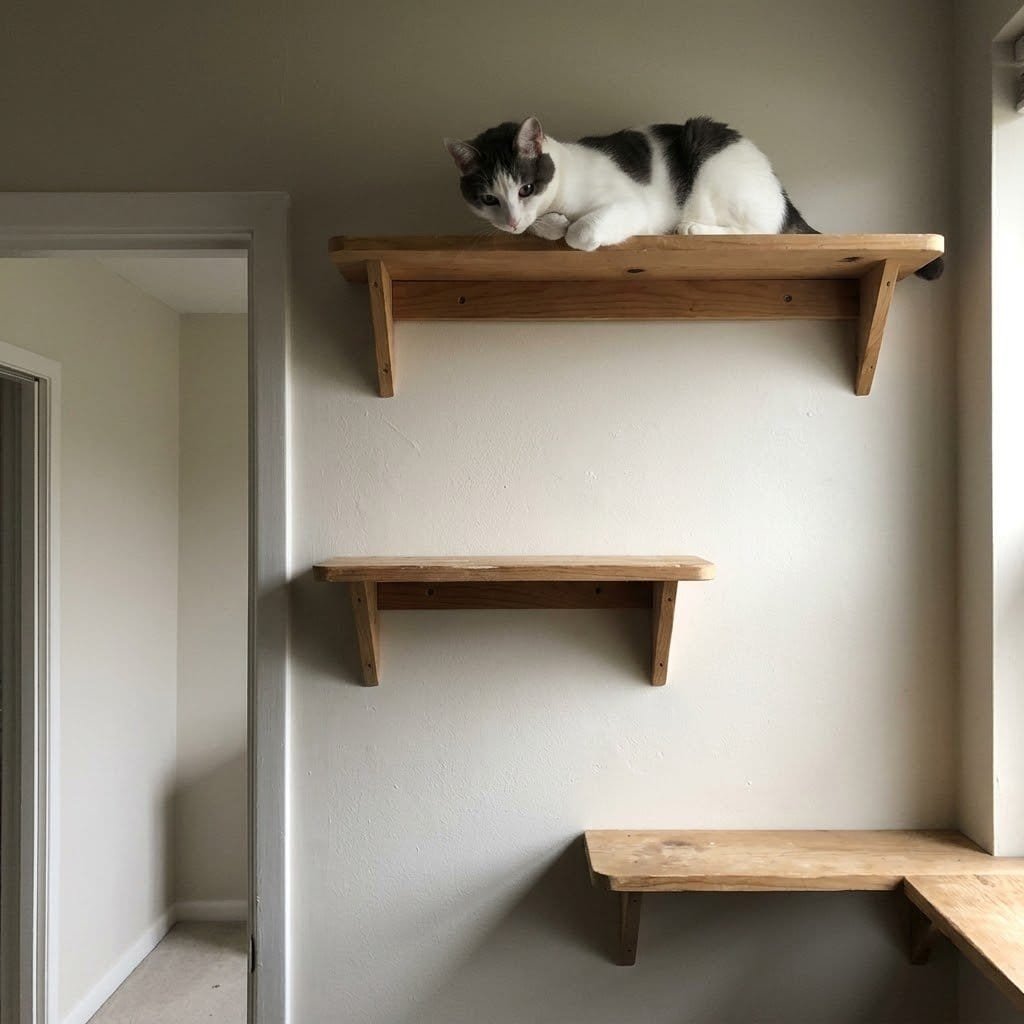
4.1 Vertical Space and Escape Routes
Adding height multiplies usable territory in any home. Cat trees, shelves, and perches let cats claim personal levels. As a result, a tense cat can climb away instead of fighting. Vertical space also lets cats pass each other without direct confrontation. For more ideas, our indoor cat enrichment article goes deeper. Place perches near windows and walkways for maximum appeal. Height turns a crowded floor into a spacious, layered world.
Escape routes are just as important as high spaces. Never let one cat trap another in a corner or dead-end room. Therefore, arrange furniture so every cat always has an exit. Wide doorways and clear paths prevent ambushes and standoffs. Place key resources where no cat must pass a rival to reach them. Multiple routes to food and litter reduce blocking behavior. Good flow through the home keeps interactions relaxed.
4.2 Calming Aids and Routines
A steady routine helps cats feel safe and reduces friction. Feed, play, and clean at consistent times so the day feels predictable. As a result, cats spend less energy worrying about resources. Synchronized play sessions also burn energy that might fuel squabbles. Meanwhile, calm, fair attention prevents jealousy between cats. Predictability is a powerful, free tool for harmony. A reliable rhythm settles the whole group.
Calming aids can help during introductions or tense phases. Synthetic feline pheromone diffusers signal safety and ease anxiety. Therefore, many owners use them in rooms where cats gather. Catnip and play also release tension in a positive way. However, products work best alongside good space and resources, not instead of them. For serious or sudden aggression, consult your veterinarian. Combined with routine, these aids smooth rough patches.
5. Spotting Stress and Getting Help
Reading feline body language is a vital multi-cat household skill. Cats rarely fight without warning, so early signs let you step in. As a result, spotting tension prevents most serious fights. Stress can also show up as hiding, over-grooming, or litter problems. Knowing the difference between play and real conflict guides your response. This section covers warning signs and when to seek help. Early action keeps small issues from becoming feuds.
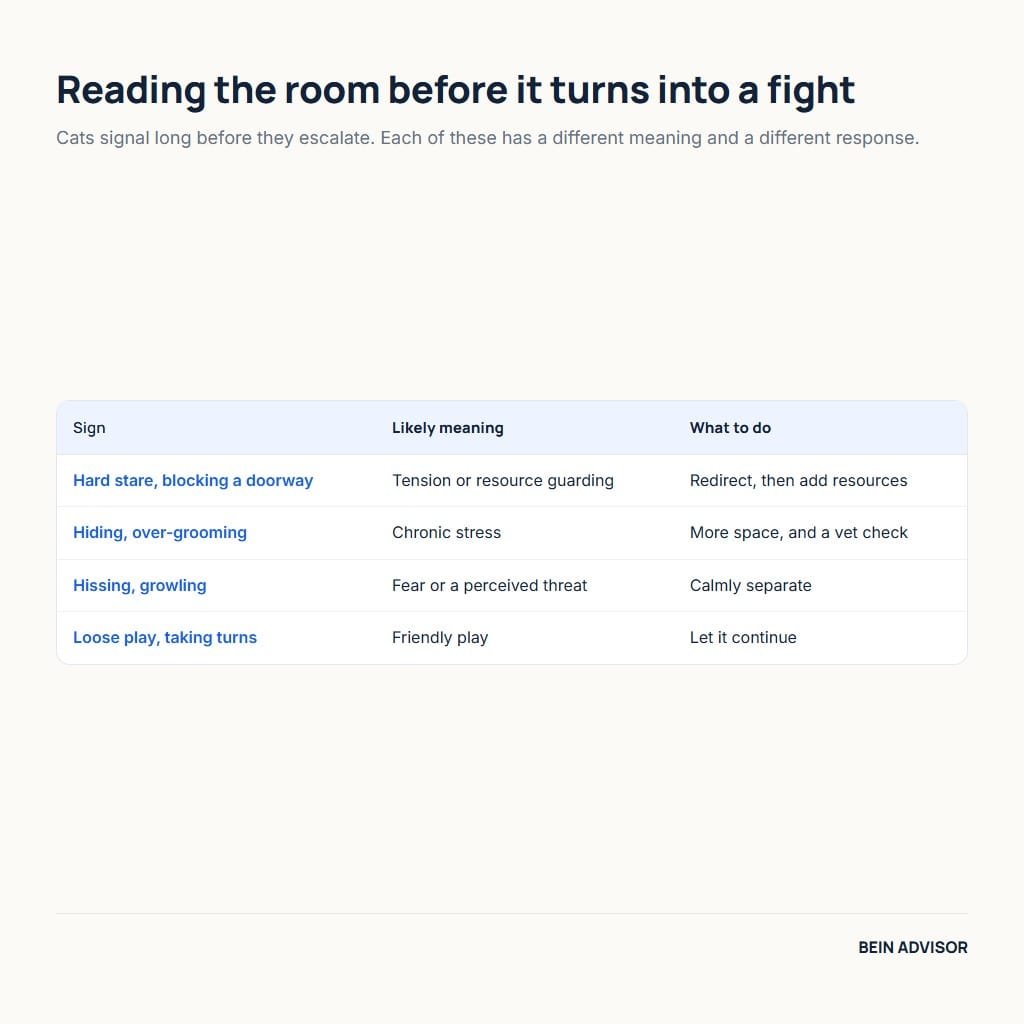
5.1 Reading Body Language
Subtle signs of tension appear long before any fight. Watch for hard staring, flattened ears, a lashing tail, or blocking. As a result, you can redirect or separate cats before things escalate. Play and real aggression can look similar, so observe closely. Healthy play is balanced, quiet, and pauses often. In contrast, real conflict brings hissing, growling, and pinned ears. The table below helps you tell stress signs from relaxed behavior.
| Sign | Likely Meaning | What to Do |
|---|---|---|
| Hard stare, blocking | Tension or guarding | Redirect, add resources |
| Hiding, over-grooming | Chronic stress | More space, vet check |
| Hissing, growling | Fear or threat | Calmly separate |
| Loose play, taking turns | Friendly play | Let it continue |
Stress can also surface in quieter, physical ways. A bullied cat may stop eating, hide for hours, or avoid the litter box. Therefore, sudden behavior changes deserve attention and often a vet visit. Over-grooming or weight loss can signal ongoing tension. Keep notes so you can describe patterns to your veterinarian. Catching these clues early protects both health and harmony. Quiet stress matters as much as open fighting.
5.2 When to Call a Professional
Some situations need expert help beyond home adjustments. Sudden aggression between cats that once got along can signal illness. As a result, a vet visit should rule out pain or medical causes first. For general health context, the ASPCA’s cat care guidance is a useful reference. Persistent fighting despite good setup may need a behavior specialist. Never physically punish cats, since it worsens fear and aggression. Knowing when to ask for help protects everyone.
A careful restart can rescue a relationship gone wrong. If cats begin fighting badly, separate them and reintroduce slowly. Therefore, you essentially repeat the scent and barrier steps from the start. Patience and consistency often repair even tense pairings. Meanwhile, a veterinary behaviorist can create a tailored plan. Most multi-cat conflicts improve with the right approach and time. Help is available when home efforts are not enough.
Multi-Cat Household FAQ
How long does it take cats to get along?
It varies widely, from a few days to several weeks or months. Kittens often adjust faster, while adults may need more time. Therefore, follow the cats’ pace and never rush the steps. A slow, positive introduction gives the best long-term results.
How many litter boxes for a multi-cat household?
Use one box per cat plus one extra, placed in separate areas. So two cats need three boxes, and three cats need four. Additionally, keep each box clean and away from busy spots. This prevents guarding and most litter box conflict.
Why is my cat suddenly aggressive to another cat?
Sudden aggression often signals pain, illness, or a scent change. A vet visit should rule out medical causes first. Meanwhile, redirected stress, like seeing an outdoor cat, can also trigger it. Reintroduce slowly and add resources to ease the tension.
Conclusion: A Happy Multi-Cat Household
A peaceful multi-cat household comes down to space, resources, and patience. Introduce cats slowly, then give each one plenty of separated stations. Meanwhile, add vertical space, keep a steady routine, and read body language daily. Step in early at the first signs of tension. Together, these habits turn a crowded home into a calm, shared territory.
Start with one change today, such as adding a litter box or a tall perch. Then build the rest of your multi-cat household plan step by step. When conflict persists, your veterinarian can rule out medical causes and guide you. With time and the right setup, most cats learn to share happily. A little planning rewards you with a calmer, more loving home.
Free printable resource
The Cat Owner’s Toolkit
Great cat care comes down to a few steady habits. Keep them all in one place — 6 printable checklists & trackers you can stick on the fridge.
- New-cat checklist
- Vaccination & vet-visit tracker
- Feeding quick chart
- Daily & weekly routine
- Litter-box troubleshooter
- Emergency cheat sheet
Want the full guide? The Complete Cat Care Handbook has all 18 chapters with their own checklists — get it on Amazon as an eBook or Paperback.