
Cat grooming is far more than keeping your pet looking tidy and handsome. Regular cat grooming protects the skin, prevents painful mats, and catches health problems early. Cats groom themselves, yet they still need our help with brushing, nails, and teeth. A simple routine started young makes grooming a calm, bonding ritual for life.
This article walks you through every part of a complete grooming routine. You will learn brushing, safe bathing, nail trimming, and ear, eye, and dental care. Moreover, it adapts the routine to coat type, age, and difficult cats. Each step is gentle, practical, and designed to keep stress low.
Every recommendation follows mainstream veterinary and grooming guidance. Therefore, you can trust these steps for kittens, adults, and seniors alike. By the end, you will have a full routine and the confidence to keep it up. The reasons come first, because they explain why grooming matters so much.
1. Why Cat Grooming Matters
Grooming does much more than improve how a cat looks. It removes loose hair, spreads healthy skin oils, and prevents painful tangles. As a result, regular cat grooming keeps the coat clean and the skin comfortable. Brushing also cuts down on hairballs by removing hair before a cat swallows it. Moreover, grooming time is a hands-on health check for lumps, fleas, or sore spots. Therefore, a simple routine supports both beauty and wellbeing. This section explains the real benefits behind every brush stroke.
1.1 The Health Benefits of Cat Grooming
Grooming is preventive care disguised as pampering. Brushing distributes natural oils that keep the coat shiny and the skin healthy. As a result, well-groomed cats have fewer mats, less dander, and softer fur. Removing loose hair also reduces hairballs, which cause vomiting and discomfort. Additionally, hands-on sessions help you spot fleas, ticks, or skin changes early. Catching a lump or wound sooner can make treatment far easier. Simple grooming quietly protects your cat’s long-term health.
Grooming also strengthens the bond between you and your cat. Gentle, positive sessions teach a cat that handling is safe and pleasant. As a result, vet visits and home care become far less stressful over time. Early handling is especially valuable, as our kitten care article explains. A relaxed cat is easier to examine, treat, and live with. Meanwhile, calm grooming reduces anxiety for nervous or rescued cats. The trust you build pays off in every other area of care.
1.2 Making Cat Grooming Stress-Free
A calm approach is the secret to easy grooming. Start with short sessions and stop before your cat gets annoyed. As a result, the cat learns that grooming is brief and rewarding. Choose a quiet time when your cat is relaxed, such as after a meal. Additionally, pair grooming with treats and gentle praise to build positive feelings. Never force a struggling cat, since fear makes future sessions harder. Patience now creates a willing, cooperative cat later.
Reading your cat’s signals keeps every session positive. Watch for a twitching tail, flattened ears, or restlessness as stop signs. Therefore, end the session before the cat feels overwhelmed. Touch sensitive areas like the belly and paws only briefly at first. Understanding feline comfort, as our article on cat enrichment and behavior covers, helps a lot. Build up tolerance gradually over many short sessions. Respecting limits turns grooming into a pleasant routine.
2. Brushing and Coat Care in Cat Grooming
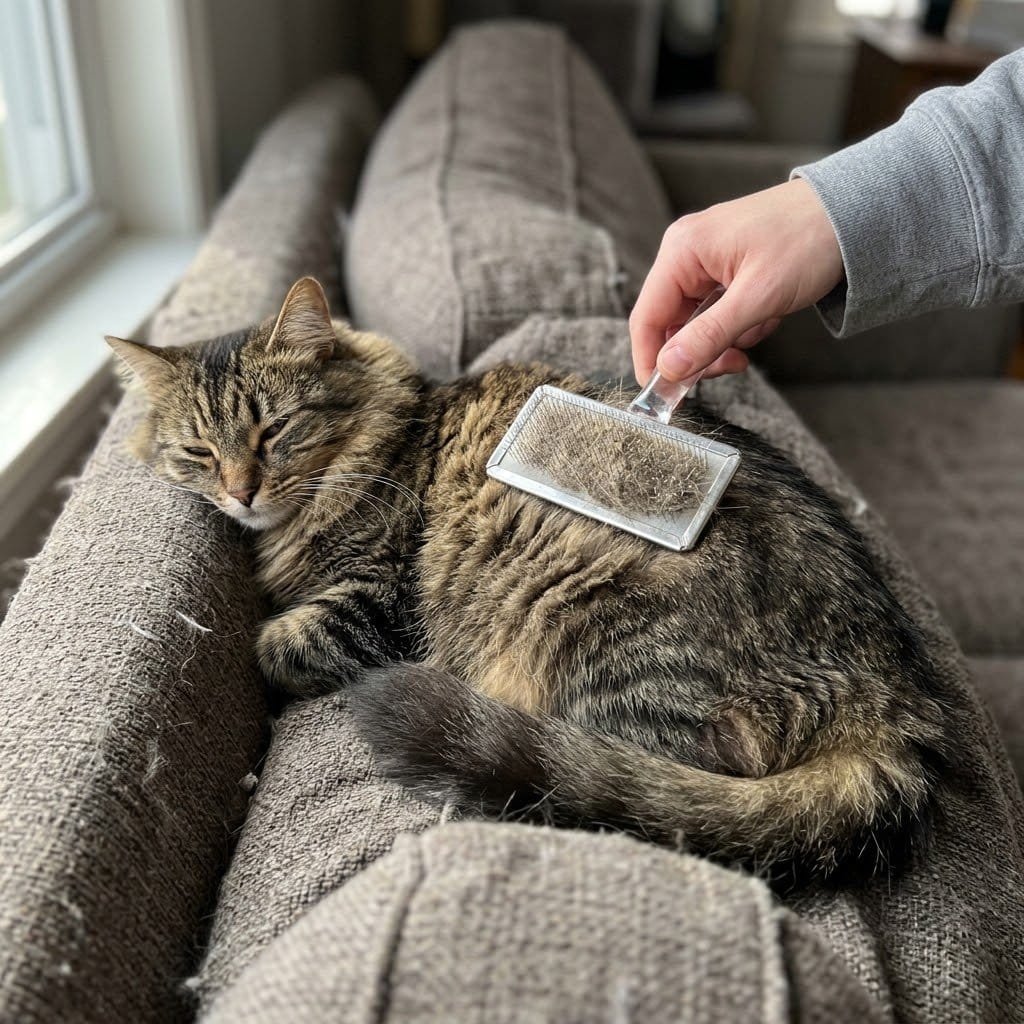
Brushing is the heart of any cat grooming routine. It removes loose hair, prevents mats, and keeps the coat glossy. As a result, regular brushing is the single most valuable grooming habit. The right tools and technique make the job quick and comfortable. Moreover, brushing frequency depends on whether your cat is short or long-haired. This section covers tools, technique, and how to handle tangles. A few minutes of brushing prevents most coat problems.
2.1 Choosing Cat Grooming Tools
The right tool makes brushing easier for you and your cat. A slicker brush removes loose hair, while a metal comb tackles tangles. As a result, most owners benefit from owning two or three basic tools. A deshedding tool helps with heavy seasonal shedding in thick coats. Additionally, a soft brush suits sensitive cats and short coats. The table below matches common tools to their best use. Good tools turn a chore into a quick, smooth routine.
| Tool | Best Use |
|---|---|
| Slicker brush | Removing loose hair, detangling |
| Metal comb | Finding and easing mats |
| Deshedding tool | Heavy seasonal shedding |
| Soft bristle brush | Short coats, sensitive cats |
Technique matters as much as the tool you choose. Always brush in the direction the fur grows to keep it comfortable. As a result, your cat enjoys the session instead of pulling away. Be gentle around the belly, legs, and tail, which are sensitive areas. Work in short strokes and pause if your cat shows stress. For mats, never yank, since that hurts and damages trust. Calm, correct technique keeps brushing pleasant and effective.
2.2 Handling Mats and Shedding
Mats are tight tangles that pull painfully on the skin. They form most often in long coats and around the legs and belly. As a result, regular brushing is the best way to prevent them. For small mats, gently tease them apart with fingers or a comb. However, never cut a mat with scissors, since you can easily cut the skin. Severe mats should be shaved by a groomer or vet. Prevention through brushing is always easier than removal.
Shedding is natural, but grooming keeps it under control. Most cats shed year-round, with heavier bursts in spring and autumn. Therefore, brush more often during peak shedding seasons. Regular brushing captures loose hair before it covers your home or forms hairballs. Additionally, good nutrition supports a healthy, less-sheddy coat. A sudden change in shedding can signal stress or illness worth a vet check. Consistent brushing makes shedding manageable all year.

3. Bathing Your Cat Safely
Most cats rarely need a bath, since they clean themselves well. However, bathing helps with messes, skin conditions, or very long coats. As a result, knowing how to bathe safely is a useful grooming skill. The key is preparation, gentle handling, and a cat-safe shampoo. Moreover, a calm setup prevents the stress baths are famous for. This section covers when and how to bathe a cat. Done right, even a bath can stay low-stress.
3.1 When and How to Bathe
Bathe a cat only when it is truly necessary. Good reasons include sticky messes, fleas, or a coat too long to self-clean. As a result, most cats need a bath only a few times a year, if ever. Brush out tangles first, since water tightens mats. Use lukewarm water and a shampoo made specifically for cats. For a full method, see our guide on how to bathe a cat. Preparation is what keeps the whole process calm.
Gentle handling makes bathing far less stressful. Place a non-slip mat in the sink so your cat feels secure. Then wet the body while avoiding the face, ears, and eyes. Massage in cat shampoo and rinse thoroughly, since residue irritates skin. Afterward, wrap the cat in a warm towel and dry it gently. Never use a loud, hot dryer, which frightens most cats. A safe, scent-light finish, like the picks in our cat grooming products guide, can help.
3.2 Drying and Aftercare
Proper drying keeps a freshly bathed cat safe and comfortable. Gently squeeze water from the coat, then blot with absorbent towels. As a result, the cat warms up quickly without a stressful blow-dryer. Keep the room warm and draft-free until the coat is fully dry. Long-haired cats may need a second towel and light combing. Meanwhile, reward calm behavior with treats and praise. Good drying prevents chills and keeps the experience positive.
Aftercare turns a stressful event into a bonding moment. Once dry, brush the coat to restore its natural fluff and shine. Therefore, the cat ends the experience feeling comfortable and cared for. Offer a favorite treat or play session to build a positive memory. Watch for any skin redness, which may signal shampoo sensitivity. If irritation appears, switch products and ask your vet. Thoughtful aftercare makes the next bath much easier.
4. Nail Care and Paw Health
Nail care is an essential but often skipped part of grooming. Overgrown claws can snag, curl into the pad, and cause pain. As a result, regular trimming protects both your cat and your furniture. With the right tool and technique, trims become quick and painless. Moreover, handling the paws often makes a cat accept trimming calmly. This section covers safe nail trimming and paw checks. A little routine prevents painful nail problems.
4.1 Safe Nail Trimming
Trimming nails safely starts with the right clippers. Use proper cat nail scissors or clippers, not human ones. As a result, you get a clean cut without crushing the nail. Gently press the paw pad to extend the claw before cutting. Snip only the clear tip, well away from the pink quick inside. Cutting the quick is painful and bleeds, so always leave a margin. A careful trim every couple of weeks keeps claws healthy.
Patience turns nail trims into a routine your cat tolerates. Start by handling the paws during cuddles so touch feels normal. Then trim just one or two nails at first, rewarding calm behavior. As a result, the cat slowly accepts the full process over time. A scratching post also helps wear nails down naturally between trims. If your cat resists strongly, ask a vet or groomer for help. Gradual, gentle practice makes nail care stress-free.
4.2 Checking Paws and Pads
Paw checks catch small problems before they grow. While trimming, look between the toes for debris, cuts, or swelling. As a result, you can treat minor issues before they become painful. Long-haired cats may grow fur between the pads that needs light trimming. Additionally, check for cracked or dry pads, especially in older cats. Any limping, licking, or odor deserves a closer look. Regular paw checks keep your cat moving comfortably.
Healthy paws support a cat’s balance, climbing, and comfort. Keep nails trimmed and pads clean to prevent slips and snags. Therefore, fold paw care into your regular grooming sessions. Wipe paws if your cat walks through anything sticky or dusty. Meanwhile, watch indoor cats for overgrown nails, since they wear them down less. Report persistent limping or swelling to your vet promptly. Simple paw care keeps every step pain-free.
5. Ears, Eyes, and Dental Care
Grooming includes the small but vital details of ears, eyes, and teeth. These areas are easy to overlook, yet problems there cause real pain. As a result, quick regular checks prevent infections and disease. Cleaning is simple when done gently and only as needed. Moreover, dental care started young protects against painful gum disease. This section covers safe ear, eye, and dental routines. A few minutes here saves big trouble later.
5.1 Cleaning Ears and Eyes
Healthy cat ears are clean, pale pink, and odor-free. Check them weekly, and clean only the visible area when needed. As a result, you avoid pushing debris deeper into the canal. Use a vet-approved ear cleaner on a cotton pad, never a cotton swab inside. Dark, smelly buildup or constant scratching points to mites or infection. Therefore, see a vet if you notice these warning signs. Gentle, occasional cleaning keeps ears comfortable and healthy.
Eyes usually stay clean on their own, with minimal help. Wipe away any normal crust with a damp, soft cloth, using a fresh area per eye. As a result, you keep the area tidy without irritating the eye. Some flat-faced breeds need more frequent gentle wiping. However, watch for redness, swelling, or heavy discharge as warning signs. These can signal infection and need veterinary attention. Quick, gentle eye care prevents minor issues from worsening.
5.2 Dental Care Basics
Dental health is one of the most overlooked parts of grooming. Plaque builds into tartar, leading to painful gum disease over time. As a result, regular tooth care protects your cat from serious problems. Start slowly with a finger brush and cat-safe toothpaste. Never use human toothpaste, since it is toxic to cats. Brushing several times a week makes a real difference. Early, gentle habits make dental care a normal routine.
Support brushing with other dental-friendly habits. Dental treats, special diets, and toys can help reduce plaque. Therefore, combine them with brushing for the best protection. Watch for bad breath, drooling, or trouble eating as warning signs. These often mean dental disease that needs a vet exam. Regular professional cleanings may be advised as your cat ages. A consistent dental routine keeps your cat’s mouth pain-free.
6. Cat Grooming by Coat Type and Age
No single routine fits every cat, so grooming should adapt. Coat length, age, and health all change what a cat needs. As a result, a long-haired kitten and a senior shorthair require different care. Matching the routine to the cat keeps grooming effective and kind. Moreover, older cats often need extra help as self-grooming declines. This section tailors grooming to coat type and life stage. The right fit keeps every cat comfortable and clean.
6.1 Cat Grooming for Long and Short Coats
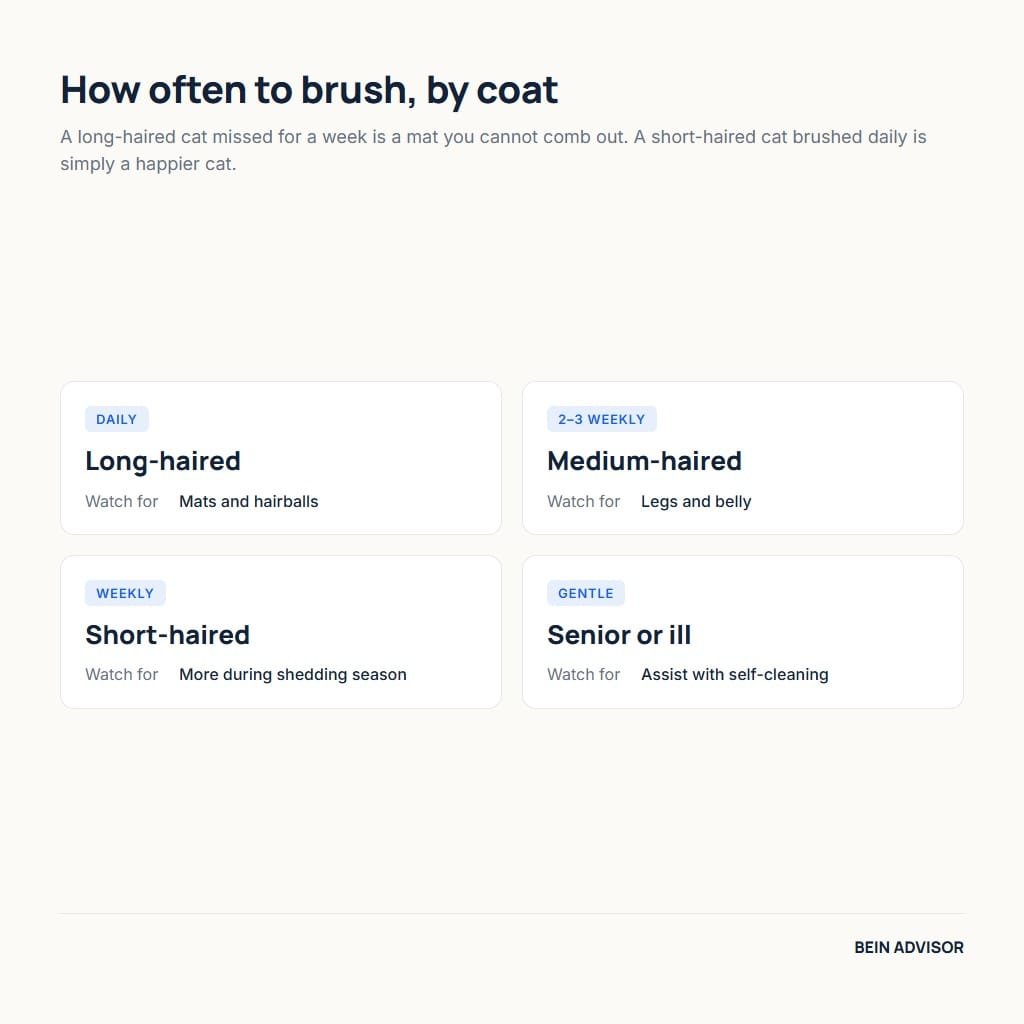
Long-haired cats need daily attention to stay mat-free. Breeds like Persians and Maine Coons tangle quickly without regular brushing. As a result, a daily comb-through prevents painful mats and hairballs. Short-haired cats are lower maintenance but still benefit from weekly brushing. The table below suggests a brushing rhythm by coat type. Adjust the frequency during heavy shedding seasons. Matching effort to coat length keeps grooming manageable.
| Coat Type | Brushing | Notes |
|---|---|---|
| Long-haired | Daily | Prevent mats and hairballs |
| Medium-haired | 2–3 times weekly | Watch legs and belly |
| Short-haired | Weekly | More during shedding |
| Senior / ill | Gentle, frequent | Assist with self-cleaning |
Coat condition reflects overall health and diet. A dull, greasy, or matted coat can signal illness, obesity, or poor nutrition. Therefore, a sudden coat change deserves a closer look and possibly a vet visit. Good food and hydration support a soft, shiny coat from the inside. Meanwhile, regular grooming maintains it from the outside. Together, diet and grooming keep the coat at its best. The coat is a useful window into your cat’s wellbeing.
6.2 Grooming Kittens and Senior Cats
Kittens benefit hugely from early, gentle grooming habits. Introducing brushing and paw handling young builds lifelong tolerance. As a result, a kitten groomed early becomes an easy adult patient. Keep sessions very short, playful, and full of praise. Use soft tools suited to a tiny, delicate body. Starting now prevents grooming battles later in life. Early practice is the best grooming investment you can make.
Senior cats often need more grooming help as they age. Stiff joints and lower energy make thorough self-cleaning harder. As a result, older cats may develop a greasy or matted coat without aid. Brush them gently and more often, watching for sore spots. Additionally, keep nails trimmed since seniors wear them down less. For general health context, the ASPCA’s cat care guidance is helpful. Patient, regular help keeps an older cat clean and comfortable.
Cat Grooming FAQ
How often should I do cat grooming?
Brush long-haired cats daily and short-haired cats about weekly. Trim nails every couple of weeks and check ears weekly. Additionally, brush teeth several times a week for the best dental health. Adjust the routine during heavy shedding or as your cat ages.
What tools do I need for cat grooming?
Start with a slicker brush, a metal comb, and cat nail clippers. A deshedding tool helps thick or long coats during shedding season. Additionally, keep a cat-safe shampoo, ear cleaner, and toothbrush on hand. A few quality tools cover almost every grooming need.
How do I groom a cat that hates it?
Go slow, keep sessions short, and reward calm behavior with treats. Start with a single area, like the back, and build up gradually. Meanwhile, never force a frightened cat, as that worsens the fear. If grooming stays impossible, a professional groomer or vet can help.
Conclusion: Cat Grooming Made Simple
Good cat grooming is a set of small, steady habits, not a big chore. Brush regularly, bathe only when needed, and keep nails, ears, and teeth in check. Meanwhile, adapt the routine to your cat’s coat, age, and comfort. Start young and go gently to build lifelong cooperation. Together, these habits give your cat a healthy coat and a happier life.
Start with one habit today, such as a short daily brushing session. Then add nail, ear, and dental care as your cat grows comfortable. When you spot skin, coat, or dental changes, your veterinarian is the best guide. With patience and the right tools, grooming becomes a calm bonding ritual. A well-groomed cat is a comfortable, healthy, and contented companion.
Free printable resource
The Cat Owner’s Toolkit
Great cat care comes down to a few steady habits. Keep them all in one place — 6 printable checklists & trackers you can stick on the fridge.
- New-cat checklist
- Vaccination & vet-visit tracker
- Feeding quick chart
- Daily & weekly routine
- Litter-box troubleshooter
- Emergency cheat sheet
Want the full guide? The Complete Cat Care Handbook has all 18 chapters with their own checklists — get it on Amazon as an eBook or Paperback.