
Cat hairballs are one of the most common and least pleasant parts of cat ownership. While the occasional hairball is normal, frequent cat hairballs can signal a problem worth fixing. They form when a cat swallows loose hair that cannot pass through the gut. The good news is that simple grooming and diet changes prevent most of them.
This article explains why hairballs happen and how to stop them effectively. You will learn what is normal, what is not, and which prevention methods truly work. Moreover, it covers grooming, diet, remedies, and the warning signs to watch. Each step is gentle, practical, and easy to fit into daily life.
Every recommendation reflects mainstream veterinary guidance, not old wives’ tales. Therefore, you can trust these steps for kittens, adults, and long-haired breeds. By the end, you will have a clear plan to keep hairballs rare. The reasons come first, because they explain every prevention tip.

1. Why Cat Hairballs Form
Hairballs start with a cat’s natural grooming habit. Cats spend hours licking their coat with rough, backward-facing tongues. As a result, they swallow large amounts of loose hair every day. Most of that hair passes harmlessly through the digestive tract. However, some collects in the stomach and forms a damp clump. When the clump grows too big to pass, the cat vomits it back up. This section explains the process and who is most at risk.
1.1 What Cat Hairballs Really Are
Despite the name, a hairball is rarely round. It usually appears as a damp, tube-shaped wad of hair and fluid. As a result, it takes an elongated shape as it passes up the narrow throat. The hair is bound together with saliva and digestive juices. Most hairballs are small, though long-haired cats can produce larger ones. Seeing one occasionally is completely normal and not a cause for alarm. Understanding what they are helps you judge when they matter.
Some cats are far more prone to hairballs than others. Long-haired breeds like Persians and Maine Coons swallow more hair. As a result, they form hairballs more often than short-haired cats. Cats that over-groom due to stress or skin problems also swallow extra hair. Additionally, shedding season increases the amount of loose hair available. Older cats and meticulous groomers tend to be affected more. Knowing your cat’s risk level guides how much prevention it needs.
1.2 Why Some Cats Get More Hairballs
Coat length is the biggest factor in how many hairballs form. The more hair a cat carries, the more it swallows while grooming. As a result, long-haired cats need more brushing to stay hairball-free. Shedding season multiplies the loose hair available to swallow. Therefore, hairballs often spike in spring and autumn. Regular grooming during these times makes a big difference. Matching prevention to coat and season keeps hairballs in check.
Behavior and health also drive how much hair a cat swallows. A stressed cat may over-groom, swallowing far more hair than usual. Likewise, skin allergies or fleas cause excessive licking and scratching. As a result, addressing stress and skin health reduces hairballs too. Slow digestion in older cats lets more hair build up. Consequently, hairballs can increase with age or illness. Looking at the whole cat, not just the coat, finds the real cause.
2. Are Hairballs Normal or a Problem?
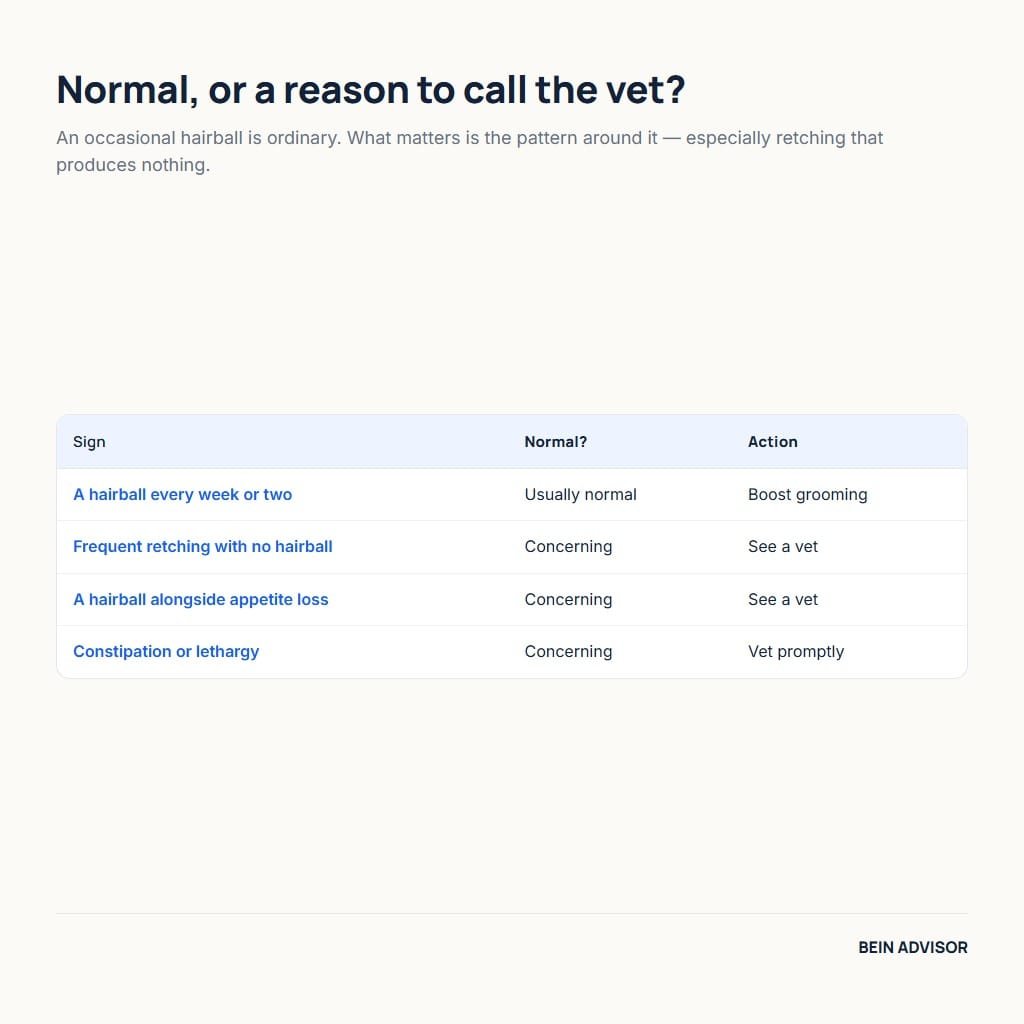
An occasional hairball is normal, but frequent ones are not. Most healthy cats bring up a hairball now and then without issue. As a result, the key is knowing what frequency and symptoms are concerning. A hairball every week or two is usually fine for a long-haired cat. However, frequent retching or a hairball with other symptoms needs attention. The table below sorts normal signs from warning signs. Knowing the difference protects your cat from hidden problems.
2.1 Normal vs Concerning Signs
A normal hairball comes up quickly with a little retching. The cat then returns to normal eating, drinking, and play. As a result, an isolated hairball is no cause for worry. The whole event usually lasts only a minute or two. Afterward, a healthy cat shows no lasting distress. Frequency matters more than a single episode. The table helps you gauge when to relax and when to act.
| Sign | Normal? | Action |
|---|---|---|
| Hairball every week or two | Usually normal | Boost grooming |
| Frequent retching, no hairball | Concerning | See a vet |
| Hairball with appetite loss | Concerning | See a vet |
| Constipation or lethargy | Concerning | Vet promptly |
Certain symptoms turn a hairball from routine to urgent. Repeated unproductive retching can signal a blockage rather than a hairball. As a result, dry heaving with nothing produced deserves a vet visit. Watch also for appetite loss, constipation, or low energy. These can mean hair has caused a dangerous obstruction. For related warning signs, see our article on common cat illnesses. When in doubt, a quick vet call is always wise.
2.2 The Risk of Blockages
In rare cases, a hairball becomes a serious medical emergency. A mass of hair can lodge in the stomach or intestine. As a result, it blocks the passage of food and causes severe illness. Signs include repeated vomiting, refusal to eat, and a swollen belly. This situation needs immediate veterinary care, sometimes surgery. Therefore, never ignore a cat that keeps trying to vomit without success. Quick action can be life-saving in a true blockage.
Prevention is the best defense against dangerous blockages. Regular grooming and a good diet keep swallowed hair moving smoothly. As a result, hair passes through rather than building into a mass. Cats with frequent hairballs benefit most from consistent prevention. Meanwhile, sudden changes in vomiting patterns warrant a vet check. Keeping notes helps your vet spot trouble early. Steady prevention keeps the rare emergency even rarer.
3. Grooming to Prevent Cat Hairballs
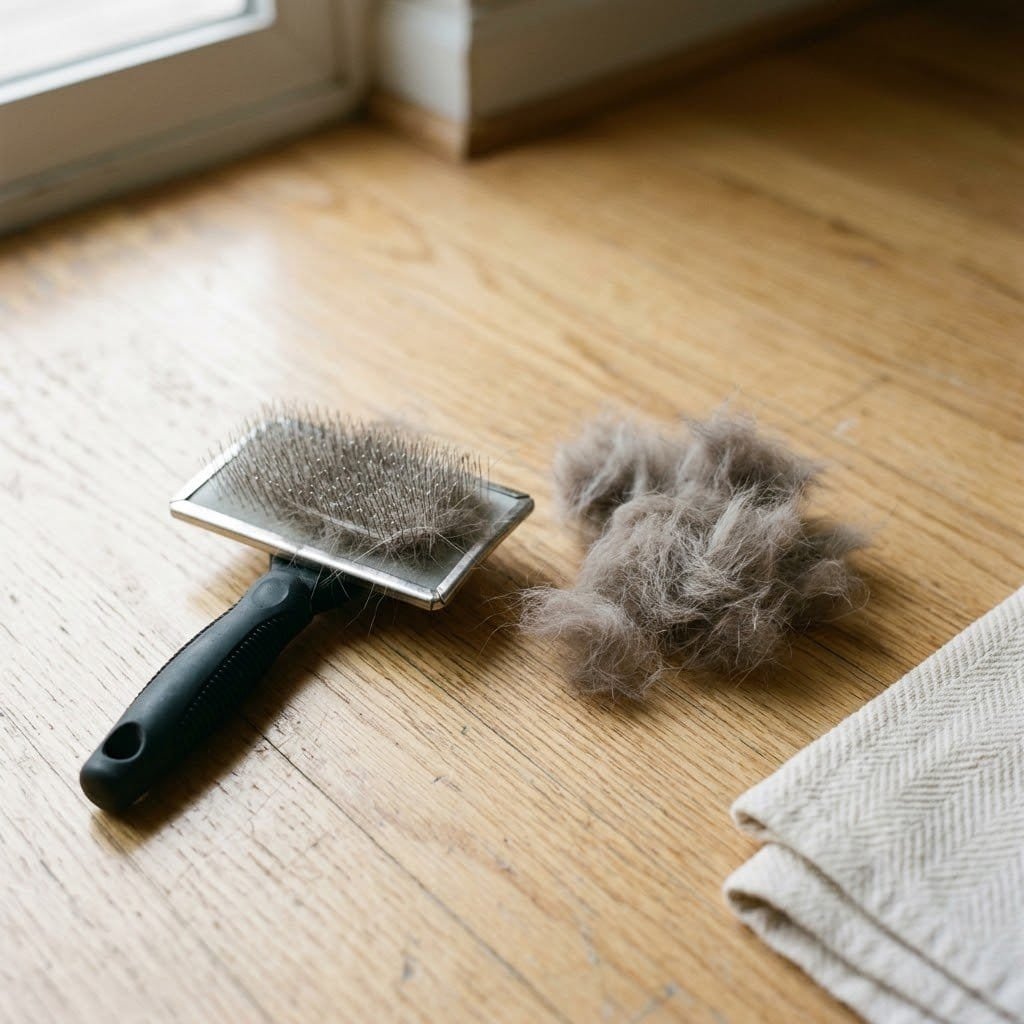
Grooming is the single most effective way to prevent cat hairballs. Every hair you brush away is hair your cat will not swallow. As a result, regular brushing dramatically cuts hairball frequency. The benefit is greatest for long-haired cats and during shedding season. Moreover, grooming doubles as a bonding and health-check routine. This section covers how to brush for maximum hairball prevention. A few minutes of brushing prevents most hairballs.
3.1 Brushing Away Cat Hairballs
Frequent brushing removes loose hair before your cat can swallow it. Brush long-haired cats daily and short-haired cats a few times a week. As a result, far less hair ends up in the stomach. Use a deshedding tool during heavy shedding to capture the undercoat. For full technique, see our article on cat grooming. Keep sessions short and positive so your cat enjoys them. Consistent brushing is the cornerstone of hairball prevention.
Timing and technique boost the benefits of brushing. Brush more often in spring and autumn when shedding peaks. Therefore, you intercept the extra loose hair before it is swallowed. A damp grooming wipe can pick up even more stray fur afterward. Meanwhile, treats and praise keep a reluctant cat cooperative. For cats that hate brushing, build up slowly with patience. Well-timed grooming keeps hairballs to a minimum year-round.
3.2 Reducing Over-Grooming
Some cats swallow extra hair because they over-groom. Stress, boredom, allergies, or fleas can all trigger excessive licking. As a result, fixing the underlying cause reduces hairballs too. Provide enrichment and play to ease stress-driven grooming. Additionally, treat any fleas or skin irritation promptly with vet guidance. A calmer, healthier cat simply grooms less obsessively. Addressing over-grooming tackles hairballs at the source.
Environmental enrichment plays a surprising role in hairball control. A bored or anxious cat may groom compulsively for comfort. Therefore, more play, climbing, and stimulation can reduce that behavior. Our article on indoor cat enrichment offers many ideas. Meanwhile, a steady routine lowers the stress that drives over-grooming. If licking seems obsessive, ask your vet to rule out medical causes. A content cat grooms normally and swallows less hair.
4. Diet and Remedies for Cat Hairballs
Diet is a powerful, often overlooked tool against cat hairballs. The right nutrition helps swallowed hair pass smoothly through the gut. As a result, fewer hairs build up into uncomfortable hairballs. Fiber, hydration, and specialized formulas all play a role. Moreover, safe remedies can ease passage when needed. This section covers food and products that genuinely help. Working from the inside complements grooming from the outside.
4.1 Fiber, Hydration, and Hairball Diets
Fiber helps move swallowed hair through the digestive system. Hairball-control diets are formulated with extra fiber for this reason. As a result, they help hair pass naturally instead of building up. A little pumpkin or a vet-approved fiber supplement can also help. Good hydration keeps everything moving smoothly through the gut. For more on feeding, see our article on cat nutrition. A fiber-rich, well-hydrated diet quietly prevents many hairballs.
Hydration deserves special attention for hairball-prone cats. A well-hydrated gut passes hair far more easily than a dry one. Therefore, wet food and fresh water are simple, effective tools. Add a pet fountain to encourage reluctant drinkers to take in more. Meanwhile, avoid sudden diet changes that can upset digestion. Combine a quality diet with steady moisture for the best results. Diet and water together keep hair moving in the right direction.
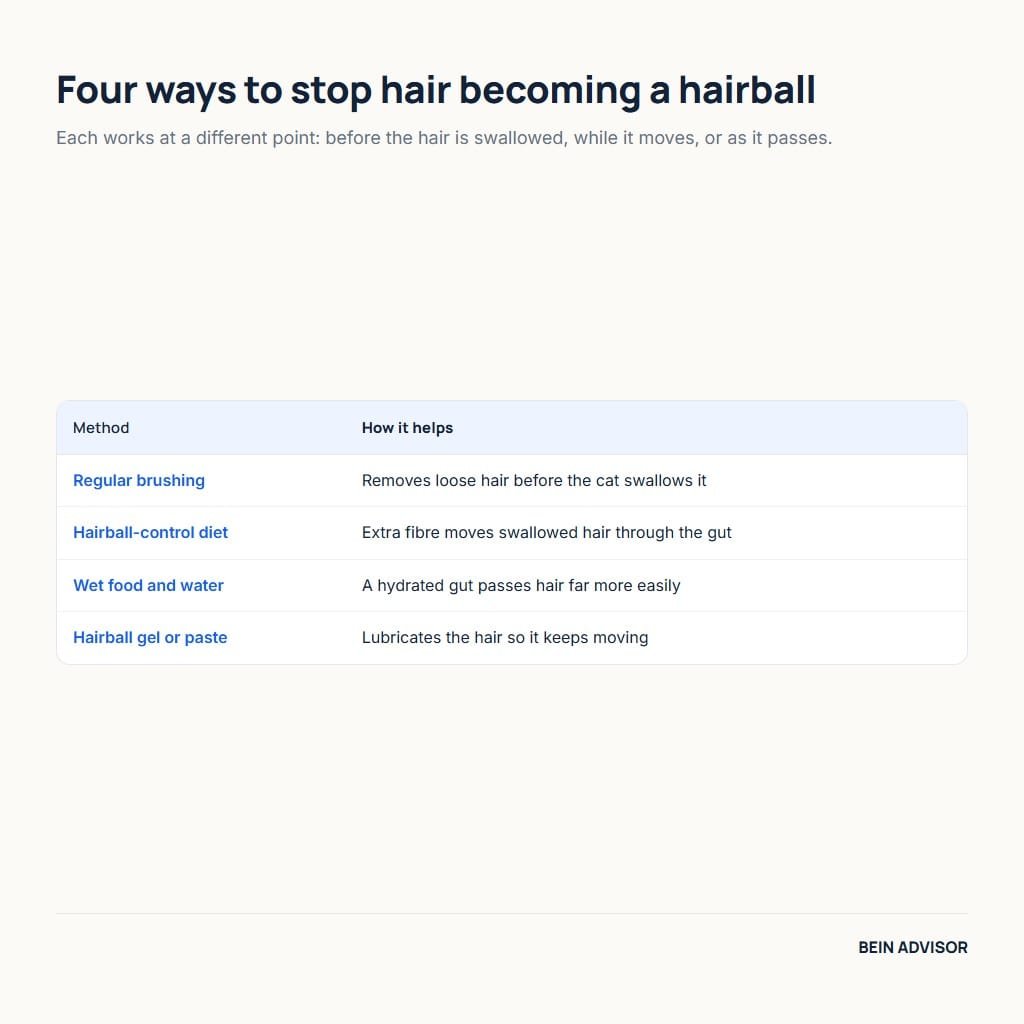
| Method | How It Helps |
|---|---|
| Regular brushing | Removes hair before swallowing |
| Hairball-control diet | Extra fiber moves hair through |
| Wet food and water | Hydrated gut passes hair easily |
| Hairball gel/paste | Lubricates hair for passage |
4.2 Safe Hairball Remedies
Hairball remedies can help when grooming and diet are not enough. Lubricating gels or pastes coat swallowed hair so it passes easily. As a result, they ease hair through the gut rather than letting it gather. Most are given as a tasty treat a few times a week. However, follow the dosing instructions and avoid overuse. Choose products made specifically for cats, never human laxatives. Used correctly, these remedies are a helpful backup tool.
Always introduce any remedy carefully and with veterinary input. Ask your vet before starting a new supplement or gel, especially for kittens. Therefore, you avoid interactions or overuse that could harm digestion. Natural options like a little fiber may be enough for mild cases. Meanwhile, severe or frequent hairballs need a professional plan, not just products. Treat remedies as support, not a cure-all. Combined with grooming and diet, they round out prevention.
5. When Cat Hairballs Need a Vet
Knowing when to call the vet is a vital hairball skill. Most hairballs are harmless, but some signal a serious problem. As a result, certain symptoms should never be ignored. Frequent retching, appetite loss, or lethargy all warrant attention. A suspected blockage is a true emergency that needs fast care. This section covers the warning signs and what to expect. Acting early protects your cat from real danger.
5.1 Warning Signs to Watch
Several symptoms turn hairballs into a veterinary matter. Repeated unproductive retching is the most important red flag. As a result, ongoing dry heaving with nothing produced needs prompt care. Watch also for refusal to eat, constipation, or unusual tiredness. A swollen or painful belly is especially concerning. For broader symptom guidance, the Cornell Feline Health Center is a trusted source. When several signs appear together, see a vet quickly.
Frequency itself can be a reason to seek help. A cat producing hairballs very often may have an underlying issue. Therefore, more than one or two hairballs a week deserves a check. The cause could be over-grooming, skin disease, or digestive trouble. Your vet can identify whether grooming, diet, or treatment is needed. Keeping a simple log of episodes helps the diagnosis. Persistent hairballs are a signal, not just a nuisance.
5.2 What the Vet Can Do
A vet can find and treat the root cause of frequent hairballs. They may check for skin conditions, allergies, or digestive disorders. As a result, you address the real problem instead of just the symptom. For suspected blockages, imaging shows whether hair is stuck. Treatment ranges from diet changes to, rarely, surgery. Your vet can also recommend the safest remedies for your cat. Professional guidance turns a recurring problem into a managed one.
Working with your vet creates a lasting prevention plan. Together you can tailor grooming, diet, and remedies to your cat. Therefore, hairballs become rare rather than a weekly event. Regular checkups catch related issues like dental or skin problems early. Meanwhile, you gain peace of mind about what is normal. Partnering with a professional is the smartest long-term move. A clear plan keeps both you and your cat comfortable.
Cat Hairballs FAQ
How do I stop cat hairballs?
Brush your cat regularly to remove loose hair before it is swallowed. Additionally, feed a fiber-rich or hairball-control diet and ensure good hydration. Hairball gels can help stubborn cases when used as directed. Together, these steps prevent most hairballs.
How often are hairballs normal?
An occasional hairball, perhaps every week or two, is usually normal. Long-haired cats naturally produce them a bit more often. However, frequent retching or daily hairballs is not normal. In that case, increase grooming and consult your vet.
Can hairballs be dangerous?
Yes, in rare cases a hairball can cause a dangerous blockage. Signs include repeated unproductive retching, appetite loss, and lethargy. This is a medical emergency that needs immediate veterinary care. Prevention through grooming and diet greatly lowers the risk.
Conclusion: Controlling Cat Hairballs
Cat hairballs are usually harmless, and they are easy to prevent. Brush regularly, feed a fiber-rich diet, and keep your cat well hydrated. Meanwhile, address stress and over-grooming, and use safe remedies when needed. Watch for warning signs that mean it is time to call the vet. Together, these steps keep hairballs rare and your cat comfortable.
Start with one change today, such as a daily brushing session. Then add diet and hydration improvements as a steady habit. When retching or other symptoms persist, your veterinarian is the best guide. With simple prevention, hairballs become a rare event rather than a routine mess. A little effort keeps your cat healthier and your floors cleaner.
Free printable resource
The Cat Owner’s Toolkit
Great cat care comes down to a few steady habits. Keep them all in one place — 6 printable checklists & trackers you can stick on the fridge.
- New-cat checklist
- Vaccination & vet-visit tracker
- Feeding quick chart
- Daily & weekly routine
- Litter-box troubleshooter
- Emergency cheat sheet
Want the full guide? The Complete Cat Care Handbook has all 18 chapters with their own checklists — get it on Amazon as an eBook or Paperback.