
Good cat nutrition is the single biggest factor you control in your cat’s health and lifespan. The right cat nutrition supports a glossy coat, lean muscle, steady energy, and a strong immune system. In contrast, the wrong diet quietly drives obesity, urinary problems, and a dull, itchy coat. Feeding a cat well is far simpler than the pet-food aisle makes it look.
This article breaks the subject into five clear secrets you can act on today. You will learn why cats are strict meat-eaters and which nutrients truly matter. Moreover, it compares wet and dry food, explains label reading, and sets feeding amounts by age. Each section turns confusing marketing into simple, confident choices at the bowl.
Every point here reflects mainstream veterinary nutrition guidance, not fads or hype. Therefore, you can trust these steps whether you have a new kitten or a senior cat. By the end, you will know exactly what to put in the bowl and why. The foundation comes first, because it explains every choice that follows.
1. The Foundation of Cat Nutrition: Obligate Carnivores
Understanding one fact transforms your whole approach to cat nutrition. Cats are obligate carnivores, which means they must eat animal tissue to survive. As a result, their bodies are built to run on protein and fat, not carbohydrates. Unlike dogs or humans, cats cannot make several key nutrients from plants. Therefore, a meat-free diet is dangerous for a cat, no matter how balanced it looks. This biological truth explains every later recommendation about ingredients and balance. Once you accept it, label reading and food choices suddenly make sense.
1.1 What “Obligate Carnivore” Means
The term obligate carnivore describes an animal that depends on meat for survival. A cat’s digestive system is short and acidic, designed to process animal protein quickly. Consequently, it handles meat far better than grains or vegetables. Cats also taste sweetness poorly, since sugar plays no role in their natural diet. In the wild, a cat eats small prey that is high in protein and water and low in carbohydrate. This pattern is the blueprint that good cat nutrition tries to copy. Matching that blueprint keeps the whole body working as nature intended.
Several nutrients are essential for cats but optional for other animals. For example, taurine is an amino acid cats cannot make in sufficient amounts. Without it, they slowly develop heart disease and blindness. Similarly, cats need preformed vitamin A and arachidonic acid from animal sources. Plants simply do not supply these in a usable form. Therefore, a quality animal-based diet is not a luxury but a biological requirement. Understanding this prevents well-meaning yet harmful choices, such as vegetarian diets for cats.
1.2 Why Carbohydrates Stay Low in Cat Nutrition
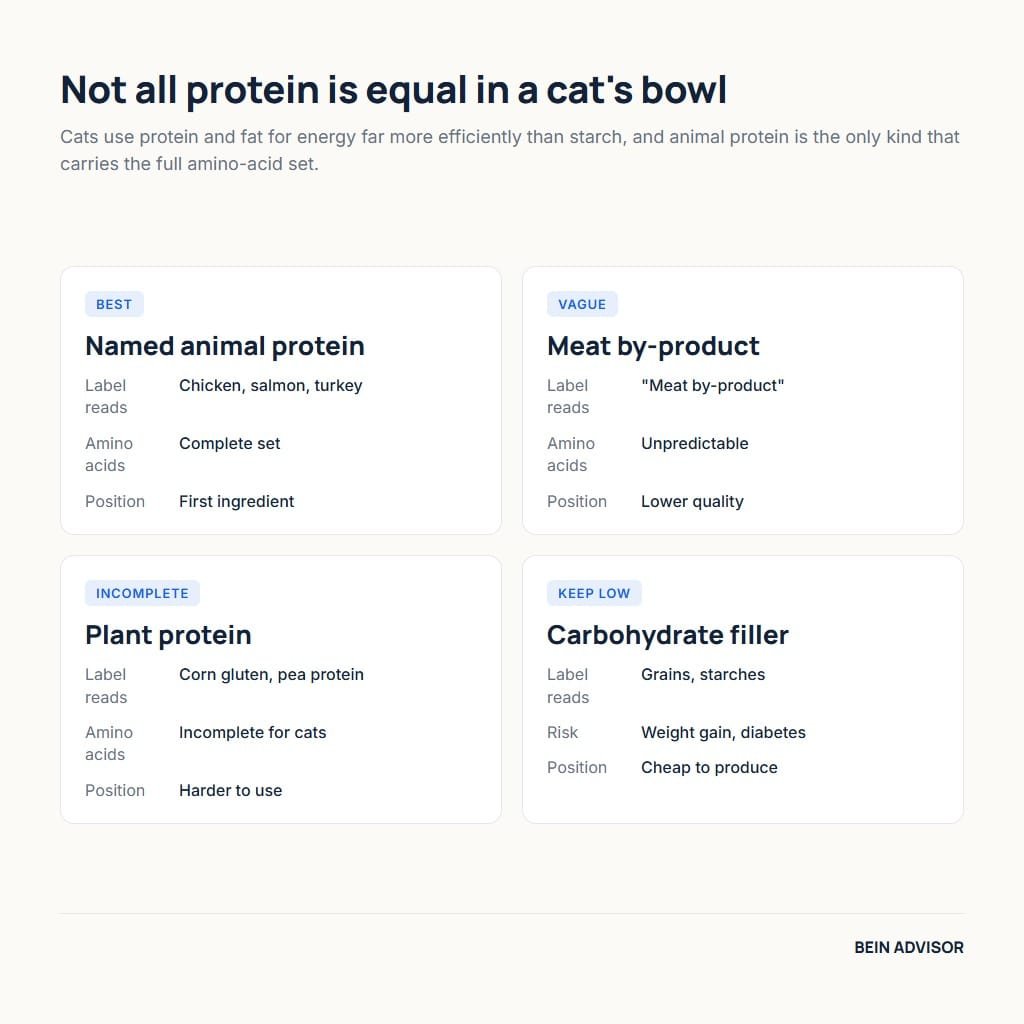
Carbohydrates are not toxic to cats, yet they should stay modest in the bowl. A cat’s body uses protein and fat for energy far more efficiently than starch. As a result, diets loaded with grains or fillers can promote weight gain. Excess weight then raises the risk of diabetes and joint strain. Many cheap dry foods rely on carbohydrates because they are inexpensive to produce. However, that convenience does not match feline biology. Reading the label, covered later, helps you spot foods that lean too heavily on fillers.
Protein quality matters as much as quantity in cat nutrition. Animal proteins provide the full set of amino acids a cat needs. In contrast, plant proteins are incomplete and harder for a cat to use. Therefore, the first ingredients should be named meats, such as chicken or salmon. Vague terms like “meat by-product” are lower quality and less predictable. A diet built on real animal protein supports muscle, organs, and a healthy weight. This single principle guides almost every smart purchase you will make.
2. Essential Nutrients in Cat Nutrition
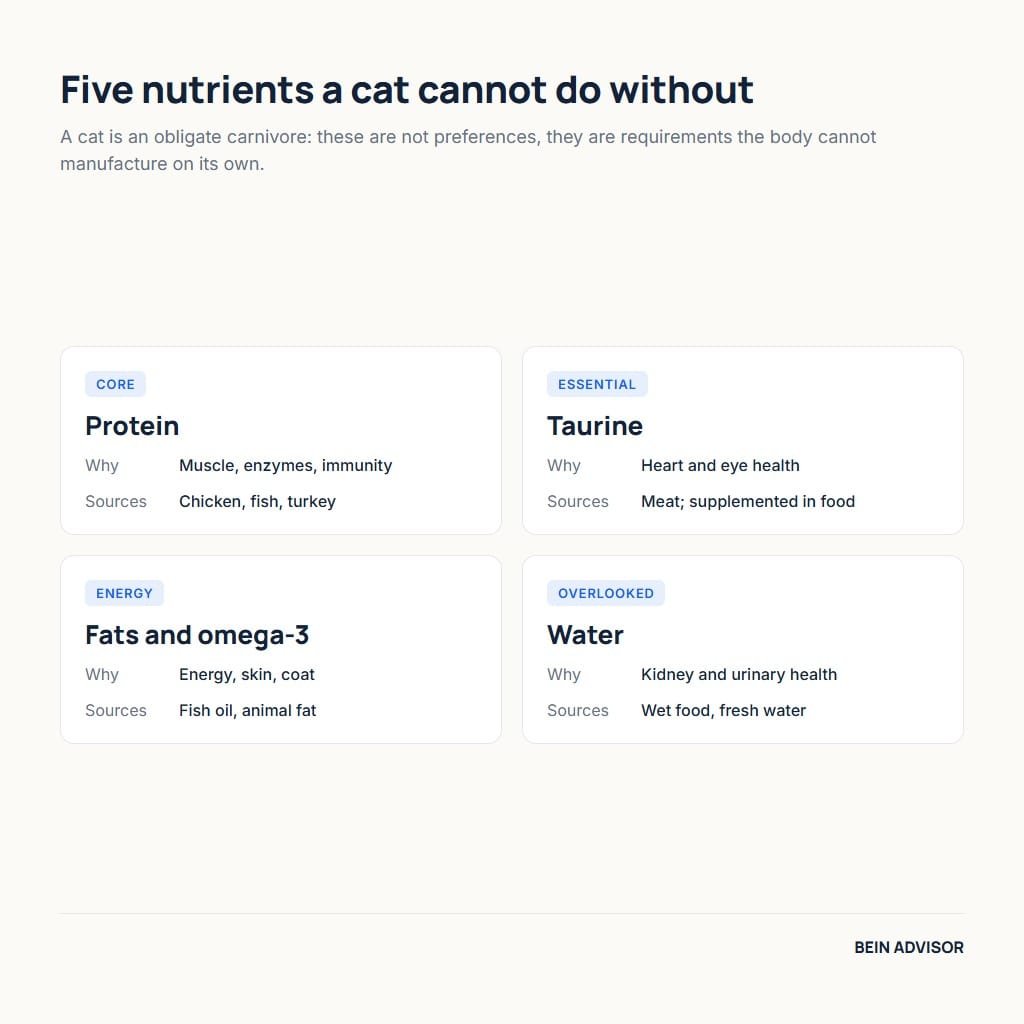
Beyond protein, several nutrients form the backbone of complete cat nutrition. A food labeled “complete and balanced” should already contain them in the right ratios. Still, knowing what they do helps you choose wisely and spot deficiencies. The main players are protein, taurine, healthy fats, vitamins, minerals, and water. Each one supports a specific system, from the heart to the skin. Moreover, balance matters as much as presence, since too much of one nutrient can block another. The table below summarizes these essentials at a glance.
2.1 Protein, Taurine, and Healthy Fats
Protein is the foundation, supplying amino acids for muscle, enzymes, and immune defense. A growing kitten needs even more protein per pound than an adult cat. Taurine deserves special attention, because a shortage causes serious, irreversible damage. For that reason, commercial cat foods are supplemented with taurine to safe levels. Fats are the second pillar, delivering concentrated energy and essential fatty acids. In addition, fat carries fat-soluble vitamins and makes food taste appealing. Together, protein and fat should provide most of a cat’s daily calories.
Omega-3 and omega-6 fatty acids support skin, coat, and joint health. A diet short on these often shows up as a dry, flaky coat. Therefore, quality foods include fish oil or animal fats for balance. However, fat is calorie-dense, so portion control still matters. Too little fat leaves a cat low on energy and prone to skin issues. Too much, on the other hand, contributes to weight gain. The goal is a steady supply from quality animal sources, not random supplements.
| Nutrient | Why It Matters | Good Sources |
|---|---|---|
| Protein | Muscle, enzymes, immunity | Chicken, fish, turkey |
| Taurine | Heart and eye health | Meat; supplemented in food |
| Fats / Omega-3 | Energy, skin, coat | Fish oil, animal fat |
| Calcium & Phosphorus | Bones and teeth | Balanced complete food |
| Water | Kidney and urinary health | Wet food, fresh water |
2.2 Vitamins, Minerals, and Water in Cat Nutrition
Vitamins and minerals work in the background of cat nutrition, yet they are vital. Calcium and phosphorus build strong bones and must stay in the right ratio. Meanwhile, vitamins A, D, E, and the B group support vision, immunity, and metabolism. A complete commercial diet already balances these, so extra supplements are rarely needed. In fact, over-supplementing can cause harm, such as vitamin A toxicity from too much liver. Trust a balanced food rather than guesswork. When in doubt, your vet can recommend the right formula for your cat.
Water is the most overlooked nutrient, especially for cats. Cats evolved in deserts and have a naturally low thirst drive. As a result, many cats live mildly dehydrated, which stresses the kidneys and bladder. Wet food helps enormously, since it is about three-quarters water. Additionally, a clean bowl, a pet fountain, or several water stations encourage drinking. For new kittens specifically, see our article on complete kitten care. Good hydration is a quiet but powerful part of feeding cats well.
3. Wet vs Dry Food in Cat Nutrition
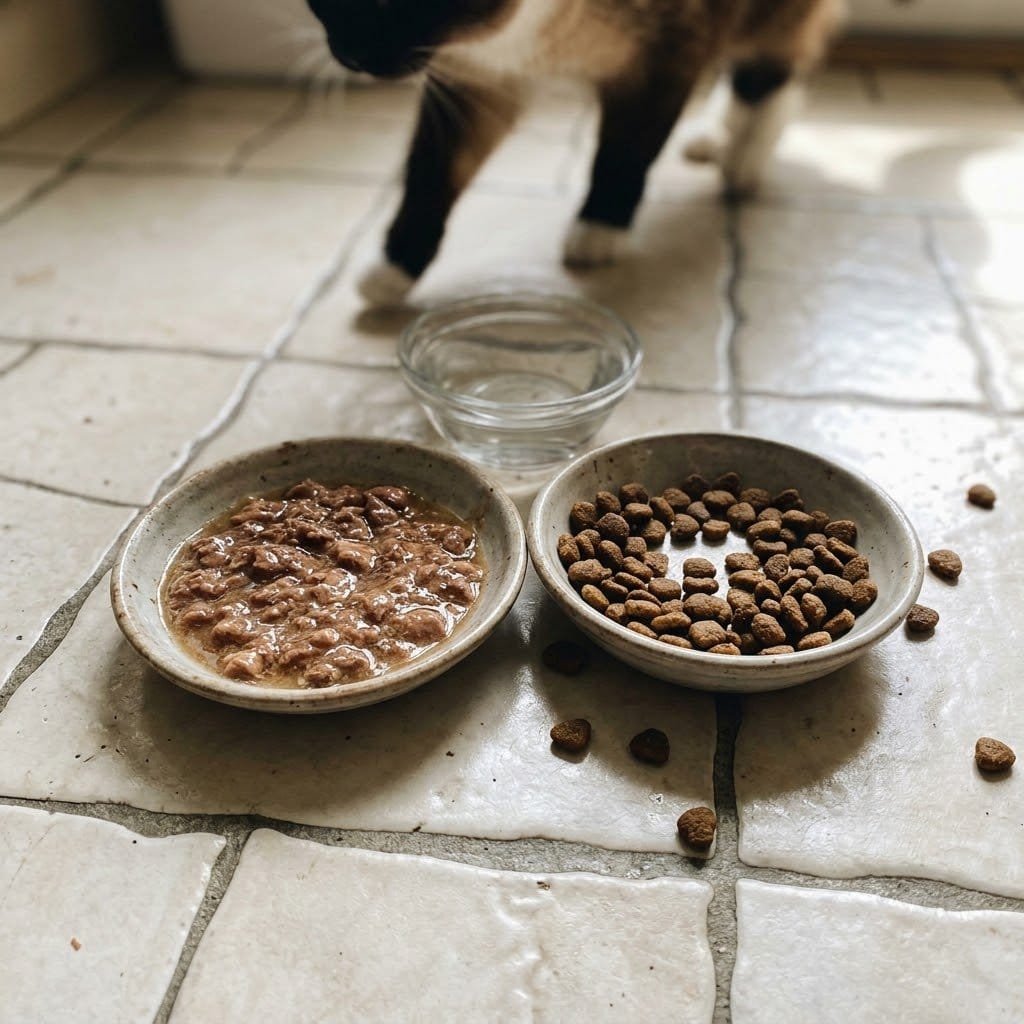
The wet-versus-dry debate is one of the most common cat nutrition questions. Both can be complete and balanced, so neither is automatically wrong. Instead, each has strengths that suit different cats and budgets. Wet food adds moisture and tends to be higher in protein. Dry food, on the other hand, is convenient, affordable, and easy to store. Many owners get the best of both by combining them. This section helps you choose based on your cat’s needs, not marketing claims.
3.1 The Case for Wet Food
Wet food shines on two fronts: hydration and protein density. Its high moisture content supports kidney and urinary health over a lifetime. For cats prone to urinary issues, that extra water can be genuinely protective. Additionally, canned diets are often richer in animal protein and lower in carbohydrate. The strong aroma also tempts picky eaters and older cats with a weak appetite. However, wet food spoils quickly once opened and costs more per serving. Refrigerate leftovers, and discard any food left out for more than an hour.
Texture and variety are practical advantages of wet food too. Pâtés, chunks, and gravies let you find a format your cat enjoys. Moreover, smaller portions make it easy to control calories at each meal. The main drawbacks are cost, storage, and dental considerations. Wet food does little to reduce plaque, so dental care matters more. For that reason, some owners pair canned meals with dental treats or brushing. Overall, wet food is an excellent base for most cats when the budget allows.
3.2 The Case for Dry Food
Dry food, or kibble, dominates the market for good reasons. It is affordable, shelf-stable, and simple to portion or leave out for grazing. For multi-cat homes or busy schedules, that convenience is a real benefit. Quality kibble can also be nutritionally complete and protein-rich. Some dental diets even use a kibble texture that helps scrape plaque. However, dry food is low in moisture, which is its main weakness. Cats on kibble alone must be encouraged to drink more water.
The biggest risk with dry food is overfeeding and carbohydrate load. Because kibble is calorie-dense and easy to free-feed, weight gain creeps up quietly. Therefore, measure portions rather than topping up the bowl all day. Choose a brand with named meat first and limited fillers. Combining a little wet food with measured kibble often gives balanced results. This hybrid approach delivers moisture, protein, and convenience together. Ultimately, the best choice is the complete diet your cat thrives on and will happily eat.
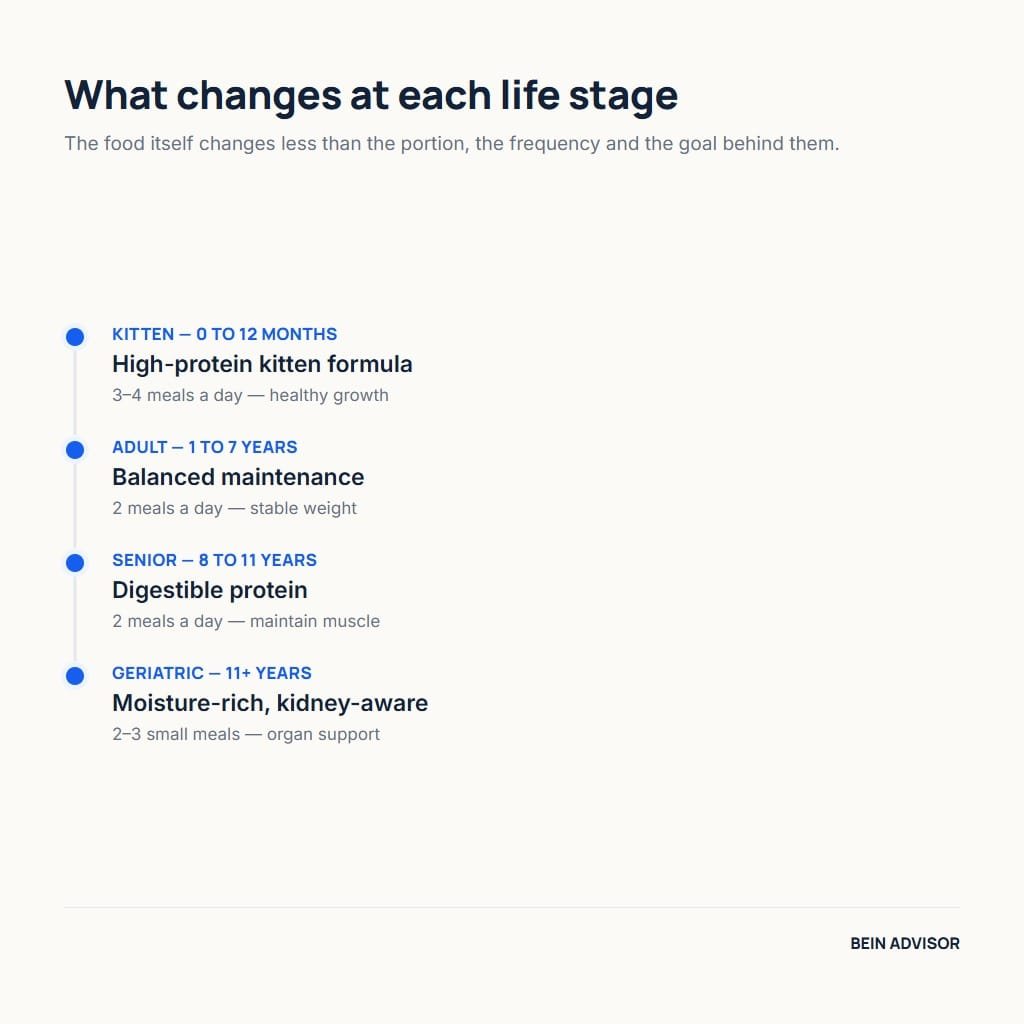
4. Cat Nutrition by Life Stage
A cat’s needs change dramatically with age, so cat nutrition must change too. A growing kitten, a busy adult, and a senior cat have very different requirements. Feeding the same food and amount for life is a common mistake. As a result, life-stage formulas exist to match calories and nutrients to age. The table below outlines a practical starting point for each stage. Always adjust to body condition and your vet’s advice. Getting the stage right keeps weight steady and energy stable.
4.1 Kittens and Adult Cats
Kittens grow fast and need calorie-dense, protein-rich food for development. A kitten formula supports bones, muscles, and a strong immune system. For that reason, small, frequent meals suit a tiny stomach. As the kitten matures, meals reduce to two or three a day. For a full feeding timeline, our kitten care article breaks it down by week. Switching to adult food around twelve months prevents unwanted weight gain. This transition should happen gradually over about a week.
Adult cats need maintenance nutrition that holds a healthy weight. At this stage, calories should match activity, which is often low for indoor cats. Therefore, measured meals beat unlimited grazing for most adults. A lean body condition, with ribs you can feel, is the goal. Treats should stay small, under a tenth of daily calories. Regular weigh-ins catch slow weight gain before it becomes obesity. Steady, measured feeding is the heart of adult cat nutrition.
| Life Stage | Food Focus | Meals/Day | Key Goal |
|---|---|---|---|
| Kitten (0–12 mo) | High-protein kitten formula | 3–4 | Healthy growth |
| Adult (1–7 yr) | Balanced maintenance | 2 | Stable weight |
| Senior (8–11 yr) | Digestible protein | 2 | Maintain muscle |
| Geriatric (11+ yr) | Moisture-rich, kidney-aware | 2–3 small | Organ support |
4.2 Senior Cats and Special Needs
Senior cats, usually over eleven, often need diet adjustments. Some lose weight and muscle, while others slow down and gain fat. As a result, senior formulas focus on easily digestible protein and joint support. Kidney health also becomes a priority, so moisture-rich food helps. Regular vet checks guide whether a therapeutic diet is needed. Meanwhile, watch closely for changes in appetite, thirst, or weight. For diet-linked warning signs, review these common cat illness signs.
Some cats need special diets for medical conditions. Urinary, kidney, diabetic, and weight-control formulas exist for good reasons. However, these are tools a veterinarian should prescribe, not guesses. For general background, the ASPCA’s cat care guidance is a helpful reference. Sudden diet changes can upset digestion, so transition slowly. Fresh water is even more important for cats on dry therapeutic diets. With the right plan, many conditions are managed largely through food.
5. Cat Nutrition Mistakes and Foods to Avoid
Even loving owners make cat nutrition mistakes that add up over time. Some errors cause slow weight gain, while others are immediately dangerous. Knowing the common traps protects your cat from both. The two big categories are feeding errors and toxic foods. For trustworthy detail on feline health, the Cornell Feline Health Center is a reliable source. This section covers the mistakes to avoid and the human foods that harm cats. A few simple rules keep your cat safe and lean.
5.1 Common Feeding Mistakes
Overfeeding is the most widespread mistake in cat nutrition. Free-feeding kibble all day makes it easy for cats to eat past their needs. As a result, indoor cats in particular drift toward obesity. Measuring meals with a scale or cup solves most of the problem. Another error is frequent, abrupt diet changes that upset digestion. Instead, transition foods slowly over seven to ten days. Too many treats and table scraps also unbalance an otherwise good diet.
Feeding dog food or homemade diets without guidance is risky too. Dog food lacks taurine and the protein levels cats require. Likewise, unbalanced homemade meals often miss key nutrients over time. Cow’s milk is another surprise problem, since most cats are lactose intolerant. Therefore, skip the saucer of milk that folklore made famous. When you want variety, choose complete commercial foods instead. These small corrections prevent the slow harm of well-meant mistakes.

5.2 Toxic Foods to Avoid
Some everyday human foods are genuinely dangerous for cats. Onions and garlic, in any form, damage feline red blood cells. Chocolate, caffeine, alcohol, and grapes are all toxic and should never be shared. Additionally, xylitol, found in sugar-free gum and treats, is poisonous. Raw dough, splintering bones, and very fatty scraps pose other hazards. Keep these items well out of reach, especially around curious kittens. When in doubt, do not offer a human food to your cat.
Knowing the signs of poisoning helps you act fast. Vomiting, drooling, weakness, or unusual behavior after eating warrant a quick call. Therefore, keep your vet’s number and a poison hotline handy. Store cleaning products and medications where a cat cannot reach them. Many cats nibble plants, so confirm your houseplants are non-toxic. Quick action often makes the difference in an accidental poisoning. A safe kitchen and a watchful eye prevent most emergencies.
Cat Nutrition FAQ
How much food does good cat nutrition require?
Daily amounts depend on weight, age, and activity level. Start with the feeding chart on the package, then adjust to body condition. You should feel the ribs easily under a thin layer of fat. Moreover, your vet can calculate exact calories if your cat needs to gain or lose weight.
Is wet or dry food better for cat nutrition?
Both can be complete and balanced, so either works when chosen well. Wet food adds valuable moisture, while dry food offers convenience and dental benefits. For that reason, many owners combine the two. Pick quality formulas with named meat first, and match the amount to your cat’s needs.
Can cats be vegetarian?
No, cats cannot thrive on a vegetarian diet. As obligate carnivores, they need nutrients such as taurine that plants do not supply. A meat-free diet leads to serious health problems over time. Therefore, always feed a complete, animal-based food formulated for cats.
How do I switch cat foods safely?
Transition gradually over seven to ten days to avoid stomach upset. Start by mixing a little new food into the old, then shift the ratio slowly. Meanwhile, watch for soft stool or refusal, and slow down if needed. A patient switch protects digestion and helps a picky cat accept the change.
Conclusion: Smart Cat Nutrition
Smart cat nutrition comes down to a few reliable principles, not endless rules. Feed a complete, animal-based diet, respect your cat’s carnivore biology, and watch the portions. Meanwhile, prioritize moisture, choose named-meat foods, and adjust the diet as your cat ages. Avoid toxic human foods, and transition between diets slowly. Together, these habits protect weight, organs, and energy for years.
Start with one change today, such as measuring meals or adding wet food. Then build the rest of your cat nutrition routine step by step. When a question goes beyond the basics, your veterinarian is the best guide. With a thoughtful bowl and fresh water, your cat can stay lean, active, and bright-eyed. Good nutrition truly is the foundation of a long, happy life together.
Free printable resource
The Cat Owner’s Toolkit
Great cat care comes down to a few steady habits. Keep them all in one place — 6 printable checklists & trackers you can stick on the fridge.
- New-cat checklist
- Vaccination & vet-visit tracker
- Feeding quick chart
- Daily & weekly routine
- Litter-box troubleshooter
- Emergency cheat sheet
Want the full guide? The Complete Cat Care Handbook has all 18 chapters with their own checklists — get it on Amazon as an eBook or Paperback.