

Bringing home a new kitten is one of life’s small joys, yet good kitten care is what turns those first fragile weeks into a healthy, confident start. The quality of your kitten care in these early months shapes your cat’s lifelong health, temperament, and trust in people. A little preparation now prevents the most common problems later, from upset stomachs to litter accidents and shyness.
This article gives you a clear, practical roadmap for the whole journey. You will learn how to set up a safe space, feed by age, train the litter box, and handle grooming without stress. Moreover, it covers vaccinations, early health checks, and the socialization window that creates a friendly adult cat. Each step is simple, and together they build a routine you can actually keep.
Every recommendation here follows widely accepted veterinary guidance and the fundamentals taught by feline health experts. Therefore, you can act with confidence, even if this is your very first kitten. By the end, you will have a complete plan and a short checklist for the fridge. The first days come first, because the small choices you make then matter most.
1. Kitten Care in the First Days at Home
The first few days set the tone for all the kitten care that follows. A new kitten leaves its mother and littermates and lands in a strange, loud world. As a result, calm and predictability matter far more than toys or treats right now. Give your kitten one quiet room, a few soft items, and a steady routine. Furthermore, keep handling gentle and short while it explores on its own terms. Most kittens settle within a week when the space feels safe. In contrast, a crowded, noisy welcome can trigger hiding, refused food, and stress illness. The goal is simple: safety, warmth, and quiet confidence.
1.1 Setting Up a Safe Space
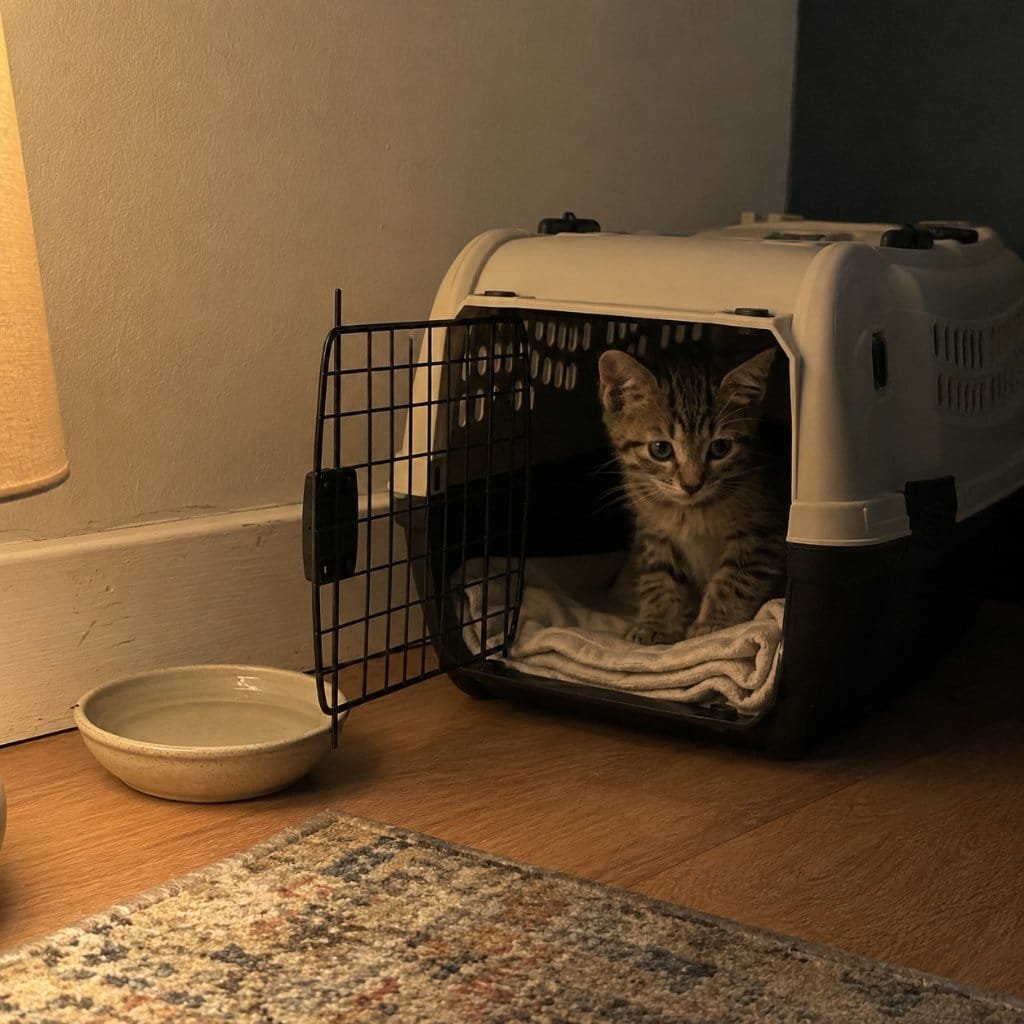
Before the kitten arrives, prepare one small room as its base camp. A bathroom, laundry room, or quiet bedroom works well for the first days. Place food and water on one side and the litter box on the opposite side. Cats dislike eating near the toilet, so this small detail prevents early refusals. Additionally, add a soft bed, a cardboard hideaway, and one or two simple toys. Warmth is essential for young kittens, therefore a heating pad on low helps them hold their body temperature. This contained setup keeps the kitten safe while it learns the smells and sounds of its new home.
Kitten-proofing the rest of the house comes next, and it pays to think like a curious climber. Kittens squeeze into gaps, chew wires, and swallow string, ribbon, and hair ties. Therefore, secure blind cords, block spaces behind appliances, and move houseplants out of reach, since several are toxic. Toilet lids should stay closed, and cleaning chemicals belong behind latched doors. For a fuller safety list, the ASPCA’s general cat care guidelines are a reliable reference. Once the main room is secure, let your kitten explore new areas gradually, one room at a time, under supervision until its confidence grows.
1.2 The First 48 Hours of Kitten Care
The first forty-eight hours are about decompression, not bonding pressure. Let the kitten approach you instead of chasing or carrying it around. Sit on the floor, speak softly, and offer a little food from your hand. Meanwhile, keep children and other pets separate at first, introducing them slowly and calmly. A predictable rhythm of feeding, play, and rest helps the kitten feel secure quickly. In fact, many kittens start purring and exploring within a day when no one rushes them. Patience during this short window pays off later with a more trusting, relaxed cat.
Careful observation defines good kitten care during these first days. A healthy kitten eats, drinks, urinates, and passes stool within a day or two. However, refusing food for more than a day, diarrhea, lethargy, or labored breathing needs a vet quickly. Keep the room warm, because chilled kittens can fade fast. Note the litter habits and appetite so you can describe them accurately if a problem appears. By treating the first two days as quiet observation, you catch issues early. Consequently, you build the calm foundation that every later step depends on.
2. Feeding and Kitten Care Nutrition
Nutrition is the engine behind healthy growth, so feeding sits at the heart of kitten care. Kittens grow fast and need roughly twice the energy of an adult cat per pound of body weight. As a result, they require food formulated specifically for growth, not adult maintenance. The right diet builds strong bones, a glossy coat, and a resilient immune system. Meanwhile, the wrong food or schedule causes loose stools, fussy eating, and slow development. This section explains how to choose a quality kitten food and how often to feed at each stage.
2.1 Choosing the Right Kitten Food
Start by reading the label rather than the marketing on the front. Look for a statement that the food is complete and balanced for growth or for all life stages. Additionally, animal protein should lead the ingredient list, because cats are obligate carnivores. High-protein kitten food supports muscle and organ development during this rapid growth phase. For very young kittens, a kitten milk replacer is essential, and never substitute cow’s milk, which causes diarrhea. Bottles and nipples sized for kittens make orphan feeding safer and cleaner. Quality nutrition early is the cheapest insurance you can buy for long-term health.
Wet and dry food each play a role, and many owners use a mix. Wet food adds moisture, which protects the kidneys and urinary tract over a lifetime. Dry food, on the other hand, is convenient and helps with dental wear when offered in measured amounts. For example, you might serve wet food at meals and leave a small portion of kibble for grazing. Always provide fresh water in a wide, shallow bowl, since whiskers dislike deep dishes. Transition between brands slowly over a week to avoid stomach upset. Ultimately, consistency and quality matter more than any single product.
2.2 A Feeding Schedule by Age
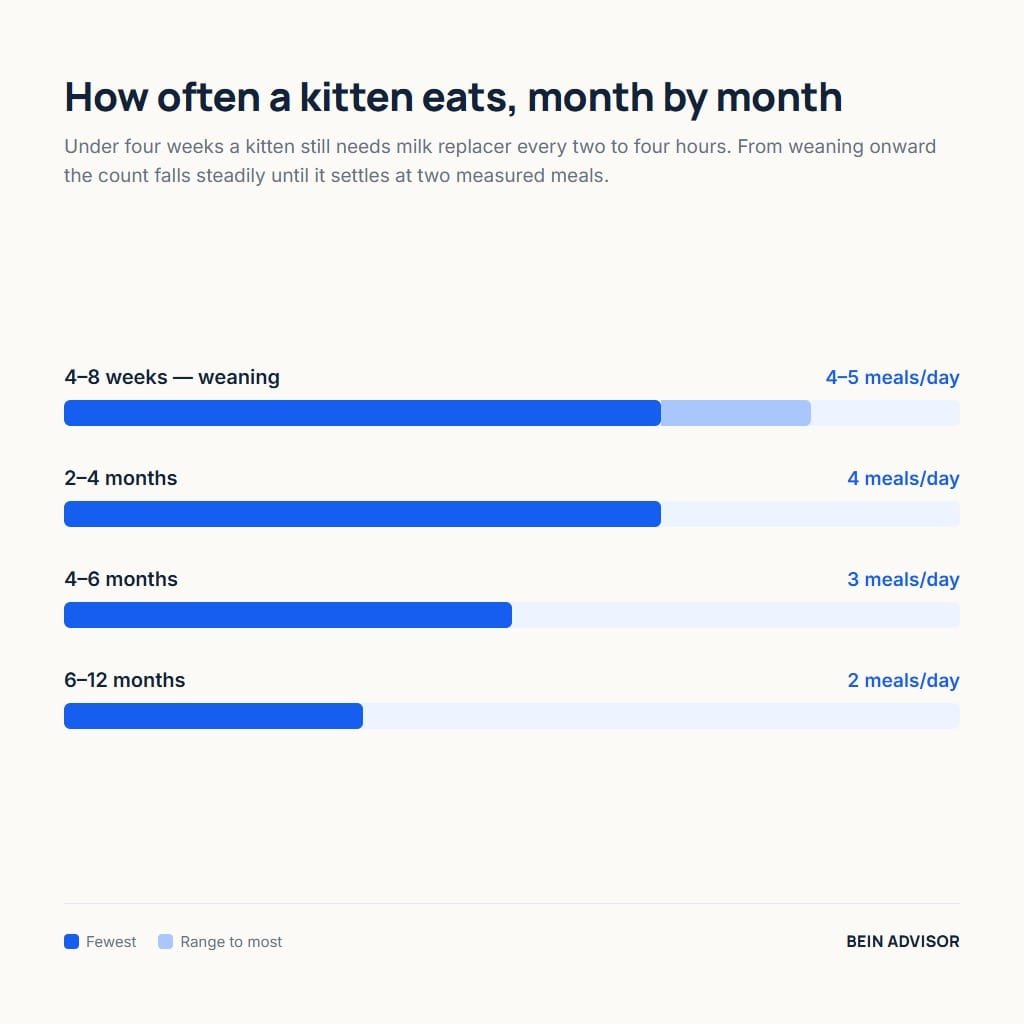
Feeding frequency drops as the kitten grows, while portion size slowly rises. Newborns under four weeks rely on milk replacer every few hours, day and night. After weaning, small frequent meals suit a tiny stomach that cannot hold much at once. Therefore, four meals a day is typical at two months, easing to three by four months. By six months, most kittens move comfortably to two measured meals daily. The table below summarizes a practical rhythm you can adapt to your own kitten. Always follow your vet’s advice for underweight, orphaned, or special-needs kittens.
| Age | Food Type | Meals per Day | Notes |
|---|---|---|---|
| 0–4 weeks | Kitten milk replacer | Every 2–4 hours | Bottle-feed; keep warm |
| 4–8 weeks | Wet food + milk replacer | 4–5 | Weaning stage |
| 2–4 months | Kitten wet/dry | 4 | Small, frequent meals |
| 4–6 months | Kitten wet/dry | 3 | Steady growth |
| 6–12 months | Kitten formula | 2 | Measured portions |
Portion control prevents both underfeeding and early weight gain. Use the feeding chart on the food package as a starting point, then adjust to body condition. You should feel the ribs easily under a thin layer of fat, with a visible waist from above. Moreover, weigh your kitten weekly so steady growth is easy to confirm. Treats should stay under a tenth of daily calories to protect appetite for balanced meals. Sudden appetite loss is a red flag and deserves a prompt vet call. In short, measured, age-appropriate feeding keeps growth smooth and digestion settled.
3. Litter Box Training Basics
Litter training is usually the easiest part of raising a kitten, because the instinct is already there. Kittens naturally want to dig and bury, so your job is to make the box obvious and pleasant. As a result, success often comes within days when the setup is right. The keys are an accessible box, the right litter, and a clean, quiet location. Meanwhile, harsh corrections or a dirty box are the fastest ways to cause accidents. This section covers how to choose equipment and how to guide those first attempts gently.
3.1 Picking the Right Litter and Box
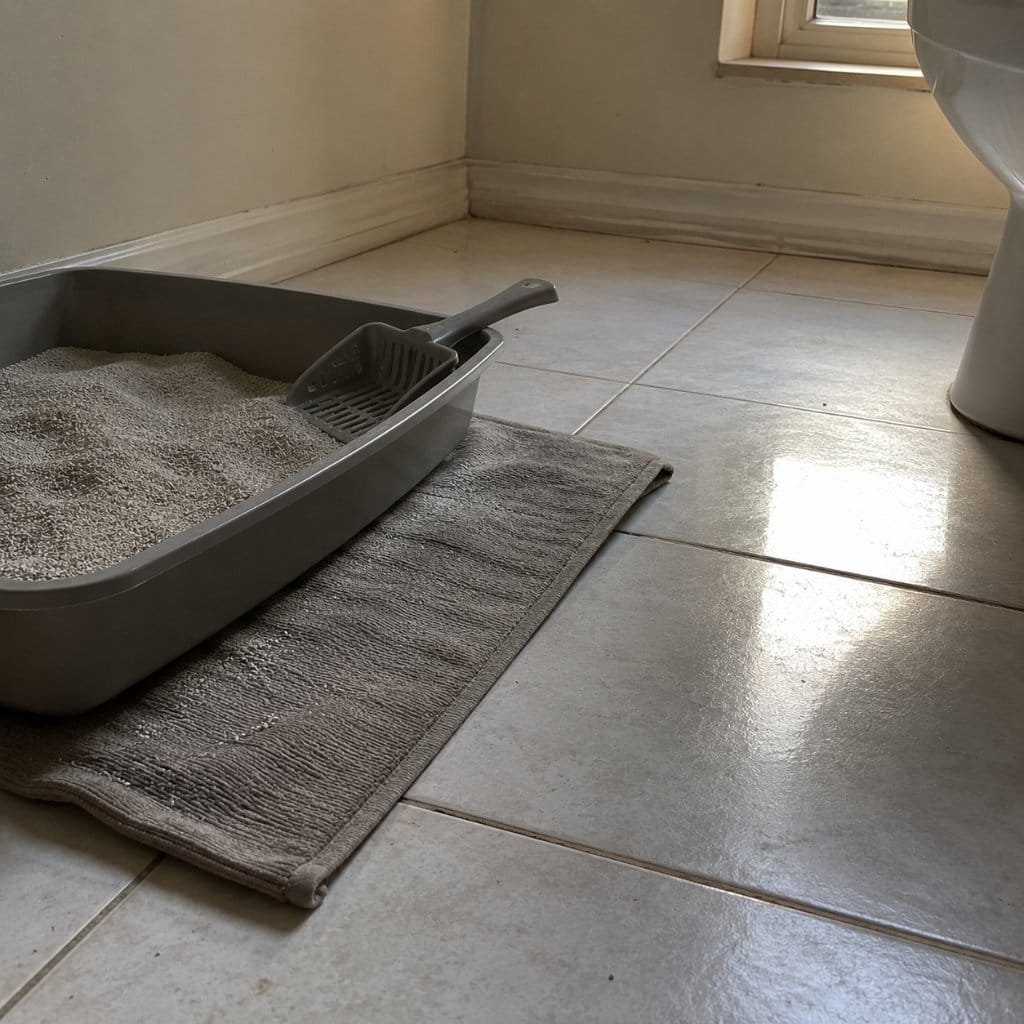
Size and height decide whether a kitten can actually use the box. A small kitten needs low sides it can step over without climbing or straining. Therefore, a shallow tray or a cut-down container works best until the kitten grows. Place one box per cat plus one spare, kept away from food and busy walkways. Unscented clumping litter suits most kittens, since strong perfumes can deter sensitive noses. Avoid switching litter types abruptly, because cats form quick preferences. A simple, consistent setup removes almost every reason a kitten would go elsewhere.
Cleanliness matters as much as the equipment itself. Scoop waste at least once or twice daily, and wash the box weekly with mild soap. In contrast, a soiled box pushes a fastidious kitten to find a cleaner corner. Closed or self-cleaning boxes can help busy households, yet some kittens find hoods intimidating at first. For that reason, introduce any covered design slowly and watch the reaction. Keep the litter depth around two inches so digging feels natural. With a clean, well-placed box, most litter problems simply never start.
3.2 Litter Training Step by Step
Begin by showing the kitten where the box is on the first day. Place it gently inside after meals, after naps, and after play, when it is most likely to go. Additionally, let the kitten dig and sniff without interruption so the surface feels familiar. If it uses the box, offer calm praise rather than loud excitement. Most kittens connect the location and the behavior within a few tries. Patience and timing do almost all of the work at this stage.
Accidents will happen, and your response shapes how fast they stop. Never punish a kitten for missing the box, because fear creates more accidents, not fewer. Instead, clean spots with an enzyme cleaner that fully removes the scent marker. Otherwise, a lingering smell invites a repeat in the same place. Meanwhile, review the basics if accidents continue: box size, cleanliness, litter type, and quiet location. Persistent problems, straining, or blood signal a health issue and a vet visit. Consequently, most setbacks resolve once the environment and timing are corrected.
4. Grooming and Daily Kitten Care
Grooming is a cornerstone of daily kitten care, and early handling makes it easy for life. Kittens that learn to enjoy brushing, nail trims, and gentle checks become calm adult patients. As a result, vet visits and home care stay low-stress for years. Short, positive sessions teach the kitten that touch is safe and rewarding. Furthermore, grooming time doubles as a health check, since you notice lumps, parasites, or sore spots early. This section covers coat care plus the small routines for nails, ears, and teeth.
4.1 Brushing and Coat Care
Regular brushing keeps the coat healthy and cuts down on hairballs. Short-haired kittens need a quick brush a few times a week, while long-haired breeds benefit from daily care. Use a soft brush or a fine comb, and follow the direction of the fur. Additionally, keep sessions brief and end on a good note with praise or a treat. Brushing removes loose hair the kitten would otherwise swallow during self-cleaning. For safe products and gentle scent options, see these vet-aware grooming picks. Early routines turn grooming into a bonding habit rather than a battle.
Bathing is rarely needed, because cats are skilled self-groomers. Reserve baths for messy accidents, and use only a kitten-safe shampoo with lukewarm water. Moreover, dry the kitten gently and keep it warm afterward to prevent chills. Most coat care happens through brushing, not washing. Watch for flakes, bald patches, or excessive shedding, since these can signal diet or skin problems. In contrast, a soft, even coat usually reflects good nutrition and overall health. Simple, consistent grooming keeps the skin and fur in excellent condition.
4.2 Nail, Ear, and Dental Kitten Care
Nail trims keep claws healthy and protect your furniture and skin. Use proper cat clippers and snip only the clear tip, well away from the pink quick. Therefore, trimming every couple of weeks becomes quick once the kitten is used to it. Handle the paws often during cuddles so touching the feet feels normal. A scratching post also lets the kitten condition its claws naturally. Together, regular trims and a good post make scratching manageable and pain-free.
Ears and teeth round out a complete kitten care routine. Check the ears weekly, and clean only the visible area with a vet-approved solution if needed. However, dark, smelly buildup or constant scratching points to mites and needs treatment. Dental care starts young, so introduce a soft finger brush and pet-safe toothpaste gradually. Meanwhile, daily or several-times-weekly brushing prevents painful disease later in life. Pair these checks with brushing sessions so the whole routine feels like one calm ritual. Small habits now save big dental and ear bills down the road.
5. Kitten Care for Health and Vaccinations
Preventive medicine is the most important investment in kitten care. A first vet visit confirms the kitten is healthy and sets up a vaccination and deworming plan. As a result, you protect against serious, often fatal, infectious diseases. Early checkups also catch hidden problems like heart murmurs or birth defects. For trustworthy background reading, the Cornell Feline Health Center offers reliable, vet-reviewed information. This section outlines the core vaccine timeline and the early signs that warrant a call. Always tailor the exact schedule to your vet’s advice and local risks.
5.1 The Core Vaccination Schedule
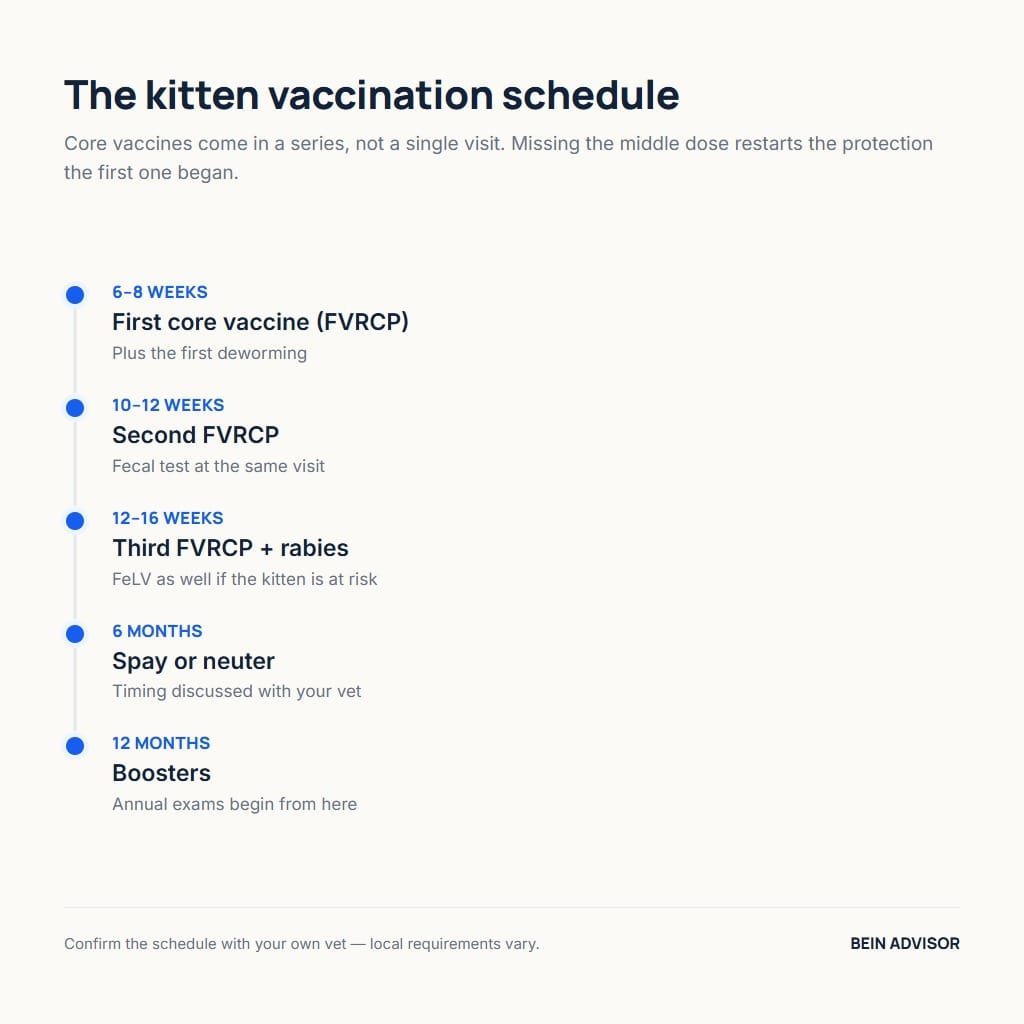
Kitten vaccines come in a series, because immunity builds in stages. The core combination vaccine protects against panleukopenia, calicivirus, and herpesvirus, the three big threats. Typically, it starts around six to eight weeks and repeats every three to four weeks. Additionally, a rabies vaccine is given once the kitten is old enough, often near three months. Deworming and a fecal test usually accompany these early visits. The table below shows a common timeline you can review with your vet. Booster timing then continues into adulthood to keep protection strong.
| Age | Vaccine / Milestone | Notes |
|---|---|---|
| 6–8 weeks | First core (FVRCP) | Plus first deworming |
| 10–12 weeks | Second FVRCP | Fecal test |
| 12–16 weeks | Third FVRCP + rabies | FeLV if at risk |
| 6 months | Spay / neuter | Discuss with vet |
| 12 months | Boosters | Annual exam begins |
Spaying or neutering is part of responsible long-term planning. The procedure prevents unwanted litters and lowers the risk of certain cancers and behaviors. Moreover, most vets schedule it around five to six months, though timing can vary. Microchipping during the same visit adds permanent identification if your cat ever wanders. Keep a simple record of dates, weights, and products used at each appointment. Consequently, you and your vet can track progress and never miss a booster. Organized records make every future visit faster and clearer.
5.2 Spotting Health Problems Early
Knowing what normal looks like helps you spot trouble fast. A healthy kitten is playful, eats well, and has clear eyes and a clean coat. However, watch for warning signs such as sneezing, runny eyes, diarrhea, or vomiting. Lethargy, hiding, or a sudden drop in appetite also deserve attention. Early action often turns a scary problem into a simple, treatable one. Trust your instincts and call the vet when something feels off.
Parasites are a frequent and manageable challenge in young cats. Fleas, ear mites, and intestinal worms are common, especially in rescued kittens. Therefore, use only kitten-safe parasite products at the correct weight and age. Never apply dog products, since some ingredients are toxic to cats. Meanwhile, keep the environment clean and wash bedding regularly to break parasite cycles. Routine fecal checks at the vet catch worms you cannot see. With prompt, age-appropriate treatment, most parasite problems clear quickly and rarely return.
6. Socialization, Play, and Behavior
The early weeks shape personality, so socialization belongs in any complete kitten care plan. Kittens have a sensitive window, roughly two to nine weeks, when new experiences feel normal. As a result, gentle exposure now builds a confident, friendly adult cat. Calm handling, varied sounds, and positive meetings teach the kitten that the world is safe. Meanwhile, play channels energy and prevents boredom-driven mischief. This section explains how to socialize well and how to guide healthy behavior from the start. Small, consistent efforts here produce a relaxed companion for years.
6.1 The Socialization Window
Positive early experiences create a cat that handles change with ease. Introduce gentle handling, different people, and household sounds in small, happy doses. Additionally, pair new things with treats and calm praise so they feel rewarding. Let the kitten meet other vaccinated pets slowly and only under supervision. For example, swap scents through a door before any face-to-face introduction. Never force contact, because fear during this window can leave lasting shyness. Gradual, upbeat exposure is the recipe for a sociable, adaptable cat.
Confidence grows when the kitten controls the pace of each new experience. Provide hiding spots and high perches so it can retreat and observe safely. Meanwhile, keep first encounters short and end them before the kitten gets overwhelmed. Reward brave, curious behavior with quiet attention rather than overwhelming handling. In contrast, repeated scary events can make a kitten withdrawn and reactive. Consistency from everyone in the home keeps the message clear and steady. Over time, this patient approach builds a cat that greets guests instead of hiding from them.
6.2 Play and Positive Behavior
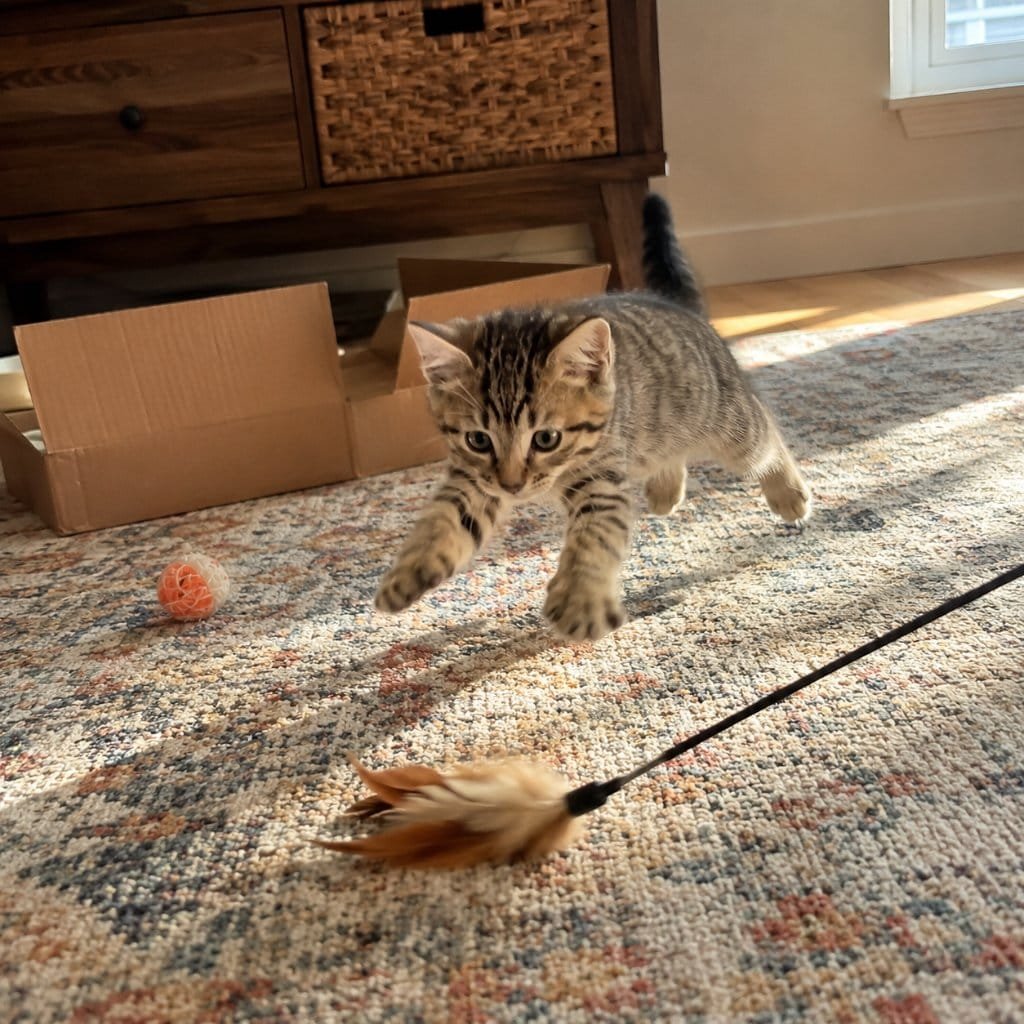
Play is how kittens learn to hunt, bond, and burn off energy. Use wand toys, balls, and puzzle feeders to satisfy the natural urge to chase. However, never use your hands as toys, since that teaches biting that is cute now and painful later. Redirect rough play to a toy the moment teeth or claws find skin. Additionally, two short play sessions a day keep a kitten happy and well-exercised. Structured play prevents most of the destructive habits owners worry about.
A predictable daily rhythm supports calm, confident behavior. Plan play before meals, since the hunt-eat-groom-sleep cycle mirrors natural feline patterns. As a result, a good play and feeding routine often leads to quieter, more restful nights. If your kitten is restless after dark, these indoor enrichment ideas can settle the household. Provide scratching posts to protect furniture and meet a deep instinct. Meanwhile, reward the behavior you want with praise and treats rather than punishing mistakes. Consistency and patience shape a polite, affectionate adult cat.
Kitten Care FAQ
How much does basic kitten care cost?
Costs vary by region, but the first year is the most expensive. Expect spending on vaccines, deworming, spay or neuter, food, litter, and basic supplies. Additionally, budget a small emergency fund, since young animals occasionally need unplanned care. Adopting from a shelter often bundles early vaccines and neutering, which lowers the total.
When should kitten care start with a vet?
Book a first checkup within the first week of bringing your kitten home. The vet confirms general health, starts the vaccine series, and checks for parasites. Moreover, this early visit is the best time to ask questions about diet and routine. After that, follow the booster schedule your vet recommends.
What is the best kitten care daily routine?
A good routine balances feeding, play, grooming, and rest at steady times. For example, offer measured meals, two short play sessions, and a quick grooming check daily. Meanwhile, keep the litter box clean and fresh water always available. Predictability helps a kitten feel secure and supports healthy behavior.
Can I leave a kitten alone during the day?
Young kittens should not be alone for long stretches at first. A kitten under four months does best with check-ins every few hours. However, a safe, kitten-proofed room with food, water, and toys helps during short absences. As the kitten matures, it can handle longer, calmer periods on its own.
Conclusion: Kitten Care Done Right
Great kitten care is really a series of small, consistent habits rather than one big effort. Set up a safe space, feed by age, and keep the litter box clean and inviting. Meanwhile, brush regularly, follow the vaccine schedule, and socialize during that crucial early window. Each routine supports the next, and together they build a healthy, confident cat. Therefore, the time you invest in the first months pays back for a decade or more.
Start with one step today, then add the next as it becomes second nature. Print a simple checklist, book that first vet visit, and stock the basics before your kitten arrives. Above all, lead with patience, because trust grows faster than any schedule. With steady kitten care and a little love, your new companion will thrive. The reward is a loyal, affectionate friend who greets you for years to come.
Free printable resource
The Cat Owner’s Toolkit
Great cat care comes down to a few steady habits. Keep them all in one place — 6 printable checklists & trackers you can stick on the fridge.
- New-cat checklist
- Vaccination & vet-visit tracker
- Feeding quick chart
- Daily & weekly routine
- Litter-box troubleshooter
- Emergency cheat sheet
Want the full guide? The Complete Cat Care Handbook has all 18 chapters with their own checklists — get it on Amazon as an eBook or Paperback.