

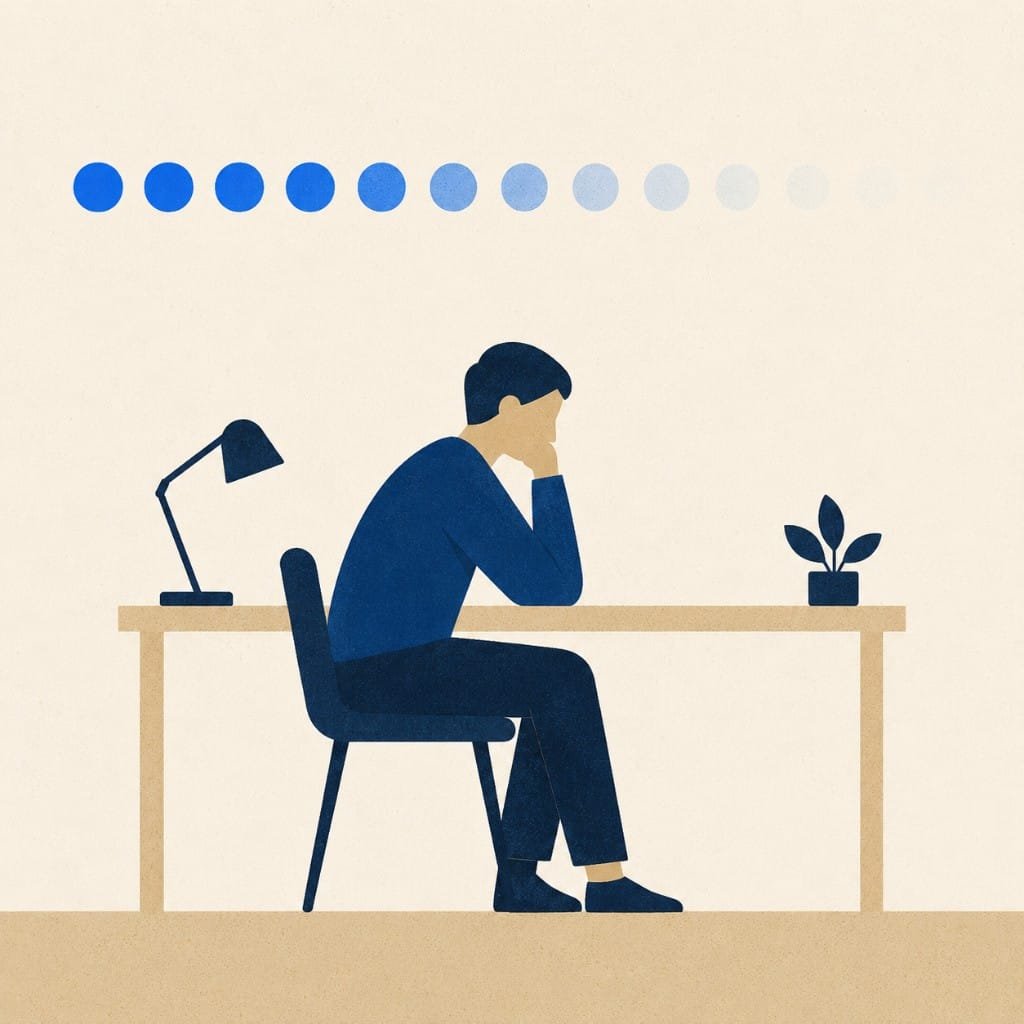
Every morning, you wake up with a full reserve of mental energy, but decision fatigue slowly drains it before lunch. Decision fatigue describes how your choices lose quality after a long run of decisions. Your brain, in fact, tires much like a muscle does after repeated effort. By evening, therefore, even picking a meal can feel strangely exhausting. Small choices pile up quietly, and each one skims a little energy off the top. As a result, late-day decisions often turn impulsive, careless, or avoided altogether.
This matters because your willpower and focus are limited resources, not infinite ones. When you spend them on trivial choices, less remains for the decisions that truly count. A unified daily routine fixes this by turning repeated choices into automatic habits. Instead of deciding everything fresh each day, you simply follow a set pattern. Consequently, your brain conserves energy for meaningful work and important judgments. Many high performers rely on this exact principle to stay sharp.
This article explains what decision fatigue is and why it builds through the day. Moreover, it shows how a standardized routine reduces that mental load step by step. You will learn six effortless habits that automate small choices and protect your energy. We also cover the common mistakes that quietly make decision fatigue worse. By the end, you will have a clear, evidence-based plan to reclaim your focus.
1. What Decision Fatigue Really Means
Decision fatigue is the gradual decline in decision quality that follows a long sequence of choices. Psychologists link it to the same system that powers self-control and willpower. Every choice, however small, draws from a shared pool of mental energy. When that pool runs low, your judgment weakens in fairly predictable ways. You may grow impulsive, or you may freeze and avoid deciding at all. The concept gained attention through research on willpower and ego depletion. According to the Cleveland Clinic overview of decision fatigue, the strain shows up as physical, mental, and emotional symptoms. Understanding this mechanism is the first real step toward managing it. Therefore, this section breaks down how the effect forms and what it looks like daily.
1.1 How Decision Fatigue Builds Through the Day
Decision fatigue builds slowly, and it usually starts the moment you wake up. First, you choose when to rise, what to wear, and what to eat. Next come dozens of micro-choices about email, messages, and your commute. Each decision seems trivial on its own, yet the cost accumulates quietly. By mid-morning, your mental reserve has already taken several small hits. In fact, researchers estimate that adults make thousands of choices every single day. Most of these happen automatically, but the demanding ones still drain real energy. As the hours pass, the pool keeps shrinking with every new judgment call. Consequently, the same task feels noticeably harder at four in the afternoon than at nine.
The afternoon is where decision fatigue tends to peak for most people. By then, you have spent hours weighing options, both big and small. Meanwhile, hunger and low blood sugar make the effect even stronger. This is why important meetings late in the day often feel so draining. Your brain, in turn, looks for shortcuts to avoid any further effort. Sometimes it picks the easiest option, and other times it delays the choice entirely. For example, a tired manager may simply approve the default rather than evaluate it. Studies of judges have even shown harsher rulings before breaks and lighter ones after. Therefore, the timing of a decision can matter almost as much as its content.
1.2 Everyday Signs You Are Mentally Depleted
Recognizing the signs of mental depletion helps you act before quality slips. One common signal is impulse buying, especially late in the day. Another is decision avoidance, where you postpone even simple choices for hours. You might also notice irritability over small, otherwise harmless questions. Procrastination frequently rises as your available mental energy falls. In addition, you may default to whatever requires the least thought, like fast food. These patterns are not signs of weakness or poor character. Instead, they reflect a brain that has simply run low on resources. Once you spot them, you can schedule demanding choices for earlier, fresher hours.
Physical cues often accompany these mental signs, and they are worth noting. You may feel a dull tiredness that sleep alone does not fully explain. Tension headaches and a short temper can appear after a choice-heavy day. Meanwhile, your focus narrows, and complex problems start to feel overwhelming. Many people reach for caffeine or sugar to push through this slump. However, those quick fixes rarely restore real decision-making capacity. A short walk, a small snack, or a brief pause works far better. For instance, stepping away for ten minutes can reset your judgment noticeably. Tracking when these signs appear, in turn, reveals your personal pattern of fatigue.
2. Why Decision Fatigue Drains Your Willpower
Willpower and decision-making share the same limited mental fuel. This connection explains why decision fatigue and weak self-control often appear together. When you resist a temptation, you spend energy that could have gone to a choice. Likewise, a hard decision leaves less willpower for the next temptation. Researchers describe this shared resource as a kind of daily mental budget. The budget refills with rest, food, and sleep, yet it stays finite each day. Therefore, spending it carelessly on trivial matters carries a real cost. This section explains the budget idea and shows how minor choices quietly empty it. With that understanding, the case for a unified routine becomes much clearer.
2.1 The Brain’s Limited Decision Budget
Think of your daily mental energy as a fixed budget you spend with each choice. The prefrontal cortex handles planning, judgment, and self-control for most decisions. This region works hard, and it consumes a notable share of your energy. As you make choices, the available balance steadily drops lower. Small purchases of energy add up, just like minor expenses drain a bank account. By contrast, rest and good nutrition act as deposits that restore the balance. Sleep, in particular, refills the budget more than any quick fix can. Without enough recovery, you begin each day with a smaller starting balance. Consequently, you reach the point of depletion faster than you might expect.
Nutrition also plays a measurable role in how this budget behaves. Your brain runs on glucose, and demanding choices burn through it quickly. When blood sugar dips, self-control and focus tend to weaken together. This is one reason late-afternoon choices often feel so genuinely hard. A balanced meal, on the other hand, helps steady your mental performance. However, sugar spikes followed by crashes can make the swings even worse. Hydration matters too, since even mild dehydration tends to cloud judgment. For example, a glass of water before a big choice is a small, smart habit. Managing these basics, ultimately, protects the budget that every decision draws upon.
2.2 When Small Choices Cause Big Decision Fatigue
The biggest source of decision fatigue is rarely one dramatic, difficult choice. Instead, it is the endless stream of tiny decisions you barely even notice. What to wear, what to eat, and which task to start all count. Each one is small, yet together they form a heavy daily load. This is why simplifying minor choices delivers such an outsized benefit. By removing them, you free real energy for decisions that genuinely matter. Many leaders famously wear similar outfits to cut this exact drain. They understand that saving willpower early protects their judgment later. As a result, their important calls stay sharper deeper into the day.
Consider two people who face the same demanding afternoon meeting. The first spent the morning agonizing over breakfast, clothes, and a messy inbox. The second instead followed a set routine and made almost no trivial choices. By meeting time, their mental reserves look very different indeed. The first person, therefore, struggles to focus and rushes the final decision. Meanwhile, the second stays composed and weighs the options carefully. This gap shows how small choices quietly shape big outcomes. In fact, the content of the meeting never changed at all. Only the decision fatigue each person carried into the room did.
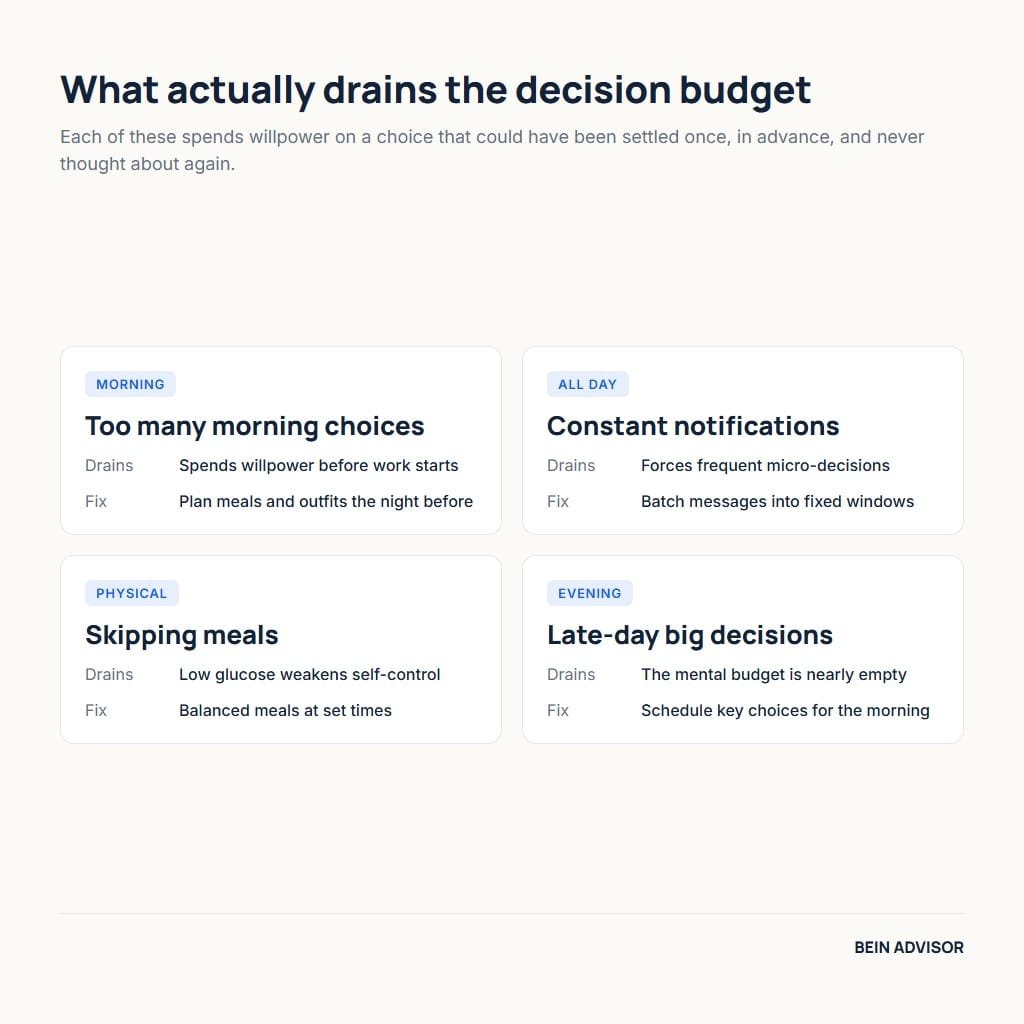
| Common Trigger | Why It Drains You | Simple Fix |
|---|---|---|
| Too many morning choices | Spends willpower before work even starts | Plan meals and outfits the night before |
| Constant notifications | Forces frequent, draining micro-decisions | Batch messages into fixed daily windows |
| Skipping meals | Low glucose weakens self-control | Eat balanced meals at set times |
| An overloaded to-do list | Choosing tasks all day drains focus | Time-block and pick the top three tasks |
| Late-day big decisions | The mental budget is nearly empty | Schedule key choices for the morning |
3. How a Unified Daily Routine Reduces Decision Fatigue
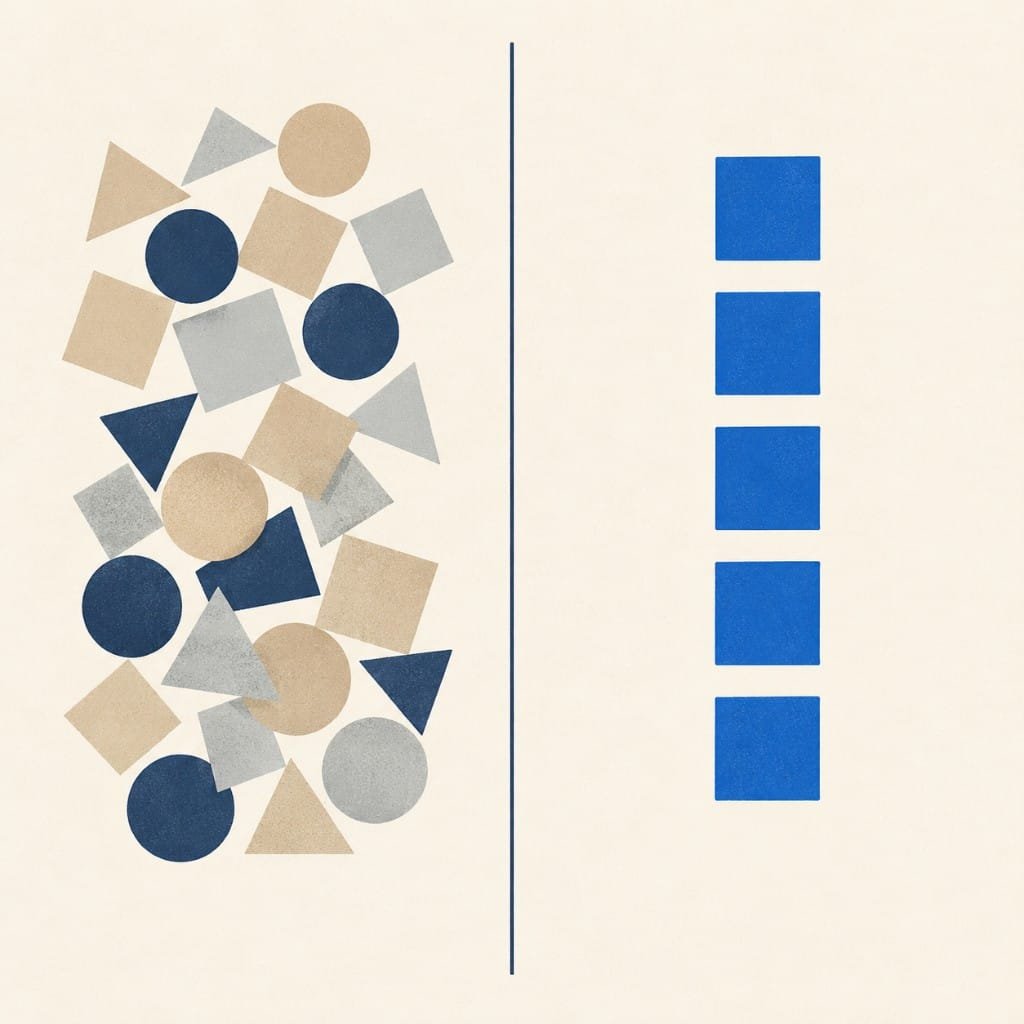
A unified daily routine is the most reliable defense against decision fatigue. The idea is simple: decide once, and then repeat the choice automatically. When a behavior becomes a habit, it no longer drains your mental budget. Instead, it runs quietly in the background while your focus stays free. This is why established routines feel almost effortless once they take hold. A standardized morning, for example, removes a dozen choices before work even begins. Over time, these saved decisions add up to a large energy surplus. You can then invest that surplus exactly where it truly matters. This section explains how habits replace choices and how to design a routine that lasts.
3.1 Turning Repeated Choices Into Automatic Habits
Habits form through a simple loop of cue, routine, and reward. A cue triggers the behavior, the routine runs, and a reward reinforces it. With enough repetition, the brain stops treating the action as a real decision. It becomes automatic, much like brushing your teeth each morning. This shift is exactly what protects your limited mental energy. Because the choice is settled, you no longer spend willpower on it. To build a habit, attach the new routine to an existing daily cue. For instance, lay out tomorrow’s clothes right after dinner every night. Consistency, more than motivation, is what cements the pattern over time. You can go deeper in our article on powerful daily habits.
Reducing friction makes new habits far easier to keep. The simpler a routine looks, the less willpower it demands to start. Therefore, prepare your environment so the right choice is the obvious one. Keep healthy snacks visible and bury the tempting ones out of sight. Likewise, set out your gym clothes if you plan to exercise at dawn. Small design tweaks like these quietly steer your behavior in the right direction. Habits also take time, so patience is essential during the early weeks. Some routines settle in a few weeks, while others need a couple of months. However, every single repetition makes the next one slightly more automatic. Eventually, the behavior runs on its own and stops costing energy.
3.2 Designing a Routine That Prevents Decision Fatigue
Designing a routine that prevents decision fatigue starts with auditing your choices. For one week, note the small decisions that seem to drain you most. Common culprits include meals, outfits, and the order of your morning tasks. Next, decide each of these once and lock the answer into a pattern. You might set a fixed breakfast, a weekly outfit plan, and a standard start time. Then protect the routine by repeating it until it feels completely natural. The goal here is not rigidity for its own sake. Rather, it is freeing your mind from choices that add little real value. A good routine should feel supportive, never like a cage. With practice, it quietly carries you through even the busiest mornings.
Planning tools can strengthen the routine you design. A simple checklist removes the need to remember each separate step. Likewise, a calendar that blocks fixed times turns intentions into reliable defaults. Some people use apps to organize tasks and automate their reminders. Our Notion AI review covers tools that reduce this kind of mental clutter. However, the tool itself matters less than the consistency behind it. Start with one or two anchors rather than rebuilding your whole day at once. For example, fix your wake time and your first work task this week. Once those feel automatic, add another small anchor to the routine. Gradual layering, in fact, lasts far longer than a sudden overhaul.
4. Six Practical Steps to Standardize Your Day
Turning theory into action requires a few concrete, repeatable steps. Each habit below removes a cluster of small choices from your day. Together, these six habits form a routine that shields you from decision fatigue. You do not need to adopt all of them at once. Instead, pick the steps that target your biggest energy leaks first. Start small, stay consistent, and let each habit settle before adding another. The aim is a day that mostly runs on autopilot for trivial matters. That way, your sharpest thinking stays available for the meaningful work. The following subsections walk through the most effective standardizing tactics.
4.1 Plan Meals and Outfits in Advance
Meals and clothing are two of the heaviest sources of daily micro-choices. Planning them in advance removes both from your morning entirely. On the weekend, for example, decide your weekday breakfasts and lunches together. Then prepare or shop for them so the choice is already made. A simple rotation of three or four meals keeps things easy and healthy. Because the menu is fixed, you skip the daily what-should-I-eat loop. This single habit can save dozens of small decisions each week. Moreover, it often improves nutrition, since planned meals beat rushed ones. Over a single month, the freed energy becomes genuinely noticeable.
Outfits deserve exactly the same advance treatment as meals. Choosing clothes each morning seems minor, yet it quietly taxes your focus. To avoid this, plan your whole week of outfits on a single evening. Lay them out, or at least decide them, so mornings stay smooth. A capsule wardrobe makes the entire process even simpler. With fewer, well-matched pieces, almost any combination works fine. As a result, you remove guesswork without sacrificing your style. Many successful people limit their wardrobe for exactly this reason. They would rather spend that energy on work than on fashion. In turn, their mornings start calmer and far more predictable.
4.2 Batch and Time-Block Similar Tasks
Batching means grouping similar tasks and doing them together in one block. This approach cuts the mental cost of constantly switching between contexts. Each switch forces a small decision about what to do next. By batching, you make that choice once for the whole group. For example, answer all your emails in two fixed windows rather than all day. Likewise, handle calls, errands, or admin work in their own dedicated blocks. Your brain stays in one mode, which preserves both focus and energy. Consequently, the work feels lighter even when the volume stays the same. Batching is a simple shift with a surprisingly large payoff.
Time-blocking takes batching one step further by assigning each block a fixed slot. You decide in advance what you will do and when you will do it. As a result, the nagging question of what now disappears from your day. Your calendar, rather than your willpower, drives the whole schedule. Reserve your sharpest hours for demanding, high-value work. Then place routine tasks in the lower-energy parts of the day. This alignment respects both your natural rhythm and your limited mental budget. You can read more about structured focus in our 5 Second Rule article. With practice, time-blocking turns a chaotic day into a calm, guided one.
4.3 Build Morning and Evening Anchors
Anchors are fixed routines that bookend your day with real stability. A strong morning anchor sets the tone before the world makes its demands. Wake at the same time, and then follow the same first few actions. You might drink water, stretch gently, and review your top task in order. Because the sequence never changes, it requires almost no thought. This calm, automatic start protects your energy for the hours ahead. Avoid checking your phone first, since it floods you with new choices. Instead, keep the opening minutes simple and fully within your control. A steady morning, in turn, makes the rest of the day feel manageable.
An evening anchor prepares both your mind and your next morning. Spend a few quiet minutes setting out tomorrow’s essentials before bed. Lay out clothes, pack your bag, and note your first task. As a result, you wake to a day that is already partly decided. A consistent wind-down also improves sleep, which refills your mental budget. Dim the lights, step away from screens, and slow down on purpose. Because sleep restores willpower, this habit pays off the very next morning. Keep the routine short so it stays easy to repeat. Over time, these anchors become the steady frame that holds your whole day together.
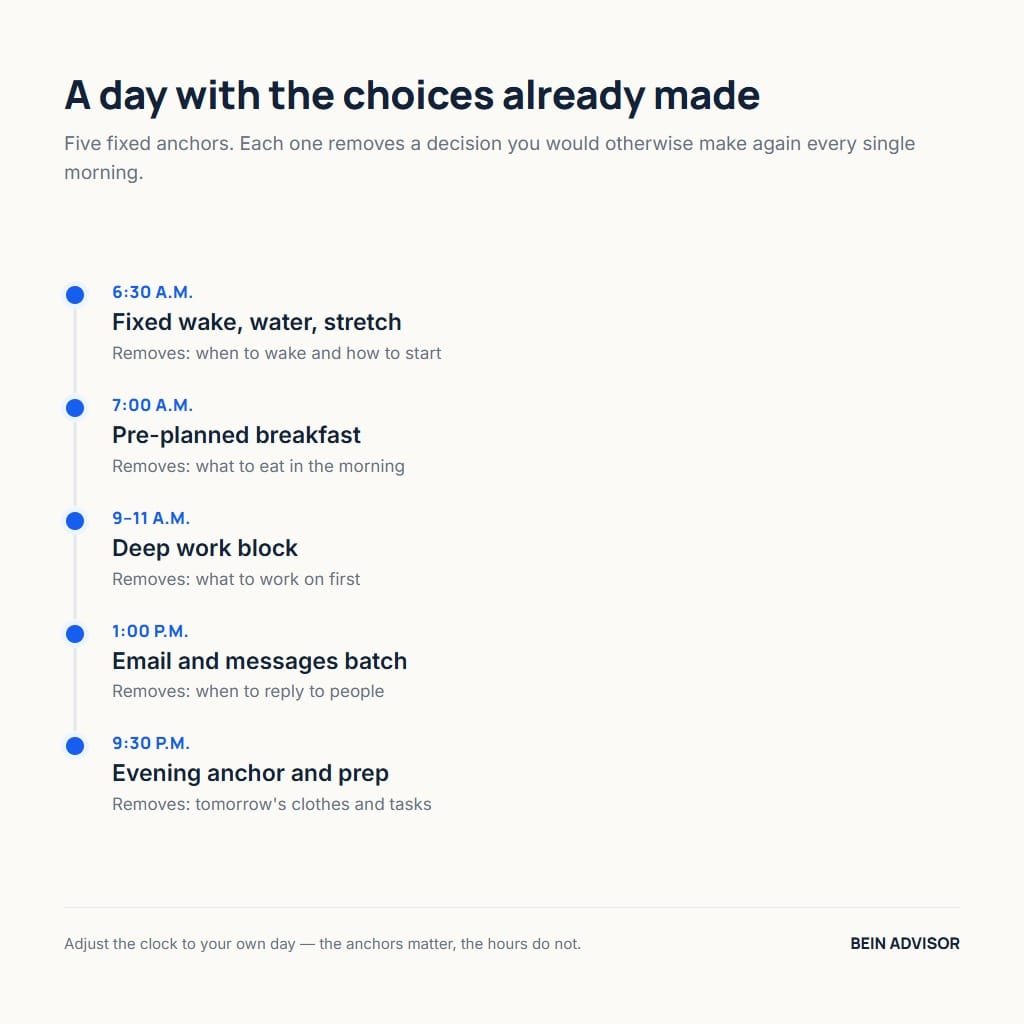
| Time | Anchor or Block | Decisions Removed |
|---|---|---|
| 6:30 a.m. | Fixed wake, water, and stretch | When to wake and how to start |
| 7:00 a.m. | Pre-planned breakfast | What to eat in the morning |
| 9:00 to 11:00 a.m. | Deep work block | What to work on first |
| 1:00 p.m. | Email and messages batch | When to reply to people |
| 9:30 p.m. | Evening anchor and prep | Tomorrow’s clothes and tasks |
5. Common Mistakes That Worsen Decision Fatigue
Even a good routine can backfire if you apply it the wrong way. Some people chase a perfect system and create new stress in the process. Others let screens and notifications quietly refill their day with choices. These mistakes can undo the benefits a routine is meant to deliver. Fortunately, each one is easy to correct once you see it clearly. This section covers the two traps that most often worsen decision fatigue. By avoiding them, you keep your routine light, flexible, and genuinely useful. The goal, after all, is less mental strain, not a stricter set of rules.
5.1 Over-Optimizing and Rigid Routines
The first trap is treating your routine as a rigid, unbreakable system. When every minute is scheduled, small disruptions start to feel like failures. As a result, the routine that should reduce stress instead begins to create it. Life is unpredictable, so your structure genuinely needs room to flex. Build in buffer time and allow yourself easy, guilt-free adjustments. A missed workout or a late start should never trigger a spiral. Instead, simply return to the pattern again the next day. Remember that the routine serves you, not the other way around. Flexibility, in fact, is what makes a routine sustainable for years.
Over-optimizing is a closely related mistake well worth avoiding. Some people spend more energy designing the perfect system than actually living it. They tweak apps, charts, and schedules instead of doing the real work. Ironically, this endless planning becomes another source of decision fatigue. A simple routine you actually follow beats a complex one you abandon. Therefore, start with a few solid anchors and resist constant fiddling. Give each change a couple of weeks before you judge it. Meanwhile, focus on steady consistency rather than flawless perfection. The best routine is the one that quietly disappears into your day.
5.2 Decision Fatigue From Digital Overload
Digital overload is one of the fastest ways to rebuild decision fatigue. Every notification asks you to choose whether to respond right now. Each app, feed, and message adds another small decision to your day. Before long, your carefully saved energy leaks away through the screen. To prevent this, set firm boundaries around your devices. Turn off non-essential notifications and check messages in fixed windows. A phone on silent during deep work protects your focus completely. Likewise, keep the first hour of your morning screen-free whenever possible. These limits, though simple, defend the routine you worked hard to build.
Social media deserves special attention in any plan against decision fatigue. The endless feed is designed to capture your choices and attention. Each scroll presents new options, opinions, and small judgments. Consequently, a few idle minutes can quietly drain real mental energy. Schedule specific times for these apps rather than checking them constantly. Better still, remove the most distracting ones from your home screen. A short, intentional digital detox each week can reset your focus. For example, a screen-free evening often restores more energy than people expect. Guarding your attention, ultimately, protects the very budget your routine is meant to save.
Conclusion: Decision Fatigue and Reclaiming Your Daily Energy
Decision fatigue is a real and measurable drain on your daily focus. Yet it is also one of the most manageable challenges you face. By standardizing the small choices, you free real energy for what truly matters. A unified routine turns dozens of daily decisions into effortless habits. Over time, that saved willpower compounds into sharper thinking and calmer days. Start with one anchor, such as a fixed wake time or a planned breakfast. Then layer in batching, time-blocking, and screen boundaries as each habit settles.
Remember that the aim here is freedom, not a rigid set of rules. A flexible routine should lighten your mind, never cage it. As you reduce decision fatigue, you will notice more energy for meaningful work. You will also make better choices when they genuinely count the most. Begin today with a single change and let it slowly become automatic. Your future self, facing a busy afternoon, will quietly thank you for it.