Cat hydration is one of the most underrated pillars of feline health. Because cats descend from desert animals, good cat hydration does not come naturally to them. Many cats drink too little and live in a state of mild, chronic dehydration. Over time, that quietly strains the kidneys and urinary tract.
This article shows you how to keep your cat properly hydrated with simple changes. You will learn how much water cats need and how to spot early dehydration. Moreover, it covers fountains, bowl placement, wet food, and emergency warning signs. Each tip is easy to apply and makes a real difference.
Every recommendation reflects mainstream veterinary advice on feline water intake. Therefore, you can trust these steps for kittens, adults, and seniors alike. By the end, you will have a clear plan to protect your cat’s kidneys for life. The reasons come first, because they make every later tip stick.
1. Why Cat Hydration Matters
Understanding why water matters makes every cat hydration habit easier to keep. Water supports digestion, circulation, temperature control, and waste removal. As a result, even mild dehydration affects how a cat feels and functions. The kidneys are especially vulnerable, since they filter blood using large amounts of water. Cats are prone to kidney and urinary disease, and poor hydration raises that risk. Therefore, steady water intake is genuine preventive medicine. This section explains the biology that makes hydration so important for cats.
1.1 The Desert Origins of Low Thirst
Domestic cats descend from desert-dwelling wildcats that rarely drank standing water. Instead, they got most of their moisture from fresh prey, which is about seventy percent water. As a result, cats evolved a weak thirst drive compared with dogs or humans. Even when mildly dehydrated, a cat may not feel motivated to drink. This mismatch becomes a problem on a modern diet of dry kibble. Because kibble holds little moisture, a kibble-fed cat must drink far more to compensate. Understanding this origin explains why owners must actively encourage water intake.
This low thirst drive has real health consequences over a lifetime. Chronic mild dehydration concentrates the urine and stresses the bladder and kidneys. Consequently, cats face higher rates of urinary crystals, blockages, and kidney disease. Male cats in particular can suffer dangerous urinary blockages. Moreover, older cats with declining kidneys need every bit of moisture they can get. Good cat hydration is therefore not optional pampering but daily protection. Small, consistent habits prevent expensive and painful problems later.
1.2 How Water Protects Your Cat’s Body
Water is involved in nearly every process inside your cat’s body. It cushions joints, regulates temperature, and carries nutrients to cells. In addition, it helps flush toxins and waste through the kidneys and bladder. When hydration drops, blood thickens and organs work harder than they should. As a result, a dehydrated cat may seem tired, constipated, or off its food. These subtle signs are easy to miss until a problem grows serious. Keeping water flowing keeps the whole system running smoothly.
Hydration and diet are closely linked in feline health. A cat on moisture-rich food carries a built-in water supply at every meal. In contrast, a cat on dry food alone depends entirely on the water bowl. For a fuller picture of feeding, see our article on complete cat nutrition. Combining good food with good hydration multiplies the benefit. Together, they protect the kidneys, coat, and energy levels for years.
2. How Much Water Your Cat Needs
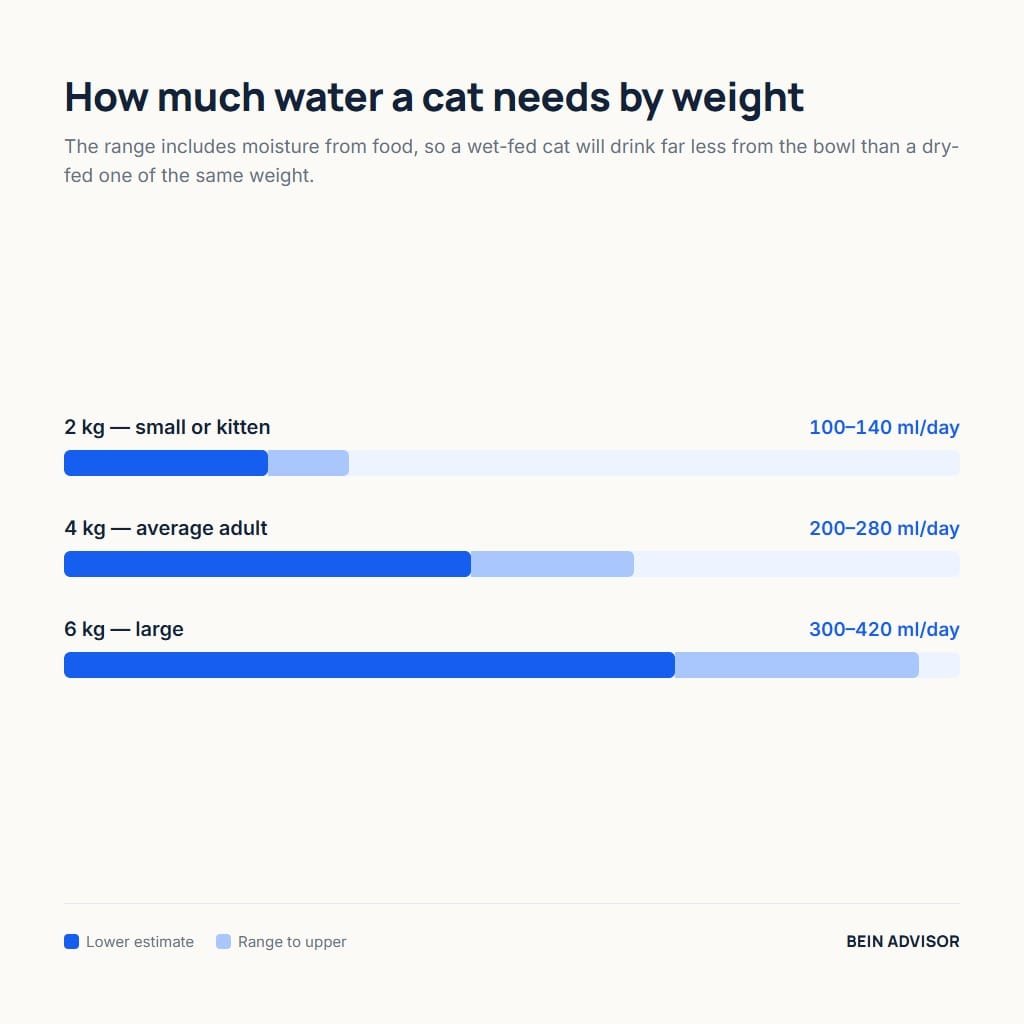
Knowing the target makes cat hydration easy to manage day to day. As a rough guide, a cat needs about fifty to seventy milliliters of water per kilogram of body weight daily. However, that total includes moisture from food, not just the bowl. Therefore, a cat on wet food drinks less from the bowl than one on kibble. Activity, weather, and health also shift the numbers. The table below offers a practical starting point by weight. Always treat these figures as estimates, not strict rules.
2.1 Daily Water Targets by Weight
Body weight is the simplest way to estimate a cat’s water needs. A typical four-kilogram adult cat needs roughly two hundred to two hundred eighty milliliters daily. Yet most of that can come from food if the diet is moisture-rich. For example, a cat eating mostly wet food may only drink a little extra from the bowl. In contrast, a kibble-fed cat of the same size must drink far more. Use the chart as a baseline, then watch your individual cat. Consistent intake matters more than hitting an exact number.
| Cat Weight | Approx. Daily Water | Notes |
|---|---|---|
| 2 kg (small/kitten) | 100–140 ml | Includes food moisture |
| 4 kg (average adult) | 200–280 ml | Less from bowl if wet-fed |
| 6 kg (large) | 300–420 ml | Watch in hot weather |
| Senior or ill | Often higher | Follow vet guidance |
Several factors raise or lower these daily targets. Hot weather, exercise, and nursing all increase a cat’s water needs. Likewise, illness with vomiting or diarrhea can quickly drain fluids. Kidney disease and diabetes also push water requirements higher. Therefore, seniors and sick cats deserve extra attention to intake. Meanwhile, a sudden spike or drop in drinking is itself a warning sign. Tracking the trend helps you catch health changes early.
2.2 How to Check Cat Hydration at Home
You do not need lab tools to gauge your cat’s hydration at home. The simplest method watches urine output in the litter box. A well-hydrated cat produces regular, moderately sized clumps each day. In contrast, very small or very few clumps suggest low intake. Additionally, you can measure bowl water at the start and end of the day. This rough tracking reveals whether your cat drinks enough. Over a week, the pattern tells you more than any single day.
A quick physical check adds another layer of insight. Gently lift the skin between the shoulder blades and release it. In a hydrated cat, the skin snaps back almost instantly. However, if it returns slowly, the cat may be dehydrated. Dry, tacky gums are another simple clue worth checking. These tests are not perfect, so pair them with overall behavior. When several signs point to dehydration, contact your veterinarian promptly.
3. Signs of Poor Cat Hydration
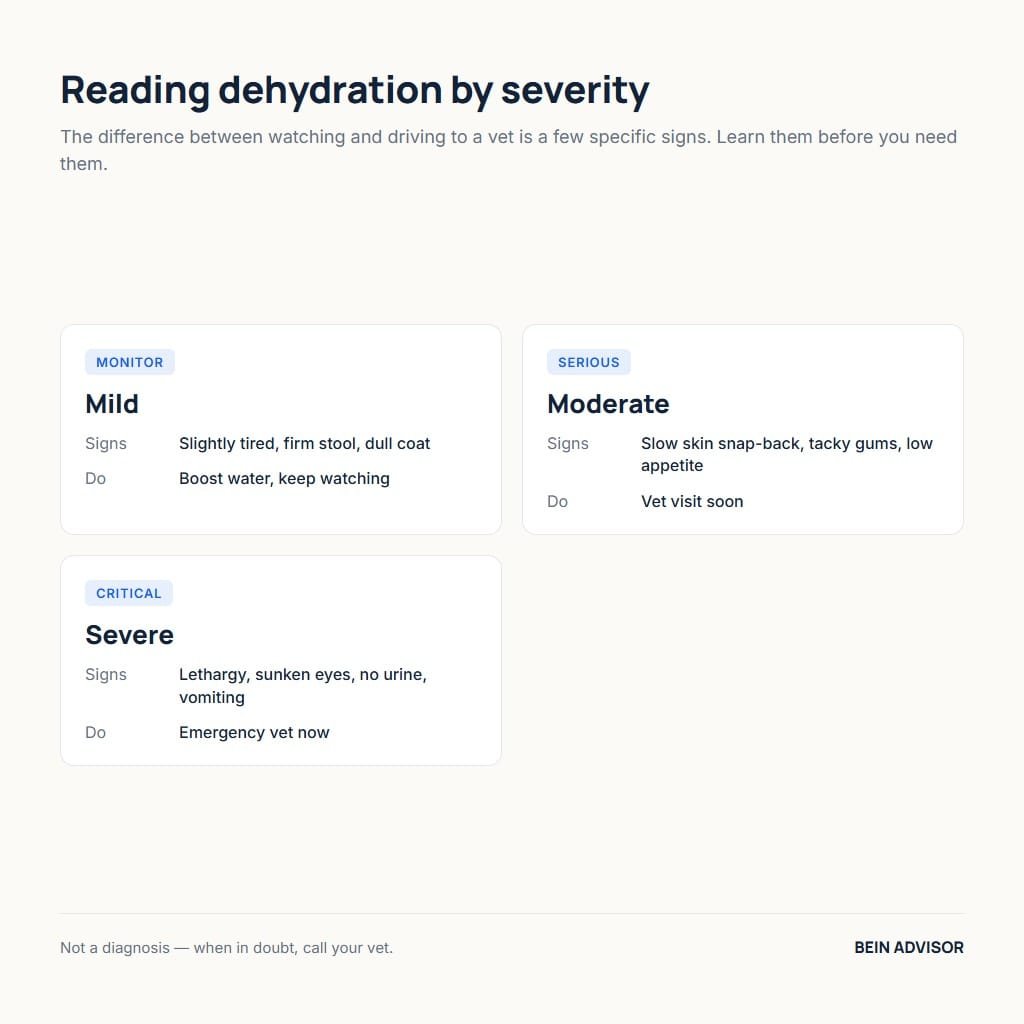
Spotting dehydration early is a core cat hydration skill for every owner. Cats hide discomfort well, so the signs can be subtle at first. As a result, many owners miss the slow slide into chronic dehydration. The clues range from mild changes in energy to clear medical emergencies. Knowing them helps you act before a small issue becomes serious. The table below groups common signs by severity. When in doubt, a quick vet call is always the safe choice.
3.1 Early and Mild Warning Signs
Mild dehydration often shows up as small changes in behavior. A cat may seem a little tired, less playful, or slightly off its food. Additionally, the stool may become firm or infrequent, hinting at constipation. The coat can look duller than usual as the skin loses moisture. These signs are easy to brush off, yet they matter. Catching them early lets you boost water intake before problems grow. Therefore, pay attention to subtle shifts in your cat’s daily routine.
A few simple home checks confirm mild dehydration. The skin-tent test, lifting the scruff gently, is a quick first step. Slow snap-back suggests the cat needs more fluids. Meanwhile, press a finger on the gums, which should feel moist, not sticky. Sunken-looking eyes can also signal a fluid deficit. None of these tests is conclusive on its own. However, several together justify more water and a closer watch.
| Severity | Signs | What to Do |
|---|---|---|
| Mild | Slightly tired, firm stool, dull coat | Boost water, monitor |
| Moderate | Slow skin snap-back, tacky gums, low appetite | Vet visit soon |
| Severe | Lethargy, sunken eyes, no urine, vomiting | Emergency vet now |
3.2 When Cat Hydration Becomes Critical
Severe dehydration is a medical emergency that needs fast action. Warning signs include marked lethargy, refusal to eat or drink, and repeated vomiting. A very slow skin snap-back and dry, pale gums point to serious fluid loss. Additionally, straining in the litter box with little urine is a red flag for blockage. For related symptoms, review these common cat illness signs. In these cases, do not wait or rely on home remedies alone. Call your vet or an emergency clinic immediately.
Certain cats face higher risk and deserve extra vigilance. Kittens dehydrate quickly because of their small size and fast metabolism. Likewise, senior cats with kidney disease can decline rapidly without enough fluids. Cats that are vomiting or have diarrhea lose water fast. Therefore, monitor these groups closely during heat or illness. Prompt veterinary fluids can be life-saving in a true emergency. When the signs are severe, speed matters more than anything else.
4. How to Improve Cat Hydration
The good news is that improving cat hydration is usually simple and cheap. Small environmental changes can dramatically increase how much a cat drinks. Because cats are fussy about water, the setup matters as much as the supply. Fresh water, the right bowl, and smart placement all play a role. Moreover, fountains and multiple stations tempt reluctant drinkers. This section covers the most effective, vet-backed ways to encourage drinking. Try a few and watch which your cat prefers.
4.1 Bowls, Fountains, and Placement
The bowl itself influences whether a cat drinks willingly. Many cats dislike narrow bowls that touch their sensitive whiskers. Therefore, a wide, shallow ceramic or stainless bowl often works best. Keep water far from the litter box, and ideally away from the food too. Cats instinctively avoid drinking near waste or where they eat. Additionally, place several water stations around the home for easy access. The more convenient the water, the more a cat tends to drink.
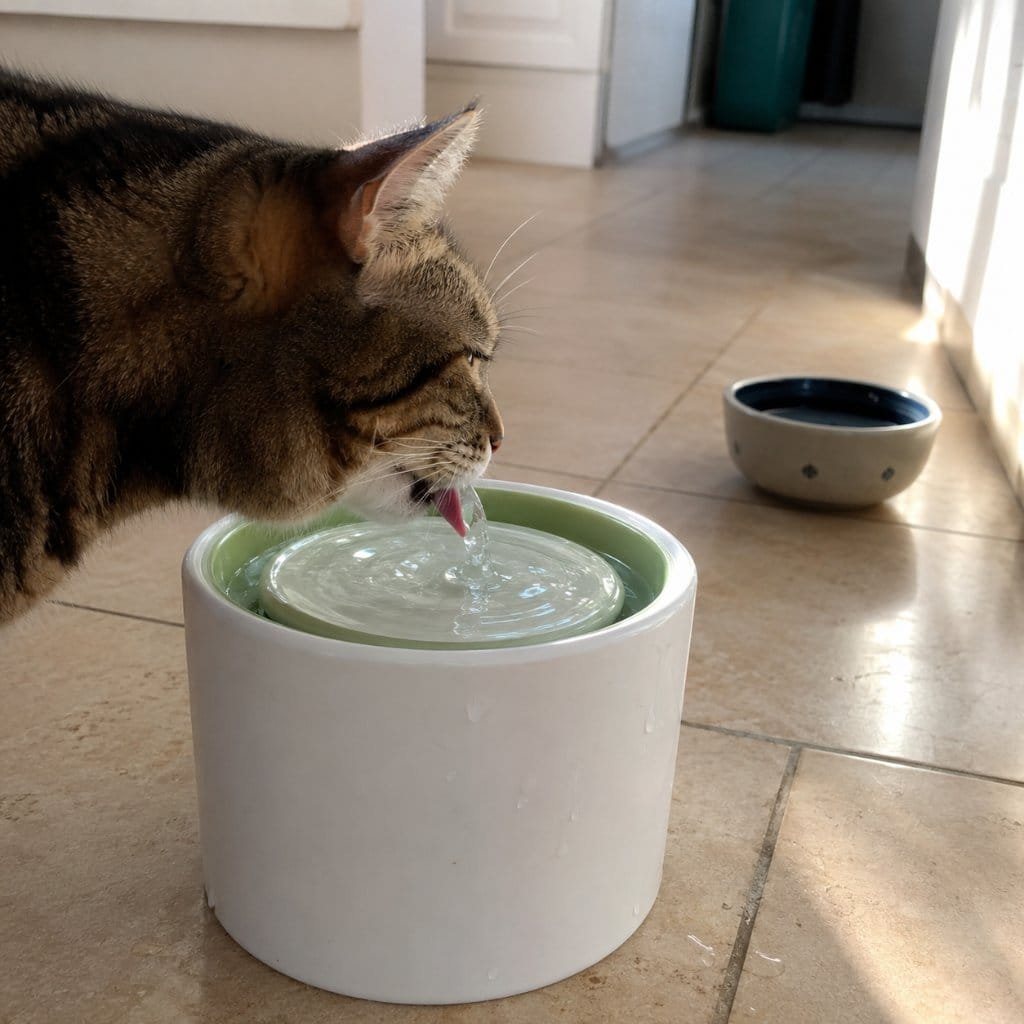
A pet water fountain is one of the best hydration upgrades available. Cats are drawn to moving water, which they instinctively see as fresher. As a result, many fussy cats drink far more from a fountain than a still bowl. Choose a quiet model that is easy to clean, and change the filter on schedule. Refresh the water daily even in a fountain, since cats notice staleness. For multi-cat homes, more than one fountain prevents competition. This single device often solves chronic low-drinking almost overnight.
4.2 Daily Habits That Boost Cat Hydration
Simple daily routines keep water appealing and intake high. Refill bowls with fresh, cool water at least once or twice a day. Wash bowls regularly, because film and odor discourage drinking. In addition, some cats prefer filtered or bottled water over hard tap water. You can also add a little water or low-sodium broth to meals. For feeding-based ideas, our cat nutrition article explains moisture-rich diets. These small habits add up to meaningful extra hydration each day.
A few creative tricks tempt even the most stubborn cat to drink. Try ice cubes in the bowl on a hot day, which many cats find fun. Likewise, a splash of water from canned tuna can flavor a fresh bowl. Some cats enjoy a dripping tap, a habit you can indulge briefly. Meanwhile, kittens learn good habits early, so start young when you can. For new arrivals, our kitten care article covers early routines. Experiment patiently until you find what your cat loves.
5. Wet Food and Cat Hydration
Diet is the most powerful lever for improving cat hydration. Because wet food is about three-quarters water, it hydrates with every meal. As a result, switching some or all meals to wet food raises total intake effortlessly. This approach is especially valuable for cats that refuse to drink enough. Moreover, it suits seniors and cats prone to urinary problems. This section explains how food and water work together. Used well, diet can do most of the hydration work for you.
5.1 Why Wet Food Hydrates So Well
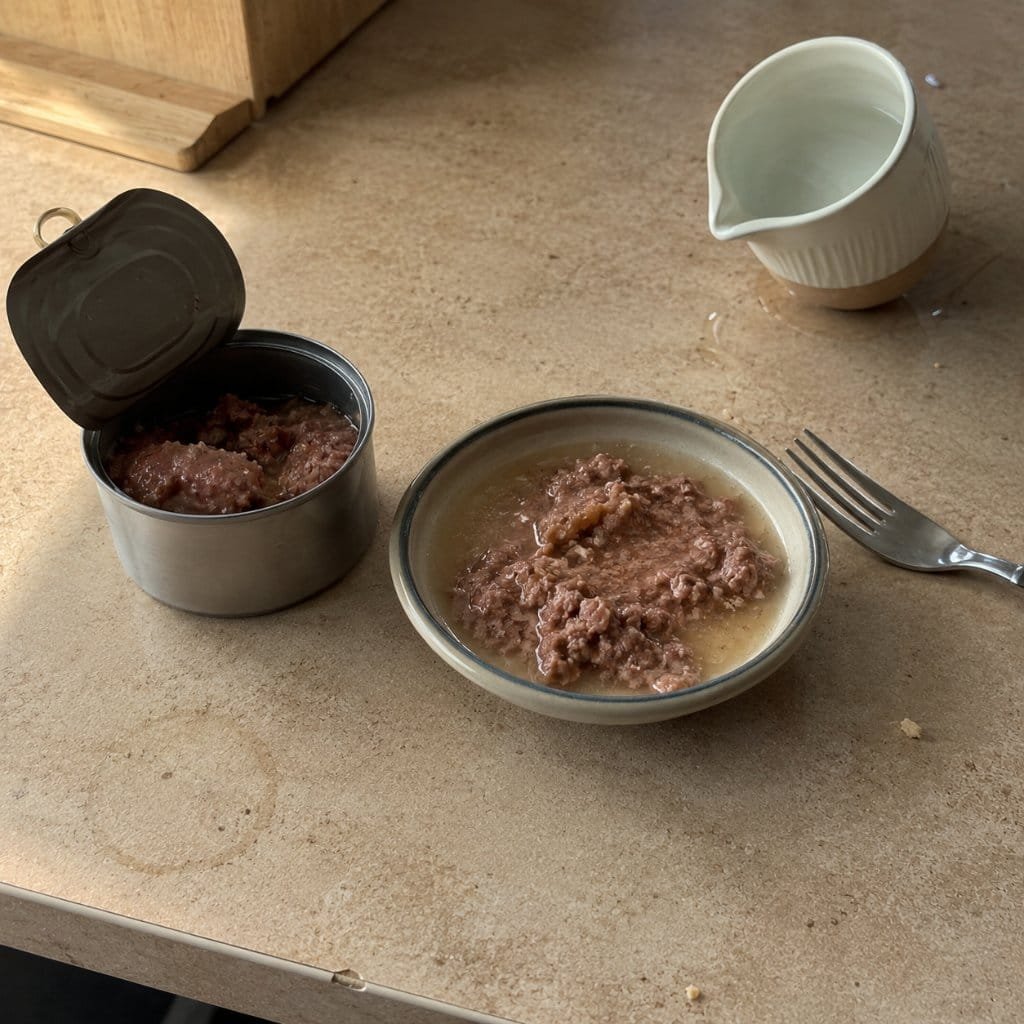
Wet food mirrors the moisture a cat would get from natural prey. A typical canned diet is around seventy to eighty percent water by weight. Consequently, a cat eating wet food takes in significant fluid without visiting the bowl. This built-in moisture eases the burden on the kidneys and bladder. In contrast, dry kibble contains only about ten percent water. Therefore, kibble-only cats must drink much more to stay balanced. For many cats, wet food is the simplest hydration fix available.
The benefits of wet food reach beyond hydration alone. Higher moisture supports urinary health and can help prevent crystals. Additionally, wet food tends to be rich in animal protein and lower in carbohydrate. The strong aroma also helps tempt picky or older cats to eat. However, wet food costs more and spoils quickly once opened. For that reason, many owners feed a mix of wet and measured dry. This balance delivers moisture, nutrition, and convenience together.
5.2 Combining Food and Water for Cat Hydration
You can blend strategies to maximize a cat’s total water intake. Serving wet food at meals while keeping fresh water available covers both bases. Moreover, adding a tablespoon of warm water to wet food creates a hydrating gravy. Some owners rehydrate kibble or freeze-dried meals with extra water. These tweaks raise moisture without changing the food a cat already likes. Therefore, you improve hydration while respecting your cat’s preferences. Gradual changes work best, since cats resist sudden differences.
Transition slowly when adding or increasing wet food. Start by mixing a little wet food into the current diet over a week. Meanwhile, watch the litter box for healthier, more regular output. If your cat refuses change, try different textures like pâté or chunks. Patience usually wins, even with stubborn eaters. For cats with medical conditions, ask your vet before major diet shifts. A thoughtful food plan keeps hydration high and digestion steady.
6. Cat Hydration for Every Life Stage
Hydration needs shift across a cat’s life, so cat hydration should adapt too. A kitten, an adult, and a senior each face different risks and requirements. As a result, a single fixed plan leaves some cats under-hydrated. Kittens dehydrate fast, while seniors often battle kidney decline. Sick cats, meanwhile, can lose fluids rapidly through vomiting or diarrhea. This section tailors hydration to each stage and situation. Matching the approach to the cat keeps every life stage protected.
6.1 Hydration for Kittens and Adults
Kittens have small bodies and fast metabolisms, so they dehydrate quickly. Therefore, fresh water must always be available once they start weaning. Wet food helps young kittens get moisture while they learn to drink. Additionally, shallow bowls suit their tiny size and build good habits early. For a full routine, our kitten care article walks through the first months. Starting hydration habits young pays off for the rest of a cat’s life. Watch kittens closely during heat or any illness.
Healthy adult cats usually maintain hydration well with the right setup. Still, indoor adults on dry food can drift toward chronic low intake. Therefore, fountains, multiple bowls, and some wet food keep adults on track. Monitor litter box output as a simple ongoing check. Active or outdoor cats need more water, especially in warm weather. Meanwhile, any sudden change in drinking deserves attention. Steady habits keep an adult cat’s kidneys healthy for the long run.
6.2 Hydration for Senior and Sick Cats
Senior cats face the highest hydration stakes of any group. Aging kidneys filter less efficiently and lose more water in the process. As a result, many older cats slide toward dehydration and kidney disease. Moisture-rich wet food becomes especially valuable at this stage. Additionally, easy-access water stations help cats with stiff joints. Regular vet checks catch kidney changes before they become severe. Extra attention to a senior’s water intake can add comfortable years.
Illness can drain a cat’s fluids faster than normal drinking can replace. Vomiting, diarrhea, fever, and diabetes all increase water loss. Therefore, a sick cat needs close monitoring and prompt veterinary care. Never force water into a cat’s mouth, since that risks aspiration. Instead, offer appealing wet food and fresh water, and call the vet. In serious cases, a vet may give fluids under the skin or by IV. Quick action during illness protects your cat from dangerous dehydration.
Cat Hydration FAQ
How do I check my cat hydration at home?
Use the skin-tent test by gently lifting the scruff and watching it settle. Quick snap-back means good hydration, while slow return suggests a deficit. Additionally, check that the gums feel moist and the litter clumps look normal. If several signs point to dehydration, call your veterinarian.
How can I get my cat to drink more water?
Offer a pet fountain, since cats love moving water and often drink more from it. Moreover, use wide bowls, place several around the home, and keep the water fresh. Adding wet food to the diet also raises intake effortlessly. Experiment until you find the setup your cat prefers.
Does wet food improve cat hydration?
Yes, wet food is one of the most effective ways to boost cat hydration. Canned diets are roughly seventy to eighty percent water, adding fluid at every meal. As a result, they ease the load on the kidneys and bladder. Many owners feed a mix of wet and dry for balance.
Conclusion: Cat Hydration Made Easy
Good cat hydration comes down to a few easy habits rather than constant effort. Offer fresh water in wide bowls, add a fountain, and keep stations away from food and litter. Meanwhile, lean on moisture-rich wet food to do much of the work for you. Watch for early dehydration signs, and act fast when they appear. Together, these steps protect your cat’s kidneys and energy for years.
Start with one change today, such as adding a fountain or a daily bowl refresh. Then build the rest of your cat hydration routine step by step. When drinking changes suddenly or signs worry you, your veterinarian is the best guide. With a little planning and fresh water always close by, your cat can stay healthy and bright. Steady hydration truly is one of the kindest gifts you can give your cat.
Free printable resource
The Cat Owner’s Toolkit
Great cat care comes down to a few steady habits. Keep them all in one place — 6 printable checklists & trackers you can stick on the fridge.
- New-cat checklist
- Vaccination & vet-visit tracker
- Feeding quick chart
- Daily & weekly routine
- Litter-box troubleshooter
- Emergency cheat sheet
Want the full guide? The Complete Cat Care Handbook has all 18 chapters with their own checklists — get it on Amazon as an eBook or Paperback.