
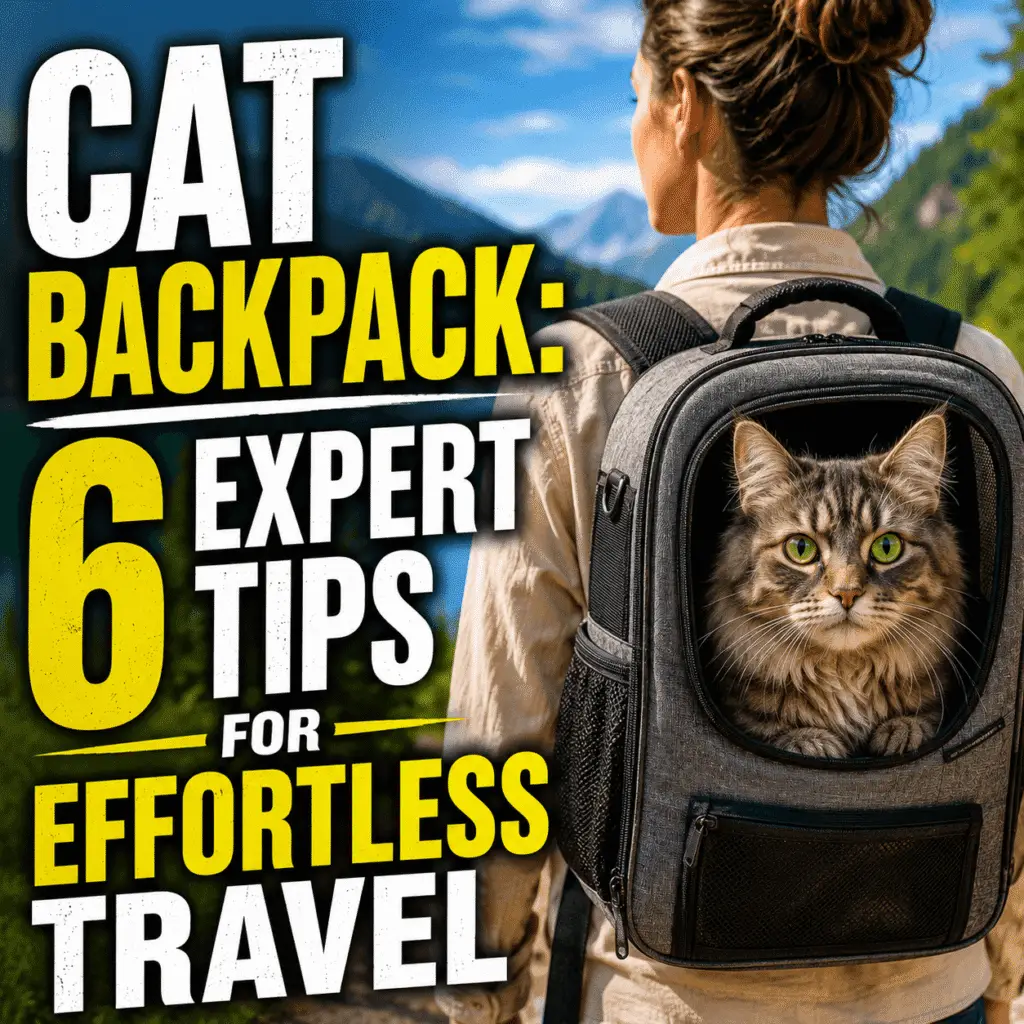
A good cat backpack opens up a whole world of safe adventures with your cat. Whether for vet trips or outdoor strolls, the right cat backpack keeps your pet secure and calm. Carrying a cat hands-free is easier and safer than juggling a traditional carrier. With the right pick and a little training, outings become enjoyable for both of you.
This article helps you choose the right carrier and use it well. You will learn key features, how backpacks compare to strollers, and how to train your cat. Moreover, it covers safe travel and tips for kittens, seniors, and anxious cats. Each step keeps comfort and safety at the center.
Our recommendations focus on comfort, ventilation, and security, the features that matter most. Therefore, you can shop with confidence rather than guesswork. By the end, you will know exactly what to look for and how to start. The benefits come first, because they show what a good carrier makes possible.
1. Why Use a Cat Backpack
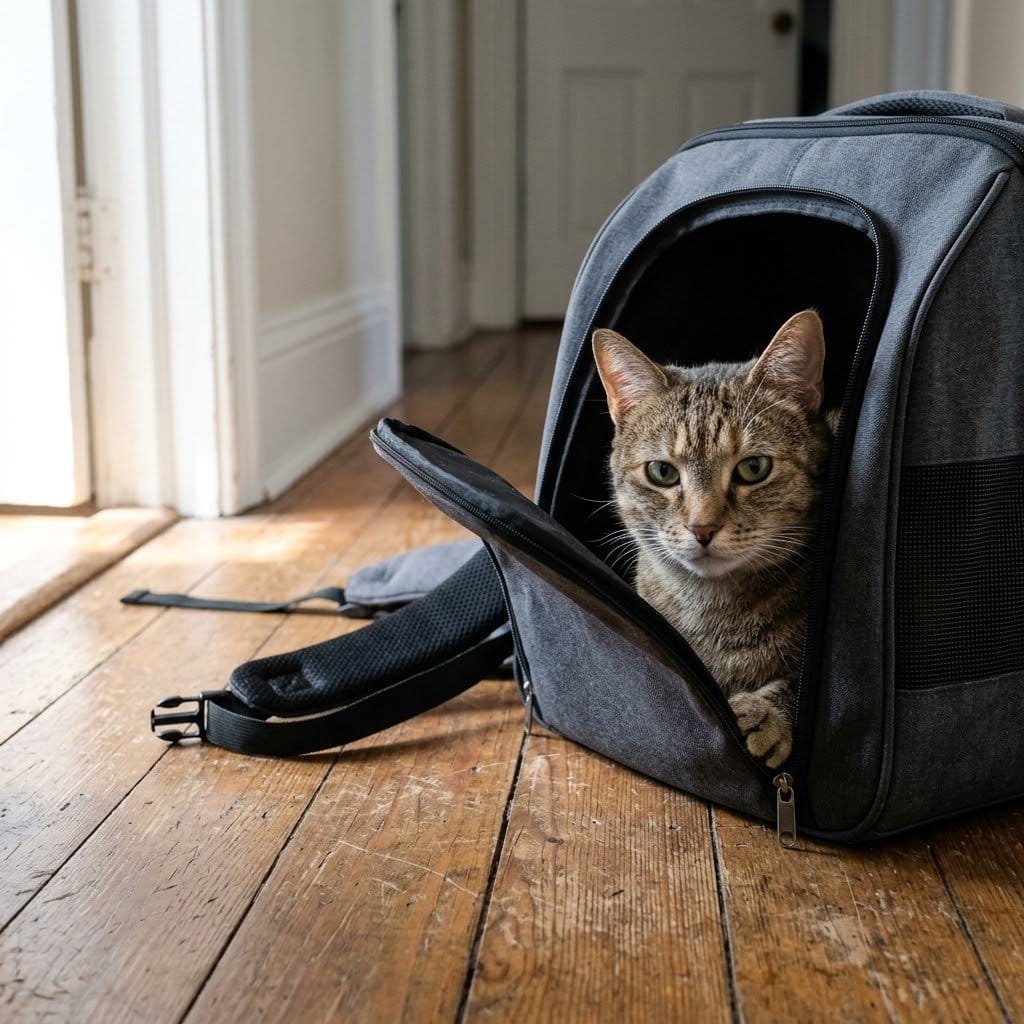
A cat backpack solves problems that a basic carrier cannot. It frees your hands, spreads weight comfortably, and keeps your cat close and secure. As a result, vet visits, travel, and adventures all become far easier. Many cats also feel safer in a snug, enclosed space against your back. Moreover, outings provide mental stimulation that indoor cats often lack. This section explains the real benefits behind the trend. The right reasons help you decide if a backpack suits your cat.
1.1 Benefits for You and Your Cat
The biggest benefit is hands-free, balanced carrying. A backpack spreads your cat’s weight across both shoulders comfortably. As a result, you can manage doors, stairs, and public transport with ease. The enclosed design also keeps your cat secure and prevents escapes. For vet trips, that security reduces stress for everyone involved. Many cats settle quickly when held snugly against a warm back. Convenience and safety together make outings genuinely practical.
Outings can also be enriching when introduced the right way. New sights, sounds, and smells stimulate a curious, confident cat. As a result, a backpack adventure can be a healthy mental workout. Our article on indoor cat enrichment explains why stimulation matters. However, not every cat enjoys the outdoors, and that is fine. A backpack still helps nervous cats during necessary trips. Used thoughtfully, it adds safe variety to a cat’s world.
1.2 Is a Cat Backpack Right for Your Cat?
A backpack suits some cats far better than others. Confident, curious, and social cats often adapt quickly to one. As a result, these cats may genuinely enjoy short outings and adventures. Shy or anxious cats may prefer a backpack only for necessary trips. Therefore, watch your cat’s temperament before planning big adventures. Health matters too, since some cats find motion stressful. Matching the carrier to the cat keeps every trip humane.
Consider your cat’s age and health before choosing a backpack. Kittens and young adults usually adjust to new experiences fastest. In contrast, senior cats may prefer a roomy, low-stress stroller instead. Cats with anxiety or medical conditions need a vet’s input first. Meanwhile, very large cats need a bigger, sturdier design. Never force a frightened cat into outings it dislikes. Respecting your cat’s limits keeps the backpack a positive tool.
2. Choosing the Right Cat Backpack
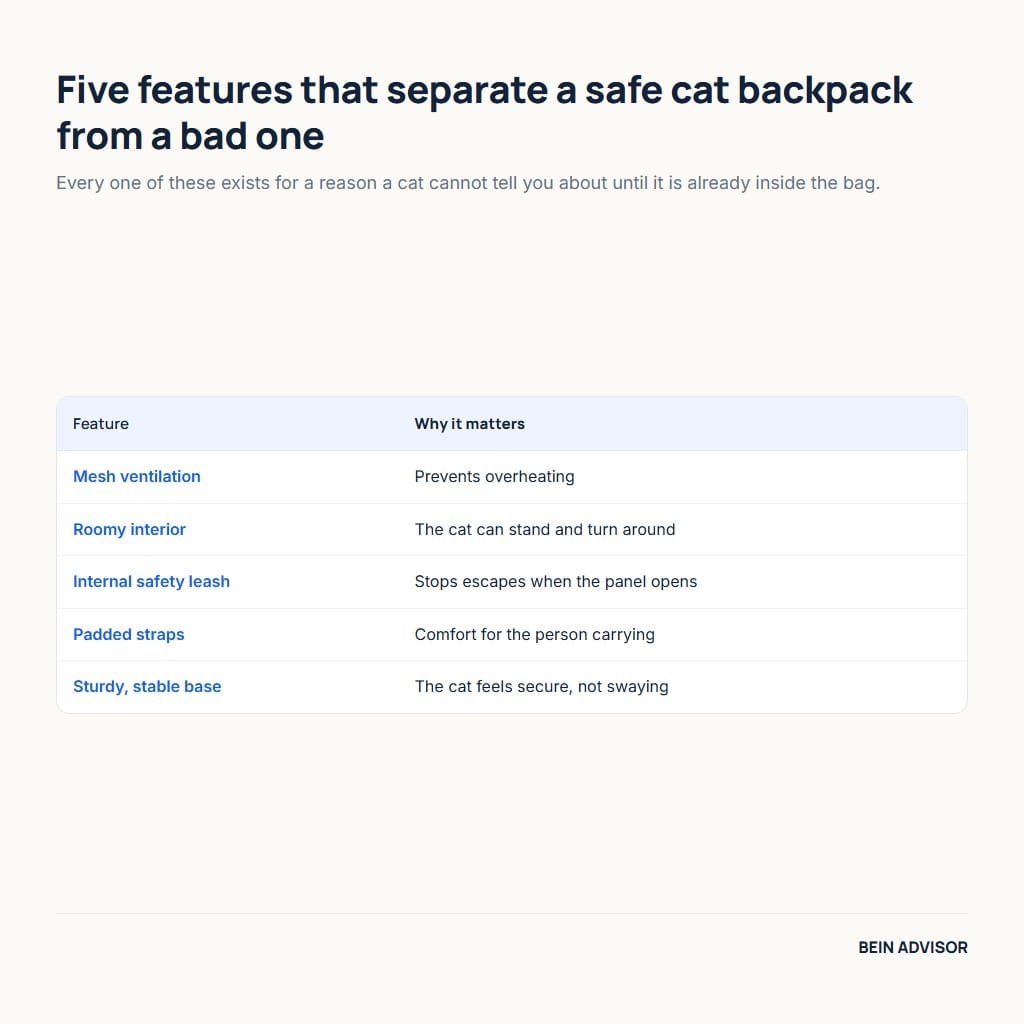
The right features turn a cat backpack from stressful to comfortable. Ventilation, size, and security matter more than looks or price. As a result, knowing what to check prevents a poor, unsafe purchase. A good backpack keeps your cat cool, calm, and unable to escape. Moreover, comfort for the carrier matters on longer trips. This section covers the key features to look for. The table below summarizes them at a glance.
2.1 Key Cat Backpack Features
Ventilation is the single most important feature to check. Cats overheat easily, so mesh panels on multiple sides are essential. As a result, good airflow keeps your cat cool and comfortable inside. Avoid bubble designs without extra ventilation, since they can trap heat. Size comes next, since a cat must stand, turn, and lie down. A cramped backpack causes stress and stiff joints on longer trips. Always match the backpack size to your cat’s measurements.
| Feature | Why It Matters |
|---|---|
| Mesh ventilation | Prevents overheating |
| Roomy interior | Cat can stand and turn |
| Internal safety leash | Stops escapes |
| Padded straps | Comfort for the carrier |
| Sturdy, stable base | Cat feels secure |
Security and comfort features round out a good choice. An internal clip leash prevents a sudden dash when you open the bag. As a result, you can offer fresh air or a peek without risking escape. Padded, adjustable straps protect your shoulders on longer outings. A firm, stable base helps the cat feel grounded rather than swaying. Easy-clean, water-resistant materials handle accidents and weather. These details separate a safe backpack from a risky one.
2.2 Sizing and Safety Checks
Correct sizing keeps your cat comfortable and calm. Measure your cat’s length and weight, then check the backpack’s limits. As a result, you avoid a bag that is cramped or unstable. Your cat should be able to stand, turn around, and lie down inside. A backpack that is too big can let a cat slide and feel insecure. Therefore, aim for snug but not tight, with room to settle. Good sizing is the foundation of a positive experience.
A few safety checks prevent accidents before they happen. Test all zippers, since flimsy ones can fail or be nudged open. As a result, sturdy, lockable zippers are worth seeking out. Confirm the internal leash clip is strong and well-anchored. Check seams and the base for solid, durable construction. Meanwhile, ensure the straps adjust to fit you comfortably. A careful inspection turns a new backpack into a trusted tool.
3. Cat Backpack vs Stroller
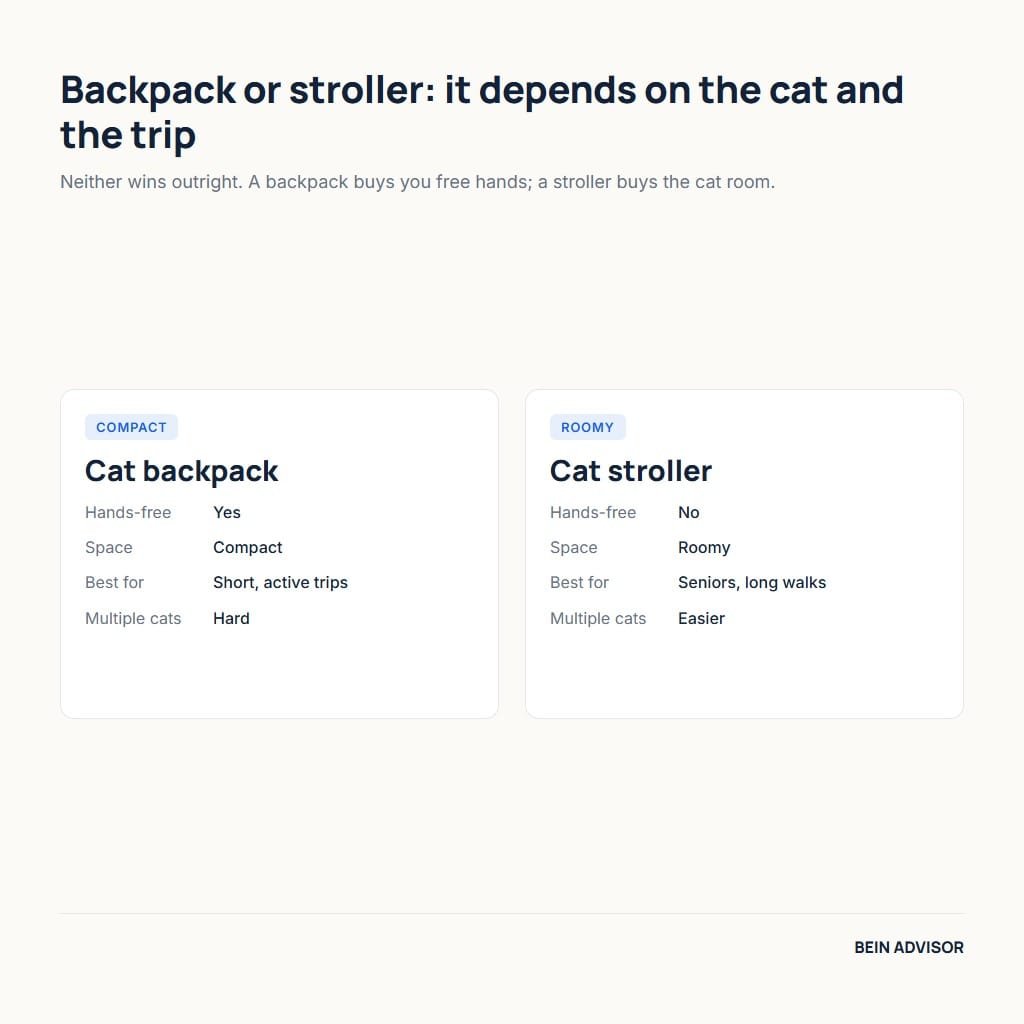
A cat backpack and a stroller each suit different cats and trips. Backpacks are compact and hands-free, while strollers offer space and comfort. As a result, the best choice depends on your cat and your plans. Backpacks shine for short trips, transit, and active outings. Strollers, on the other hand, suit seniors, multiple cats, or long walks. This section compares the two so you can choose wisely. The table below lays out the key trade-offs.
3.1 When a Backpack Wins
A backpack is ideal for short, active, hands-free trips. It keeps your cat close and leaves your arms free for other tasks. As a result, it excels on public transport, bikes, and quick errands. The snug fit also reassures many cats during stressful vet visits. A backpack stores easily and travels well when not in use. For one calm or small cat, it is often the simplest option. Compact convenience is the backpack’s biggest strength.
| Aspect | Backpack | Stroller |
|---|---|---|
| Hands-free | Yes | No |
| Space/comfort | Compact | Roomy |
| Best for | Short, active trips | Seniors, long walks |
| Multiple cats | Hard | Easier |
Backpacks do have limits worth weighing. They suit one cat at a time and a limited weight range. As a result, large or multiple cats may not fit comfortably. The enclosed space can also feel warm on hot days without good airflow. Therefore, limit backpack time and watch for overheating. Some cats simply dislike being on a person’s back. Knowing these limits helps set realistic expectations.
3.2 When a Stroller Wins
A stroller is better for comfort, space, and longer outings. It offers room to stretch, fresh air, and a smooth ride. As a result, strollers suit senior cats and those with joint issues. They also carry multiple cats or supplies far more easily. The relaxed pace works well for long walks in the park. For cats that dislike being carried, a stroller feels less confining. Comfort and capacity are the stroller’s clear advantages.
Strollers have trade-offs of their own to consider. They are bulky, harder to store, and not hands-free. As a result, they are less practical for transit or quick trips. Stairs and tight spaces can be awkward with a stroller. Therefore, match the choice to where you will actually go. Some owners keep both for different situations. Choosing by use, not trend, gives the best results.
4. Getting Your Cat Comfortable
Even the best carrier fails without patient training. Cats need time to see a backpack as safe rather than scary. As a result, a slow, positive introduction is essential. Rushing the process creates fear that is hard to undo. Treats, familiar scents, and short sessions build trust steadily. This section walks through introducing the carrier step by step. A calm start makes every future trip easier.
4.1 Introducing the Backpack Slowly
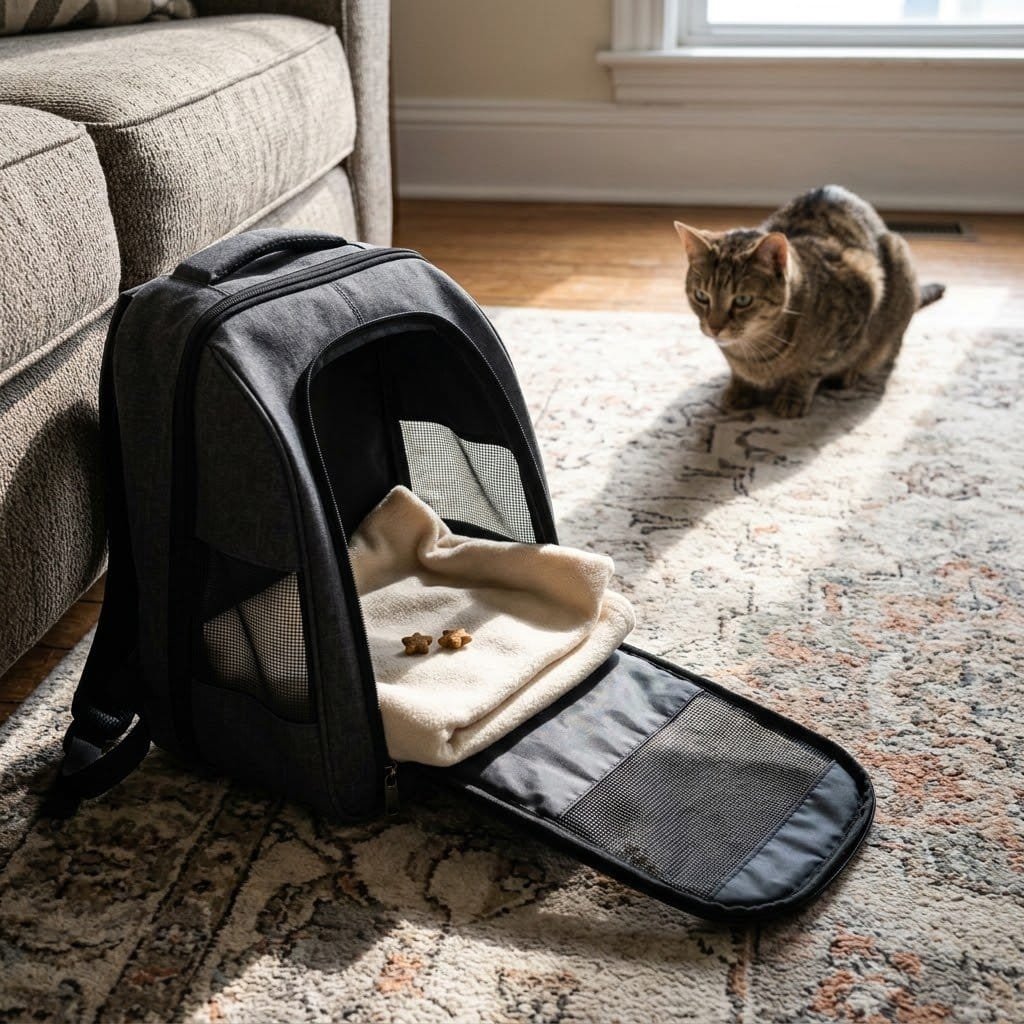
Start by leaving the open backpack in your cat’s favorite room. Let the cat sniff and explore it with no pressure at all. As a result, the carrier becomes a familiar part of the home. Place treats, a favorite toy, or a worn blanket inside to invite entry. Reward any interest calmly to build a positive link. For new kittens, our kitten care article covers early handling. Patience here lays the groundwork for stress-free outings.
Once your cat enters willingly, build up in small steps. Close the bag briefly while offering treats, then open it again. As a result, the cat learns that being inside is safe and short. Next, lift the backpack gently and walk a few steps indoors. Gradually increase the time and distance as confidence grows. Always end on a positive note before any stress appears. Slow, rewarding progress turns wary cats into willing travelers.
4.2 Reading Stress Signals
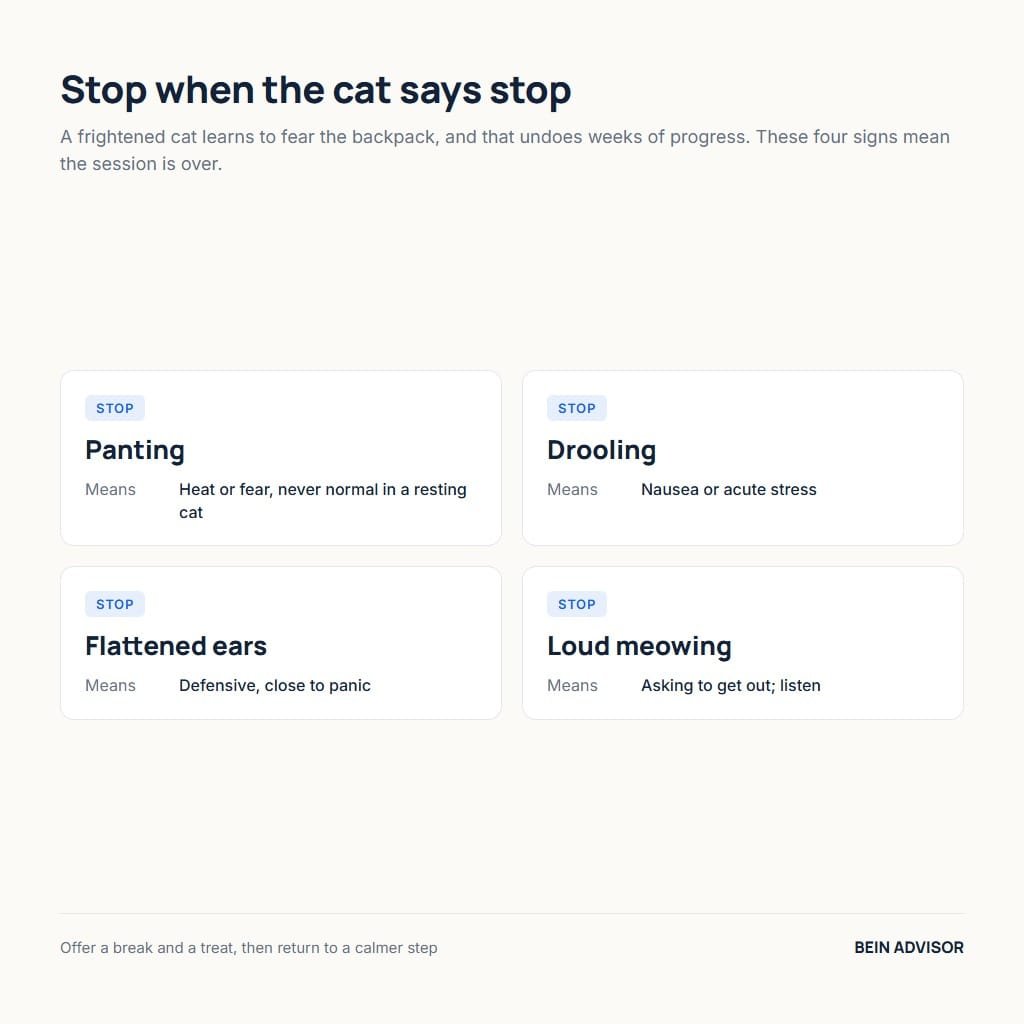
Watching your cat’s body language keeps training humane. Signs of stress include panting, drooling, flattened ears, or loud meowing. As a result, you should stop and slow down when these appear. A frightened cat learns to fear the backpack, undoing your progress. Therefore, never push past clear signs of distress. Offer a break, a treat, and a return to a calmer step. Respecting these signals protects the trust you have built.
Some cats will never love a backpack, and that is okay. Accept your cat’s personality rather than forcing adventures. As a result, you keep the carrier a low-stress tool for necessary trips. For anxious cats, a vet may suggest calming aids for travel. Meanwhile, focus on safe, short, positive experiences only. The goal is comfort and safety, not forced fun. Honoring limits keeps your cat trusting and calm.
5. Safe Cat Backpack Use on the Go
Safe use matters as much as the right carrier. Once your cat is comfortable, good habits keep every trip secure. As a result, you protect your cat from heat, escapes, and stress. Temperature, timing, and supervision all play a role. Moreover, a few essentials make outings smoother. This section covers safe travel practices in detail. Smart habits turn a backpack into a reliable adventure tool.
5.1 Temperature, Timing, and Breaks
Heat is the biggest danger during any backpack outing. Cats overheat quickly, so avoid hot, sunny conditions entirely. As a result, choose cooler times of day and shaded routes. Never leave a cat in a backpack in a parked car, even briefly. Keep trips short at first, then extend only if your cat stays relaxed. Offer water and a break in a safe, enclosed space on longer outings. Watching the temperature keeps your cat safe and comfortable.
Good timing and breaks prevent stress from building. Plan outings around your cat’s calm, well-fed, and rested moments. Therefore, avoid trips right after meals or during high-energy periods. On longer adventures, pause in a quiet spot to let your cat settle. Keep water handy, especially in warm weather, to support hydration. Watch for signs that your cat has had enough and head home. Thoughtful pacing keeps the experience positive every time.
5.2 Travel and Vet Trip Tips
A backpack shines for stress-free vet visits and travel. The snug, enclosed space helps an anxious cat feel protected. As a result, many cats stay calmer than in a hard carrier. Line the base with a familiar blanket that smells like home. Always clip the internal leash before opening the bag in public. For general travel safety, the ASPCA’s cat care guidance is a helpful reference. Preparation makes vet days and trips far smoother.
A few essentials make any outing safer and easier. Bring water, a small towel, and waste bags for accidents. As a result, you can handle surprises calmly and hygienically. Make sure your cat wears an ID tag or is microchipped before trips. Keep the carrier securely fastened and never leave it unattended. Meanwhile, stay alert to dogs, traffic, and loud noises nearby. Being prepared lets you focus on enjoying the adventure.
6. A Cat Backpack for Every Cat
Different cats need different carriers and approaches. Age, size, and temperament all shape the best choice. As a result, the ideal setup for a kitten differs from a senior’s. Matching the carrier to the individual keeps every cat comfortable. Moreover, special needs may call for extra features or a stroller instead. This section tailors the choice to your specific cat. The right fit makes outings safe and pleasant for all.
6.1 Kittens, Seniors, and Large Cats
Kittens usually adapt to a backpack fastest of all. Early, positive exposure builds lifelong comfort with travel. As a result, starting young makes outings easy later. However, ensure the carrier is secure, since kittens are tiny and curious. Senior cats need extra cushioning and gentle, short trips. A roomy stroller may suit an arthritic older cat better. Matching comfort to age keeps every cat content.
Large cats need a sturdier, roomier carrier than average. Check weight limits carefully, since many backpacks suit smaller cats. As a result, a big cat may be more comfortable in a stroller. Ensure the base is firm enough to support extra weight safely. Meanwhile, prioritize ventilation, which matters even more for larger bodies. Never squeeze a big cat into a cramped bag. The right size keeps a large cat calm and safe.
6.2 Anxious and First-Time Travelers
Anxious cats need the gentlest, slowest introduction of all. Keep early sessions very short and full of rewards. As a result, the cat slowly links the carrier with safety. A backpack with more enclosed sides can help a nervous cat hide. Pheromone sprays may also ease anxiety during training. For severe anxiety, ask your vet about calming options. Patience and empathy turn fearful cats into calmer travelers.
First-time travelers do best with realistic, modest goals. Begin with a short trip around the block, not a long adventure. As a result, the cat builds confidence through small successes. Keep the first outings calm, quiet, and predictable. Celebrate progress and never rush toward bigger trips. Over time, many cautious cats grow to tolerate or enjoy outings. Small wins build a confident, well-traveled companion.
Cat Backpack FAQ
Are cat backpacks safe?
Yes, a well-designed cat backpack is safe when used correctly. Choose one with good ventilation, a secure zipper, and an internal leash. Additionally, keep trips short, avoid heat, and never leave your cat unattended. Proper training and supervision keep every outing safe.
How long can a cat stay in a backpack?
Keep most trips under thirty to sixty minutes, especially at first. Cats can overheat or grow stressed in an enclosed space. Therefore, offer breaks, water, and fresh air on longer outings. Always watch your cat and head home if it seems uncomfortable.
How do I get my cat used to a backpack?
Introduce it slowly by leaving it open with treats inside. Let your cat explore freely before you ever close or lift it. Then build up with short, rewarded sessions over days or weeks. Patience and positive associations are the key to success.
Conclusion: Choosing a Cat Backpack
A good cat backpack makes travel and adventures safe and simple. Prioritize ventilation, size, and security when you choose one. Meanwhile, compare a backpack with a stroller based on your cat and plans. Introduce the carrier slowly, and always put comfort and safety first. Together, these steps open up a bigger, happier world for your cat.
Start by measuring your cat and choosing a well-ventilated carrier. Then train patiently and keep the first trips short and calm. When your cat shows anxiety or health concerns, ask your veterinarian for advice. With the right gear and approach, outings become a joy rather than a chore. A thoughtful choice rewards you both with safe, memorable adventures.