

Indoor cat enrichment is the key to a happy, healthy, well-behaved cat. Without enough indoor cat enrichment, even a pampered pet grows bored, stressed, and destructive. Cats are natural hunters, so a bare living room rarely meets their instincts. The good news is that a few smart additions transform any home into a feline playground.
This article shows you how to enrich an indoor cat’s world with simple, affordable changes. You will learn about vertical space, scratching, play, sensory stimulation, and food puzzles. Moreover, it explains how to spot boredom and build a daily routine your cat loves. Each idea works with natural instincts rather than against them.
Every suggestion reflects mainstream feline-behavior guidance, not passing trends. Therefore, you can trust these ideas for kittens, adults, and multi-cat homes alike. By the end, you will have a clear plan to keep your cat active and content. The reasons come first, because they make every later idea click.
1. Why Indoor Cat Enrichment Matters
Indoor living keeps cats safe, yet it can leave their instincts unused. A wild cat spends hours hunting, climbing, and exploring every day. As a result, an under-stimulated indoor cat often turns that energy into trouble. Boredom drives scratching, overeating, aggression, and even stress-related illness. Therefore, indoor cat enrichment is not a luxury but a core part of good care. It channels natural drives into healthy, satisfying outlets. This section explains why a stimulating home protects both behavior and health.
1.1 What Indoor Cat Enrichment Really Means
Enrichment means giving a cat chances to express natural behaviors safely. In practice, that covers climbing, scratching, hunting, exploring, and observing. As a result, a well-enriched home offers outlets for each of these drives. The goal is not endless toys but a varied, engaging environment. Additionally, enrichment includes mental challenges, not just physical activity. A cat that solves a food puzzle uses its brain the way hunting would. Together, physical and mental stimulation keep a cat balanced and calm.
Different cats need different kinds and amounts of enrichment. A young, energetic cat may need several active play sessions daily. In contrast, a senior cat enjoys gentler stimulation like window watching. Therefore, observe your cat and adjust the mix to its age and personality. Breed and temperament also shape preferences, since some cats crave height while others love chasing. Meanwhile, multi-cat homes need enough resources to prevent competition. Tailoring enrichment to the individual is what makes it truly effective.
1.2 Signs Your Cat Needs More Stimulation
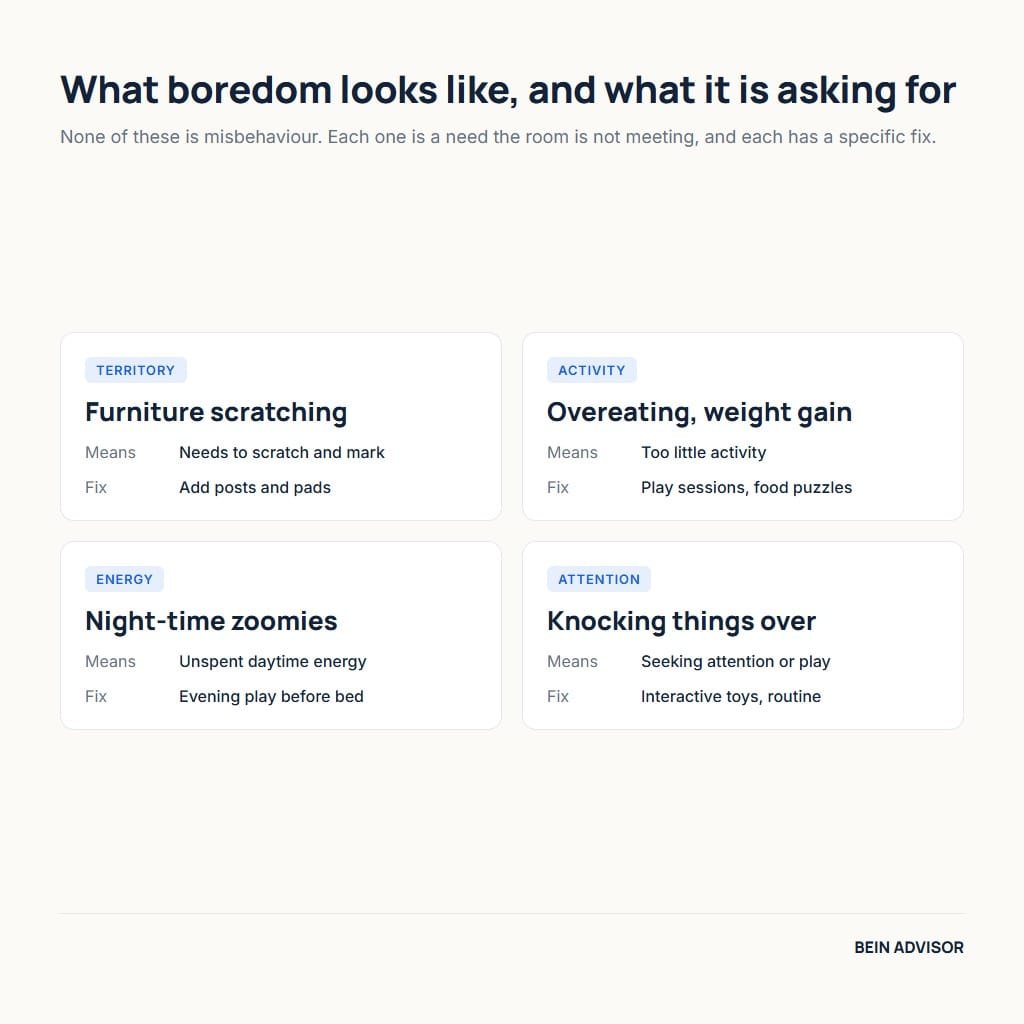
A bored cat usually tells you through its behavior. Common signs include excessive sleeping, overeating, and weight gain. Additionally, some cats become destructive, scratching furniture or knocking items over. Others grow withdrawn, while a few turn overly demanding or aggressive. Therefore, sudden behavior changes often signal an unmet need for stimulation. The table below pairs common boredom signs with simple enrichment fixes. Reading these clues early prevents habits that are hard to undo.
Boredom can also affect a cat’s physical health over time. Inactivity leads to obesity, which raises the risk of diabetes and joint problems. Meanwhile, chronic stress can trigger over-grooming or urinary issues. Some of these overlap with medical conditions, so rule those out too. For warning signs worth knowing, review these common cat illness signs. When behavior shifts suddenly, a vet visit is wise. Otherwise, more enrichment is usually the cure for a restless cat.
| Boredom Sign | What It Means | Enrichment Fix |
|---|---|---|
| Furniture scratching | Needs to scratch and mark | Add posts and pads |
| Overeating, weight gain | Too little activity | Play sessions, food puzzles |
| Night-time zoomies | Unspent daytime energy | Evening play before bed |
| Knocking things over | Seeking attention or play | Interactive toys, routine |
2. Vertical Space for Indoor Cat Enrichment
Cats experience the world in three dimensions, not just the floor. Height gives them safety, a vantage point, and valuable territory. As a result, vertical space is one of the most powerful enrichment tools available. Cat trees, shelves, and window perches multiply usable space without a bigger home. Moreover, climbing builds muscle and burns energy in a natural way. In multi-cat homes, vertical territory reduces conflict by adding personal zones. This section covers how to build height your cat will actually use.
2.1 Cat Trees, Shelves, and Perches
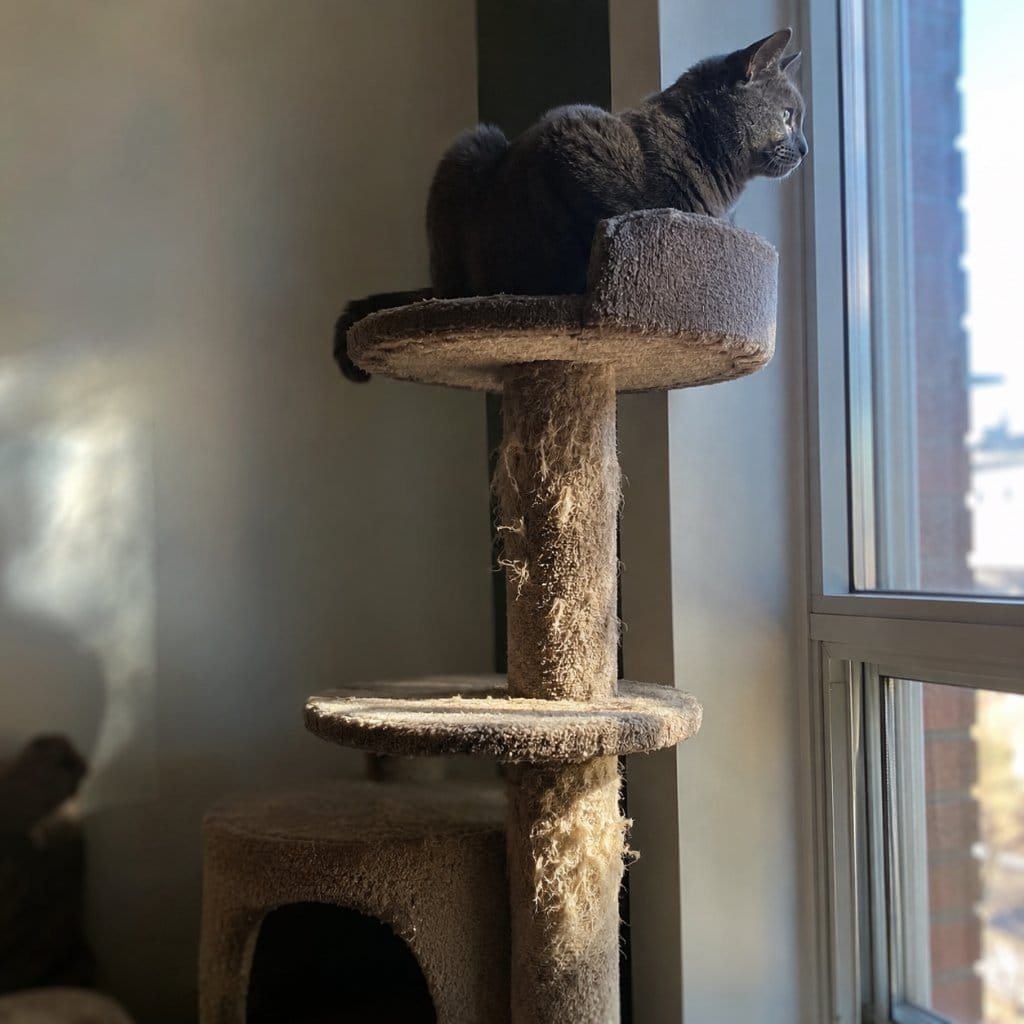
A sturdy cat tree is the simplest way to add vertical space. Choose a tall, stable model with platforms, a scratching surface, and a cozy perch. As a result, one piece of furniture covers climbing, scratching, and resting needs. Wall-mounted shelves create climbing routes for cats that love to explore. Additionally, place perches near windows so your cat can survey its territory. Vary the heights to make the space interesting and challenging. A well-placed tree quickly becomes a favorite spot in the home.
Placement matters as much as the equipment itself. Position trees and shelves near walls or corners where a cat feels secure. Meanwhile, avoid wobbly setups, since one scare can put a cat off for good. For seniors or kittens, add low steps so climbing stays safe and easy. You can also build cheap height with sturdy bookshelves cleared for the cat. In small apartments, a single tall tree plus a window perch works wonders. Thoughtful vertical design transforms even a tiny home into rich territory.
2.2 Safe Climbing and Hideaways
Cats need cozy hiding spots as much as high lookouts. A covered bed, a cardboard box, or a tunnel offers security and stress relief. As a result, shy cats gain a safe retreat when life feels overwhelming. Hideaways are especially valuable in busy or multi-pet homes. Additionally, rotating a few boxes keeps the environment novel and interesting. Cats famously love simple cardboard, so you need not spend much. Pairing high perches with low hideaways covers both confidence and comfort.
Safety should guide every climbing setup you create. Secure tall furniture to the wall so it cannot tip during a leap. Meanwhile, keep climbing routes away from fragile items or hot surfaces. Check perches and shelves regularly for stability and wear. For homes with kittens, lower heights reduce the risk of hard falls. A new kitten’s full routine is covered in our kitten care article. Safe height lets a cat enjoy its instincts without danger.
3. Scratching Posts and Territory
Scratching is a deep instinct, not a behavior problem to punish. Cats scratch to stretch, condition their claws, and mark territory with scent. As a result, the solution to furniture damage is the right scratching outlet, not scolding. Good scratching options protect your home and satisfy a core need. Moreover, scratching relieves stress and helps a cat feel in control of its space. Offering enough surfaces is a simple, high-impact form of enrichment. This section covers choosing and placing scratchers that cats actually use.
3.1 Choosing the Right Scratchers
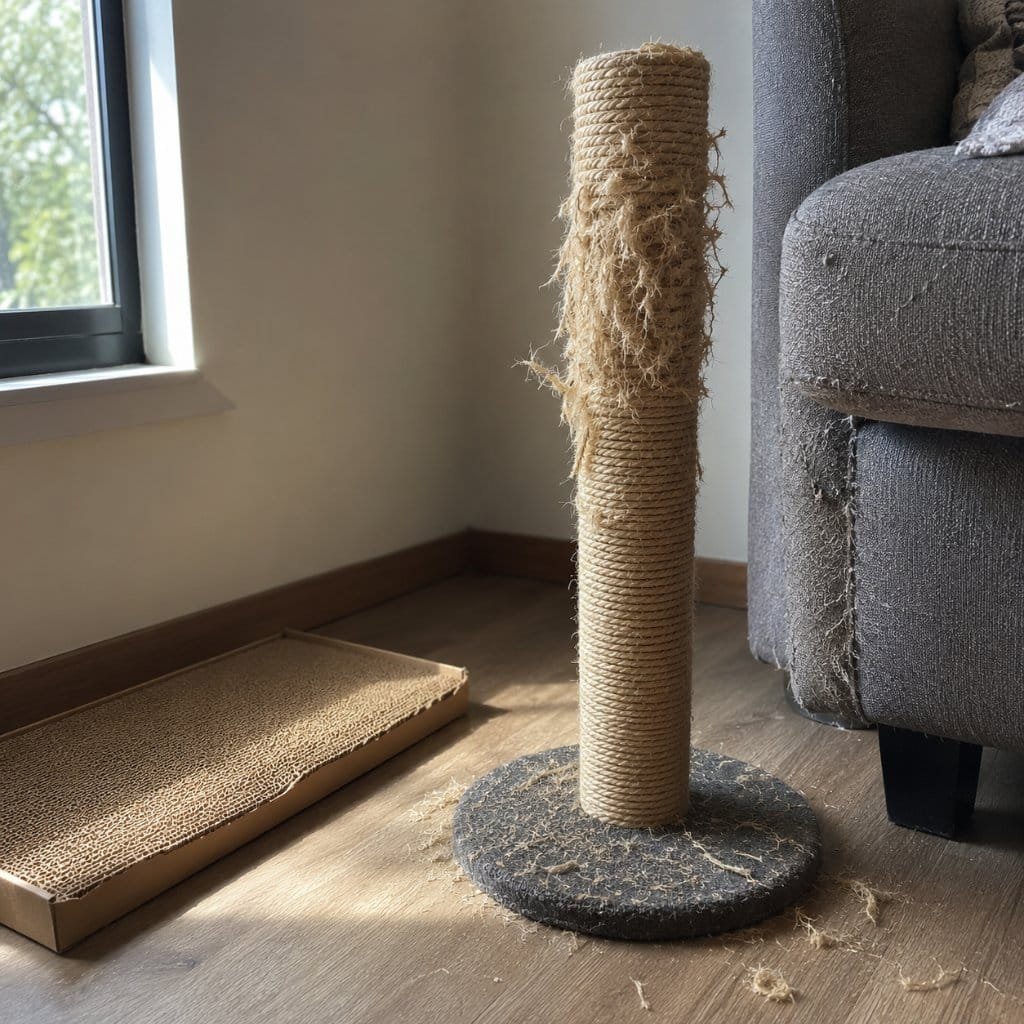
Cats have individual preferences for scratching surfaces and angles. Some love tall vertical posts, while others prefer horizontal pads or angled ramps. Therefore, offering a variety helps you discover what your cat likes. A vertical post must be tall and stable enough for a full stretch. Sisal rope and cardboard are popular, durable, and satisfying materials. Additionally, place at least one scratcher per major room. Matching the surface to your cat’s taste stops most furniture scratching.
Quality and stability decide whether a scratcher gets used. A wobbly post feels unsafe, so a cat will simply ignore it. As a result, weighted bases and solid construction are worth the small extra cost. Replace worn scratchers before they become useless and frustrating. Catnip or a sprinkle of treats can attract a cat to a new post. Meanwhile, reward use with praise so the habit sticks. A few good scratchers protect both your furniture and your cat’s wellbeing.
3.2 Placement and Redirecting Behavior
Where you place a scratcher decides whether a cat chooses it. Put posts near sleeping areas, since cats love to scratch after waking. Additionally, place one beside furniture the cat already targets. As a result, you redirect the behavior to an acceptable surface nearby. Prominent, social locations work better than hidden corners. Cats scratch partly to mark visible territory, so respect that instinct. Smart placement turns a scratcher into the obvious, easy choice.
Redirecting unwanted scratching takes patience, not punishment. Never yell or use water, since fear damages trust and rarely works. Instead, make the off-limits spot less appealing with double-sided tape or a cover. Meanwhile, make the nearby post more attractive with catnip and praise. Reward every use of the right surface to reinforce the habit. If scratching suddenly spikes, consider stress or a new change at home. Consistency and good options solve the problem for good.
4. Play and Hunting Enrichment
Play is hunting in disguise, and it sits at the heart of enrichment. Through play, a cat stalks, chases, pounces, and captures, just as it would in the wild. As a result, regular play prevents boredom, builds fitness, and deepens your bond. Interactive sessions with you matter even more than solo toys. Moreover, a good play routine reduces night-time zoomies and destructive habits. Short, frequent sessions suit a cat’s natural energy bursts. This section covers how to play in ways that truly satisfy.
4.1 Interactive Play for Indoor Cat Enrichment
Wand toys are the gold standard for interactive play. Move the toy like prey, with darts, pauses, and hides, to trigger the hunt. As a result, your cat stalks and pounces with real focus and joy. Always let the cat catch the toy sometimes, since endless misses cause frustration. Additionally, end each session with a capture and a small treat. This mimics the natural hunt-eat-groom-sleep cycle. Two short sessions a day keep most cats happy and well-exercised.
Variety keeps play exciting and prevents toys from getting boring. Rotate a small set of toys so they feel new each week. Meanwhile, never use your hands as toys, since that teaches painful biting. A well-timed evening play session also improves sleep, as our article on helping a cat sleep explains. Laser pointers are fun but should end on a physical toy to catch. Solo toys fill gaps, yet they never replace time with you. Engaged, varied play is the most rewarding enrichment of all.
4.2 Solo Toys and Rotation
Solo toys keep a cat busy when you cannot play directly. Balls, crinkle toys, springs, and catnip mice all invite independent play. As a result, your cat stays engaged during your work hours or sleep. However, cats lose interest in toys left out all the time. Therefore, rotate toys in and out of a bin to keep them novel. A toy that vanished for a week feels brand new on its return. Simple, rotated toys deliver big enrichment for little money.
Homemade and low-cost options work just as well as fancy ones. A crumpled paper ball, a cardboard box, or a toilet-roll tube can entertain for hours. Additionally, treat-dispensing balls combine play with a food reward. Always check toys for small parts or string that a cat could swallow. Meanwhile, supervise any toy with feathers, bells, or loose threads. Replace damaged toys promptly to keep play safe. A mix of safe solo toys rounds out a complete enrichment plan.
5. Sensory Indoor Cat Enrichment
A cat’s senses are powerful, so sensory stimulation is rich enrichment. Sights, sounds, scents, and textures all engage a curious mind. As a result, sensory variety keeps an indoor cat mentally active and content. A window view alone can entertain a cat for hours each day. Moreover, safe plants, scents, and sounds add gentle, low-effort stimulation. Sensory enrichment suits cats of every age, including quiet seniors. This section covers easy ways to engage all of a cat’s senses.
5.1 Window Views and Outdoor Sights
A window perch is one of the cheapest, most loved forms of enrichment. Cats happily watch birds, leaves, and people for long stretches. As a result, a sunny window with a comfortable perch becomes prime real estate. Position the perch so your cat can see activity safely from indoors. Additionally, a bird feeder outside the window creates live cat television. Some cats also enjoy short, supervised time on a secure balcony or catio. A good view turns a quiet day into hours of gentle entertainment.
Keep the window experience safe and comfortable for your cat. Ensure screens are secure so a cat cannot push through or fall. Meanwhile, provide a warm, padded perch for cooler days near the glass. Rotate the view occasionally by moving the perch to a different window. For nervous cats, a calmer, lower-traffic window may feel safer. Always supervise any access to open windows or balconies. A safe, engaging view is enrichment that asks almost nothing of you.
5.2 Scents, Sounds, and Cat-Safe Plants
Scent is a cat’s most powerful sense, so it offers strong enrichment. Catnip, silver vine, and valerian delight many cats in small doses. As a result, a sprinkle on a toy or post can spark joyful play. Cat-safe plants like cat grass also give a natural nibbling outlet. However, always confirm any plant is non-toxic before bringing it home. Rotating scents keeps the experience fresh and exciting. Gentle scent enrichment engages the brain without any hard work.
Sound and texture add further layers of sensory variety. Some cats relax to soft music or specially made cat audio. Meanwhile, others enjoy the crinkle of a tunnel or the feel of different surfaces. Provide varied textures like sisal, carpet, and soft bedding to explore. Additionally, gentle background sound can ease anxiety when you are away. Keep volumes low, since a cat’s hearing is far sharper than ours. A thoughtful mix of senses keeps an indoor cat engaged all day.
6. Food Puzzles and Daily Routine
Mealtime is a daily chance for powerful mental enrichment. In the wild, a cat works for every meal by hunting. As a result, food puzzles that make a cat work for kibble satisfy a deep instinct. They slow fast eaters, fight boredom, and add healthy activity. Moreover, a predictable daily routine ties all enrichment together. Cats thrive on rhythm, so consistent play and feeding reduce stress. This section covers food puzzles and a simple enrichment schedule.
6.1 Food Puzzles as Indoor Cat Enrichment
Food puzzles turn an ordinary meal into a rewarding challenge. A treat ball, a puzzle feeder, or a snuffle mat makes a cat think and move. As a result, eating becomes slower, more natural, and far more satisfying. Start with an easy puzzle so your cat enjoys early success. Then increase difficulty gradually as confidence grows. Additionally, scatter a few kibbles around the room for a simple foraging hunt. Food puzzles deliver both mental and physical enrichment at once.
Puzzles also help with common feeding problems. For cats that gobble food, a puzzle naturally slows them down. As a result, they digest better and feel fuller on the same portion. Use part of the daily ration in puzzles rather than adding extra calories. Meanwhile, keep puzzles clean to stay hygienic and appealing. Homemade versions, like a box with holes, work nearly as well as store-bought. A daily food puzzle is one of the easiest enrichment wins available.
6.2 Building a Daily Enrichment Routine
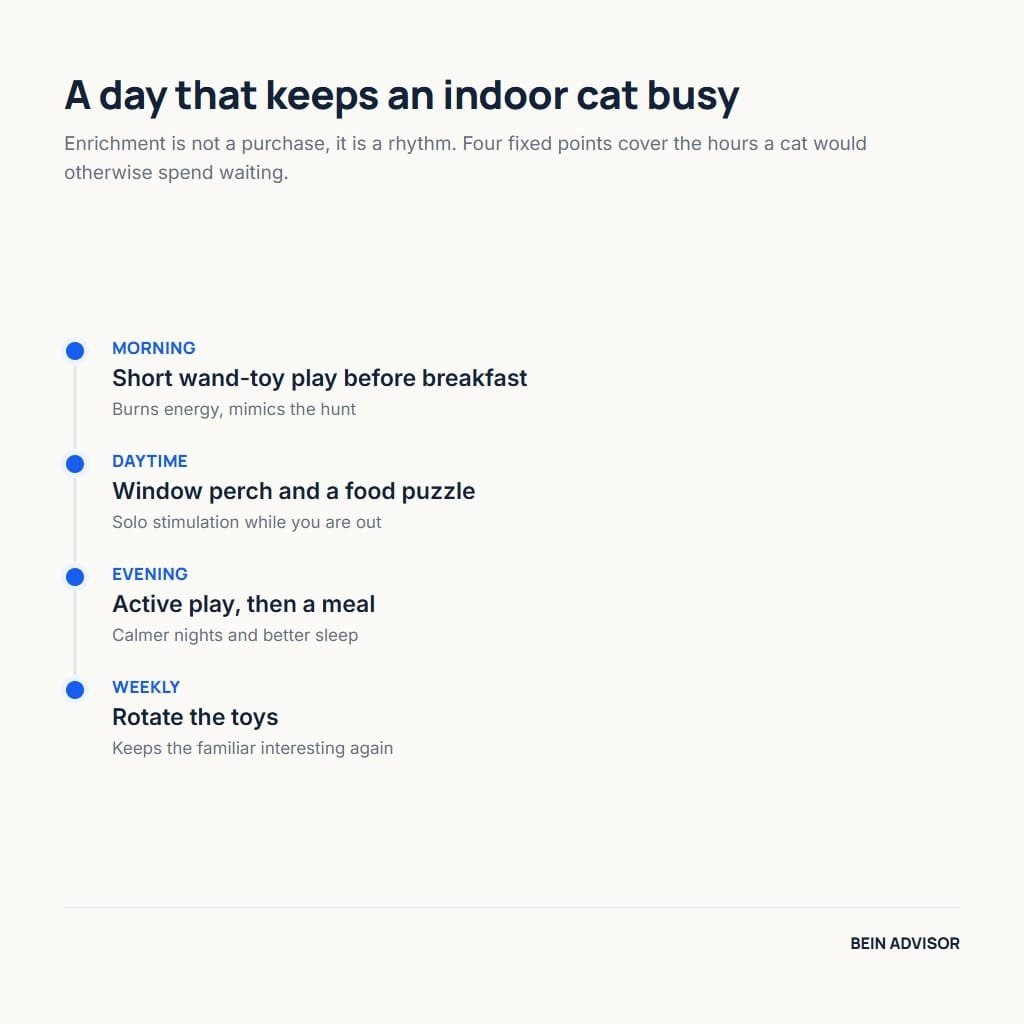
A simple routine makes enrichment effortless and effective. Plan two short play sessions, ideally one before each main meal. As a result, you recreate the natural hunt-eat-groom-sleep cycle cats crave. Add a food puzzle at one meal and fresh window time during the day. Meanwhile, rotate toys weekly so the environment keeps feeling new. Consistency matters more than spending hours, since cats love predictability. A light daily rhythm keeps a cat balanced without much effort from you.
Adapt the routine to your cat and your schedule. A busy owner can split duties across morning and evening blocks. Additionally, multi-cat homes need enough toys and posts so no cat misses out. Watch how your cat responds and adjust the mix over time. For kittens, keep sessions shorter but more frequent as they learn. Seniors may prefer gentle play and more window time. A flexible, consistent plan turns enrichment into a natural daily habit.
| Time of Day | Enrichment Activity | Benefit |
|---|---|---|
| Morning | Short wand-toy play before breakfast | Burns energy, mimics the hunt |
| Daytime | Window perch and a food puzzle | Solo stimulation while you are out |
| Evening | Active play, then a meal | Calmer nights and better sleep |
| Weekly | Rotate toys, refresh scents | Keeps the space novel |
Indoor Cat Enrichment FAQ
What is indoor cat enrichment?
Indoor cat enrichment means giving a cat safe ways to express natural behaviors. That includes climbing, scratching, hunting through play, and exploring with the senses. As a result, a cat stays mentally and physically active indoors. Good enrichment prevents boredom, stress, and many behavior problems.
How much indoor cat enrichment does a cat need?
Most cats thrive with two short play sessions daily plus ongoing options. Provide constant access to scratching, climbing, and a window view. Additionally, add a food puzzle and rotate toys to keep things fresh. Adjust the amount to your cat’s age, energy, and personality.
How do I entertain a cat while I am at work?
Set up solo enrichment before you leave for the day. A window perch, rotated solo toys, and a food puzzle keep a cat busy. Moreover, a second cat or safe climbing space adds company and activity. Then reconnect with active play as soon as you return home.
Conclusion: Indoor Cat Enrichment That Works
Indoor cat enrichment is simply about working with your cat’s instincts. Add vertical space, good scratchers, daily play, sensory variety, and food puzzles. Meanwhile, watch for boredom signs and adjust the mix to your individual cat. Tie it together with a light, consistent daily routine. Together, these steps create a calm, confident, and genuinely happy cat.
Start with one addition today, such as a cat tree or a single food puzzle. Then build the rest of your indoor cat enrichment plan step by step. When a behavior problem persists, your veterinarian can rule out medical causes. With a little creativity, any home can become a stimulating feline world. A well-enriched cat is healthier, calmer, and a joy to live with.
Free printable resource
The Cat Owner’s Toolkit
Great cat care comes down to a few steady habits. Keep them all in one place — 6 printable checklists & trackers you can stick on the fridge.
- New-cat checklist
- Vaccination & vet-visit tracker
- Feeding quick chart
- Daily & weekly routine
- Litter-box troubleshooter
- Emergency cheat sheet
Want the full guide? The Complete Cat Care Handbook has all 18 chapters with their own checklists — get it on Amazon as an eBook or Paperback.