

A clean, well-chosen cat litter box is the foundation of a fresh home and a happy cat. Get the cat litter box right, and litter training almost takes care of itself. Get it wrong, and you face odor, accidents, and a stressed pet. Most litter problems trace back to a few simple setup mistakes.
This article walks you through every part of litter box mastery. You will learn how to choose the box and litter, where to place it, and how to train gently. Moreover, it covers cleaning routines and fixes for the most common problems. Each step is simple and makes daily life easier for you and your cat.
Every recommendation follows mainstream veterinary and feline-behavior guidance. Therefore, you can trust these steps for kittens, adults, and multi-cat homes alike. By the end, you will have a clean, accident-free routine that lasts. The reasons come first, because they explain every choice that follows.
1. Why the Cat Litter Box Matters
The cat litter box is more than a convenience; it sits at the center of feline health and harmony. Cats are clean, instinctive buriers, so a good setup works with their nature. As a result, the right box prevents most accidents before they ever start. A rejected or dirty box, on the other hand, pushes a cat to go elsewhere. Litter habits also reveal health, since sudden changes can signal urinary trouble. Therefore, mastering the litter box protects both your floors and your cat’s wellbeing. This section explains why the setup deserves real attention from day one.
1.1 The Link Between the Litter Box and Behavior
Litter box trouble is usually a communication problem, not spite. When a cat avoids the box, it is telling you something feels wrong. As a result, the cause is often the setup rather than the cat itself. A box that is too small, too dirty, or badly placed feels unwelcoming. Additionally, stress from new pets, moves, or routine changes can trigger avoidance. Understanding this shifts your focus from punishment to problem-solving. Fixing the environment resolves most behavioral litter issues quickly.
Cats also value privacy and safety while they are vulnerable. Therefore, a box in a loud or exposed spot may feel threatening. Meanwhile, a calm, accessible location encourages consistent use. Each cat has preferences for litter depth, texture, and box style. Observing those preferences helps you build a setup your cat actually likes. In multi-cat homes, competition over a single box causes frequent accidents. Respecting these instincts turns the litter box into a stress-free zone.
1.2 What Litter Habits Reveal About Health
The litter box is a daily health report if you pay attention. Changes in frequency, volume, or appearance often signal a problem early. For example, straining with little output can mean a urinary blockage, which is an emergency. Likewise, very hard stools suggest dehydration or constipation. Therefore, scooping daily gives you a built-in chance to monitor health. For related symptoms, review these common cat illness signs. Catching changes early can save your cat from serious illness.
Hydration and litter habits are also closely connected. A well-hydrated cat produces regular, moderate clumps each day. In contrast, very small or infrequent clumps hint at low water intake. For more on this, see our article on cat hydration. Sudden urination outside the box can also reflect pain or infection. Consequently, a clean box plus daily observation is real preventive care. When in doubt about a change, call your veterinarian promptly.
2. Choosing the Right Cat Litter Box
The box itself shapes whether a cat uses it willingly. A good cat litter box is roomy, accessible, and matched to your cat’s size and age. As a result, choosing well removes one of the biggest causes of accidents. Size, height, and style all matter more than most owners expect. Meanwhile, a trendy but cramped or hooded box can quietly deter a sensitive cat. This section covers how to pick a box your cat will happily use. Get this right, and the rest of the routine becomes far easier.
2.1 Size, Height, and Entry
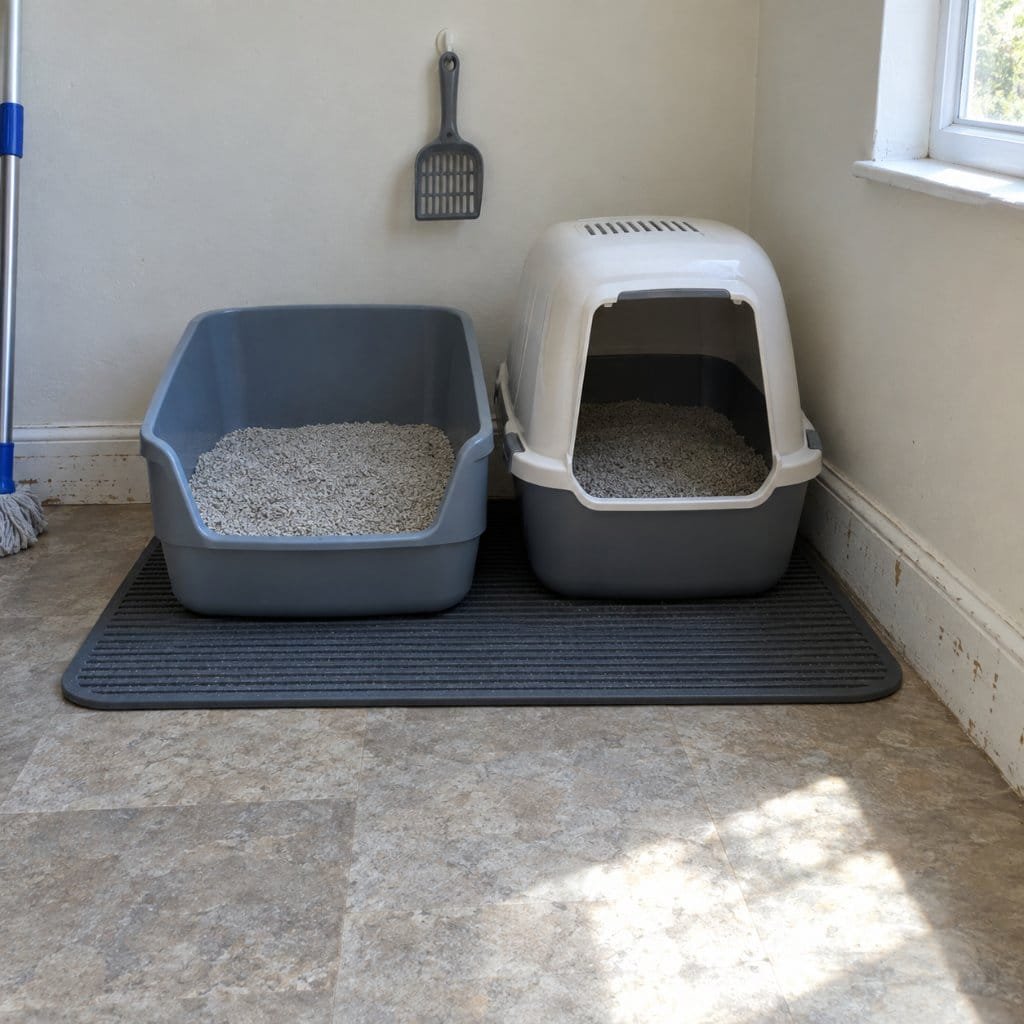
Size is the single most important feature of any litter box. As a rule, the box should be at least one and a half times your cat’s length. Therefore, many commercial boxes are actually too small for a full-grown cat. A roomy box lets the cat turn, dig, and position comfortably. For kittens and seniors, low sides make entry easy and painless. In contrast, high walls can block an arthritic or tiny cat. When unsure, choose bigger, since few cats complain about too much space.
Entry height should match your cat’s mobility and life stage. A young kitten needs a shallow tray it can step into easily. Meanwhile, an older cat with stiff joints benefits from a low cut-down entrance. For a complete early routine, see our kitten care article. You can repurpose a storage tub with a low doorway for a cheap, roomy option. Additionally, high back walls help contain litter from enthusiastic diggers. Matching the box to the cat prevents avoidance from day one.
2.2 Open, Covered, or Self-Cleaning
Each box style carries clear trade-offs worth weighing. Open boxes are simple, airy, and preferred by many cats. However, they offer less odor control and can scatter litter. Covered boxes contain mess and smell but trap odor inside, which some cats dislike. Therefore, introduce a hood slowly and watch the reaction. A nervous cat may feel trapped in an enclosed box with one exit. When in doubt, an open or large covered box suits most households.
Self-cleaning boxes promise convenience but require careful thought. They rake waste automatically, which helps very busy owners. On the other hand, the motor and movement can frighten cautious cats. Additionally, they cost more and still need periodic deep cleaning. For multi-cat or large homes, they can reduce daily chores noticeably. Still, many cats do best with a simple, scooped box. Choose based on your cat’s temperament, not just your schedule.
3. Choosing Litter for the Cat Litter Box
The litter inside the cat litter box matters as much as the box itself. Cats have strong texture and scent preferences, formed early in life. As a result, the wrong litter can cause refusal even with a perfect box. Clumping, non-clumping, clay, and natural options each behave differently. Meanwhile, heavy perfumes that please humans often repel sensitive feline noses. This section helps you pick a litter your cat accepts and you can manage. The table below compares the most common types at a glance.
3.1 Clumping, Unscented, and Texture
Most cats prefer fine-grained, unscented clumping litter. The soft texture feels close to the sand their instincts expect. Additionally, clumping litter makes daily scooping fast and thorough. Unscented options avoid the strong perfumes that drive many cats away. For a deeper look at materials, see our guide to litter types and picks. Depth also matters, so aim for roughly two inches of litter. Too little feels unpleasant, while too much gets kicked everywhere.
Natural litters offer eco-friendly alternatives with their own trade-offs. Options made from corn, wheat, tofu, or wood are biodegradable and low-dust. However, some clump less firmly or carry a scent cats must adjust to. Low-dust formulas are kinder to cats and owners with sensitive airways. Therefore, weigh tracking, dust, odor control, and clumping when choosing. Test a new material in one box before switching every box. Patience helps a cat accept an unfamiliar texture without stress.
| Litter Type | Pros | Cons |
|---|---|---|
| Clumping clay | Easy scooping, good odor control | Dust, heavy, not biodegradable |
| Silica crystals | Very absorbent, low odor | Pricey, texture some cats dislike |
| Natural (corn/wood/tofu) | Eco-friendly, low dust | Variable clumping, cost |
| Non-clumping clay | Cheap, widely available | Harder to clean, more odor |
3.2 Switching Litter Without Stress
Cats dislike sudden changes, so switch litter gradually. Start by mixing a small amount of the new litter into the old. Then increase the proportion slowly over one to two weeks. As a result, the cat adjusts without noticing a jarring difference. Meanwhile, watch for any hesitation, scratching outside the box, or accidents. If problems appear, slow the transition and add more familiar litter. Patience here prevents a refusal that is hard to reverse later.
Some cats are especially particular and resist any change at all. For these cats, find one acceptable litter and stick with it. Additionally, keep the brand and type consistent once you find a winner. Stocking up avoids forced last-minute switches that upset routine. If you must change for health or supply reasons, go extra slowly. Offering a second box with the new litter can also help. Respecting preferences keeps your cat confidently using the box.

4. Cat Litter Box Placement and Number
Where you put the cat litter box is as important as the box you buy. Cats want a location that feels safe, quiet, and easy to reach. As a result, a poorly placed box leads to avoidance even when everything else is right. The number of boxes matters too, especially in multi-cat homes. Meanwhile, crowding boxes in one spot defeats their purpose. This section covers ideal placement and how many boxes you truly need. Small adjustments here solve a surprising number of accidents.
4.1 The Best Locations
A good location balances privacy with easy access. Choose a quiet corner away from noisy appliances and heavy foot traffic. However, avoid hiding the box somewhere so remote the cat must hunt for it. Keep it far from food and water, since cats dislike eliminating near meals. Additionally, ensure the spot has an easy escape route so the cat never feels cornered. For multi-level homes, place a box on each floor. Good placement makes using the box the easy, obvious choice.
Certain spots cause problems and are best avoided. A loud laundry room may startle a cat mid-use and create fear. Likewise, a cramped closet with one exit can feel like a trap. Therefore, test a location and watch whether your cat uses it confidently. Senior cats need boxes within easy reach to avoid long, painful trips. Keep boxes in consistent places, since moving them confuses cats. A stable, calm location supports a lifelong habit.
4.2 How Many Boxes You Need
The golden rule is one box per cat, plus one extra. So a two-cat home should have three litter boxes available. As a result, cats never have to compete or wait for a clean spot. This rule prevents many accidents in multi-cat households. Additionally, spread the boxes across different rooms rather than lining them up. Cats may view side-by-side boxes as a single station. Following the rule reduces territorial stress and keeps every box usable.
Placement of multiple boxes deserves the same care as a single one. Put boxes in separate, calm areas so a shy cat is never blocked. Meanwhile, in larger homes, ensure no cat must travel far to reach one. For kittens, extra boxes nearby reduce early accidents while they learn. Seniors also benefit from more boxes to shorten the journey. Keep every box clean, because one dirty box undoes the benefit. Enough well-placed boxes is the simplest fix for multi-cat trouble.
5. Cat Litter Box Training Made Simple
Training is usually the easiest part of cat litter box mastery. Because burying is instinctive, most cats need only gentle guidance. As a result, success often comes within days when the setup is right. The keys are timing, patience, and a calm, rewarding approach. Meanwhile, punishment backfires and creates fear-based accidents. This section shows how to train kittens and new cats smoothly. It also covers how to handle the occasional accident without stress.
5.1 Training Kittens and New Cats
Start by showing the cat where the box is on the very first day. Place it gently inside after meals, naps, and play, when it is likely to go. Additionally, let the cat dig and sniff freely so the surface feels familiar. When it uses the box, offer quiet praise rather than loud excitement. For a new kitten, confine it to a small room with the box nearby at first. Most cats connect the location and behavior within a few tries. Calm consistency does almost all of the work.
New adult cats may need a little extra patience as they settle in. Keep them in a smaller space with an easy-to-find box for the first days. Meanwhile, reduce stress by giving hiding spots and a steady routine. A recently adopted cat may be nervous, so avoid forcing interactions. Gradually expand its territory as confidence grows. If the cat used a litter before, match that type to ease the move. A gentle introduction builds reliable habits that last.
5.2 Handling Accidents Calmly
Accidents happen, and your reaction shapes how quickly they stop. Never punish a cat for missing the box, since fear only worsens the problem. Instead, clean the spot with an enzyme cleaner that fully removes the scent. Otherwise, a lingering smell invites a repeat in the same place. Meanwhile, review the basics: box size, cleanliness, litter type, and location. Often one small fix resolves the issue completely. Stay calm, and treat each accident as useful information.
Persistent accidents call for a closer look at health and stress. Frequent misses, straining, or blood mean a vet visit, not a scolding. Additionally, new stressors such as a move or a new pet can trigger lapses. Therefore, restore routine and add a box if competition is the cause. Pheromone diffusers can help anxious cats relax around the box. Rule out medical issues first, then adjust the environment. Patience and detective work solve nearly every case.
6. Cleaning the Cat Litter Box and Cutting Odor
A clean cat litter box is the secret to both feline cooperation and a fresh home. Cats are fastidious and avoid boxes that smell or look dirty. As a result, a simple, consistent cleaning routine prevents most odor and refusal. Good habits also help you spot health changes early. Meanwhile, harsh chemical cleaners can leave smells that deter cats. This section covers an easy cleaning rhythm and fixes for common problems. A few minutes a day keeps everything fresh and accident-free.
6.1 A Simple Cleaning Routine
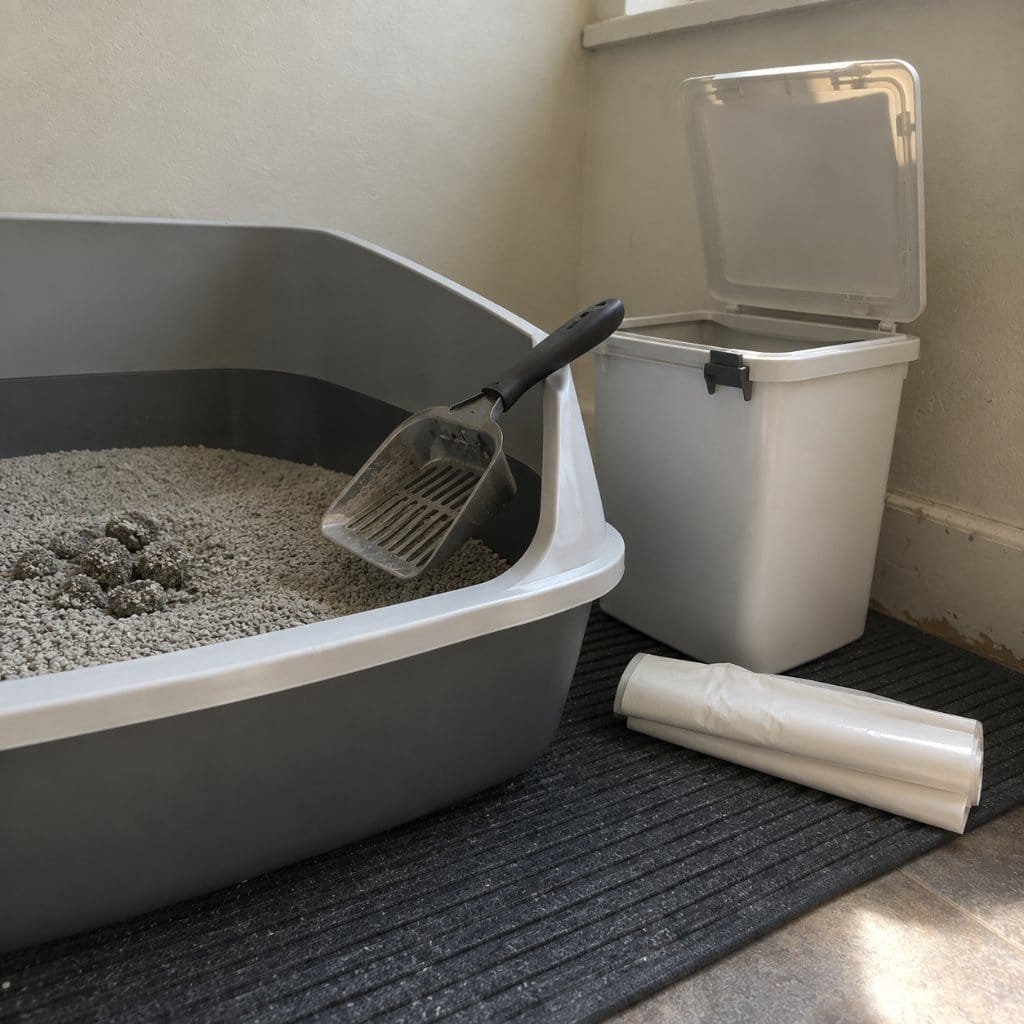
Scoop the box at least once or twice every day. Daily scooping controls odor and keeps the box inviting for a clean cat. Additionally, top up litter to maintain a steady depth of about two inches. Once a week, empty clumping litter fully and wash the box with mild soap. Avoid strong-smelling cleaners, since residual scent can repel your cat. Dry the box well before refilling to prevent litter from sticking. This light routine takes only minutes and prevents most problems.
Odor control comes mainly from cleanliness, not perfume. A well-scooped box with quality litter rarely smells strong. Therefore, resist the urge to mask odor with scented sprays cats dislike. Good ventilation in the area also helps keep things fresh. Replace plastic boxes yearly, because scratches trap odor over time. Baking soda mixed into litter offers a gentle, cat-safe odor boost. Consistent cleaning beats any deodorizer for a truly fresh home.
6.2 Solving Common Litter Box Problems
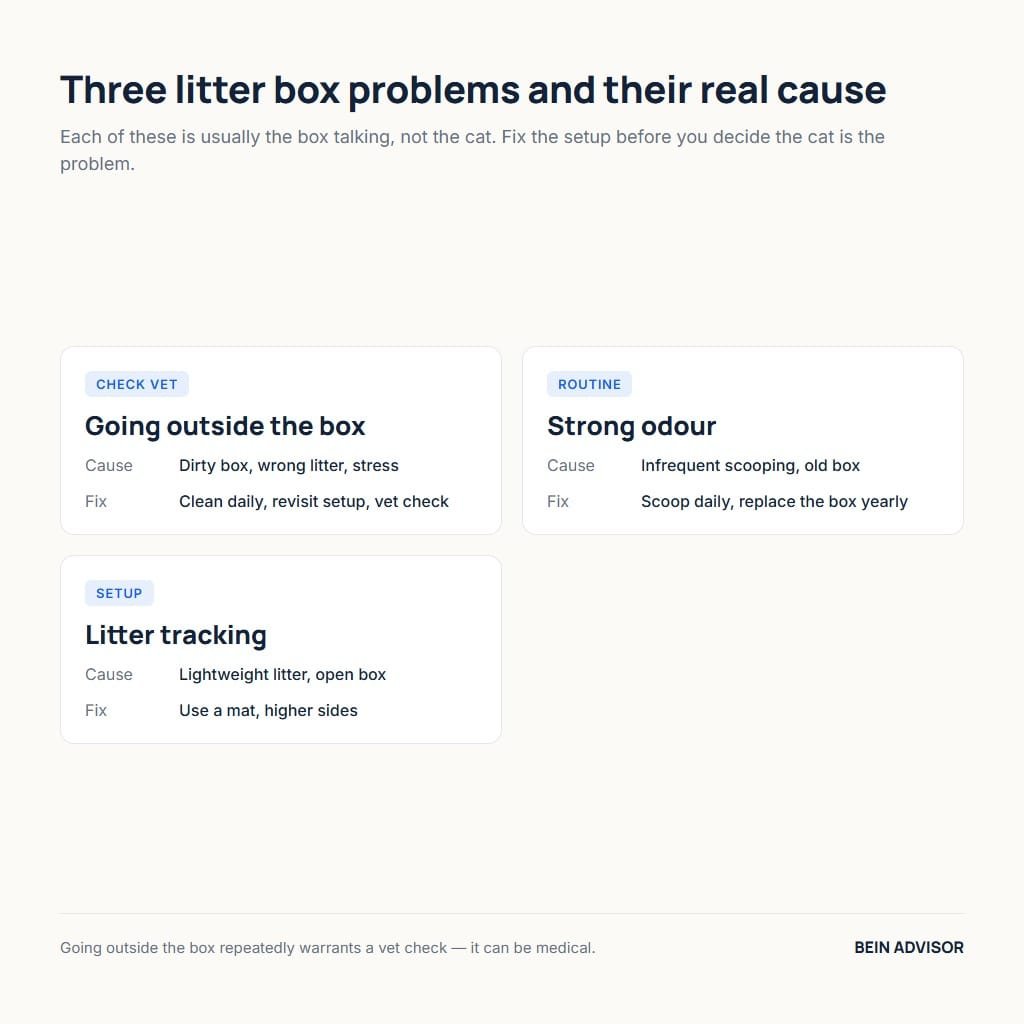
Most litter box problems have simple, identifiable causes. Avoidance often traces to a dirty box, wrong litter, or poor location. Litter tracking across the floor usually means lightweight litter or an open box. Therefore, a mat at the entrance and a higher-sided box reduce scatter. Meanwhile, strong odor signals infrequent scooping or an aging box. The table below pairs common problems with practical fixes. Work through the basics before assuming a behavioral cause.
| Problem | Likely Cause | Fix |
|---|---|---|
| Going outside the box | Dirty box, wrong litter, stress | Clean daily, revisit setup, vet check |
| Strong odor | Infrequent scooping, old box | Scoop daily, replace box yearly |
| Litter tracking | Lightweight litter, open box | Use a mat, higher sides |
| Straining, little urine | Possible blockage (emergency) | See a vet immediately |
Some problems are medical and need professional help fast. Straining with little or no urine can mean a life-threatening blockage. Likewise, blood, crying, or frequent tiny trips warrant an urgent vet visit. For warning signs, review these common cat illness signs. Therefore, always rule out health issues before blaming behavior. Once the cat is cleared, fine-tune the box, litter, and placement. This order solves problems safely and for good.
Cat Litter Box FAQ
How many cat litter boxes do I need?
Follow the rule of one box per cat plus one extra. So one cat needs two boxes, and two cats need three. Additionally, spread them across different rooms rather than grouping them together. This setup prevents competition and keeps a clean option always available.
Why is my cat not using the litter box?
Avoidance usually points to the box, the litter, or stress. Check that the box is clean, roomy, and in a quiet, accessible spot. Moreover, rule out medical issues, since pain often causes sudden avoidance. If straining or blood appears, see a vet right away.
How often should I clean the cat litter box?
Scoop at least once or twice daily to control odor and encourage use. Additionally, wash the whole box weekly with mild, unscented soap. Replace clumping litter fully during that weekly clean. A consistently clean box is the best defense against accidents and smell.
Conclusion: Cat Litter Box Mastery
Mastering the cat litter box is really a series of small, smart choices. Pick a roomy box, a soft unscented litter, and a calm, accessible spot. Meanwhile, follow the one-per-cat-plus-one rule and scoop every single day. Train gently, clean consistently, and rule out health issues when problems appear. Together, these habits deliver a fresh home and a confident, content cat.
Start with one improvement today, such as upgrading to a bigger box or scooping more often. Then refine the rest of your cat litter box routine step by step. When accidents persist or worry you, your veterinarian is the best next call. With a clean setup and a little patience, litter problems simply fade away. A well-managed box is one of the kindest, simplest gifts you can give your cat.
Free printable resource
The Cat Owner’s Toolkit
Great cat care comes down to a few steady habits. Keep them all in one place — 6 printable checklists & trackers you can stick on the fridge.
- New-cat checklist
- Vaccination & vet-visit tracker
- Feeding quick chart
- Daily & weekly routine
- Litter-box troubleshooter
- Emergency cheat sheet
Want the full guide? The Complete Cat Care Handbook has all 18 chapters with their own checklists — get it on Amazon as an eBook or Paperback.