
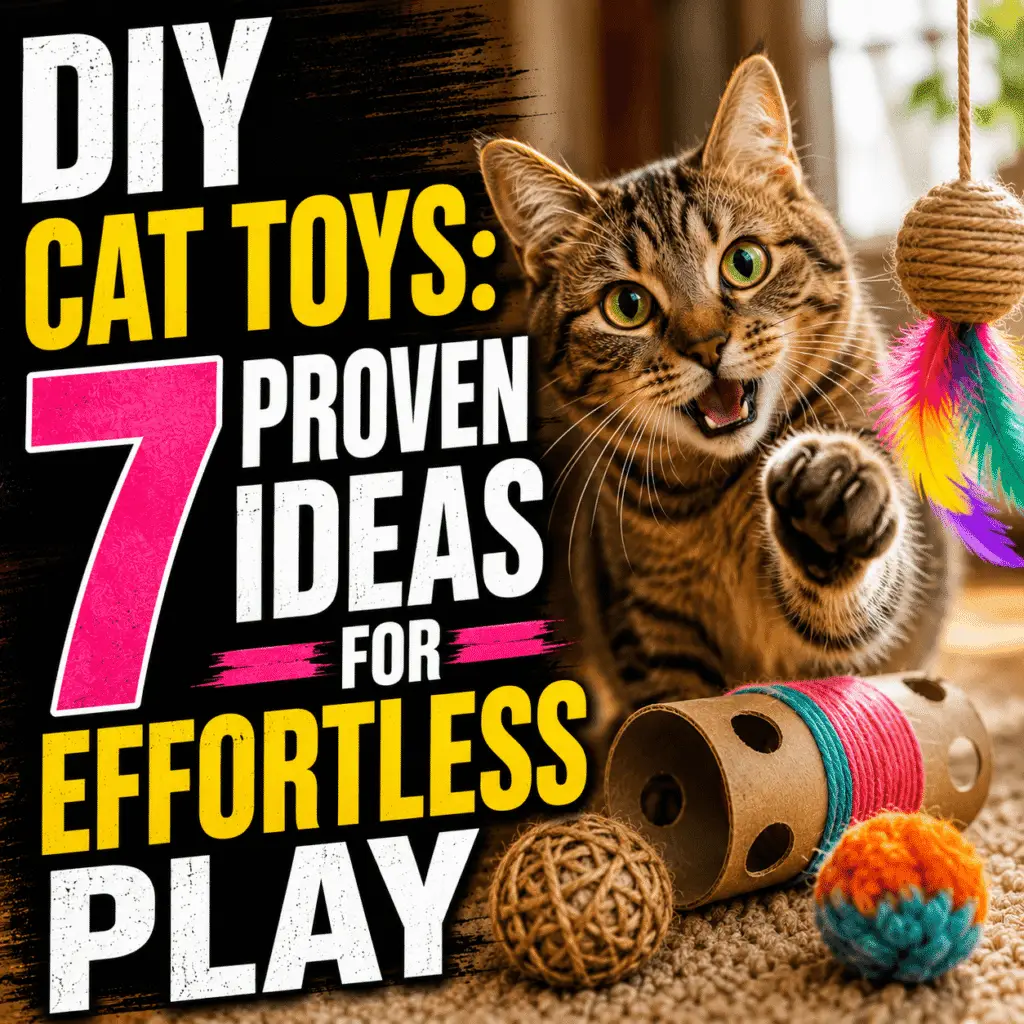
DIY cat toys are one of the easiest ways to keep a cat happy without spending much. With a few household items, homemade DIY cat toys can entertain as well as anything from the store. Cats care about movement, texture, and challenge, not price tags. As a result, a simple sock or paper ball often beats an expensive gadget.
This article shows you how to make safe, fun toys your cat will love. You will get no-cost ideas, interactive builds, and catnip toys you can sew in minutes. Moreover, it covers safety rules and how to keep toys fresh. Each idea is quick, cheap, and based on what truly excites a cat.
Every suggestion follows mainstream feline-behavior and safety guidance. Therefore, you can trust these toys for kittens, adults, and multi-cat homes alike. By the end, you will have seven easy toys and the skills to invent more. The reasons come first, because they explain what makes a toy irresistible.
1. Why DIY Cat Toys Are Worth It
Making your own toys saves money while giving your cat real enrichment. Store-bought toys can be pricey, yet cats often ignore them within minutes. As a result, homemade options let you experiment cheaply until you find a winner. DIY cat toys also let you match a toy to your cat’s exact preferences. Moreover, building toys is a fun, bonding activity for the whole family. Play itself satisfies a cat’s hunting instinct and burns nervous energy. This section explains why homemade play is so valuable for cats.
1.1 Cheap, Custom, and Enriching
The biggest advantage of homemade toys is the price, which is often zero. Most builds use things you already have, like socks, boxes, and paper. As a result, you can refresh your cat’s toy box every week for free. This matters because cats crave novelty and tire of the same items fast. Additionally, you control the size, texture, and difficulty of each toy. A shy cat might need a soft, quiet toy, while a bold one wants a noisy chase. Custom toys simply fit your individual cat better than mass-produced ones.
Homemade toys also deliver genuine mental and physical enrichment. Through play, a cat stalks, pounces, and captures, just as it would when hunting. Consequently, regular play prevents boredom, obesity, and destructive habits. Toys that make a cat think, like a treat-filled tube, add valuable mental challenge. For a wider plan, see our article on indoor cat enrichment. Pairing homemade toys with daily play sessions keeps a cat balanced. Together, they support both a healthy body and a calm mind.
1.2 What Makes a Toy Irresistible
Cats respond to toys that mimic prey in size, movement, and sound. Small, light objects that dart and skitter trigger the hunting drive instantly. As a result, a fluttering feather or a rolling ball feels like real quarry. Texture matters too, since cats love to sink claws into fabric or cardboard. Additionally, unpredictable movement keeps a toy exciting longer than a steady one. Sound, like a crinkle or a soft bell, adds another layer of appeal. Understanding these triggers helps you design toys cats cannot resist.
Scent is another powerful way to make a toy appealing. Many cats go wild for catnip, silver vine, or valerian added to a toy. Therefore, a plain felt mouse becomes thrilling once stuffed with catnip. Variety also keeps interest high, so rotate toys in and out of storage. A toy that disappears for a week feels brand new on its return. Meanwhile, novelty in shape and material prevents boredom. Combining movement, texture, sound, and scent creates a truly irresistible toy.
2. Safety First With DIY Cat Toys
Homemade toys are wonderful, but safety must always come first. Cats explore with their mouths, so small or stringy parts can be dangerous. As a result, the wrong materials risk choking or a serious gut blockage. Knowing which items are safe lets you build with confidence. Moreover, supervision turns risky play into safe fun. This section covers safe materials, hazards to avoid, and smart play habits. A few simple rules keep every homemade toy worry-free.
2.1 Safe Materials and Hazards to Avoid
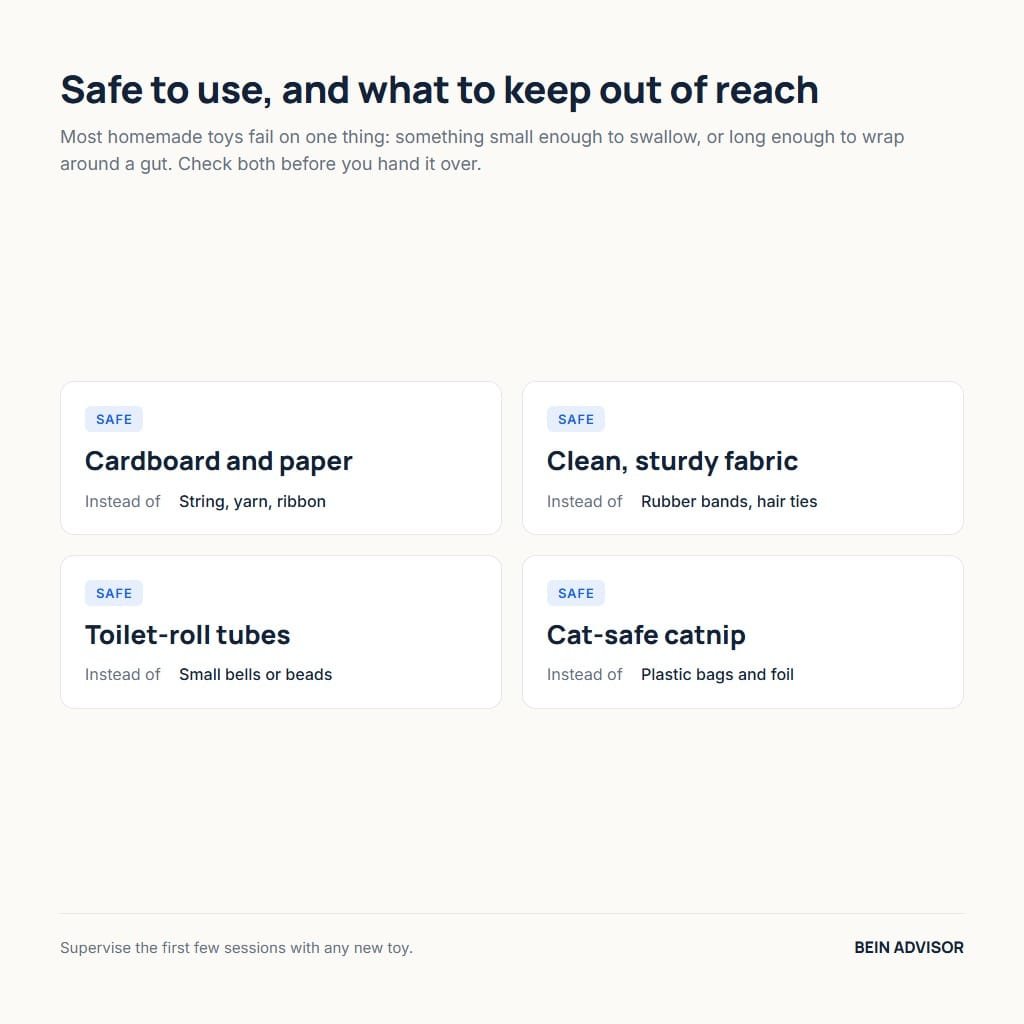
Choose materials that are sturdy, non-toxic, and free of tiny parts. Cardboard, clean fabric, and thick paper are excellent, safe choices. In contrast, string, ribbon, rubber bands, and yarn are surprisingly dangerous. If swallowed, these can bunch up and cause a life-threatening blockage. Additionally, avoid small bells, googly eyes, or beads that can detach. Toxic items like plastic bags and foil should never become toys. The table below sorts common materials into safe and unsafe at a glance.
| Safe to Use | Avoid |
|---|---|
| Cardboard and paper | String, yarn, ribbon |
| Clean, sturdy fabric | Rubber bands, hair ties |
| Toilet-roll tubes | Small bells or beads |
| Cat-safe catnip | Plastic bags and foil |
Construction quality is just as important as the materials. Sew or glue parts firmly so nothing comes loose during rough play. Therefore, check each toy regularly and discard it once it frays or tears. Keep stuffing minimal and secure, since loose filling can be swallowed. Meanwhile, size the toy so it cannot be gulped whole. For homes with kittens, be extra cautious, as our kitten care article explains. Sturdy, well-made toys stay safe far longer than flimsy ones.
2.2 Supervised vs Solo Play
Some toys are safe only when you are watching your cat. Wand toys with string, for example, are great fun during active sessions. However, they must be put away afterward so the cat cannot chew the cord. As a result, divide your toys into supervised and solo categories. Solo toys should have no loose parts, strings, or small pieces. This simple sorting prevents most accidents when you are not around. Clear habits keep play fun whether or not you are present.
Storage also plays a quiet role in safety. Keep supervised toys in a closed box between play sessions. Meanwhile, leave only a few safe solo toys out at any time. This both protects your cat and keeps toys feeling novel. Additionally, inspect solo toys often for new damage or loose parts. Replace anything questionable before it becomes a hazard. Thoughtful storage makes safe, independent play easy to maintain.
3. No-Cost DIY Cat Toys from Household Items
The best DIY cat toys often cost nothing at all. Everyday items like paper, boxes, and socks become instant playthings. As a result, you can build a full toy box without a single purchase. These simple toys tap directly into a cat’s hunting and exploring instincts. Moreover, they are quick to make and easy to replace when worn. The table below lists fast favorites with their materials. This section walks through three no-cost toys cats reliably love.
| Toy Idea | Materials | Time |
|---|---|---|
| Paper crinkle ball | Scrap paper | 1 minute |
| Sock mouse | Old sock, catnip, filling | 10 minutes |
| Treat tube | Toilet-roll tube, kibble | 3 minutes |
| Box maze | Cardboard boxes | 15 minutes |
3.1 Quick DIY Cat Toys from Paper and Cardboard
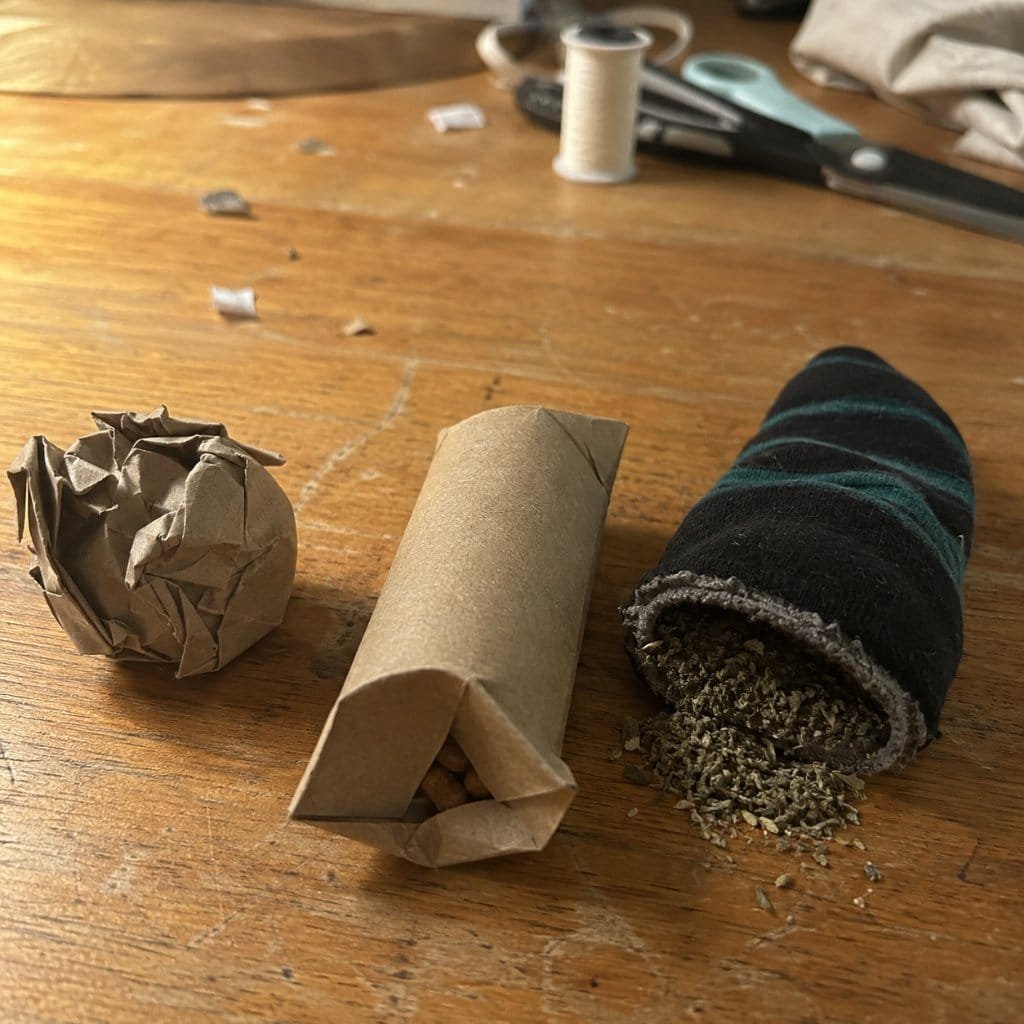
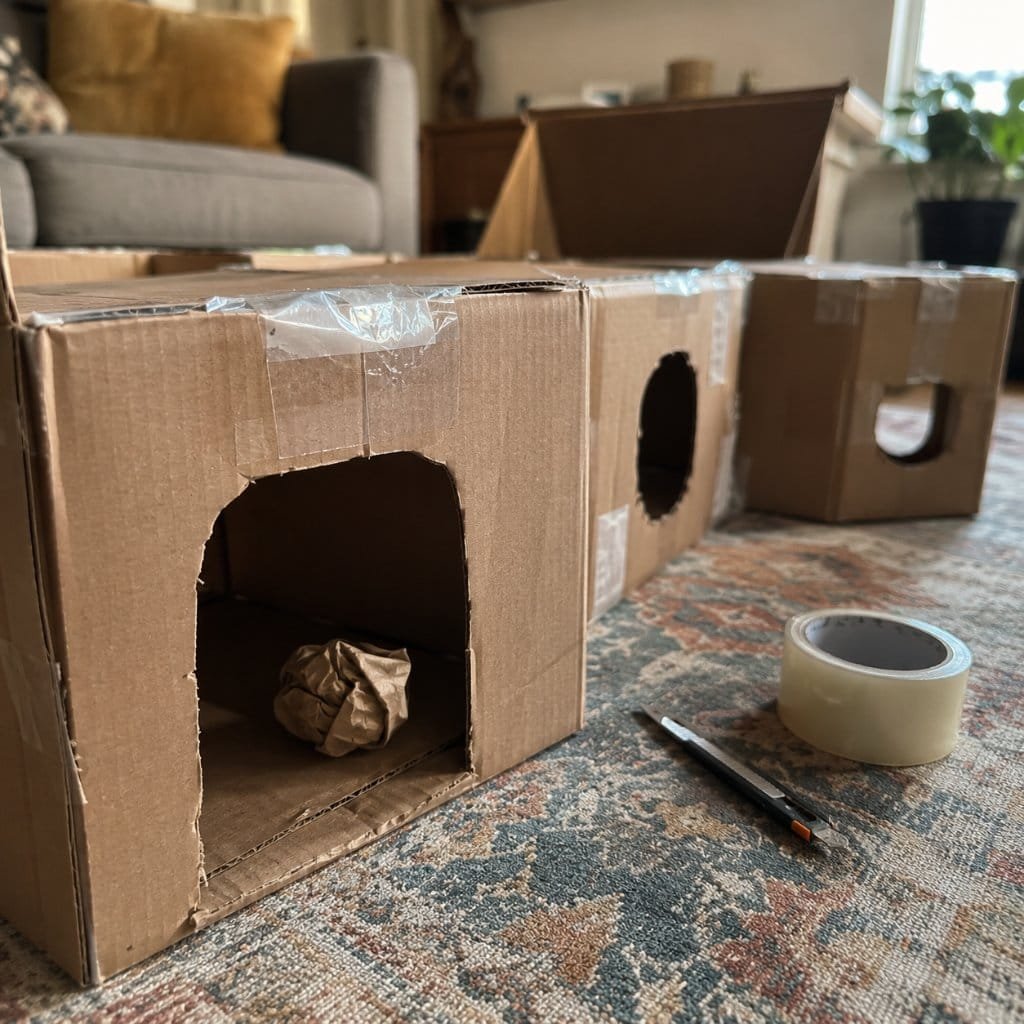
A crumpled paper ball is the fastest toy you will ever make. Simply scrunch a sheet of scrap paper into a light, batting-sized ball. As a result, your cat gets a skittering target that is perfect for pouncing. Avoid foil or plastic, and toss the ball once it gets soggy. A cardboard box adds another free, beloved option for any cat. Cut a few paw-sized holes so your cat can swat and peek through. These paper and cardboard toys cost nothing yet entertain for hours.
A toilet-roll treat tube turns snack time into a fun puzzle. Fold in one end, drop in a few kibbles, and gently fold the other end. Then cut a couple of small holes so treats fall out as the cat rolls it. Consequently, your cat works and thinks for the reward, just like hunting. This simple food puzzle slows fast eaters and fights boredom. You can also link several boxes into a tunnel maze for exploring. Cardboard creations deliver enrichment, exercise, and fun for free.
3.2 The Classic Sock Mouse
A sock mouse is a soft, satisfying toy cats love to grab and kick. Take a clean old sock and add a little stuffing or scrap fabric. Then sprinkle in catnip for an extra burst of excitement. Tie or sew the end securely so nothing can spill out. As a result, your cat gets a huggable toy perfect for bunny-kicking. Keep the size large enough that it cannot be swallowed. This ten-minute build often becomes a long-term favorite.
You can vary the sock mouse to suit your cat’s taste. For a noisy version, tuck a crinkly piece of paper inside before sealing. Meanwhile, a longer sock makes a snake-style toy for cats that love to wrestle. Always stitch seams firmly, since loose threads are a hazard. Check the toy often and repair or replace it when it wears. Different cats prefer different sizes, so experiment a little. A homemade mouse proves that the best toys are often the simplest.
4. Interactive Toys You Can Build
Interactive toys create the bonding, active play that cats need most. Unlike solo toys, these involve you moving the toy like live prey. As a result, your cat gets a real hunt, complete with stalking and pouncing. Homemade wands and puzzle feeders are easy, high-impact builds. Moreover, interactive play tires a cat out far better than solo toys alone. A short evening session can even improve sleep, as our article on helping a cat sleep explains. This section covers two interactive toys worth making.
4.1 A Homemade Wand Toy
A wand toy is the gold standard for interactive play. Tie a length of sturdy cord to a stick or dowel to make the rod. Then attach a feather, a fabric strip, or a small cloth shape at the end. As a result, you can make the lure dart, hide, and flutter like prey. Move it away from the cat, not toward it, to trigger the chase. Always let the cat catch the lure sometimes to avoid frustration. This simple build delivers the most engaging play of all.
Safety is essential with any string-based wand toy. Use thick cord rather than thin string, and check it for fraying. Therefore, always supervise wand play and store the toy out of reach afterward. A cat left alone with a cord could chew and swallow it. End each session with a catch and a small treat to mimic a successful hunt. Vary the lure to keep the game fresh and exciting. Used safely, a homemade wand is the most rewarding toy you can build.
4.2 A Cardboard Puzzle Feeder
A puzzle feeder makes your cat work its brain for food. Take a shallow box and arrange clean tubes or cups inside it. Then hide kibble among the obstacles so the cat must fish it out. As a result, eating becomes a slow, rewarding hunt rather than a quick gulp. This mental challenge fights boredom and helps with weight control. Start easy so your cat enjoys early success and stays motivated. Increase the difficulty gradually as confidence and skill grow.
You can adapt the puzzle feeder in many simple ways. For a beginner version, cut larger holes so treats fall out easily. Meanwhile, a muffin tin with toys over each cup makes a quick foraging puzzle. Use part of the daily food rather than adding extra calories. Additionally, keep the feeder clean to stay hygienic and appealing. Replace cardboard parts when they get soggy or torn. A homemade puzzle feeder is enrichment and mealtime rolled into one.

5. Catnip Toys You Can Make
Catnip turns a plain homemade toy into an exciting treat. Many cats react to catnip with joyful rolling, rubbing, and energetic play. As a result, a pinch of catnip can make almost any fabric toy a favorite. Silver vine and valerian work well for cats that ignore catnip. Moreover, scent toys are simple to sew and easy to refresh. This section covers two catnip toys anyone can make at home. A little scent goes a long way toward feline joy.
5.1 Simple Catnip Pouches and Mice
A catnip pouch is the quickest scent toy to make. Cut two small squares of sturdy fabric and stitch around three sides. Then fill the pocket with dried catnip and sew the last side shut. As a result, you get a soft, fragrant toy ready for kicking and cuddling. A felt mouse shape adds charm but works the same way inside. Stitch every seam firmly so no catnip or filling escapes. These little toys are cheap, fast, and hugely popular with cats.
Keeping catnip toys potent is easy with a little care. Store spare toys in a sealed bag with extra catnip to recharge them. Therefore, a tired toy regains its appeal after a day in the bag. Offer catnip toys in moderation, since constant access dulls the effect. Additionally, remove the toy for a few days to reset your cat’s interest. Always check seams, as a determined cat may rip a pouch open. Refreshed scent toys stay exciting for months at almost no cost.
5.2 Catnip for Cats That Do Not React
Not every cat responds to catnip, and that is perfectly normal. Sensitivity is genetic, so roughly a third of cats feel little effect. Kittens under several months old also rarely react to it. As a result, a non-responder needs a different scent to get excited. Silver vine is a powerful alternative that many catnip-immune cats love. Valerian root and honeysuckle wood are two more options to try. Testing a few scents helps you find what thrills your particular cat.
Introduce any new scent toy slowly and watch the reaction. Offer it during a calm moment so the cat can investigate freely. Meanwhile, never force interaction, since pressure makes cats wary. If one scent flops, simply try another the next time. Some cats prefer to chew scent toys, while others bunny-kick them. Match the toy style to how your cat likes to play. With patience, almost every cat finds a scent that delights it.
6. Keeping DIY Cat Toys Fresh and Safe
Even the best DIY cat toys lose their magic if they never change. Cats quickly tire of toys that are always available. As a result, rotation and upkeep are what keep homemade toys exciting. Regular checks also catch wear before it becomes a hazard. Moreover, a simple toy routine ties play into daily life. This section covers rotating, cleaning, and replacing toys safely. A little maintenance keeps the fun and the safety going strong.
6.1 Rotating and Refreshing Toys
Rotation is the simplest trick for keeping toys interesting. Keep most toys in a bin and offer only a few at a time. As a result, each toy feels new again when it reappears days later. Swap the selection every few days to maintain novelty. Additionally, refresh catnip toys in a sealed bag to restore their scent. This costs nothing yet dramatically extends a toy’s appeal. A small, rotating collection beats a huge, ignored pile.
Pair rotation with a light daily play routine for the best results. Plan two short sessions, ideally one before each main meal. Consequently, you recreate the natural hunt-eat-groom-sleep cycle cats love. Use a fresh toy each session to keep enthusiasm high. Meanwhile, store wand and string toys safely after every session. A predictable rhythm makes play a reliable, calming part of the day. Consistency, not quantity, is what truly satisfies a cat.
6.2 Cleaning and Replacing Toys
Homemade toys need basic cleaning to stay hygienic. Fabric toys can be hand-washed gently and air-dried as needed. As a result, you remove saliva, dirt, and germs that build up over time. Avoid strong detergents, since lingering scent can put a cat off. Let toys dry fully before returning them to the rotation. Cardboard and paper toys are simply replaced when soiled. Clean toys are safer and far more pleasant for your cat.
Knowing when to retire a toy is just as important. Discard any toy that is fraying, torn, or shedding small parts. Therefore, inspect each toy briefly before and after play. A loose thread or exposed filling is an immediate reason to toss it. Because homemade toys are cheap, replacing them is no burden. Keep a few spares ready so play never has to pause. Regular checks keep your cat safe while the fun continues.
DIY Cat Toys FAQ
Are DIY cat toys safe?
Yes, when you use safe materials and supervise string-based play. Stick to cardboard, sturdy fabric, and cat-safe catnip. Meanwhile, avoid string, small bells, and anything a cat could swallow. Check toys often and discard any that fray or shed parts.
What are the best DIY cat toys?
The best toys mimic prey through movement, texture, and scent. Crumpled paper balls, sock mice, and homemade wands are reliable favorites. Additionally, treat tubes and catnip pouches add mental challenge and excitement. Try a few and watch which style your cat prefers.
How often should I change my cat’s toys?
Rotate the available toys every few days to keep them novel. Keep most toys stored and offer only a few at a time. As a result, each toy feels fresh when it returns. Replace homemade toys whenever they show wear or damage.
Conclusion: DIY Cat Toys Made Easy
DIY cat toys prove that fun and enrichment cost almost nothing. With paper, boxes, socks, and catnip, you can build seven great toys today. Meanwhile, simple safety rules keep every homemade toy worry-free. Rotate, clean, and refresh them to keep your cat excited week after week. Together, these habits give your cat a richer, more playful life.
Start with one easy build today, such as a paper ball or a sock mouse. Then expand your collection as you learn what your cat loves. When play seems to fade, a quick rotation or a fresh scent usually revives it. With a little creativity, your home becomes an endless source of feline fun. The best toys are the ones you make with your cat in mind.
Free printable resource
The Cat Owner’s Toolkit
Great cat care comes down to a few steady habits. Keep them all in one place — 6 printable checklists & trackers you can stick on the fridge.
- New-cat checklist
- Vaccination & vet-visit tracker
- Feeding quick chart
- Daily & weekly routine
- Litter-box troubleshooter
- Emergency cheat sheet
Want the full guide? The Complete Cat Care Handbook has all 18 chapters with their own checklists — get it on Amazon as an eBook or Paperback.