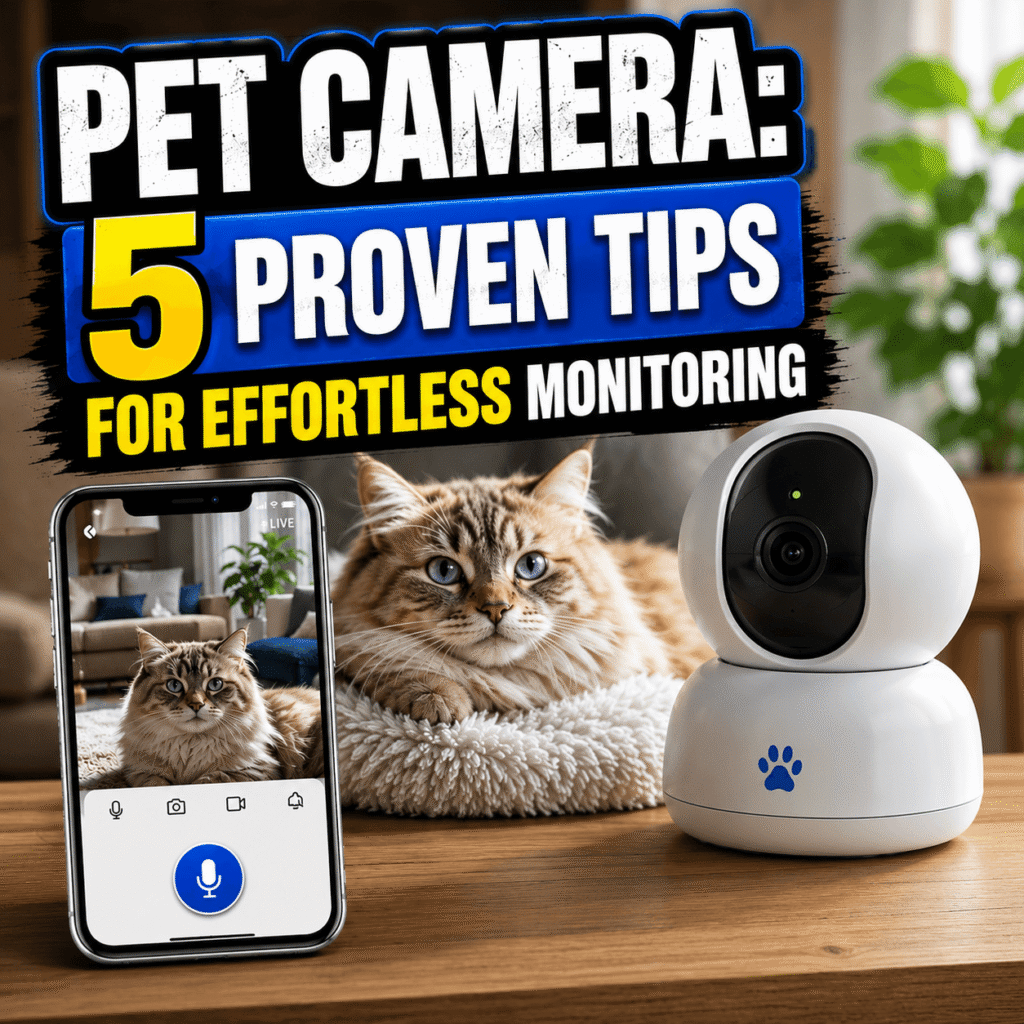
A pet camera lets you check on your cat anytime, turning worry into reassurance. With a good pet camera, you can watch, talk to, and even play with your cat from your phone. For owners who work long hours or travel, that connection is genuinely comforting. Beyond peace of mind, monitoring can also reveal health and behavior clues you would otherwise miss.
This article explains the types of cameras and how to choose well. You will learn key features, smart placement, and how to read what you see. Moreover, it covers using a camera to support health and behavior. Each point helps you monitor your cat usefully, not just watch idly.
Our guidance focuses on practical value, privacy, and your cat’s comfort. Therefore, you can choose a camera that truly helps your household. By the end, you will know what to look for and how to set it up. The benefits come first, because they show what monitoring makes possible.
1. Why Use a Pet Camera
A pet camera solves the quiet anxiety of leaving a cat home alone. It lets you confirm your cat is safe, calm, and behaving normally. As a result, you gain reassurance during work, errands, or travel. Many cameras also let you talk to your cat or dispense a treat. Moreover, recorded footage can reveal hidden behavior and health patterns. This section explains the real benefits behind the device. Knowing them helps you decide if a camera fits your life.
1.1 Peace of Mind and Connection
The biggest benefit is simple peace of mind. A quick glance at your phone confirms your cat is safe and settled. As a result, you worry less and focus better during your day. Two-way audio lets you speak soothing words to an anxious cat. Some cameras even toss treats or trigger a toy remotely. For lonely or nervous cats, that interaction can ease separation stress. Staying connected makes time apart easier for you both.
A camera also helps you understand your cat’s hidden routine. Cats often behave differently when no one is home. As a result, footage can reveal boredom, anxiety, or destructive habits. You might notice excessive scratching, hiding, or over-grooming you never saw. Our article on indoor cat enrichment can then help you respond. Watching real behavior turns guesses into informed care. The insight is often as valuable as the reassurance.
1.2 When a Pet Camera Helps Most
A camera is especially useful in a few common situations. Owners who work long hours gain daily reassurance about a solo cat. As a result, they can spot problems early instead of arriving home to a mess. Travelers benefit too, checking in while a sitter handles feeding. New kittens and senior cats also warrant closer watching. For multi-cat homes, a camera helps you observe how cats interact. These scenarios are where monitoring delivers the most value.
Monitoring is also valuable after changes or during recovery. A new home, a new pet, or an illness all shift a cat’s behavior. As a result, a camera helps you track how your cat is coping. You can watch whether a recovering cat eats, moves, and rests normally. In multi-cat households, footage can catch tension you would otherwise miss. Our multi-cat household guide pairs well with this. A camera turns absence into informed, attentive care.
2. Pet Camera Types and Key Features
Pet cameras range from simple viewers to interactive, treat-tossing models. The right features depend on what you want to do, not just see. As a result, understanding the options prevents overpaying or underbuying. Core features include video quality, night vision, and two-way audio. Interactive extras like treat dispensers and laser toys add engagement. This section explains the main types and features. The table below summarizes them at a glance.
2.1 Core Pet Camera Features
Video quality is the foundation of any useful camera. Clear, high-definition video lets you actually see what your cat is doing. As a result, look for at least 1080p resolution and a wide viewing angle. Night vision is essential, since cats are active in low light. A wide-angle lens captures more of the room from a single spot. Reliable live streaming with low lag keeps the view practical. These basics matter more than flashy extras.
| Feature | Why It Matters |
|---|---|
| 1080p+ video | Clear view of your cat |
| Night vision | Cats are active in the dark |
| Two-way audio | Talk to and hear your cat |
| Motion alerts | Notified of activity |
| Treat/toy dispenser | Interact and reward |
Smart features turn a viewer into an interactive tool. Two-way audio lets you reassure your cat with your voice. As a result, an anxious cat may settle when it hears you. Motion and sound alerts notify your phone when something happens. Some cameras dispense treats or trigger a laser for remote play. However, these extras raise the price, so choose what you will use. Match the features to how you plan to engage.
2.2 Interactive and Smart Options
Interactive cameras let you do more than watch. Treat-tossing models reward your cat and create positive check-ins. As a result, your cat may associate the camera with good things. Built-in laser toys allow short, supervised play from your phone. These features help combat boredom in cats left alone. However, use them sparingly so a laser never frustrates your cat. Interactive tools work best alongside real toys and enrichment.
Smart integrations add convenience for connected homes. Many cameras work with phone apps, voice assistants, and cloud storage. As a result, you can review clips or get alerts wherever you are. Cloud recording saves footage, though it often needs a subscription. Local storage on a card is a one-time, private alternative. Consider data privacy and security when choosing any connected device. Pick the smart features that genuinely fit your routine.

3. Choosing the Right Pet Camera
The right pet camera balances features, budget, and privacy. Not everyone needs treat tossing, but everyone needs reliable video. As a result, focus first on the basics that you will use daily. Storage type, app quality, and security deserve careful thought. Moreover, the camera should suit your home and habits. This section covers the key buying criteria. Choosing well ensures the camera actually earns its place.
3.1 Matching Features to Your Needs
Start by deciding what you want the camera to do. For simple check-ins, a basic 1080p camera with an app is plenty. As a result, you avoid paying for features you will never touch. If you want interaction, prioritize two-way audio and a treat dispenser. Frequent travelers may value cloud recording and reliable alerts. Therefore, list your must-haves before comparing models. Buying to your real needs prevents wasted money.
Storage and app quality shape the daily experience. Cloud storage is convenient but usually adds a monthly fee. As a result, local card storage can be cheaper and more private over time. A well-designed, stable app makes the camera pleasant to use. Read reviews for connection reliability, since a laggy app frustrates fast. Meanwhile, check that the camera fits your Wi-Fi and home layout. Good software matters as much as good hardware.
3.2 Privacy and Security
A pet camera is an internet-connected device in your home. As a result, security and privacy deserve real attention. Choose a reputable brand with strong encryption and regular updates. Set a unique, strong password and enable two-factor authentication. Avoid cheap, unknown cameras with poor security track records. Position the camera to watch pet areas, not private living spaces. Sensible precautions keep your footage and home safe.
Ongoing security habits protect you over the long term. Keep the camera’s firmware and app updated to patch vulnerabilities. As a result, you close security gaps as they are discovered. Review which accounts and devices can access the feed. Disable features you do not use to reduce exposure. Meanwhile, understand where your footage is stored and who can see it. A little diligence keeps a helpful device from becoming a risk.
4. Setup and Placement
Smart placement makes a pet camera far more useful. The right spot captures your cat’s favorite areas clearly and safely. As a result, you see meaningful activity rather than an empty corner. Stable mounting and good Wi-Fi keep the feed reliable. Moreover, safe setup prevents a curious cat from knocking it down. This section covers placement and setup basics. A little planning gives you the best possible view.
4.1 Best Placement for a Clear View
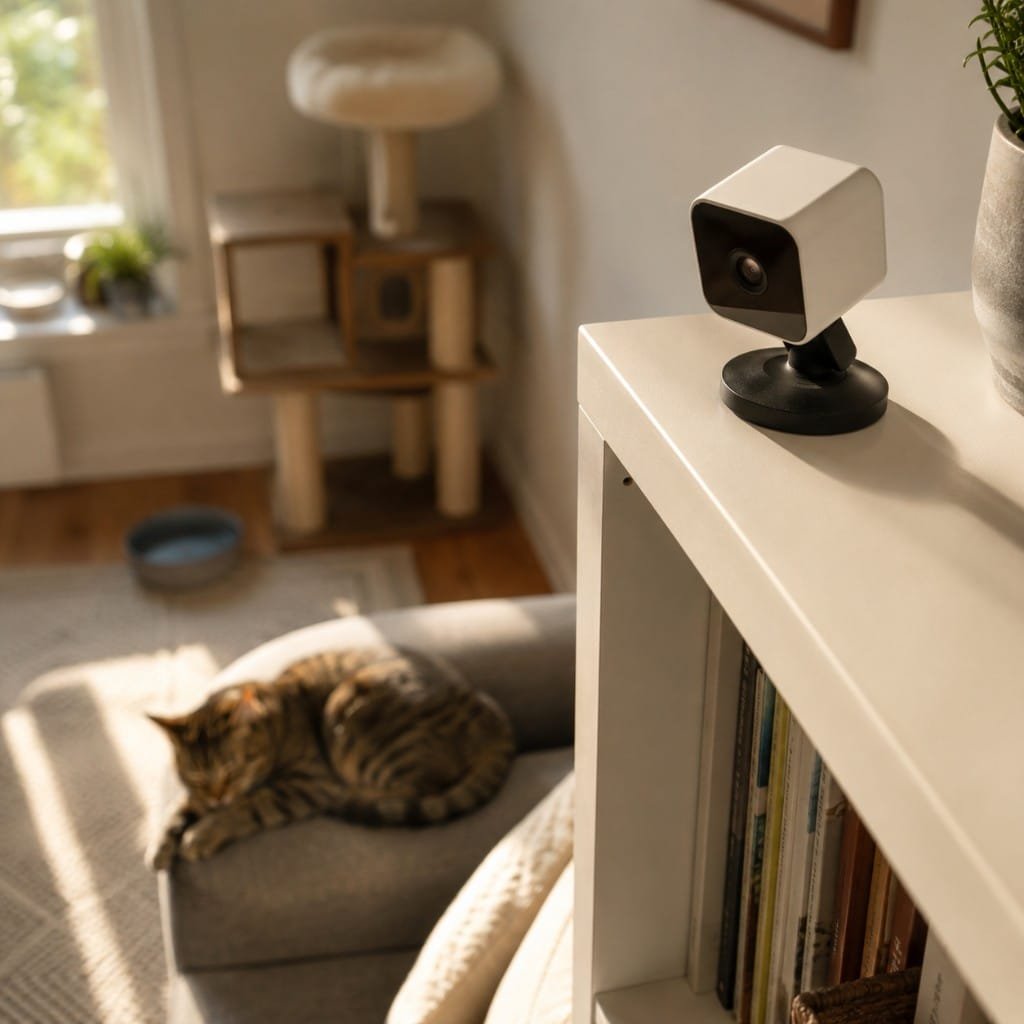
Place the camera where your cat spends the most time. Aim it at favorite resting spots, feeding areas, or the litter region. As a result, you capture the activity that matters most. A higher angle covers more of the room and resists tampering. Keep the lens away from direct light, which can wash out the image. For wide rooms, a corner placement maximizes coverage. Thoughtful aiming turns a camera into a genuine window.
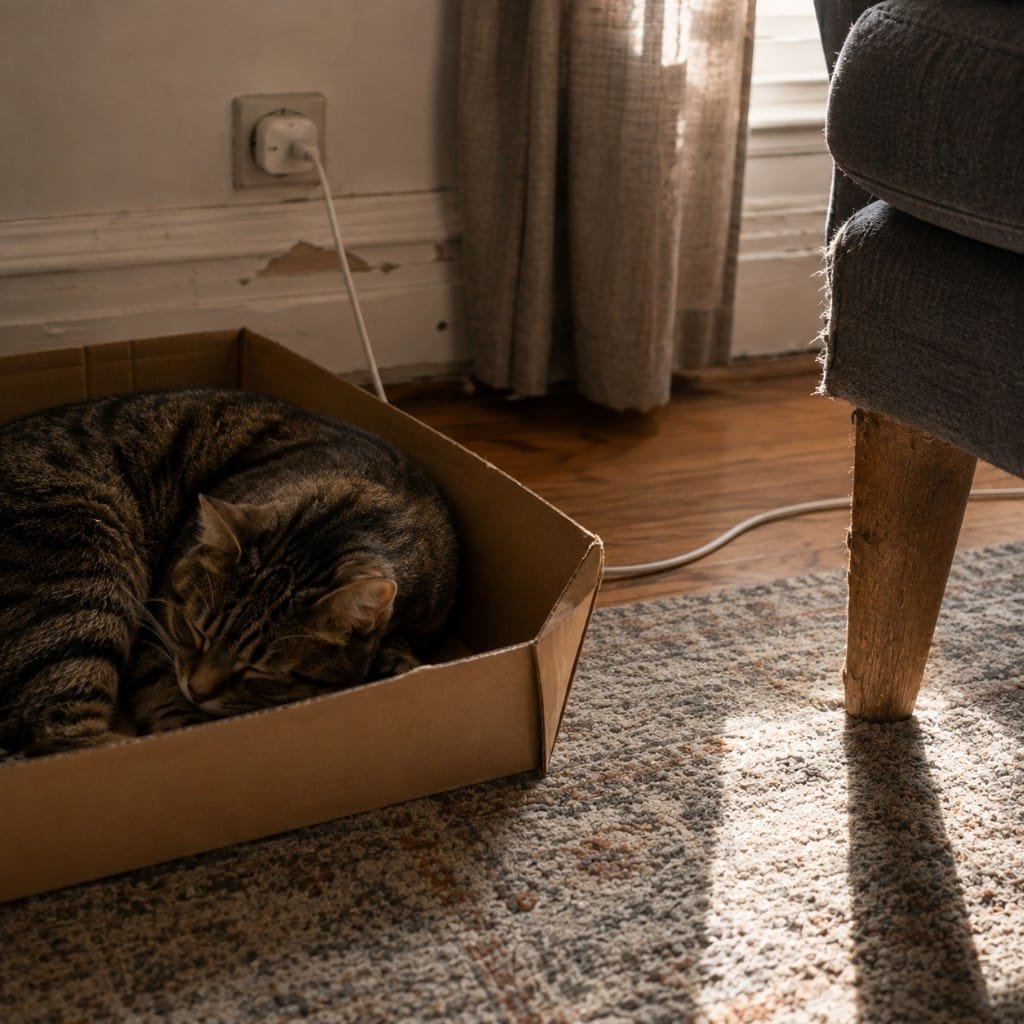
Stability and safety guide where you mount it. Secure the camera so a climbing cat cannot knock it over. As a result, you avoid damage and a sudden loss of view. Hide or secure cords, since cats may chew dangling cables. Keep the device away from heat, water, and the litter box itself. Meanwhile, ensure a stable power source and strong Wi-Fi signal. A safe, steady mount keeps monitoring trouble-free.
4.2 Simple Setup Steps
Most cameras follow a quick, app-guided setup. Download the app, create an account, and connect to your Wi-Fi. As a result, you are usually streaming within a few minutes. Test the view and adjust the angle before you rely on it. Set up motion alerts so you are notified of real activity. Label the camera clearly if you use more than one. A careful first setup saves frustration later.
A few habits keep the camera working reliably. Check the connection before any trip you will depend on it for. As a result, you avoid discovering a dead feed when you are away. Keep the lens clean for a clear picture over time. Confirm storage settings so important clips are actually saved. Meanwhile, keep the app and firmware updated for stability and security. Reliable routines make the camera something you can trust.

5. Using a Pet Camera for Health and Behavior
A pet camera is most powerful when used as a care tool. Watching daily patterns helps you spot health and behavior changes early. As a result, you can act before a small issue becomes serious. Eating, litter habits, energy, and mood are all visible on camera. Moreover, footage gives your vet useful, real-world information. This section explains how to monitor meaningfully. Used well, a camera supports better, earlier care.
5.1 Spotting Health Changes Early
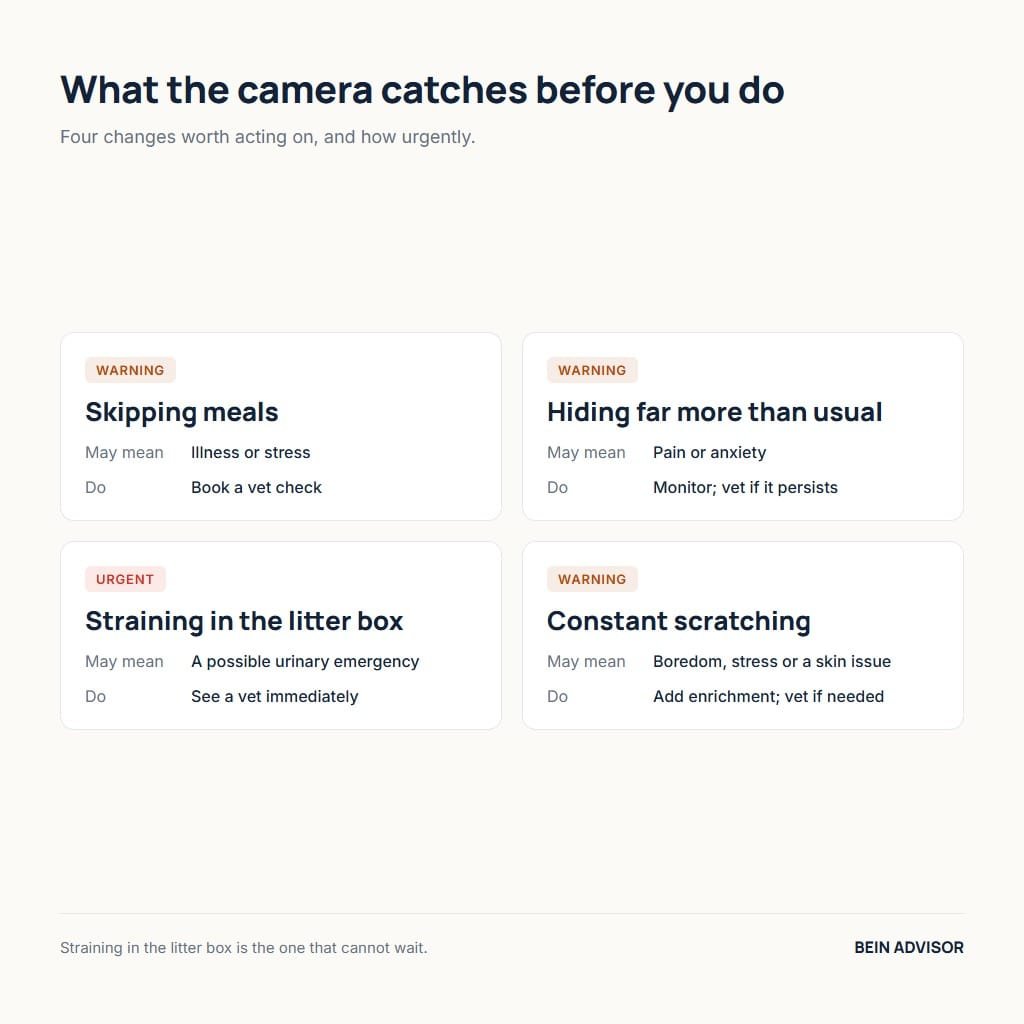
A camera helps you notice subtle changes you might otherwise miss. Watch for shifts in appetite, energy, or bathroom habits. As a result, you can catch early signs of illness sooner. Reduced movement, hiding, or skipped meals are worth noting. For warning signs, see our article on common cat illnesses. Footage of unusual behavior can also guide a vet visit. Early observation often leads to easier, cheaper treatment.
| Sign on Camera | What It May Mean | Action |
|---|---|---|
| Skipping meals | Illness or stress | Vet check |
| Hiding far more than usual | Pain or anxiety | Monitor, vet if it persists |
| Straining in the litter box | Possible urinary emergency | See a vet immediately |
| Constant scratching or grooming | Boredom, stress, or skin issue | Add enrichment; vet if needed |
Recorded clips are surprisingly useful at the vet. Describing a behavior is hard, but showing a video is clear. As a result, your vet can assess limping, coughing, or odd episodes accurately. Capture anything unusual, like straining, retching, or sudden hiding. Note the time and frequency to share alongside the footage. The ASPCA’s cat care guidance reinforces the value of attentive observation. A short clip can speed up the right diagnosis.
5.2 Understanding Behavior and Stress
A camera reveals how your cat truly behaves when alone. You may find boredom, anxiety, or destructive habits during the day. As a result, you can adjust enrichment, routine, or resources to help. Excessive meowing, pacing, or scratching often signals stress. Therefore, footage helps you target the real cause, not the symptom. More play and stimulation usually calm a restless cat. Watching behavior turns frustration into a clear action plan.
In multi-cat homes, a camera exposes hidden dynamics. You can see whether one cat blocks another from food or litter. As a result, you can fix resource competition you never witnessed. Footage also shows whether play is friendly or tipping into conflict. Meanwhile, you can confirm a shy cat gets enough quiet time. Adjust the setup based on what you actually observe. A camera makes invisible household tension visible and fixable.
Pet Camera FAQ
Is a pet camera worth it?
For many owners, yes, especially if you work long hours or travel. A camera offers reassurance and reveals health or behavior changes early. Additionally, interactive models let you talk to or reward your cat remotely. Choose features you will actually use to get real value.
Do cats notice and mind a camera?
Most cats ignore a quiet, stationary camera after brief curiosity. Some react to two-way audio or a treat dispenser at first. Therefore, introduce interactive features gently and in moderation. A well-placed camera rarely bothers a relaxed cat.
Where should I place a pet camera?
Aim it at your cat’s favorite spots, such as beds, feeding, or play areas. A higher corner angle covers more of the room and resists tampering. Additionally, avoid direct light and secure any cords. Test the view and adjust before you rely on it.
Conclusion: Choosing a Pet Camera
A pet camera turns time apart into reassurance and better care. Focus on clear video, night vision, and the interactive features you will use. Meanwhile, prioritize privacy, smart placement, and a reliable app. Use the footage to spot health and behavior changes early. Together, these steps make monitoring genuinely helpful, not just a novelty.
Start by listing the features you truly need, then choose a secure, well-reviewed model. Place it thoughtfully and test the view before you depend on it. When footage reveals worrying changes, share it with your veterinarian. With the right camera and habits, you stay connected to your cat anywhere. A smart choice brings peace of mind and a healthier, happier cat.