
A dog walking business can look simple from the outside. You take a dog outside, return it safely, and collect a fee. However, the difficult work sits between those actions. First, you must choose a service area that keeps travel under control and understand which dogs you can handle. In addition, you must communicate with owners, protect against avoidable incidents, and price the full time required for each visit. A profitable outcome is possible, but it is never automatic. Instead, it depends on repeat bookings, route density, reliable operations, and a price that covers both visible and hidden work.
This guide treats a dog walking business as a small local service. Such a service is not a casual side job with unlimited capacity. For example, the guide explains how to test demand before spending and turn a vague offer into defined packages. In addition, it shows how to build a practical safety protocol and use simple numbers to understand break-even. Moreover, the guide covers client intake, referrals, marketplaces, and the point at which hiring becomes sensible. The figures in it are planning illustrations rather than market averages. Also, local rules, insurance requirements, animal-welfare standards, and platform availability can differ sharply by location.
1. Define the dog walking business promise and territory
Start with a promise that a client can understand in one sentence. For example, you might serve busy owners who need a reliable midday walk. You might also serve older dogs that need a shorter routine or households that need a scheduled visit during work hours. However, a broad promise such as “all pet care” creates unclear expectations and increases risk before you know your capacity. Therefore, decide whether your first offer is a walk, a short relief visit, a home check, or a recurring weekday route. In contrast, treat boarding, transport, daycare, grooming, and medication support as separate services, because each one changes the operating model.
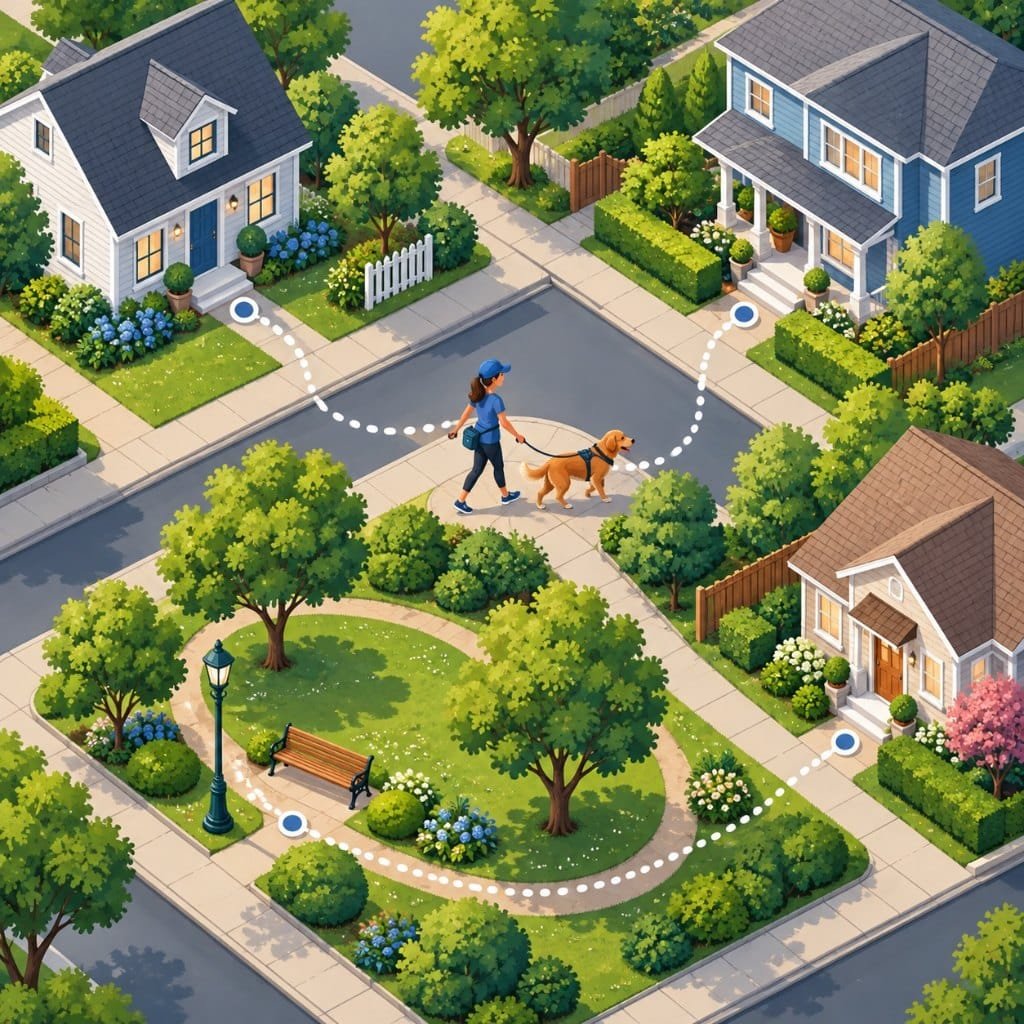
Your territory is part of the product. For example, a compact service area gives a dog walking business more time for care and less time in traffic. To define it, map the buildings, streets, parks, veterinary practices, pet stores, and local groups around the area you can realistically reach. Next, speak with potential customers instead of relying on a population estimate. For example, ask when they need help and what they dislike about current options. Also ask what information they expect after a visit and which conditions would stop them from booking. The U.S. Small Business Administration recommends checking demand, market size, location, saturation, and pricing during market research. Use that framework locally, and check the rules and market conditions that apply where you operate.
2. Validate demand before buying a large equipment list
Validation does not require a formal survey with hundreds of responses. Instead, a short set of structured conversations can reveal whether the problem is real and specific. For instance, interview owners who work away from home, travel frequently, or have a dog that needs a consistent routine. Ask for recent behavior, not a hypothetical promise: “When was the last time you paid for help, and what happened?” Record the day, time, service type, travel distance, and reason for the booking. For a dog walking business, the first offer becomes easier to design when it reflects observed patterns rather than the owner’s personal assumptions.
Next, review competitors as a customer would. For instance, note their service boundaries, response speed, onboarding questions, cancellation language, updates, reviews, and visible availability. However, do not treat a competitor’s posted fee as proof of what you should charge. Instead, look for an underserved combination: dependable early appointments, a small senior-dog route, clear handoff documentation, or a service that communicates calmly with first-time owners. The goal is not to be the cheapest option. Ultimately, the goal is to make the choice easy for a defined customer with a specific need.
| Validation question | Useful evidence | Design decision |
|---|---|---|
| When is help needed? | Repeated days and time windows | Set a focused route |
| What creates hesitation? | Safety or trust concerns | Improve intake and updates |
| What is missing locally? | Repeated complaints or gaps | Choose one service advantage |
| Will owners return? | Recurring need, not one-off interest | Build a weekly package |
3. Build a safety protocol that can be repeated
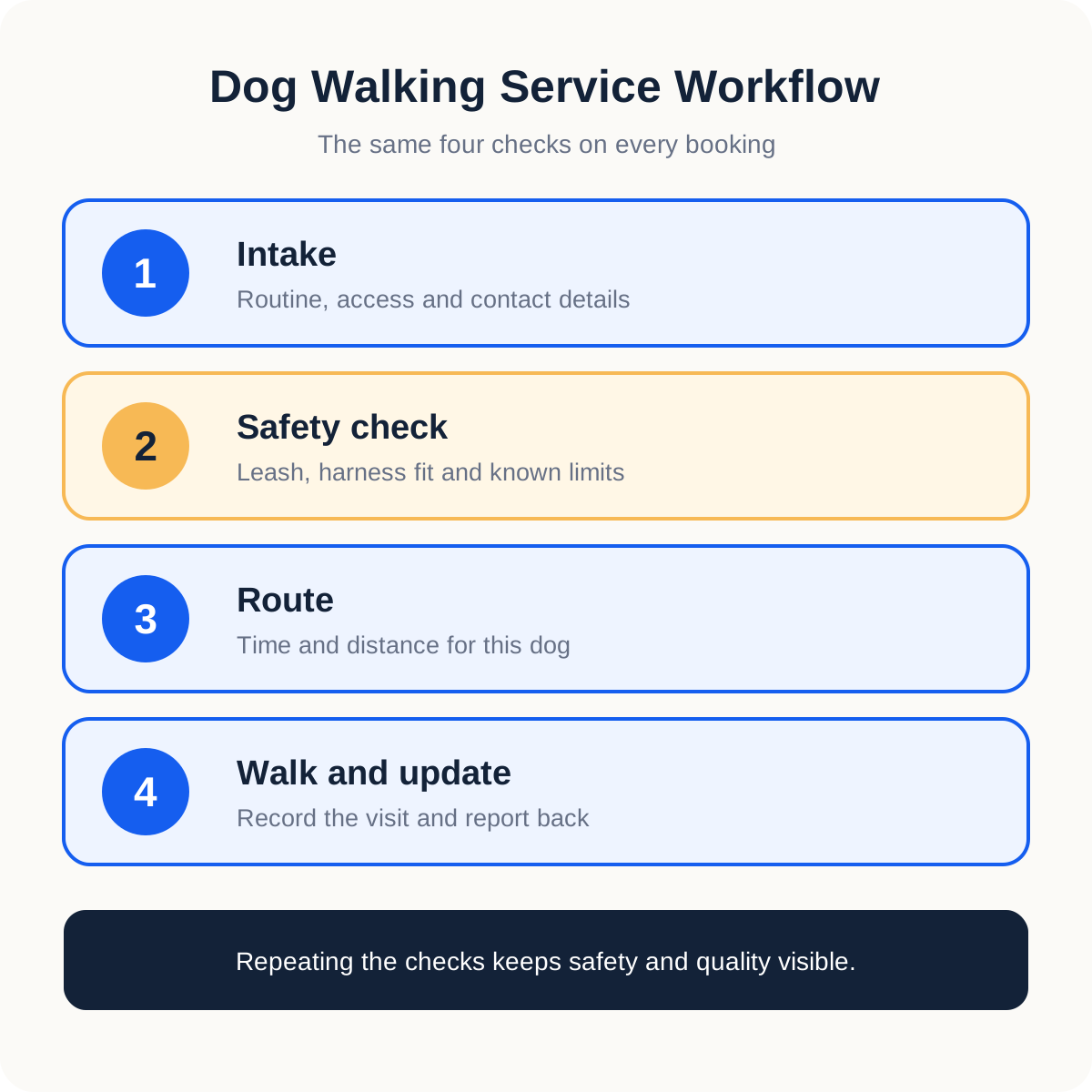
Safety begins before the first walk. Therefore, create an intake form that asks about the dog’s age, size, health limitations, triggers, leash behavior, reactions to strangers and other dogs, food restrictions, medication instructions, escape risk, and emergency contacts. For example, ask the owner to describe a recent difficult situation rather than accepting “friendly” as a complete assessment. In addition, confirm the address, entry instructions, handoff person, and veterinary contact. Also confirm permission for emergency action. If the information is incomplete, delay the booking. A professional dog walking business makes uncertainty visible instead of hiding it inside a busy schedule. Consequently, this standard protects you as well as the owner.
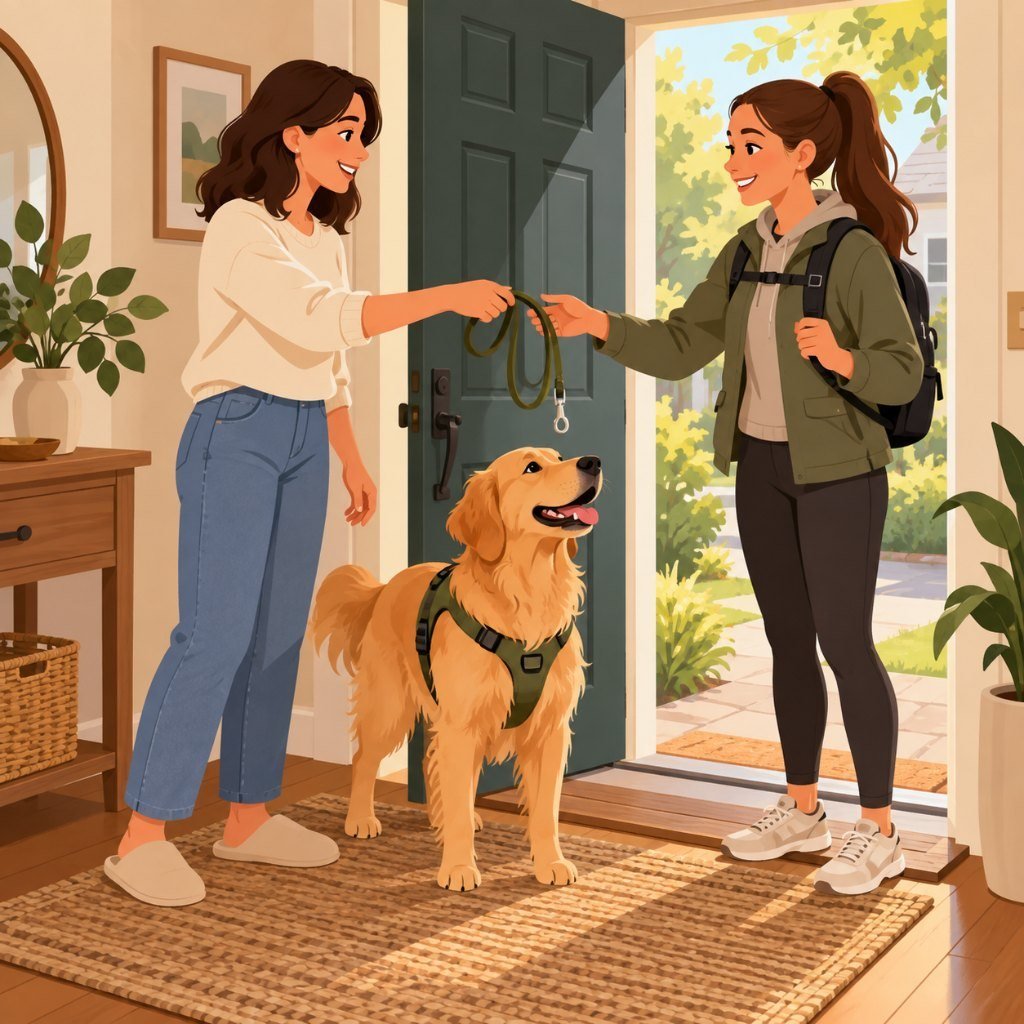
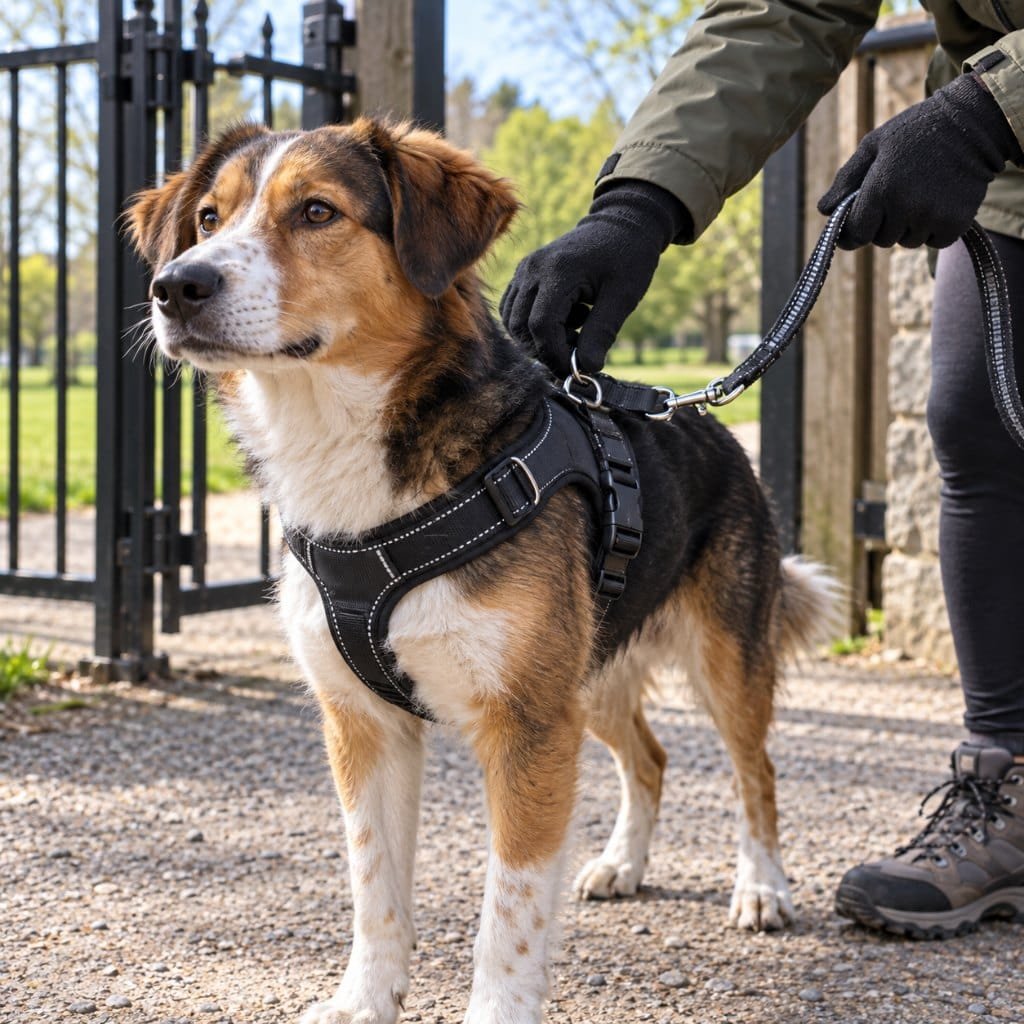
Write a short operating checklist for every visit. On each visit, confirm the leash and identification, check the door before leaving, use an agreed route, avoid unapproved group contact, and send a time-stamped update after the return. Additionally, set weather and heat limits in advance. Then define what happens when an owner is late, a dog refuses to walk, a key does not work, or an injury appears. Record incidents and near misses, even when nobody is harmed. These records help you improve the service and give the owner a clear account. They do not replace veterinary care, legal advice, insurance, or local animal-welfare requirements.
4. Price a dog walking business around capacity
The most common pricing mistake is counting only the minutes spent walking. In practice, a visit also includes travel, preparation, entry, handoff, messages, payment processing, notes, and occasional waiting. Therefore, track the complete time for a small test group, then divide your day into realistic appointment windows. Also leave space for delays and emergencies. A full calendar can produce a weak result if every appointment is separated by an unpaid journey. In a dog walking business, route density often matters as much as the headline fee. Nearby recurring clients reduce the time that cannot be billed.
Separate fixed costs from variable costs. For example, fixed costs may include registration, software, basic marketing, and insurance if appropriate. In contrast, variable costs may include travel, payment fees, consumables, and extra time for a special visit. Additionally, set a base service and define additions for distance, urgent requests, unusual time windows, or multiple dogs when the responsibility genuinely increases. Do not copy the lowest visible competitor, because a price that fails to pay for safe preparation becomes a liability. As a result, the shortfall appears later as rushed work or unsustainable hours.
| Illustrative planning item | Example amount | What it teaches |
|---|---|---|
| Monthly fixed costs | 300 currency units | Costs that continue without visits |
| Contribution per visit | 15 currency units | Price less variable cost |
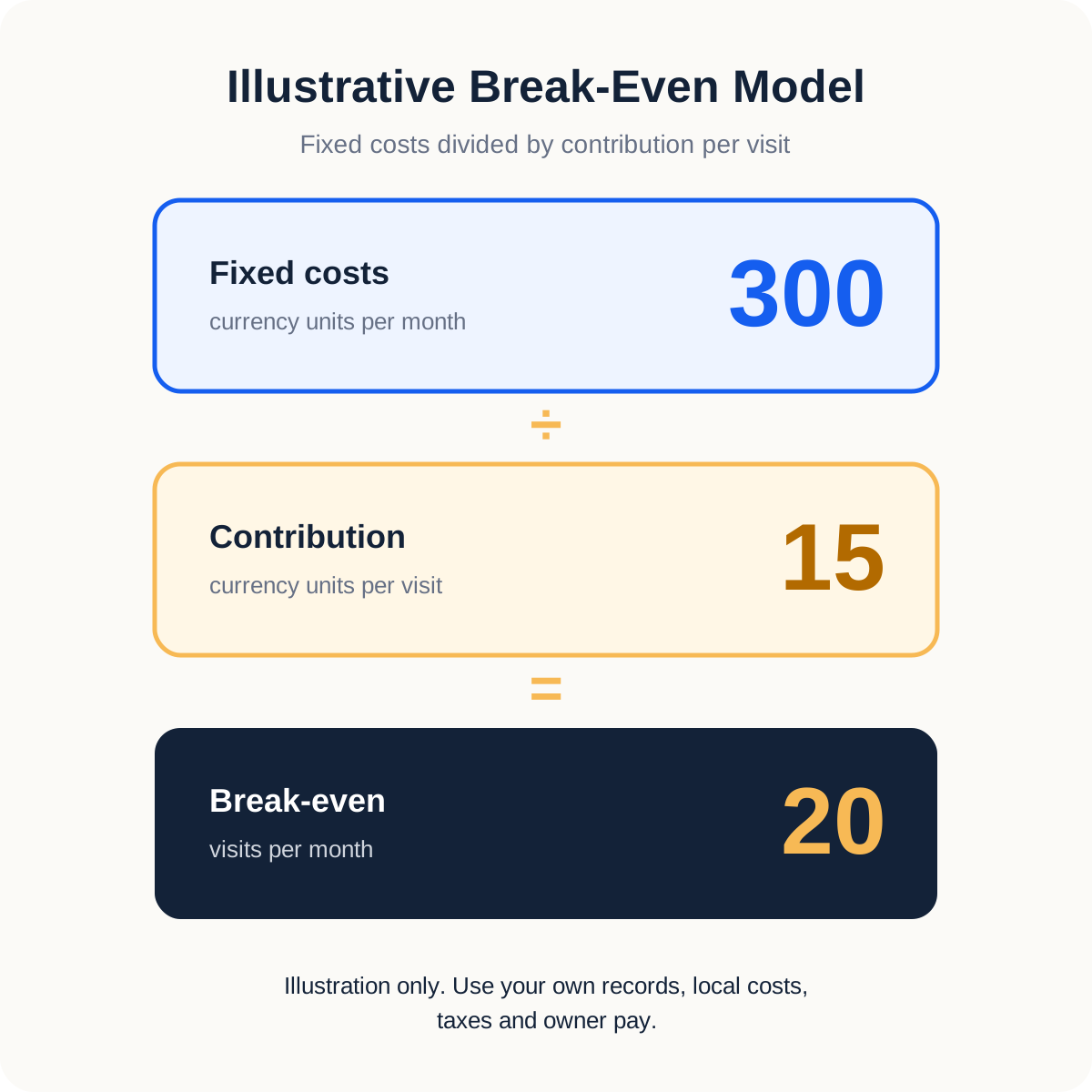
| Break-even visits | 20 visits | 300 divided by 15 |
| Unpaid route time | Measure locally | May require a tighter territory |
The table is an illustration, not a forecast. The Small Business Administration planning guide explains that startup-cost analysis can help estimate break-even and funding needs. However, use your own records and local accounting treatment. A simple break-even calculation is fixed costs divided by the contribution margin per sale. It does not account for taxes, owner pay, loan payments, demand changes, or unexpected incidents unless you add them to the model. Additionally, a one-page feasibility study can help compare those assumptions before you commit to a larger spend.
5. Create a client intake and handoff system
Good intake reduces surprises. Use one form for the dog’s routine, behavior, health notes, emergency contacts, access details, approved walking area, and communication preferences. Next, follow it with a short first meeting in which you observe the handoff and ask the owner to demonstrate the equipment. In addition, confirm what the service includes and what it excludes. Write the cancellation, late-access, weather, and emergency policies in plain language. When a client books again, update the record instead of trusting memory. For a dog walking business, the system must be quick enough to use every time and detailed enough to support a safe decision.
After the visit, send a concise report: arrival and return time, route or activity summary, water or food notes if included, unusual behavior, and any follow-up needed. In turn, a calm record tells owners what happened and what they should do next. Additionally, store personal information securely and limit access if other people join the operation. A scheduling tool can reduce missed appointments, but it does not replace a human review of conflicts, travel time, or special instructions.
6. Win the first recurring clients for your dog walking business
Early marketing should make trust easy to evaluate. For instance, build a simple page that states your territory, service promise, availability, intake process, updates, boundaries, and contact method. Additionally, publish useful local content about preparing a dog for a first visit, choosing a safe leash, or deciding when a shorter outing is appropriate. Then ask satisfied clients for honest reviews without exposing their address or private details. Partnerships with pet stores, trainers, residential communities, and complementary service providers can create qualified introductions when the partner is comfortable with your standards.
Track the source of every inquiry. For example, record how many people ask questions, how many complete intake, how many book once, and how many return. If you use a small introductory offer to reduce first-booking risk, give it a clear end date or scope. Avoid a permanent discount that teaches customers to wait for a lower price. Ultimately, the strongest signal for a dog walking business is a pattern of safe, profitable repeat appointments inside a manageable area.
7. Use marketplaces as channels, not as the whole business
A marketplace can help a new provider reach owners who are already searching. For example, setting up a profile on a marketplace such as Rover typically means choosing services, setting rates and availability, and adding profile information. Rover’s help page for new sitters and walkers lists its current steps. In addition, safety and verification steps can differ by country. Therefore, read the rules for the country where your dog walking business operates, because requirements, fees, coverage, and availability can change by market. Do not imply that joining one platform is legally required or sufficient to operate safely. A dog walking business remains responsible for its own service standards.
Use a platform to learn which service attracts inquiries, then build direct trust within the rules that apply to that platform. In addition, keep your own consistent intake, service notes, and follow-up process. A dog walking business becomes vulnerable when one marketplace controls every lead and the operator has no record of what customers value. Therefore, a balanced approach uses marketplaces for discovery while referrals, local partnerships, and a clear service page create additional routes to repeat work.
8. Delay hiring until the operation is teachable
Hiring is not the first answer to every increase in demand. Therefore, before adding a walker, verify that the bookings are recurring, the territory is compact, the intake is complete, and the service standards are written. A helper cannot repair an unclear offer or a broken schedule. Once those conditions hold, create a short training path covering introductions, leash handling, entry and exit, updates, incident reporting, privacy, and escalation. Additionally, start with a limited number of visits and review the work closely. Do not place unfamiliar dogs together merely to increase the number of walks per hour.

Decide how quality will be checked. For instance, review completed forms, client updates, timing, cancellations, complaints, and incidents. In addition, pay attention to the handoff, not only the walk itself. If a worker needs different equipment or insurance coverage, resolve that before assigning clients. Ultimately, expansion should preserve the experience that created repeat demand. If adding people makes communication slower or safety less visible, the dog walking business has expanded beyond its current management capacity.
9. Review five numbers in your dog walking business every week
Weekly review turns a small service into a learning system. Track inquiry-to-booking conversion, repeat-booking rate, total time per visit, cancellation rate, and contribution after variable costs. Additionally, add a safety measure, such as incidents and near misses, so the financial dashboard cannot hide operational weakness. Compare results by route and package. For example, a lower-fee package may be valuable if it creates predictable density, while a higher-fee visit may be weak if it requires long travel and repeated rescheduling.
Make one controlled change at a time. For instance, tighten the service area, revise a package, move a time window, improve the intake form, or test one referral channel. Keep the test long enough to produce useful evidence, then decide whether to keep, change, or stop it. However, do not expand because of one busy week. A dog walking business is healthier when its owner can explain why a change improved safety, margin, repeat bookings, or schedule stability.
In practice, review capacity before you celebrate revenue. List the appointments that can be served within one route, then compare the promised response time with the time needed for travel, updates, and recovery between visits. If the route cannot absorb a late handoff or a weather change, it is already too full. Similarly, a repeat customer is valuable only when the visit remains safe and fairly priced after all work is counted. Use the weekly figures to choose a small improvement, document the result, and keep the service promise narrow enough for a new helper to follow.
Operational tools for a dog walking business
As an Amazon Associate, BeIN ADVISOR earns from qualifying purchases.
The examples below can support a dog walking business, but they do not replace a fit check, a behavior assessment, or a documented handoff protocol. Compare durability, comfort, return terms, and the needs of each dog before buying. Do not use equipment that does not suit the animal or the route.


Conclusion: run a small, measurable first test
The safest first move is not a large equipment purchase or a broad advertisement. Instead, choose one compact area, one clear service, and one customer problem. Conduct a small set of interviews and create a basic intake form. Additionally, test two packages and complete a limited number of visits with complete records of time and cost. Ask what made the owner feel secure and what caused friction. Then revise the offer before adding boarding, transportation, group walks, or a new worker. This approach gives you evidence without pretending that early interest guarantees demand.
A dog walking business has profit potential when repeat demand, safe operations, route density, and honest pricing work together. Therefore, write a one-page feasibility sheet, check the local rules, and define the smallest test that could prove or disprove your assumptions. Keep that test small enough to measure without creating unnecessary risk. For another example of building a focused service around a clear promise, read the guide to starting a specialized consulting business. Start with a controlled route, measure the complete work, and let client experience and reliable numbers decide the next step for your dog walking business.