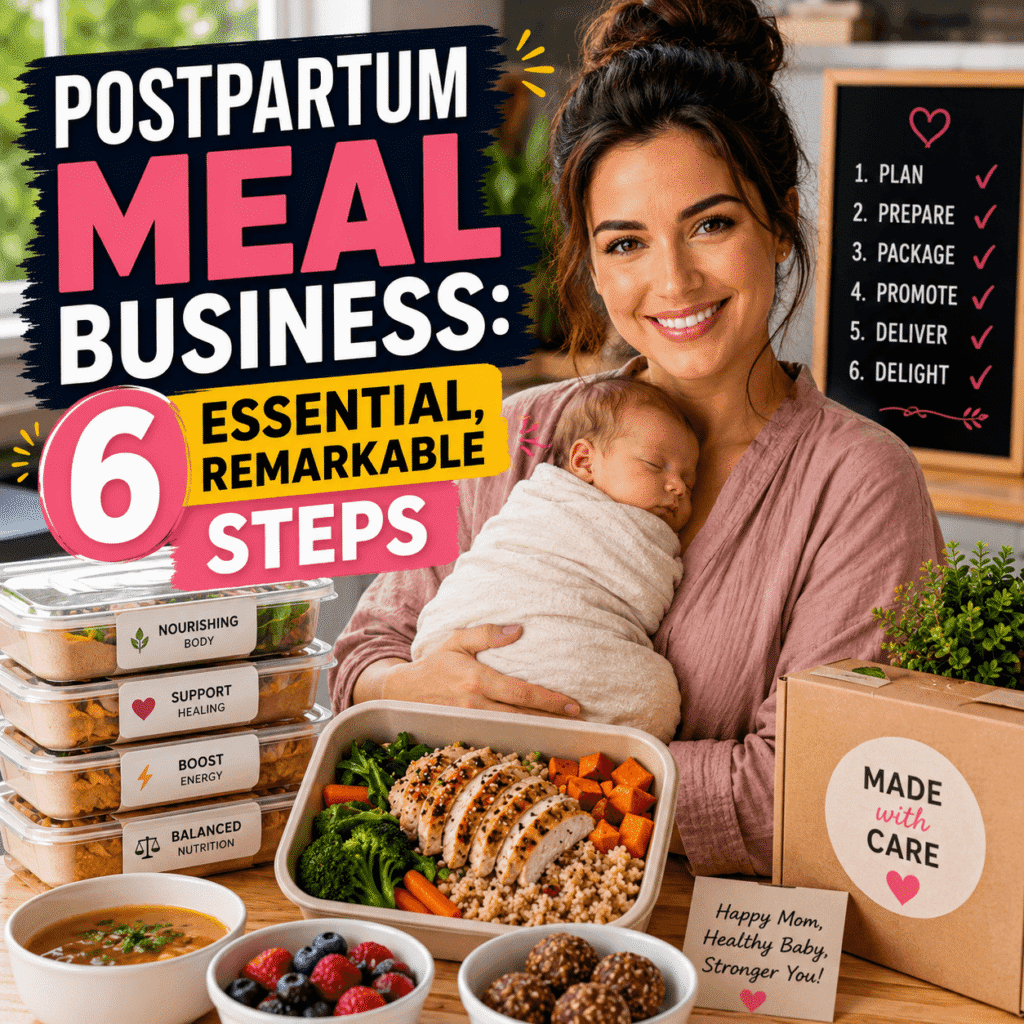
A postpartum meal business turns one of the hardest weeks of a mother’s life into your opportunity to help, because new parents are exhausted, recovering, and rarely able to cook nourishing food for themselves. Starting a postpartum meal business lets you deliver warm, healing meals to families who genuinely need them, while building a service with loyal customers and steady demand. This article walks through six essential steps to plan, launch, and grow a service that feeds new mothers well and earns a real income.
The appeal of this niche is its mix of meaning and stability. Every day, families welcome new babies, and almost all of them face the same problem: no time and no energy to eat well during recovery. That creates a constant stream of customers who value convenience over price and who recommend services they trust to other parents. A focused offer aimed at this moment can grow quickly through word of mouth alone.
By the end of this article, you will know how to design a postpartum menu, handle licensing and a safe kitchen, price your plans for profit, run smooth production and delivery, and market to new and expecting mothers. You do not need a restaurant or a large budget to begin — many successful founders start from a home kitchen and a single weekly menu. What you need is a clear plan, and that is exactly what the steps below provide.
For a practical recipe reference when planning postpartum menus, The Postpartum Nutrition Cookbook by Diana Licalzi and Ashley Reaver is a related reading option.
As an Amazon Associate, we may earn from qualifying purchases.
1. Why a Postpartum Meal Business Is in Demand
Before building anything, it helps to understand why this service sells so reliably. A postpartum meal business does not chase a trend; it answers a permanent, universal need that arrives with every new baby. New mothers are healing from birth, often breastfeeding, and frequently surviving on whatever is fastest rather than what supports recovery. Understanding the depth of that gap, and exactly who feels it most, shapes every later decision about menu, pricing, and marketing.
1.1 The Postpartum Nutrition Gap
The weeks after birth place enormous demands on a mother’s body, yet they are exactly when cooking becomes nearly impossible. Recovery from delivery, broken sleep, and the round-the-clock needs of a newborn leave almost no room for planning balanced meals. Good nutrition in this window supports healing, energy, milk supply, and even mood, which is why authorities such as the World Health Organization stress nourishment during recovery. A postpartum meal business exists to close this gap with food that is ready, warm, and designed for healing.
This gap is not a minor inconvenience; it has real consequences families want to avoid. Poor nutrition can slow recovery and drain the energy a mother needs, and the stress of one more unmet task can weigh on a fragile time — a period when issues like postpartum mood changes are already a concern. Because the need is so concrete and so widely felt, a postpartum meal business rarely has to convince people the problem exists. The selling is simply proving that your meals solve it conveniently and well.
1.2 Who Your Customers Really Are
Your buyers are not always the mothers themselves. New parents are often too overwhelmed to order, so a large share of sales come from grandparents, friends, and coworkers who want to help but do not know how. A meal plan is the perfect gift: practical, thoughtful, and immediately useful. Designing a postpartum meal business around both audiences — the recovering family and the people who care about them — doubles your market and shapes how you package and present your plans.
Within the mother audience, you will also find distinct segments worth serving deliberately. Some want strictly healthy, lactation-supporting meals; others simply want comforting home cooking with zero effort; and many follow specific diets such as vegetarian, halal, or allergy-aware plans. Knowing which segment you serve best lets you specialize rather than trying to please everyone. A focused postpartum meal business that nails one clear customer profile is far easier to market and earns stronger loyalty than a vague service that promises a little of everything.
2. Step 1 — Define Your Postpartum Meal Offering
Your offering is the heart of the business, and clarity here makes everything else simpler. Defining what you sell means deciding the type of meals, their nutritional focus, and the format in which they reach customers. A tight, well-defined menu is cheaper to produce, easier to market, and more reassuring to a tired buyer than an endless list of choices. This step turns a vague idea — “healthy meals for moms” — into a concrete product people can understand and buy in seconds.
2.1 Choosing Your Menu and Nutritional Focus
Start with a small, rotating menu built around postpartum recovery rather than a sprawling restaurant list. Focus on nutrient-dense, easy-to-digest meals rich in protein, iron, healthy fats, and fiber — foods that support healing and steady energy. A rotating weekly set of six to ten dishes keeps production manageable while still feeling varied to customers. For a postpartum meal business, a focused menu is a feature, not a limitation: it signals expertise and removes the decision fatigue that overwhelms new parents.
Within that menu, decide your nutritional angle clearly and let it guide every recipe. You might specialize in lactation-supporting meals, traditional warming dishes drawn from cultural postpartum customs, or simply clean, balanced family food. Accommodate the most common dietary needs — vegetarian options, common allergens, and culturally appropriate choices — without trying to cover every possible request. This balance of a clear focus with sensible flexibility lets a postpartum meal business stay efficient in the kitchen while still meeting the real needs of the mothers it serves.
2.2 Choosing a Meal Format That Fits
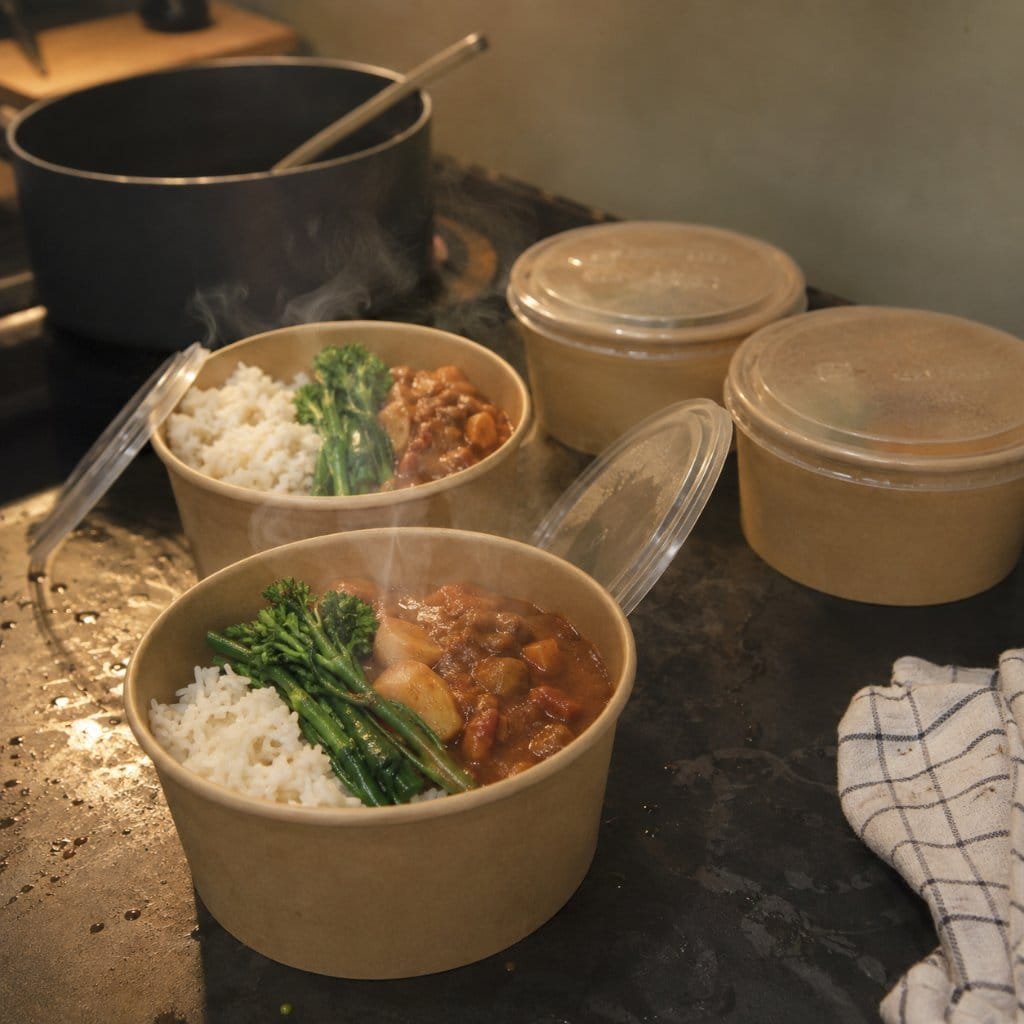
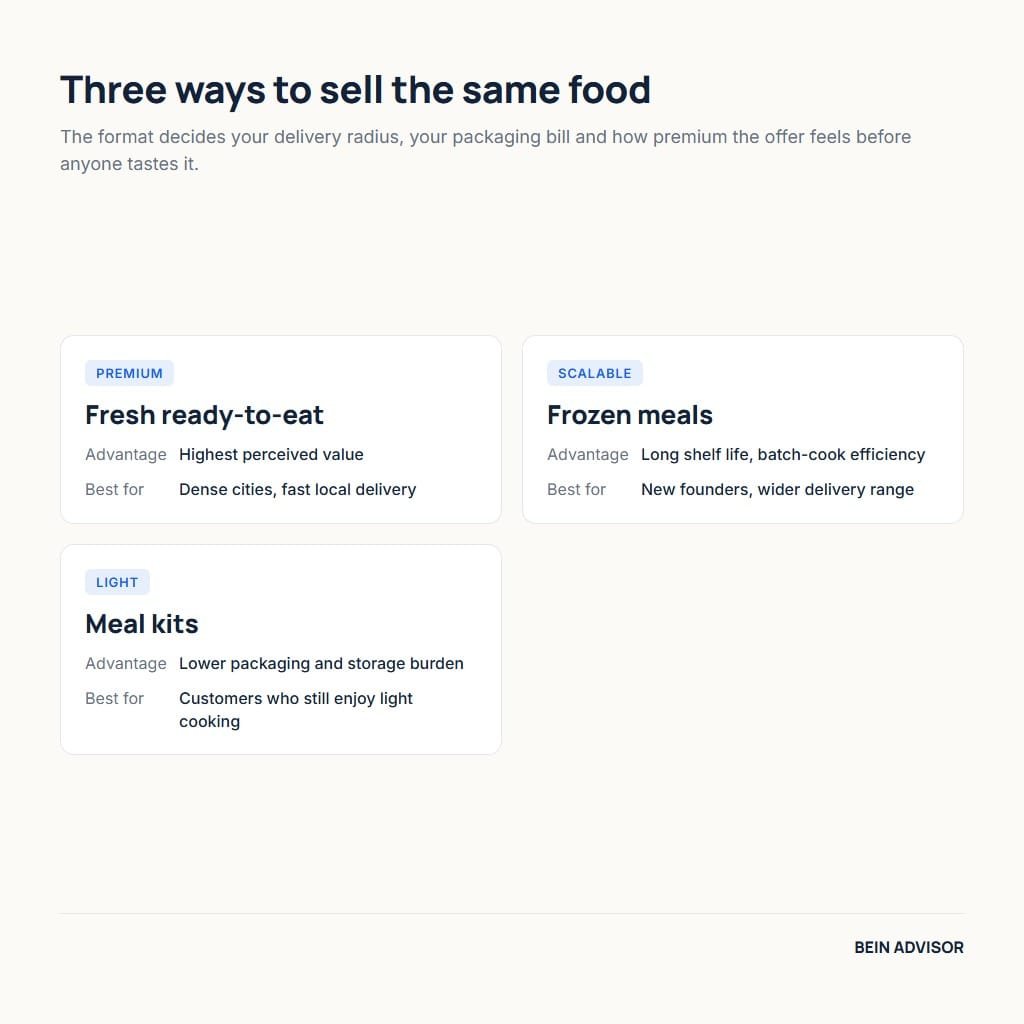
The format you choose shapes your kitchen, your costs, and your delivery model, so decide it early. Fresh ready-to-eat meals feel premium but spoil fast and demand tight delivery windows. Frozen meals last for weeks, ship more easily, and let you batch-cook efficiently, which is why many founders start there. Meal kits with prepped ingredients shift some work to the customer but reduce your packaging and storage needs. Each path suits a different postpartum meal business model and budget.
Match the format to your customers and your capacity rather than copying a competitor. A frozen model often fits a new founder best because it forgives timing and reduces waste, while a fresh-daily model can command higher prices in a dense city where you can deliver quickly. The table below compares the three common formats so you can weigh them against your kitchen, budget, and target customer before committing your postpartum meal business to one path.
| Format | Main advantage | Best for |
|---|---|---|
| Fresh ready-to-eat | Feels premium, highest perceived value | Dense cities, fast local delivery |
| Frozen meals | Long shelf life, batch-cook efficiency | New founders, wider delivery range |
| Meal kits | Lower packaging and storage burden | Customers who still enjoy light cooking |
3. Step 2 — Set Up a Legal, Safe Kitchen
Selling food carries real responsibility, and getting the legal and safety basics right protects both your customers and your business. This step covers the licenses you need and the kitchen you cook in. It is the least glamorous part of launching a postpartum meal business, but skipping it risks fines, shutdowns, and — far worse — harming a vulnerable customer. Handling it properly from the start also becomes a selling point, because parents trust a service that is visibly safe and compliant.
3.1 Licensing and Food-Safety Rules
Food-business rules vary by country and even city, so your first task is to learn the specific requirements where you operate. Most places require a food-handler certificate, a business registration, and rules about where and how food may be prepared for sale. Some regions allow home-based “cottage food” sales with limits, while others require a licensed commercial kitchen for any prepared meals. Researching this early prevents a postpartum meal business from being built on a foundation that local authorities will not allow.
Beyond licensing, build genuine food-safety discipline into daily operations, because your customers are recovering and your meals must be impeccable. Learn safe cooking and cooling temperatures, label every meal with ingredients and allergens, and track preparation dates carefully. Clear allergen labeling matters enormously for breastfeeding mothers watching what they eat. Treating safety as a core habit, not a checkbox, gives a postpartum meal business the credibility that turns first-time buyers into long-term, trusting customers who feel safe feeding your food to their family.
3.2 Choosing Your Kitchen Setup
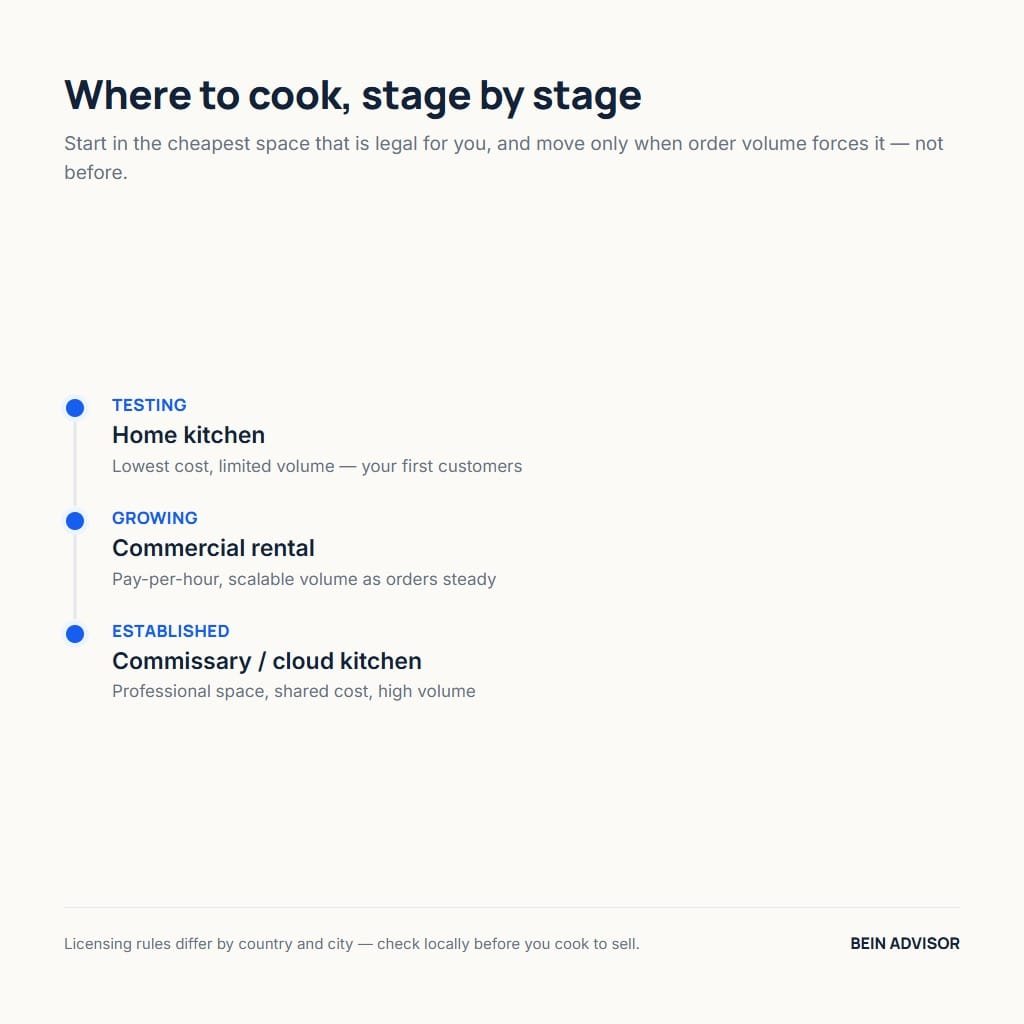
Where you cook depends on your local laws, your volume, and your budget. A home kitchen is the cheapest start and may be legal for small volumes in cottage-food regions, but it limits how much you can produce. A commercial kitchen rental gives you legal clearance and capacity by the hour, while a shared “cloud” or commissary kitchen offers professional space without the cost of building your own. Each option scales a postpartum meal business differently.
The smart approach is to start small and upgrade as demand proves itself. Many founders begin at home or in a few rented kitchen hours, then move to a dedicated commercial space once recurring orders justify the cost. This keeps early risk low while leaving room to grow. The table below summarizes the three setups so you can match one to your current stage and let your postpartum meal business expand its kitchen only when the orders genuinely require it.
| Setup | Cost & capacity | Best stage |
|---|---|---|
| Home kitchen | Lowest cost, limited volume | Testing and first customers |
| Commercial rental | Pay-per-hour, scalable volume | Steady, growing orders |
| Commissary / cloud kitchen | Professional space, shared cost | Established, high-volume demand |
4. Step 3 — Price Your Postpartum Meal Plans for Profit
Pricing decides whether your work becomes a sustainable business or an exhausting hobby. Because this niche sells convenience and care at a vulnerable moment, customers will pay well for quality — but only if your prices also cover ingredients, labor, packaging, delivery, and profit. This step makes sure a postpartum meal business charges enough to thrive, and packages those prices in ways that raise the average order and encourage repeat purchases rather than one-time trials.
4.1 Building a Profitable Price
Start by calculating the true cost of each meal, not just its ingredients. Add the cost of food, packaging, the kitchen, delivery, and an honest value for your own time, then build in a margin on top. Many new founders undercharge because they count only groceries and forget labor, which quietly turns a postpartum meal business into unpaid work. Knowing your real per-meal cost is the only way to set a price that leaves profit after every expense is paid.
Then price on the value you deliver, not just cost-plus, because your customers are buying relief, recovery, and peace of mind. A week of nourishing meals delivered to an exhausted family is worth far more than the sum of its ingredients, and confident pricing reflects that. Position your service as a premium, caring solution rather than the cheapest option, since competing on price erodes the margin a postpartum meal business needs to survive. Customers in this niche remember quality and reliability long after they forget the price.
4.2 Subscriptions, Bundles, and Gift Plans
How you package prices matters as much as the numbers themselves. Weekly meal bundles and recurring subscriptions create predictable revenue and save customers from reordering during a chaotic time, while tiered plans let buyers choose their level of support. Offering a few clear packages — a starter week, a full recovery month, and a premium plan — guides buyers and raises your average sale. Structured packages give a postpartum meal business steadier income than selling single meals one at a time.
Gift options deserve special attention, since friends and family are a huge share of buyers. A simple gift plan — where someone can buy a week of meals for a new parent in a few clicks — unlocks a market that the exhausted mother would never reach herself. Gift cards, group-funded plans where several friends chip in, and easy “send to a new mom” checkout flows all expand sales. Building these into a postpartum meal business from the start captures demand that competitors who only sell to mothers will miss.
| Plan | What it includes | Best for |
|---|---|---|
| Starter week | 5–7 meals for one week | First-time trial or a gift |
| Recovery month | Weekly delivery for four weeks | Full postpartum support |
| Premium plan | More meals, snacks, custom options | Higher-budget or special diets |
5. Step 4 — Run Smooth Operations and Delivery
Once orders arrive, reliable operations are what keep customers and protect your reputation. This step covers sourcing ingredients, preparing food efficiently, and getting meals to the door safely. A postpartum meal business lives or dies on consistency: a tired parent who receives the wrong meal late, or food that arrives unsafe, will not order again. Building simple, repeatable systems early prevents the chaos that overwhelms founders the moment demand starts to climb.
5.1 Sourcing and Food Preparation
Consistent ingredients are the backbone of consistent meals, so build reliable supplier relationships early. Source fresh, quality produce and proteins from vendors who can supply you steadily as you grow, and negotiate better rates as your volume rises. Buying in planned quantities tied to your weekly menu reduces waste and protects your margin. For a postpartum meal business, predictable sourcing also means predictable quality, which is exactly what turns a customer’s first nervous order into ongoing trust in your food.
Preparation runs best in planned batches rather than cooking to order. Set fixed cooking days, prepare meals in efficient batches, and use a simple system to track what is made, labeled, and stored. Batch production saves hours, lowers cost per meal, and keeps quality even across every order. As a postpartum meal business grows, these routines are what let you add customers without adding chaos, because the kitchen follows a rhythm instead of reacting to each order as a fresh emergency.
5.2 Packaging and Delivery
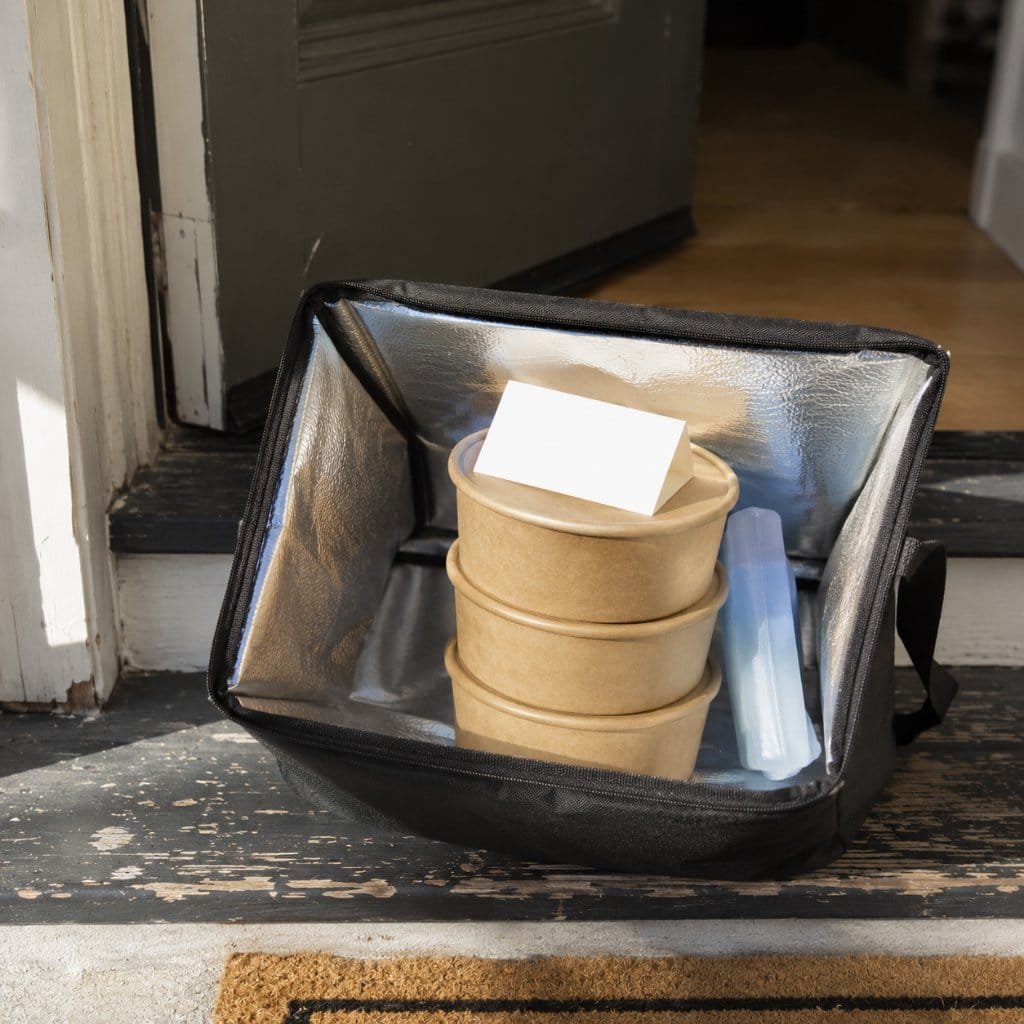
Packaging protects your food and carries your brand to the door. Choose containers that keep meals safe at the right temperature, are easy to reheat, and feel cared-for rather than cheap, since presentation reassures an anxious customer. Clear labels with the dish name, ingredients, allergens, and reheating instructions remove guesswork for a sleep-deprived parent. Thoughtful packaging makes a postpartum meal business feel professional and trustworthy, and it quietly markets you every time a recipient sees your name on the box.
Delivery is where promises are kept or broken, so choose a model you can run reliably. You might deliver locally yourself at first, use a courier service, or set fixed delivery days that let you plan efficient routes. Communicate delivery windows clearly and keep them, because reliability matters more than speed to a recovering family. A postpartum meal business that delivers exactly when it says, in safe and appealing packaging, builds the dependable reputation that drives the referrals this niche thrives on.
6. Step 5 — Market Your Postpartum Meal Business
A great service still needs to be found, and marketing in this niche rewards trust over flash. Your customers are making an emotional, health-related decision, so your marketing should feel warm, credible, and genuinely helpful. This step covers reaching mothers online and building the partnerships and referrals that grow a postpartum meal business faster than ads alone. The goal is to be the name parents and their families think of the moment a baby is on the way.
6.1 Reaching New Mothers Online
Most new parents research online during pregnancy, so meet them there with helpful content. Share simple recovery-nutrition tips, behind-the-scenes glimpses of your cooking, and real testimonials on social platforms where mothers gather. Helpful, honest content builds the trust that turns followers into buyers far better than pushy promotion. A postpartum meal business that teaches and reassures — for example, by explaining how nutrition supports recovery and even breastfeeding — earns attention from exactly the audience it serves.
A simple, trustworthy website or ordering page turns that attention into sales. Make it effortless to understand your plans, see your menu, and order or gift a package in a few taps, because your buyers have little time and patience. Collect emails so you can reach expecting parents before their due date, when they are planning ahead. For a postpartum meal business, a clear online presence paired with content that genuinely helps — like a third-trimester checklist — keeps you visible at the exact moment families decide.
6.2 Partnerships and Word of Mouth
Some of your best customers will come from people who already serve new parents. Midwives, doulas, lactation consultants, prenatal classes, and pediatric clinics all talk to families at exactly the right moment, and a trusted referral from them carries enormous weight. Building genuine relationships with these professionals — offering samples, clear information, or a referral arrangement — plugs a postpartum meal business into a steady stream of warm leads that no advertisement can match in credibility.
Word of mouth is the engine of this niche, so make referrals easy and rewarding. Satisfied parents naturally tell other parents, and a small incentive — a discount for referring a friend, or a thank-you gift — accelerates that sharing. Encourage reviews and let happy customers spread the word, because a recommendation from a fellow mother is the most persuasive marketing you can have. A postpartum meal business that consistently delivers care will find its reputation doing much of the selling on its behalf.
FAQ
Do I need a commercial kitchen to start a postpartum meal business? Not always. Many regions allow small home-based food sales under “cottage food” rules, while others require a licensed commercial or commissary kitchen for prepared meals. Check your local regulations first, then start with the lowest-cost legal option and upgrade as orders grow.
How do I price postpartum meal plans? Calculate the full cost of each meal — ingredients, packaging, kitchen, delivery, and your time — then add a healthy margin and price on the value of convenience and recovery, not just cost. Weekly bundles and subscriptions raise the average order and create steadier income.
Who actually buys these meals? Both recovering mothers and the people around them. A large share of orders are gifts from grandparents, friends, and coworkers, so offering easy gift plans is one of the most effective ways to grow.
Conclusion: Build a Business That Nourishes
A postpartum meal business is rare in combining genuine meaning with reliable demand: you help families during one of life’s hardest transitions while building a service people gladly pay for and recommend. By understanding the need, defining a focused menu, setting up a safe and legal kitchen, pricing for real profit, running dependable operations, and marketing with warmth, you create something that earns trust as much as income. Each of the six steps builds on the last, turning a caring idea into a sustainable business.
Start with one clear menu and your local food rules, then cook for a single family and let your reputation grow from there. Add packages, partners, and delivery routines as demand builds, and keep quality and reliability at the center of everything. The need for nourishing food after birth will never disappear, which means a postpartum meal business that serves mothers well has a future limited only by how thoughtfully you choose to grow it.