A vegan transition can feel intimidating if you love your muscle. Many people fear that dropping meat means losing strength. The good news is that this fear is largely a myth. Plants can supply all the protein your body needs. With a smart plan, you can switch without shrinking. Athletes and lifters thrive on plant-based diets every day. The secret lies in protein, calories, and consistency. This article shows you exactly how to do it.
A vegan transition is simply a shift toward plant foods. You replace meat, dairy, and eggs with plant sources. Done well, it supports both health and performance. Done carelessly, it can leave you tired and weak. This article keeps you firmly in the first camp. You will learn how much protein to eat daily. We share seven clear steps to switch smoothly. We also cover training and the few key supplements.
Our guidance leans on respected nutrition science, not hype. We cite trusted bodies like Harvard’s Nutrition Source. The focus stays practical, realistic, and muscle-friendly. A vegan transition is a marathon, not a sprint. Small, steady changes beat one dramatic overhaul. Talk to a doctor or dietitian before big diet changes.
1. What a Vegan Transition Really Means
A vegan transition means moving to a fully plant-based diet. You stop eating meat, fish, dairy, and eggs. In their place, you build meals around plants. That includes beans, grains, nuts, seeds, and vegetables. The change can happen overnight or over many weeks. A gradual shift is usually easier to sustain. It gives your taste buds and habits time to adapt. It also lowers the risk of nutrient gaps. This section explains what the switch involves. It also tackles the biggest muscle-related worry head on.
1.1 Why People Make the Switch
People choose a plant-based diet for many reasons. Health is one of the most common motivations. Plant-rich diets link to lower heart disease risk. They often improve cholesterol and blood pressure too. Many people also feel lighter and more energetic. Ethics drive a large share of new vegans. They want to reduce harm to animals. The environment is another powerful reason to switch. Plant foods generally use fewer resources to produce. These motivations often overlap and reinforce each other.
Whatever the reason, the goal stays the same. People want the benefits without sacrificing their health. Muscle and strength sit high on that list. Active people worry most about losing hard-won gains. That worry is understandable but largely unfounded. A well-planned plant diet supports muscle just fine. The key word there is well-planned, not random. Skipping protein and calories causes problems on any diet. So the plan matters more than the label. This article gives you that solid plan.
1.2 The Muscle Myth About a Vegan Transition
The biggest myth says plants cannot build muscle. This idea is outdated and simply incorrect. Muscle grows from enough protein and proper training. The source of that protein matters far less than the amount. Plants can supply every essential amino acid you need. You just combine different sources across the day. Beans, grains, soy, and seeds cover the full range. Many strong athletes prove this point daily. Plant-based bodybuilders compete at the highest levels. Their results put the old myth firmly to rest.
There is a small grain of truth to address. Plant proteins are sometimes less concentrated than meat. Some also contain slightly less of certain amino acids. Soy, however, is a complete, high-quality protein. The simple fix is to eat a bit more protein. You also vary your sources throughout the day. This easily closes any small amino acid gap. Leucine, the key muscle trigger, is very reachable on plants. Soy, lentils, and seitan all supply it well. With minor tweaks, plants match animal protein for muscle.
2. Protein First: The Key to a Vegan Transition
Protein is the single most important nutrient to track. A successful vegan transition lives or dies by protein. Get it right, and your muscle stays safe. Get it wrong, and strength can slowly fade. The challenge is that plant protein needs planning. It does not appear by accident on a vegan plate. You must choose protein-rich foods on purpose. This section shows how much you truly need. It also lists the best plant sources to use. Master protein, and the rest becomes much easier.
2.1 How Much Protein You Actually Need
General health needs only modest amounts of protein. Active people building muscle need considerably more. A common target is around 1.6 grams per kilogram of body weight. Some athletes push that figure a little higher. For an eighty-kilogram person, that means roughly 130 grams daily. That number can look daunting on a plant diet. Spreading it across meals makes it manageable. Aim for protein at every meal and snack. Twenty-five to forty grams per meal works well. Consistency across the day beats one giant serving.
Tracking protein helps a lot in the early weeks. A simple app reveals where your intake really lands. Most new vegans eat less protein than they assume. Seeing the numbers prevents that hidden shortfall. Over time, you learn portions by heart. Then you can track less and trust your habits. Pair protein with enough total calories as well. Muscle cannot grow in a large energy deficit. Harvard’s Nutrition Source offers helpful protein guidance. Use it alongside your own tracking data.
2.2 Best Plant Protein Sources
Some plant foods deliver far more protein than others. Soy products lead the pack by a wide margin. Tofu, tempeh, edamame, and soy milk are staples. Each offers complete, high-quality protein for muscle. Legumes come next, including lentils, chickpeas, and beans. They pair protein with fiber and slow-release energy. Seitan, made from wheat gluten, is very protein-dense. It has a chewy, meat-like texture many enjoy. Together these foods form your protein foundation. Build most meals around at least one of them.
Other foods add useful protein in smaller amounts. Whole grains like quinoa and oats contribute steadily. Nuts and seeds bring protein plus healthy fats. Hemp and pumpkin seeds are especially protein-rich. A scoop of vegan protein powder helps too. Pea and soy powders make hitting targets simple. The table below compares popular sources at a glance. Use it to plan varied, protein-packed meals. Rotating sources keeps your amino acids well balanced. Variety also keeps your meals interesting and tasty.
| Plant Food | Protein Level | Notes |
|---|---|---|
| Tofu / tempeh | High | Complete soy protein |
| Lentils / beans | Moderate-high | Protein plus fiber |
| Seitan | Very high | Chewy, meat-like |
| Edamame | High | Whole soybeans |
| Vegan protein powder | Very high | Quick and convenient |
3. 7 Steps for a Smooth Vegan Transition
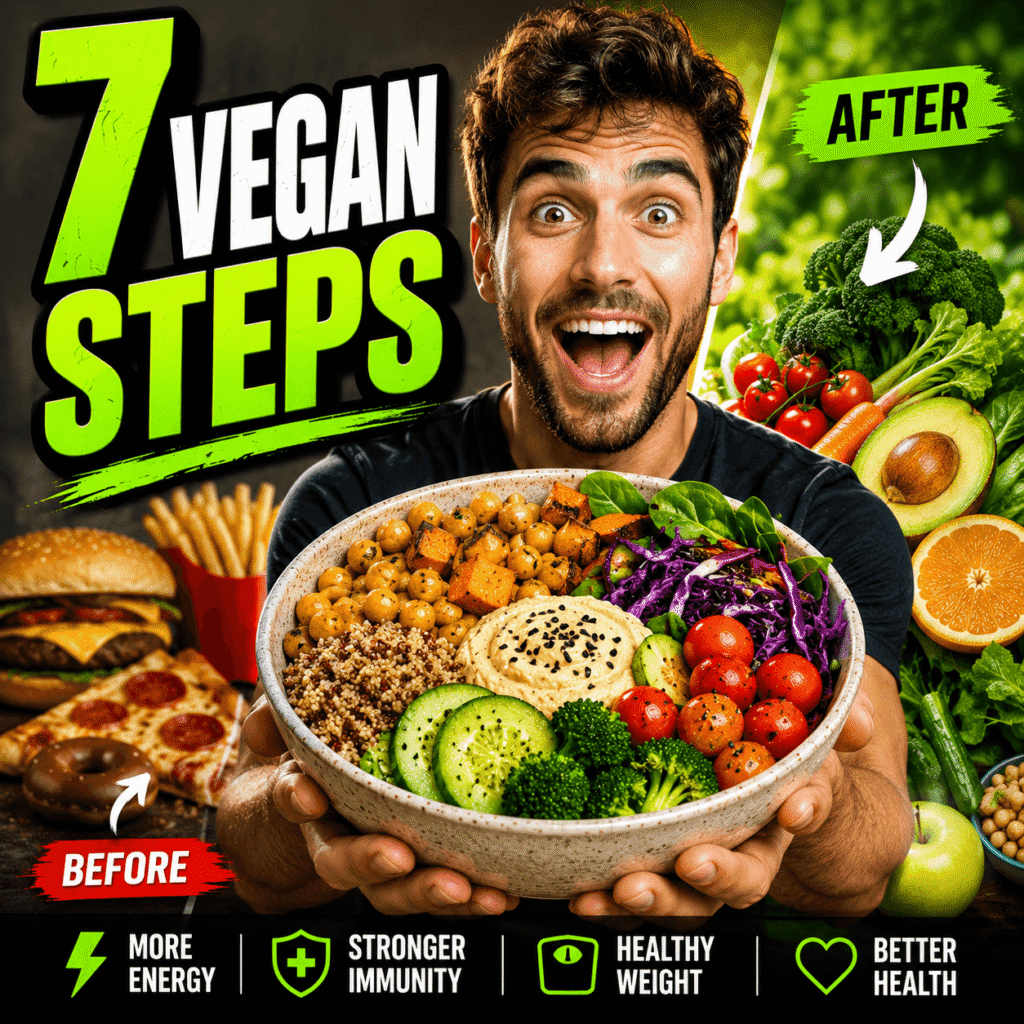
A vegan transition works best as a series of steps. Trying to change everything overnight often backfires. A staged plan keeps the switch calm and sustainable. The seven steps below build on one another logically. They start with mindset and end with tracking. Each step is simple enough to act on today. Together they protect your muscle and your energy. The table summarizes all seven for quick reference. Read the details, then start with step one. Progress beats perfection at every stage.
| Step | Action | Goal |
|---|---|---|
| 1 | Go gradual | Replace one food type at a time |
| 2 | Audit your plate | Spot current protein and gaps |
| 3 | Hit protein | Reach your daily protein target |
| 4 | Plan meals | Prep protein-rich plant dishes |
| 5 | Supplement wisely | Cover B12 and key nutrients |
| 6 | Keep training | Lift to signal muscle retention |
| 7 | Track progress | Adjust based on real results |
3.1 Vegan Transition Steps 1–2: Ease In
Step one is to go gradual, not cold turkey. Replace one animal food at a time each week. Start by swapping cow’s milk for soy milk. Next, trade a few meat meals for bean dishes. This slow pace prevents stress and cravings. It also lets your digestion adjust to more fiber. Sudden fiber jumps can upset the stomach badly. A gentle ramp keeps you comfortable and consistent. Most people quit from doing too much too fast. Easing in protects your motivation for the long haul.
Step two is to audit your current plate honestly. Look at where your protein comes from now. Note which meals will need a plant swap. Identify your favorite meals to veganize first. Familiar food in a new form feels easy. Find plant versions of meals you already love. A bean chili replaces a meat chili smoothly. This audit reveals your likely protein gaps early. It turns a vague goal into a clear plan. Knowledge here makes every later step simpler.
3.2 Steps 3–4: Hit Protein and Plan Meals
Step three makes protein your daily priority. Set a clear gram target based on your weight. Then build every meal around a protein source. Add tofu, lentils, or seitan to each plate. Keep high-protein snacks ready for busy days. Edamame, roasted chickpeas, and soy yogurt all help. A protein shake covers any remaining gap fast. Check your total at the end of each day. Adjust portions upward if you fall short. Hitting protein daily is the heart of the plan.
Step four turns good intentions into real meals. Meal planning prevents last-minute, low-protein choices. Spend a little time mapping your week ahead. Batch-cook beans, grains, and tofu in advance. Store them for quick, balanced meals later. An air fryer makes plant-based meals fast and tasty. Keep your fridge stocked with protein staples. A planned kitchen removes daily decision fatigue. When protein is ready, you eat it without thinking. Preparation quietly carries the whole transition.
3.3 Steps 5–7: Supplement, Train, and Track
Step five is to supplement a few key nutrients. Vitamin B12 is essential and non-negotiable for vegans. Plants do not reliably provide this vital vitamin. A simple B12 supplement closes that gap completely. Vitamin D, omega-3, and iodine may also help. Creatine is worth adding for strength and muscle. We cover these supplements in detail further below. None of them are complicated or expensive. A small daily routine keeps your nutrition complete. Think of supplements as smart insurance, not a crutch.
Step six is to keep training your muscles hard. Strength training tells your body to keep muscle. Without that signal, any diet can cost you strength. Lift weights two to four times each week. Focus on progressive overload over the months. Step seven is to track your progress honestly. Watch your weight, strength, and energy over time. Adjust protein or calories if results stall. A gentle magnesium supplement can support recovery too. Tracking turns guesswork into steady, real progress.
4. Training and Supplements During a Vegan Transition
Diet alone does not decide your muscle fate. Training and supplements play huge supporting roles. During a vegan transition, both deserve real attention. The right training preserves the muscle you have. The right supplements fill the gaps plants leave. Neither needs to be complex or costly. A few simple habits cover almost everything. This section explains what actually matters most. It separates the essential from the merely hyped. Focus here, and your transition stays rock solid.
4.1 Strength Training Protects Muscle
Muscle responds to demand, not to diet alone. If you stop training, muscle slowly disappears. If you keep lifting, your body holds that muscle. This stays true on any well-fed diet. So strength training is your muscle insurance policy. Aim to train each major muscle group regularly. Two to four sessions a week works well. Compound lifts like squats and rows are efficient. They work many muscles in little time. Progressive overload keeps the growth signal strong.
Recovery matters just as much as the training itself. Muscles grow while you rest, not while you lift. Sleep is the foundation of good recovery. Aim for seven to nine hours each night. Protein after training supports muscle repair well. A plant protein shake works perfectly here. Stay hydrated and manage your daily stress. Overtraining without recovery undermines your results. Balance hard work with genuine rest. That balance keeps muscle through any diet change.
4.2 Key Supplements for Plant-Based Eaters
A few supplements make a plant diet complete. Vitamin B12 tops the list without question. Your body needs it for nerves and blood. Plants cannot be trusted to supply it reliably. A weekly or daily B12 dose solves this. Vitamin D supports bones, mood, and immunity. Many people run low regardless of their diet. Omega-3 from algae oil supports the heart and brain. These three form the core vegan supplement stack. They are cheap, safe, and genuinely worthwhile.
Creatine deserves special attention for active vegans. Meat is the main dietary source of creatine. Vegans therefore start with lower natural stores. A daily creatine supplement raises those levels fully. It supports strength, power, and muscle gains. Research backs creatine as safe and effective. Iron and zinc are worth monitoring too. Plant forms absorb a little less efficiently. The NIH offers clear B12 guidance worth reading. A simple stack keeps your nutrition airtight.
5. Common Vegan Transition Mistakes to Avoid
Most vegan transition problems come from a few mistakes. The good news is that all are easy to avoid. Knowing them in advance saves you real trouble. Each mistake has a simple, practical fix. This section covers the two biggest pitfalls. Both relate directly to protecting your muscle. Avoid them, and your switch will feel smooth. Fall into them, and energy and strength suffer. A little awareness keeps you on the right path. Learn from others rather than the hard way.
5.1 Under-Eating During Your Vegan Transition
The most common mistake is simply eating too little. Plant foods are often lower in calorie density. Vegetables fill your stomach with few calories. New vegans can feel full yet under-eat badly. That hidden deficit slowly drains energy and muscle. The fix is to include calorie-dense plant foods. Nuts, seeds, avocado, and oils all help. Whole grains and legumes add steady calories too. Do not try to lose fat and switch at once. Keep calories adequate while your body adapts.
Under-eating protein is the partner to this mistake. Many assume vegetables provide plenty of protein. In reality, most vegetables offer very little. Relying on them alone leaves a big gap. Build meals around real protein sources instead. Treat vegetables as a healthy side, not the protein. Track your intake until portions feel natural. A protein shake offers easy insurance on busy days. Adequate protein and calories protect your hard-earned muscle. Together they keep your transition strong and safe.
5.2 Relying Too Much on Processed Food
Vegan junk food has exploded in recent years. Plant-based burgers, nuggets, and sweets are everywhere. These foods are fine as occasional treats. As daily staples, though, they cause problems. Many are high in salt, oil, and additives. They often lack the fiber and nutrients of whole foods. A diet of vegan junk is still a poor diet. The vegan label does not guarantee good nutrition. Treat processed options as convenience, not a foundation. Whole plant foods should anchor your plate.
Whole foods deliver far more than just protein. They bring fiber, vitamins, minerals, and antioxidants. These support recovery, digestion, and overall health. Build your diet around beans, grains, and vegetables. Add fruits, nuts, and seeds for balance. Use processed foods to fill occasional gaps only. Cooking at home gives you full control. It also saves money over packaged convenience foods. A whole-food base makes every other step work. That foundation is what truly protects your muscle.
Conclusion: Your Vegan Transition, Done Right
A vegan transition does not have to cost you muscle. The fear of shrinking is mostly an old myth. Plants supply all the protein your body needs. The real keys are protein, calories, and training. Hit your protein target at every single meal. Keep lifting weights to hold your strength. Add a few smart supplements like B12 and creatine. Do these things, and your muscle stays safe.
Take your vegan transition one steady step at a time. Start gradually and let new habits settle. Plan your meals so protein is always ready. Track your progress and adjust as you learn. Avoid the traps of under-eating and vegan junk. A well-planned plant diet supports a strong body. Thousands of athletes already prove this every day. Begin your transition today, and build strength on plants.