

An air fryer turns an ordinary countertop into a fast, low-oil cooking station that crisps food with rapidly circulating hot air instead of a deep pool of grease. For anyone who wants crunchy fries, juicy chicken, or roasted vegetables without the mess and added calories of frying, a quality air fryer earns its place on the counter within the first week of use. The appliance reaches cooking temperature in minutes, finishes most meals far faster than a full-size oven, and cleans up through a single removable basket. That blend of speed, lighter meals, and genuine convenience is why the machine has moved from novelty to kitchen staple.
Picking the right model is harder than it first appears, because capacity, wattage, preset programs, and basket design vary sharply from one unit to the next. A compact pick that suits one person can frustrate a family of five at dinnertime, and a powerful unit that crisps beautifully may be far too bulky for a small kitchen. The wrong choice usually means wasted money and a gadget that ends up stored in a cupboard. Matching the machine to your household and the food you cook most is the real key to lasting satisfaction.
This article reviews five proven models across different budgets and household sizes, explains the specifications that genuinely matter, and shows how to get crisp, even results from the first batch onward. A side-by-side comparison table, a practical cooking time chart, and clear notes on who each model suits best make the final decision straightforward. Whether the goal is healthier weeknight dinners or simply faster cooking with less cleanup, the right air fryer is well within reach.
1. How an Air Fryer Works and Why It Earns Its Place
At its core, an air fryer is a compact convection oven built around a powerful fan and a tightly enclosed cooking chamber. A heating element sits just above the food, and the fan drives superheated air around the basket at high speed, cooking every surface at once. Because the chamber is small and sealed, that air stays intensely hot and moves quickly, which is what produces the crisp, browned exterior people associate with deep frying. Understanding this simple mechanism makes every later decision easier, from how much oil to add to why crowding the basket ruins the texture of an otherwise good meal.
1.1 The Technology Behind the Crisp
The browning that makes air-fried food appealing comes from the Maillard reaction, a chemical process between amino acids and sugars that needs high, dry heat to develop. An air fryer creates exactly those conditions by concentrating heat in a small space and stripping moisture from the food’s surface with constant airflow. A light coat of oil helps conduct heat and speeds browning, but the machine does most of the work through air movement rather than fat. This is the fundamental difference from deep frying, where hot oil surrounds the food and transfers heat directly into it from every side at once.
Most units rely on a single top-mounted element paired with a high-speed fan, and several brands market their own names for the design, such as Philips Rapid Air or Instant EvenCrisp. The engineering goal is identical in each case: even heat distribution and fast recovery after the basket is opened. Models with higher wattage recover temperature more quickly, which matters when cooking in batches because the chamber cools every time the drawer slides out. Knowing that airflow drives the result explains why arranging food in a single layer, rather than piling it high, is the most important habit for good texture.
1.2 Health, Speed, and Convenience Benefits
The headline benefit is oil reduction. Deep frying can add a great deal of fat to a portion, while an air fryer needs only a teaspoon or two for similar crispness, cutting both calories and the lingering smell of fried oil in the home. Lower oil use also reduces some of the byproducts created when fat is heated repeatedly. For households trying to eat lighter without giving up favorite textures, this single change can make a meaningful difference, and groups such as the American Heart Association consistently encourage reducing fried-food intake as part of a balanced diet.
Speed and cleanup are the other two advantages people notice immediately. A small chamber heats in two to four minutes versus ten or more for a conventional oven, so weeknight meals arrive faster and the kitchen stays cooler. The removable basket and tray are usually non-stick and dishwasher safe, which turns cleanup into a one-minute task rather than a greasy chore. Many models also handle reheating better than a microwave, restoring crispness to leftover pizza or fries instead of leaving them soft and rubbery. Together these benefits explain why the appliance becomes a daily habit rather than an occasional treat.
2. What to Look for in an Air Fryer Before You Buy
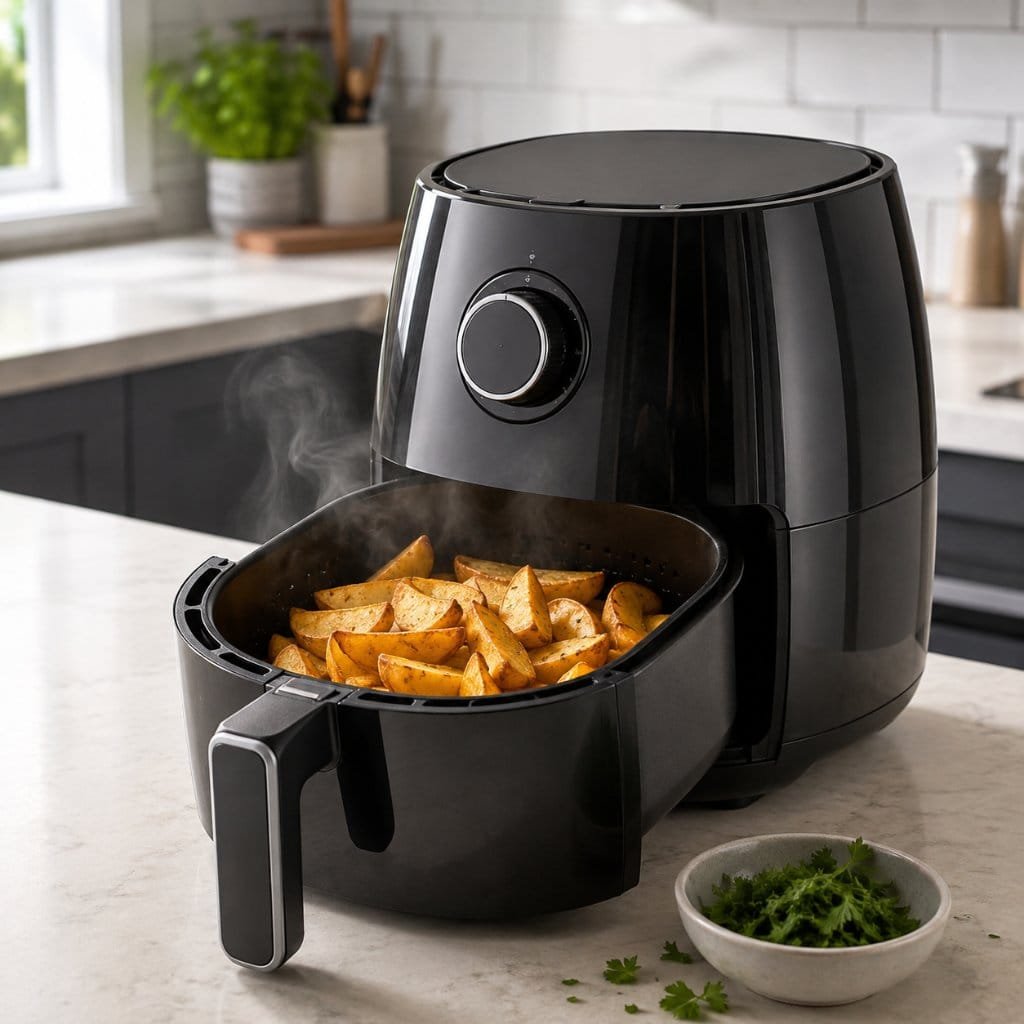
The right air fryer depends less on brand loyalty than on a handful of practical specifications that shape daily use. Capacity determines how many people you can feed in one batch; wattage affects speed and crisping; and the control system decides how much guesswork the machine removes. Basket shape, footprint, and ease of cleaning then separate models that look similar on paper. Weighing these factors against your kitchen space and cooking habits prevents the two most common regrets, which are buying a unit that is too small to be useful or too large to store comfortably between meals.
2.1 Capacity and Basket Design
Capacity is measured in quarts or liters, and it is the first number to match to your household. A two-quart unit suits one person or a couple making sides, a four to five-quart basket covers a small family, and six quarts or more is needed to cook a whole chicken or feed four to six people at once. Larger is not automatically better, because a big chamber takes longer to heat and wastes energy when cooking small portions. The honest question is how many servings you realistically cook in a single sitting, since that decides the ideal size far better than the marketing on the box.
Basket design affects both capacity and results. Square baskets generally offer more usable surface area than round ones of the same rated volume, letting more food sit in a single layer where the air can reach it. Drawer-style baskets are the most common and easiest to load, while basket-and-tray systems add a rack for two-level cooking. Non-stick coatings make cleanup simple but should be treated gently, since metal utensils can scratch them and shorten their life. Looking at the flat surface area, not just the quoted volume, gives a far more accurate picture of how much food a given air fryer can actually crisp at once.
2.2 Power, Presets, and Smart Features
Wattage typically ranges from about 1,000 watts on compact units to 1,700 watts or more on larger ones, and it directly affects how quickly the chamber heats and recovers. Higher wattage helps with batch cooking and with foods that need a strong initial blast of heat, such as fries or wings. That said, a well-designed lower-wattage model can still cook excellently for one or two people, so power should be weighed alongside capacity rather than chased on its own. Temperature range matters too, with the most flexible units reaching from a low dehydrating setting up to around 400 to 450 degrees Fahrenheit.
Controls fall into two camps: simple manual dials and digital panels with preset programs. Dials are durable, intuitive, and cheaper, but they leave timing and temperature entirely to the cook. Digital presets for fries, chicken, fish, or vegetables remove guesswork and produce repeatable results, which beginners tend to appreciate. Higher-end models add conveniences such as a viewing window, shake reminders, app-guided recipes, or a keep-warm function. None of these extras are essential, yet they can make an air fryer noticeably more pleasant to live with, so it is worth deciding which features you will genuinely use before paying for them.
3. The Best Air Fryer Models Reviewed
As an Amazon Associate, BeIN ADVISOR earns from qualifying purchases.
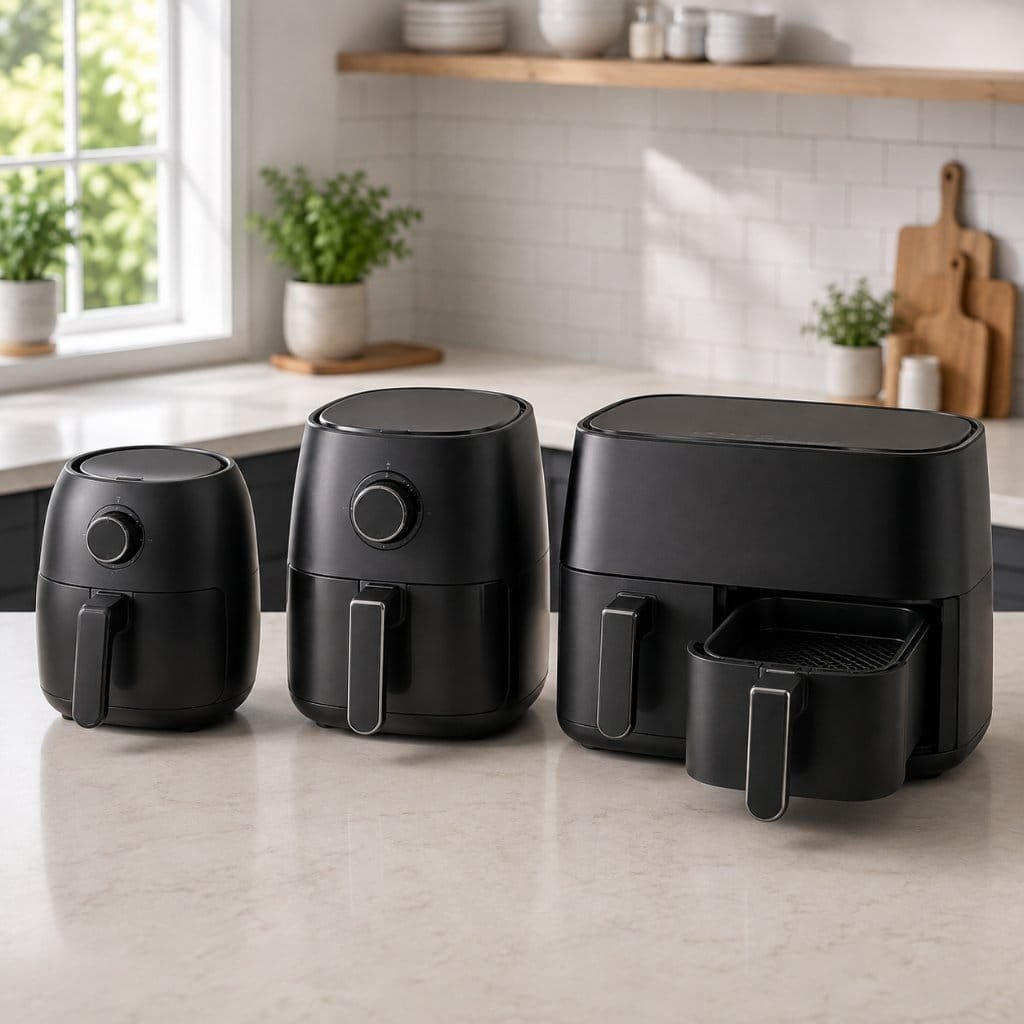
The five air fryer models below were selected to cover the situations most buyers face, from tight budgets and small kitchens to large families and serious home cooks. Each entry explains where the model fits in the market, details how it performs and what it offers, and describes who it suits best along with the trade-offs to weigh. Prices shift over time and by region, so the focus here is on design, capacity, and real-world strengths rather than a single number on a tag. Read each summary against your own household size and cooking style to find the closest match.
3.1 Ninja AF101 Air Fryer — Best Compact All-Rounder
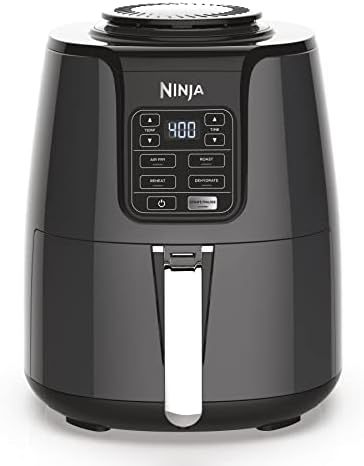
The Ninja AF101 has become a default recommendation for first-time buyers, and for good reason: it pairs a sensible four-quart capacity with a reputation for durability at a mid-range price. It sits in the sweet spot of the market, large enough for a couple or a small family yet compact enough to leave on the counter without dominating it. Ninja built its name on blenders and powerful kitchen motors, and that engineering focus shows in a unit that feels solid and heats aggressively. For anyone who wants a dependable air fryer without studying spec sheets, it is an easy and reassuring starting point.
Under the hood, the AF101 offers a 1,550-watt element with a temperature range from 105 to 400 degrees Fahrenheit, wide enough to dehydrate fruit at the low end and crisp fries at the top. Four programs, air fry, roast, reheat, and dehydrate, cover the everyday jobs without overwhelming the user. The ceramic-coated basket and crisper plate are non-stick and dishwasher safe, and the basket pulls out smoothly for shaking partway through a cook. The low dehydrate setting is unusual at this price and lets the unit make jerky or dried fruit overnight, adding genuine versatility well beyond simple frying.
This model suits singles, couples, and small families who want reliable everyday performance and a little extra flexibility from the dehydrate function. The main trade-off is the absence of a digital preset menu, since cooking relies on manual time and temperature, which is simple but offers no one-touch shortcuts. The four-quart basket also tops out at roughly two to three servings of fries, so larger households will find themselves cooking in batches. For its target buyer, though, the combination of solid build quality, a useful temperature range, and an approachable price makes it one of the safest choices on the market.
3.2 Cosori Pro II Air Fryer — Best for Presets and Value
The Cosori Pro II is the model many people picture when they imagine a modern air fryer: a sleek square unit with a bright digital panel and a long list of one-touch programs. It competes directly on value, offering a generous 5.8-quart basket and a feature set that usually appears on pricier machines. Cosori has leaned heavily into recipes and community, bundling a cookbook and supporting an app full of guided cooks. The result is a unit positioned squarely at home cooks who want repeatable results without memorizing times and temperatures for every dish they prepare.
The Pro II runs at 1,700 watts and offers a temperature range of roughly 90 to 450 degrees Fahrenheit, giving it both a gentle low end and a high ceiling for fast crisping. Nine to thirteen presets, depending on the version, cover foods from steak to seafood to baked goods, and each can be customized and saved for next time. The square basket maximizes flat surface area, the interior is well lit, and the non-stick basket lifts out for dishwasher cleaning. A shake reminder prompts the cook partway through, a small touch that meaningfully improves evenness on fries and wings.
This air fryer is best for families and enthusiastic cooks who value preset convenience and a roomy basket at a reasonable price. The trade-offs are footprint and noise, since the larger chamber needs more counter and cupboard space, and the fan is clearly audible during cooking. The customizable presets reward users who take a little time to dial them in, while those who never touch the extra programs are paying for features they may not use. For most households, however, the blend of capacity, smart controls, and value makes it one of the most well-rounded options available today.

3.3 Philips Premium Airfryer XXL — Best Premium Pick
Philips effectively introduced the home air fryer, and the Premium Airfryer XXL represents the brand’s flagship approach to the category. It is a large, heavy, confidently built machine aimed at buyers who want the most refined results and are willing to pay for them. Positioned at the top of the market, it competes on cooking quality and capacity rather than price, with a chamber big enough to roast a whole chicken. For serious home cooks who treat the air fryer as a primary appliance rather than an occasional helper, this is the aspirational pick of the group.
The standout feature is the fat-removal design, in which a starfish-shaped base and TurboStar airflow circulate heat in a constant loop while excess fat drains away from the food into the drawer below. Capacity reaches roughly seven quarts, enough for around six portions, and a digital interface offers presets alongside full manual control. The build quality is noticeably more substantial than budget rivals, and the airflow pattern is engineered to reduce the need for shaking midway through. That refinement shows up as unusually even browning, particularly on fattier foods such as wings and sausages that shed grease as they cook.
This model is best for larger families and dedicated cooks who prioritize results and capacity over cost and counter space. The obvious trade-offs are price and size, since it is among the most expensive and bulkiest units in its class, demanding a permanent home on the counter. Those cooking for one or two will rarely use its full capacity and may find a smaller unit more practical day to day. For its intended audience, though, the combination of even cooking, effective fat drainage, and a genuinely large chamber justifies the premium and explains its loyal following.

3.4 Instant Vortex Plus Air Fryer — Best for Versatility
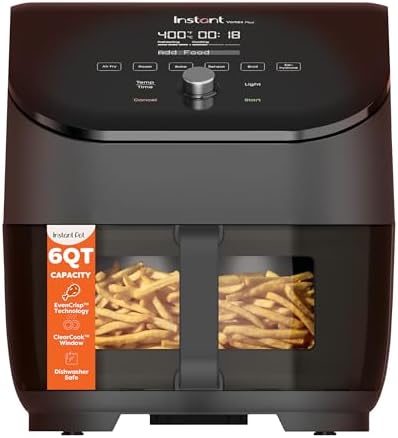
From the brand behind the multicooker that reshaped many kitchens, the Instant Vortex Plus brings the same versatility-first philosophy to air frying. It is a six-quart unit that aims to replace several appliances at once, combining air frying with roasting, baking, broiling, reheating, and dehydrating in a single footprint. Positioned in the competitive mid-range, it appeals to buyers who want one machine to handle as many tasks as possible. The clear-window door and digital touchscreen give it a modern feel and signal its all-in-one ambitions to anyone who walks into the kitchen.
The Vortex Plus runs at about 1,700 watts and uses what Instant calls EvenCrisp technology, a combination of airflow and heat designed to brown evenly with little intervention. Six built-in programs cover the core cooking modes, and the temperature climbs high enough for fast crisping. The ClearCook window paired with an interior light lets the cook monitor progress without opening the drawer and dropping the temperature, a practical advantage during longer roasts. The basket and tray are non-stick and dishwasher safe, and the touchscreen walks users through each program with simple, readable prompts.
This air fryer suits households that want a multitasker and like the idea of consolidating a small oven, dehydrator, and fryer into one device. The trade-off is that a jack-of-all-trades rarely beats a specialist at every single job, and some users find the touchscreen less tactile than physical buttons. The six-quart basket is family friendly but adds bulk, so small kitchens should measure their space first. For buyers who value flexibility and the convenience of monitoring food through a window, the Vortex Plus delivers a strong, well-rounded package at a fair price.
3.5 Dash Compact Air Fryer — Best Budget and Compact
The Dash Compact takes the opposite approach to the large premium machines, focusing on simplicity, low cost, and a small footprint. With a compact basket and a single analog dial, it is designed for people who want air-fried food without complexity or a big commitment of counter space. Dash positions these units as approachable, colorful, and beginner friendly, and they are frequently among the most affordable air fryer options on the shelf. For a dorm room, a small apartment, or a low-risk first try of the concept, this little machine fills a clear and useful niche.
Specifications are intentionally modest: a roughly two to three-quart basket, around 1,000 to 1,700 watts depending on the size, and a straightforward dial that sets time up to a fixed maximum. Temperature is controlled by a second dial on the larger versions or preset to a single high heat on the smallest models. There are no digital presets or app connections, just a simple airflow design and a non-stick basket that rinses clean easily. The simplicity is the point, removing every barrier between plugging in and cooking, and what it lacks in features it returns in sheer ease of use.
This compact air fryer is best for one or two people, small spaces, and anyone who wants to test the concept before investing more. The trade-offs are obvious and expected: limited capacity means cooking for more than two requires several batches, and the manual controls offer no shortcuts or precision beyond the dial. Build quality is lighter than the premium units, which matches the modest price. None of that undercuts its core appeal, because for a single user who mainly reheats, crisps sides, or cooks for one, it delivers the essential experience at the lowest cost and smallest size.

4. Air Fryer Comparison at a Glance
The table below condenses the five reviews into the specifications that most influence a buying decision: capacity, power, control style, and the buyer each model serves best. Use it to shortlist two or three candidates, then return to the detailed write-ups for the nuances that a table cannot capture. Remember that the ideal air fryer is the one matched to your servings and counter space, not simply the largest or most feature-packed unit on the list.
| Model | Capacity | Wattage | Controls | Best For |
|---|---|---|---|---|
| Ninja AF101 | 4 qt | 1,550 W | Manual + 4 programs | Compact all-rounder |
| Cosori Pro II | 5.8 qt | 1,700 W | Digital, 9–13 presets | Presets and value |
| Philips Premium XXL | ~7 qt | up to 2,225 W | Digital + manual | Premium results |
| Instant Vortex Plus | 6 qt | 1,700 W | Touchscreen, 6-in-1 | Versatility |
| Dash Compact | 2–3 qt | ~1,000–1,700 W | Analog dial | Budget and small spaces |
If you enjoy building a well-equipped countertop, our reviews of the best pasta machines and the top electric lighter picks cover two more worthwhile kitchen upgrades that pair naturally with a new air fryer.
5. How to Get the Best Results From Your Air Fryer
Buying a capable machine is only half the equation, because technique decides whether food comes out evenly crisp or disappointingly soft. The good news is that the habits that matter most are simple and quick to learn. Preheating, light oiling, sensible loading, and regular cleaning together account for the difference between a unit that delights and one that frustrates. The cooking chart further on takes the guesswork out of common foods, giving reliable starting points that you can fine-tune to your own air fryer and taste.
5.1 Preheating, Oil, and Loading the Basket
Preheating for two to three minutes gives food an immediate sear when it lands in the basket, which improves browning and helps prevent sticking. A light coat of oil is the next lever, applied either with a spray or by tossing food in a teaspoon or two before cooking. Use an oil with a high smoke point, such as avocado or refined canola, since delicate oils can smoke and turn bitter at air-frying temperatures. Patting wet foods dry before they go in also matters, because surface moisture must evaporate before the surface can brown and crisp properly.
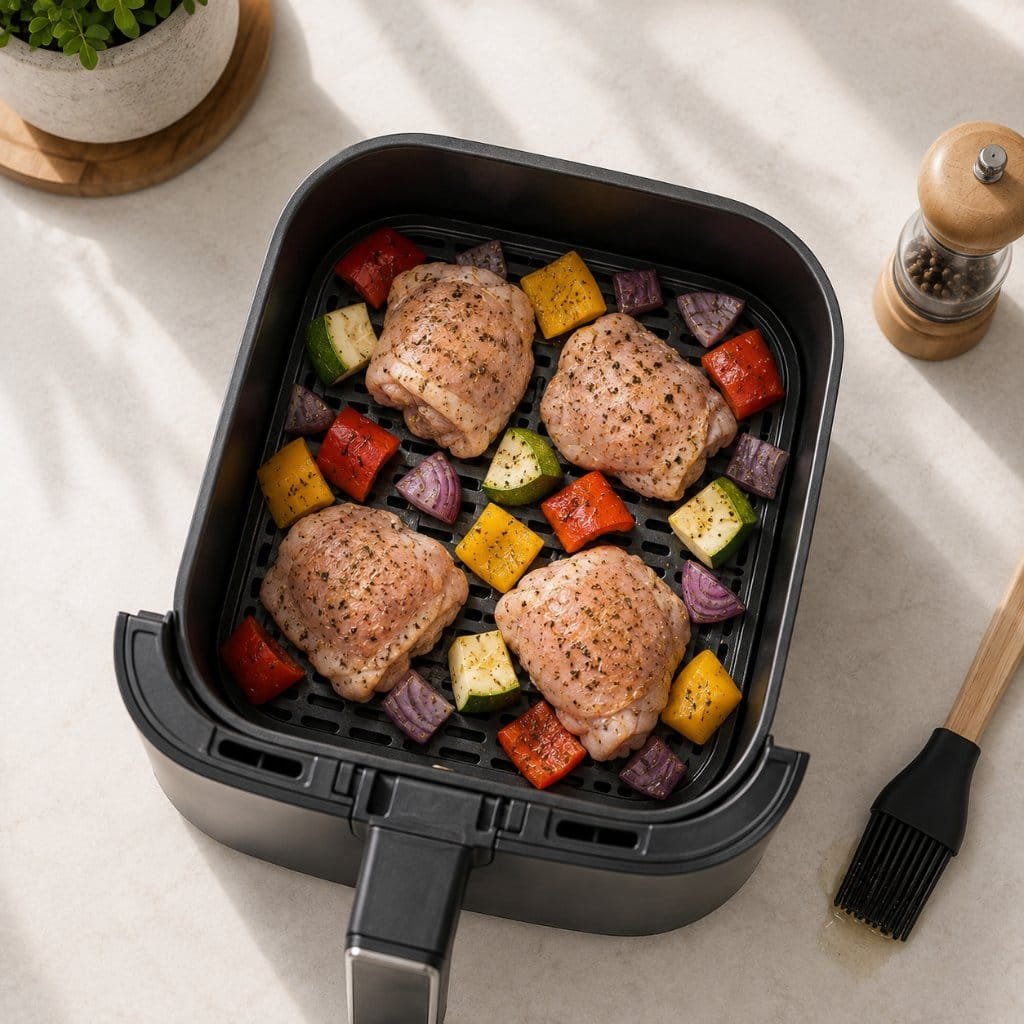
Loading is where many people unknowingly sabotage their results. The single most important rule is to arrange food in one layer with space around each piece, because the circulating air needs a clear path to every surface. Overcrowding traps steam and produces pale, soft results no matter how good the machine is. Shaking or flipping food halfway through evens out browning, especially for fries, wings, and vegetables. When a recipe makes more than the basket can hold in one layer, cooking in two batches and combining at the end yields far better texture than forcing everything in at once.
5.2 Cleaning, Care, and a Cooking Time Chart
Cleaning the basket after each use keeps performance high and prevents old grease from smoking on the next cook. Most non-stick baskets are dishwasher safe, but hand washing with a soft sponge extends the life of the coating considerably. Let the unit cool first, then wipe the heating element and interior with a damp cloth to remove splatter. Avoid metal utensils and abrasive pads, which scratch non-stick surfaces and lead to flaking over time. A quick wipe-down takes under a minute and protects both the food’s flavor and the machine’s longevity across years of regular use.
The chart below offers reliable starting points for popular foods in a typical air fryer. Treat the times as a baseline and adjust for your model’s wattage and the thickness of the food, checking a few minutes early the first time you cook anything new. Times assume a single layer and a brief preheat, and shaking the basket where noted keeps results even.
| Food | Temp (°F) | Time (min) | Shake / Flip |
|---|---|---|---|
| Frozen fries | 400 | 15–18 | Halfway |
| Chicken wings | 380 | 22–25 | Halfway |
| Salmon fillet | 390 | 9–12 | No |
| Bacon | 350 | 8–10 | Halfway |
| Mixed vegetables | 375 | 10–15 | Halfway |
| Reheat pizza slice | 350 | 3–5 | No |
6. Frequently Asked Questions
Do air fryers really cook without any oil? They use far less oil, not zero. A light spritz of a teaspoon or two helps crisping and flavor, but there is no need for the cups of oil that deep frying requires, which is the main reason the food turns out lighter.
Is air-fried food genuinely healthier than deep-fried? Generally yes, because it contains far less added fat and fewer of the compounds formed when oil is reheated repeatedly. It remains sensible to balance fried-style foods with whole foods, since the cooking method alone does not turn every dish into health food.
What should you avoid cooking in an air fryer? Wet batters drip before they can set, large roasts may not fit, and light leafy greens can blow around in the strong airflow. Most other foods, from proteins and vegetables to frozen snacks and reheated leftovers, cook very well.
How large an air fryer do I actually need? Match capacity to servings: roughly two quarts for one person, four to five quarts for a small family, and six quarts or more for four to six people or whole-chicken cooking. Buying far bigger than you need wastes both energy and counter space.
Conclusion: Choose the Air Fryer That Fits Your Kitchen
The best air fryer is always the one matched to how you actually cook. The Ninja AF101 rewards buyers who want a dependable all-rounder, the Cosori Pro II delivers presets and space for families, and the Philips Premium Airfryer XXL aims at cooks who want the finest results. The Instant Vortex Plus consolidates several appliances into one, while the Dash Compact proves that a small, affordable unit can still transform weeknight cooking. Capacity, wattage, and controls matter far more than brand prestige when the goal is consistently good food.
Decide how many people you feed, how much counter space you can spare, and whether you prefer presets or manual control, then choose the air fryer that answers those questions directly. With the right model and a few good habits, crisp and lighter meals become a daily reality rather than an occasional indulgence, and the appliance quickly proves it was worth the counter space. Start with the pick that fits your household today, and let it earn its keep one fast, satisfying meal at a time.