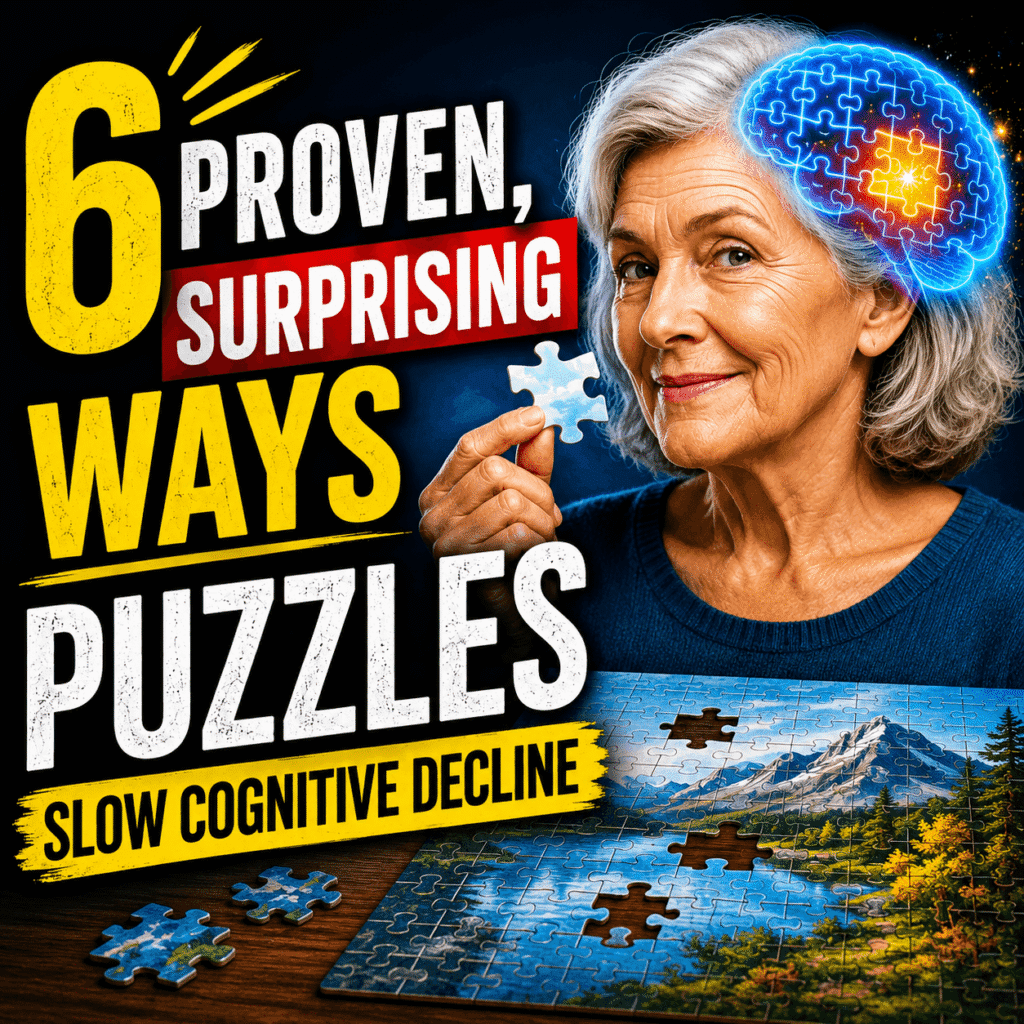
Cognitive decline is not an inevitable, unstoppable slide for everyone who reaches a certain age; growing research points to mental activity, including regular puzzle solving, as one of several lifestyle factors associated with a lower risk and a slower pace of decline. Anyone who has watched an older relative stay sharp into their eighties while solving a daily crossword has likely sensed this connection intuitively, but the evidence behind it is more specific and more actionable than vague advice to “stay active.” This article explains what the research actually supports, how puzzle solving plausibly contributes to that protection, and how to build a realistic habit that fits the evidence rather than overstating it.
It is worth being precise from the start: puzzle solving is associated with a reduced risk of cognitive decline and is part of a broader pattern of brain-healthy habits, not a guaranteed prevention method or a cure for any diagnosed condition. With that distinction in mind, the sections below cover the mechanism behind cognitive reserve, the type and frequency of puzzle practice with the strongest support, and how this fits alongside the daily brain training habits already covered elsewhere in this series.
1. What Cognitive Decline Is and Why Puzzles Are Relevant
Cognitive decline describes a gradual reduction in memory, processing speed, reasoning, or attention that can occur with age, ranging from mild, normal slowing to more significant impairment. Puzzle solving becomes relevant here because it represents a concentrated, repeatable form of the mental challenge that researchers consistently associate with slower decline, giving people a concrete, low-cost activity to point to rather than the vague instruction to simply “keep your brain active.”
1.1 Defining Cognitive Decline Across the Spectrum
Mild cognitive decline, the kind most adults notice as occasionally misplacing keys or needing a moment longer to recall a name, sits at one end of a spectrum that extends through mild cognitive impairment and, in some cases, dementia at the far end. Most discussions of puzzle solving and brain health concern the earlier part of this spectrum, where lifestyle factors have the clearest, most consistent association with outcomes, rather than the more complex medical territory of diagnosed dementia, which involves additional biological factors beyond lifestyle alone.
This distinction matters because it sets realistic expectations: puzzle solving is not positioned by credible sources as a treatment for diagnosed dementia, but as one part of a pattern of habits associated with healthier cognitive aging in the general population. Conflating the two leads either to unrealistic hope or to dismissing a genuinely useful habit because it cannot do something it was never claimed to do in the first place.
1.2 Why Puzzle Solving Specifically Gets Attention
Puzzle solving draws particular research and public attention because it is easy to measure and easy to adopt compared with broader categories like “intellectual engagement,” which can be hard to quantify across a population. A crossword, a logic grid, or a number sequence puzzle has a clear start and finish, a measurable difficulty level, and a track record across studies of older adults that makes it a convenient stand-in for the harder-to-isolate concept of staying mentally active in general.
This practicality also explains why puzzle solving appears so often in both popular health advice and in cognitive aging research: it is one of the few mentally demanding habits that nearly anyone can start immediately, without special training, equipment, or cost, which makes it a realistic recommendation rather than an aspirational one that few people actually follow through on.
2. The Cognitive Reserve Theory Behind Puzzle Solving
The leading explanation for why puzzle solving correlates with slower cognitive decline centers on cognitive reserve, the idea that a brain with more developed neural connections and more flexible processing strategies can better compensate for age-related changes before symptoms become noticeable. This theory reframes the goal of puzzle solving from “preventing decline” to “building a buffer” against it.
2.1 How Cognitive Reserve Builds Over Time
Cognitive reserve accumulates gradually through a lifetime of mentally engaging activity, including education, occupation, social interaction, and deliberate mental challenges like puzzle solving, rather than appearing suddenly from a short burst of effort. Each successful engagement with a sufficiently difficult problem appears to reinforce neural pathways in ways that contribute to this reserve, echoing the neuroplasticity mechanism already discussed for general brain training elsewhere in this series.
This gradual accumulation is precisely why starting a puzzle habit later in life still has genuine value, even though someone who has solved puzzles for decades may have a larger existing reserve. Cognitive reserve is not a fixed quantity set early in life; it continues to respond to new mental challenge at virtually any age, which is consistent with research showing benefits from starting mentally engaging activities well into older adulthood.
2.2 What Happens Without Sufficient Mental Challenge
The flip side of cognitive reserve theory is that a brain rarely challenged beyond familiar, automatic tasks may build less of this protective buffer over time, leaving fewer alternative neural pathways available if age-related changes begin to affect a primary one. This does not mean an unstimulated brain inevitably develops dementia, since many other factors, including genetics and overall health, contribute heavily as well, but it does suggest that mental challenge is one modifiable factor worth addressing directly.
This is part of why retirement is sometimes associated with a noticeable shift in mental engagement for some people, when work-related challenges disappear without an equivalent replacement. A deliberate puzzle-solving habit can fill exactly this gap, providing structured, escalating challenge that does not depend on a job or external schedule to keep showing up.
3. What the Research Says About Puzzle Solving and Cognitive Decline
Public health and aging organizations consistently include mental challenge among recommended brain-healthy habits, though the strength of the evidence varies by activity type and study design, and most studies show association rather than proven, direct causation. Understanding this nuance helps separate well-supported guidance from overstated marketing claims about specific puzzle products.
| Factor | Association With Cognitive Decline | Strength of Evidence |
|---|---|---|
| Regular mental challenge | Lower risk, slower pace | Consistent, observational |
| Education level | Lower risk overall | Strong, long-studied |
| Social engagement | Lower risk | Consistent, observational |
| Physical exercise | Lower risk | Strong, multiple study types |
3.1 What the Alzheimer’s Association Recommends
The Alzheimer’s Association’s brain health guidance lists challenging the mind with new, unfamiliar activities as one of ten everyday habits associated with lowering the risk of cognitive decline, noting that positive, everyday actions can make a measurable difference in brain health over time. The guidance frames mental challenge as one piece of a broader pattern rather than a stand-alone solution, alongside physical activity, social connection, and managing cardiovascular health.
This framing matters for puzzle solving specifically: a daily puzzle habit fits naturally under “challenge your mind,” but the same guidance would caution against treating puzzles as a replacement for exercise, social contact, or managing other health conditions known to affect brain health. The strongest real-world approach combines several of these recommended habits rather than relying on puzzles alone to carry the full protective effect.
3.2 Why Novelty and Difficulty Matter More Than Repetition
Research on cognitive reserve consistently emphasizes novelty and genuine difficulty over simple repetition, which has direct implications for how a puzzle habit should be structured to align with the evidence. Solving the identical, comfortable puzzle type for years likely contributes less to cognitive reserve than regularly introducing new formats or rising difficulty, since the protective mechanism appears tied to genuine challenge rather than familiar, low-effort activity.
This is consistent with the rotation-and-progression approach already recommended throughout this series for general brain training: a puzzle habit that keeps raising difficulty and varying format is more aligned with what the cognitive reserve research actually supports than a static routine that became comfortable years ago and never changed since.
4. How to Build a Puzzle Habit That Supports Brain Health
Translating this research into a daily habit does not require a dramatic lifestyle overhaul, only a consistent, moderately challenging puzzle routine maintained over years rather than weeks, since the protective association with cognitive decline reflects long-term patterns, not short-term effort. A realistic, sustainable habit beats an intense but short-lived one by a wide margin here.
4.1 Choosing Puzzle Types With the Strongest Fit
Puzzle types that demand active reasoning, such as logic grids, number sequences, and strategic games, align more closely with the cognitive reserve mechanism than purely recall-based formats like simple trivia, since active problem-solving appears to recruit a broader, more flexible set of neural pathways. This does not make recall-based puzzles worthless, but it does suggest weighting a routine toward reasoning-heavy formats for the strongest plausible benefit.
Rotating through several reasoning-based puzzle categories over a typical week, rather than settling permanently on one comfortable favorite, also keeps the novelty element intact that the research consistently flags as important. A graded puzzle collection covering multiple formats removes much of the planning burden involved in maintaining this variety over years rather than weeks.
4.2 Combining Puzzles With Other Protective Habits
Given that the strongest guidance frames mental challenge as one part of a broader pattern, pairing a daily puzzle habit with regular physical activity and consistent social contact, both independently associated with lower cognitive decline risk, builds a more complete approach than puzzles alone. A weekly structure that includes a short daily puzzle session, several walks or other aerobic activity, and at least one socially engaging activity covers the major recommended categories without requiring any single habit to do all the work.
This combined approach also hedges against the uncertainty in any single piece of research, since relying on one habit alone means the overall benefit depends entirely on how strong that one factor’s effect turns out to be. Spreading effort across several independently supported habits is a more robust strategy than betting everything on puzzle solving in isolation.
5. Common Misconceptions About Puzzles and Cognitive Decline
Two misconceptions repeatedly distort how people interpret the puzzle-and-cognitive-decline connection, often leading to either inflated expectations or unwarranted dismissal of a genuinely useful habit. Addressing both directly keeps expectations realistic without discarding a habit with real, evidence-aligned value.
5.1 Treating Puzzles as a Guaranteed Prevention
Marketing around commercial brain-training products has sometimes implied that regular puzzle use prevents dementia outright, a claim that overstates what observational, association-based research actually supports. The honest framing is that puzzle solving is linked to a lower risk and a potentially slower pace of decline as part of a broader healthy pattern, not a guaranteed individual outcome regardless of other genetic and health factors at play.
Holding this realistic expectation actually supports better long-term adherence, since a habit framed as “one part of a sensible, multi-factor approach” survives the inevitable weeks when motivation dips far better than a habit built on an inflated promise that quietly erodes trust once someone notices normal, expected lapses in memory despite consistent practice.
5.2 Dismissing Puzzles as Having No Real Effect
The opposite misconception, often a reaction to overhyped marketing, dismisses puzzle solving entirely as having no meaningful relationship to cognitive decline at all. This overcorrection ignores the consistent association found across observational research and the plausible biological mechanism behind cognitive reserve, throwing away a low-cost, low-risk habit because it cannot single-handedly guarantee an outcome that no single lifestyle factor realistically could.
A more accurate middle position treats puzzle solving the same way credible health guidance treats most lifestyle factors: genuinely useful, evidence-supported, and best combined with other protective habits rather than expected to perform miracles or dismissed for failing to do so alone.
Conclusion: Cognitive Decline and the Real Value of Puzzle Solving
The evidence supports a measured, encouraging conclusion: regular puzzle solving is associated with a lower risk and potentially slower pace of cognitive decline, plausibly through the mechanism of cognitive reserve, and works best as one part of a broader pattern that includes physical activity and social connection. Building a consistent, gradually escalating puzzle habit over years, not weeks, aligns far better with this research than either an inflated belief in guaranteed prevention or a dismissal of puzzles as pointless.
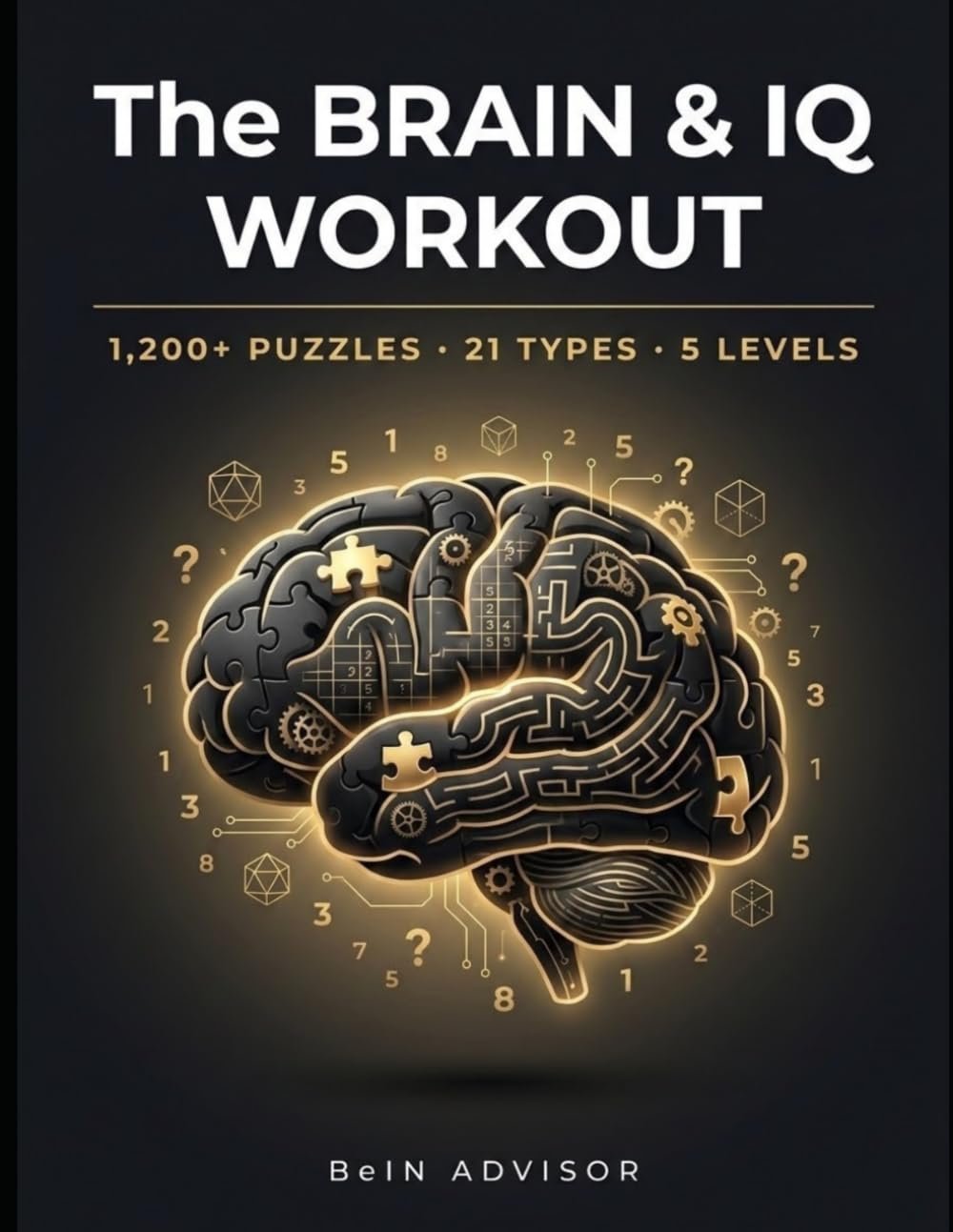
For the reasoning-heavy, escalating-difficulty puzzle practice this research favors, Brain & IQ Workout offers more than twenty puzzle types across five rising difficulty levels, with every answer explained, providing exactly the kind of varied, genuinely challenging daily practice this section recommends as part of a broader brain-healthy routine.
As an Amazon Associate, BeIN ADVISOR earns from qualifying purchases.