
A beekeeping business turns a quiet patch of land into a steady source of income built on two of nature’s most valuable products: honey and beeswax. The appeal is simple. Demand for pure, locally produced honey keeps climbing, while beeswax has quietly become a prized raw material for cosmetics, candles, and food wraps. Together they give a single operation two income streams from the same hives.
What makes this venture stand out is its accessibility. You do not need acres of farmland or heavy machinery to begin. A handful of well-managed colonies, the right equipment, and a clear plan can generate returns that grow season after season. The bees do the hardest work; your job is to manage the hives, harvest the products, and reach the buyers willing to pay a premium for quality.
This article walks you through every stage of building a beekeeping business that actually earns. You will learn what equipment matters, how to set up a productive apiary, how to harvest and process both honey and beeswax, and how to market what you make. You will also see realistic figures on startup costs and profitability, plus the mistakes that drain new beekeepers before they find their footing. By the end, you will have a practical roadmap from first hive to first sale.
1. Why the Beekeeping Business Is a Smart Venture
Few small enterprises combine low barriers to entry with such durable demand. A beekeeping business produces consumable goods that customers buy again and again, and it does so with modest land and equipment. Once colonies are established, they reproduce and expand on their own, lowering the cost of growth. This section explains the market forces and economics that make beekeeping one of the most resilient agricultural ventures available to newcomers.
1.1 The Demand Behind Honey and Beeswax
Consumer interest in natural, traceable food has lifted demand for raw honey far beyond what large commercial suppliers comfortably meet. Shoppers increasingly seek unfiltered, single-origin honey and will pay more for it at farmers’ markets and specialty shops. Beeswax follows the same trend. Artisan candle makers, skincare brands, and eco-conscious households all compete for clean, well-rendered wax. A beekeeping business that delivers consistent quality can sell everything it produces, often before the next harvest is ready, because supply rarely keeps pace with this steady appetite.
1.2 Low Overhead, Scalable Returns
The economics favor patient operators. A starter apiary of two or three hives costs relatively little, and much of that outlay is one-time spending on durable equipment that lasts for years. As colonies grow, you can split them to create new hives at almost no cost, multiplying production without proportionally multiplying expenses. Honey and beeswax also store well, so you are never forced to sell at a loss to clear perishable stock. This combination of low overhead, natural expansion, and shelf-stable products gives the beekeeping business an unusually forgiving path to profit.
2. Understanding Your Two Core Products
Every successful beekeeping business is built on a clear understanding of what it sells. Honey and beeswax come from the same hives but serve very different markets, carry different margins, and demand different handling. Knowing how each product earns its keep lets you plan production, set prices, and decide where to focus your effort. The two together make the operation far more profitable than honey alone ever could.
2.1 Honey: Your Primary Revenue Stream
Honey is the workhorse of any beekeeping business and usually accounts for the largest share of income. A single healthy hive can yield a substantial harvest each productive season, and that honey sells across a wide range of formats, from simple jars to comb honey and infused varieties. Pricing depends on purity, floral source, and presentation. Raw, local honey commands a premium that mass-produced imports cannot match, which is why direct sales to nearby customers almost always outperform wholesale. Reliable honey output is the foundation everything else builds upon.
2.2 Beeswax: The Underrated Profit Center
Beeswax is often treated as a byproduct, yet it can be one of the most profitable parts of a beekeeping business per unit of weight. After honey is extracted, the wax cappings and old comb are rendered into clean blocks that sell to candle makers, cosmetic formulators, and crafters. Because buyers value purity, well-filtered wax fetches strong prices. Turning that raw wax into finished goods such as candles, lip balms, or food wraps multiplies its value many times over. Treating beeswax as a deliberate product line, not a leftover, meaningfully raises total earnings.
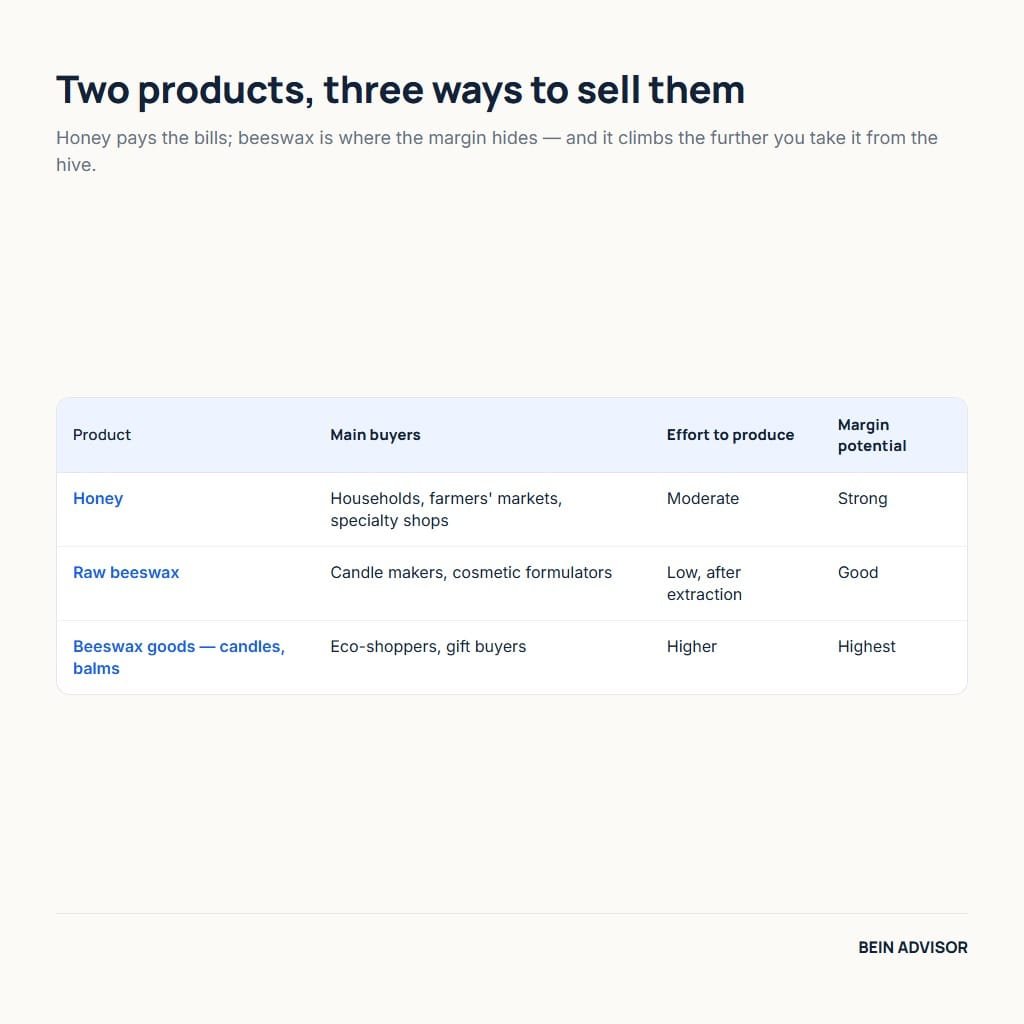
| Product | Main Buyers | Effort to Produce | Margin Potential |
|---|---|---|---|
| Honey | Households, farmers’ markets, specialty shops | Moderate | Strong |
| Raw beeswax | Candle makers, cosmetic formulators | Low (after extraction) | Good |
| Beeswax goods (candles, balms) | Eco-shoppers, gift buyers | Higher | Highest |
3. Essential Equipment to Start a Beekeeping Business
Starting a beekeeping business requires a focused set of tools rather than a large investment. The right equipment keeps you safe, keeps the bees calm, and makes harvesting efficient. Buying quality gear once is far cheaper than replacing flimsy items every season. The list below covers what genuinely matters at the start, including the products most new beekeepers rely on, so you can equip a productive apiary without overspending.
3.1 Hives, Frames, and Beekeeping Gear
The hive is your most important purchase, and most beginners start with a standard stackable system that is easy to inspect and expand. A Complete Beekeeping Starter Kit: bundles the hive boxes, frames, and foundation together, which saves money and guarantees the parts fit. Personal safety comes next. A well-made Beekeeping Protective Suit: with a veil lets you work the hives confidently without fear of stings, and a sturdy pair of gloves protects your hands during inspections. These items form the durable backbone of the operation and rarely need replacing.
3.2 Extraction and Processing Tools
Harvesting honey and wax calls for a few specialized tools that quickly pay for themselves. A Honey Extractor: spins frames to draw out honey without destroying the comb, letting bees refill it faster and boosting long-term yield. A Bee Smoker: calms the colony during inspections and harvests, making the work safer and gentler on the bees. Smaller essentials such as a hive tool and an uncapping knife round out the kit. With these in hand, a beekeeping business can process its harvest cleanly and keep both honey and beeswax at premium quality.
Practical Beekeeping Equipment
Disclosure: This article contains Amazon affiliate links. If you buy through them, BeIN ADVISOR may earn a commission at no extra cost to you.
POLLIBEE 35-piece starter kit: The listing identifies a beginner kit with a bee suit, smoker, frame holder, hive tools, and an Oxford bag. Check the selected size and included pieces before ordering, because a starter bundle is not a substitute for learning safe hive handling.
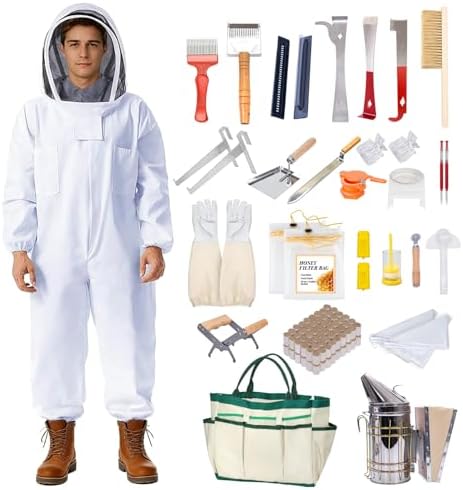
LONGADS full-body bee suit: The product title specifies a full-body beekeeper suit with gloves and a veil in XL. Choose the size that matches the wearer and inspect the closures and coverage before entering an apiary; protective clothing works best when it fits securely.

Honey harvesting tool kit: The listing describes a 13-piece set with a 5-gallon plastic honey bucket. Keep all food-contact parts clean, confirm that the set matches your extraction method, and use heat and sharp tools with appropriate fire and handling precautions.
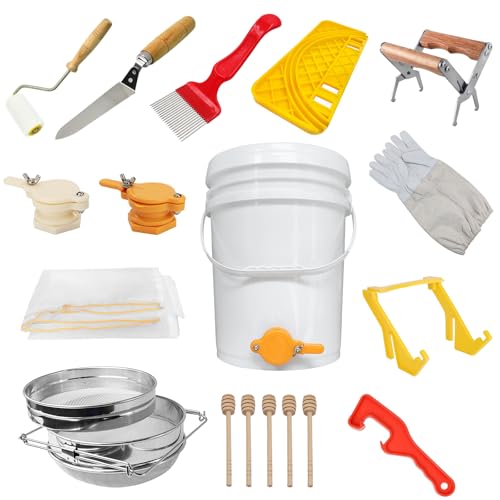
These are equipment starting points, not guarantees of colony health or harvest volume. Follow local beekeeping guidance, protect bystanders from stings, and keep smokers and hot wax away from flammable materials.
4. Setting Up Your Beekeeping Apiary
Where and how you place your hives shapes the productivity of the entire beekeeping business. Bees thrive in specific conditions, and a thoughtfully sited apiary produces more honey, healthier colonies, and fewer problems. Setting up well from the start saves countless hours of corrective work later. This section covers the two decisions that matter most: choosing the location and bringing your first bees home.
4.1 Choosing the Right Apiary Location
The ideal apiary site offers abundant forage, clean water, and shelter from harsh wind. Bees need flowering plants within easy flying distance, so areas rich in wildflowers, orchards, or crops support stronger honey production. A nearby water source keeps the colony hydrated and reduces stress during hot spells. Good drainage and morning sun help hives stay dry and active, while a windbreak protects them through colder months. Positioning hive entrances away from footpaths keeps both bees and neighbors comfortable, an often-overlooked factor for any beekeeping business near homes.
4.2 Sourcing and Installing Your Bees
New colonies typically arrive as a package of bees with a queen or as an established nucleus colony, often called a nuc. A nuc contains a laying queen and frames of brood, so it builds up faster and is the easier choice for beginners. Buy from reputable local breeders whose bees are already suited to your climate and show good temperament and disease resistance. Installing them is straightforward: transfer the frames gently into your hive, ensure the queen is accepted, and feed the colony if natural forage is still scarce. A strong start sets the tone for the season.
5. Producing and Harvesting Your Honey
Honey production follows the rhythm of the seasons, and understanding that cycle is central to running a profitable beekeeping business. Bees gather nectar when flowers bloom, convert it to honey, and store it for lean times. Your task is to support that process and then harvest the surplus without weakening the colony. Timed well, the harvest rewards you with high-quality honey and leaves the bees with enough to thrive.
5.1 The Seasonal Honey Production Cycle
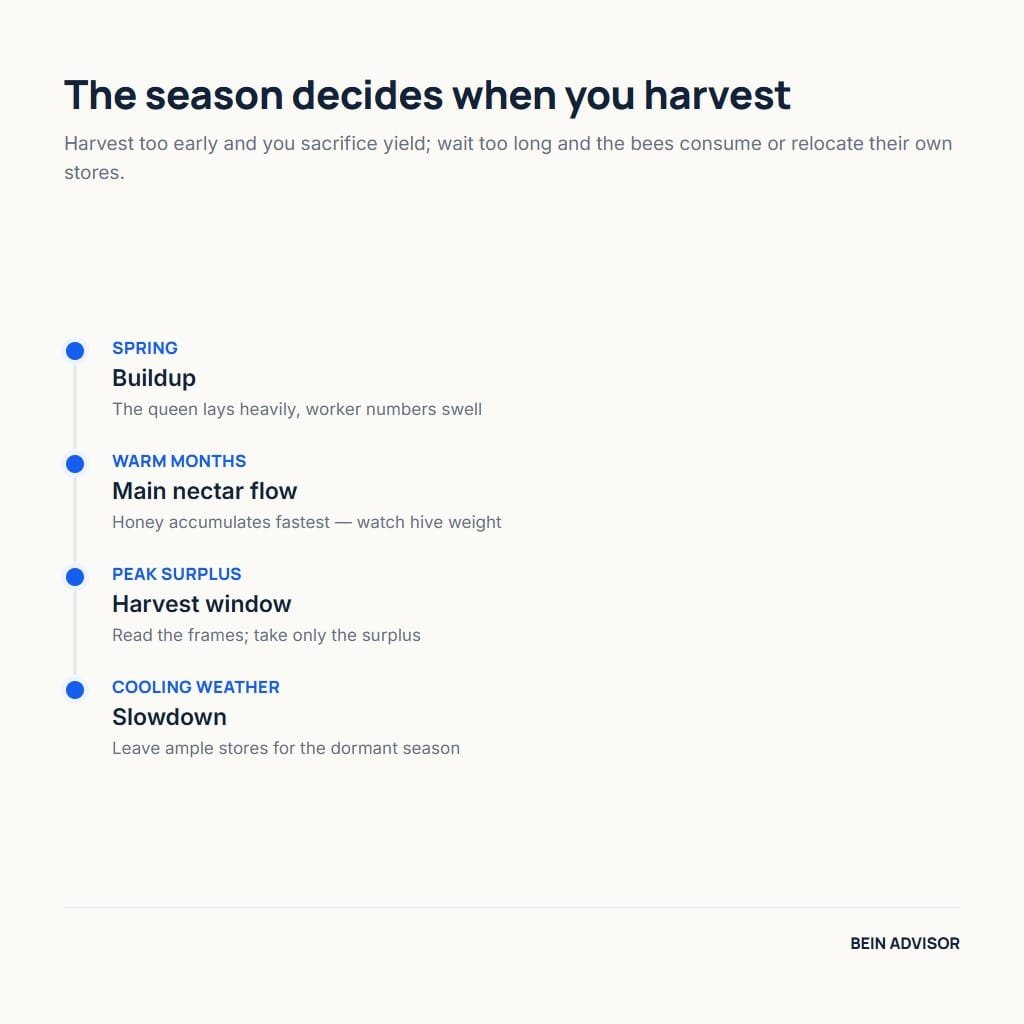
Colonies build through spring, peak in the warm months when forage is plentiful, and slow as cooler weather arrives. During the buildup, the queen lays heavily and worker numbers swell, preparing the hive for the main nectar flow. This is when honey accumulates fastest. A beekeeper monitors the hive’s weight and the state of the frames to judge when the surplus is ready. Harvesting too early sacrifices yield, while waiting too long risks the bees consuming or relocating their stores. Reading the cycle accurately is a skill that sharpens with each season.
5.2 Harvesting Without Harming the Colony
A responsible harvest takes only the surplus the bees can spare, leaving ample stores for them to survive the dormant season. Using a smoker to calm the hive, you remove the honey-filled frames, brush off the bees, and carry the frames to a clean indoor space for extraction. Uncapping the wax seals and spinning the frames in an extractor draws the honey out while preserving the comb for reuse. Returning the empty frames lets the colony refill them quickly. This gentle approach protects colony health, which keeps the beekeeping business productive year after year.
6. Rendering and Processing Beeswax
Beeswax processing transforms a humble byproduct into a second profit line for the beekeeping business. The wax cappings sliced off during honey extraction, along with old comb, contain valuable material that simply needs cleaning and shaping. Done properly, rendering yields golden, fragrant blocks that buyers prize. This section explains how to clean raw wax and how to turn it into finished products that sell for many times the price of the raw material.
6.1 Cleaning and Filtering the Beeswax
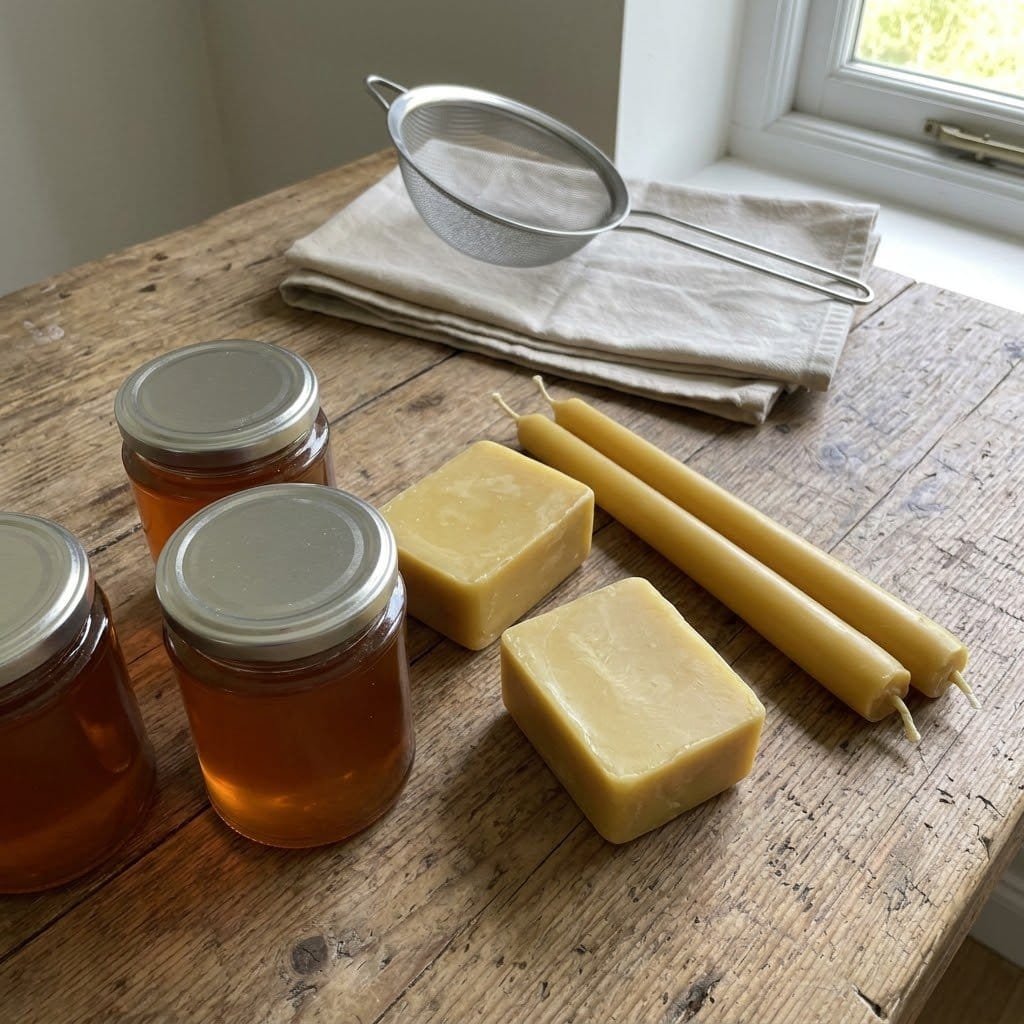
Raw wax arrives mixed with honey residue, bits of debris, and the occasional dead bee, so it must be melted and filtered before sale. Gentle heat in a double boiler or a dedicated wax melter liquefies the wax without scorching it, since overheating darkens the color and lowers its value. Straining the molten wax through cloth removes impurities, and a second pass produces the clean, even blocks that command premium prices. Pouring the filtered wax into molds creates uniform bars that are easy to weigh, label, and ship to buyers.
6.2 Turning Beeswax Into Sellable Products
The greatest returns come from converting raw beeswax into finished goods. Hand-poured candles remain the most popular option, valued for their natural scent and clean burn. Skincare items such as lip balms, salves, and lotion bars use only small amounts of wax yet sell at high margins. Reusable food wraps, made by coating cloth in wax, appeal to eco-minded shoppers and are simple to produce in batches. By building a small product line around beeswax, a beekeeping business captures far more value than selling raw blocks alone, and it reaches new customers in the process.
7. Marketing and Selling Your Products
Producing excellent honey and beeswax is only half the work; reaching buyers who value them is what turns a hobby into a profitable beekeeping business. The way you sell shapes your margins as much as the quality of your harvest. Direct relationships with customers almost always pay better than wholesale, and a clear brand lets you charge what your products are worth. This section outlines where to sell and how to position your goods.
7.1 Direct-to-Consumer Sales Channels
Selling directly to the people who use your products captures the full retail price rather than the thin margins of wholesale. Farmers’ markets are a natural starting point, offering face-to-face contact that builds trust and repeat custom. A simple online store or social media shop extends your reach beyond the local area and lets customers reorder easily. Local shops, cafes, and craft fairs provide additional outlets, while gift boxes pairing honey with beeswax candles raise the average sale. Diversifying across several channels keeps the beekeeping business steady even when one outlet slows.
7.2 Branding and Pricing for Profit
A clear, honest brand justifies premium pricing. Clean labels that state the floral source, location, and raw nature of the honey signal quality at a glance and reassure buyers. Consistent jars, logos, and a short origin story make the products memorable and worth recommending. When setting prices, account for every cost, including equipment, time, and packaging, then position above mass-market honey rather than competing on price. Customers who seek local honey expect to pay more for it, and undercharging leaves money on the table while quietly devaluing the entire beekeeping business.
8. Beekeeping Business Costs and Common Mistakes
Sound numbers separate a thriving beekeeping business from an expensive hobby. Understanding what you will spend, how long until you recover it, and where new beekeepers lose money lets you plan with confidence. Startup costs are modest compared with most enterprises, and disciplined management brings profitability within a season or two. The table and guidance below give a realistic picture of the financial side of the venture.
8.1 Startup and Running Costs
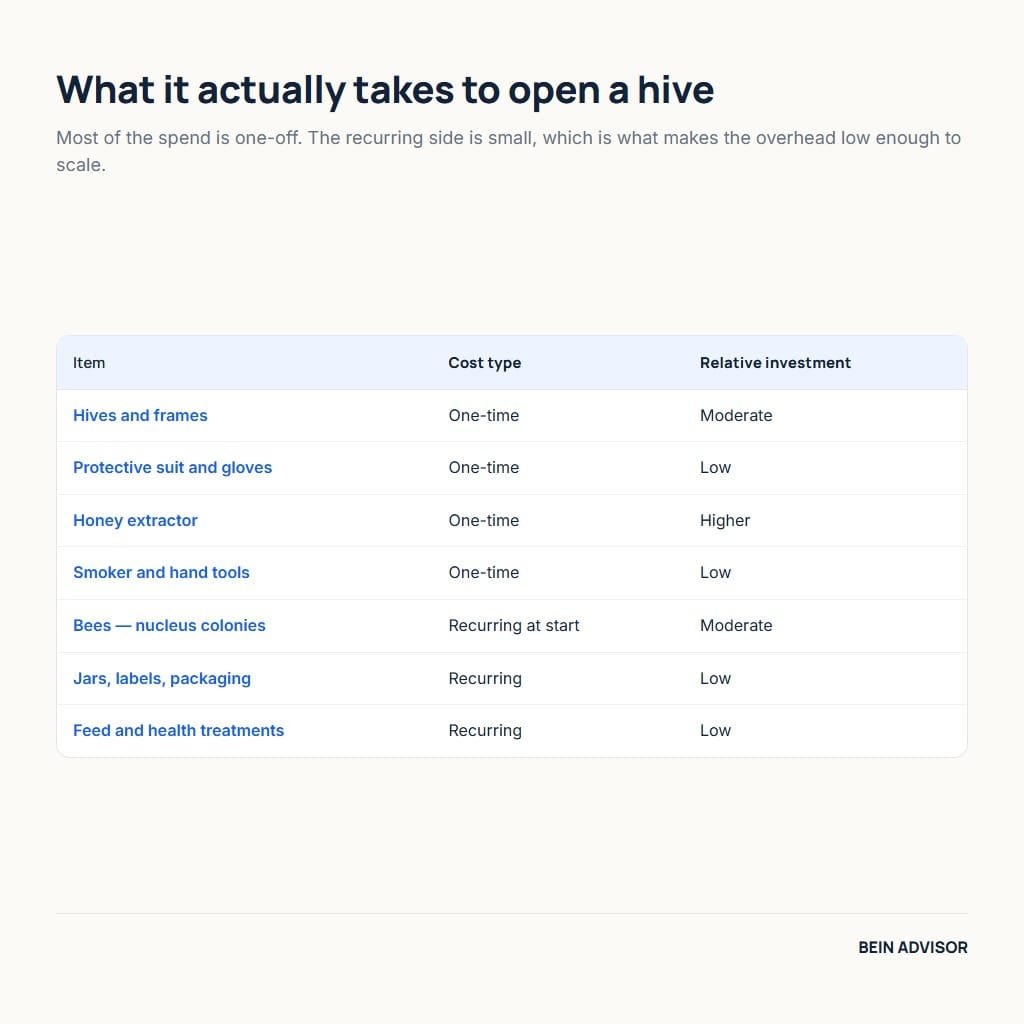
The bulk of early spending goes toward durable equipment that serves for many years, which means costs fall sharply after the first season. Hives, protective gear, and an extractor are the main one-time purchases, while bees, feed, and jars recur. Because colonies multiply naturally, expansion costs little once you are established. The table below outlines typical starting categories for a small operation; actual prices vary by region and supplier, but the proportions hold true and help you budget for a realistic beekeeping business launch.
| Item | Cost Type | Relative Investment |
|---|---|---|
| Hives and frames | One-time | Moderate |
| Protective suit and gloves | One-time | Low |
| Honey extractor | One-time | Higher |
| Smoker and hand tools | One-time | Low |
| Bees (nucleus colonies) | Recurring at start | Moderate |
| Jars, labels, packaging | Recurring | Low |
| Feed and health treatments | Recurring | Low |
8.2 Mistakes That Sink New Beekeepers
Several avoidable errors derail beginners. Overharvesting honey and leaving colonies short of winter stores is the most damaging, often killing the very hives that generate income. Neglecting hive inspections allows pests and disease to spread unchecked, while starting with too many colonies at once overwhelms a new beekeeper’s time and skill. Underpricing is another quiet killer, eroding profit that should fund growth. Finally, treating beeswax as waste discards an entire revenue stream. Avoiding these missteps keeps the beekeeping business healthy, sustainable, and steadily more profitable as your experience deepens.
Conclusion: Build a Beekeeping Business That Lasts
A beekeeping business rewards patience, care, and attention to detail with income that compounds over time. By understanding your two core products, equipping yourself properly, siting your apiary well, and harvesting with respect for the colony, you lay a foundation that strengthens every season. The honey pays the bills while the beeswax quietly widens your margins, and smart marketing ensures both reach buyers who gladly pay for quality.
The path is genuinely accessible. You can start small with a couple of hives, learn the rhythm of the seasons, and expand as your confidence and colonies grow. Mistakes are part of the learning, but the ones outlined here are easy to sidestep with a little foresight. Few ventures let nature do so much of the work while you build something durable and genuinely your own.
Now is the moment to take the first step. Order your starter equipment, find a reputable local source for your bees, and place your first hive. Each season your beekeeping business will grow steadier and more profitable, turning a fascination with bees into a thriving source of income.