

Salary negotiation is one of the highest-paid skills you will ever practice, yet most professionals avoid it out of fear or discomfort. A single successful salary negotiation can raise your income for years, because every future raise, bonus, and job offer often builds on the number you accept today. Learning to negotiate well is not about being aggressive; it is about presenting your value clearly and asking with confidence.
The stakes are higher than they appear. Accepting the first offer without discussion can quietly cost you a significant sum over a career, since small differences compound through annual increases and percentage-based bonuses. The professionals who negotiate are rarely the most talented in the room; they are simply the ones who prepared and spoke up.
This article gives you a practical, step-by-step approach to salary negotiation that works whether you are joining a new company or asking your current employer for a raise. You will learn how to research your market value, build an evidence-based case, time your request, set your numbers, and handle pushback with poise. You will also see what to negotiate beyond base pay and which mistakes quietly weaken your position. By the end, you will be ready to ask for what you are worth and hold your ground professionally.
For a practical guide to preparing for offers and asking for fair compensation, Fearless Salary Negotiation by Josh Doody is a related reading option.
As an Amazon Associate, we may earn from qualifying purchases.
1. Why Salary Negotiation Matters More Than You Think
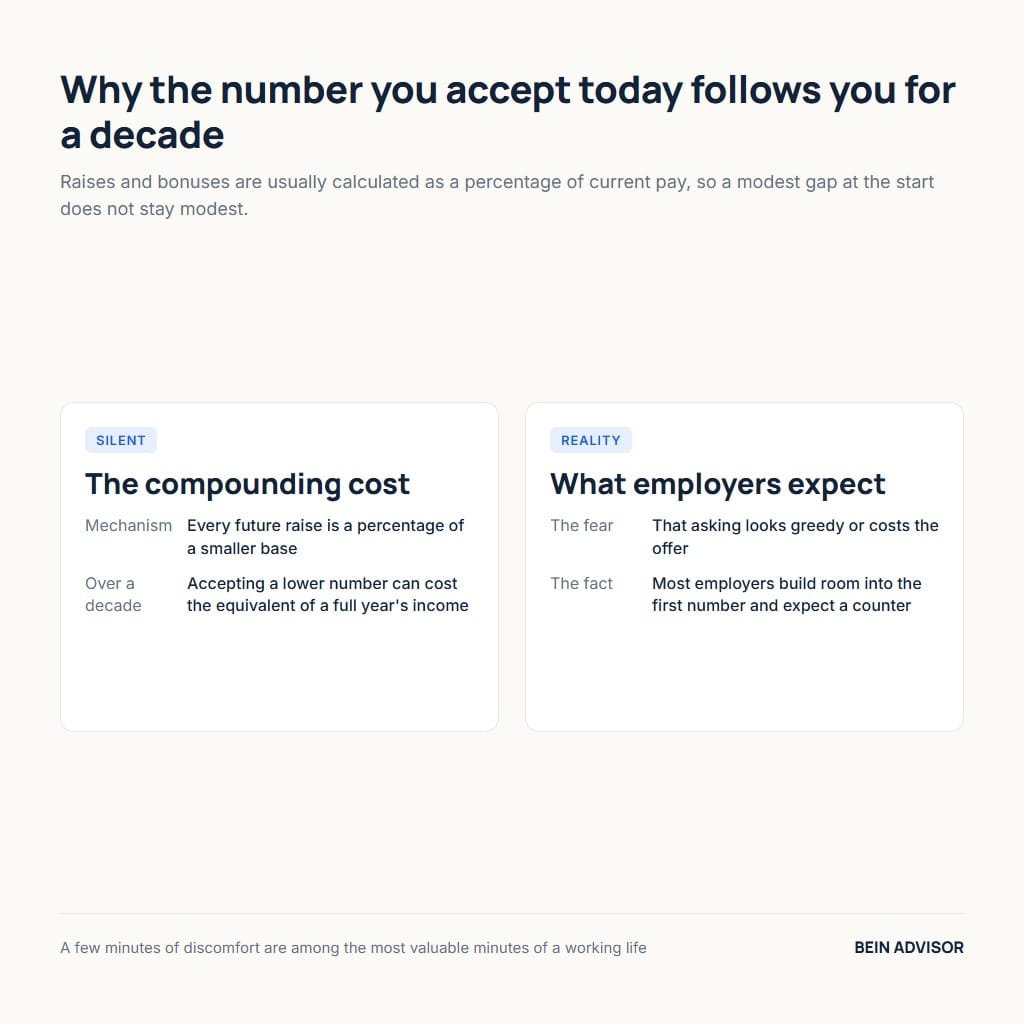
Salary negotiation shapes far more than your next paycheck. The figure you agree on becomes the baseline for raises, bonuses, and even the offers you receive at future employers. Treating it as a minor formality leaves real money on the table, while approaching it deliberately can transform your long-term earnings. Understanding why the stakes are so high is the first step toward negotiating with genuine conviction rather than apology.
1.1 The Compounding Cost of Not Negotiating
The true price of skipping a salary negotiation is rarely visible in the moment. A modest gap in your starting figure grows year after year, because raises and bonuses are usually calculated as a percentage of your current pay. Over a decade, accepting a lower number can quietly cost the equivalent of an entire year’s income or more. This compounding effect means the few minutes of discomfort involved in negotiating are among the most financially valuable minutes of your working life. Viewing the conversation through this lens makes preparation feel essential rather than optional.
1.2 What Employers Actually Expect
Many professionals stay silent because they fear that negotiating will seem greedy or cost them the offer. In reality, most employers expect a degree of negotiation and often build room into their initial figure precisely for it. A respectful, well-reasoned counter signals confidence and professionalism, qualities companies value in the people they hire and promote. Rescinding an offer simply because a candidate asked is rare and usually a warning sign about the employer. Recognizing that negotiation is a normal, expected part of the process removes much of the anxiety surrounding it.
2. Building Your Case Before the Conversation
Confidence in a salary negotiation comes from preparation, not personality. The strongest position is built quietly in advance, through research and evidence that justify the number you intend to request. When you can point to market data and concrete results, the conversation shifts from a personal plea to a reasoned business case. This section covers the two pillars of that preparation: knowing your market value and documenting your contribution.
2.1 Researching Your Market Value
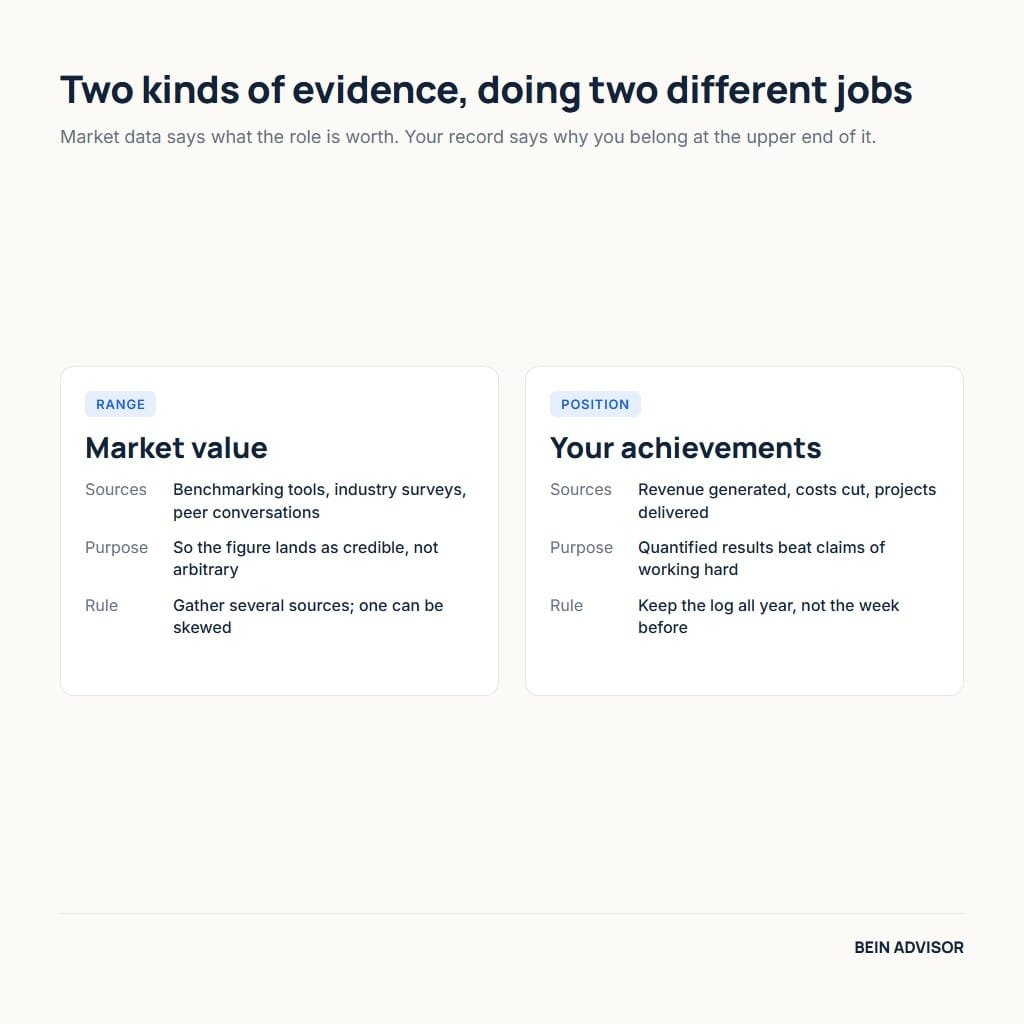
Before you name a figure, you need to know what your role commands in the current market. Salary benchmarking tools, industry surveys, and conversations with peers reveal the realistic range for your title, experience, and location. A Salary Benchmarking Tool: can quickly show typical pay bands so your request lands within a credible range rather than appearing arbitrary. Gathering several sources protects you from relying on a single skewed number. Walking into a salary negotiation armed with this data lets you anchor your request to evidence the employer recognizes and respects.
2.2 Documenting Your Achievements
Market data tells employers what the role is worth; your achievements tell them why you are worth the upper end of it. Compile a clear record of your measurable contributions, such as revenue generated, costs reduced, projects delivered, or efficiencies created. Quantified results are far more persuasive than general claims of being a hard worker. Keeping an ongoing accomplishment log throughout the year makes this step effortless when the moment arrives. In any salary negotiation, the ability to connect your request to tangible value is what turns a hopeful ask into a compelling argument.
3. Timing Your Salary Negotiation Right
Even a well-prepared case can fall flat if raised at the wrong moment. Timing influences how receptive your employer will be and how much flexibility they have to say yes. The most effective negotiators choose their moment deliberately, aligning the request with points of leverage rather than convenience. This section explains when to ask and how to read the signals that indicate the timing is in your favor.
3.1 The Best Moments to Ask
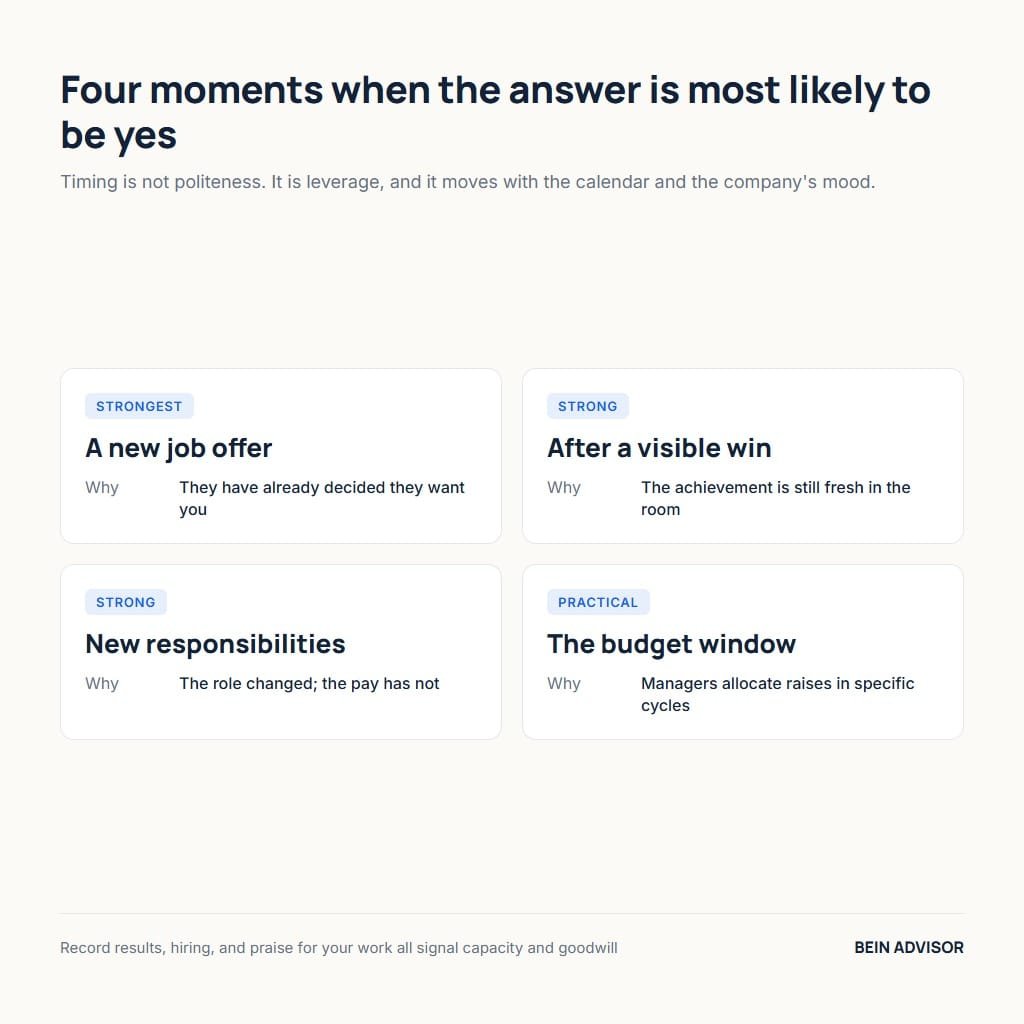
Certain moments naturally strengthen your hand in a salary negotiation. Receiving a new job offer is the single most powerful one, because the employer has already decided they want you and competition is implicit. Within an existing job, the period after a major success, a glowing performance review, or the assumption of new responsibilities offers strong footing. Annual budget and review cycles also matter, since managers allocate raises during specific windows. Asking just after you have delivered visible value, while the achievement is fresh, dramatically improves your odds of a positive response.
3.2 Reading Your Company’s Signals
Smart timing also means reading the wider context around you. A company celebrating record results, expanding its team, or praising your work is signaling capacity and goodwill. Conversely, raising the topic during layoffs, budget freezes, or a rough quarter rarely ends well, regardless of your merit. Pay attention to your manager’s workload and mood, and choose a calm moment rather than a hurried one. Aligning your salary negotiation with the organization’s rhythm shows emotional intelligence and increases the chance that your request meets a receptive, rather than defensive, audience.
4. Setting Your Numbers Strategically
A successful salary negotiation depends on walking in with clear, deliberate numbers rather than vague hopes. The figures you prepare shape the entire exchange, from your opening request to the point where you would respectfully decline. Setting these numbers in advance keeps you calm and consistent under pressure. This section covers how to anchor the conversation with a target range and how to define the limit you will not cross.
4.1 Anchoring With a Target Range
The first concrete number mentioned tends to anchor the entire discussion, which is why your opening figure deserves careful thought. Aim slightly above your true target, within the credible range your research supports, so there is room to settle at a number you are genuinely happy with. Presenting a range rather than a single figure can keep the tone collaborative while still anchoring high. The key is ensuring even the lower end of your range comfortably exceeds your minimum. A well-anchored salary negotiation steers the final agreement toward your goal from the very first exchange.
4.2 Knowing Your Walk-Away Point
Just as important as your target is the figure below which you are prepared to decline or keep looking. Defining this walk-away point in advance prevents you from accepting something you will resent later in a moment of pressure. It also gives you quiet confidence, because you know exactly where your limit lies and need not decide emotionally on the spot. Your walk-away number should reflect your financial needs, alternatives, and market options. Entering a salary negotiation with this boundary clearly set allows you to stay flexible on the details while remaining firm on what truly matters.
5. Mastering the Salary Negotiation Conversation
The conversation itself is where preparation meets performance. How you open, respond, and carry yourself often matters as much as the numbers you bring. Composure, clarity, and a collaborative tone turn a potentially tense exchange into a constructive discussion. Many professionals sharpen these skills with a structured Salary Negotiation Course: before a high-stakes conversation. This section focuses on delivering your request with confidence and managing the pushback and silence that experienced negotiators use to test your resolve.
5.1 Opening With Confidence
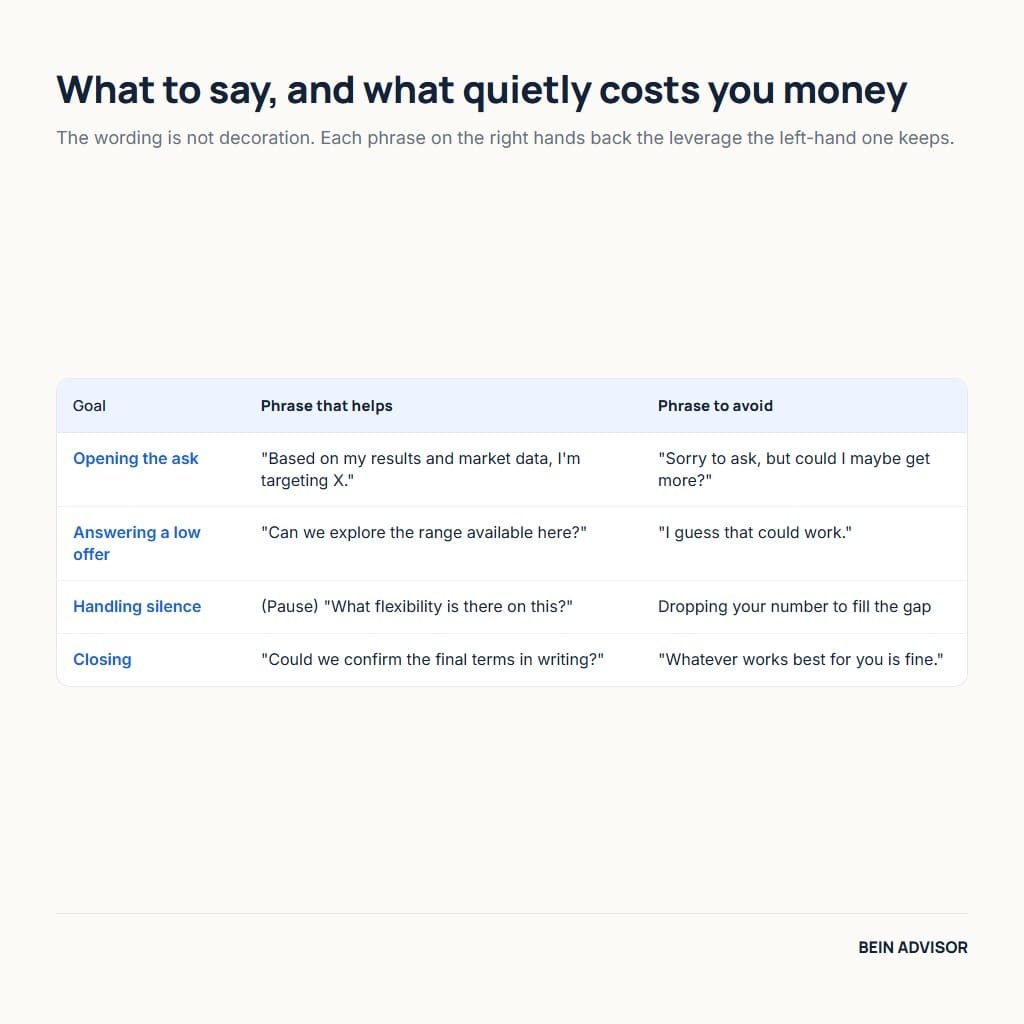
Begin the conversation by expressing genuine enthusiasm for the role or company, then state your request clearly and without apology. A confident opening frames the discussion positively and signals that you see the exchange as a normal business conversation. Avoid hedging language that undercuts your position, such as excessive qualifiers or nervous justifications. State your figure, give your strongest reason, and then stop talking to let the other side respond. Leading a salary negotiation with calm clarity rather than anxious over-explanation immediately strengthens how your request is received.
5.2 Handling Pushback and Silence
Resistance is a normal part of any salary negotiation and should not rattle you. When an employer pushes back or falls silent, resist the urge to fill the gap by lowering your number prematurely. Instead, acknowledge their point, restate your value, and ask questions to understand their constraints. Phrases that invite collaboration, such as asking what flexibility exists, keep the tone constructive. Silence is often a tactic, so pause comfortably and let it work in your favor. Staying composed through pushback demonstrates exactly the kind of professionalism that justifies the figure you are requesting.
| Goal | Phrase That Helps | Phrase to Avoid |
|---|---|---|
| Opening the ask | “Based on my results and market data, I’m targeting X.” | “Sorry to ask, but could I maybe get more?” |
| Answering a low offer | “Can we explore the range available here?” | “I guess that could work.” |
| Handling silence | (Pause) “What flexibility is there on this?” | (Dropping your number to fill the gap) |
| Closing | “Could we confirm the final terms in writing?” | “Whatever works best for you is fine.” |
6. Negotiating Beyond Base Pay
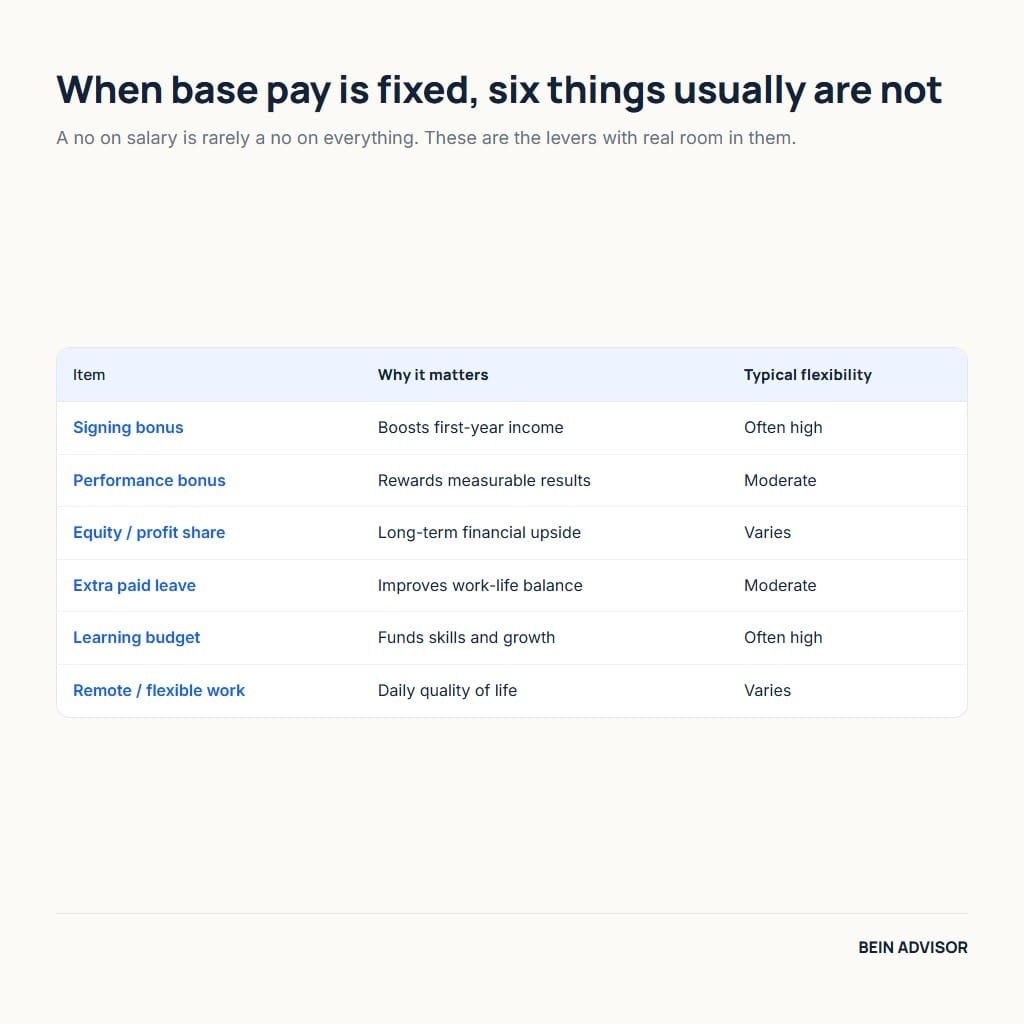
Base salary is only one component of your total compensation, and focusing on it alone can leave significant value untapped. When an employer cannot move further on the headline figure, other elements often hold real flexibility. A broader salary negotiation that considers the full package frequently produces a better outcome than fixating on a single number. This section explores the additional levers worth raising and how they add up.
6.1 Benefits, Bonuses, and Equity
When the base figure reaches its ceiling, the conversation can shift to the components surrounding it. Signing bonuses, performance bonuses, and equity or profit-sharing can substantially raise your effective income without changing the base. Improved retirement contributions, health coverage, or a guaranteed early review for a raise also carry lasting value. Because these items sometimes come from different budgets, employers may grant them more readily than base pay. Expanding a salary negotiation to include these elements lets both sides find agreement when the headline number alone has stalled.
6.2 Flexible Work and Growth Perks
Compensation also includes benefits that improve your daily life and career trajectory. Remote or flexible working arrangements, additional paid leave, and a professional development budget all carry genuine worth, even though they do not appear on your monthly payslip. Funding for courses, certifications, or conferences can accelerate your growth and future earning power. For many professionals, these perks rival a modest pay bump in real value. Raising them in a salary negotiation signals that you think holistically about your contribution and your future, which employers tend to respect.
| Item | Why It Matters | Typical Flexibility |
|---|---|---|
| Signing bonus | Boosts first-year income | Often high |
| Performance bonus | Rewards measurable results | Moderate |
| Equity / profit share | Long-term financial upside | Varies |
| Extra paid leave | Improves work-life balance | Moderate |
| Learning budget | Funds skills and growth | Often high |
| Remote / flexible work | Daily quality of life | Varies |
7. Common Salary Negotiation Mistakes to Avoid
Knowing what not to do is as valuable as knowing the right techniques. A handful of avoidable mistakes can undermine even a well-prepared salary negotiation, weakening your position or souring the relationship. Most of these errors stem from emotion, poor preparation, or careless wording. This section highlights the missteps that most often cost professionals money and credibility, so you can sidestep them with awareness.
7.1 Emotional and Tactical Errors
The most common errors in a salary negotiation come from letting emotion lead. Accepting an offer instantly out of excitement, or reacting with frustration to a low one, both weaken your outcome. Negotiating against yourself by lowering your number before the employer responds is another frequent mistake. So is relying on personal financial needs, rather than market value and results, as the basis for your request. Treating the discussion as a battle to win instead of a problem to solve also backfires. Staying calm, patient, and evidence-based keeps you in a position of strength.
7.2 What to Never Say
Certain statements quietly damage your standing in a salary negotiation. Sharing that you would accept far less, bluffing about offers you do not have, or speaking negatively about your current employer all erode trust. Ultimatums you are not prepared to honor are equally risky, since a called bluff leaves you cornered. Avoid framing your request around personal expenses, as it shifts focus away from your professional value. Choosing words that stay positive, factual, and forward-looking protects the relationship while keeping your request firmly anchored to the value you bring.
8. After the Negotiation: Closing and Following Up
The work of a salary negotiation is not finished when a verbal agreement is reached. How you close the conversation and follow up determines whether the outcome holds and how the relationship continues. Professional handling at this stage protects what you have secured and sets a positive tone for your tenure. This section covers confirming the agreement properly and responding well if the answer is not what you hoped.
8.1 Getting the Offer in Writing
A verbal yes is encouraging, but only a written agreement makes it real. Politely request that the final terms, including base pay and any negotiated extras, be confirmed in a formal offer letter or email. This protects both sides from misunderstanding and ensures every element you discussed is captured accurately. Review the document carefully before signing, checking that bonuses, start dates, and perks match what was agreed. Closing a salary negotiation with clear written confirmation demonstrates diligence and prevents the disappointment of promises that quietly evaporate later.
8.2 Handling a “No” Gracefully
Not every salary negotiation ends in immediate success, and how you respond to a refusal shapes your future prospects. If the answer is no, stay gracious and ask what would need to change for a raise to become possible. Request a specific timeline and clear, measurable goals, then secure a date to revisit the conversation. Documenting this agreement keeps your manager accountable and gives you a concrete path forward. Treating a “no” as “not yet” rather than a closed door keeps the relationship strong and positions you well for the next opportunity.
Conclusion: Master Salary Negotiation and Own Your Worth
Salary negotiation is a learnable skill, not a personality trait reserved for the bold. Every element covered here, from researching your market value to closing with a written agreement, is something you can prepare and practice. The professionals who earn what they deserve are simply those who treat the conversation as a normal, expected part of working life and walk in ready. With evidence on your side and a clear sense of your numbers, you can ask with confidence and hold your ground without anxiety.
The reward extends well beyond a single raise. Each successful negotiation lifts the baseline for everything that follows, compounding into substantial earnings over a career. Just as importantly, advocating for your own value builds confidence that carries into every part of your professional life. Take the first step now: research your market range, document your achievements, and prepare your numbers before your next review or offer. When the moment comes, a confident salary negotiation can change the trajectory of your income and your career.