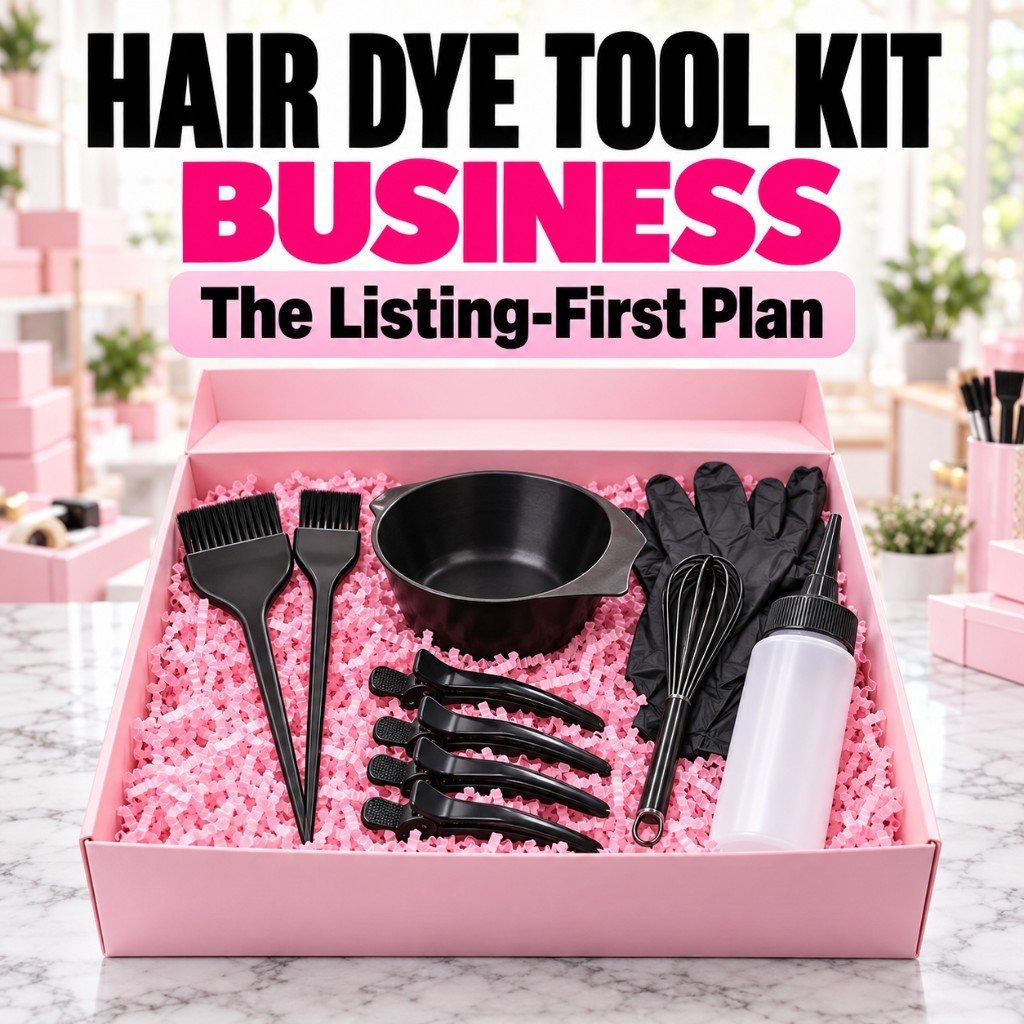
Someone opens a box of hair color at home and finds that the first step needs a bowl to mix in. The kitchen has cereal bowls, and nobody wants dye in one of those. A hair dye tool kit business sells the answer to that moment. It bundles a mixing bowl, a tint brush, sectioning clips, gloves, and a cape into one pouch. The buyer can set up before the color is opened.
The work is resale and packing. You buy the pieces wholesale, inspect them, pack them, and describe them accurately. You never mix a chemical, apply color to anyone, or give medical advice. As a result, the business needs no trade skill, and a first batch can fit in one drawer.
This guide to a hair dye tool kit business follows the order that protects a small budget. First you write the listing, and then you set a price. After that you choose what goes in the box, and only then do you buy samples. The dollar figures are illustrative examples, not income promises; therefore, replace each one with your own supplier quotes, fees, taxes, and shipping rates.
What a Hair Dye Tool Kit Business Actually Sells
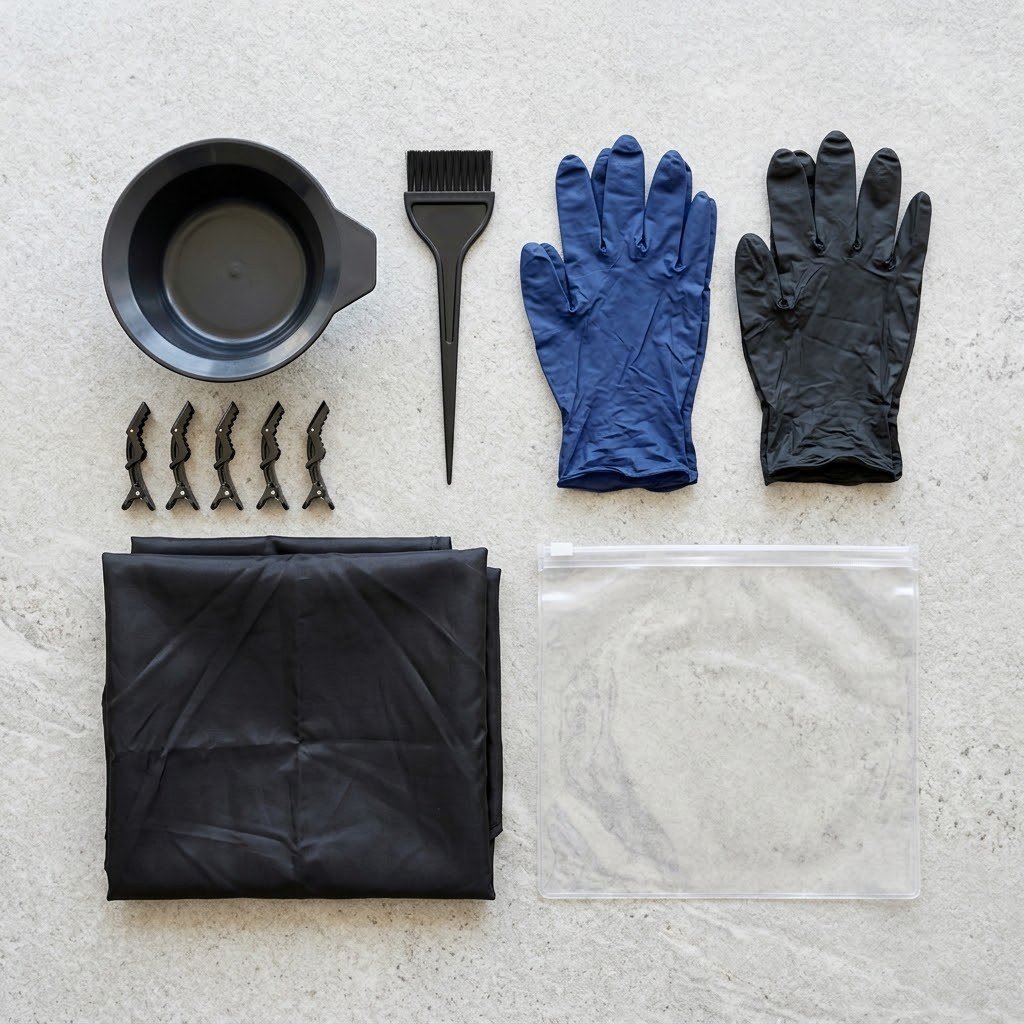
The product is preparation. Each piece in a hair dye tool kit handles one step of a home coloring session. The bowl holds the mixture and the brush spreads it. Clips hold unfinished sections aside, gloves cover the hands, and the cape covers the shoulders. A buyer could collect all five pieces separately; however, that means several listings, several shipping fees, and no certainty that the sizes work together.
Three things stay outside the business. The dye itself is a cosmetic with its own label, ingredients, and rules. In addition, application is a salon service that takes training, and skin questions belong to a doctor. Therefore, the listing, the insert card, and every customer reply should repeat one message: these are tools, and the dye maker’s instructions govern the coloring.
That boundary is also what keeps the idea open to a beginner. A person who sells accessories carries responsibility for the accessories: correct counts, intact pieces, and honest descriptions. In contrast, a person who sells a formula carries responsibility for what it does on skin. Readers who would rather make a product than resell one can compare the two paths in the hair oil business guide.
Three Buyers Who Pay for a Hair Dye Tool Kit
Each group of buyers wants a different hair dye tool kit, so choose one group before buying stock. The first group touches up roots on a regular schedule. These buyers already know the routine; therefore, they care about durability. For example, they will notice a brush that sheds bristles or a bowl that keeps a stain after washing. They are also the group with a reason to reorder gloves and clips.
The second group is coloring at home for the first time. Price matters most here, and so does guidance. Therefore, a one-page insert that names each piece and its job belongs in this kit. In addition, this buyer needs the “tools only, no dye included” line in the first sentence of the listing, because the confusion is easy to make.
The third group buys a gift. Presentation decides the sale; consequently, the pouch, the color match between pieces, and the photographs outweigh brush stiffness. The U.S. Small Business Administration describes market research as the way to find customers and competitive analysis as the way to make a business distinct. Ten short conversations with people from one group are a practical way to start that research.
Write the Listing Before You Buy Anything
A listing draft costs nothing and exposes weak ideas early. Write the title, five bullet points, and the “what’s included” block as if the hair dye tool kit already existed. As a result, every claim you type becomes a specification you must later source. For instance, “four clips” means four in every pouch, and “washable cape” means you have washed one yourself.
The draft also shows which claims you cannot make. The FDA’s hair dye page gives consumers a checklist for coloring at home. It says to follow all directions on the label and in the package, to patch-test the skin every time before dyeing, and to wear gloves when applying dye. Two more steps cover timing: do not leave the product on longer than directed, and rinse the scalp well with water afterward.
The same page adds several warnings. Keep dye away from the eyes, do not dye eyebrows or eyelashes, and keep hair dyes out of the reach of children. Do not dye hair when the scalp is irritated, sunburned, or damaged. Furthermore, the FDA notes that a sensitivity can develop with repeated exposure, so a past session without a reaction does not guarantee the next one.
That advice belongs to the FDA and the dye maker, and a tool seller repeats it without adding to it. Consequently, phrases such as “allergy-safe,” “salon results,” or “protects sensitive skin” have no place in the copy. The American Academy of Dermatology lists rash or redness, swelling, burning, and itching as signs of a reaction to hair color. It advises people who notice them to stop and see a dermatologist. A seller can print those warning signs on the insert card; a seller cannot, however, diagnose a reaction in a chat window.
Instead, write what the buyer will see when the hair dye tool kit is opened. State the piece count, bowl diameter, brush width, glove material and size, and how the cape is cleaned. Specific numbers do the selling for a tool, and they leave nothing for a disappointed buyer to argue with.
Landed Cost of One Hair Dye Tool Kit
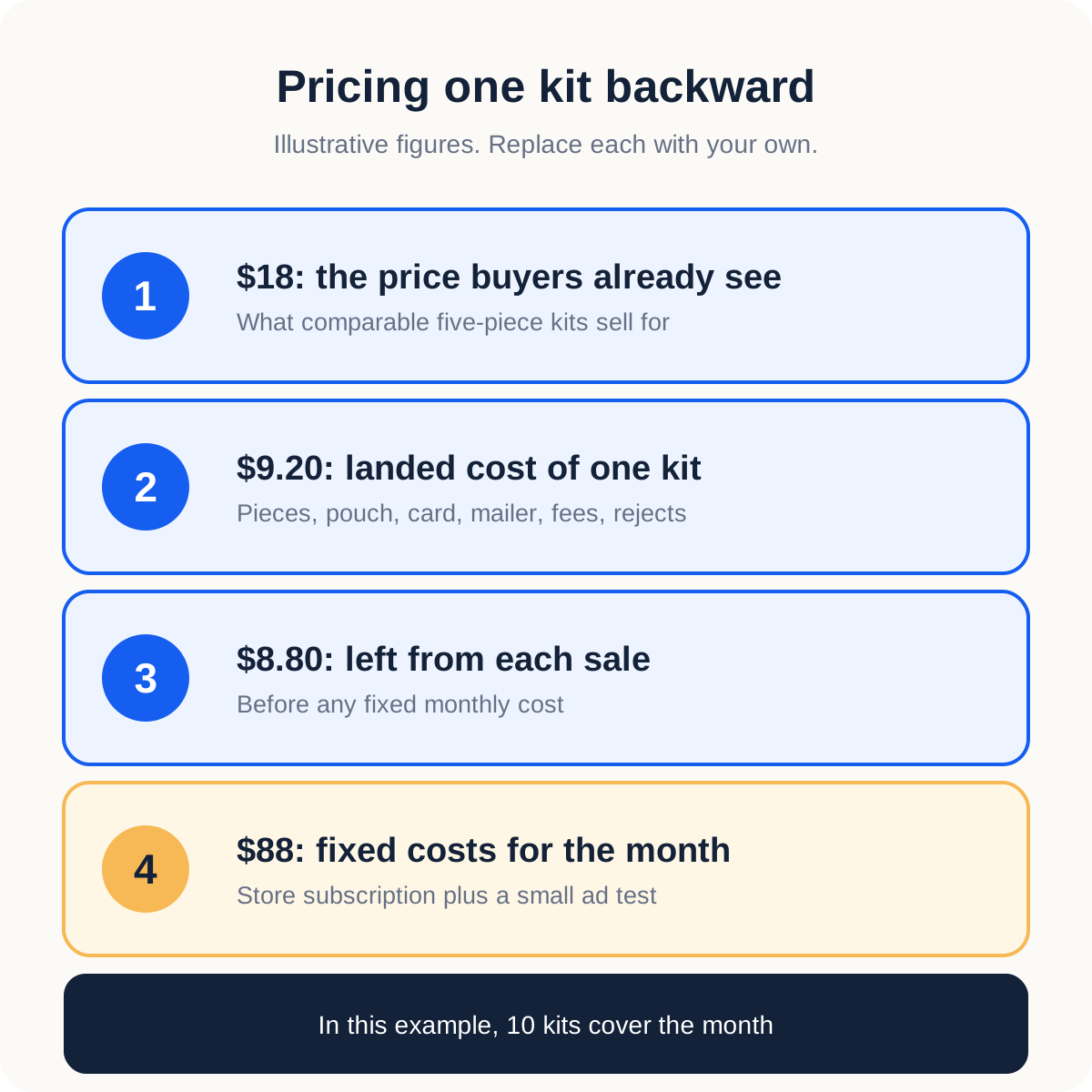
Start from the price a buyer already sees, then work backward. Search for comparable kits and note what five-piece bundles sell for in your market. For example, suppose that figure is $18. Your job is to learn whether a hair dye tool kit at that price leaves anything after every cost has been counted.
| Cost line | Illustrative amount | Share of cost |
|---|---|---|
| Mixing bowl | $1.60 | 17% |
| Tint brush | $0.90 | 10% |
| Sectioning clips (4) | $0.80 | 9% |
| Gloves (2 pairs) | $0.40 | 4% |
| Cape | $1.30 | 14% |
| Pouch | $0.90 | 10% |
| Insert card | $0.20 | 2% |
| Shipping mailer | $0.60 | 7% |
| Marketplace and payment fees | $2.20 | 24% |
| Allowance for rejected pieces | $0.30 | 3% |
| Total | $9.20 | 100% |
In this example one hair dye tool kit costs $9.20 to put in a buyer’s hands, which leaves $8.80 from an $18 sale. Fixed monthly costs come out of that remainder. For instance, if a store subscription and a small advertising test total $88 a month, ten kits cover them. That said, these numbers explain the method and are not a forecast. The feasibility study guide shows how to build the full calculation with real quotes.
The table also shows where to negotiate. Fees are the largest single line in the example; therefore, the choice of sales channel changes the result more than a cheaper brush would. The bowl and the cape come next. In contrast, gloves and the insert card are small lines, and cutting them saves pennies while risking complaints.
Leave your own time out of the table at first; however, track it. Inspecting, packing, photographing, and answering messages all take minutes per kit. Ultimately those minutes decide whether the business is worth continuing, so write them down from the first order.
What Established Brands Put in the Box
Commercial products show the baseline a buyer expects from a hair dye tool kit. The Colortrak tint bowl kit lists four items in its specifications. They are a brush with a 2.25-inch head and firm bristles, one mixing bowl, one croc clip, and one pair of clear gloves in size medium. That is a working minimum for a single session; however, it leaves visible room for a small seller.
For example, one clip cannot hold a full head of sections, one glove size cannot fit every hand, and no cape is included. A small seller can answer each gap without inventing anything: four clips, two pairs of gloves, and a wipe-clean cape. Each addition raises the landed cost; therefore, check it against the $18 example before it goes in the pouch.
| Tier | Contents | Suits |
|---|---|---|
| Basic | Bowl, brush, 2 clips, 1 pair of gloves | First-time buyers watching price |
| Complete | Bowl, brush, 4 clips, 2 pairs of gloves, cape, pouch | Regular root touch-ups |
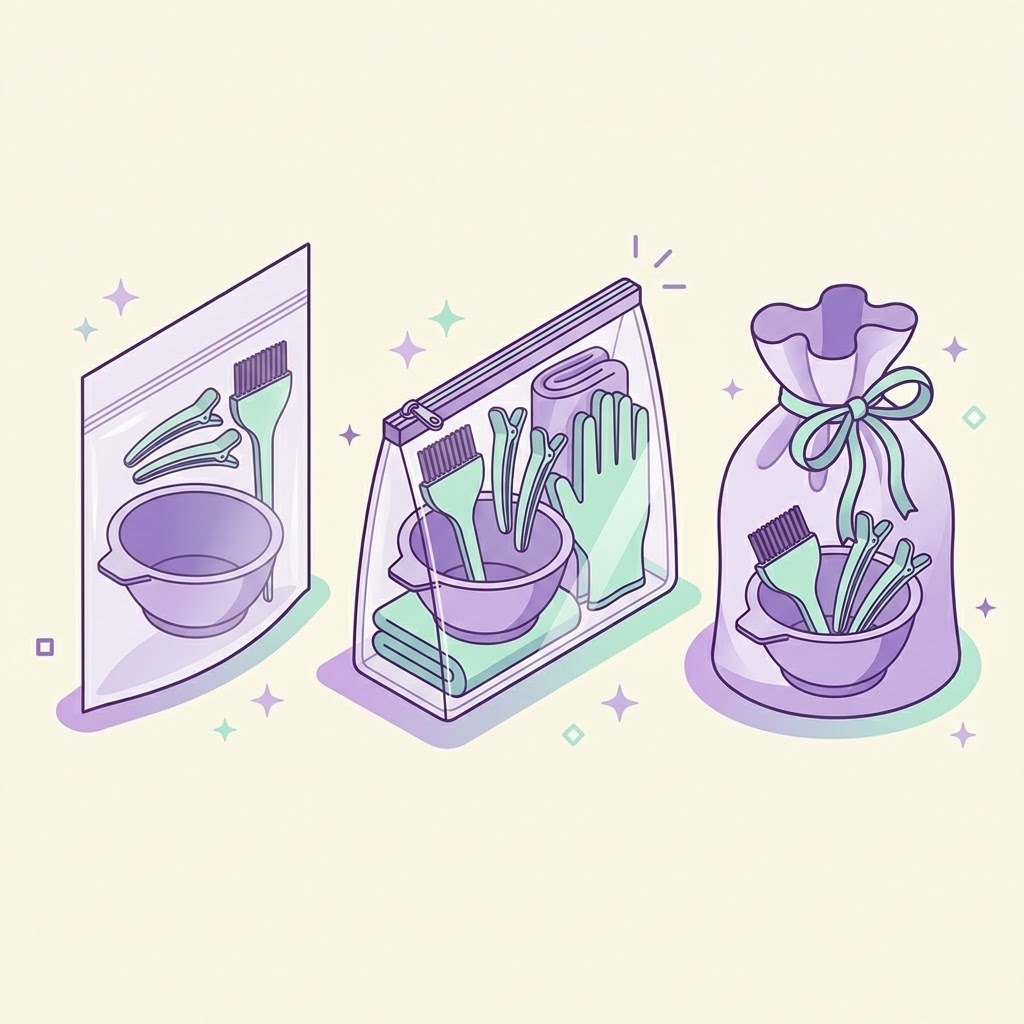
| Gift | Complete tier in a presentation pouch with a printed card | Gift buyers |
Launch the hair dye tool kit in one tier, because each extra tier adds photographs, a listing, and separate stock counts. Similarly, resist decorative extras that fill the pouch without serving a step. Ask of every piece: at what point in the session does the buyer pick this up? A piece without an answer adds nothing; as a result, it only raises cost and shipping weight.
Glove material deserves a line of its own on the listing. State nitrile, vinyl, or latex exactly as the supplier documents it, because some buyers avoid latex. “Latex-free” is a statement about material; however, it is not a promise that no buyer will react, and the copy should never stretch it into one.
A Kitchen-Table Test for Every Sample
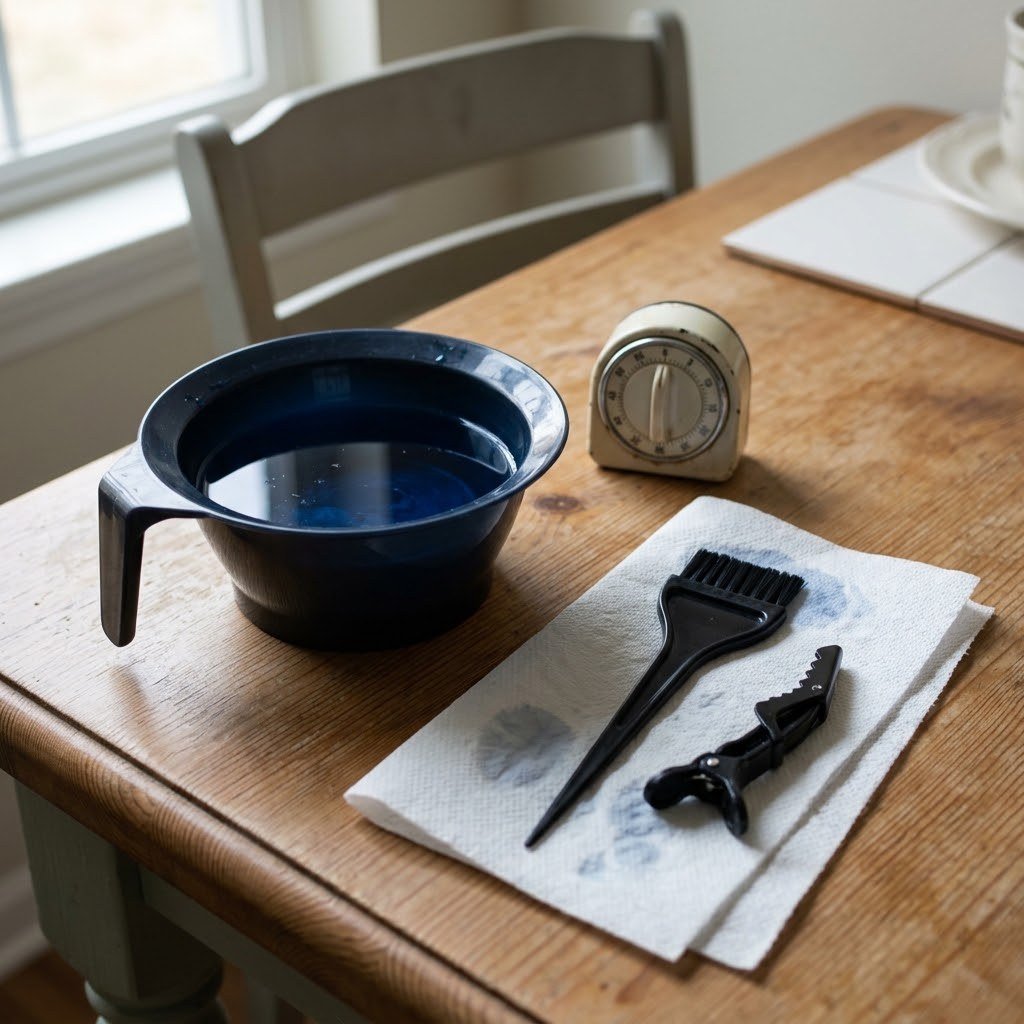
Order single samples of each piece from three suppliers before committing to a quantity. Then test each piece the way a buyer of a hair dye tool kit would use it. For example, fill the bowl with strongly colored water, leave it for an hour, wash it, and check for a stain. Flex the rim and run a finger along the edge for sharp molding seams.
Tug the brush bristles between two fingers and count what comes loose. Open and close each clip twenty times and see whether the spring still grips a thick section. Put on the gloves, make a fist, and spread the fingers for two minutes. Meanwhile, wipe the cape with a damp cloth and close its fastening several times.
Record the results in a grid with one row per supplier and one column per test. In addition, record unit price, minimum order, and delivery time. As a result, a vague impression becomes a comparison you can defend. For example, a supplier with the lowest price and a shedding brush will show up clearly as the wrong choice.
Ask each supplier one more question: will the next batch match this sample? For instance, a changed bowl color or brush size makes your photographs inaccurate overnight. Therefore, keep one accepted piece from every shipment as a reference, and compare the next delivery against it before any piece reaches a pouch.
Returns and Hygiene Rules for an Opened Hair Dye Tool Kit
Decide the returns policy before the first sale, because the hard cases arrive early. A missing or broken piece is the simple case. Ask for a photograph and send the replacement part, which costs far less than a full refund and return shipping. Therefore, keep a few spare pieces of each type aside for exactly this purpose.
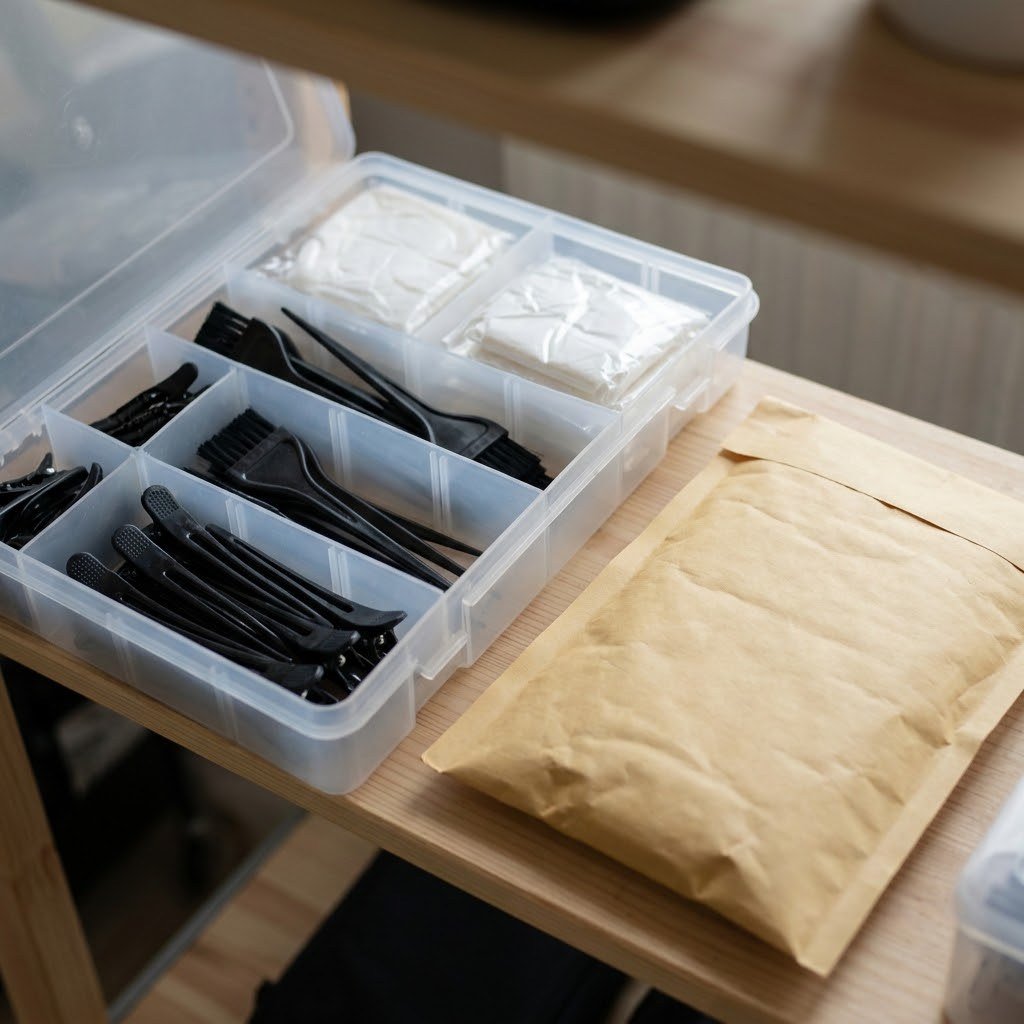
In contrast, an opened hair dye tool kit cannot go back on the shelf, because unwrapped gloves and tools with dye on them are not resalable. Say so plainly on the listing. That said, consumer law in your country may give buyers return rights that a store policy cannot remove. Read the local rules before you publish the policy.
Prepare one reply for the message every seller in this category eventually receives: a buyer reports itching, swelling, or burning after coloring. However tempting it is to help, do not suggest a remedy or ask the buyer to describe symptoms. Express concern, point to the dye maker’s instructions and a medical professional, and offer whatever your policy allows for the kit itself. In addition, the FDA page explains how consumers can report a cosmetic problem after getting medical help.
Refills That Bring a Buyer Back
A bowl is washed and reused, so the hair dye tool kit alone is close to a one-time sale. However, the consumable pieces can return a buyer. For example, gloves are used up in a session, clips go missing, and brushes wear out. A refill pack of gloves and clips at a low price gives a root touch-up customer a reason to come back.

Mention the refill on the insert card inside every hair dye tool kit. Pack the refill flat so it ships in an envelope, which keeps postage from swallowing the margin on a small order. Track how many kit buyers reorder within three months; ultimately, that number says more about the product than any count of likes.
Add one refill or add-on at a time. For instance, a second bowl, a wider brush, or a spare cape each needs its own stock count and photograph. On the other hand, a seller who launches six variants at once cannot tell which one the buyers actually wanted.
Supplies for Assembling Your First Kits
As an Amazon Associate, BeIN ADVISOR earns from qualifying purchases. Links to AliExpress and Alibaba are affiliate links too.
This list holds one ready-made kit to buy as a sample, one supplier that sells by the carton, and search links for single pieces. Use them to buy first samples for a hair dye tool kit or to compare against a local wholesaler’s offer. Pick sizes and counts to match your own kit, and read the seller rating and return terms before ordering.
- A 6-piece bowl and brush kit on AliExpress: Buy one kit as a sample, then handle and test the pieces before ordering in quantity.
- Sectioning clips: sold in multipacks that divide across kits and refill packs.
- Nitrile gloves: an alternative material for buyers who avoid latex, in several sizes.
- Waterproof coloring capes: the piece that separates a complete tier from a basic one.
- Wholesale bowl and brush kits from a supplier on Alibaba: sold by the carton with a minimum order, so ask for a sample first.
Pre-Sell the Hair Dye Tool Kit Before You Stock It
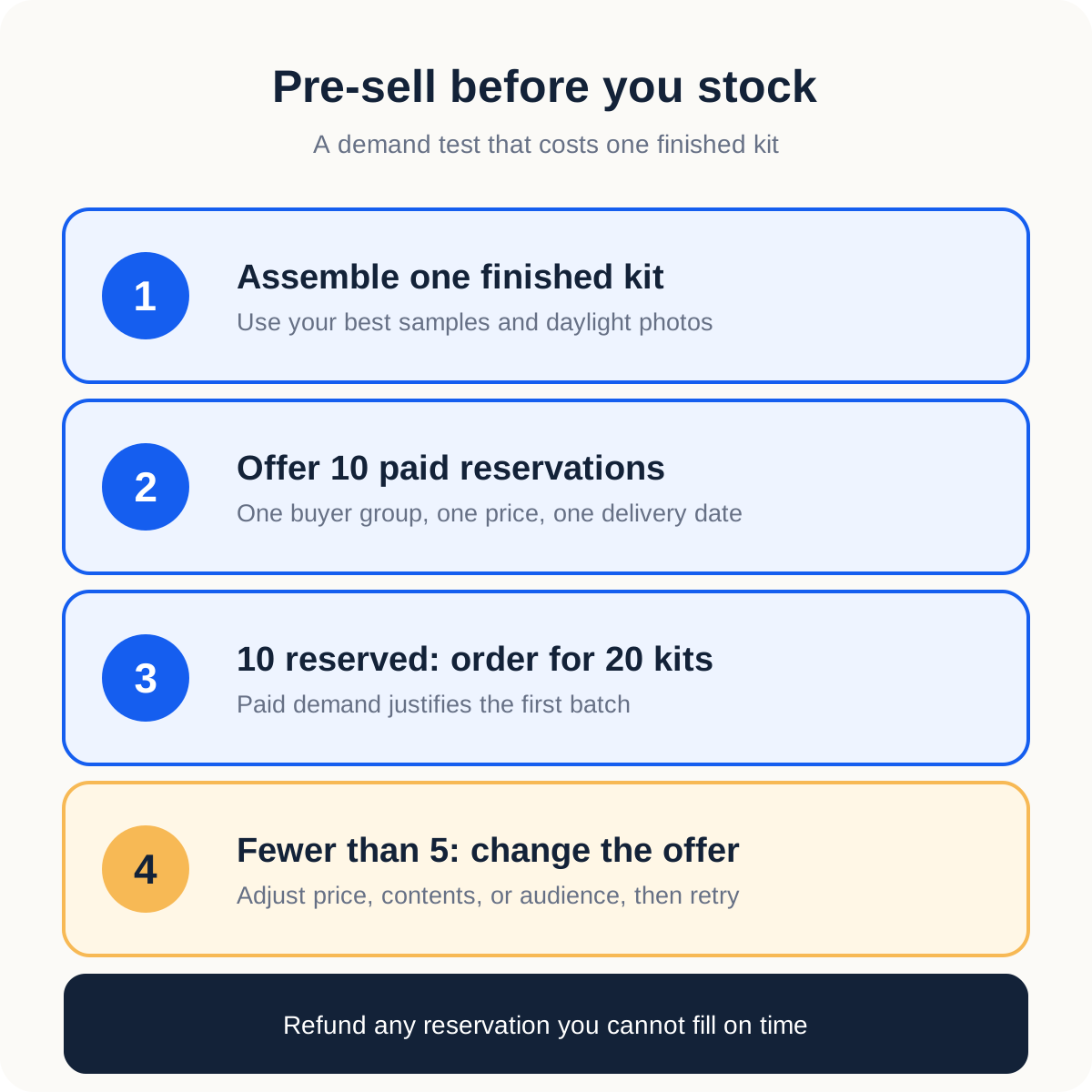
Everything so far can be done with three sets of samples and a draft listing. The last step, however, tests demand before money goes into cartons. Assemble one finished hair dye tool kit from your best samples and photograph it in daylight. Show it to the buyer group you chose, state the price, and take paid reservations for ten kits with a clear delivery date.
Ten reservations justify a first order of twenty kits. Fewer than five is a signal as well; in fact, it is the cheapest signal you will ever get. Therefore, ask the people who declined what stopped them, then change the price, the contents, or the audience and offer again. Refund any reservation you cannot fill on time.
After the first ten deliveries, wait two weeks and ask every buyer three questions. Which piece did you not use? Which piece did you wish for more of? Would you order the refill? Ultimately, their answers set the contents of the second batch. That batch is where a hair dye tool kit business starts to look like a business.