
A resume is often the first work sample a job seeker shares. That makes a resume writing service a useful freelance offer, but it also makes accuracy non-negotiable. The work is to find the useful facts in a crowded career history, arrange them for a specific role, and give the client a document they can explain in an interview. That focus on real facts is what earns a client’s trust.
The steps below start with the offer and leave the template for later. First, decide exactly what a client receives. Then build an intake system that captures proof before the writing begins. After that, use a production workflow, price the work by scope, and protect the files you receive. Ultimately, the goal is a resume writing service that can repeat a careful process. No step in it promises an interview, a job, or a particular salary.
1. Define the Smallest Useful Resume Writing Service
A broad offer creates slow projects. In contrast, a narrow first offer creates a service you can deliver well. For example, begin with one target role family, one tailored resume draft, one client revision round, and delivery as both an editable file and a PDF. In addition, include a short intake call or form. In contrast, cover letters, LinkedIn profiles, rush delivery, and extra role versions stay outside the package unless the client buys them separately. Consequently, the buyer understands what they are paying for before you read a single document.

Write the boundary in ordinary language on your order page. A resume writing service organizes the client’s truthful experience, makes the document easier to scan, and tailors it to a stated role. It does not invent an employer, stretch dates, add a certificate, or create a reference. Similarly, it cannot guarantee that a recruiter will reply. Those limits tell serious clients that the document will still make sense when someone asks them about every line.
| Included in a starter package | Priced separately or excluded |
|---|---|
| One intake form and one target role | Rush turnaround |
| One tailored resume draft | Several unrelated role versions |
| One revision round based on facts | New experience added after approval |
| Editable source file and PDF | Cover letter or LinkedIn profile |
2. Collect Proof Before You Try to Improve the Wording
The strongest part of a freelance resume project happens before the first bullet is written. Ask the client for the existing resume, the target job description, employer names, dates, education, certifications, work samples they may share, and outcomes they can support. Harvard’s guide to a strong resume describes a good resume as concise, specific rather than general, active rather than passive, easy to scan, and tailored to the position. Therefore, do not start by selecting a design. Start by making sure there are enough truthful details to organize.
Create a claim ledger for every resume writing service order. It can be a simple private table with the proposed bullet, the source material, and the client’s written confirmation. For instance, “reduced response time by 20 percent” needs a report, record, or explicit client confirmation. In contrast, if the client only remembers that a process became faster, write a precise but unquantified version. As a result, a polished sentence does not become an unsupported claim later.

| Ledger field | Example | Why it matters |
|---|---|---|
| Role and dates | Customer support coordinator, May–October | Stops accidental date changes |
| Task | Built a weekly ticket report | Shows the client’s actual contribution |
| Outcome | Helped managers spot repeated issues | Avoids an invented metric |
| Proof | Client confirmation in the intake form | Lets the client stand behind the line |
Ask focused follow-up questions when a record is thin. Ask what the client did first, who used the result, what changed afterward, and which tool, process, or volume they can state honestly. However, never coach a client to claim ownership of a team result that they cannot explain. A useful resume writing service makes real work visible; it does not turn vague memory into fiction.
3. Tailor Your Resume Writing Service to One Real Job
A generic file is difficult to sell because it gives the client little reason to return. In contrast, one targeted version gives the work a clear purpose. Read the job description and mark the duties, tools, and outcomes the employer actually names. Next, compare those needs with the client’s verified record. Put relevant experience near the top, use familiar terms only where they are true, and remove older detail that takes attention away from the target role. Ultimately, the aim is a closer match with the role, built only from true details.
Begin each bullet with a concrete action. The same Harvard guide asks for active wording, because an action verb points to what the person actually did. However, the verb is only the start. “Coordinated inventory checks” becomes more useful when it states the setting, the scale, or the result the client can support. For example, “Coordinated weekly inventory checks for a small retail floor and flagged shortages for the manager.” The sentence is specific without pretending to be a company-wide achievement.
Keep a master record separate from every tailored version. The master holds verified history; each role version selects from it. As a result, you do not repeatedly ask the client for the same dates and facts. In addition, you can show the client exactly which evidence supports a line when they request a change. A resume writing service becomes faster over time when its source material is organized.
4. Use a Workflow the Client Can See
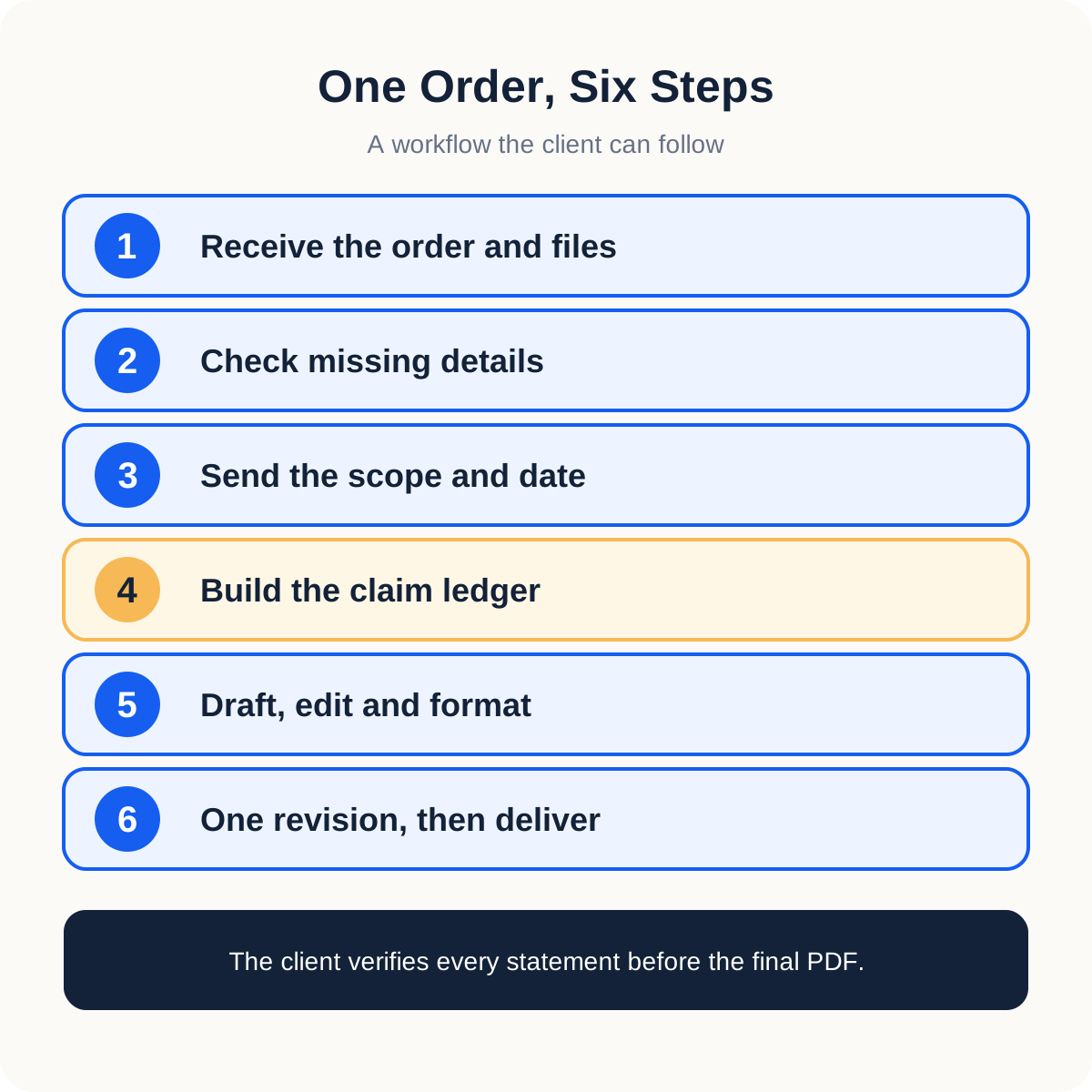
Clients worry when a document disappears into a freelancer’s inbox. A visible workflow, in turn, lowers that uncertainty. First, confirm that the intake is complete. Second, send a short scope note naming the target role, files received, price, delivery date, and revision limit. Third, organize the factual record, and fourth, write and format the draft. Then invite the client to verify every statement before you make the final PDF. As a result, the client corrects facts early, when corrections are cheap.

- Receive the order, source files, and target job description.
- Check missing dates, duties, education, and measurable outcomes.
- Send the written scope and the agreed delivery date.
- Create the claim ledger and role-specific outline.
- Draft, edit, and format the document for scanning.
- Collect one factual revision round and deliver the editable file plus PDF.
Use a simple delivery checklist. Confirm the client’s name, contact details if used, dates, title consistency, and spelling. Check that headings render well as a PDF and that the file can be opened. Then ask the client to read every achievement out loud. If they cannot explain it, revise it. That final check protects both sides and separates a responsible resume writing service from a template resale business.
5. Price a Resume Writing Service by Scope, Not Hiring Results
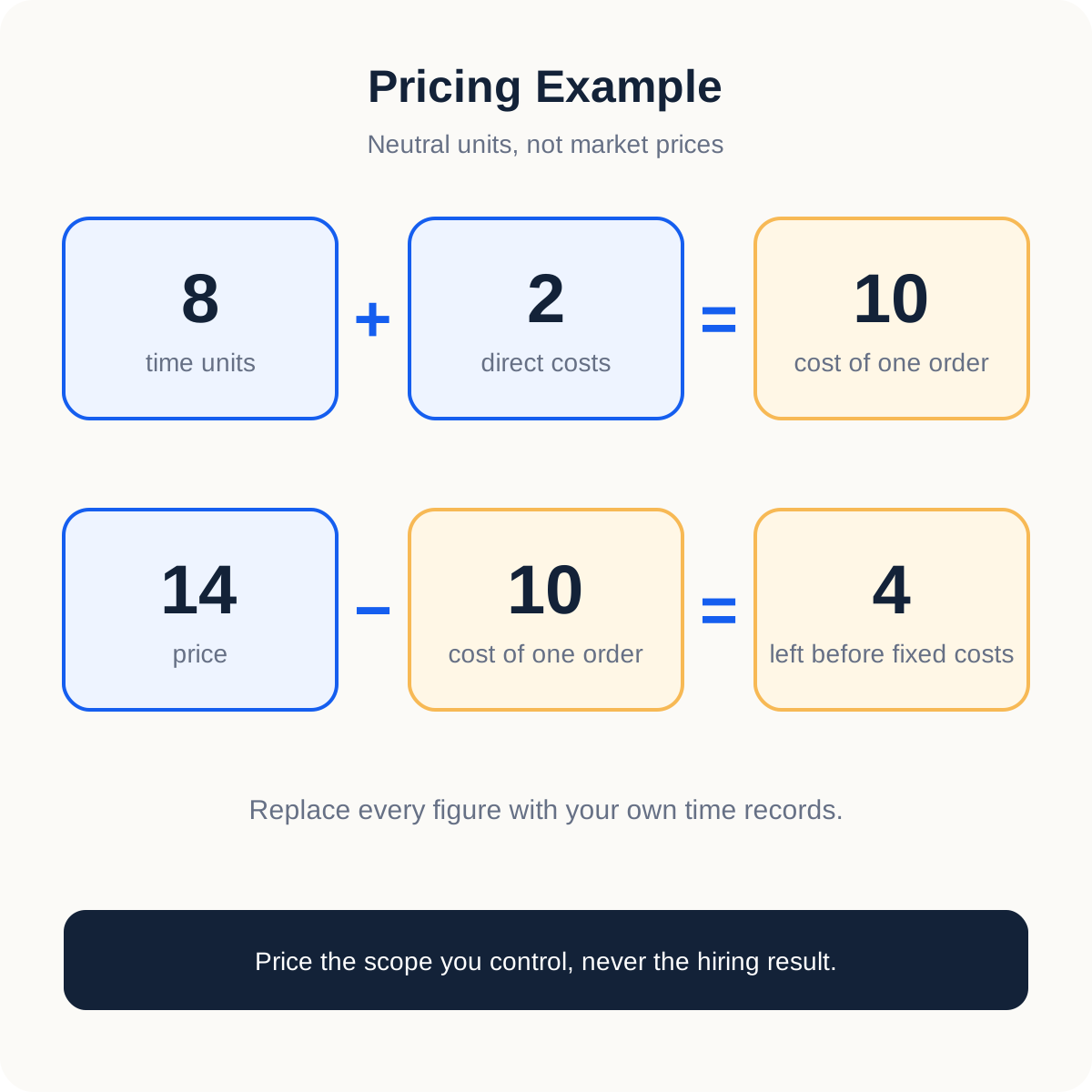
Price should reflect work you control: intake review, fact organization, drafting, formatting, revision, and delivery. In contrast, it should not reflect whether the client gets hired, because that decision belongs to an employer. Therefore, start by timing a few sample projects using anonymized practice material or a willing tester. Include the time spent reading files, asking follow-up questions, writing, formatting, responding, and sending the final version. In addition, leave room for payment fees, software, and the hours you do not bill.

Use neutral units if you have not yet researched your local market. For example, suppose the work takes eight time units and your direct costs are two units. A price of fourteen units leaves four units before monthly fixed costs. The figures are only an example, so replace them with your own time records and local currency. Additionally, list the optional add-ons with their own prices: a cover letter, a LinkedIn review, a second target role, or a faster delivery date.
A deposit can protect time that you reserve for a client. Furthermore, state when the remaining payment is due and whether a cancelled order receives a refund after drafting has begun. Keep this policy simple and show it before payment. Consequently, a small resume writing service is less likely to lose a full day to a client who stops replying after the first draft.
6. Treat Personal Files as a Business Responsibility
The files a resume writing service receives can contain addresses, phone numbers, work history, certificates, and personal links. Therefore, limit access to the folder, keep devices locked, and avoid sharing a client sample without written permission. Set a retention policy as well: for example, tell clients how long you will keep the source file and how they can ask for deletion. That said, a policy does not make every tool safe; it forces you to decide where the data goes before the upload happens.
AI tools can help brainstorm a headline or spot repetition, but they do not verify the underlying facts. Harvard’s AI guidance for resumes and cover letters cautions users to verify accuracy and to consider privacy before sharing personal information. Therefore, remove identifiers before using a public tool, obtain the client’s permission, and never accept generated text without checking it against the claim ledger. The client must be able to discuss every statement in the final file.
7. Choose Tools for the Task, Not for the Sales Page
A tool should solve a real step in the workflow. A word processor handles drafting and comments, a spreadsheet can hold the claim ledger, and a layout tool can help produce a clean final PDF. Canva, for example, offers resume templates and export options; it can be useful for layout, but a good template cannot make inaccurate content credible. Similarly, grammar software can surface a typo, while the writer still decides whether the sentence says what the client actually did.
Do not make tools the center of the offer. Clients of a resume writing service buy clarity, care, and a document they can own. Therefore, start with a small, stable set of tools you understand. In addition, document the version of each template you use, because a layout change can move text onto a second page without anyone noticing. As a result, a resume writing service becomes easier to improve one order at a time.
8. Find First Clients for a Resume Writing Service
Start where the problem is specific. For example, recent graduates, people changing industries, and small community groups may need help putting a real record into a usable shape. Share an example process, not another person’s private resume. For instance, publish a short checklist explaining what to gather before a writing session. In addition, offer an introductory package to a small number of people whose feedback you can request. However, ask for comments on communication, clarity, and delivery—not testimonials that imply a hiring outcome.
Partnerships can bring a resume writing service more suitable clients than broad advertising. For example, a language tutor, career coach, training provider, or local print shop may meet people who need a cleaner document. Explain your scope, exchange only consented referrals, and make sure each partner knows that you do not recruit or guarantee employment. For more ideas about building a practical service offer, see our dog walking business guide and our feasibility study guide. The first shows another service built on a defined scope, and the second helps you test the numbers before you commit.
9. Fix the Mistakes That Make a Resume Writing Service Hard to Trust
The first mistake is accepting an order with no target role and no source material. It seems fast; however, it creates endless revisions. The second is making a grand claim because it sounds stronger. As a result, that claim becomes a problem the moment an interviewer asks for detail. The third is promising a turnaround that leaves no time for client verification. Instead, publish a realistic schedule and keep a buffer for missing information.
Another common mistake is treating formatting as the whole job. However, a polished font cannot rescue unclear dates or vague work history. Similarly, do not reuse a client’s document as a public portfolio piece without clear written permission. Each of these errors damages the same asset: trust. In contrast, a resume writing service that explains its limits, keeps facts traceable, and delivers on time can earn repeat work through practical referrals.
10. Add a Quality-Control Pass to Every Resume Writing Service Order
A quality-control pass is where a resume writing service turns a draft into a dependable delivery. First, compare the name, dates, job titles, education, and contact details against the source materials, and read each achievement beside its ledger entry. Remove any number that the ledger does not support. For example, change a broad claim to a clear description of the task when no record exists. However, do not remove useful detail merely because it is difficult to format. Ask the client one focused question and keep a note of the answer.
Next, read the document as a recruiter might scan it. This pass looks for repeated ideas, buried dates, inconsistent tense, and headings that do not guide the eye. In addition, open the editable version and the PDF on a second device. That way, you can spot a line that wraps badly or a page break that hides a heading. Check the file name and version label too, so the client receives the final approved version and not a working copy.

Then run the client approval with a short, fixed message. For instance, ask them to confirm that every employer, date, qualification, and result is accurate. Invite factual corrections only, because a new direction falls outside the agreed revision limit. That said, accept a genuine factual correction even when it is inconvenient, since accuracy matters more than protecting a first draft. Record the approval date in the project folder before exporting the final PDF.
Treat the quality-control pass as part of the quoted work. Therefore, schedule time for it before you promise delivery. The final check supports the same promise as the rest of the process: the client receives a truthful, readable document they can discuss with confidence.
Build Your First Client Intake File Before You Advertise
Before posting an offer, create one working intake file. Include the client’s target role, source-document checklist, consent for any tools you will use, claim-ledger fields, package scope, revision limit, delivery date, and deletion request. Fill it with a fictional practice case so you can see which questions are unclear. Then revise the file until it guides a full order without guesswork. That written system is a better first step than a logo or a discount, because it is the part of your resume writing service that every client will actually use.