
A handmade souvenir business works best when it gives a visitor a small, useful way to carry a place home. The product may be a magnet, keyring, illustrated card, pouch, or small print, but the purchase decision usually happens quickly. A traveller wants to recognise the place, understand the item, and fit it into a bag without worrying about damage. That is why a beginner should begin with one clear product line rather than a broad collection that looks attractive only on a worktable.
In fact, the practical question is not whether a city has landmarks. However, it is whether one original detail can become a consistent product that a visitor-facing shop can display and reorder. A handmade souvenir business can start through a printer, a local workshop, or an artist agreement. Therefore, you do not need to own production equipment or rent a shop. You do need careful choices about originality, sample quality, buyer terms, and local selling rules.
Meanwhile, this guide treats costs as an illustrative planning exercise, not as a promise of revenue. For example, ask local suppliers for the real minimum order, finishing cost, packaging price, delivery time, and replacement policy. In addition, before selling at a hotel, museum area, market, or event, ask the venue manager and the relevant local authority what applies in that location. Therefore, use an original or commercially licensed design: a public image search is not permission to print and resell somebody else’s photograph, artwork, logo, or mascot.
1. Find the buyer’s travel or gift moment
Start by naming the moment in which someone reaches for the product. For example, a traveller leaving a landmark needs a compact memento. Meanwhile, a hotel guest may want a quick gift that is easy to carry. In contrast, a conference organiser may need a local item ordered in a small batch. Those are different buyers even when they visit the same city. The handmade souvenir business becomes easier to plan when the product is tied to one moment and one display location. Avoid a vague idea of “tourists.” For a related hospitality angle, compare the visitor expectations discussed in hotel buying environments.
Moreover, observe how the buyer will encounter the item. For instance, is it on a counter beside a payment point, on a rotating rack, inside a gift bundle, or in an online photograph? However, a detailed drawing may work on a postcard but disappear on a small keyring. In contrast, a phrase that feels meaningful to residents may need a short explanatory line for visitors. Finally, write down the use case beside each design idea. It will help you decide what to simplify before paying for a sample.
2. Handmade souvenir business: make a local detail recognisable
For example, choose a detail that can be recognised in a second. Consider an architectural outline, a local plant, a permitted traditional pattern, a street texture, or a simple public view. On the other hand, do not copy a hotel identity, sports badge, government emblem, or another business’s logo simply because visitors see it around town. The United States Copyright Office explains that original visual works are protected. Additionally, the United States Patent and Trademark Office explains that a trademark identifies the source of goods or services. Therefore, create your own artwork and avoid implying an official connection you do not have.
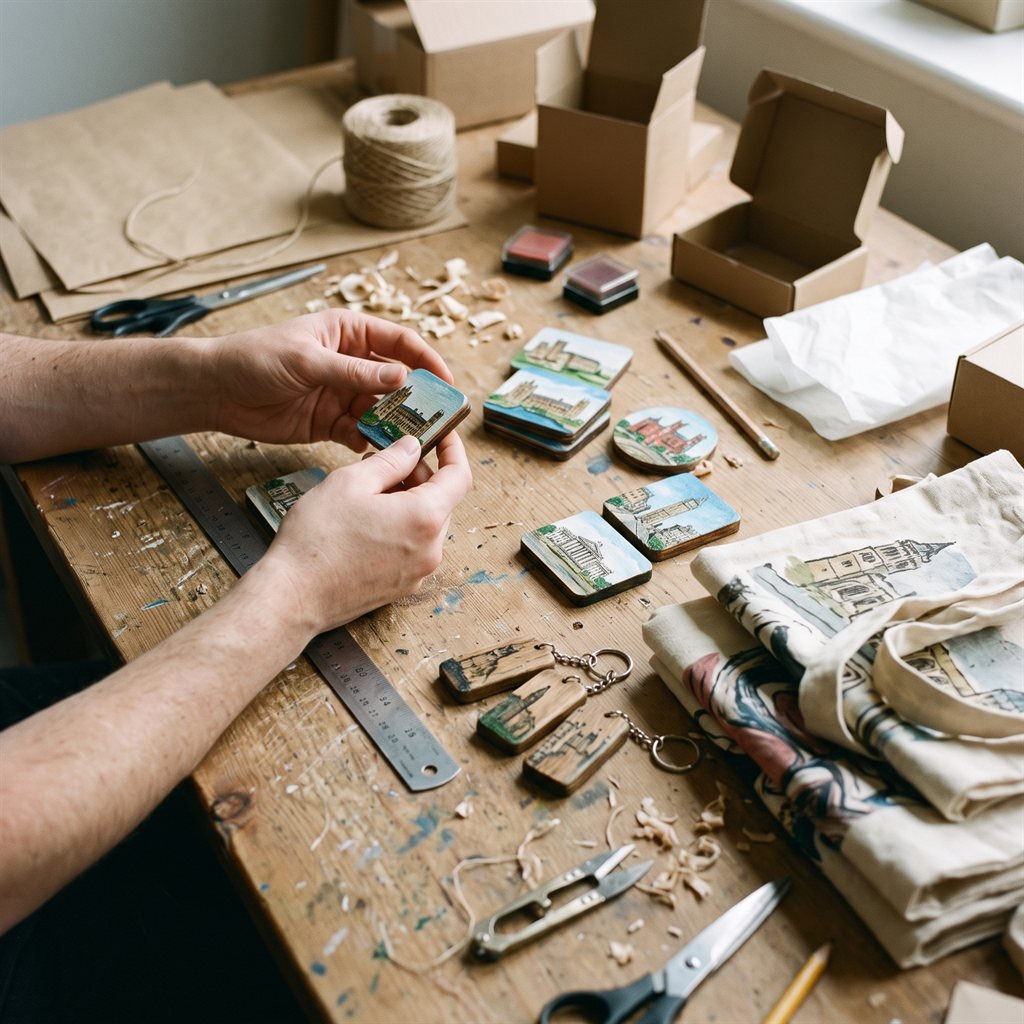
First, if an artist makes the illustration, agree in writing on what you are buying. Specify the product formats and whether reprints are allowed. Also state whether colours may change and how the artist will be credited. In addition, keep the invoice, permission, licence, and final production file in one product folder. A handmade souvenir business does not need a complicated legal system to begin. However, it does need a traceable answer when a printer or stockist asks where the artwork came from.
3. Choose a format that survives baggage handling
In fact, travel changes what counts as a good product. The most ornate item is not always the best starter item if it chips, bends, scratches, or requires special packing. For example, test a magnet’s fixing, a keyring’s join, a card’s corners, a pouch’s stitching, and the way a print looks after handling. Then put the sample in an ordinary bag with everyday items. Afterward, look at it again after movement and pressure. This simple test can reveal weaknesses before you commit to a batch.
| Format | Useful check | Likely adjustment |
|---|---|---|
| Magnet | Strength and surface scratches | Add a protective sleeve |
| Keyring | Ring and attachment durability | Change the fitting or material |
| Illustrated card | Corner bends and print clarity | Use a stronger stock or backing |
| Small pouch | Stitching and print placement | Move artwork away from seams |
However, do not confuse a product test with a sales forecast. The test only tells you whether the item is fit to be handled, displayed, and packed. In a handmade souvenir business, that evidence is valuable because a shop buyer will notice quality problems before a traveller does. In addition, photograph the approved sample from several angles and record the material, dimensions, and version number. Those details make the next order less dependent on memory.

4. Handmade souvenir business: build a small sample set
For a stockist, prepare enough information to judge the product without guessing. Prepare one finished sample, one clean product photograph, and a one-page sheet. Additionally, the sheet should show the product code, dimensions, material, unit ordering terms, minimum order, lead time, packaging, and your contact route. Include a short, accurate line about the local inspiration. Finally, avoid claims that a product is official, traditional, handmade by a named artist, or locally made unless that statement is true and can be supported.
In turn, visit only a few suitable places at first. A gift shop close to a visitor site may offer useful feedback. An independent hotel, tour operator, or local event can also test new stock. A large retailer may not offer that chance. Therefore, ask where the product would sit, who chooses incoming items, and what the shop normally needs from a supplier. A refusal is still information if the buyer explains whether the issue is size, price, display space, timing, or product fit.
A small kit for a first keyring sample
As an Amazon Associate, BeIN ADVISOR earns from qualifying purchases.
If you want to test the keyring format with a small lot, the Audab acrylic keychain blanks kit is a practical starting option. Check the current kit details and shipping, then confirm that its blank size matches your artwork before ordering.
A handmade souvenir business magnet sheet for testing a local design
For example, for a magnet prototype, Mr. Pen’s adhesive magnetic sheets can be cut to a small shape after you print or mount the artwork. Check the current size, backing, and shipping, then test whether the finished piece holds securely before ordering more.
A handmade souvenir business blank pouch for a small textile sample
In addition, if the first format is a small pouch, Legigo’s blank canvas zipper bags give you a plain surface for a local illustration or label. Confirm the selected colour and size, and test the zipper and print finish before treating it as a repeatable product.
5. Separate direct retail from stockist terms
On the other hand, do not use one number for every sales route. For example, direct retail includes your time for display, messages, payment, delivery, and packaging. A stockist gives the product access to visitors but may need a wholesale price, a margin, or a commission arrangement. Next, ask which model the shop uses, when it settles sales, and what happens to unsold items. A handmade souvenir business is easier to manage when each route has its own written terms instead of a verbal assumption.
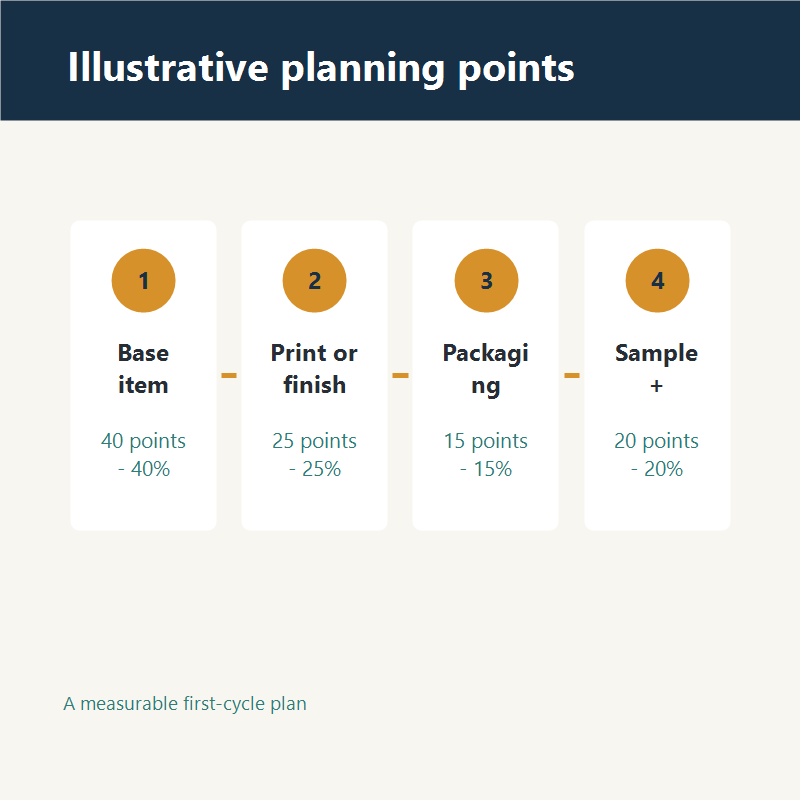
| Illustrative cost element | Planning points | Share of example |
|---|---|---|
| Base item | 40 | 40% |
| Print or finish | 25 | 25% |
| Packaging and card | 15 | 15% |
| Sample, delivery, and spoilage allowance | 20 | 20% |
| Total | 100 | 100% |
Meanwhile, the table is an example in neutral points, not a price list or income calculation. Replace every point with a local quote. Include expenses a beginner often overlooks, such as artwork changes, a damaged sample, workshop transport, and a replacement card. In addition, if a venue has a registration, permit, tax, or invoice requirement, confirm it locally before you promise delivery. The U.S. Small Business Administration notes that registration and licensing obligations vary by business activity and location. Therefore, check the authority that applies where you plan to sell.

6. Handmade souvenir business: make reorders simple
Consequently, reorders become difficult when a product exists only in chat messages and memory. Assign an internal product code, save the approved art file, retain the supplier quote, and record the exact material, size, finish, packaging, and lead time. A shop should be able to say that a particular code is running low. You should identify the right version without rebuilding the order from scratch. This operating habit matters more than creating many new designs early.
First, agree with the workshop on one approval point before each production run. Ask it to confirm the file, quantity, deadline, and any variation from the approved sample. If the workshop cannot reproduce the same finish, pause before a batch is made and decide whether the change is acceptable. The handmade souvenir business gains reliability when the supplier relationship is specific and calm, not when the lowest quote is accepted without a clear sample.
7. Photograph a catalogue that answers buyer questions
For example, a small catalogue is a working sales tool, not a social media gallery. Use clean photographs that show the front, back, scale, packaging, and a close view of the finish. In addition, add the product code and key facts to the accompanying sheet, rather than placing lots of text over the image. A buyer should be able to see the product clearly on a phone and decide whether to request the sample. Keep the same background and light where possible so the product line looks coherent.
Moreover, keep a private note beside every image: the product version, date the sample was approved, and the supplier who made it. When a design changes, take new photos instead of quietly using an old image. Honest product presentation protects the relationship with the shop and gives you a useful archive when comparing feedback. It also makes it easier to recognise which photograph or format produced inquiries rather than relying on a vague impression.
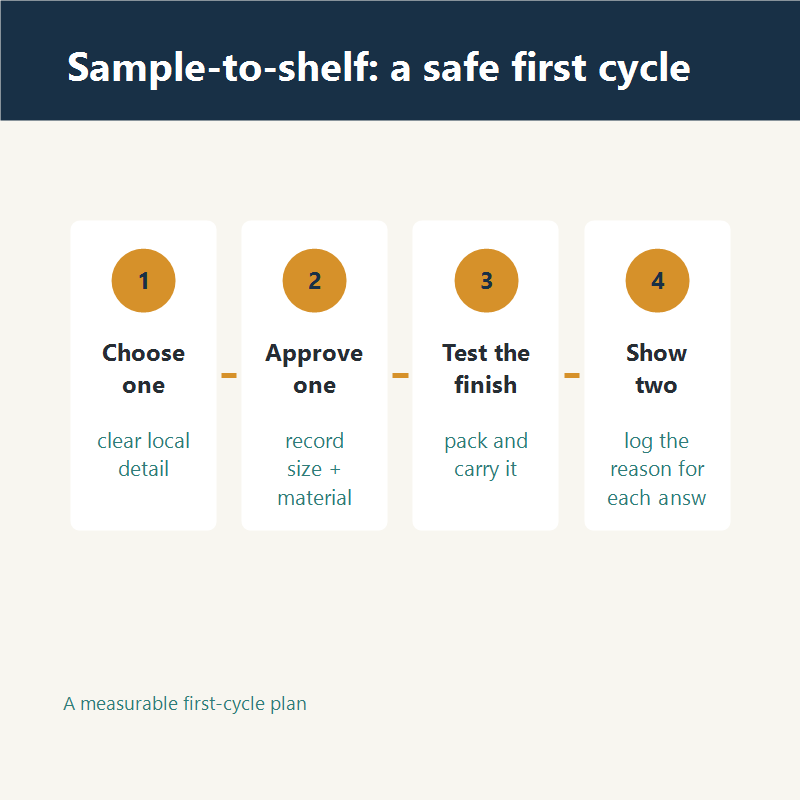
8. Handmade souvenir business: run a short first cycle
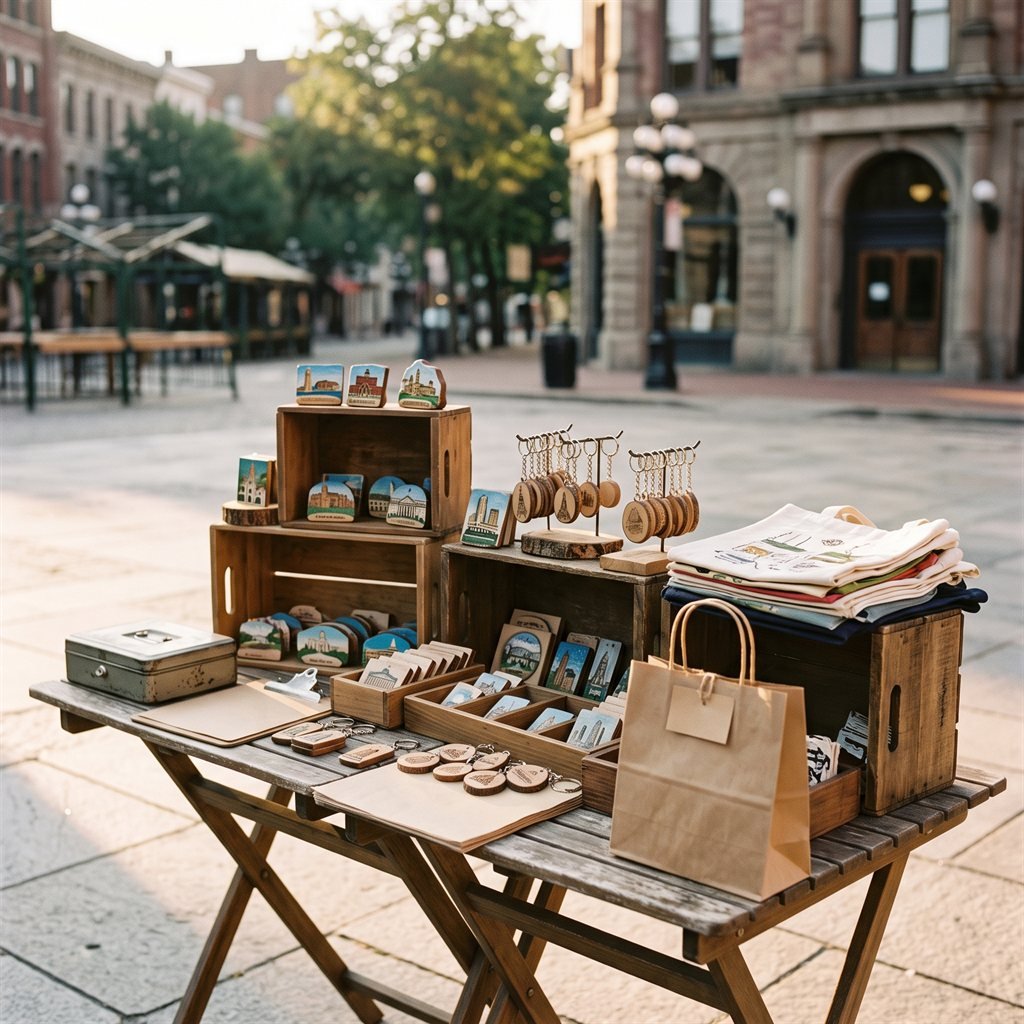
For the first cycle, choose one design, one product format, one workshop, and two possible buyer locations. Next, request quotes, approve a sample, test its durability, and show it with the one-page sheet. Record the answer from each place and the reason behind it. If a buyer is interested, ask what first quantity, lead time, or display method would make the trial practical. If a buyer declines, make only one supported change before trying again.
However, do not treat a larger batch as the reward for excitement. Order more only when you can identify what was approved, where it will go, and how it will be counted. Also decide what happens if it does not sell. A handmade souvenir business can remain deliberately small while you learn these operational details. Therefore, the next strong step is a wholesale-ready sample sheet with a product code, lead time, minimum order, and reorder contact. For a wider small-business planning reference, see this feasibility-study guide. That is a clearer foundation than a shelf full of untested stock.
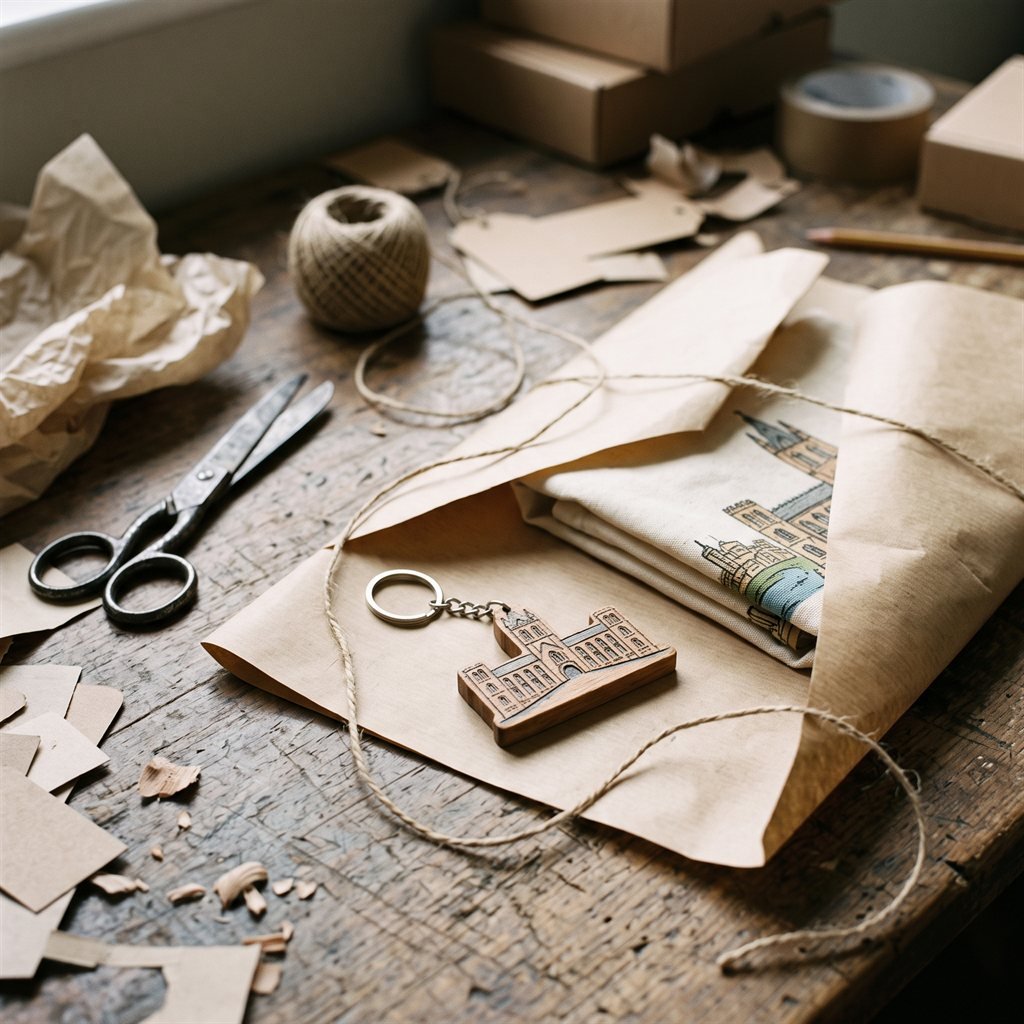
9. Use feedback to make one defensible change
Ultimately, keep a simple feedback log for every conversation and trial sale. Record the product code, place, question, outcome, and reason a buyer gave for hesitation or interest. For instance, a handmade souvenir business benefits from notes that distinguish “too large for luggage” from “too expensive for this shop,” because those lead to different decisions. Do not collect personal details you do not need. The aim is to see a pattern in the product and sales route, not to build a customer database.
In turn, when the same observation appears several times, test one response. A handmade souvenir business might simplify the illustration or use a stronger backing card. It might shorten the local story or move the product to a different display position. Change one element, then show the revised sample to an appropriate buyer. Consequently, this keeps the handmade souvenir business from chasing conflicting opinions and gives each adjustment a reason that can be reviewed later. A measured handmade souvenir business can explain why each revision was made.
A small supplier file makes the handmade souvenir business easier to continue when demand changes. Keep the approved version, supplier contact, quoted lead time, packing method, and stockist terms together. The handmade souvenir business becomes more dependable when the next order follows a clear record, rather than a rush to recreate a past conversation. That discipline also lets a beginner stop or change direction without being left with a confusing collection of materials. A careful handmade souvenir business protects its time by reusing this record for every approved variation. That is how a handmade souvenir business stays organised as the product line develops.