
A jar of honey sits on a market table, and the first question is often not about the price. The buyer picks it up, tilts it toward the light, and asks where it came from. A honey business that keeps no bees lives or dies on the answer. The seller buys honey from beekeepers, packs or relabels it, and sells it to households that want to know the source.
No hives, no bee suit, and no land are needed. However, the work is still a food business, and food rules differ from one country to the next. Therefore, a visit to the local food-safety authority comes before the first jar is filled.
A new seller in a honey business faces five decisions: how to buy, what the label may say, what never to claim, how to price one jar, and how to bring a buyer back.
What a Honey Business Without Bees Sells
The product of this honey business is honey from a named beekeeper, with the proof attached. A supermarket shelf already sells honey at a price a small seller cannot match. In contrast, the small seller can say who kept the bees and where the hives stood. Some buyers will pay extra for that knowledge; however, the seller has it only after visiting the apiary.
Therefore, a honey business starts with a visit before any purchase. On site, a seller sees where the hives stand and what blooms nearby. In addition, the visit shows where the beekeeper extracts and stores the honey. Ask when this batch was extracted and whether the honey was heated or strained. Ask, furthermore, whether the bees were fed sugar syrup and when that stopped. Write the answers down the same day, because a buyer’s question six weeks later deserves the same answer.
Keeping bees takes seasons of practice, equipment, and a site. In contrast, reselling takes a relationship, records, and careful packing. Readers who would rather produce honey than buy it can compare the paths in the beekeeping business guide. The U.S. Small Business Administration describes competitive analysis as the way to make a business distinct; for a honey business, that is the named beekeeper.
Bulk Pails or Sealed Jars: Two Ways to Buy
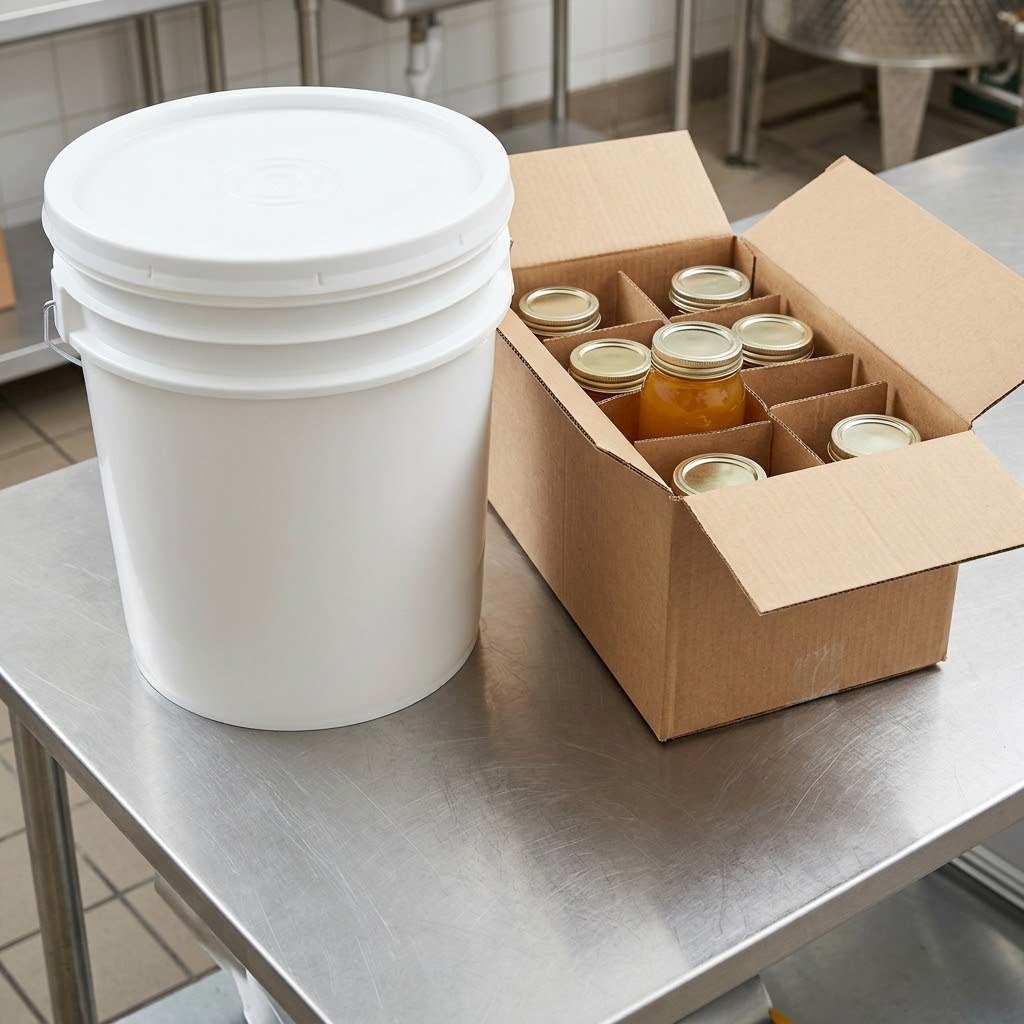
A beekeeper can sell honey in two forms, and the choice shapes the whole honey business. Sealed jars arrive packed and labeled by the beekeeper. The reseller adds nothing, handles no open food, and sells under the beekeeper’s name or with a second label where local rules allow it. As a result, this route asks for the least equipment. It may also need fewer permits, but only the local authority can say so.
Bulk pails, on the other hand, cost less per pound, and the reseller fills the jars. Consequently, the reseller needs clean jars, a scale, labels, and a packing space the food-safety authority accepts. In addition, repacking makes the reseller responsible for what the label says. Therefore, ask the authority two things before choosing: whether honey may be repacked at home, and what the label must show.
| Sealed jars from the beekeeper | Bulk pails, packed by you | |
|---|---|---|
| Cost per pound | Higher | Lower |
| Open food handled | None | Yes, at every filling |
| Label | The beekeeper’s, sometimes with yours added | Yours, and you answer for it |
| Equipment | Shelves and boxes | Jars, scale, labels, clean packing space |
| Best for | A first season and a market stall | A seller with steady repeat orders |
Start a honey business with sealed jars unless the numbers force the other route. A first season is for learning which jar size sells and how many buyers return. Moreover, a batch that stays sealed keeps its link to the beekeeper intact. Whichever form is chosen, keep one unopened jar from every batch until that batch is sold out. It is the reference if a buyer says the honey changed.
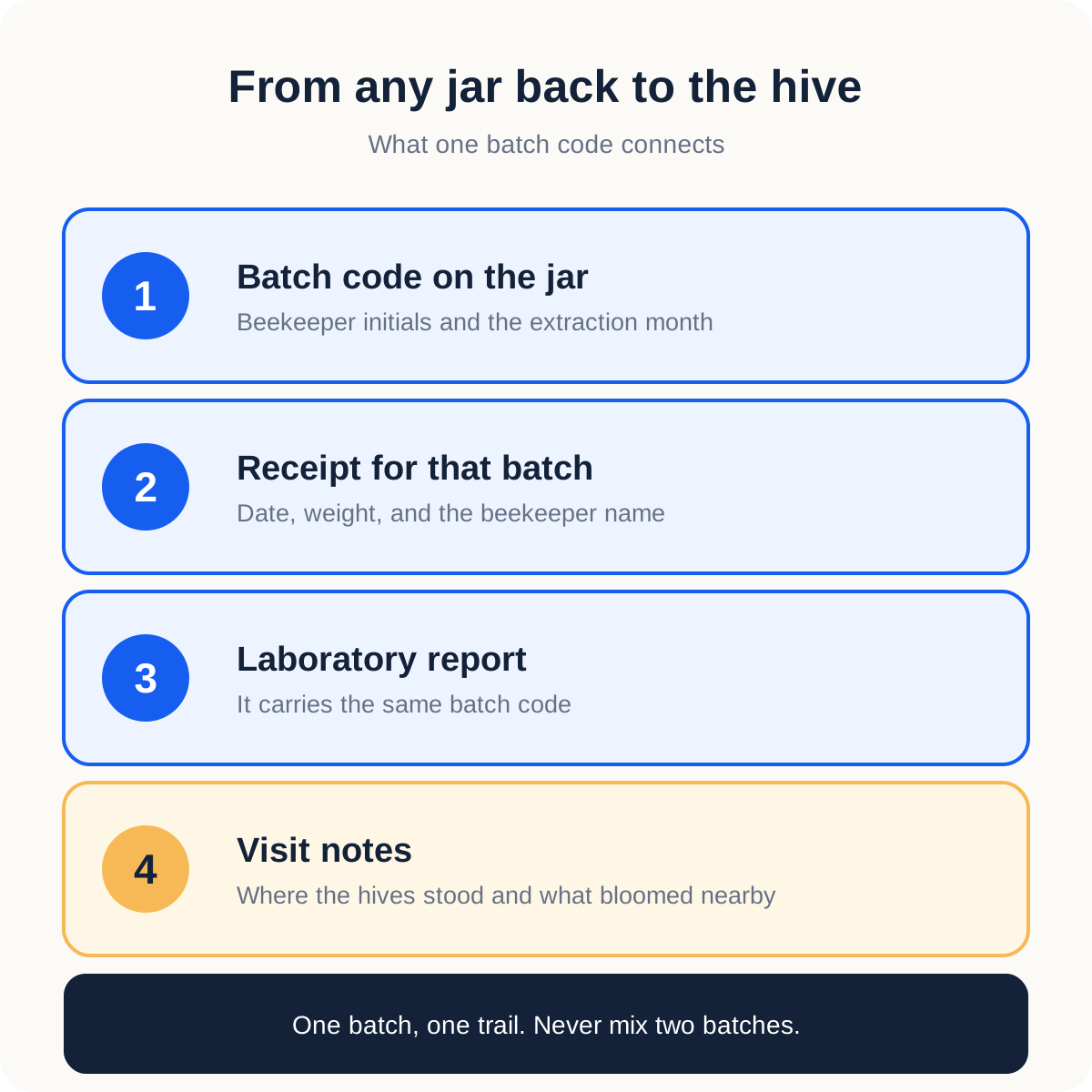
Never mix two batches in one container. Once blended, honey from two apiaries or two seasons no longer matches any beekeeper’s account of it. Give each purchase a batch code, for example the beekeeper’s initials and the extraction month, and write it on every jar. Consequently, any jar can be traced back to one visit, one receipt, and one answer.
The Name on the Jar in a Honey Business
The label is where a small honey business is tempted to say more than it knows. The FDA’s guidance on honey labeling is a useful reference even outside the United States. That said, the document itself says it is nonbinding. It states that a food containing only honey must be named “honey”. In addition, it says a single-ingredient food such as honey needs no ingredient statement on the label.
Floral names follow a stricter test. The guidance says the floral source does not have to be declared. However, a seller may name the plant or blossom when the evidence supports it. The seller or the producer must have information showing that it is the chief floral source. For example, the guidance accepts “Clover Honey” and “Orange Blossom Honey”. Any claim about the floral source, it adds, must be truthful and not misleading.
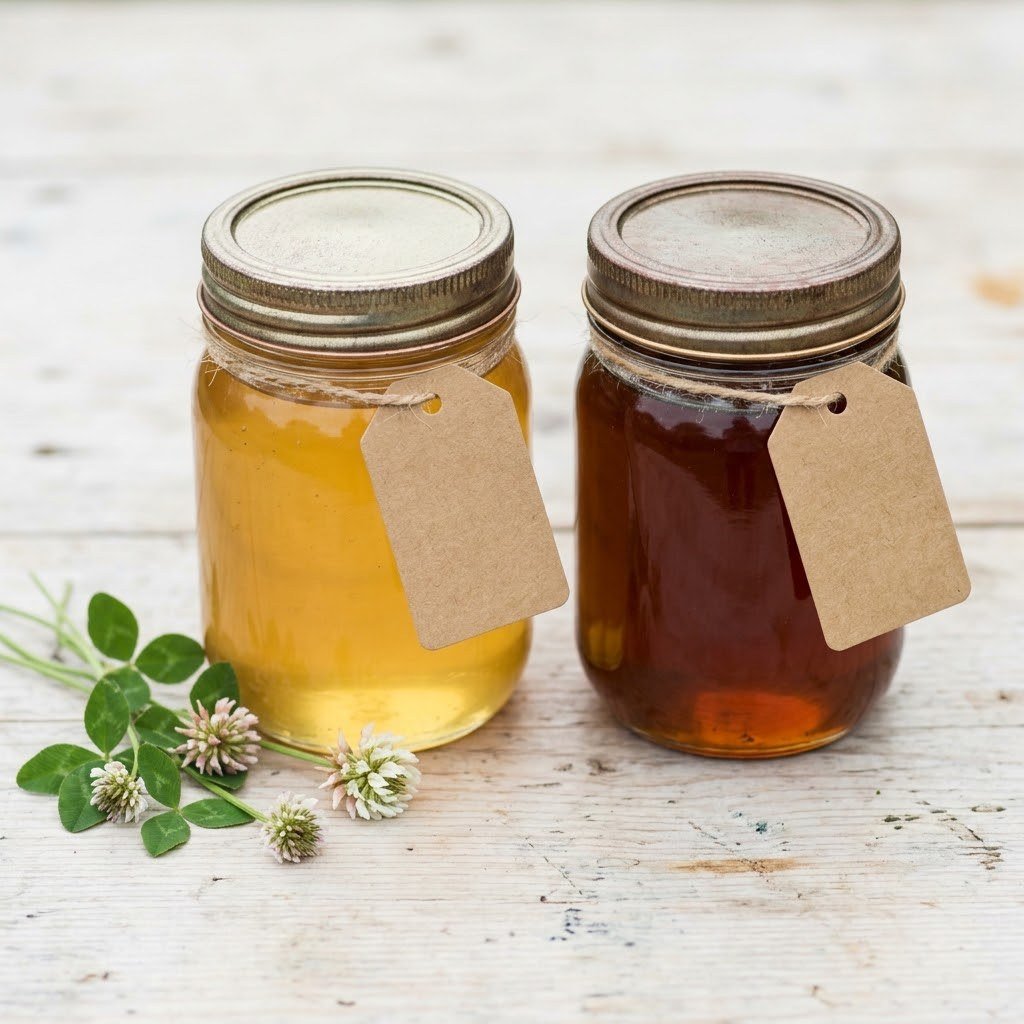
Blends lose the name. According to the same guidance, honey mixed with a sweetener cannot be labeled simply “honey”. For example, it must carry a name like “Blend of honey and corn syrup”, with both ingredients listed in descending order by weight. A reseller does not blend, but the rule explains why buyers ask whether the jar holds only honey.
Place names need the same care. The Codex standard for honey allows a regional name only when the honey was produced entirely within that area. Similarly, it allows a floral name when the honey comes wholly or mainly from that source. Therefore, write only the region and season that the visit notes support, and leave “mountain” or “wild” off the jar unless the beekeeper’s account backs it. Then ask the local authority which other items the label must carry; net weight is one that the FDA guidance itself mentions.
What a Seller Can and Cannot Say About Honey
Buyers bring health questions to a honey stall, and the seller’s answer has a hard limit. A honey business sells food. A seller has no medical evidence to offer and no standing to offer it. Consequently, the label, the stall sign, and the social posts make no treatment claim. When a buyer asks whether honey helps a cough or a stomach complaint, say kindly that a doctor answers that question.
One health statement does belong on the jar. The Centers for Disease Control and Prevention says not to feed honey to a child younger than one year old, because honey can contain the bacteria that cause botulism. In addition, the agency reports that babies became ill with infant botulism after using honey pacifiers. Therefore, print the warning in plain words, and say it aloud when a buyer mentions a baby at home.
“Raw” and “pure” are words buyers use and sellers should define. When a buyer asks whether the honey is raw, do not answer with the word alone. Instead, say what the beekeeper did after extraction: strained or not, warmed or not, and how. The Codex standard says honey shall not be heated to the point where its essential composition and quality are impaired. In addition, it permits no food additives. A clear account of handling tells the buyer more than an adjective.
Purity is proven on paper. Kitchen tests with water or a flame give a seller nothing to show a doubtful buyer. A report from an accredited laboratory, on the other hand, carries a name, a date, and a sample number. Ask the beekeeper for one covering the batch, or send a sample before paying in full. Ask the laboratory which checks it runs on honey; for example, water content and added sugars.
Crystallized Honey Is Not a Defect
A buyer may return with a jar that has turned cloudy and firm, and assume the worst. The National Honey Board handout on shelf life explains why it happens. Most honeys are supersaturated with glucose, so the glucose can crystallize at room temperature. The rate depends on the honey’s origin and on how it was processed and handled. Heating, it notes, melts the crystals.
Therefore, tell buyers about crystallization before they see it. A small card in every bag can say that the crystals are sugar from the honey itself and that gentle warming turns the honey liquid again. As a result, the returning buyer arrives informed instead of suspicious. However, do not liquefy stock over direct heat to make it look clear on the table. That trades the honey’s quality for a moment of shelf appeal.
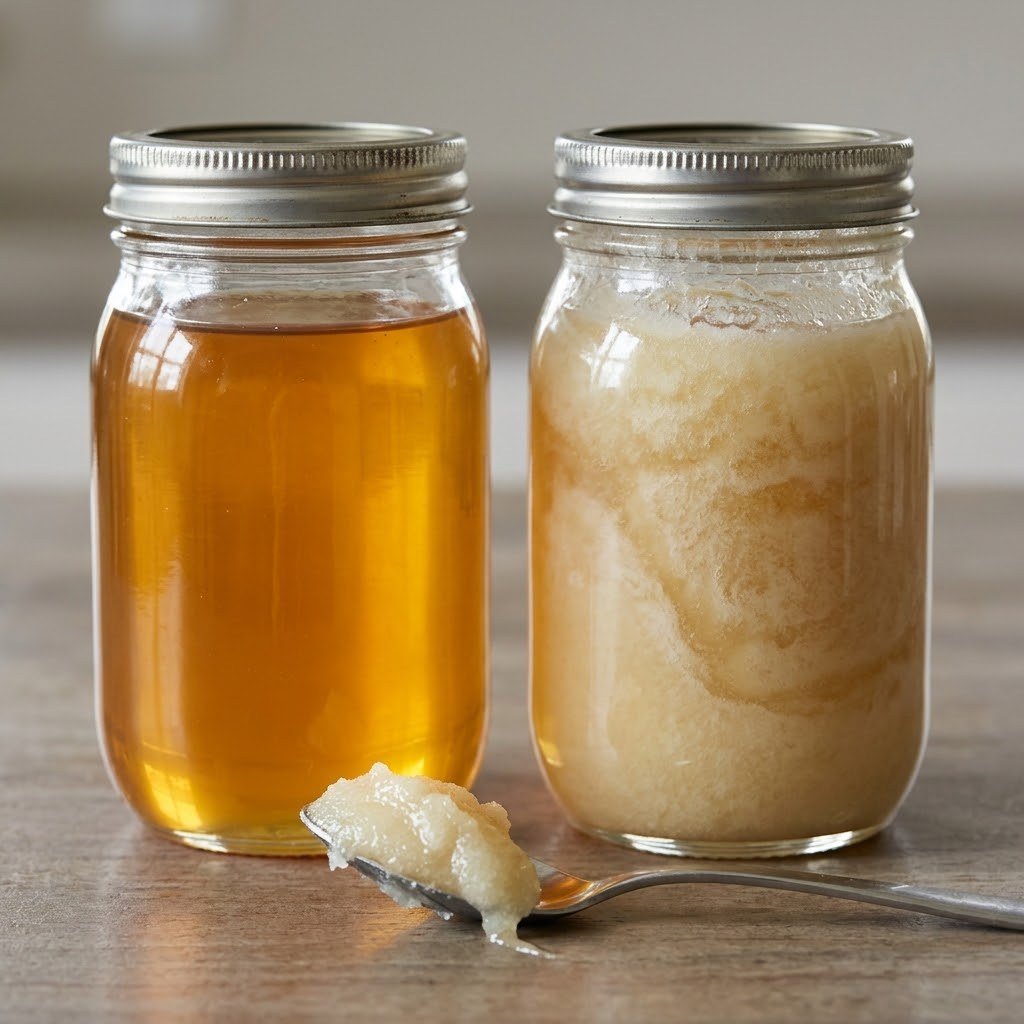
Storage is the other half of the answer. The handout says stored honey tends to darken and lose aroma and flavor, and that the change depends on temperature. In addition, it notes that a shelf life of two years is often stated for practical purposes. Therefore, keep stock out of sun and heat, and write the packing date on each jar. Then ask the local authority which date the label must show.
Pricing One Jar in a Honey Business
In the example below, honey is the largest cost line in a honey business. Count every line before looking at competitors. Start with the honey that fills one jar, then add the jar and lid, the label, the tamper band, and the bag or box. In addition, give each jar its share of the laboratory report, the stall or payment fees, and the honey lost to tasting samples. The dollar figures below are illustrative examples, not income promises; therefore, replace each one with your own quotes.
| Cost line | Illustrative amount | Share of cost |
|---|---|---|
| Honey for a one-pound jar | $5.00 | 56% |
| Stall or payment fees | $1.00 | 11% |
| Jar and lid | $0.90 | 10% |
| Bag or shipping box | $0.75 | 8% |
| Tasting samples and loss | $0.55 | 6% |
| Jar’s share of the lab report | $0.45 | 5% |
| Label | $0.25 | 3% |
| Tamper band | $0.10 | 1% |
| Total | $9.00 | 100% |
In this example one jar costs $9.00 to put in a buyer’s hands. If the jar sells for $13, $4.00 is left. Fixed monthly costs come out of that remainder. For instance, if trips to the apiary and a stall deposit total $80 a month, twenty jars cover them. That said, these numbers explain the method and are not a forecast. The feasibility study guide shows how to build the full calculation with real quotes.
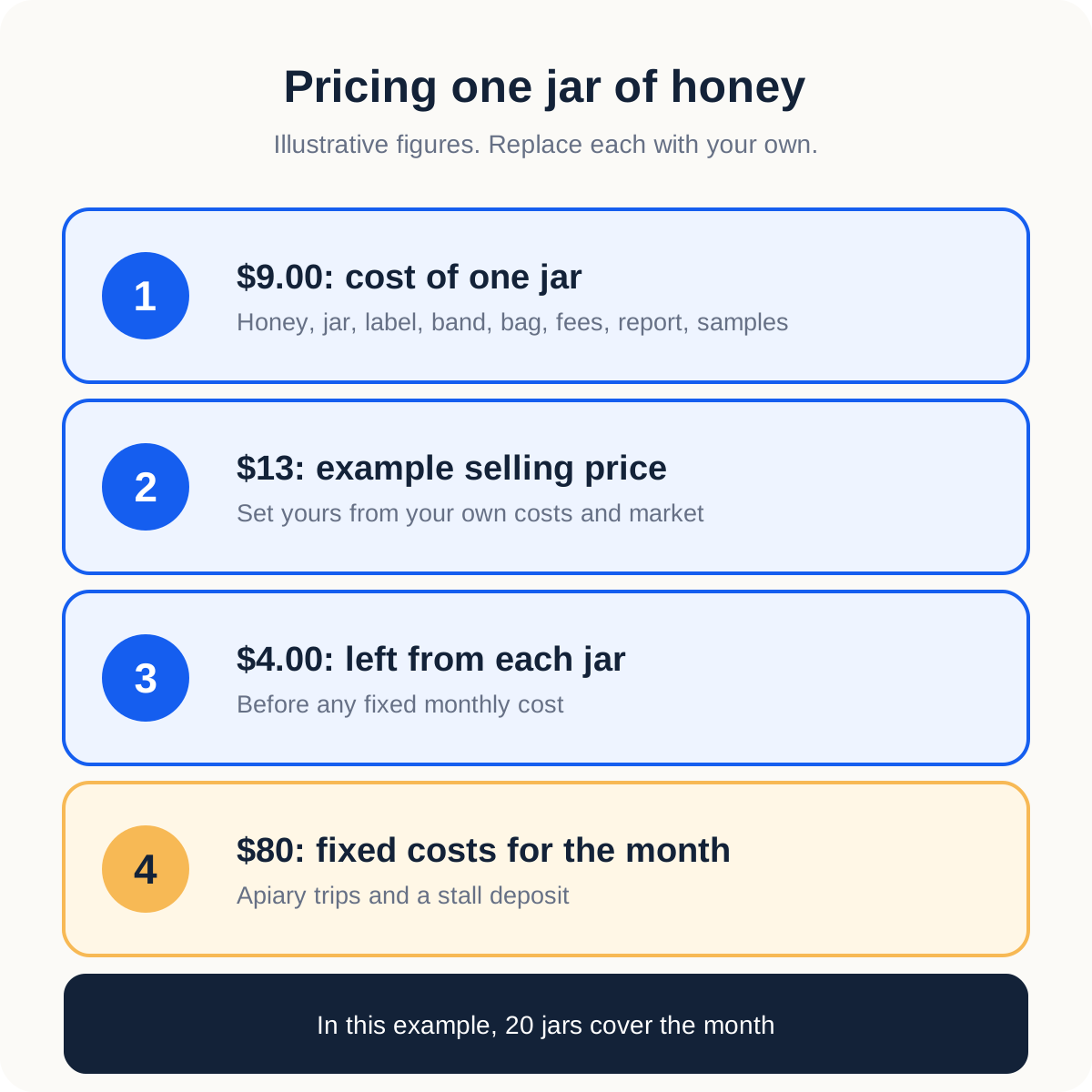
More than half of the cost in the example is honey. When a seller’s own quotes show the same, a honey business has, therefore, little room to undercut a supermarket. A reseller also pays the beekeeper first, so the seller cannot sell below the beekeeper’s own price. Instead, sell what the cheap jar cannot offer: a named apiary, a batch code, and a laboratory report. If the price is too high for a first-time buyer, offer a smaller jar, not a lower price per pound.
Where a Small Honey Business Finds Repeat Buyers
A honey business grows on the second sale, when the buyer of a good first jar returns. A weekly market stall suits that, because buyers taste, ask their questions face to face, and see the same seller the following week. Similarly, a standing order with a neighborhood bakery or café reaches people who already trust the shop.
In addition, a honey business keeps a buyer list from its first day. Write each buyer’s name, the jar size, the batch code, and the date. Ask a few buyers how long a one-pound jar lasts in their home. A message sent shortly before that point is, therefore, a service and not a nuisance. However, ask at the first sale for permission to send it.
Seasons give a honey business a calendar. Honey from different extractions can differ in taste and color. Consequently, each new batch is a reason to write to the list. Furthermore, a seller with two beekeepers can offer two honeys side by side and let the buyer choose. That said, do not add a third source until the first two sell through.
Rules to Check Before the First Jar
Food law is local, so a honey business owner checks it in the place of sale. The useful step is a short meeting or call with the food-safety authority, with written questions. May honey be repacked at home, or only resold sealed? Is a registration or inspection required? What must the label show, and in which language? Is a laboratory report required for each batch?
Therefore, keep the answers with the batch records. A folder for each beekeeper holds the visit notes, the laboratory report, the receipt, and the authority’s reply. In addition, a notebook lists every batch code with its packing date and jar count. These pages take minutes at each purchase. Ultimately, they are what the seller opens when a buyer or an inspector asks where the honey came from.
Supplies for Packing and Measuring
As an Amazon Associate, BeIN ADVISOR earns from qualifying purchases. Links to Alibaba are affiliate links too.
A honey business that packs its own jars needs tools for filling, weighing, and labeling. Pick sizes and counts to match your own batch, and read the seller rating and return terms before ordering.
- Honey refractometers: read the water content of a sample before a batch is bought.
- Digital kitchen scales: weigh each jar so the net weight on the label is true.
- Glass honey jars with lids: buy a small count first to test the size with your buyers.
- Wholesale glass honey jars from a manufacturer on Alibaba: once one jar size has proved itself, order that size by the carton; ask for a sample first.
- Waterproof labels: stay readable when honey runs down the jar.
Start the Honey Business With One Beekeeper and One Market Day
A honey business without bees needs very little to begin and a great deal of honesty to continue. Choose one beekeeper whose apiary you have seen. Buy a small lot of sealed jars from one extraction, keep one jar back, and note the batch code. Then take the rest to a single market day with tasting spoons, the storage card, and the infant warning in plain sight.
Count three things at the end of that day: jars sold, questions asked, and names on the list. The questions show what the label and the card should say next time. The names, however, are the real result. If a fair share of them buy again after the next message, the second order can be larger; if they do not, the lesson cost one small lot.