Sugaring paste is the natural, budget-friendly way to remove hair with just three kitchen ingredients. This ancient method uses sugar, lemon, and water to pull hair from the root, leaving skin silky smooth. For anyone tired of expensive waxing or harsh chemical removers, homemade sugaring paste is a gentle, effective answer. It costs almost nothing, rinses away with water, and suits even sensitive skin. With a little practice, you can enjoy salon-style smoothness in your own bathroom.
This method matters because so many hair-removal options are costly, painful, or irritating. Waxing strips can grip the skin and cause real discomfort and redness. Chemical creams often smell strong and can sting sensitive areas. Sugaring paste, by contrast, attaches mainly to the hair, not the living skin. Moreover, it is water-soluble, so any mess cleans up in seconds. The challenge is simply getting the recipe and technique right, which this article makes easy.
This article walks through six proven steps to make and use sugaring paste at home. You will learn what it is, how it works, and which simple ingredients you need. Furthermore, it covers the exact recipe, the application technique, and aftercare. Each step is written for beginners, with clear tips to avoid common mistakes. By the end, you will be ready to remove hair naturally and smoothly at home.
1. What Sugaring Paste Is and Why It Beats Waxing
Sugaring paste is a thick, amber mixture of sugar, lemon juice, and water. People have used this gentle hair-removal method for thousands of years. The paste grips the hair and lifts it out from the root, like waxing. Unlike wax, however, it sticks mostly to hair rather than to living skin. As a result, it pulls less on the surface and feels gentler during removal. Understanding what it is helps you see why so many people prefer it to wax.
1.1 How Sugaring Paste Works
Sugaring paste works by molding onto the skin and wrapping around each hair. You apply it against the direction of hair growth to coat the strands. Then you flick it off quickly in the same direction the hair grows. This action pulls hair out cleanly from the follicle, root and all. Because hair is removed from the root, regrowth is slower and finer over time. The technique is the opposite of waxing, which removes hair against the growth.
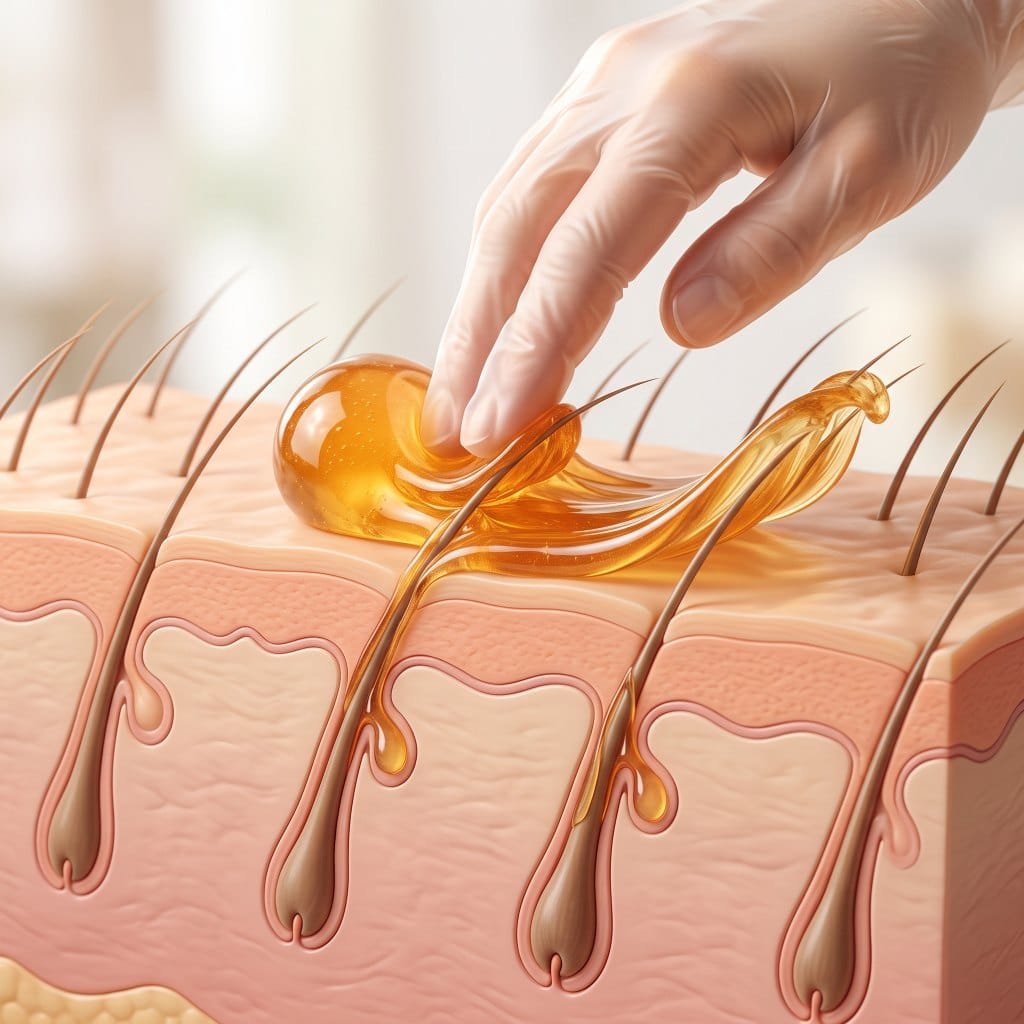
The science behind it is simple and surprisingly forgiving. Warm paste is pliable, so it molds into the base of each hair. The sugar bonds to the hair far more than to your skin cells. As a result, removing it lifts hair without tearing the skin surface. This gentler pull is why sugaring suits sensitive and reactive skin. With practice, the flick becomes quick, almost painless, and very satisfying.
1.2 Sugaring Paste Benefits Over Waxing
The biggest benefit is how gentle sugaring is on the skin. Because the paste grips hair more than skin, it causes less irritation than wax. It also works at a lower temperature, so there is no risk of burns. This makes it a kinder choice for sensitive areas and delicate skin. The American Academy of Dermatology stresses gentle, careful technique for all at-home skin care. Therefore, sugaring fits well with a skin-friendly routine.
Cost and convenience make sugaring even more appealing than waxing. The three ingredients cost only pennies and likely sit in your kitchen already. Any sticky mess dissolves instantly in warm water, unlike stubborn wax. The paste is also natural, with no resins, dyes, or strong chemicals. Pairing it with gentle, natural care, like our picks for sensitive skin, completes the routine. As a result, sugaring offers smooth skin cheaply, naturally, and with minimal fuss.
2. Sugaring Paste Ingredients and Tools
One of the joys of sugaring is how few things you need to start. The paste uses just three pantry ingredients you almost certainly own. A handful of basic tools completes everything required for the process. There is no special equipment, no strips, and no costly kit to buy. Knowing exactly what to gather makes your first batch quick and stress-free. The subsections below cover the three ingredients and the simple tools you need.
2.1 The Three Simple Ingredients
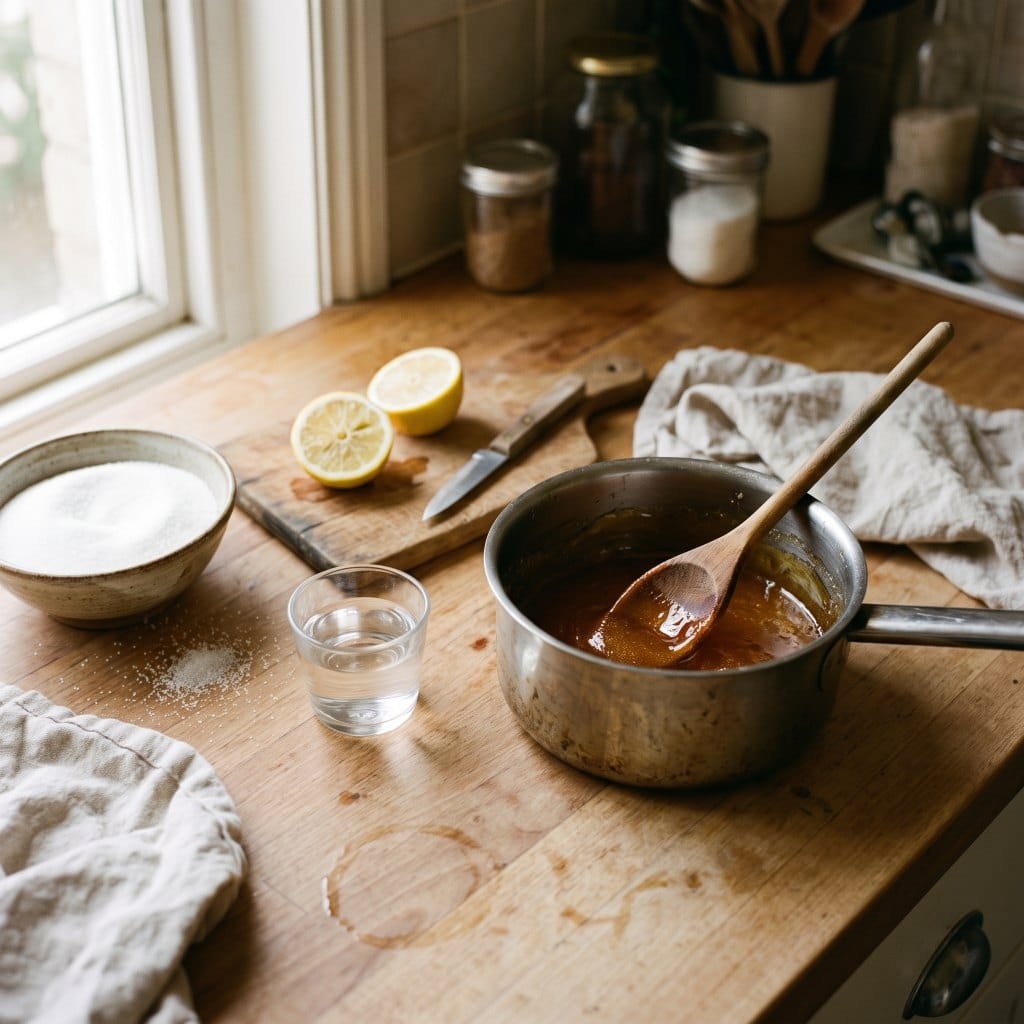
The recipe needs only sugar, lemon juice, and water. White granulated sugar forms the base and does the actual gripping of hair. Fresh lemon juice acts as a natural acid that controls the cooking process. It stops the sugar from hardening into a solid, brittle candy. Water simply helps everything dissolve and blend smoothly at the start. Together, these three humble ingredients create the perfect pliable paste.
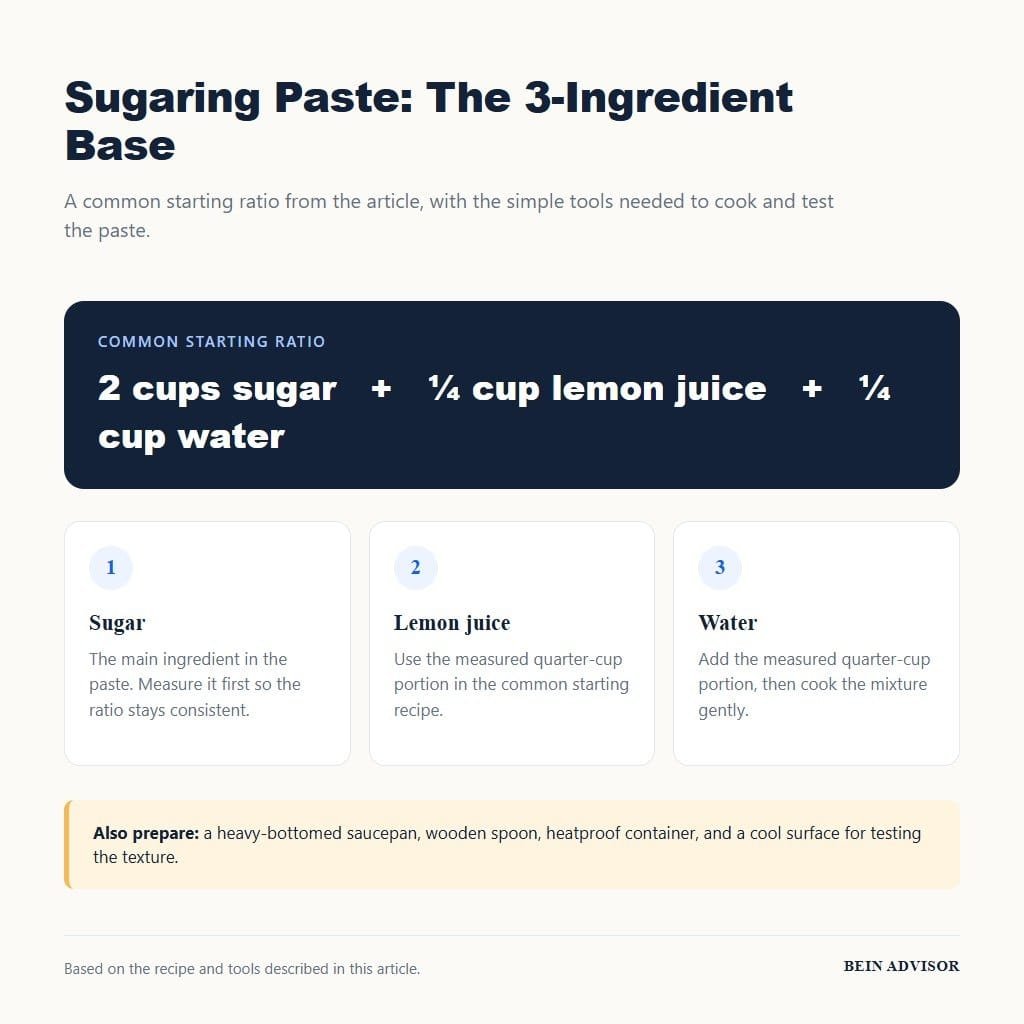
Each ingredient plays a clear and important role in the result. The sugar provides the sticky structure that captures the hair. The lemon’s acidity keeps the texture soft and workable when cool. Without enough lemon, the paste can set too hard to use. A common ratio is roughly two parts sugar to one part each of lemon and water. Measuring carefully the first time helps you learn how the mixture behaves.
2.2 Tools You Need
The tools for sugaring are just as simple as the ingredients. You need a small, heavy-bottomed saucepan to cook the mixture evenly. A wooden spoon or spatula helps you stir as it thickens and changes color. A heatproof container, such as a glass jar, stores the finished paste. Having these ready before you start keeps the process smooth and safe. None of these items costs much, and most kitchens already have them.
A few extra items make application easier and cleaner. A small bowl of warm water lets you wash sticky fingers between sections. Cornstarch or talc-free powder helps dry the skin before you begin. Some people like cloth strips, though a true sugaring purist uses hands alone. Keep a clean towel nearby to manage any drips during the work. With everything within reach, the whole routine feels calm and controlled.
3. How to Make Sugaring Paste at Home
Making the paste is the heart of the whole process, and it is easier than it sounds. The mixture cooks in minutes, changing from cloudy liquid to glossy amber. The real skill lies in reading the color and texture as it heats. Cooking too little leaves it runny, while too much makes it brittle. With a watchful eye, anyone can hit the perfect point on the first try. The subsections below give the exact recipe and show how to judge the consistency.
3.1 The Step-by-Step Sugaring Paste Recipe
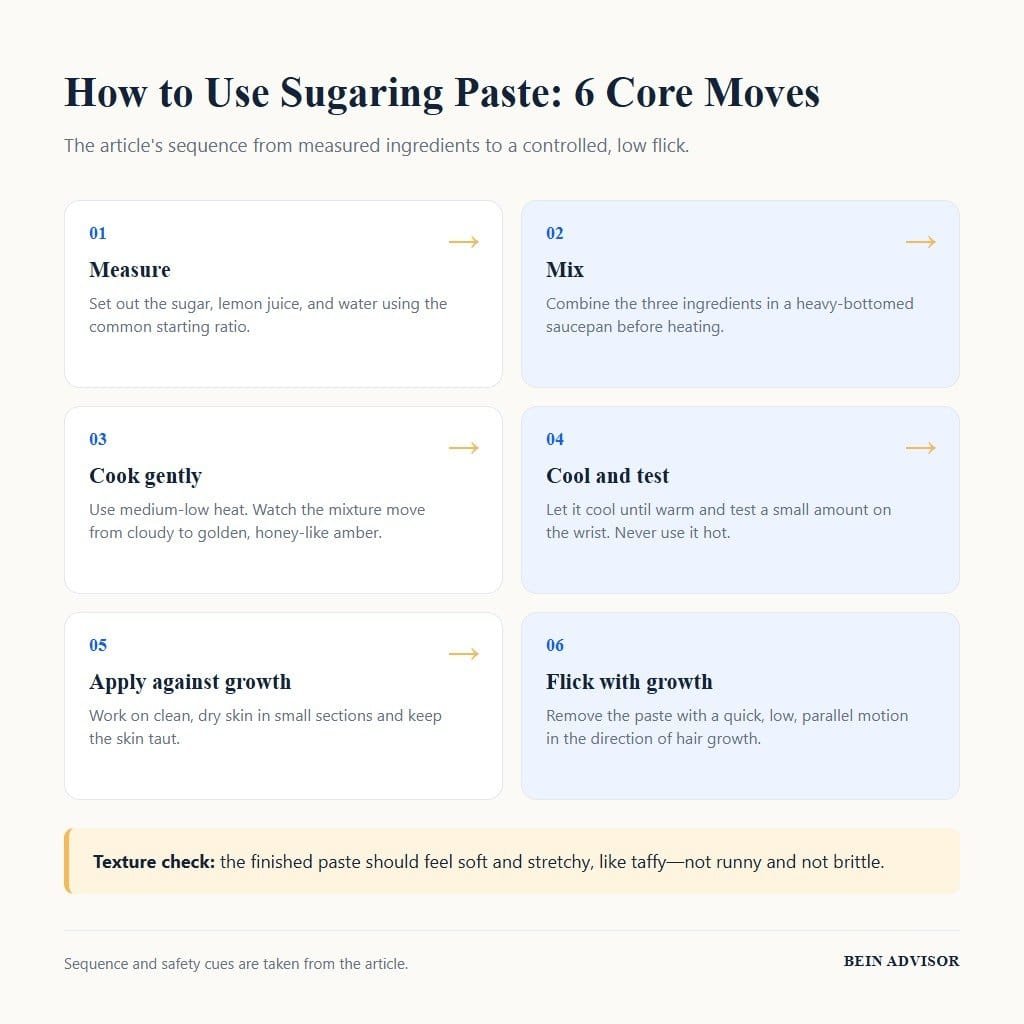
Start by combining the sugar, lemon juice, and water in your saucepan. Use roughly two cups of sugar with a quarter cup each of lemon and water. Stir everything together and set the heat to medium-low. Keep stirring gently as the sugar dissolves and the mixture begins to bubble. The liquid will slowly turn from cloudy white to a clear, golden color. This gradual change is your signal that the paste is forming.
Watch the color closely, because it shifts quickly near the end. Once it reaches a warm, honey-like amber, remove it from the heat. Overcooking turns it dark and hard, so err on the side of caution. Pour the hot paste carefully into your heatproof jar to cool. Let it rest until it is warm but no longer scalding to the touch. Testing a tiny amount on your wrist confirms it is safe to use.
3.2 Getting the Right Consistency
Perfect paste should feel like soft, stretchy taffy when warm. If you pull a small piece, it should stretch without snapping or dripping. A paste that is too runny needs a little more cooking time. One that is too stiff was cooked slightly too long and can be softened. Getting this texture right is the single biggest factor in success. With one or two batches, your eye and hands quickly learn the target.
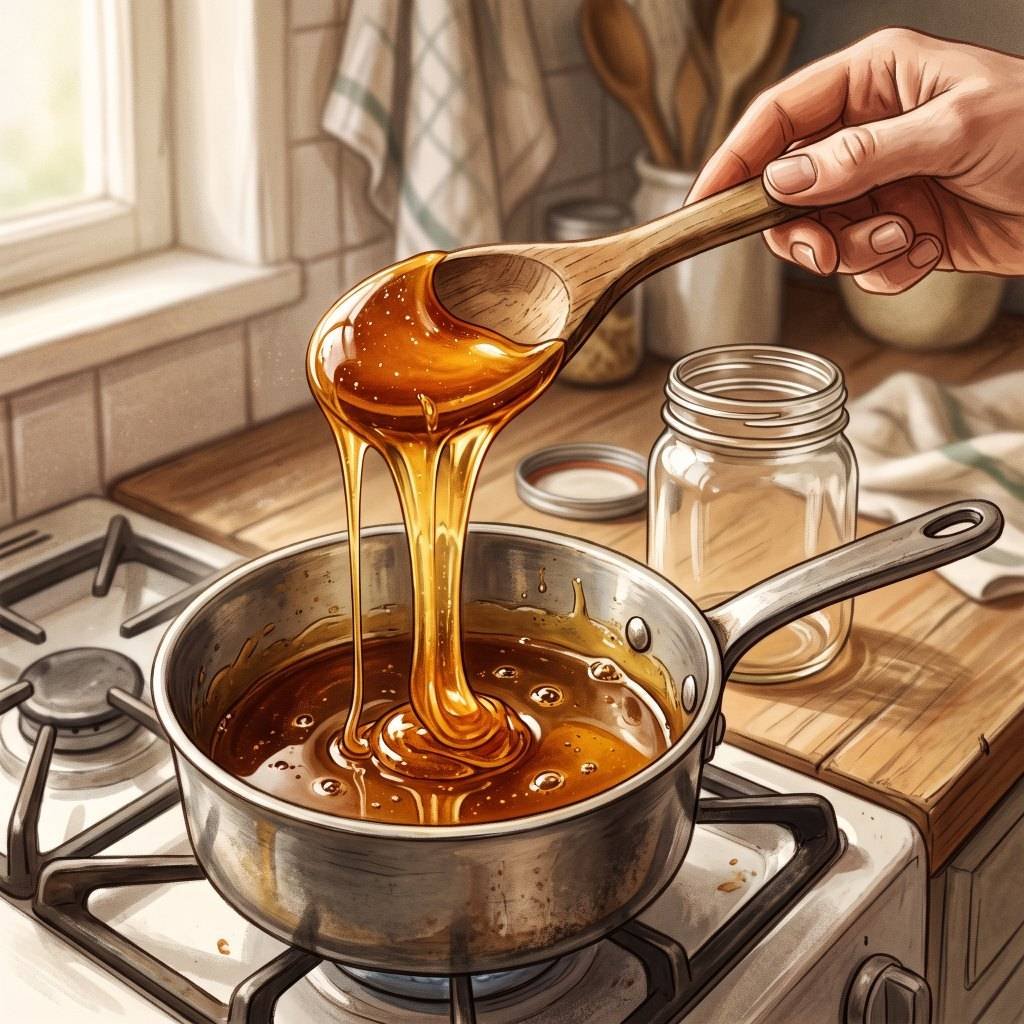
You can adjust a batch that did not turn out perfectly. If the cooled paste is too hard, microwave it for a few seconds to soften. If it is too soft, return it to low heat and cook a little longer. Warmth always makes the paste more pliable and easier to handle. Avoid working with it while it is hot, since that risks burns. A warm, workable ball of paste is exactly what you want before starting.
4. How to Use Sugaring Paste for Hair Removal
With your paste ready, the application is where smooth results come together. Clean, dry skin and the correct flicking motion make all the difference. The technique feels strange at first but becomes natural within a few tries. Good preparation reduces discomfort and helps the paste grip the hair well. Patience and small sections lead to the cleanest, smoothest finish. The subsections below explain how to prepare your skin and apply the paste correctly.
4.1 Preparing Your Skin
Start with clean, completely dry skin for the best grip. Wash the area gently and pat it fully dry before you begin. Lightly dust the skin with cornstarch to absorb any remaining moisture. Dry skin is essential, because the paste cannot grip a damp surface. Make sure the hair is at least a few millimeters long for removal. This preparation step quietly sets up a smooth, effective session.
Timing and comfort also help the process go smoothly. Exfoliating the day before lifts trapped hairs and improves the result. Avoid lotions or oils right before, since they block the paste’s grip. Some people apply the paste when the skin is warm and relaxed. A warm room keeps the paste soft and the skin supple. With your skin prepped properly, you are ready to apply the paste.
4.2 The Application Technique
Scoop a small, warm ball of paste with your fingers. Spread it firmly against the direction of hair growth onto the skin. Press it on so it wraps fully around the base of each hair. Then flick it off sharply in the same direction the hair grows. This quick, parallel flick is the secret to clean, comfortable removal. Keep your other hand holding the skin taut for the best result.
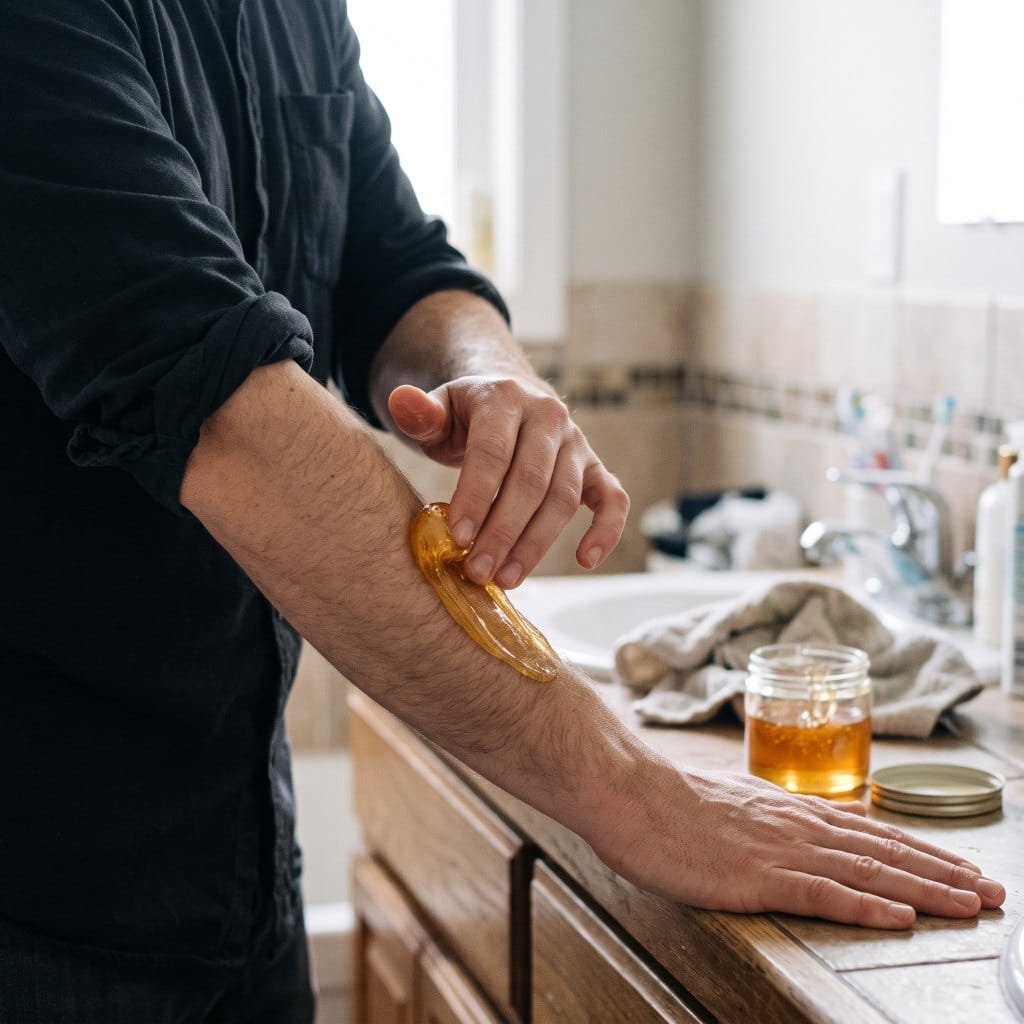
Work in small sections for control and the smoothest finish. One ball of paste can be reused many times until it loses its grip. If it gets too sticky, simply swap it for a fresh piece. Flick close to the skin, not upward, to avoid breakage and bruising. Repeat over each area until the skin feels completely smooth. With a steady rhythm, the whole routine becomes quick and even relaxing.
5. Tips, Troubleshooting, and Aftercare
Even a simple method has a learning curve, so a few tips go a long way. Most early problems come from paste texture or application technique. Knowing the common fixes saves a failed batch and a frustrating session. Good aftercare then keeps your freshly smoothed skin calm and healthy. Together, these habits turn shaky first attempts into reliable, repeatable results. The subsections below cover the usual mistakes and how to soothe skin afterward.
5.1 Common Mistakes and Fixes
The most common mistake is cooking the paste for the wrong time. An undercooked batch stays runny and slides off without gripping hair. An overcooked one turns hard and dark and cracks instead of stretching. Watching the amber color closely prevents both problems. Another frequent error is applying the paste to damp or oily skin. Clean, dry, powdered skin solves most grip issues instantly.
Technique mistakes are just as easy to correct with practice. Many beginners pull upward instead of flicking parallel to the skin. This upward motion hurts more and can cause bruising or breakage. Holding the skin taut and flicking low fixes this quickly. Working in sections that are too large also reduces control. Smaller sections and a confident, fast flick produce the cleanest results.
5.2 Aftercare and Skin Soothing
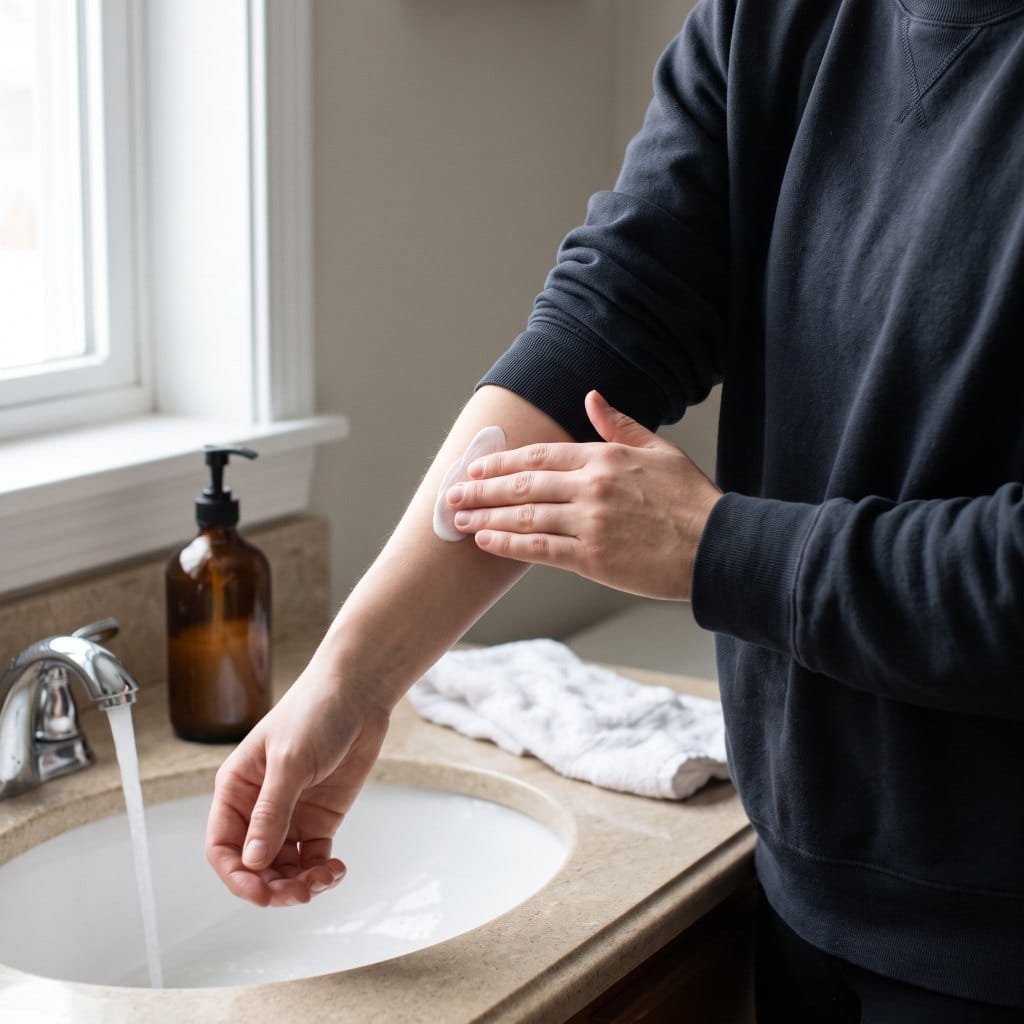
After removing hair, rinse away any residue with plain warm water. The paste dissolves instantly, leaving no sticky film behind. Pat the skin dry and apply a soothing, fragrance-free moisturizer. Aloe vera gel is a popular choice for calming any mild redness. Avoid hot showers, tight clothing, and heavy sweating for a few hours. This gentle care helps the skin settle quickly and comfortably.
A little ongoing care keeps results smooth and prevents ingrown hairs. Gently exfoliate the area every few days once the skin has calmed. This lifts dead cells and frees new hairs to grow outward cleanly. Moisturizing daily keeps the skin soft and supple between sessions. Following a calm routine, like our skincare routine for radiant skin, supports healthy skin. With this aftercare, your skin stays smooth, soft, and happy.
| Ingredient | Amount | Its Role |
|---|---|---|
| White sugar | 2 cups | Grips and lifts the hair |
| Lemon juice | 1/4 cup | Keeps texture soft and workable |
| Water | 1/4 cup | Helps it dissolve and blend |
| Problem | Likely Cause | Fix |
|---|---|---|
| Paste too runny | Undercooked | Cook a little longer to amber |
| Paste too hard | Overcooked | Warm gently to soften |
| Paste won’t grip | Damp or oily skin | Dry skin and dust with powder |
| Painful removal | Pulling upward | Flick parallel, skin held taut |
| Hair breaks, not pulls | Hair too short | Wait for a few millimeters growth |
Conclusion: Sugaring Paste — Smooth Skin, Naturally
Sugaring paste proves that smooth, hair-free skin need not be costly or harsh. The six steps in this article take you from understanding the method through making, using, and caring for your skin. With only sugar, lemon, and water, you create a gentle remover that rivals salon waxing. The keys are the right consistency, dry skin, and a confident parallel flick. Above all, a little practice quickly turns a wobbly first try into a smooth routine. Natural, affordable hair removal is genuinely within everyone’s reach.
If you want smooth skin without the cost or chemicals, this method is well worth trying. Gather your three ingredients, cook a small batch, and practice on your arm first. Keep your skin dry, work in sections, and soothe it gently afterward. Over time, regular sugaring leaves hair finer and regrowth slower. The best part is that the whole process is natural, cheap, and surprisingly satisfying. Make your first batch of sugaring paste today and enjoy beautifully smooth skin.