
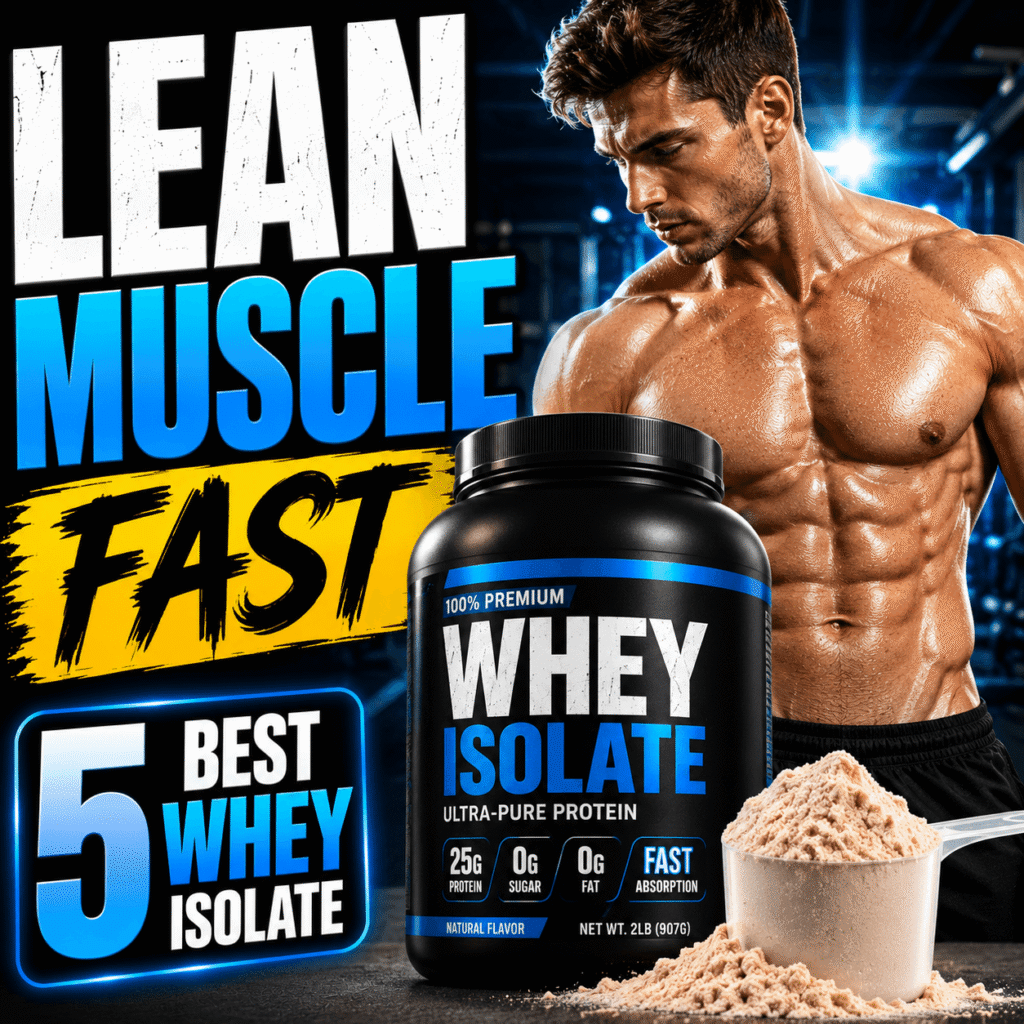
Whey protein isolate is the most refined form of whey, and it has become the go-to supplement for anyone chasing a lean, defined physique. When you cut calories to reveal muscle, protein needs rise even as food intake falls. A high-purity whey protein isolate delivers fast-digesting protein with very little fat, sugar, or lactose. That makes it far easier to hit daily targets without wasting precious calories. This article explains what sets isolate apart and which five products stand out for a serious cut.
You will learn how isolate differs from concentrate and why purity matters during a calorie deficit. You will also learn how to read a label so marketing claims never fool you again. We compare five tested picks on protein per serving, added sugar, mixability, and value. Then we show you exactly how to fit the powder into a fat-loss plan. Every recommendation rests on published nutrition science, not hype or bold packaging promises.
Cutting is hard enough without second-guessing your supplements. By the end, you will know which whey protein isolate suits your goals and how much to take. You will also know the quiet mistakes that stall progress for so many lifters. Treat the powder as one tool inside a disciplined diet, and the results follow naturally over the weeks ahead.
1. What Whey Protein Isolate Is and Why It Suits Cutting
Whey is the liquid fraction of milk left over when cheese is made. Manufacturers dry and filter it into three main grades. Concentrate keeps more carbs and fat, while isolate is filtered further for higher purity. A whey protein isolate is processed until protein makes up around ninety percent or more of its weight. That extra filtering strips away most lactose, fat, and sugar. The result is a lean protein source that fits tight cutting macros and suits people who feel bloated by heavier powders.
1.1 Isolate, Concentrate, and Hydrolysate Compared
The three grades differ mainly in how much they are filtered. Concentrate is the least processed, so it carries more carbohydrate and fat per scoop. That extra content is fine for bulking but works against a strict cut. Isolate is filtered to a higher protein percentage with very little lactose. Hydrolysate goes one step further and breaks the protein into smaller fragments for faster uptake. The table below shows how the grades stack up so you can match the right one to your goal.
| Grade | Protein by weight | Lactose & fat | Best use |
|---|---|---|---|
| Concentrate | ~70–80% | Higher | Budget, bulking phases |
| Isolate | ~90%+ | Very low | Cutting, lactose-sensitive users |
| Hydrolysate | ~90%+ (pre-digested) | Very low | Fastest post-workout absorption |
No grade is magic, and total daily protein still matters most. Yet the filtering does change how a powder feels and fits your day. People with mild lactose sensitivity often tolerate isolate far better than concentrate. The lower fat and carb load also leaves room for vegetables and whole foods. For most lifters on a cut, isolate is the sensible default, with hydrolysate as a faster but pricier option for the window right after training.
1.2 Why Isolate Protects Muscle on a Cut
During a calorie deficit, the body can break down muscle for fuel. A high protein intake protects lean tissue and keeps your metabolism active. Whey is rich in leucine, the amino acid that triggers muscle repair most strongly. Isolate packs that leucine into very few calories, which is exactly what a cut demands. The International Society of Sports Nutrition recommends higher protein when dieting to preserve muscle. Isolate makes those targets realistic on a budget of calories.
Protein also keeps you full, which is the real battle when food is limited. A scoop of isolate in water can quiet hunger for a couple of hours. That helps you stick to the plan instead of raiding the kitchen at night. Fast digestion also makes isolate handy around workouts when appetite is low. Pair it with balanced meals, such as the lean dishes in our guide to healthy high-protein meals, and the deficit feels far more manageable.
2. The 5 Best Whey Protein Isolate Picks
We chose these picks on four simple criteria that matter on a cut. First, protein density per serving and how clean the macros are. Second, added sugar, carbs, and fillers that waste calories. Third, mixability and taste, because a powder you dislike gets left in the tub. Fourth, value per serving rather than the sticker on the front. We leaned on third-party tested brands and independent supplement research over flashy marketing. Each whey protein isolate below earns its place for a specific kind of user.
2.1 Optimum Nutrition Gold Standard 100% Isolate
Optimum Nutrition is one of the most recognised names in sports supplements. Its Gold Standard 100% Isolate is a flagship product aimed at lean-muscle goals. The brand has a long track record and wide third-party testing. That reputation makes it a safe first pick for newcomers who want reliability.
Each serving delivers around twenty-five grams of protein with very little sugar or fat. The powder uses whey protein isolate as its primary source, so the macros stay tight. It mixes smoothly in a shaker and dissolves without clumps. Flavours are clean rather than overly sweet, which helps during long cutting blocks.
This pick suits anyone who wants a dependable all-round isolate without fuss. The main trade-off is price, since the brand premium adds a little cost per serving. Flavour range is broad, so most people find one they enjoy. For a balanced mix of purity, taste, and trust, it remains a strong default choice.
2.2 Dymatize ISO100 Hydrolyzed
Dymatize ISO100 sits at the premium end of the isolate market. It blends hydrolysed whey with isolate for very fast absorption. The brand is popular with competitive lifters and physique athletes. Many users reach for it specifically around hard training sessions.
A serving provides about twenty-five grams of protein with roughly one gram of sugar. Because part of the protein is pre-digested, it hits the bloodstream quickly. That speed makes it a smart post-workout option when recovery is the priority. The texture is light and the flavours are consistently well rated.
ISO100 fits dedicated trainers who want speed and low lactose in one tub. The clear trade-off is cost, as hydrolysed protein commands a higher price. People on a tight budget may not need the extra absorption speed. For serious athletes who train hard and value fast recovery, it earns its premium tag.
2.3 Isopure Zero Carb Whey Protein Isolate
Isopure built its name on a true zero-carb formula. The powder targets people on strict low-carb or keto-style cuts. It is a pure whey protein isolate with no added sugars. Added vitamins also set it apart from simpler products.
Each serving offers around twenty-five grams of protein and zero carbohydrate. That clean profile makes tracking macros almost effortless during a deficit. The formula includes a vitamin and mineral blend for extra support. The powder mixes thin, more like a flavoured drink than a milkshake.
This pick suits low-carb dieters who want zero hidden sugar in every scoop. The trade-off is a thinner texture that some people find less satisfying. Those who like a creamy shake may prefer a different formula. For strict carb control with added micronutrients, Isopure is hard to beat.
2.4 NOW Sports Whey Protein Isolate
NOW Sports focuses on simple, no-frills formulas at a fair price. Its whey protein isolate keeps the ingredient list short and clean. The brand carries respected third-party quality certifications. That appeals to buyers who read labels carefully before purchase.
A scoop gives roughly twenty-five grams of protein with minimal additives. There is an unflavoured version for people who blend it into recipes. The macros stay lean, with very low carbs and fat per serving. Mixability is solid, though the texture is plain rather than dessert-like.
This option suits value-minded buyers who want purity without paying for branding. The trade-off is a smaller flavour range and a less indulgent taste. Heavy flavour seekers might find it a little flat. For honest macros at a sensible cost, it is a smart everyday pick.
2.5 Myprotein Clear Whey Isolate
Myprotein Clear Whey Isolate takes a very different approach to texture. Instead of a milkshake, it mixes into a light, juice-like drink. This format appeals to people who tire of creamy shakes on a long cut. It has become popular for hot weather and low-appetite days.
A serving supplies around twenty grams of protein with low sugar and fat. The refreshing texture makes it easy to drink when food feels heavy. Fruit-style flavours suit those who dislike traditional dessert tastes. It still uses isolate as the base, so the macros stay lean.
This pick fits anyone who struggles with thick shakes during dieting. The trade-off is slightly less protein per serving than classic isolates. People chasing maximum grams per scoop may look elsewhere. For variety and easy drinking on a strict cut, it is a refreshing change of pace.
3. Comparing the Picks and Reading Labels
A quick comparison helps you match a product to your own routine and budget. The numbers below are typical per-serving values rather than exact figures. Always check the panel on your tub, since formulas can vary by flavour. Use the table as a shortlist, then confirm the details before you buy.
3.1 Side-by-Side Comparison
| Pick | Protein / serving | Sugar | Standout | Best for |
|---|---|---|---|---|
| ON Gold Standard Isolate | ~25 g | <1 g | Clean macros | All-round cutting |
| Dymatize ISO100 | ~25 g | ~1 g | Hydrolyzed, fast | Post-workout |
| Isopure Zero Carb | ~25 g | 0 g | Zero carbs + vitamins | Strict low-carb |
| NOW Sports Isolate | ~25 g | <1 g | Minimal ingredients | Budget purists |
| Myprotein Clear Whey | ~20 g | <1 g | Light, juice-like | Low-appetite days |
No single row wins for everyone, since needs differ on a cut. Strict carb counters lean toward Isopure, while athletes favour ISO100. Budget buyers do well with NOW Sports, and the undecided start with Optimum Nutrition. Pick the row that fits your taste, stomach, and wallet, then stay consistent.
3.2 How to Read an Isolate Label
Start with the protein per serving against the total calories. A clean whey protein isolate gives most of its calories from protein alone. Next, check the listed sugar and carbohydrate, which should both be low. Watch the serving size too, since some brands quote big scoops. The first ingredient should be an isolate, not a cheaper concentrate. These quick checks reveal whether the front-label claims match the panel.
Beware of proprietary blends that hide exact amounts behind one label. A short, clear ingredient list is usually a good sign. Look for third-party testing seals, such as Informed Sport, for added trust. These programs check that the tub matches its claims and is free of banned substances. A few seconds reading the label saves money and protects your results. Quality control matters far more than a flashy name on the front.
4. How to Use Whey Protein Isolate for a Cut
A great product still needs a smart plan around it to work. The powder supports your diet but never replaces whole, balanced meals. Use it to fill gaps when real food is hard to prepare. The habits below help your whey protein isolate deliver visible results on a cut.
4.1 Daily Protein Targets and Timing
Most active adults on a cut aim for higher protein than usual. A common target is around 1.6 to 2.2 grams per kilogram of body weight. Whole foods should cover most of that intake across your meals. Isolate then fills the gap on busy days or after training. One or two scoops daily is plenty for the average lifter. More powder does not speed fat loss once your total is met.
Timing matters less than total intake, but it can still help. A scoop after training supports recovery when appetite is often low. Many people also use it at breakfast to start the day with protein. Spreading protein across three or four feedings supports muscle best. Mix isolate with water for the leanest option on a cut. Use milk only if the extra calories fit your daily budget.
4.2 Common Mistakes to Avoid
The biggest mistake is treating powder as a free pass to skip meals. Whole foods bring fibre and micronutrients that a scoop cannot match. Another error is adding high-calorie mixers that undo the lean macros. Peanut butter and full-fat milk turn a light shake into a heavy one. Cutting added sugar elsewhere helps too, as our look at natural sugar substitutes explains. Small extras add up fast across a week of dieting.
Some people also overspend on hydrolysate when a basic isolate would do. The faster absorption rarely changes results for a casual gym-goer. Others ignore total calories and assume protein alone drives fat loss. A deficit is still the engine of any cut, with protein as support. Finally, switching brands constantly makes it hard to judge what works. Choose one quality whey protein isolate and stay consistent for several weeks.
Conclusion: Choose Your Isolate and Stay Consistent
A good whey protein isolate makes a hard cut feel far more manageable. It delivers lean protein, controls hunger, and protects muscle in a deficit. Our five picks cover every common need, from strict low-carb to easy drinking. Match one to your taste, stomach, and budget, then commit to it. The best supplement is always the one you use consistently with a solid diet.
Remember that powder supports the plan but never replaces real food and training. Set your protein target, fill the gaps with isolate, and track your calories. Stay patient, because visible definition takes weeks of steady effort. Pick your whey protein isolate today and turn disciplined habits into a stunning, lean result.