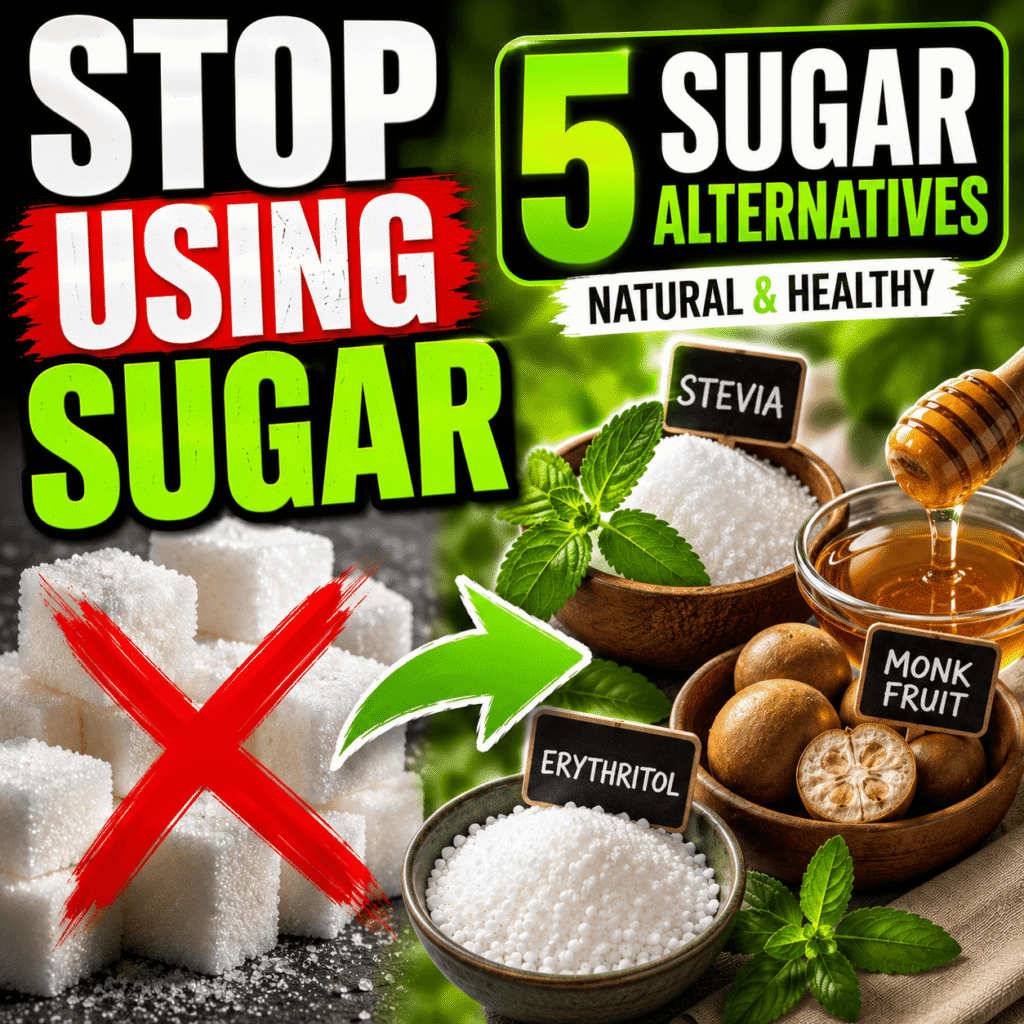
Natural sugar substitutes are the simplest way to enjoy sweetness while protecting your long-term health. Cutting white sugar matters, yet most people miss the taste and quit within days. These substitutes solve that problem by keeping flavour while reducing the harm. The right swap can lower calories, steady your energy, and still satisfy a craving. This article reviews five options that actually work in real kitchens.
You will learn how each option compares on sweetness, calories, and effect on blood sugar. We explain which choices suit coffee, which handle baking, and which belong in dressings. Every recommendation rests on published nutrition science rather than passing diet trends. We also flag the trade-offs, because no sweetener is perfect for every single dish.
Reducing sugar should feel doable, not like a punishment you dread daily. By the end, you will know exactly which natural sugar substitutes fit your taste and goals. You will also learn the common mistakes that turn a healthy swap into an empty one. Treat these options as practical tools, and a lower-sugar lifestyle becomes far easier to keep.
Why Replace White Sugar with Natural Sugar Substitutes?
White sugar adds calories with almost no nutrients in return. Eaten often, it spikes blood sugar and feeds energy crashes through the day. It also crowds out better foods and makes weight control harder. Health bodies link high added sugar to several long-term problems. Natural sugar substitutes let you keep the sweetness you enjoy while easing that load. The goal is not zero sweetness, but smarter, lower-impact choices in daily cooking and drinks.
1.1 The Real Problem With Added Sugar
Added sugar hides in far more foods than most people expect. Sauces, bread, cereals, and drinks all carry it in surprising amounts. The body absorbs it fast, which sends blood sugar up quickly. That rise is followed by a dip that leaves you tired and hungry again. Over time, this cycle makes cravings stronger and harder to control. Research from Harvard’s nutrition experts links excess added sugar to weight gain and heart strain.
The calories from sugar are often called empty for a good reason. They bring energy but no fibre, vitamins, or minerals to support you. Liquid sugar in soft drinks is especially easy to overconsume. You can drink hundreds of calories without feeling any fuller at all. Switching to natural sugar substitutes breaks that pattern in a gentle, realistic way. You keep the sweet taste while cutting the calorie and blood-sugar burden behind it.
1.2 How to Identify Good Natural Sugar Substitutes
A strong substitute should taste close to sugar without a harsh aftertaste. It should also have a lower impact on blood sugar where possible. Some options are calorie-free, while others are caloric but more nutritious. The best choice depends on whether you are baking, sweetening coffee, or making dressings. The table below compares sweetness, calories, and glycemic impact at a glance. Use it to match each substitute to the job you need it to do.
| Substitute | Sweetness vs sugar | Calories | Glycemic impact |
|---|---|---|---|
| Stevia | 200–300× | ~0 | Negligible |
| Monk fruit | 150–200× | ~0 | Negligible |
| Raw honey | ~1.2–1.5× | High | High |
| Maple syrup | ~0.6× | High | Moderate–high |
| Coconut sugar | ~1× (like sugar) | High | Moderate |
No single option wins every category, so context matters most. Stevia and monk fruit shine when you want zero calories in drinks. Honey, maple, and coconut sugar bring flavour and trace nutrients, but still count. A high-protein meal plan, like the one in our look at a lean, protein-rich diet, pairs well with low-calorie sweeteners. Choose by purpose, not hype, and your swaps will stick.
2. The 5 Best Natural Sugar Substitutes
We selected these natural sugar substitutes on four clear criteria. First, how close the taste is to real sugar without odd aftertastes. Second, the effect on blood sugar and overall calorie load. Third, how well each one performs in baking, drinks, or cooking. Fourth, how easy it is to find and use at home. We favoured options backed by nutrition research and approved by food-safety bodies. Each pick below suits a different need, so read for your own habits.
2.1 Stevia
Stevia comes from the leaves of a South American plant. It has become one of the most popular zero-calorie sweeteners worldwide. Food-safety agencies have reviewed purified stevia and consider it safe. You will find it as drops, powder, and blended baking products.
Stevia is roughly two to three hundred times sweeter than sugar. A tiny amount sweetens a whole cup, so portions are very small. It does not raise blood sugar, which makes it useful for many diets. Pure stevia also resists heat, so it survives hot drinks and light baking.
Stevia suits anyone who wants sweetness in coffee, tea, or yogurt with no calories. The main trade-off is a slight liquorice-like aftertaste that some people notice. Blended versions reduce that aftertaste and improve baking results. For an everyday, calorie-free option, stevia remains a reliable first choice.
2.2 Monk Fruit
Monk fruit, also called luo han guo, is a small Asian melon. Its extract has been used in traditional drinks for centuries. The sweetness comes from natural compounds called mogrosides. It is calorie-free and increasingly easy to find in stores.
Monk fruit is about one hundred and fifty to two hundred times sweeter than sugar. It has little to no effect on blood sugar levels. Many products blend it with erythritol to improve texture and baking. That blend behaves more like sugar by adding helpful bulk.
Monk fruit suits people who dislike the aftertaste of plain stevia. It tastes clean and works well in coffee and baked blends. The main trade-off is cost, since pure monk fruit is pricier. For a smooth, calorie-free sweetener, it is one of the best natural sugar substitutes available.
2.3 Raw Honey
Raw honey is one of the oldest natural sweeteners known to humans. Unlike processed sugar, it carries trace enzymes and antioxidants. It has a rich flavour that enhances tea, dressings, and marinades. Quality varies, so look for raw, minimally processed jars.
Honey is slightly sweeter than sugar, so you can use a little less. It still contains carbohydrates and calories, which matters on a diet. Its glycemic impact is real, so portion control stays important. The upside is flavour depth that refined sugar simply cannot match.
Raw honey suits those who want a whole-food sweetener with character. It is ideal for tea, oatmeal, and homemade salad dressings. The trade-off is that it remains a sugar, so calories add up fast. Use it as a flavourful upgrade, not a free pass to sweeten everything.
2.4 Pure Maple Syrup
Pure maple syrup is made from the boiled sap of maple trees. It is a whole, single-ingredient sweetener with a distinct taste. It contains small amounts of minerals like manganese and zinc. Choose pure syrup, not pancake syrups that are mostly corn sugar.
Maple syrup is less sweet than sugar, so recipes may need adjusting. It dissolves easily, which makes it great for liquids and glazes. Like honey, it still raises blood sugar and brings real calories. Its lower sweetness can actually help you use a smaller amount.
Maple syrup suits pancakes, baking, and savoury marinades alike. Its flavour adds warmth that plain sugar cannot deliver. The trade-off is the same as honey, since it is still a caloric sugar. Treat it as a tasty, natural option used in sensible amounts.
2.5 Coconut Sugar
Coconut sugar comes from the sap of the coconut palm flower. It looks and tastes a little like brown sugar. It keeps small amounts of minerals and a fibre called inulin. This makes it a slightly more wholesome swap than white sugar.
Coconut sugar is about as sweet as regular sugar, so swaps are easy. You can usually replace white sugar with it at a one-to-one ratio. Its glycemic impact may be slightly lower, though it is still notable. The calorie count stays close to ordinary table sugar.
Coconut sugar suits bakers who want a simple, like-for-like replacement. It works in cookies, cakes, and warm drinks without special blends. The trade-off is that it remains caloric and is not a low-sugar miracle. Use it to upgrade the quality of your sugar, not to eat more of it.
3. Comparing the Picks and Cooking With Them
Each substitute behaves differently once it hits a recipe. Some add bulk and brown nicely, while others only add sweetness. Knowing the strengths of each one prevents wasted ingredients. The table and tips below help you choose with confidence every time.
3.1 Best Use Comparison
| Substitute | Best use | Good for baking? | Watch out for |
|---|---|---|---|
| Stevia | Drinks, yogurt | Limited (no bulk) | Aftertaste |
| Monk fruit | Coffee, baking blends | Good in blends | Cost |
| Raw honey | Tea, dressings | Yes (reduce liquid) | Calories, still sugar |
| Maple syrup | Pancakes, glazes | Yes (reduce liquid) | Calories |
| Coconut sugar | 1:1 baking swap | Yes (1:1) | Still caloric |
Use the table as a quick map for any recipe. Reach for zero-calorie options in daily drinks you sweeten often. Save honey and maple for dishes where their flavour truly shines. Coconut sugar is your easiest direct swap for classic baking projects.
3.2 Baking and Cooking Tips
Baking with sweeteners is trickier than sweetening a drink. Sugar adds bulk, moisture, and browning that pure stevia cannot replace. For cakes, choose monk-fruit or stevia blends made for baking. These products include bulking agents that mimic how sugar behaves. When using honey or maple, reduce other liquids slightly to keep texture right. Lower the oven temperature a little, since these sweeteners brown faster than sugar.
Start by replacing only half the sugar in a familiar recipe. This protects texture while your taste buds adjust to less sweetness. Taste as you go, because these options vary in strength. For savoury cooking, a touch of honey or maple balances acidity well. Pair lower-sugar habits with whole-food meals, such as the dishes in our healthy cooking ideas. Small, steady changes outlast any dramatic overhaul.
4. How to Use Natural Sugar Substitutes Wisely
A substitute only helps if you use it as part of a smart plan. Swapping sugar is a start, but overall habits decide your results. The points below keep your switch to natural sugar substitutes genuinely healthy. They also stop the common slip-ups that quietly cancel the benefit.
4.1 Daily Amounts and Smart Swaps
Even healthy sweeteners are best used in moderation, not by the handful. Zero-calorie options give freedom, but they should not feed constant cravings. The aim is to retrain your palate to enjoy less sweetness overall. Start with the drinks and snacks you sweeten most often each day. Swapping your coffee sugar alone can cut a surprising number of calories weekly. Build the habit slowly so the change feels natural and lasting.
Read labels carefully, since many products hide added sugar under other names. Choose plain yogurt and add your own measured sweetener at home. Keep a calorie-free option on the table for tea and coffee. Save caloric natural sweeteners for recipes where flavour really matters. This balance lets you cut sugar without feeling deprived at any meal. Over weeks, your taste for intense sweetness fades on its own.
4.2 Mistakes to Avoid
The biggest mistake is treating honey or maple as calorie-free. They are healthier than refined sugar, but they still add up fast. Another error is overusing zero-calorie sweeteners to justify constant treats. That keeps your sweet tooth strong and works against the real goal. Some people also expect baking to taste identical after a swap. Adjust recipes and expectations, and the results improve with practice.
Watch for stomach upset when first using large amounts of sugar alcohols. Erythritol and similar blends can cause bloating if you overdo them. Introduce any new sweetener slowly to see how your body reacts. Finally, do not rely on substitutes alone for better health. Pair them with whole foods, more water, and regular movement. Natural sugar substitutes are one helpful tool inside a balanced lifestyle.
Conclusion: Sweeten Smarter with Natural Sugar Substitutes
Quitting white sugar does not mean giving up sweetness for good. The right natural sugar substitutes let you enjoy treats with far less harm. Stevia and monk fruit cover calorie-free needs, while honey, maple, and coconut sugar add flavour. Match each option to the job, watch your portions, and adjust recipes with patience. Smarter swaps protect your energy, your weight, and your long-term wellbeing.
Begin with one easy change, like the sweetener in your morning drink. Small wins build momentum and make the next swap feel simple. Keep a calorie-free choice handy and save richer sweeteners for special dishes. Choose your favourite natural sugar substitutes today and take a confident step toward better health.