Red light therapy has moved from clinics into homes, and the panels are now everywhere. This article explains how red light therapy works and what the devices can really do. You will learn the science, the studied benefits, and how to pick a panel that fits. We also cover safe sessions, common mistakes, and who should be cautious. The goal is clear, evidence-based information without the marketing noise.
The treatment uses specific wavelengths of light to support your cells. Unlike a tan, it does not rely on heat or harmful ultraviolet rays. Research has explored its effects on skin, muscles, joints, and hair. The results look promising for several uses, though it is not a cure-all. Understanding the evidence helps you set realistic expectations before you buy a device.
Panels vary widely in power, size, and price, which makes choosing hard. A weak device wastes money, while the right one delivers steady results. By the end, you will know which features matter and which are simply hype. You will also learn how to run sessions safely at home. Treat red light therapy as one supportive tool, and you can use it with confidence.
1. What Red Light Therapy Is and How It Works
Red light therapy delivers low levels of red and near-infrared light to the body. The light is absorbed by the cells rather than reflected away. This process is called photobiomodulation in the scientific literature. The idea is that certain wavelengths support how cells produce energy. Devices range from small handhelds to large standing panels. Understanding the basics helps you judge bold claims and choose wisely.
1.1 The Science of Photobiomodulation
Cells contain tiny structures called mitochondria that make energy. Researchers believe red and near-infrared light can stimulate these structures. The light may help mitochondria produce more of a molecule called ATP. More available energy could support repair and normal cell function. The Cleveland Clinic notes that red light therapy is studied for skin and healing. This mechanism is the basis for most claimed benefits.
It is important to keep expectations grounded in current evidence. Some uses, like skin and wound healing, have stronger support than others. Study sizes, devices, and doses vary, which makes firm conclusions harder. Red light therapy is generally considered low risk when used correctly. Still, it works gradually and rewards consistency over weeks. Think of it as gentle support, not an instant fix for any condition.
1.2 Red Light Therapy vs Near-Infrared Light
Most quality panels combine two ranges of light for good reason. Visible red light sits around 630 to 660 nanometres in wavelength. It penetrates shallowly, which suits skin, fine lines, and surface concerns. Near-infrared light sits higher, around 810 to 850 nanometres. It reaches deeper into muscle and joint tissue where you cannot see it. The table below shows how the two ranges differ in practice.
| Light type | Wavelength | Penetration | Best for |
|---|---|---|---|
| Red light | ~630–660 nm | Shallow (skin) | Skin, wrinkles, acne |
| Near-infrared | ~810–850 nm | Deep (muscle/joint) | Recovery, joints, deep tissue |
A panel that offers both ranges covers more uses in one device. Red light targets the surface you can see in the mirror. Near-infrared works quietly on tissues beneath the skin. For broad benefits, many users prefer a combined red and near-infrared panel. If your only goal is skin, a red-dominant device may be enough. Match the wavelengths to the result you actually want.
2. 7 Studied Benefits of Red Light Therapy
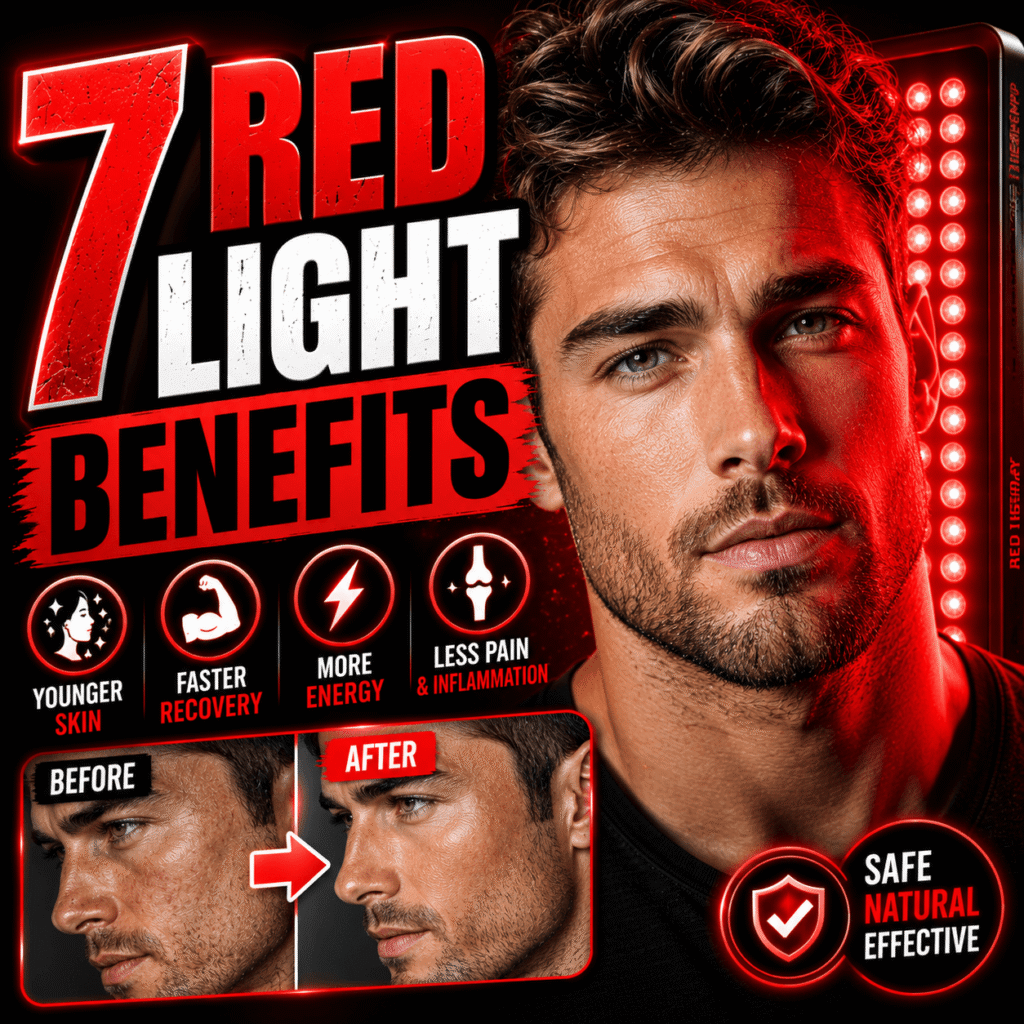
Research has explored red light therapy for several different goals. Some areas have solid evidence, while others remain early and mixed. The table below summarises seven commonly studied benefits at a glance. Use it as an overview, then read the detail that follows. Remember that results depend on dose, consistency, and the device itself.
| Area | What red light may support |
|---|---|
| Skin aging | Collagen production, softer fine lines |
| Acne | Calmer inflammation, clearer skin |
| Muscle recovery | Less soreness after exercise |
| Joints & pain | Reduced stiffness and discomfort |
| Hair | Support in pattern thinning |
| Wound healing | Faster tissue repair |
| Mood & sleep | Possible circadian support |
2.1 Skin, Wrinkles, and Acne
Skin care is the most popular use of red light therapy at home. Studies suggest red light can support collagen, the protein that keeps skin firm. More collagen may soften the look of fine lines over time. Many users combine it with a good skincare routine for better results. A dedicated LED face mask for skin is a focused alternative to a full panel. Both rely on the same basic light principles.
Red light may also help calm the inflammation behind some acne. It is often paired with blue light, which targets acne-causing bacteria. Results build slowly, so daily or near-daily sessions work best. People with sensitive skin usually tolerate it well at recommended doses. As always, severe skin conditions deserve a doctor’s input first. Used patiently, it can be a gentle support for a clearer, smoother complexion.
2.2 Muscle Recovery and Joint Comfort
Athletes often use red light therapy to ease soreness after hard training. Near-infrared light reaches deeper tissue where muscle fatigue builds. Some studies report less soreness and faster perceived recovery. This makes it appealing as part of a wider recovery routine. It pairs well with sleep, hydration, and sensible training loads. The effect is supportive rather than dramatic for most people.
Joint comfort is another area drawing growing interest. Light in the near-infrared range may help reduce stiffness for some users. People with everyday aches sometimes find sessions soothing and relaxing. It is not a replacement for medical treatment of joint disease. Anyone with a diagnosed condition should speak with a clinician first. Within those limits, many find it a helpful comfort tool after activity.
2.3 Hair, Healing, and Wellbeing
Red light therapy is studied for certain types of hair thinning. Low-level light may support follicles in early pattern hair loss. Results vary and tend to need months of consistent use. Specialised caps and combs target the scalp more directly than panels. It works best when thinning is recent rather than long established. Patience and realistic goals matter a great deal here.
Wound and tissue healing is one of the better-supported uses. Clinics have long used light to help certain wounds recover. Some users also report better mood and sleep with regular morning light. The evidence on mood is still early and should be read with care. Even so, a calming light routine can feel restorative day to day. Treat these wellbeing effects as a welcome bonus, not a guarantee.
3. How to Choose Red Light Therapy Panels
Choosing a panel is where most buyers feel overwhelmed. The market is full of bold numbers and confusing marketing terms. A few key specifications separate a serious device from a toy. Focus on those specs and ignore the rest of the noise. The sections below explain what truly matters before you spend.
3.1 Key Specs: Irradiance, Wavelength, and Size
Irradiance is the power of light reaching your skin at a set distance. Too little power means weak, slow, or unreliable results. Reputable brands publish irradiance at a stated distance, not a vague peak. Check that wavelengths fall in the effective red and near-infrared ranges. Panel size decides how much of your body you can treat at once. A larger panel saves time but costs more and needs more space.
Build quality and safety certifications also deserve a close look. Good panels manage heat well and carry recognised electrical approvals. Low flicker is better for comfort during longer sessions. A clear warranty signals that a brand stands behind its product. Read independent reviews rather than trusting the sales page alone. These checks protect both your money and your results.
3.2 Panel Types and Popular Options
Panels come in several sizes for different goals and budgets. Small targeted panels suit the face or a single joint. Large full-body panels treat more skin and muscle in one session. Several established brands are known for honest specifications and solid build. The table below lists popular options as a starting point for research.
| Panel | Tier | Known for |
|---|---|---|
| Hooga | Budget | Value, good for beginners |
| Mito Red Light | Mid-range | Balanced specs and size options |
| PlatinumLED BIOMAX | Premium | High measured irradiance |
| Joovv | Premium | Modular build and app control |
Match the device to your main goal and available space. A beginner may start with a budget panel to test a routine. A serious user might invest in a larger, higher-powered model. Compare published irradiance, wavelengths, and warranty across your shortlist. Other at-home tools, like at-home skincare devices, can complement a panel. Buy once and buy well to avoid disappointment.
4. How to Use Red Light Therapy Safely
Good technique decides whether red light therapy delivers results. The right distance, time, and frequency matter more than buying the priciest panel. Safe habits also prevent the few risks linked to misuse. The points below help you build a simple, effective routine. Always follow the instructions that come with your specific device.
4.1 Sessions, Distance, and Frequency
Most panels are used from a short distance, often around fifteen to thirty centimetres. The exact distance depends on the panel’s power and the maker’s guidance. Sessions typically last a few minutes per area, not hours. More time does not automatically mean better results. Consistency beats intensity, so aim for regular short sessions. Many users treat target areas most days of the week.
Keep the treated skin clean and free of heavy products beforehand. Bare skin absorbs the light better than skin under thick creams. Track your sessions so you can judge progress fairly over weeks. Give any benefit time to appear before changing your routine. Photos taken under the same light help you measure skin changes. A steady schedule is the single biggest factor in real results.
4.2 Safety, Mistakes, and Who Should Be Cautious
Red light therapy is generally low risk, but eye protection still matters. The bright light can be uncomfortable, so use the goggles provided. Never stare directly into a powerful panel during a session. A common mistake is sitting too far away for any effect. Another is expecting overnight changes and quitting too soon. Overusing sessions does not speed results and only wastes time.
Certain people should check with a doctor before starting. This includes those on light-sensitising medication or with specific eye conditions. Pregnant users and anyone with a serious illness should seek advice first. Red light therapy does not replace prescribed medical treatment. If a skin area looks unusual, see a professional rather than self-treating. When in doubt, a quick medical check keeps your routine safe.
Conclusion: Use the Light With Confidence
Red light therapy is a promising, low-risk tool when you understand it. The science points to real support for skin, recovery, and healing. Choose a panel with honest irradiance, the right wavelengths, and a fair warranty. Then use it consistently, at the correct distance, with eye protection. Realistic expectations turn a popular trend into a genuinely useful habit.
Start simple, track your sessions, and give the routine several weeks. Pair red light therapy with good skin care, sleep, and sensible training. Speak to a doctor if you have any medical concerns before you begin. With the right device and steady habits, you can enjoy the benefits safely and confidently.