
At-home microdermabrasion lets you resurface dull, tired skin without an expensive clinic visit. This gentle exfoliating treatment sweeps away dead surface cells to reveal smoother, brighter skin underneath. A simple handheld device brings a spa-style technique into your own bathroom for a fraction of the price. For anyone chasing a fresh, even complexion, it is one of the most rewarding tools available. With the right method, you can see real improvement in tone and texture at home.
This treatment matters because skin renewal slows as we age, leaving the surface rough and lifeless. Professional sessions work well but cost a lot and add up over time. At-home microdermabrasion offers a budget-friendly way to keep that renewal going between visits. Moreover, regular use can soften fine lines, fade dark spots, and unclog pores. The key is doing it correctly and safely, since over-treating can irritate the skin. Done well, it delivers a clear, glowing result that few other home tools match.
This article walks through six proven steps for safe, effective at-home microdermabrasion. You will learn how it works, which device types exist, and how to treat your skin properly. Furthermore, it covers aftercare, ideal frequency, and the safety rules that protect your skin. Each point is grounded in dermatology guidance rather than hype. By the end, you will know exactly how to renew your complexion at home with confidence.
1. What At-Home Microdermabrasion Is and How It Works
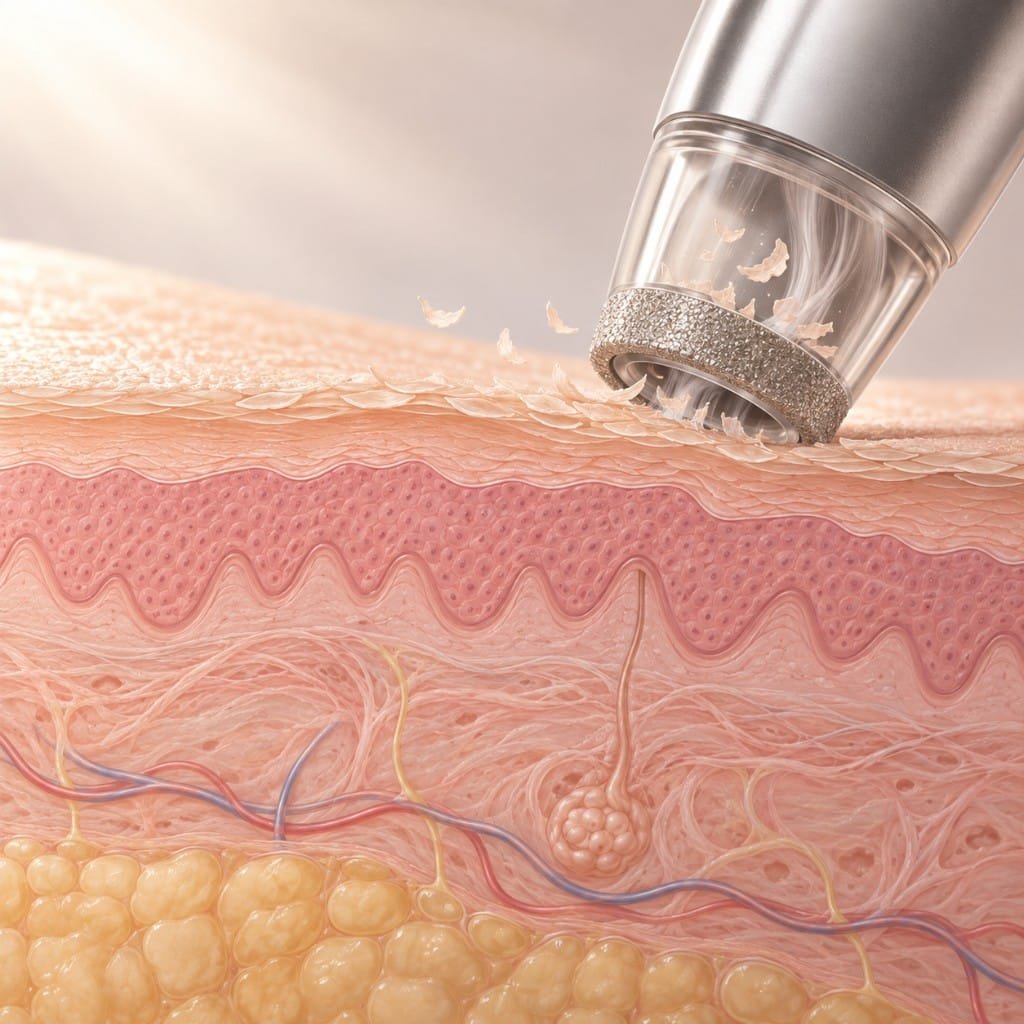
At-home microdermabrasion is a mechanical exfoliation that polishes the outermost layer of skin. A handheld device uses fine crystals or a textured tip to buff away dead cells. Gentle suction then lifts the loosened debris from the surface. This process reveals the fresher skin sitting just below the dull top layer. It mimics the professional treatment but uses milder settings for safe home use. Understanding this simple mechanism helps you treat your skin effectively without overdoing it.
1.1 How At-Home Microdermabrasion Works
The device works through two simple actions: abrasion and suction. The abrasive tip gently sands the very top layer of dead skin cells. At the same time, light suction vacuums away the loosened flakes and stimulates blood flow. This combination smooths the surface and encourages fresh cell turnover. As a result, the skin looks brighter and feels softer after a single session. The American Academy of Dermatology describes microdermabrasion as a safe, surface-level resurfacing method when used correctly.
Home devices are deliberately gentler than the machines used in clinics. They use lower suction and softer tips to reduce the risk of injury. Because the treatment only affects the surface, it suits regular maintenance well. For deeper concerns, a professional can refer to the American Academy of Dermatology guidance on microdermabrasion. Meanwhile, the home version keeps your skin smooth between any professional sessions. This makes it a practical, ongoing part of a skincare routine.
1.2 Benefits of At-Home Microdermabrasion
The main benefit is smoother, brighter skin with a more even tone. Removing the dull surface layer instantly improves how light reflects off your face. Over several weeks, regular treatment can soften the look of fine lines. It also helps fade mild dark spots and patches of uneven pigment. Additionally, clearing dead cells helps unclog pores and reduce their appearance. These visible results explain why the treatment has become a home-care favorite.
There is a second, quieter benefit that boosts your whole routine. Exfoliated skin absorbs serums and moisturizers far more effectively. With the dead layer gone, your products reach fresh cells and work better. As a result, the rest of your skincare delivers more value for the money. This pairs well with treatments like an LED face mask for added glow. Therefore, microdermabrasion acts as a multiplier for everything else you apply.
2. Types of At-Home Microdermabrasion Devices
Not all home devices work the same way, so understanding the types helps you choose well. The two main styles use either loose crystals or a fixed abrasive tip. Each delivers exfoliation but differs in mess, cost, and ease of use. Suction strength and tip quality also vary widely between models. Knowing these differences prevents you from wasting money on the wrong tool. The subsections below compare the styles and explain what truly matters when buying.
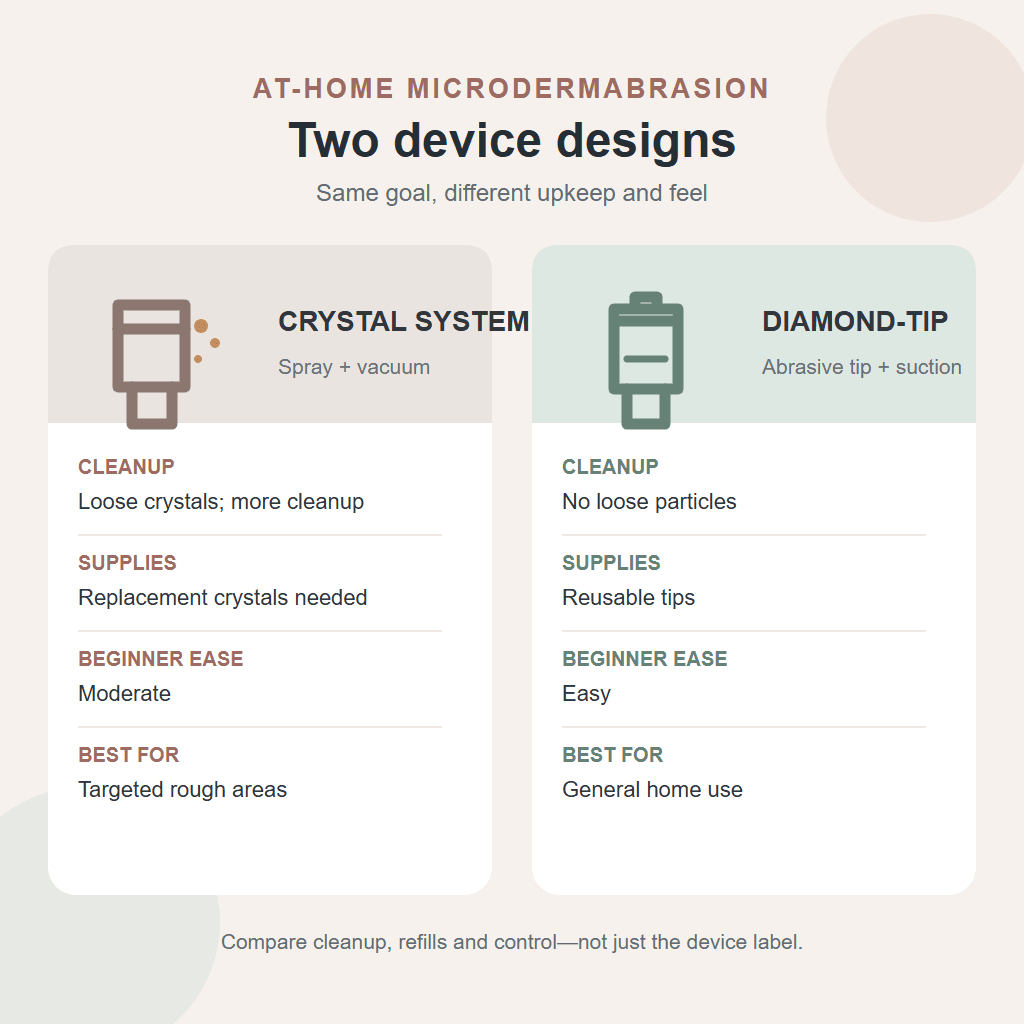
2.1 Crystal vs. Diamond-Tip Devices
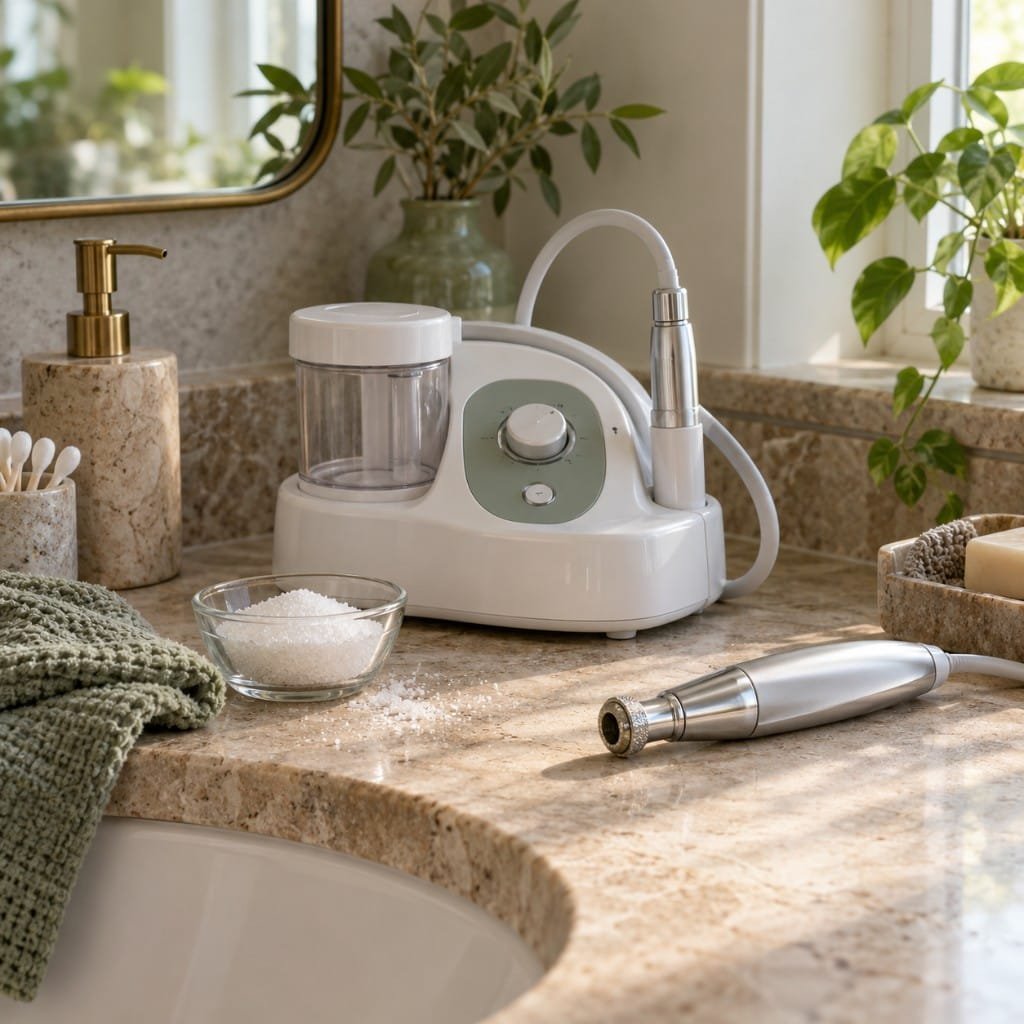
Crystal devices spray tiny exfoliating crystals onto the skin, then vacuum them away. This is the classic method used in many older clinic machines. It exfoliates effectively but can be messy and uses replaceable crystals. The loose particles also require care around the delicate eye area. For some users, the spray feels powerful and satisfying on rough patches. However, the ongoing crystal refills add a small recurring cost over time.
Diamond-tip devices use a textured, abrasive head instead of loose crystals. The head buffs the skin directly while suction lifts away the dead cells. This design is cleaner, reusable, and easier to control for beginners. Many people prefer it because there are no crystals to refill or spill. The tips often come in different grades for sensitive or tougher skin. Overall, diamond-tip tools suit most home users seeking simple, repeatable results.
2.2 What to Look for When Choosing
Adjustable suction is the single most important feature to seek. Multiple intensity levels let you start gently and build up safely. Sensitive skin needs the lowest setting, while tougher areas can handle more. Look also for several tip grades so you can match the abrasion to each zone. A clear, comfortable handle makes the device easier to guide across your face. These practical features matter far more than flashy marketing claims.
Build quality and hygiene round out a smart buying decision. Choose a device with washable, replaceable filters and tips for cleanliness. A rechargeable battery adds convenience and avoids tangled cords during use. Reading honest reviews helps you avoid weak suction or fragile parts. Meanwhile, a reputable brand usually offers better support and spare parts. Picking carefully here ensures your at-home microdermabrasion stays safe and effective for years.
3. How to Do At-Home Microdermabrasion Safely
Good technique is what separates glowing results from red, irritated skin. At-home microdermabrasion is simple, yet a few rules keep the process safe. Clean, dry skin and gentle, steady movements protect the surface from damage. Rushing or pressing too hard is the most common beginner mistake. Starting on a low setting lets your skin adjust before you increase intensity. The subsections below walk through preparing your skin and the treatment itself, step by step.
3.1 Preparing Your Skin
Preparation begins with thoroughly cleansing your face and removing all makeup. Wash with a gentle cleanser, then pat the skin completely dry. Dry skin is essential, since the device glides and grips best on a dry surface. Avoid treating broken, sunburned, or actively breaking-out skin. A quick patch test on the jaw checks how your skin reacts first. This careful start prevents irritation and sets up an even, comfortable treatment.
It also helps to plan the timing of your session wisely. Many people treat in the evening so the skin can calm overnight. Skip any strong actives like retinol or acids for a day or two before. These ingredients already exfoliate, so combining them can over-strip the skin. Keep a soothing moisturizer ready for immediately after the treatment. With your skin clean, dry, and calm, you are ready to begin safely.

3.2 The Step-by-Step Treatment
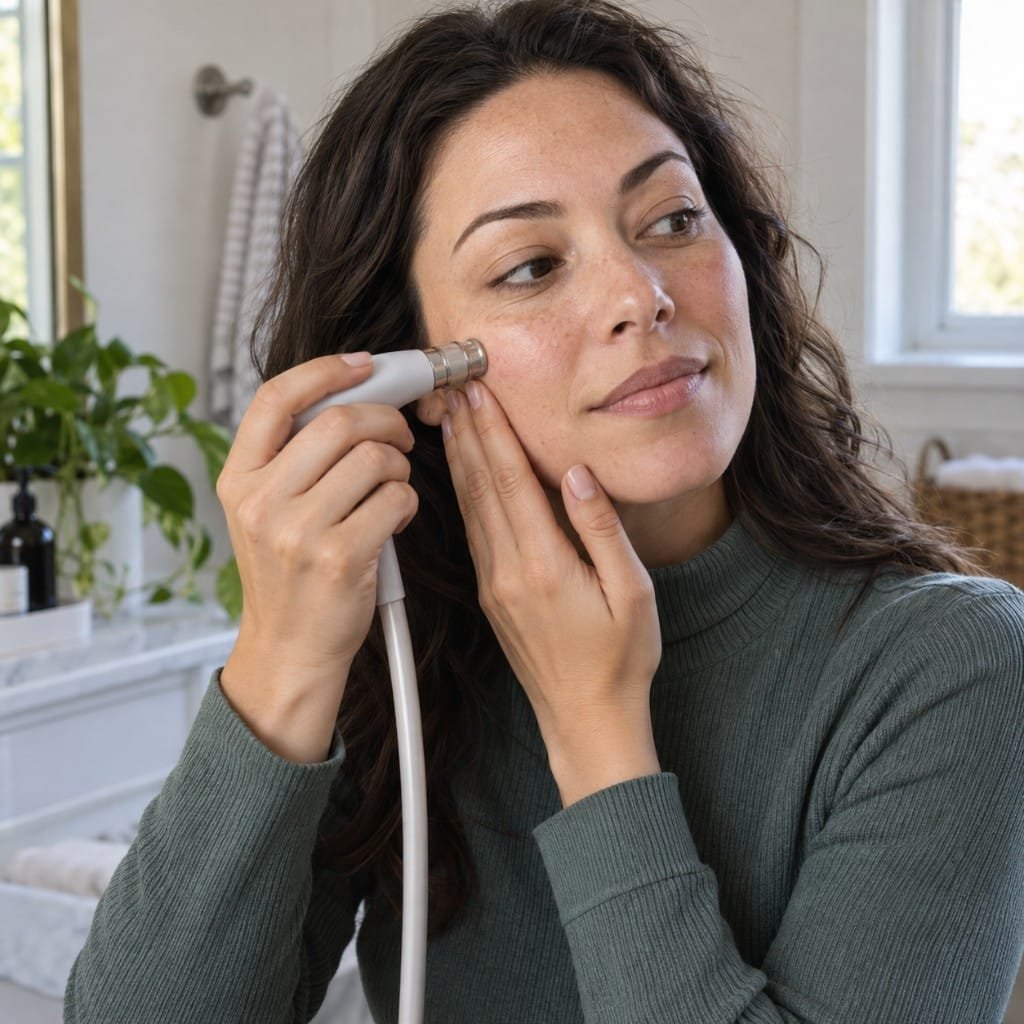
Begin on the lowest suction setting to let your skin adjust. Hold the skin taut with one hand to keep the surface flat. Glide the device in slow, straight passes, never lingering in one spot. Move upward and outward, following the natural lines of your face. Make only one or two passes over each area to avoid over-exfoliating. Steady, light movements give the smoothest and safest result.
Treat the more delicate zones with extra care and a lighter touch. Avoid the eyelids and any area where the skin feels thin or sensitive. Lift the device fully before changing direction to prevent suction bruising. Keep the whole session short, usually under five minutes for the full face. When finished, rinse away any residue with cool water and pat dry. This calm, controlled routine delivers the renewal you want without the risk.
4. Aftercare and Best Results for At-Home Microdermabrasion
What you do after treatment shapes your results as much as the session itself. Freshly resurfaced skin is more sensitive and needs gentle, protective care. The right aftercare locks in the glow and prevents irritation or dryness. Spacing your sessions correctly also lets the skin recover and renew fully. Treating too often is a common way to undo your own progress. The subsections below cover post-treatment care and how often to repeat the routine.
4.1 Post-Treatment Skincare
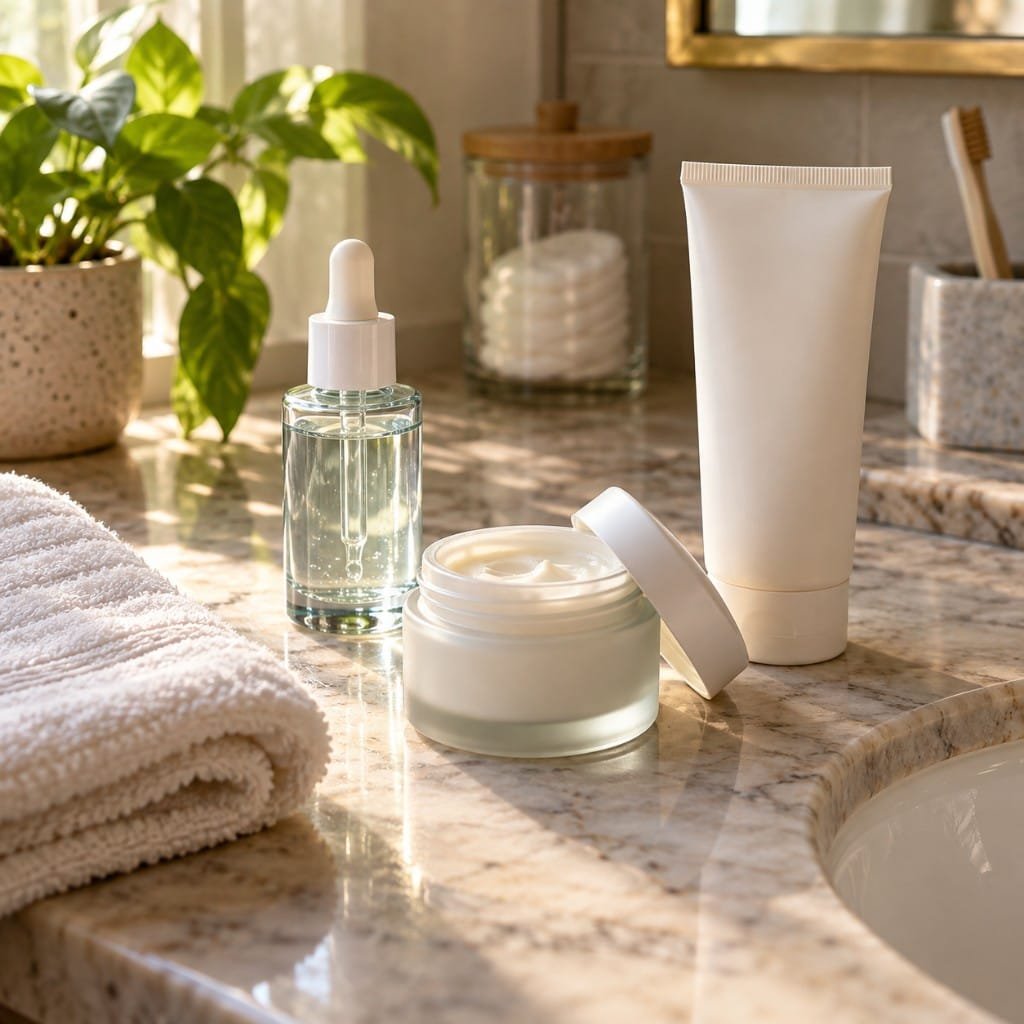
Right after treatment, apply a gentle, hydrating moisturizer to calm the skin. A simple formula with hyaluronic acid or ceramides works beautifully here. This is also the perfect moment to apply a nourishing serum, since absorption peaks. Avoid harsh actives, scrubs, or strong acids for the next day or two. Your skin has just been exfoliated, so it needs soothing, not more stripping. This gentle care helps the fresh surface settle into a healthy glow.
Sun protection is the single most important aftercare step of all. Newly resurfaced skin is more vulnerable to sun damage and dark spots. Apply a broad-spectrum sunscreen every morning without fail after treating. Building this into a full routine, like our skincare routine for radiant skin, protects your results. Skipping sunscreen can quickly reverse the brightening you worked for. Therefore, daily sun protection is non-negotiable for lasting, glowing results.
4.2 How Often to Treat
Frequency depends on your skin type and how it responds to treatment. Most people do well treating once every one to two weeks. This spacing gives the skin time to renew fully between sessions. Sensitive skin should stretch the gap even further, to every two or three weeks. Treating more often than this can leave the skin raw and inflamed. Patience here protects your barrier and keeps the results steady.
Listen to your skin and adjust the schedule as you learn its limits. If you notice lasting redness or tightness, extend the time between sessions. Consistency over weeks matters more than treating aggressively all at once. Many users find a steady, gentle rhythm gives the best long-term glow. Tracking your sessions on a simple calendar helps you avoid overdoing it. In short, slow and regular beats fast and harsh for healthy, lasting renewal.

5. Safety, Risks, and Who Should Avoid It
Although it is gentle, at-home microdermabrasion still carries a few real risks. Most issues come from treating too hard, too often, or on unsuitable skin. Knowing the possible side effects helps you spot trouble early and adjust. Some people should avoid the treatment entirely for medical reasons. Respecting these limits keeps the experience safe and rewarding rather than damaging. The subsections below outline the common side effects and who should steer clear.
5.1 Common Side Effects
Mild redness right after treatment is the most common and normal reaction. The skin may also feel slightly tight or look a little flushed for an hour. These effects usually fade quickly when you treat gently and moisturize after. Pushing too hard, however, can cause real irritation or small abrasions. Excess suction sometimes leaves temporary marks that resemble light bruising. Keeping the intensity low prevents nearly all of these unwanted reactions.
More serious problems appear only when the treatment is misused. Over-exfoliating can damage the skin barrier, causing dryness and sensitivity. Treating active acne can spread bacteria and worsen breakouts. If you notice lasting pain, broken skin, or swelling, stop immediately. Persistent reactions are a clear signal to pause and let the skin heal. When in doubt, a dermatologist can advise whether the treatment suits you.
5.2 Who Should Avoid At-Home Microdermabrasion
Some skin conditions make this treatment a poor choice. People with active acne, rosacea, or eczema should generally avoid it. The abrasion can inflame these conditions and make them noticeably worse. Anyone with very sensitive or easily broken skin should also be cautious. Open cuts, sunburn, and cold sores are clear reasons to wait. In these cases, gentler care or professional advice is the safer path.
A few other situations call for extra caution before starting. Those using prescription retinoids or recent acid peels should consult a doctor first. Skin that scars or darkens easily may react poorly to aggressive exfoliation. When any doubt exists, a quick chat with a dermatologist settles it. For most healthy adults, though, gentle at-home microdermabrasion is perfectly safe. Matching the treatment to your skin is the final key to great results.
| Feature | Crystal Device | Diamond-Tip Device |
|---|---|---|
| Method | Sprays and vacuums crystals | Abrasive tip plus suction |
| Mess | Loose crystals, more cleanup | Clean, no loose particles |
| Running cost | Crystal refills needed | Reusable tips |
| Ease for beginners | Moderate | Easy |
| Best for | Targeted rough areas | General home use |
| Skin Type | Suggested Frequency | Key Tip |
|---|---|---|
| Normal | Every 1–2 weeks | Low suction, single passes |
| Oily / resilient | Every 1 week | Watch for over-exfoliation |
| Sensitive | Every 2–3 weeks | Lowest setting, patch test first |
| Mature | Every 1–2 weeks | Always follow with sunscreen |
Conclusion: At-Home Microdermabrasion — Smooth, Bright Skin
At-home microdermabrasion brings genuine, professional-style resurfacing into your own routine. The six steps in this article take you from understanding the technique through device choice, safe treatment, aftercare, and risks. Done gently and consistently, it smooths texture, brightens tone, and helps your products work harder. The keys are a quality device, a light touch, and patient spacing between sessions. Above all, gentle and regular treatment beats harsh, frequent passes every time. With care, your skin can look fresher and brighter without ever leaving home.
If you crave smoother, more radiant skin, this treatment is well worth trying. Start with a gentle device, a patch test, and the lowest setting. Follow each session with hydration and daily sunscreen to protect your glow. Respect your skin’s limits and pause whenever it asks for a break. Over a few weeks, the steady renewal of at-home microdermabrasion adds up beautifully. Begin slowly today and let your complexion reveal its brighter, smoother self.