
A document shredding business looks simple from the outside: collect paper, run it through a machine, and send an invoice. In practice, the first decision shapes everything after it. Will clients bring their boxes to you, will you collect from their offices, or will you shred at their door? Each model needs a different budget, attracts different clients and proves destruction in a different way.
This guide compares the three models side by side. It shows who pays for the service and why, what each model costs to start, and which one suits a small first step. After that, it covers the machine and shred size, pricing, the shredded paper itself, and the first clients worth calling. Finally, it explains when a shred truck starts to make sense.
Who Pays a Document Shredding Business, and Why
Offices pay a document shredding business because confidential paper becomes a liability once they no longer need it. In the United States, the FTC’s Disposal Rule (16 CFR Part 682) applies to any business or individual that uses a consumer report for a business purpose. FTC guidance on the rule lists lenders, insurers, employers, landlords, car dealers, attorneys and debt collectors, among others. Reasonable disposal, the rule says, can mean burning, pulverizing or shredding papers so the information cannot be read or reconstructed.
Healthcare brings a second legal reason to shred. The HHS disposal FAQ names shredding, burning, pulping and pulverizing as examples of proper disposal for paper records with patient information. Clinics, pharmacies and dental practices therefore have a steady need.
Notably, the rule also describes hiring a document destruction contractor after due diligence. That due diligence may include an independent audit, several references, certification by a recognized trade association and a review of the contractor’s security policies. In other words, the rule itself tells your future clients what to ask you. Prepare those answers early, and your document shredding business looks established from the first meeting. Outside the United States, however, the rules differ, so check the data-protection law where you work before you write your first contract.
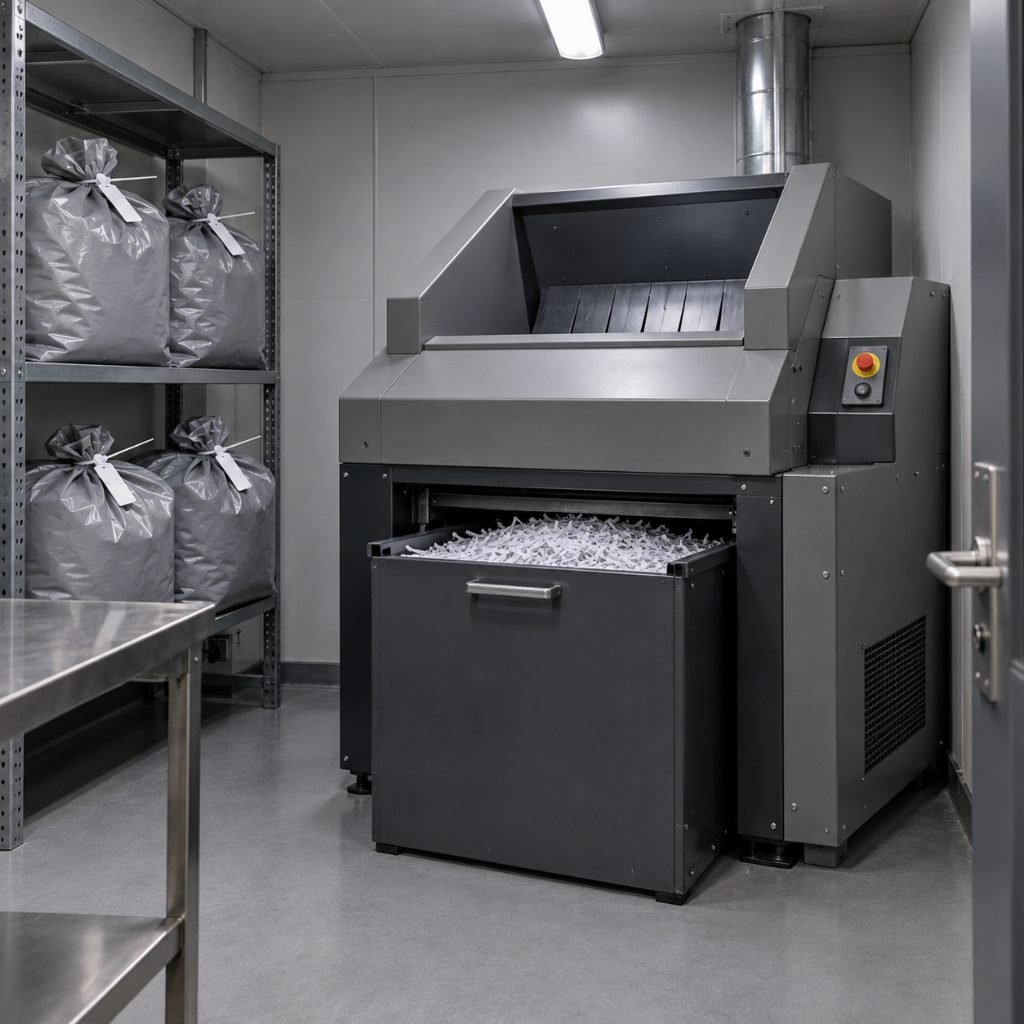
Model 1: A Drop-Off Document Shredding Business
In the drop-off model, clients bring boxes or bags to your location, and you shred them while they wait or soon after. The setup is the smallest of the three: a lockable room, a high-capacity cross-cut shredder and a counter. Households fit this model well, since many people keep old bank statements and tax papers they do not know how to discard. Similarly, small offices without a regular schedule fit it.
The weakness, however, is volume. Drop-off clients come when they remember, so income is uneven from week to week. However, the model is cheap to test. For example, a monthly open shredding day, advertised to nearby homes and small shops, shows quickly whether local demand exists. In addition, if clients can watch their own boxes go in, you solve the proof problem on the spot.
Model 2: Scheduled Pickup to Your Own Shredder
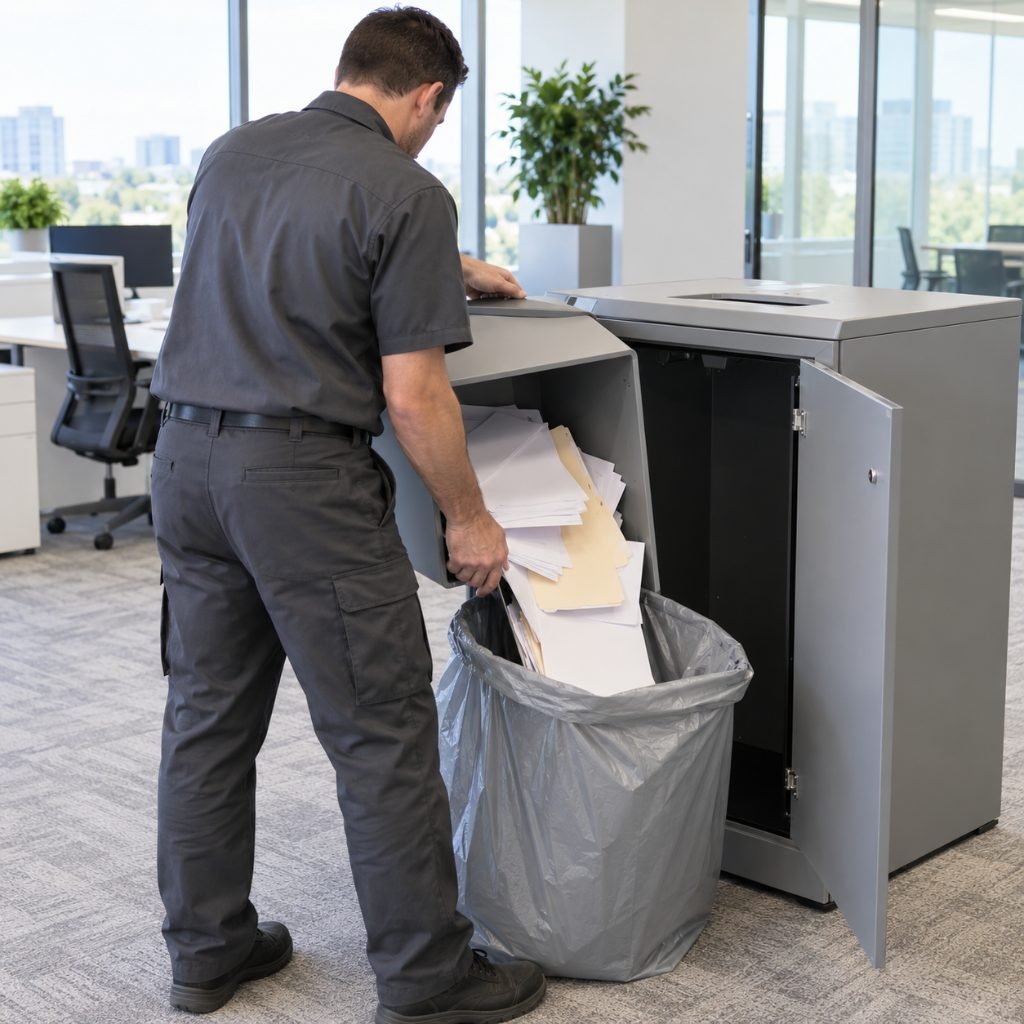
In the pickup model, you place locked consoles in client offices. Staff drop paper through a slot, and you empty the console on a fixed schedule. You then seal the paper in security bags, drive it to your locked room and shred it there. Because each client books a regular visit, this model turns a document shredding business from one-off jobs into recurring revenue.
Trust carries more weight here, because the paper leaves the client’s building before you destroy it. Therefore, every step needs a record: numbered seals, a signed pickup log, and a certificate of destruction afterwards. Tamper-evident security bags and locking shred consoles are the basic tools of this model, and clients will ask to see both before they sign.
As an Amazon Associate, BeIN ADVISOR earns from qualifying purchases.
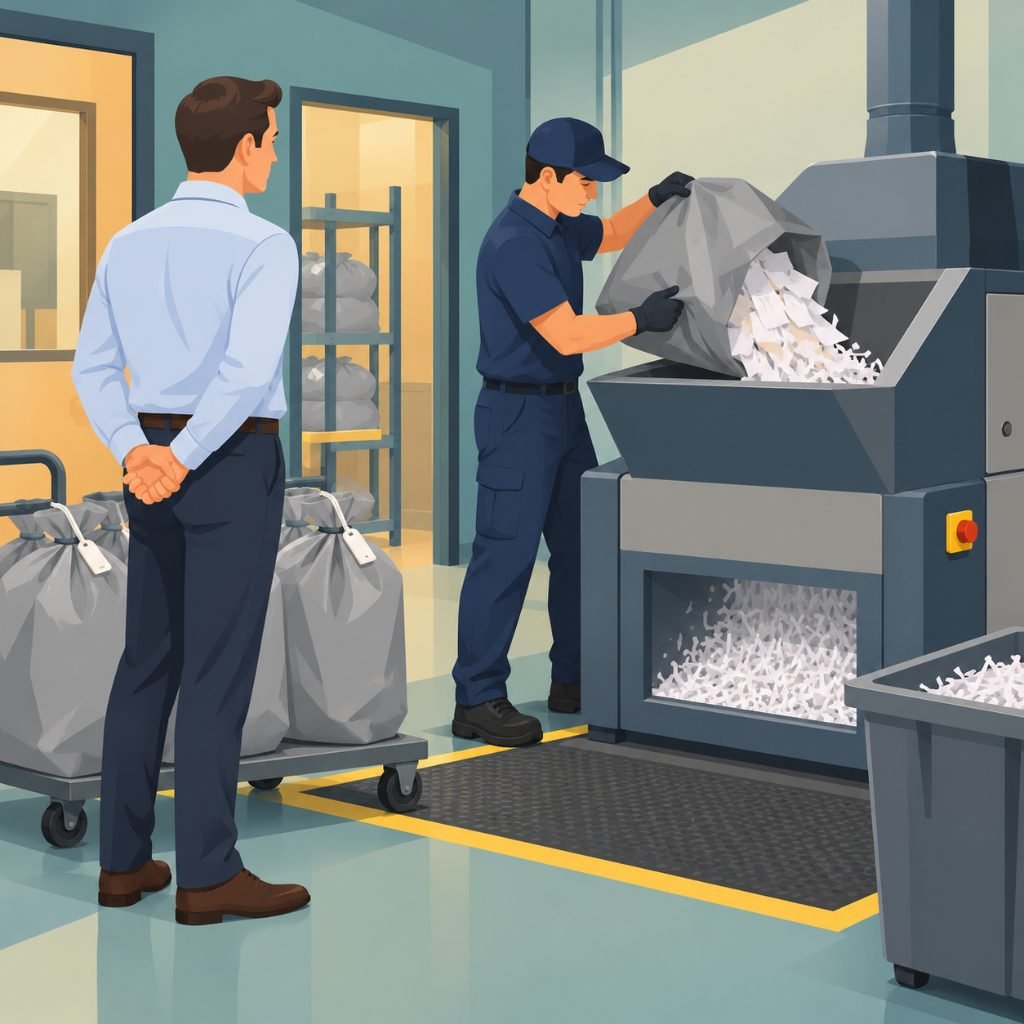
Whichever model you run, the client ends up with one document: the certificate of destruction. It records the client’s name, the date, the number of bags, the seal numbers and the security level used. It carries your signature and, where possible, the signature of a client employee who watched. For example, an accountant facing an audit can show that certificate when asked what happened to old files.
Number your certificates in sequence and keep a copy of each. In addition, keep the pickup logs that match them, so any certificate can be traced back to a signed collection. Later, if you pursue NAID AAA Certification, run by i-SIGMA, these records will matter. Its auditors check the whole destruction process, make unannounced visits as well as scheduled ones, and look at how staff are screened.
Model 3: A Mobile On-Site Document Shredding Business
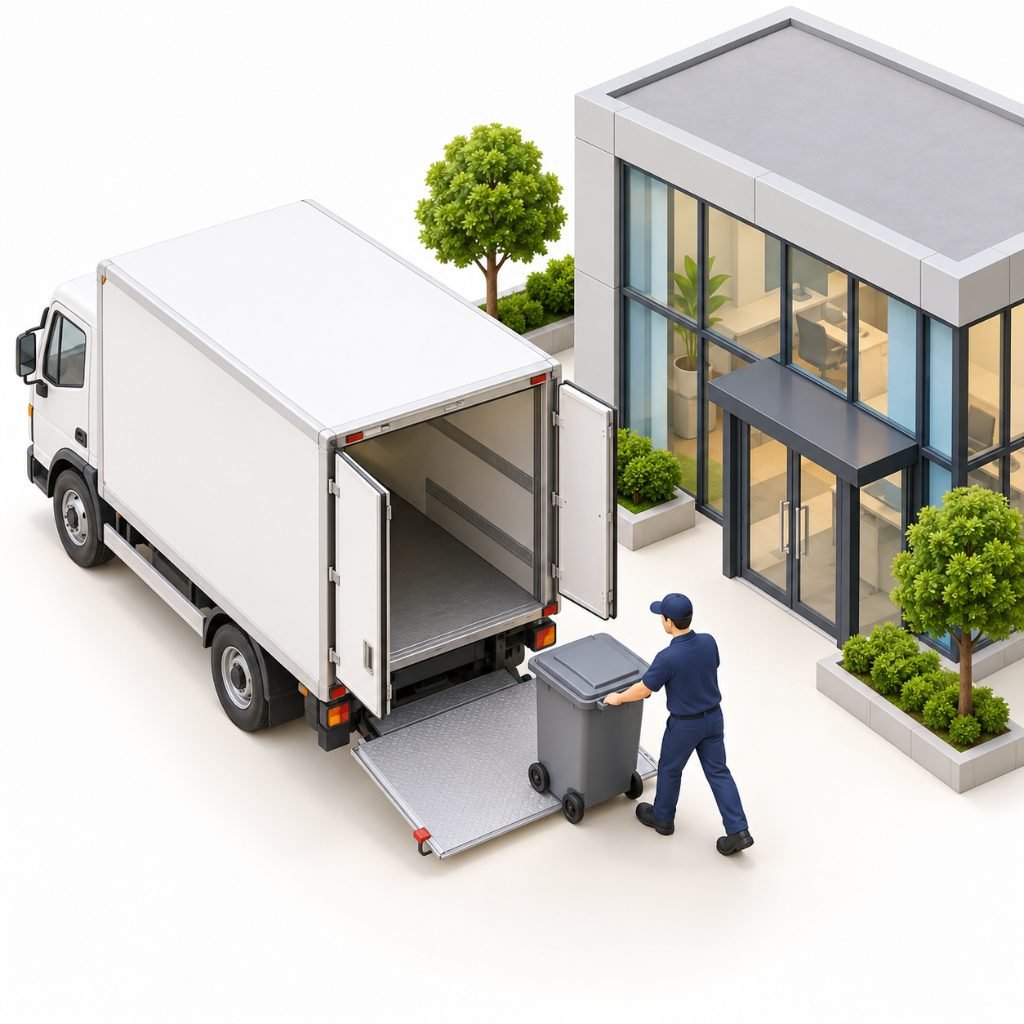
In the mobile model, a truck with a built-in shredder parks outside the client’s office and destroys the paper there. In contrast to pickup, clients can watch the bags go in, so proof is immediate. As a result, large clients with strict policies, such as hospitals or banks, often prefer it. Furthermore, the same truck can handle big one-time purges, such as an office move or an archive clean-out.
The cost, however, is the obstacle. A mobile shredding system means the shredder, its conveyor and the work to install them in a box truck. Industry guides put that system at roughly $72,000 to $90,000, before the cost of the truck itself. A used shred truck, with the shredder already fitted, appears in listings at roughly $38,000 to $84,000, depending on age and capacity. Consequently, this is usually a second step for a document shredding business, not a first one.
Comparing the Three Document Shredding Business Models
| Drop-off | Scheduled pickup | Mobile on-site | |
|---|---|---|---|
| Main equipment | Cross-cut shredder in a locked room | Shredder, locked consoles, vehicle, seals | Shred truck with built-in shredder |
| Typical clients | Households, small offices | Clinics, accountants, law firms | Hospitals, banks, large offices |
| How clients see proof | They watch the shredding | Seal log and certificate | They watch at their door |
| Income pattern | Uneven, walk-in | Recurring, scheduled | Recurring plus large purges |
| Start-up scale | Smallest | Small to medium | Largest |
Read the table from your budget backwards. If you can fund a shredder and a locked room, the first two models are open to you. In contrast, the third needs either savings or a lender. Therefore, the most realistic route to profit for a small start combines drop-off days with a short list of pickup clients: start-up costs stay low, and pickup contracts bring in income every month.
The Profitable Start for a Small Document Shredding Business
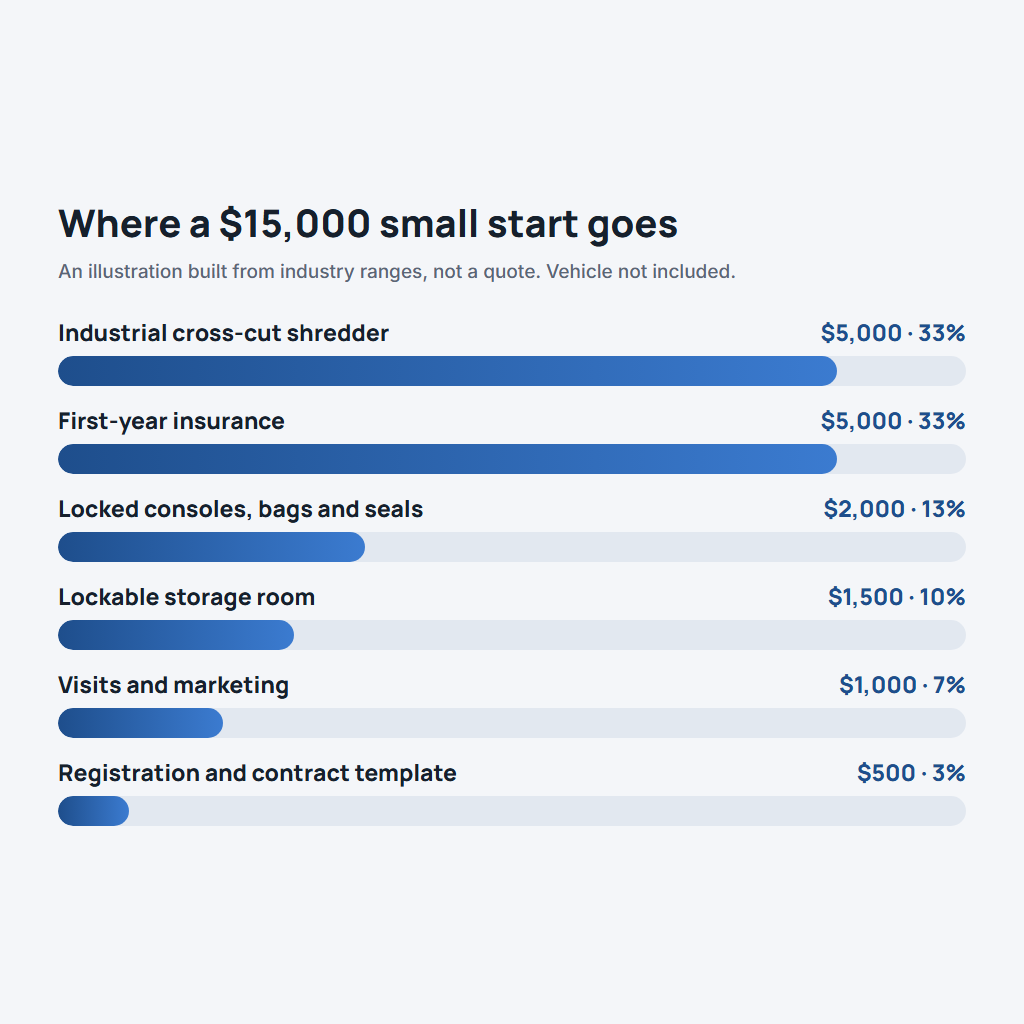
Scheduled pickup, backed by monthly drop-off days, earns from both sides. Pickup clients book regular visits, which makes monthly revenue easier to forecast against fixed costs such as the shredder and insurance. Drop-off days, in turn, fill spare machine hours and bring in households and small offices you would not visit. Moreover, both models share the same machine and the same locked room, so you pay for that equipment once.
| Item (illustration, not a quote) | Approx. cost (USD) | Share of capital |
|---|---|---|
| Industrial cross-cut shredder | 5,000 | 33% |
| First-year insurance | 5,000 | 33% |
| Locked consoles, bags and seals | 2,000 | 13% |
| Lockable storage room | 1,500 | 10% |
| Visits and marketing | 1,000 | 7% |
| Registration and contract template | 500 | 3% |
| Total | 15,000 | about 100% |
The figures are an illustration built from industry ranges: standalone industrial shredders start around $5,000, and first-year insurance for a shredding operation is often estimated at $5,000 to $10,000. Therefore, replace each line with real quotes before you commit. In addition, this plan assumes you already have a vehicle. If you need one, budget it separately, because a van can cost more than everything in the table.
Shred Size and the Machine You Buy
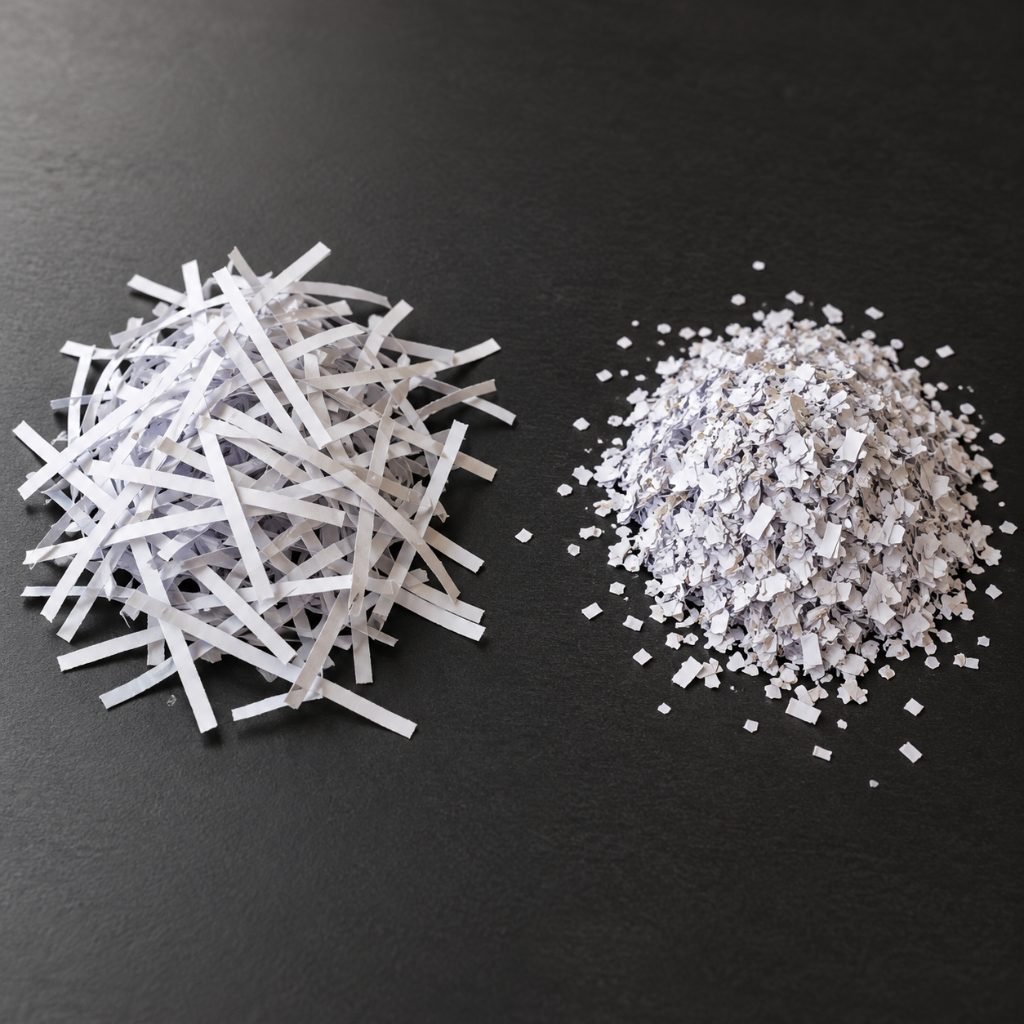
Clients will ask how small the pieces are, and a written standard gives you a clear answer. DIN 66399, also published internationally as ISO/IEC 21964, grades paper shredding from P-1 to P-7. Higher numbers mean smaller particles. For example, P-4 allows pieces up to 160 square millimetres, while P-5 allows up to 30. According to the Fellowes guide to shredder security levels, P-4 or P-5 suits most confidential documents.
Therefore, buy a machine rated for the level you will promise, and print that level on your contract and certificate. Strip-cut machines, in contrast, leave long, readable strips, so they do not fit this work. Furthermore, check the duty cycle, meaning how long the shredder can run before it must cool down. A cross-cut shredder that must stop often to cool down will turn a two-hour job into a whole afternoon.
Finding the First Clients for a Document Shredding Business
Start with clinics, pharmacies, accountants and small law firms near your room, since their paper is sensitive and arrives steadily. Visit with three things that show how your document shredding business works: a sample certificate, a photo of your locked console, and a signed confidentiality agreement for your staff. Those three answer the first questions a careful office manager asks. In addition, offer a free trial box, shredded in front of an employee.
After each job, ask the client for a referral or a short review. Professionals in the same field tend to know each other; as a result, one satisfied accountant may recommend you to others. Meanwhile, keep a calendar of drop-off days for households, and post it where neighbours will see it. If you would rather sell goods than a service, our guide to a furniture flipping business covers a different small start.
Pricing a Document Shredding Business Service
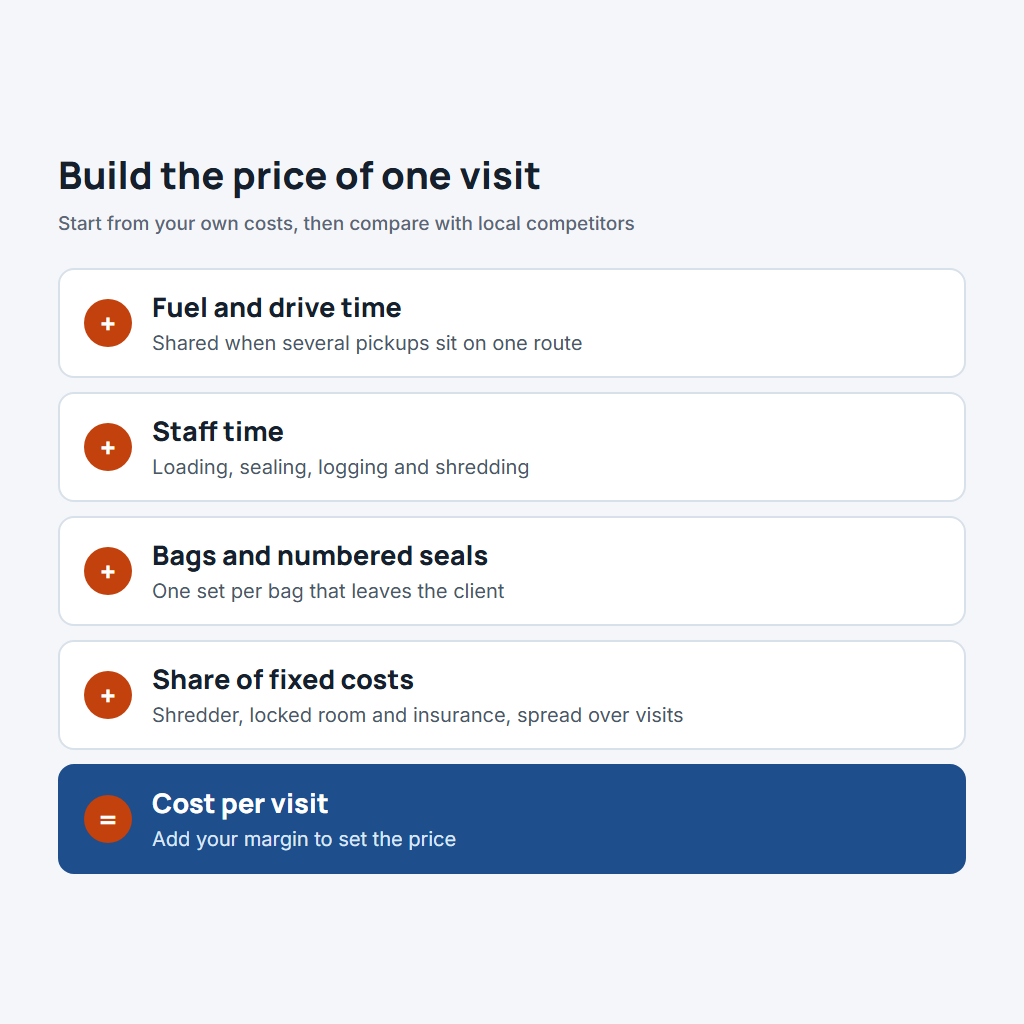
Three pricing methods cover most jobs. First, drop-off clients usually pay per box or per bag. Pickup clients pay a monthly fee based on the number of consoles and visits. Large purges, on the other hand, get a quote for the whole job, since volume and access vary so much. In each case, price your document shredding business from your own cost per visit rather than from a competitor’s price list.
To find that cost, add fuel, staff time, bags and seals, and a share of the shredder, room and insurance. Then add your margin, and compare the total with local competitors if there are any. Route planning changes the result more than most people expect. For instance, three pickups on the same street share one drive, so each visit costs less. The same logic appears in a small catering business, where the order of deliveries shapes the margin.
What to Do With the Shredded Paper
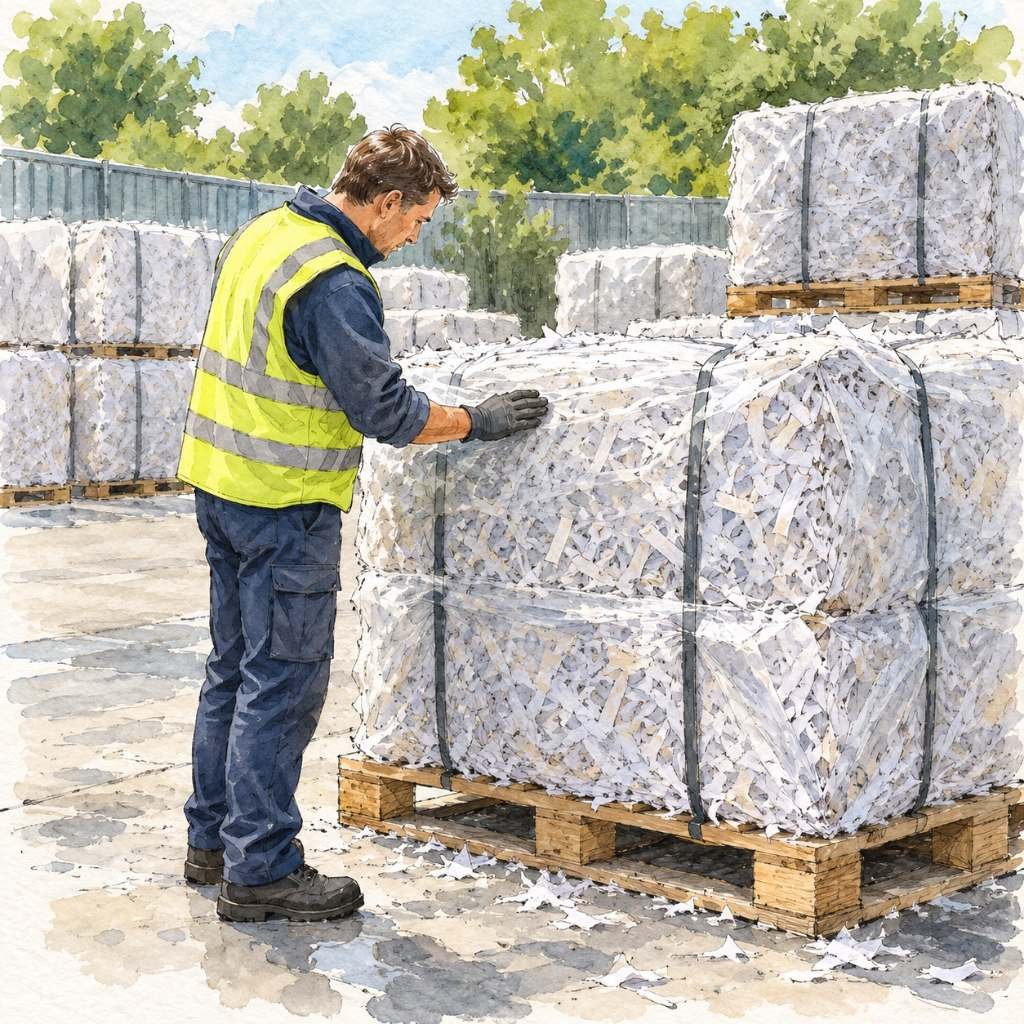
Every job leaves bags of paper particles, and many paper recyclers accept shred. However, shredding shortens the paper fibres, so shred is usually worth less than unshredded office paper. Therefore, call recyclers and paper dealers near you before you buy your machine. Ask whether they take shred, whether they want it bagged or baled, and how often they collect.
Treat any money from recycled shred as a bonus rather than a pillar of your document shredding business plan, because recyclers set their own terms and those terms change. That said, recycling still helps you sell. An office may be glad to hear that its old files end up as new paper instead of in a landfill.
When a Shred Truck Starts to Make Sense
For a document shredding business, a truck becomes realistic when two things are true at once. First, clients are asking you to shred on site, and you are losing contracts because you cannot. Second, your recurring pickup revenue can cover a loan payment without help from new sales. That said, until both are true, renting time on another operator’s truck for the occasional large job is often the safer path.
In addition, check what else a truck changes. Commercial driving rules, parking at client sites and vehicle maintenance all join your list. Ultimately, the models build on each other, so nothing you set up for drop-off or pickup goes to waste.
Choose the Model First, Then the Shredder
In a document shredding business, the model decides the shredder, the vehicle, the paperwork and the clients you call first. So begin with a single question: who will hand you their paper, and where? If the answer is households and a few local offices, a locked room and a cross-cut shredder are enough. On the other hand, if hospitals already want you at their door, plan for a truck and the financing behind it.
Write that answer at the top of your plan, then price only the equipment it requires. A document shredding business grows by adding models one at a time, and each new one rests on clients you have already earned.