

A small catering business rarely starts with a business plan. In fact, it usually starts with a friend who enjoyed your food at a family lunch and wants it for her office party. Saying yes is easy. However, the job changes the moment money changes hands. As a result, you become responsible for food that travels across town and sits on someone else’s table while you are gone.
Good home cooking turns into a small catering business only after a few decisions are made on paper. For example, you need to know where you may cook and how many guests you can feed. You also need a price that pays you, a clean drop-off and a written quote. Finally, each event needs a short debrief, because the second booking is often won or lost there.
Where Can You Legally Cook for a Small Catering Business?
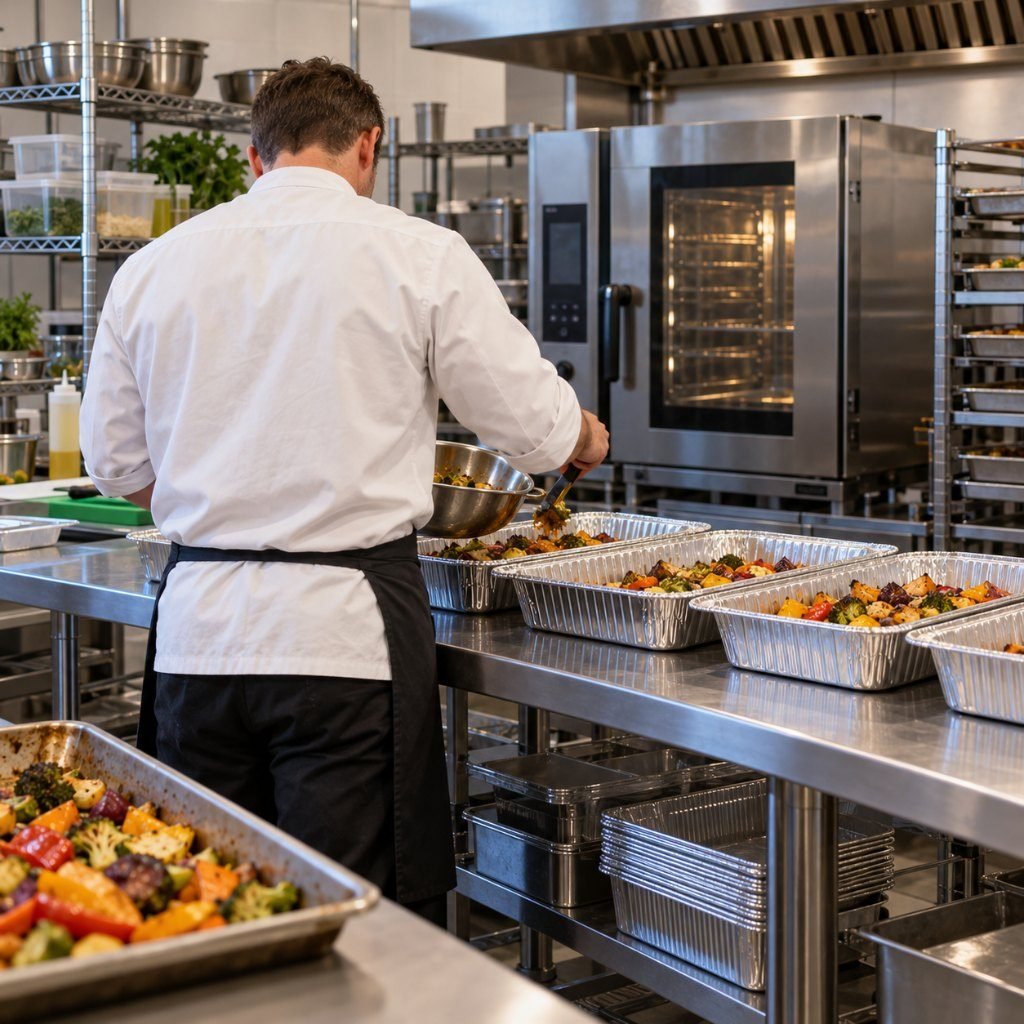
Start with the question most new caterers leave for later, because food rules differ by country, by state and often by city. Therefore, the only reliable answer comes from your local health department. Some places allow home kitchens to sell certain low-risk foods, such as some baked goods. In contrast, cooked dishes that must stay hot or cold often fall under stricter rules. Chicken, rice and stews, for example, belong to that group. Therefore, ask the office three things: which foods you may sell, from which kitchen, and under which permit. Write down the answer, the name of the person you spoke to and the date, and keep that note with your business papers.
However, a home kitchen that does not qualify still leaves you options, since many cities have shared kitchens that rent space by the hour. Similarly, some restaurants, community halls and places of worship rent their kitchens on closed days. For a small catering business, a few rented hours each week can cost less than converting a room at home.
How Many Guests Can One Cook Really Feed?
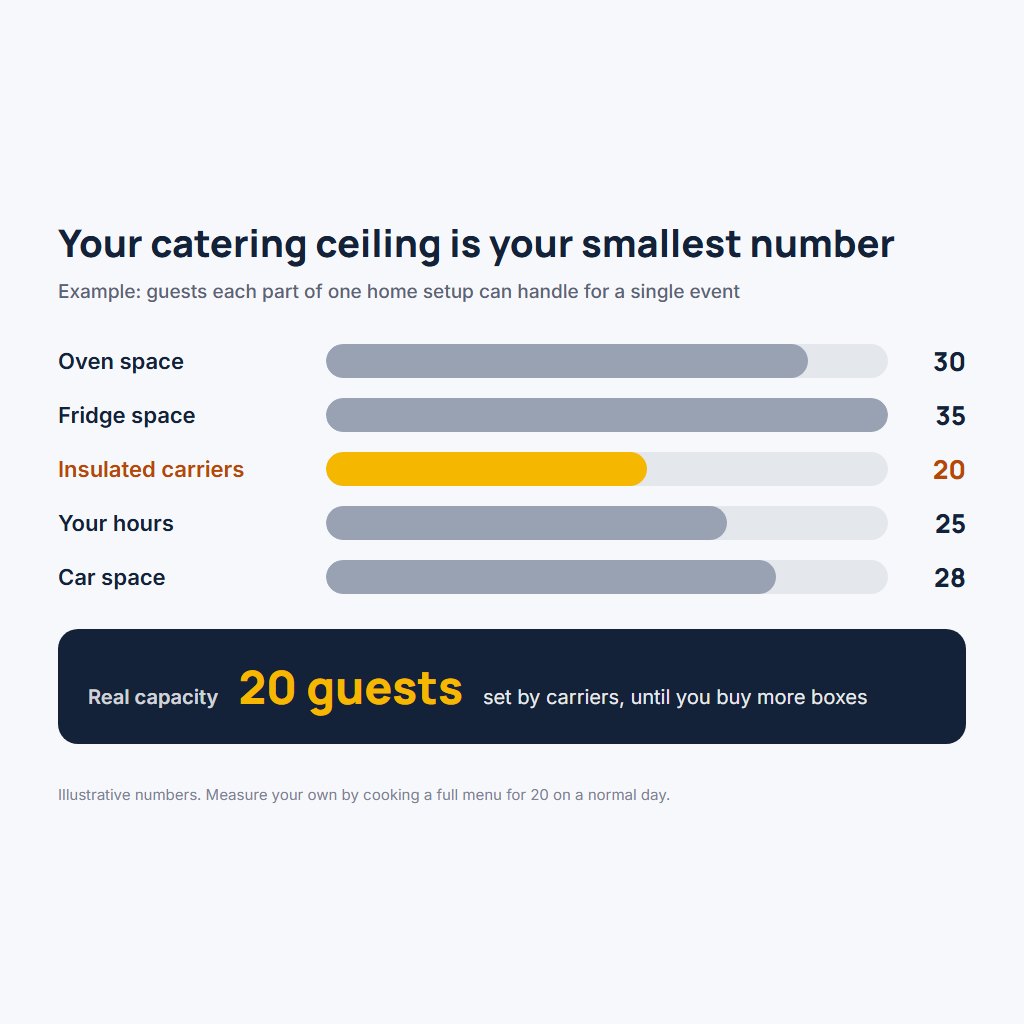
Your first limit is your oven, your fridge and your two hands, not demand. A home oven holds two or three full trays at a time, and a tray of chicken may need an hour. Therefore, a lunch for 50 guests can need more oven cycles than one morning allows. For that reason, find your ceiling before you take a booking: cook a menu for 20 people on a normal day and time each step.
| Limit | What to measure | What it decides |
|---|---|---|
| Oven space | Trays per cycle, minutes per cycle | Largest hot menu for one morning |
| Fridge space | Free shelves for prepared food | How much you can prep a day early |
| Carriers | Insulated boxes you own | How many trays arrive hot |
| Your time | Hours from shopping to delivery | Events you can take per week |
| Transport | Boxes that fit in your car | Largest order for one trip |
The smallest of these numbers is your real capacity. For example, you may have oven space for 30 guests but carriers for only 20. In that case, 20 is your ceiling until you buy more boxes. Write the number down and quote it to clients. Moreover, turning down a large order politely protects the name of your small catering business. A client who hears “my limit is 25 guests” often trims the list or splits the order.
When to Bring in a Helper
When your own time is the smallest number in that list, a second pair of hands raises the ceiling. The last two hours before delivery are full of small jobs. Trays need lids and labels, carriers need loading, and someone has to check temperatures. Meanwhile, the final dish is still in the oven. A paid helper for those two hours can then let your small catering business accept 30 guests instead of 20, as long as your oven, fridge and carriers already hold 30.
Start with one person you trust, such as a relative or a friend who has worked in a kitchen. Give the helper a written list of tasks, so you do not explain each step during the rush. Pay an agreed amount per event, and include it in the labour line of your price. Also ask your local health office whether helpers in your small catering business need a food handler course or certificate where you live. Rules on this differ, so the answer belongs in your notes too.
How to Price a Small Catering Business Per Guest
Build the price from the cost of one guest, because a restaurant’s menu down the road tells you little about your own costs. First, add up the ingredients for the whole menu and divide by the number of guests. Next, add packaging, labels, gas or electricity, and the drive. In addition, add your labour for shopping, cooking, packing and delivery, at an hourly rate you would accept from an employer. Similarly, our guide to pricing a jar of honey line by line uses the same method for a food product.
| Cost line per guest | Example (currency units) | Share |
|---|---|---|
| Ingredients | 18 | 45% |
| Labour | 12 | 30% |
| Packaging and labels | 4 | 10% |
| Kitchen rent or utilities | 4 | 10% |
| Delivery | 2 | 5% |
| Total cost | 40 | 100% |
In this example one guest costs 40 units. A price of 52 units leaves 12 units per guest after your own wage. As a result, a lunch for 25 guests leaves 300 units. However, these figures only illustrate the method; they describe no real market and promise no income, so use your own prices. Furthermore, set a minimum order, such as 12 guests, because a lunch for six takes almost the same shopping and driving time.
Keep start-up costs apart from the cost of each event. The guidance from the U.S. Small Business Administration separates one-time costs, such as equipment and permits, from costs that repeat every month. Carriers and chafing dishes, for instance, belong to the first group, so spread them over many events in your start-up budget. Consequently, your first booking does not have to pay for your whole kit. That keeps your per-guest price close to what clients expect from your first booking.
A Small Catering Business Menu That Survives Two Hours
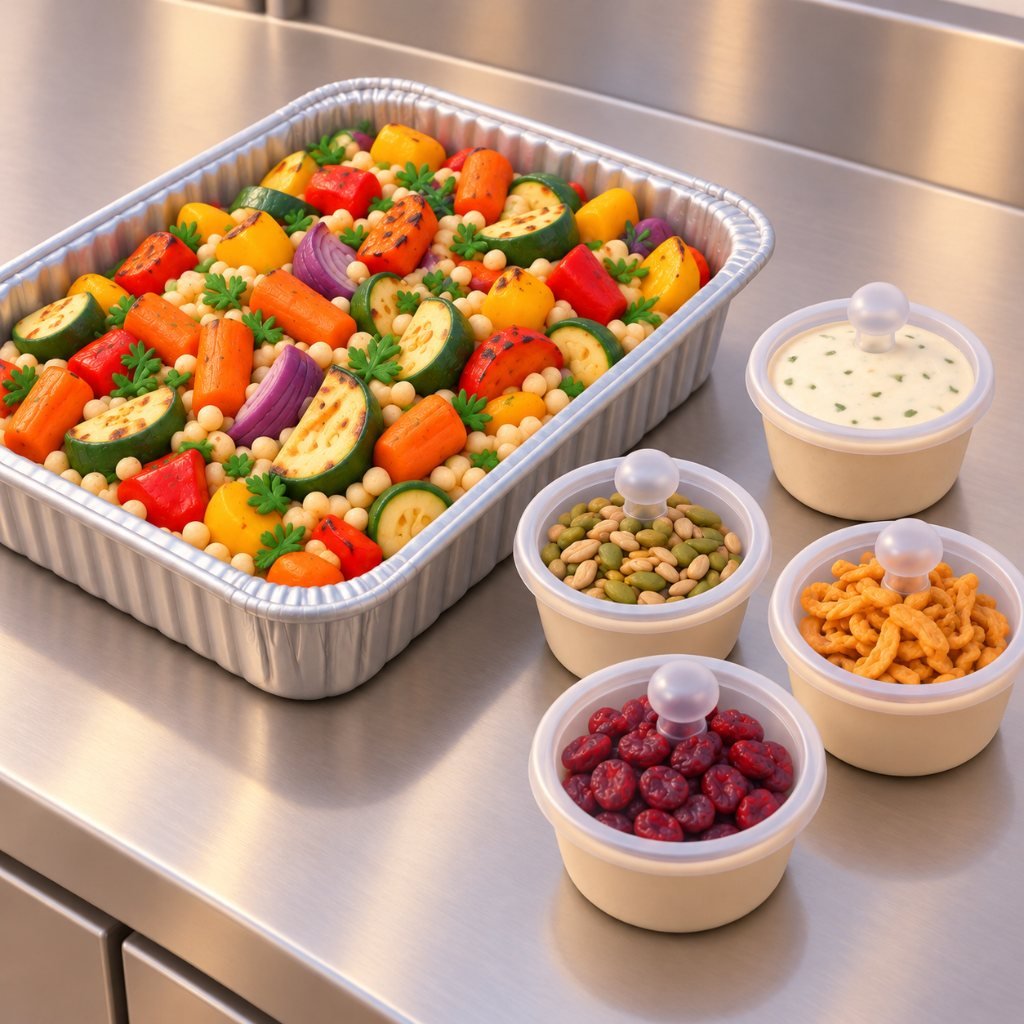
A catering menu is judged at the table, not at the stove. Therefore, choose dishes that still taste right after a drive and some time on a buffet. Baked pasta, rice dishes, roast chicken, meatballs in sauce and grain salads, for example, travel well. On the other hand, fried food in a closed box turns soft within half an hour. Similarly, dressed leaf salads wilt on the way. As a result, dressings and crisp toppings travel in separate pots, and the client adds them before serving.
Keep the menu of a small catering business short, since three set packages are easier to cook, shop for and price than a long list. For instance, offer a lunch package, a dinner package and a party package. Give each one four or five items. In turn, a short menu lets you buy the same ingredients in larger amounts and cook them faster. Before a dish goes on the menu, test it the way it will travel: cook it, pack it, wait two hours, then taste it. A dish that fails leaves the menu.
What a Professional Drop-Off Looks Like
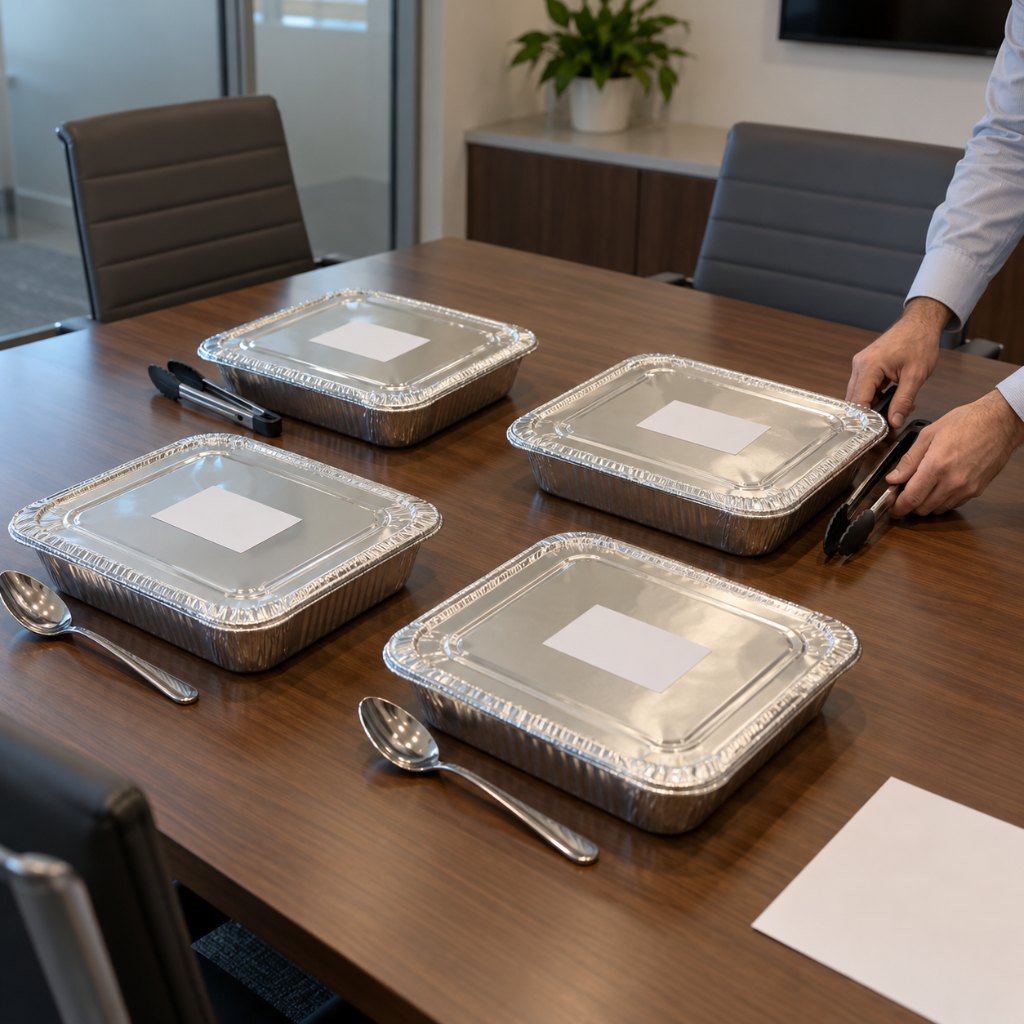
Many small events are drop-off orders, where you deliver the food, set it out and leave within about ten minutes. The client judges your small catering business in those ten minutes. So arrive at the agreed time and carry the boxes in one trip if you can. Place each dish where the host wants it, then walk the host through the table and show where the dressings are. Finally, say how long the food may stay out.
- Label every tray. Dish name, main allergens, and “keep hot” or “keep cold”.
- Bring serving tools. One spoon or pair of tongs per dish.
- Leave a one-page sheet. Menu, delivery time, safe serving window, your phone number.
- Agree on returns. Which carriers you will collect, and when.
For example, the FDA lists nine major food allergens: milk, eggs, fish, crustacean shellfish, tree nuts, peanuts, wheat, soybeans and sesame. Therefore, ask about allergies when you take the booking, not at the door. If one guest has an allergy, pack that meal in a separate, named container. A separate box still does not make the meal allergen-free if you cook everything in one kitchen with the same tools. In that case, the label should say so in plain words.
The Temperature Kit Every Caterer Needs
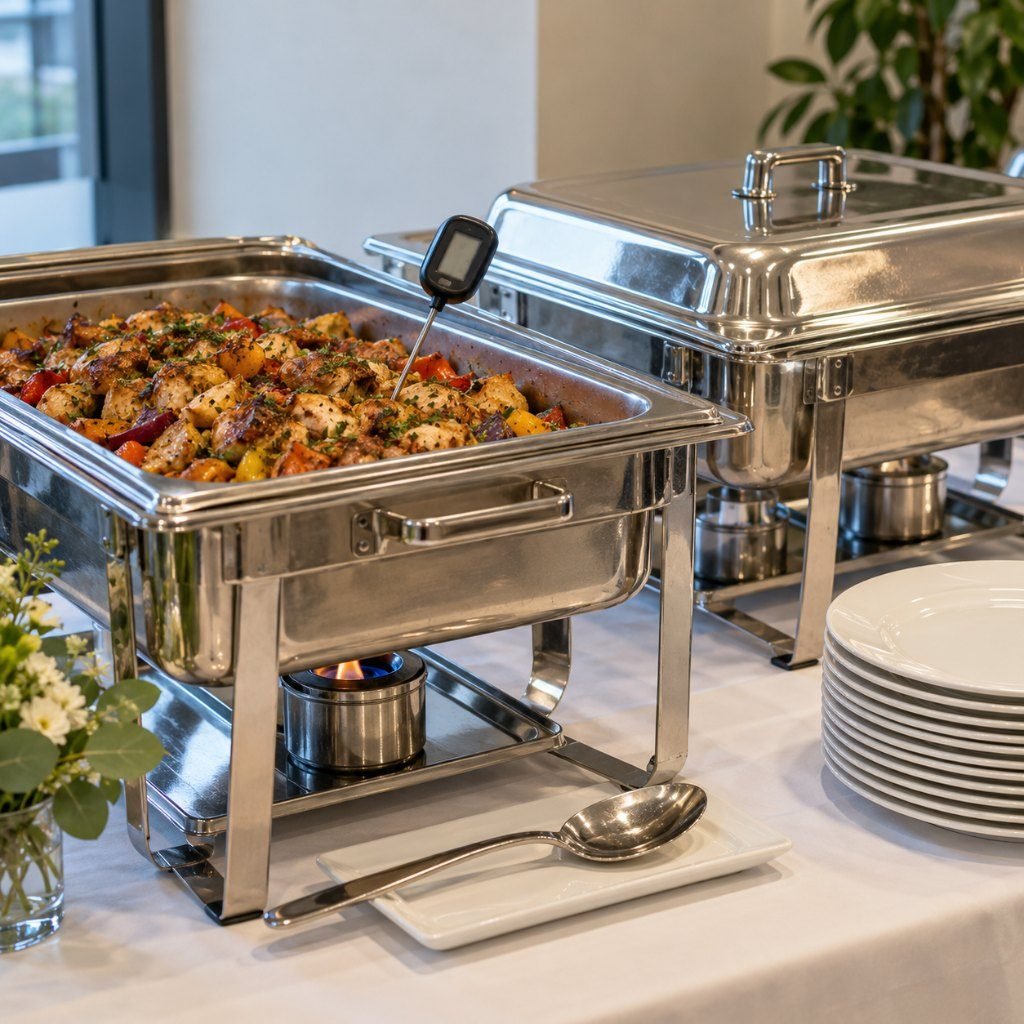
The FDA guidance on serving safe buffets sets clear numbers. For example, hot food should stay at 140 °F (60 °C) or warmer, and cold food at 40 °F (4 °C) or colder. In addition, perishable food should not sit out for more than two hours, or one hour when the room is above 90 °F (32 °C). Moreover, the guidance warns that some warmers only reach 110 to 120 °F. Therefore, read the label before you rely on one.
The same guidance favours small platters that you replace, because topping up a nearly empty dish with fresh food mixes new food with food that has already sat out. In addition, the FDA’s four basic steps of clean, separate, cook and chill apply in your kitchen. For instance, thaw meat in the fridge, never on the counter, and keep raw chicken away from salads. As a result, these rules decide what you need to buy first for a small catering business: a way to measure heat, to keep trays hot on the road, and to keep cold dishes cold.
As an Amazon Associate, BeIN ADVISOR earns from qualifying purchases.
- Digital probe food thermometer: check one dish before you close each carrier.
- Insulated food pan carriers: hold full trays hot or cold on the drive.
- Chafing dish buffet set: for events where you stay and serve.
- Disposable aluminum pans with lids: drop-off trays you never collect.
- Removable food labels: dish names, allergens and pack times.
Start with this small kit and add to it only when a real booking shows a gap. For example, buy a second carrier only after a lunch where one tray had nowhere to go. That way, you spend money in your small catering business only on problems you have actually met.
How to Quote and Confirm a Small Catering Business Booking
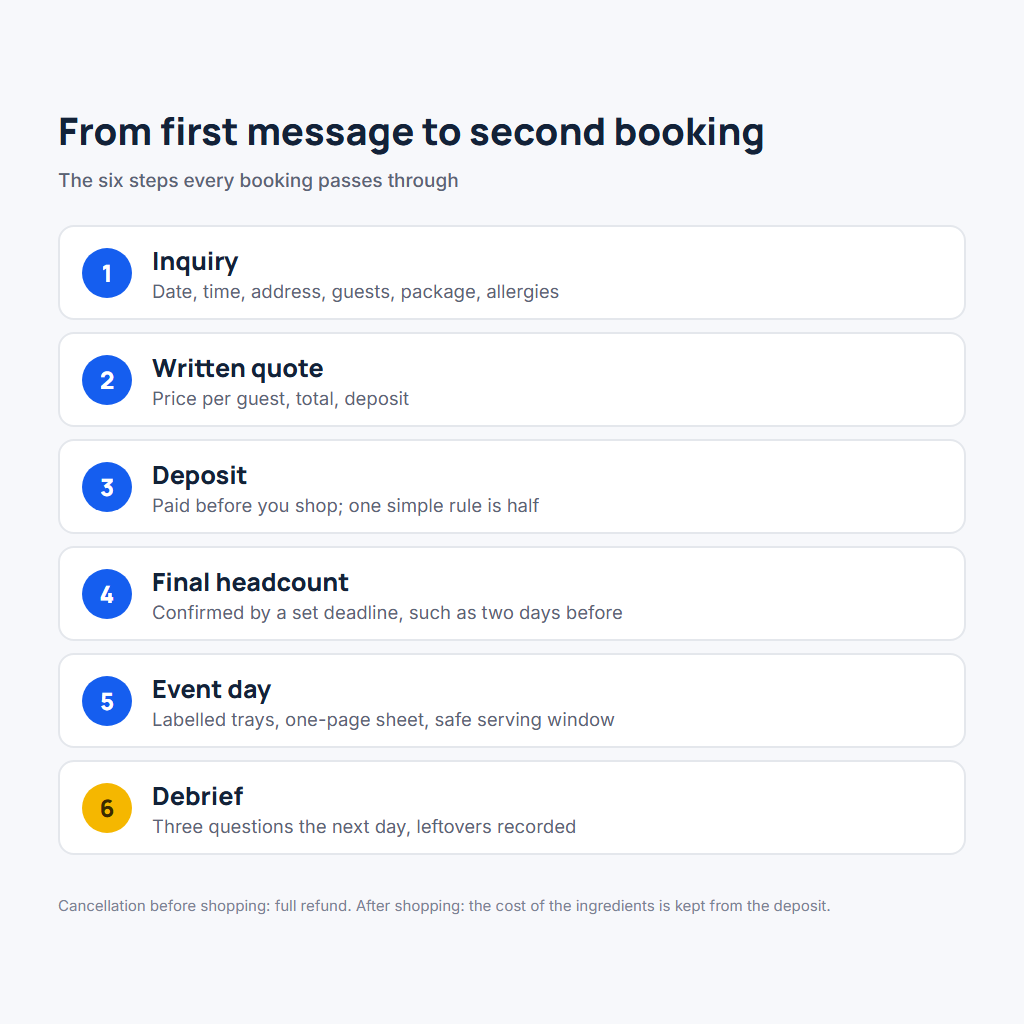
Every inquiry should end with a written quote, even when the client is a friend. Collect the same details each time: date, serving time, address, guest count, package and allergies. Also ask whether you deliver only or stay to serve. Then send a quote that repeats those details and states the price per guest and the total. As a result, the client sees exactly what was agreed. Moreover, you have one message to return to if memories differ later.
Ask for a deposit before you shop for any small catering business order. For example, one simple rule is half the total, because that money buys the ingredients. Next, set a final headcount deadline, such as two days before the event. After that date, you cook for the confirmed number and charge for it. In addition, state what happens if the client cancels: before you shop, you refund the deposit in full; after you shop, you keep the part that paid for the ingredients. Clear terms like these make clients trust your small catering business more.
Finding the First Ten Clients
Your first clients usually come from people who have already eaten your food. Therefore, cook one tray from each package, photograph it in daylight, and send it with a price per guest to twenty people you know. Then ask each of them for one name of someone with an event coming up. Meanwhile, offer a small tasting to the office manager of one nearby company. In fact, one office that books every month can matter more than ten one-off parties.
If you already cook meals for a specific group, start there. A postpartum meal business, for example, already has families who trust its kitchen. Those families host visitors, and visitors need lunch, so ask your current customers about their next gathering. That said, take only bookings inside your written capacity, even when the first months are slow. One overloaded event can cost you the referrals you worked for.
The Debrief That Wins the Second Booking
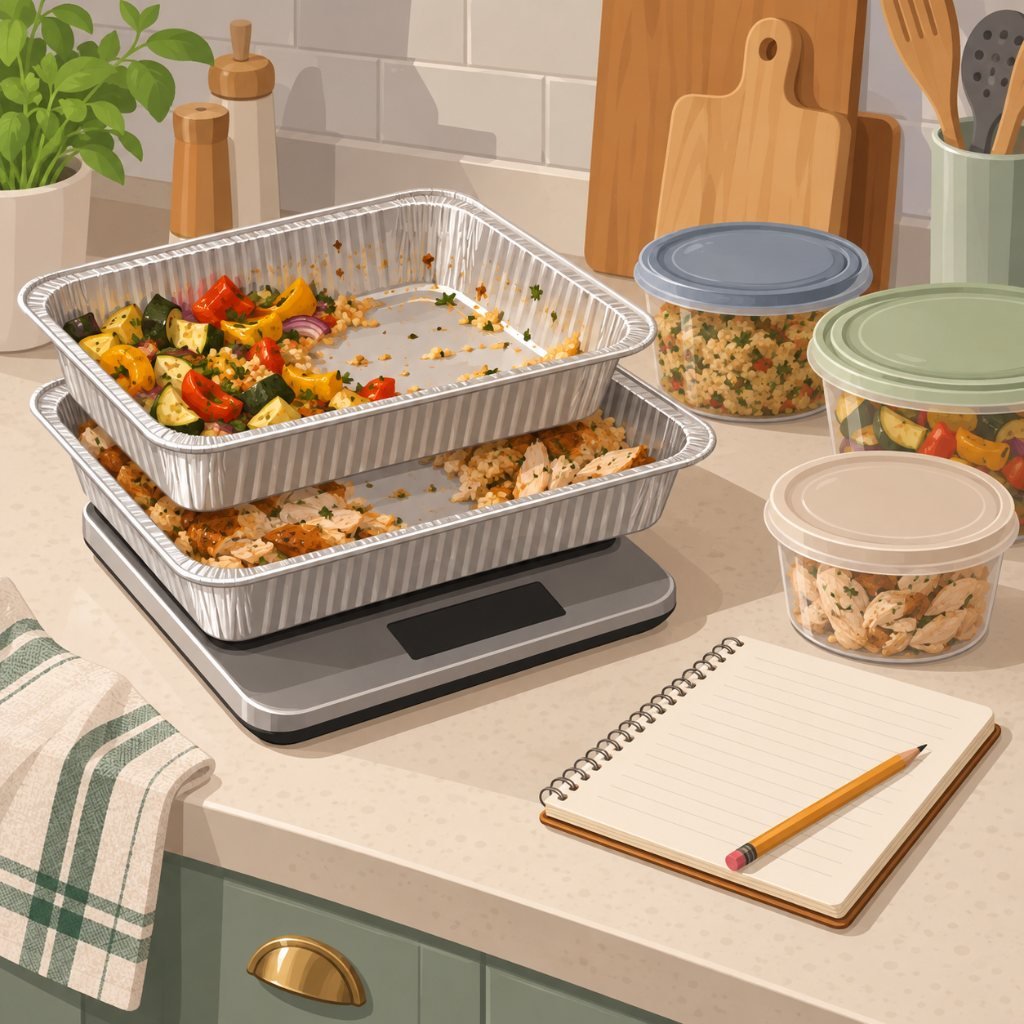
The day after each event, send the client a short message. For example, ask which dish guests finished first, whether anything arrived cool, and whether they would book again. Meanwhile, look at what came back in the trays and write down the leftovers of each dish. After three or four events, you will have your own portion figures for your small catering business. Consequently, you will stop relying on general charts that know nothing about your clients.
Keep a simple record of each small catering business booking: guest count, menu, quantities, leftovers, temperatures, delivery time and the client’s answers. Ultimately, this file becomes the most useful tool in your small catering business. It shows which dishes to keep, how much to buy, and which clients to thank first in a slow month.
Take No Deposit Before Your Small Catering Business Has One Written Sheet
Before your first paid booking, put everything above on one page. List your three packages, your price per guest, and your minimum and maximum guest count. Then add your deposit, headcount deadline and cancellation terms. Include the allergens in each dish and the answer from your local health department. When a client asks what you offer, send that page. In turn, it answers most questions before they are asked.
A reverse schedule for your most popular package belongs on the same page. It starts at the serving time and runs back through delivery, packing, cooking and shopping, minute by minute. Without it, a deposit pays for a promise; with it, the first deposit your small catering business takes pays for a plan you have already timed.