
Starting a smash burger business looks simple from the outside. You need a hot griddle, a ball of beef, a heavy press and a soft bun. In fact, that simplicity is the appeal. One cook in a small kitchen can turn out a crusty burger in a few minutes. However, the same simplicity hides the costs that close small kitchens: delivery commissions, soggy buns and a menu that slowly grows too long.
For that reason, this plan for a smash burger business starts with numbers rather than recipes. First comes the cost of one burger, then a name and an app listing people trust. After that come the patty routine, the equipment worth buying, and packaging that survives the ride. Finally, it covers ratings and the signs that you are ready for a second griddle. Food rules differ by place, so ask your local health department about kitchens and permits before your first sale.
What One Burger Costs in a Smash Burger Business
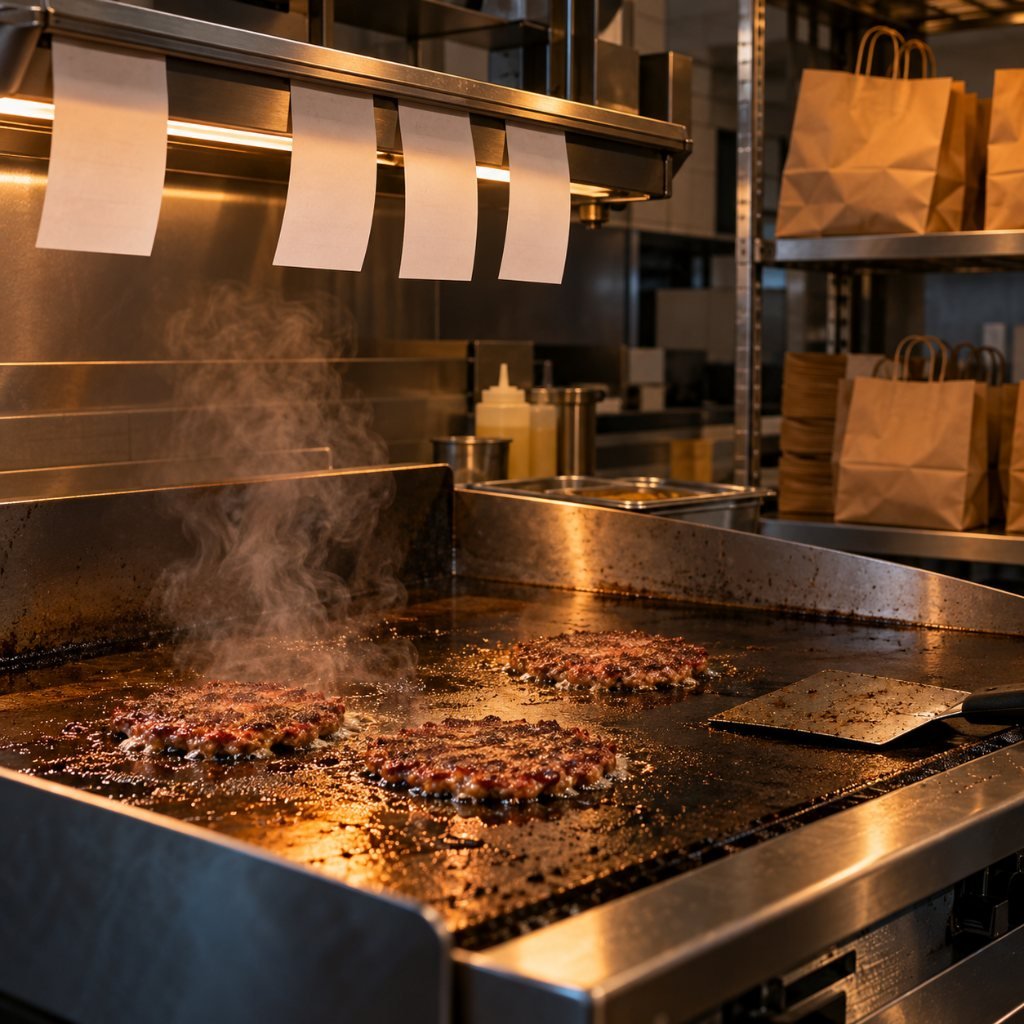
In a smash burger business, price the burger before you buy the griddle. Add up the beef in one patty, the bun, the cheese and the sauce. Next, add the box, the bag and the napkins. Then add your share of gas or electricity and your own labour. Finally, add the delivery app’s commission if you sell through one. As a result, you see the real cost of a burger in your smash burger business, not the cost of its ingredients alone.
| Cost line per burger | Example (currency units) | Share |
|---|---|---|
| Beef patty | 3.20 | 40% |
| App commission | 1.60 | 20% |
| Bun, cheese and sauce | 1.20 | 15% |
| Labour | 1.20 | 15% |
| Box and bag | 0.40 | 5% |
| Gas or electricity | 0.40 | 5% |
| Total | 8.00 | 100% |
In this example a burger sold through an app costs 8 units, while the same burger ordered directly costs 6.40. That gap is the commission line. However, these figures only show the method. They describe no real market and promise no income, so put your own prices in. Read the actual commission in the app’s contract before you set a menu price, because it varies by platform and plan. Our guide to a honey business without bees builds the same line-by-line cost for a jar of honey.
Keep start-up costs out of this table. The Small Business Administration separates one-time costs, such as equipment and permits, from monthly costs such as rent. Your griddle, press and fridge belong to the first group. Therefore, spread them over many weeks of sales in a start-up budget, rather than adding them to the price of the first burger.
Why the Smash Method Fits a Small Smash Burger Business
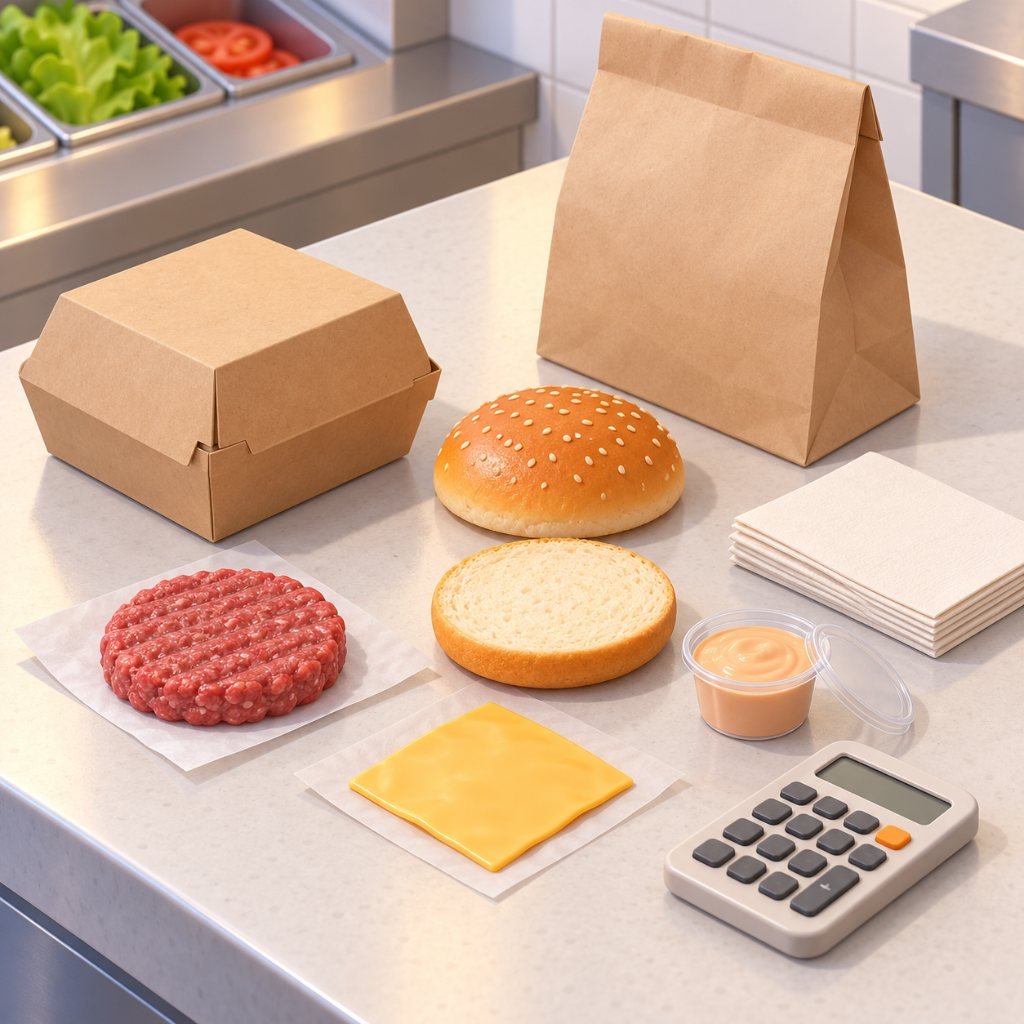
Smashing is a cooking method, and any cook can learn it. You press a ball of cold ground beef flat on a very hot griddle. The whole surface touches the steel at once, so a brown crust forms fast. As a result, a thin patty cooks in a few minutes. A thick burger, in contrast, needs more time and closer watching to cook through without burning.
Speed matters most in delivery, where orders arrive in waves. One griddle and one cook can keep up with a busy evening when each patty takes minutes. Moreover, the method rewards one product done well. A short menu is easier to buy for, cook and price; the same logic drives a focused service such as a postpartum meal business. A smash burger business built on one patty applies the same logic to a late-night crowd.
Name, Photos and the App Listing
On a delivery app, customers meet your photo before your food, so the listing of a smash burger business is your shop front and deserves real effort. Therefore, choose a short name that says what you sell and is easy to type. For example, a name with “smash” or “griddle” in it tells a hungry customer what to expect. Check that no nearby business uses the same name, and look up the name on the apps and social media before you print anything.
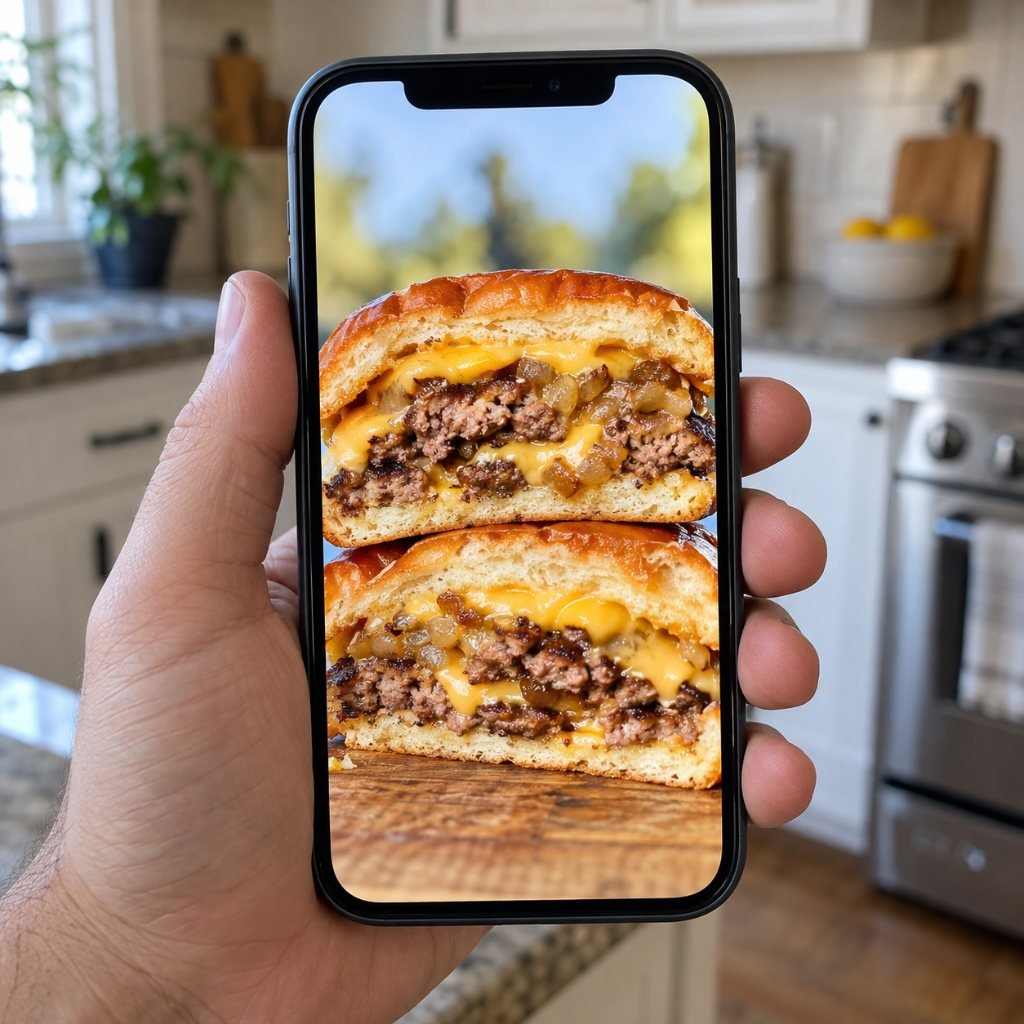
Then take your photos in daylight, with the burger cut in half so the layers show. Shoot the burger you will actually deliver, in the box you will actually use. Similarly, write menu descriptions that list what is inside, such as two patties, cheese, pickles and house sauce. As a result, clear descriptions reduce wrong orders and complaints. In turn, fewer complaints protect your rating, which can affect how often the app shows your smash burger business.
Three Builds From One Patty
A short menu keeps a smash burger business fast. Build three burgers on the same patty: a single with cheese, a double, and one with a different sauce or caramelised onions. Then add fries and a drink. For instance, the double uses exactly the same steps as the single, with one more ball on the griddle. Therefore, a new menu item costs you no new skills and almost no new stock.
Price the add-ons with care. An extra patty, extra cheese or bacon each has its own cost line, and you can measure it the same way as the burger. Consequently, you can set an add-on price that covers its cost and your time. That said, keep the list of add-ons short. Every option is one more thing to remember during a rush, and one more chance to get an order wrong.
The Patty Program in a Smash Burger Business
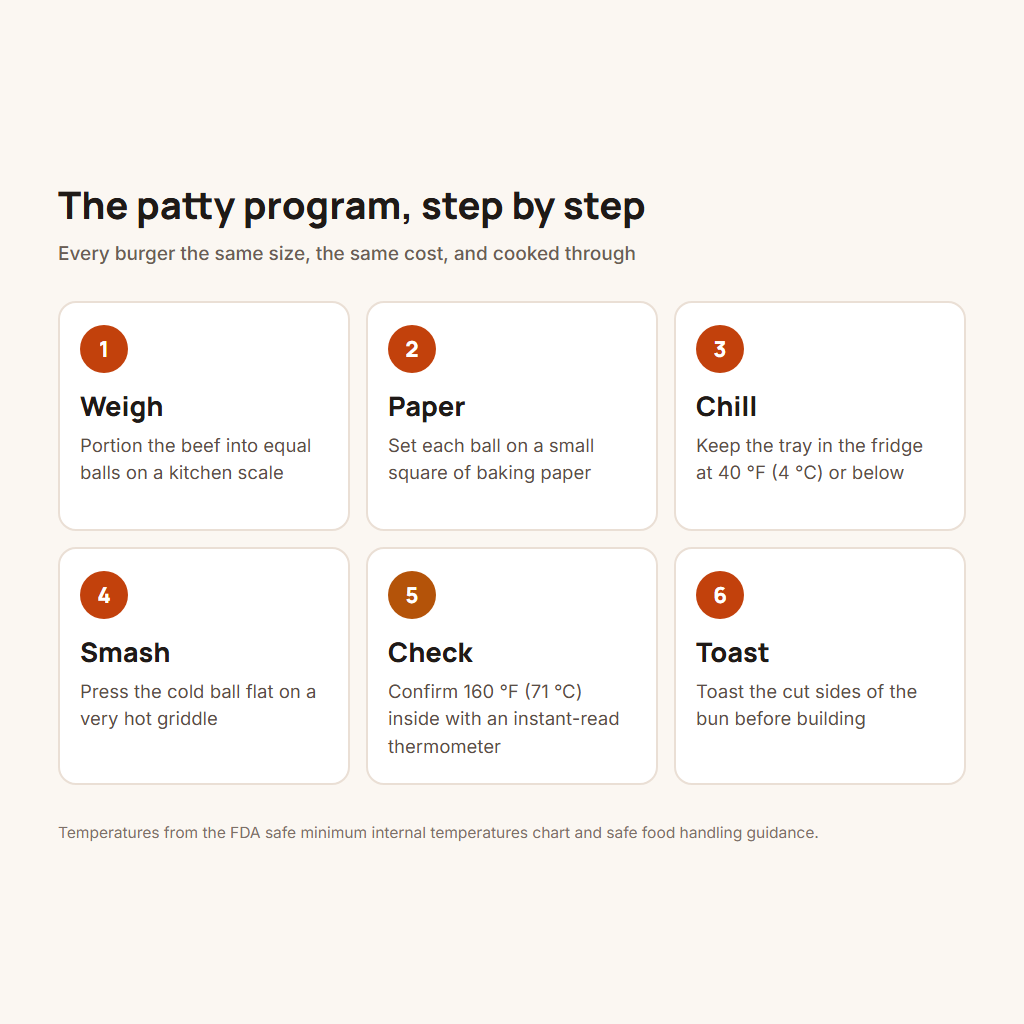
Consistency in a smash burger business starts before service. Weigh the beef into equal balls on a kitchen scale, so every burger has the same size and the same cost. In addition, keep the balls on a tray in the fridge until they go on the griddle. As a result, cold beef holds its shape when pressed and forms a better crust. Then lay a square of baking paper on top of each ball before you press, so the beef does not stick to the press.
The FDA’s safe minimum internal temperatures chart lists 160 °F (71 °C) for ground meat. A thin patty reaches that quickly. However, colour is not proof. Therefore, check one patty from each batch with an instant-read thermometer in your first weeks, until you know how long patties need on your griddle. The FDA safe food handling guidance adds the basics: keep the fridge at 40 °F (4 °C) or below, thaw beef in the fridge, and keep raw meat away from ready-to-eat toppings. In practice, that means one board and one knife for raw beef only.
Equipment Worth Buying First
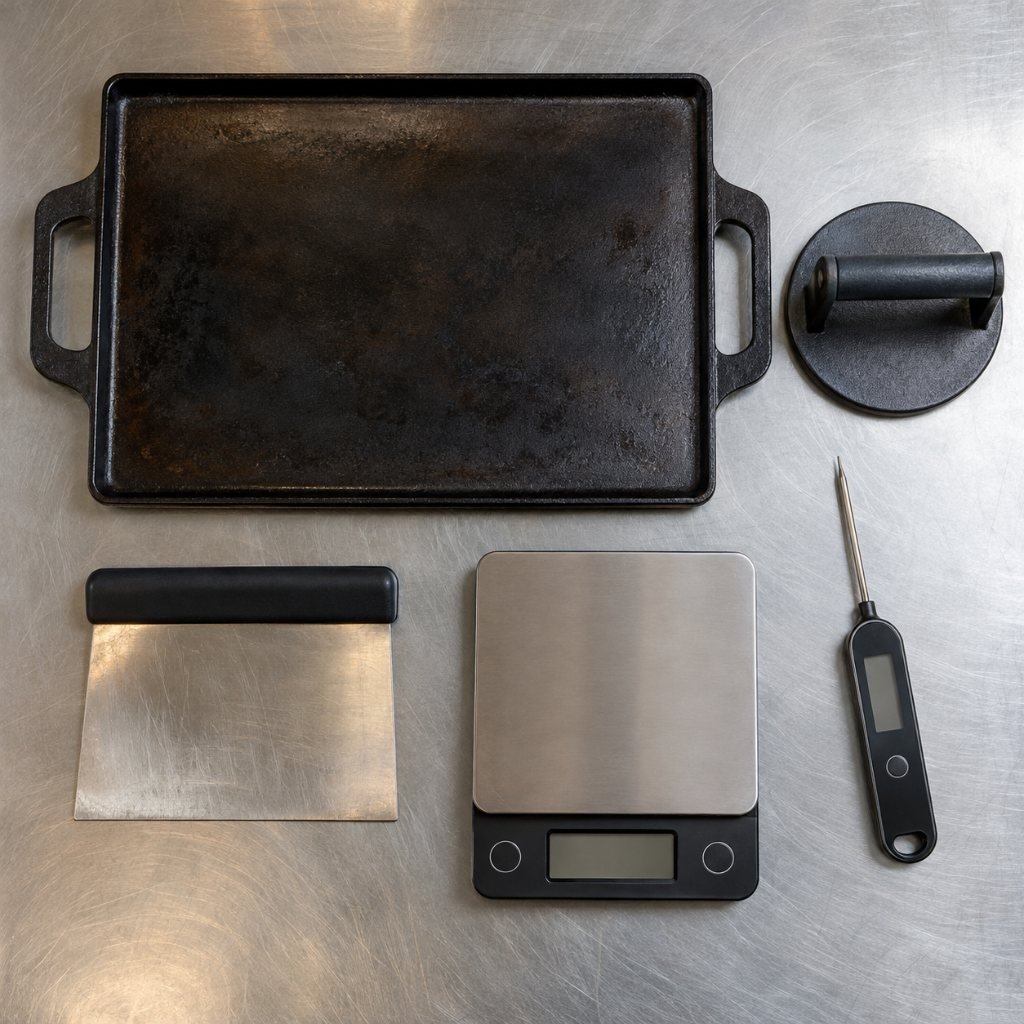
Buy for the bottleneck first: in a smash burger business, that is the griddle. A thick flat-top holds its heat when several cold balls land on it at once. In contrast, a thin pan loses heat with every patty, and the crust never forms. In addition, you need a heavy flat press, a stiff scraper that lifts the patty with its crust, and the scale and thermometer from your patty routine. Start with this kit and add to it only when real orders show a gap.
As an Amazon Associate, BeIN ADVISOR earns from qualifying purchases.
- Cast iron flat-top griddle: holds heat for several patties at once.
- Burger smasher press: flattens each ball evenly in one push.
- Stiff griddle scraper: lifts the patty without tearing the crust.
- Digital kitchen scale: portions every ball to the same weight.
- Instant-read meat thermometer: confirms the patty is cooked through.
Packaging That Survives the Ride
A hot burger in a sealed box releases steam, and the steam softens the bun. Therefore, toast the cut sides of the bun on the griddle first, because the toasted layer resists the juices. Next, spread the sauce on the toasted bun rather than on the patty. Pack lettuce and tomato separately if you offer them. Finally, choose a vented box, or wrap the burger in paper that lets steam escape.
Fries need their own container, slightly open, since they lose their crunch faster than anything else in the bag. Before launch, test the whole order. Pack a burger and fries, wait 20 minutes, then open and taste them. If the bun is too soft, change the wrap or use less sauce, and test again. For example, some kitchens move the pickles to a small side pot, so their liquid stays away from the bun.
Ratings, Reviews and Repeat Orders
On delivery apps, your rating works like your street address. A lower rating can push your listing down, and fewer people find you. Therefore, read every review in the first months. When a customer reports a cold burger or a missing item, reply politely, fix the cause, and note it in a log. In turn, the log shows when a complaint comes back twice, and that points to one step in the kitchen that needs changing.
Moreover, repeat customers who order directly are worth more to you than app orders, because they carry no commission. Put a small card in each bag with your name and a direct ordering number. As a result, a customer who liked the burger on an app can order straight from you next time. Consequently, your smash burger business keeps the full price, because that order carries no commission. Keep a simple list of direct customers, and message them about a new burger no more than once a week.
Handing Orders to Riders
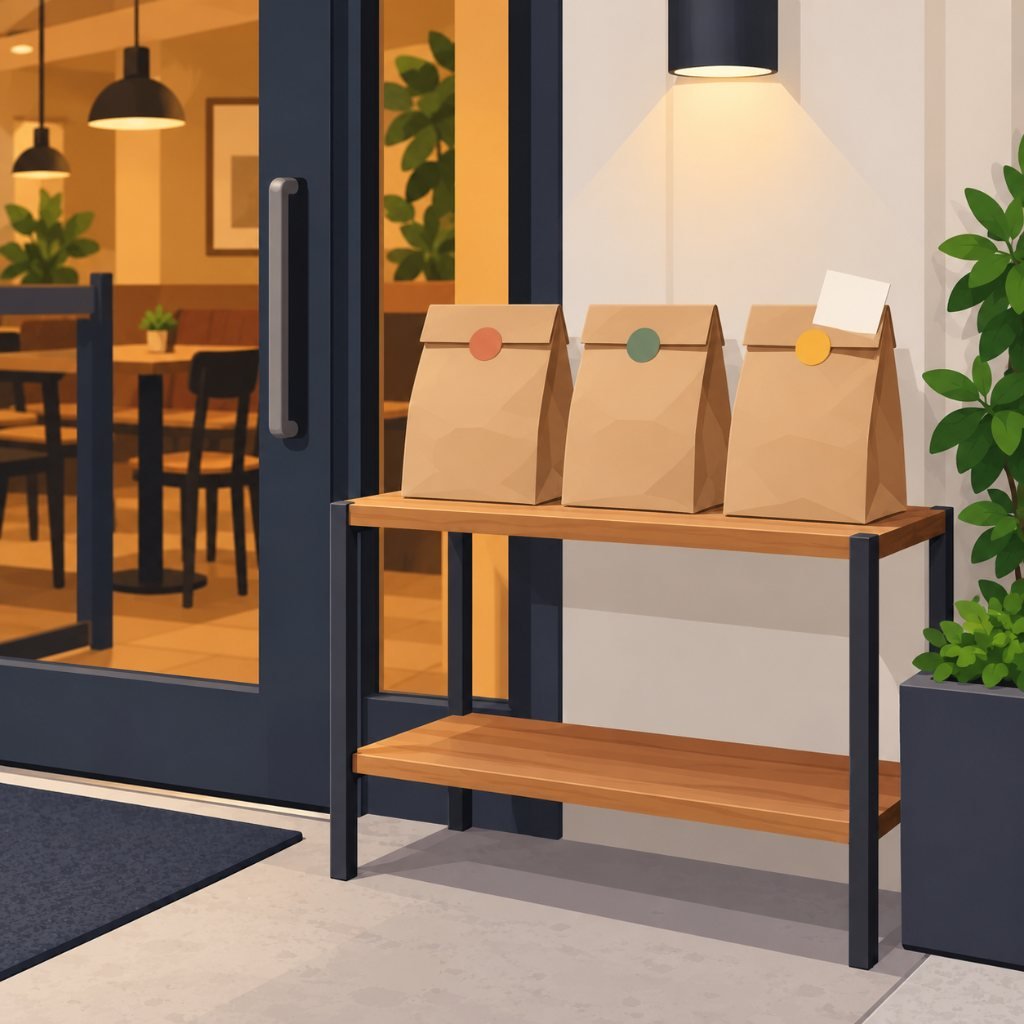
The handover is the last step you control. Therefore, set up a small shelf near the door for finished bags, with the order number written large on each one. Seal every bag with a sticker, so the customer knows nobody opened it on the way. In addition, check each bag against the ticket before it leaves: burgers, fries, drinks and sauces. For instance, a missing sauce pot costs you little, yet it can end up in a one-star review.
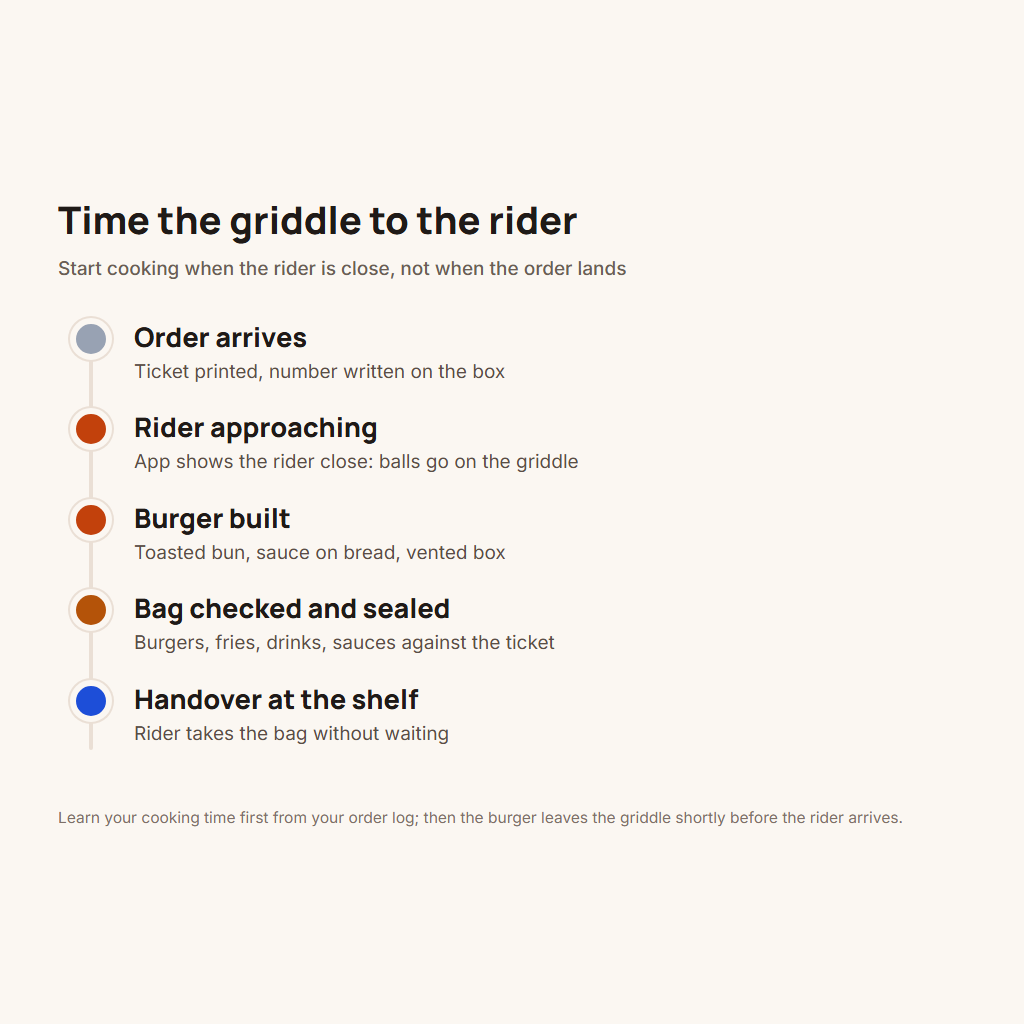
Riders work to the clock. If they wait at your door, they reach your customer later, and the burger arrives cooler. Therefore, once you know your cooking time, start cooking when the app shows the rider is close, not when the order first lands. As a result, the burger leaves the griddle shortly before the rider arrives. In a smash burger business, a few minutes saved at the door show up as a warmer bun at the table.
Hours and Delivery Radius for a Smash Burger Business
You do not have to open every night. In fact, you can start with two or three evenings a week, when people look for a quick hot dinner. As a result, fewer nights mean less wasted beef and fewer stale buns. Meanwhile, your daytime stays free for shopping, prep and, if you have one, your other job. Add a night only when your order log shows the existing nights are full.
Keep the delivery radius tight at first. A burger that spends 15 minutes on the road arrives very differently from one that spends 40. For example, start with the streets you can reach in a short ride, and widen the circle only after your packaging test passes at the longer time. Similarly, a tight radius keeps your smash burger business close to the customers most likely to order again.
When to Add a Second Griddle
Let your order log decide when to grow. Write down the time each order arrives and the time it leaves with the rider. As a result, after a few weeks you will see your real capacity per hour. If orders on your busiest nights regularly wait for griddle space, a second griddle or a helper may pay for itself. On the other hand, if the wait comes from packing, a helper at the packing station solves it more cheaply.
Before you sign a lease on a bigger kitchen, try smaller steps that cost little. Add a second night, extend your delivery radius a little, or rent a shared licensed kitchen by the shift. Ultimately, each step should prove itself in your order log before the next one. That way, your smash burger business grows on numbers you have measured rather than on a busy weekend you remember.
Start Your Smash Burger Business With a Cost Card and a Timed Run
Before you open on any app, write a one-page cost card. List each burger, its cost line by line, its menu price on the app, and its direct price. Add the add-ons with their costs. Then add the answer you got from your local health department about your kitchen and permit. This card tells you, in seconds, whether a supplier’s new price or a new commission rate still leaves you a profit on each burger.
Then run a timed rehearsal with no customers. Portion the beef, set up the griddle, and cook twenty orders as if they had arrived in one hour. Time each step, from the first ball on the griddle to the last bag sealed. That number is your real hourly capacity. Consequently, you can open your smash burger business knowing how many orders to accept, what each one earns, and where the first bottleneck will appear.