
A full serving of some popular mass gainers lists around 1,200 calories. The NHS, in contrast, suggests that underweight adults add about 300 to 500 extra calories a day. As a result, one full serving can hold two to four times the increase you were aiming for. That gap between the serving size and your own daily target is the first thing to settle. Once you know your number, choosing the best mass gainer becomes a matter of fitting a serving to it.
A mass gainer is a powder that adds calories, carbohydrate and protein to your day, and its label shows how much of each one serving holds. This guide works out your daily calorie gap first, then shows how to split a serving to match it. After that, it compares five options by situation, including a shake you can make at home. Finally, it checks protein, sugar and certification seals, and explains how to tell whether the plan is working.
One caution comes first. The FDA does not approve supplements before they are sold, so a doctor or pharmacist is worth asking before you start. The next section lists the situations where that advice matters most.
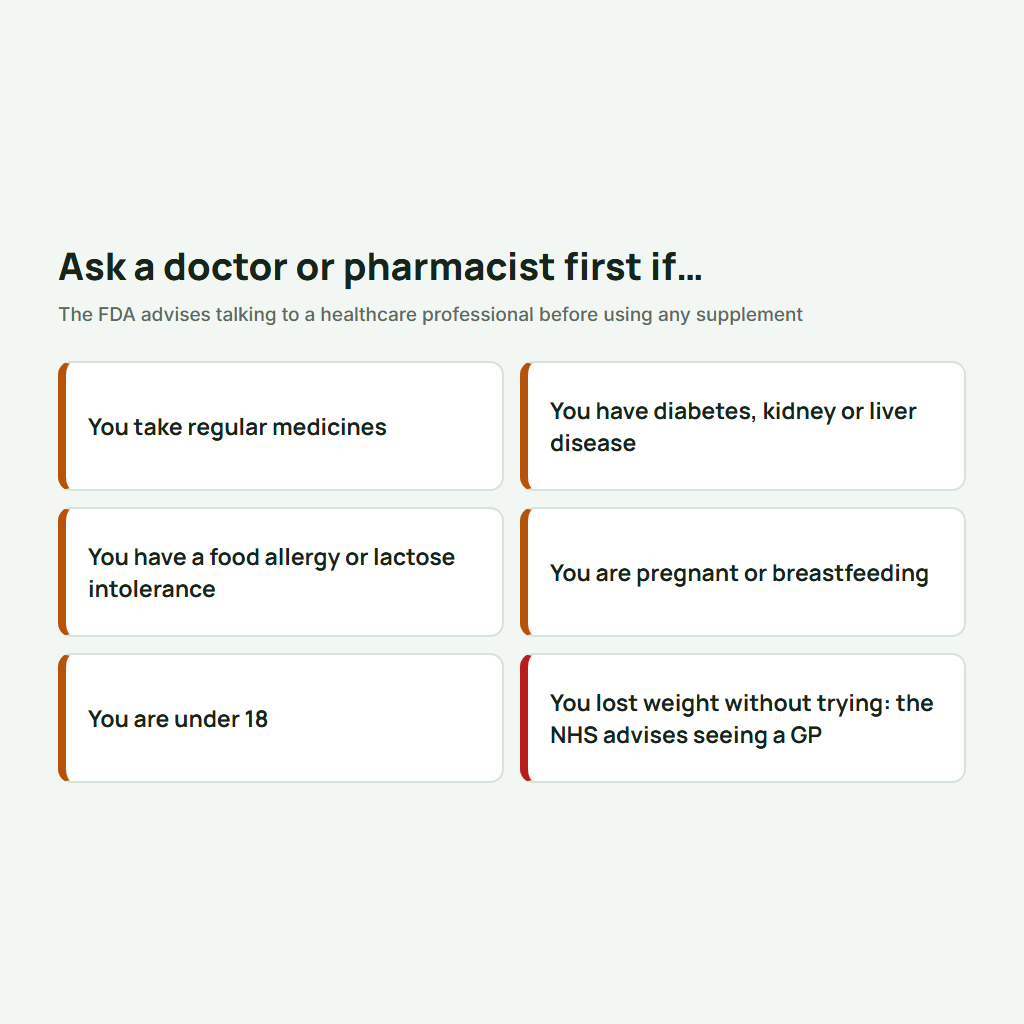
Who Should Ask a Doctor or Pharmacist First
The FDA advises people to talk to a doctor, pharmacist or another healthcare professional before using a supplement. That advice matters most if you have diabetes, kidney or liver disease, a digestive condition or a food allergy. It matters too if you take regular medicines. Anyone under 18, pregnant or breastfeeding should also get advice before using any gainer.
Weight loss you cannot explain, on the other hand, is a separate issue. The NHS advises seeing a GP if you have lost weight suddenly or without changing your diet or exercise. In that case, the priority is finding the cause, not adding calories. Once a doctor has ruled out a medical reason, a planned calorie increase becomes a safer project.
Your Calorie Gap Sets the Mass Gainer Serving
Weight gain needs more energy in than out. Research on body composition describes muscle gain as relying on a sustained calorie surplus. The ISSN position stand on diets and body composition adds that the size of that surplus and your training status shape what you gain. In practice, then, the useful question is how many extra calories you need each day. You can work that out before you compare a single product.
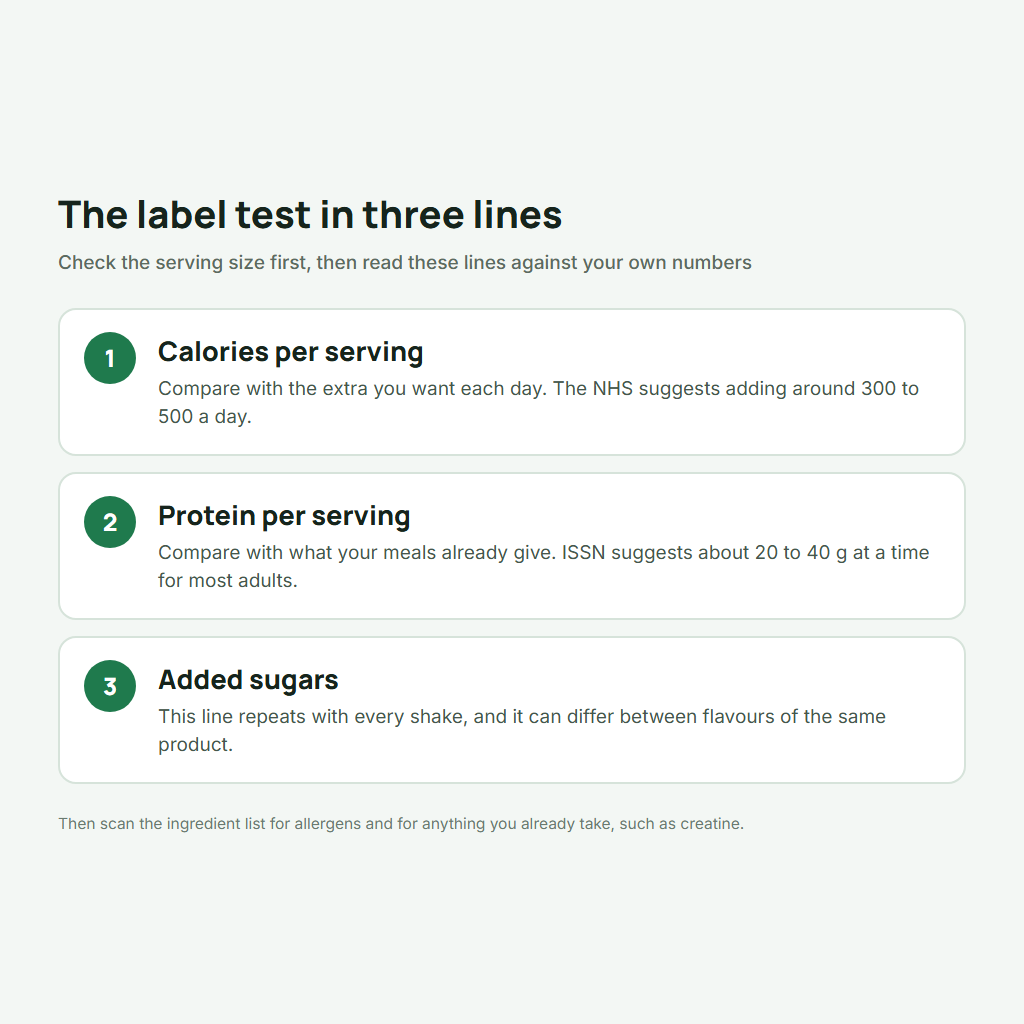
The NHS advice for underweight adults suggests adding around 300 to 500 extra calories a day. It also suggests tracking what you eat for two or three weeks. However, that range is small next to many gainers. For example, retailer labels for several popular high-calorie gainers list roughly 1,200 calories for a full serving. As a result, one full serving can be two to four times the increase the NHS suggests.
| Daily extra calories you want | Full serving of a ~1,200 kcal gainer | Closer fit |
|---|---|---|
| 300 | Four times the target | A quarter serving, or food alone |
| 500 | Over twice the target | Half a serving, or a lighter gainer |
| 800 | Still above target | Two-thirds of a serving |
| 1,200 | Close to target | A full serving, split into two shakes |
These rows are worked examples. The right number, however, depends on your body, your training and your current diet. Food should still do most of the work. For example, the NHS points to meals built on starchy carbohydrates and protein foods such as beans, eggs, fish and lean meat. In that plan, a mass gainer is simply a convenient extra on busy days.
How to Use a Mass Gainer Without Overdoing It
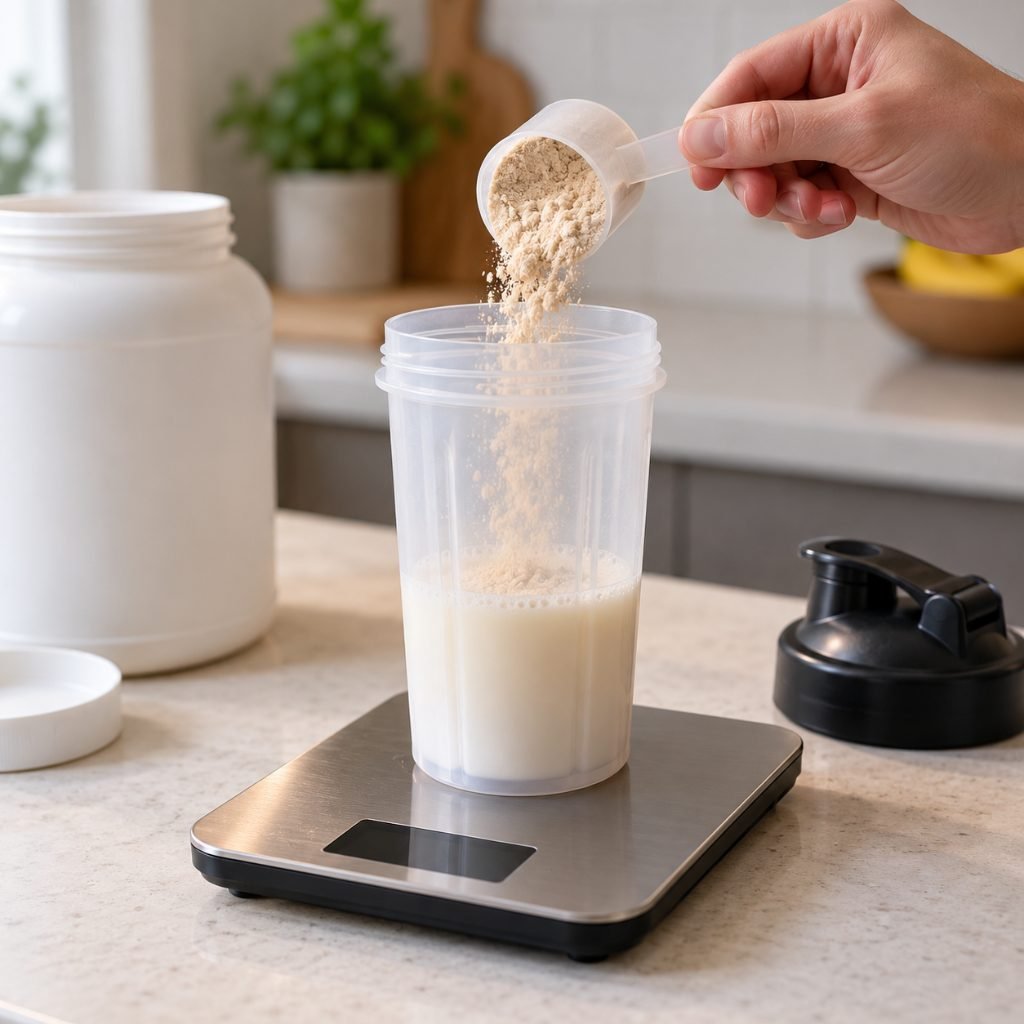
Start small. Take a quarter or half serving once a day for the first week, and notice how your stomach handles it. Then adjust the amount to your calorie target. Meanwhile, weigh yourself at the same time each week. Daily weight swings with water and food, and as a result a single reading tells you little.
Split large servings into two shakes, for example one between breakfast and lunch and one after training. That way, each shake stays easier to digest and closer to what one meal needs. That said, a mass gainer does not replace meals. Use it between regular meals, the way the NHS suggests using snacks and drinks.
How to Tell Your Mass Gainer Plan Is Working
Give the plan four weeks before you judge it. Record your weight once a week, at the same time and in similar clothes. In addition, measure your waist every two weeks, and keep a simple log of your main lifts if you train. As a result, these three numbers together tell a clearer story than the scale alone.
If weight does not move after a month, raise your daily calories a little. For instance, add a quarter serving or one extra snack. On the other hand, if weight rises but your waist grows fast while your lifts stall, the surplus may be too large. In that case, reduce the mass gainer first, because food usually brings more nutrients per calorie. In addition, change one thing at a time, so you know what made the difference.
Mass Gainer Options by Situation
No single mass gainer suits everyone, so the options below are grouped by the situation they fit. The figures are approximate and come from retailer labels and reviews. In addition, formulas change between flavours, sizes and regions. Therefore, read the label on the tub you actually buy before you plan servings.
As an Amazon Associate, BeIN ADVISOR earns from qualifying purchases.
Optimum Nutrition Serious Mass: the highest-calorie option
Retailer labels list about 1,200 calories and about 50 grams of protein for a full serving. Most of the rest comes from carbohydrate. For that reason, it suits people with a large, measured calorie gap, such as very active people who struggle to eat enough. For most beginners, however, a full serving overshoots, so start with a fraction. Before buying, compare the label on Amazon with your own calorie gap.
Dymatize Super Mass Gainer: a similar profile, different taste
Retailer listings show roughly 1,200 calories and about 50 grams of protein per full serving, depending on flavour. In other words, it sits in the same high-calorie group as Serious Mass. As a result, the choice between them often comes down to taste, mixability and price per serving. However, some flavours list more added sugar than others, so compare that line on Amazon before you choose one.
Naked Mass: a short ingredient list
Reviews of the unflavoured version describe a short ingredient list built on milk proteins and maltodextrin. They list about 1,200 calories per large serving. As a result, it suits people who want to control sweetness and flavour themselves, for example by blending it with fruit or cocoa. You can check its label on Amazon before you plan what to blend it with.
Transparent Labs Mass Gainer: a lighter, higher-protein option
Reviews list roughly 700 to 800 calories and about 50 grams of protein per serving. In contrast to the products above, that puts it in a lighter group. The brand states that it is certified by Informed Choice, a third-party testing programme. Consequently, it suits people who want a moderate calorie boost with a higher share of protein, and its label is easy to check on Amazon.
A home-made shake: the most flexible option
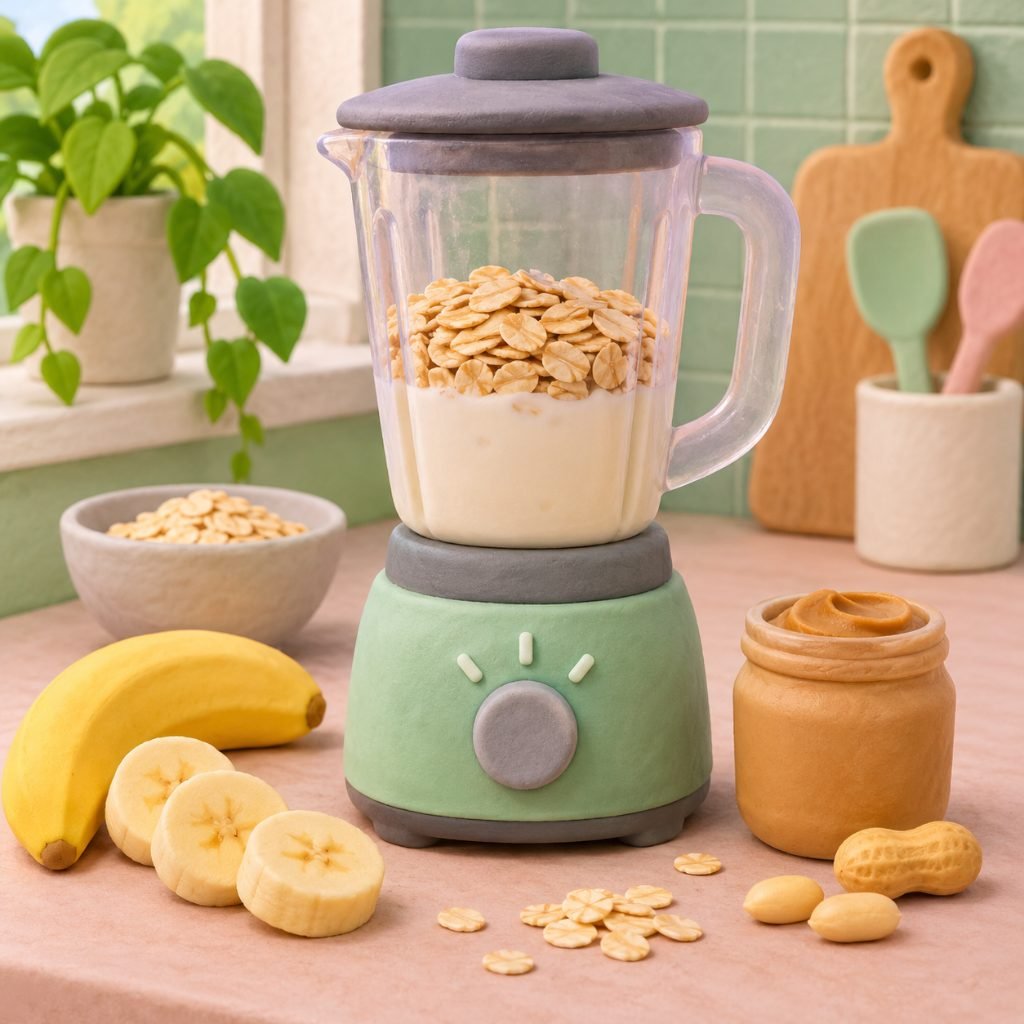
Blend milk, oats, a banana, peanut butter and a scoop of whey protein, and you control every ingredient. For example, adding or removing a spoon of peanut butter moves the total by about a hundred calories. In addition, whole foods bring fibre and micronutrients that a powder may not. The trade-off, however, is time, since a home shake takes a few minutes and some cleaning. If you make it ahead, a sealed shaker bottle lets you carry it in a bag without leaks.
Protein per Serving in a Mass Gainer
Protein is the second number to read. The International Society of Sports Nutrition position stand on protein concludes that 1.4 to 2.0 grams per kilogram of body weight per day suits most people who exercise. It also suggests spreading intake across the day, at about 0.25 grams per kilogram per meal. In absolute terms, it gives a general range of roughly 20 to 40 grams at a time. Consequently, a serving that adds 50 grams on top of normal meals may be more than one sitting needs.
Check, therefore, how much protein your meals already provide. For instance, a 70-kilogram person aiming for 1.6 grams per kilogram needs about 112 grams a day. If meals already supply 80 grams, a shake with 30 grams closes the gap. In contrast, a shake with 50 grams overshoots, and the extra adds calories you may not want. If your real gap is protein rather than calories, a whey protein isolate shake may fit better than a mass gainer.
Carbohydrate and Added Sugar in a Mass Gainer
Most of the calories in a mass gainer come from carbohydrate, so the source matters. Labels, for example, often list maltodextrin, oat flour or other starches first. Maltodextrin dissolves easily and costs little, which is why it is common. However, some products also add sugar for taste. The label shows it on its own line as added sugars. Compare that line between products, because a shake you drink daily repeats that sugar every day.
Sweeteners are the next detail. For instance, some gainers use sucralose, while others use stevia or monk fruit. A few come unflavoured. Also check for milk proteins if you are lactose-intolerant, and for allergens such as soy or gluten. In addition, look for ingredients you already take elsewhere, such as creatine monohydrate. That way, you do not double up without meaning to.
What a Certification Seal Adds
According to the FDA information for consumers on dietary supplements, the agency is not authorized to approve dietary supplements for safety and effectiveness before they are marketed. In other words, the label is the manufacturer’s own word. That said, independent programmes add a check. For example, NSF Certified for Sport tests products for substances banned in sport. Consequently, a seal matters most to tested athletes, and it adds some assurance for everyone else.
A seal does not make a product right for you, and it does not change the calorie maths above. It also covers one specific product; therefore, check the exact tub and flavour on the certifier’s website. If a product claims a certification, you should find it listed there in seconds.
Mixing, Taste and Digestion
Taste and texture decide whether you keep using a gainer at all. A thick shake that sits heavily in your stomach, for instance, is easy to skip. Therefore, try a new product with cold water or milk in a shaker first, and drink it slowly. For example, half the usual powder in the same amount of liquid gives a thinner drink that many people find easier.
Some people feel bloated with large servings or with milk proteins. In that case, a smaller amount split across the day may sit better. If it does not, a lactose-free protein or a home-made shake may suit you more. In addition, rinse the shaker soon after use, because milk residue starts to smell once it dries.
Common Mass Gainer Mistakes
The first mistake is following the scoop instead of the plan. The serving on the tub is the maker’s suggestion, not your dose. The second is drinking a shake instead of a meal, which can leave total calories unchanged. As a result, the scale stays still and the mass gainer gets the blame.
Another mistake is ignoring the rest of the label. Added sugar, allergens and doubled ingredients all hide below the calorie line. A third mistake is switching products every few weeks, so you never learn what works. Choose one product, use a fixed amount for a month, and adjust from what your numbers show.
Fit One Serving to One Number
The best mass gainer is the one whose serving, or a part of it, matches the calorie gap you worked out. If that gap is large and appetite is what holds you back, a high-calorie tub split into two shakes can close it. In contrast, if the gap is moderate, a lighter gainer or half a serving fits better. And if protein is the real shortfall, a protein shake does the job with fewer calories.
A small gap, however, may not need a powder at all. The NHS points to snacks such as yoghurt between meals and to adding cheese, nuts and seeds to food you already eat. Write your daily number on the tub before the first scoop. That figure, rather than the serving printed on the label, tells you how much to pour.