
A fresh pasta business looks like a recipe problem, but the first real decision is legal. Fresh egg pasta has to stay cold to stay safe. Yet many home-kitchen food laws exclude anything that needs refrigeration. Dried pasta, by contrast, can qualify under those same laws in some places. So the kitchen you may use decides which pasta you can sell.
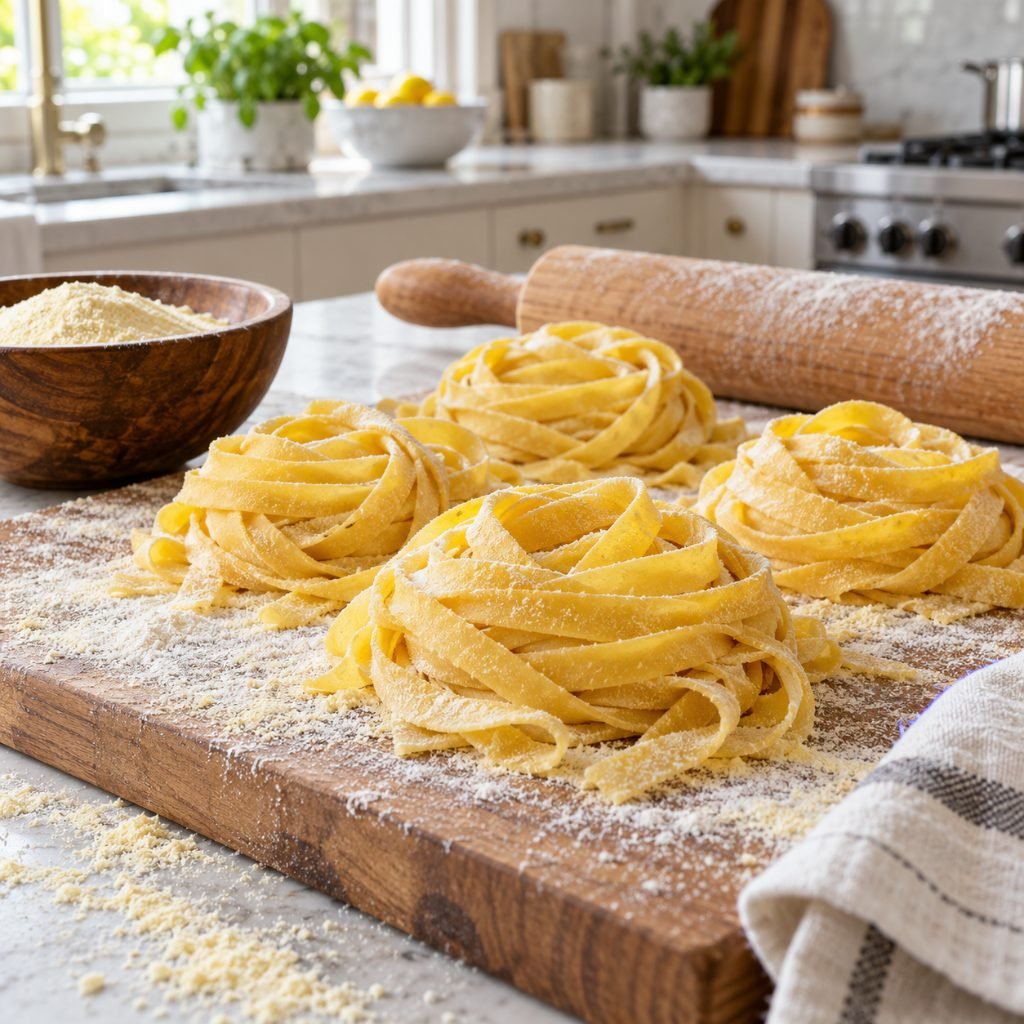
The fresh-or-dried question comes first, together with the kitchens that fit each answer. Buyers, a sales test and pricing follow, then shapes, eggs and cold storage. Equipment, an illustrative budget, labels, delivery and growth come last, once the basics are settled.
Fresh or Dried: The First Fresh Pasta Business Decision
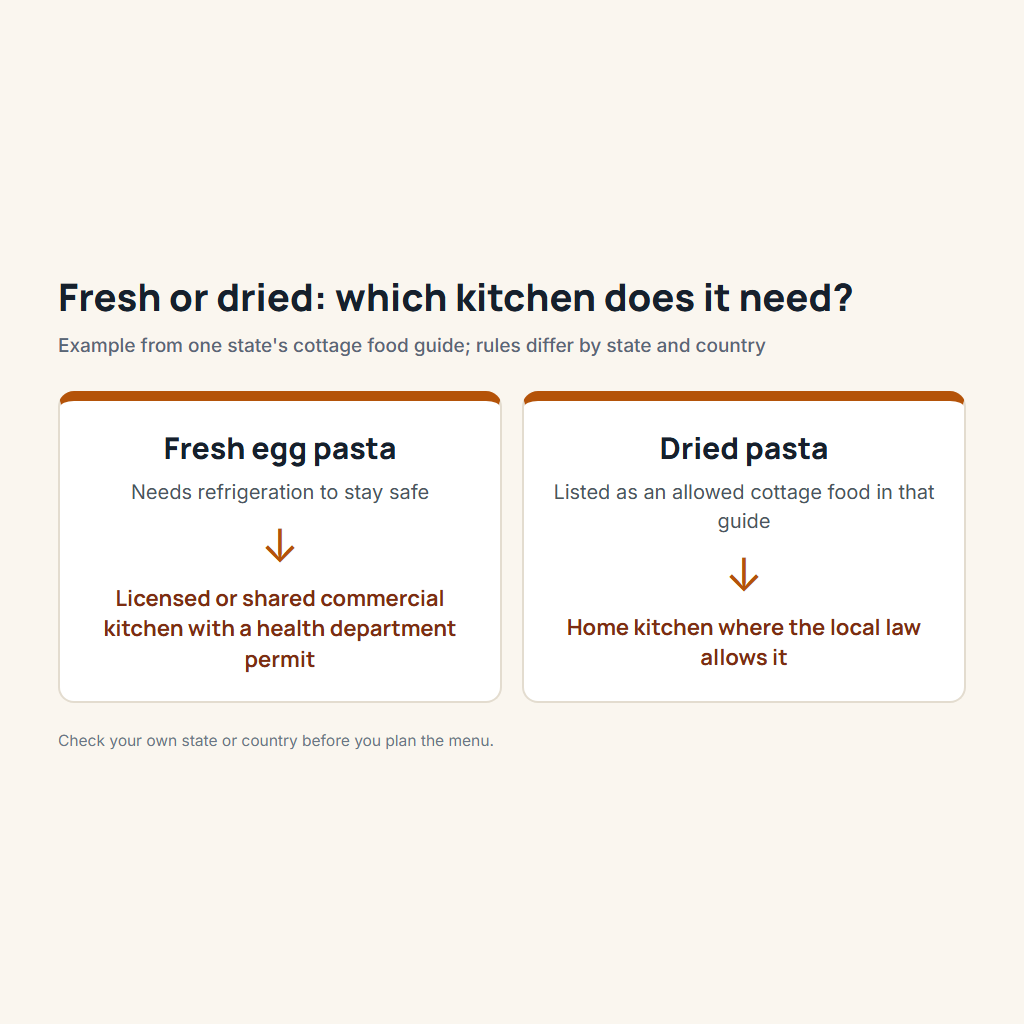
Home food businesses usually run under cottage food laws, and those laws cover low-risk foods only. The Mississippi State University Extension guide to cottage food is a clear example. It says that if a product requires refrigeration, it is not allowed under that state’s law. In contrast, its list of allowed products includes dried pasta. Eggs, meanwhile, appear on its list of unapproved items.
That one rule splits the business in two. A dried pasta line can start in a home kitchen where the local law allows it. A fresh egg pasta line, however, needs a kitchen that the health department licenses for foods that must stay cold. Rules differ by state and by country. Therefore, read your own rules before you plan a menu for your fresh pasta business.
Where a Fresh Pasta Business Can Legally Cook
For fresh pasta, the usual routes are a licensed commercial kitchen, a shared kitchen rented by the shift, or a restaurant kitchen used outside its service hours. Each route needs approval from the local health department. Moreover, the FDA Food Code is a model that local authorities adopt and adapt. As a result, the inspector’s checklist comes from your city or county.
Kitchen space is often the largest fixed cost in a fresh pasta business. One industry start-up guide puts a commercial kitchen at roughly $2,000 to $5,000 a month, including utilities. Therefore, a shared kitchen that rents by the shift can make sense while volume is small. Ask each kitchen how much cold storage you will get. Fresh pasta needs refrigerator space every hour it is not being made or delivered.

Who Buys From a Fresh Pasta Business
Two kinds of buyers fit a small operation. Restaurants and cafés buy fresh pasta to save prep time and get a consistent shape. Households, on the other hand, buy it for quality they cannot easily make at home. Supermarkets usually ask for steady volume, shelf-life data and labeling. A new fresh pasta business rarely has all three in its first months.
Each buyer changes the product. A restaurant wants the same weight and shape every time, delivered at an agreed hour. A household wants clear cooking instructions and a portion that fits a family meal. For example, the same tagliatelle might go to a restaurant in large trays and to homes in two-portion packs. Plan both packs before you cook the first batch.
Testing Demand Before the Fresh Pasta Business Grows
Run a small paid test before your fresh pasta business buys commercial equipment. For instance, offer one shape to three or four restaurants and a short list of households for four weeks. Track how many reorder and how much is returned or wasted. Also track how long each batch takes from mixing to packing. Together, those numbers show whether demand is real and what one batch truly costs.
Pricing One Portion Before You Scale
Add flour, eggs, packaging, labels and kitchen time to find the cost of one batch. Then divide by the number of portions you actually sold, not the number you made. The real cost includes the time and waste around the food, not only the ingredients. Our guide to a small catering business uses the same method to price events.
Price restaurant and household portions separately. Restaurants buy larger trays and expect a lower price per kilogram. On the other hand, a restaurant that likes the product often reorders every week. Households pay more per portion, yet each order is small and takes the same packing time. Therefore, work out the margin on both packs before you decide which buyer to chase first.
Choosing the First Shapes
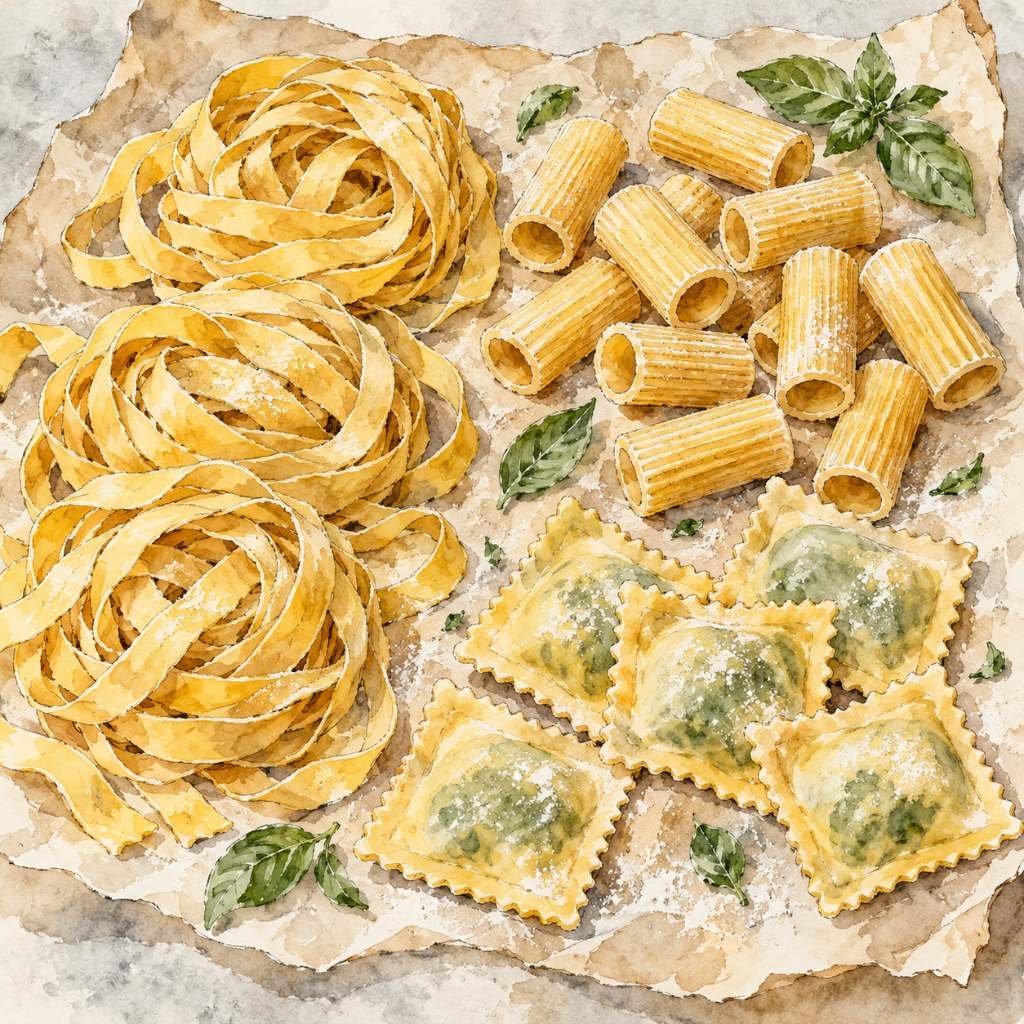
Start with one or two shapes that your equipment can make the same way every day. Ribbon shapes such as tagliatelle can be cut from rolled sheets, so they suit a roller machine. Extruded shapes such as rigatoni, in contrast, need an extruder with the right die. Filled pasta such as ravioli adds a filling that must also stay cold. Consequently, it raises both labor and risk.
A common starting point for egg pasta is about one egg for each 100 grams of flour. The dough is usually rested before rolling. Semolina from durum wheat, meanwhile, is common for extruded and dried shapes. Treat these as starting points, then write down your own tested formula. As a result, anyone who works with you can repeat every batch.
Eggs, Cold Storage and Cleaning in a Fresh Pasta Business
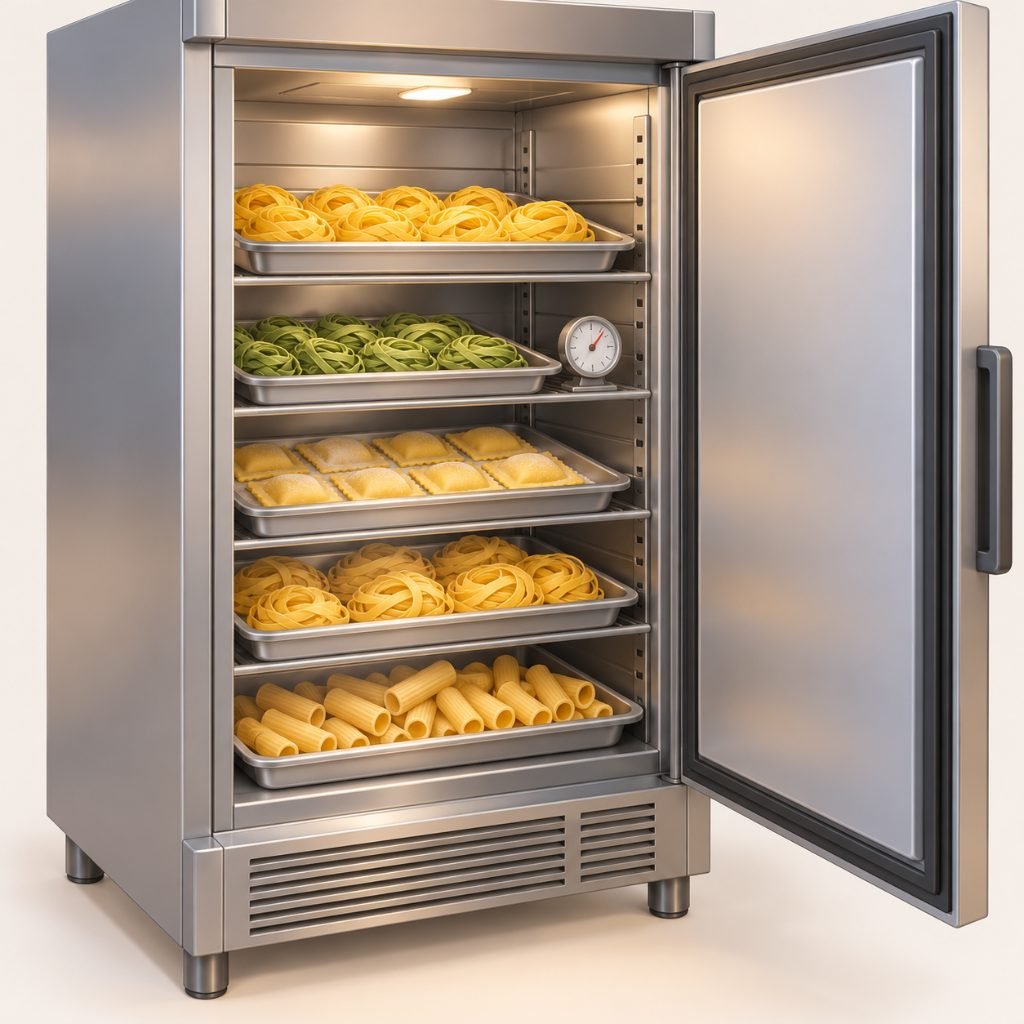
Eggs are the main food-safety concern in fresh pasta. According to USDA guidance on shell eggs, Salmonella can be inside eggs that look normal. Therefore, eggs belong in the refrigerator at 40°F (4°C) or below. The same guidance asks you to wash hands, utensils and work surfaces after contact with raw eggs. In a pasta kitchen, that includes boards, cutters and machine rollers.
Similarly, finished fresh pasta needs the same cold chain. The FDA guidance on storing food safely recommends a refrigerator at or below 40°F (4°C) and a freezer at 0°F (-18°C). It also advises checking both with appliance thermometers. For that reason, put a refrigerator thermometer in every unit you use. Then record the reading at the start and end of each shift.
As an Amazon Associate, BeIN ADVISOR earns from qualifying purchases.
Equipment for a Small Fresh Pasta Business
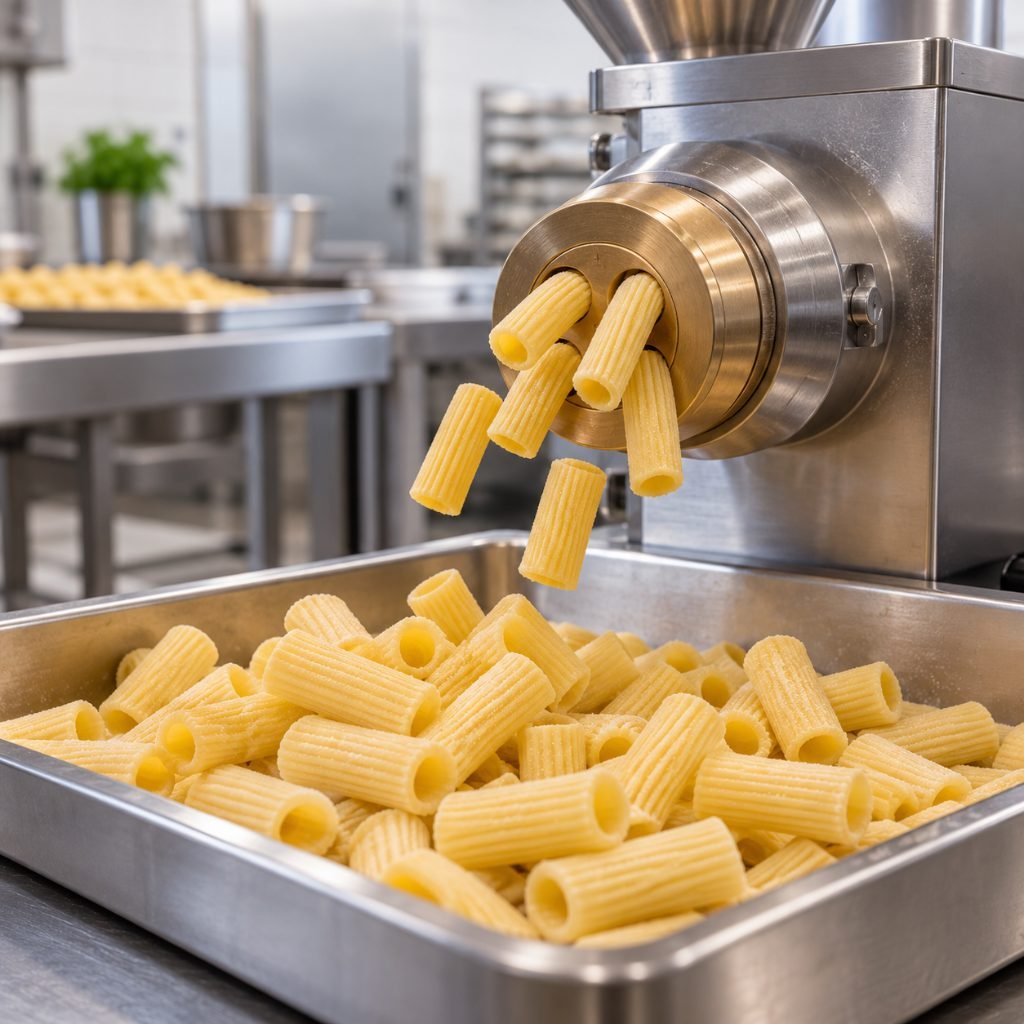
Buy equipment by stage, not by catalogue. For recipe testing, a roller pasta machine and a digital kitchen scale are enough. They let you settle the formula, the sheet thickness and the portion weight. In other words, you learn the product before you spend on larger machines.
Commercial equipment, in contrast, comes later, once a licensed kitchen and real orders exist. The same industry guide puts a commercial pasta extruder at roughly $5,000 to $20,000 by capacity. It puts an industrial mixer at $3,000 to $10,000. Drying and storage equipment, meanwhile, adds more if you also sell dried pasta. Buy the machine that removes your current bottleneck, whether that is mixing, shaping or packing.
An Illustrative Commercial-Stage Budget for a Fresh Pasta Business
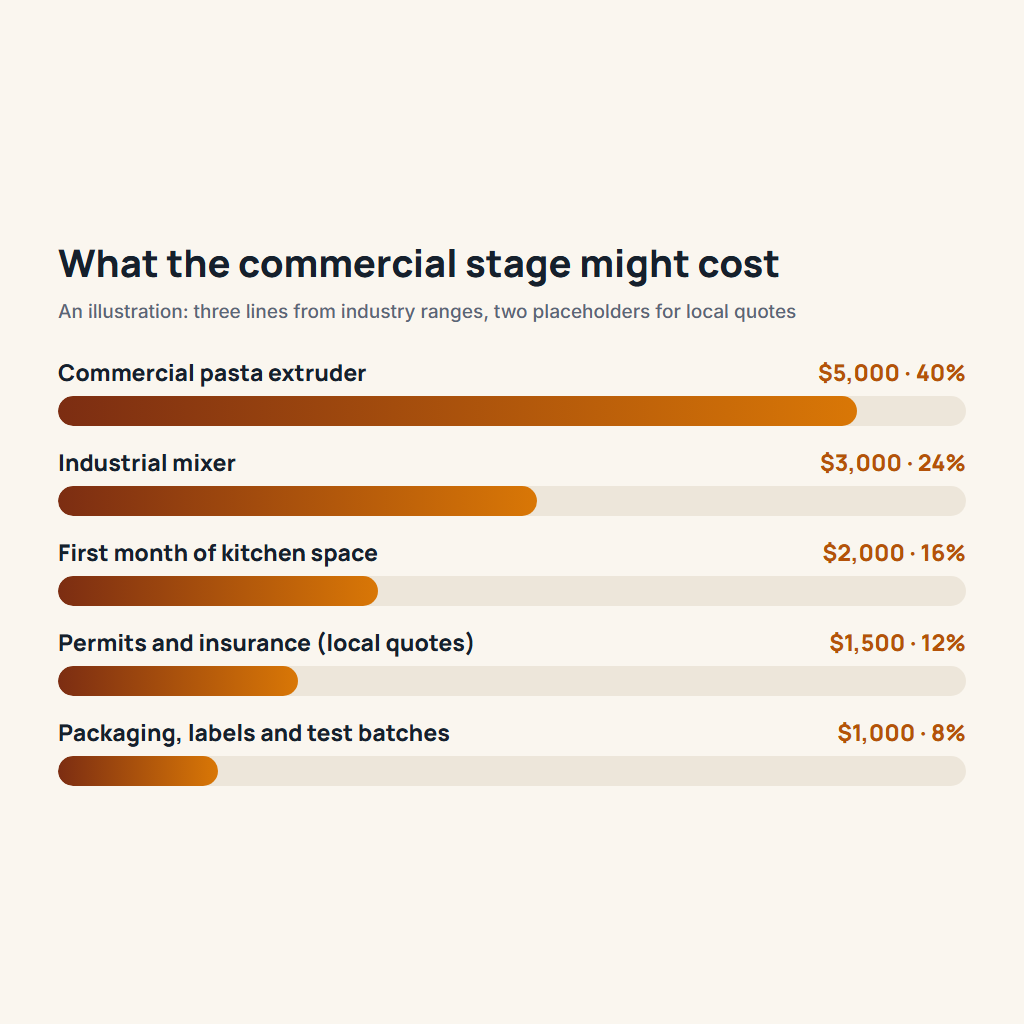
The table below shows what the commercial stage might cost, once a licensed kitchen and repeat orders justify a first extruder. It is an illustration, not a quote. The extruder, mixer and kitchen lines come from those industry ranges, while the permits and packaging lines are placeholders for local quotes. Therefore, replace every line with local prices before you commit.
| Item (illustration) | Approx. cost (USD) | Share of capital |
|---|---|---|
| Commercial pasta extruder (entry level) | 5,000 | 40% |
| Industrial mixer | 3,000 | 24% |
| First month of kitchen space | 2,000 | 16% |
| Permits and insurance (local quotes) | 1,500 | 12% |
| Packaging, labels and test batches | 1,000 | 8% |
| Total | 12,500 | 100% |
In addition, keep a cash reserve for the first weeks, because a restaurant buyer may pay a month after the first delivery.
Labels, Delivery and Batch Records in a Fresh Pasta Business
A fresh pasta label has to say clearly that the product needs refrigeration. The FDA guidance on labeling foods that need refrigeration explains why a plain “keep refrigerated” line is not enough. Shoppers often read it as a quality tip rather than a safety instruction. So make the warning prominent and specific, for example “Perishable. Keep refrigerated at 40°F (4°C) or below,” and place it near the product name. Then add cooking instructions and the allergens the pasta contains, such as wheat and egg.
Packing, in addition, protects the shape as well as the food. For example, dust the pasta with semolina or rice flour so the strands do not stick. Then pack it in a tray or box that a delivery bag will not crush. Test the pack by storing it overnight and carrying it on a real delivery route. That test, in turn, reveals problems you will not see on a kitchen counter.
Moreover, fresh pasta loses quality quickly once it leaves the cold, so delivery belongs inside the plan. Agree a delivery window with each restaurant, for example before lunch prep starts. Moreover, carry orders in an insulated box with ice packs, and check the temperature on arrival. A late or warm delivery can cost you a restaurant buyer faster than an average recipe.
In addition, keep simple batch records. For example, give each batch a number, then write the date, the shape, the formula, the weight made and the buyers who received it. As a result, you can trace any batch in minutes if a customer reports a problem. Those records also help during an inspection, because they show what you made and how you stored it.
Growing a Fresh Pasta Business Without Waste
Add a second shape only when the first one sells steadily and your formula gives the same result every day. Similarly, add a larger machine only when the current one is the bottleneck on most production days. Growth that comes before those signs, however, usually turns into waste. Fresh pasta that does not sell quickly has to be thrown away.
Later, you might add a small food counter or a delivery menu around your pasta. Our smash burger business guide covers that kind of short-menu start. That step brings its own permits and costs, however. Treat it as a separate project with its own plan.
A small fresh pasta business can start with one person. However, rolling, cutting, packing and delivering all happen on the same day, so time runs short quickly. For example, a single shift might produce enough pasta for several restaurants but leave no time for the delivery window. Therefore, decide early which task you would hand over first.
Packing and delivery are usually the easiest tasks to share, because they need less skill than mixing and shaping. In contrast, the formula and the temperature checks should stay with you until someone else has learned them well. In addition, anyone who handles the food should follow the same cleaning steps around raw eggs. As a result, help adds capacity to your fresh pasta business while keeping the added risk small.
The first mistake is selling fresh egg pasta from a home kitchen where the law excludes refrigerated foods. The second is buying a large extruder before any buyer has reordered. A third is skipping temperature records, which leaves you with no proof if something goes wrong. Finally, a fourth is pricing from ingredients alone, which ignores packing time, waste and delivery.
In fact, each of these mistakes has the same cause: doing a later step before an earlier one is settled. For example, the extruder decision depends on the sales test, and the sales test depends on an approved kitchen. Keep the order, and most of these problems never appear.
Settle the Kitchen, Then the Menu
The order matters more than the recipe. First, decide whether you will sell fresh or dried pasta, and find out which kitchen your local law requires for that choice. Then choose one or two shapes and set up a cold chain you can prove with written temperature checks. Finally, test real orders before you buy commercial machines.
A fresh pasta business that starts this way spends its money in the right sequence. The kitchen approval comes first, the formula second and the large machine last. By then, your buyers have already shown you what they will reorder.