
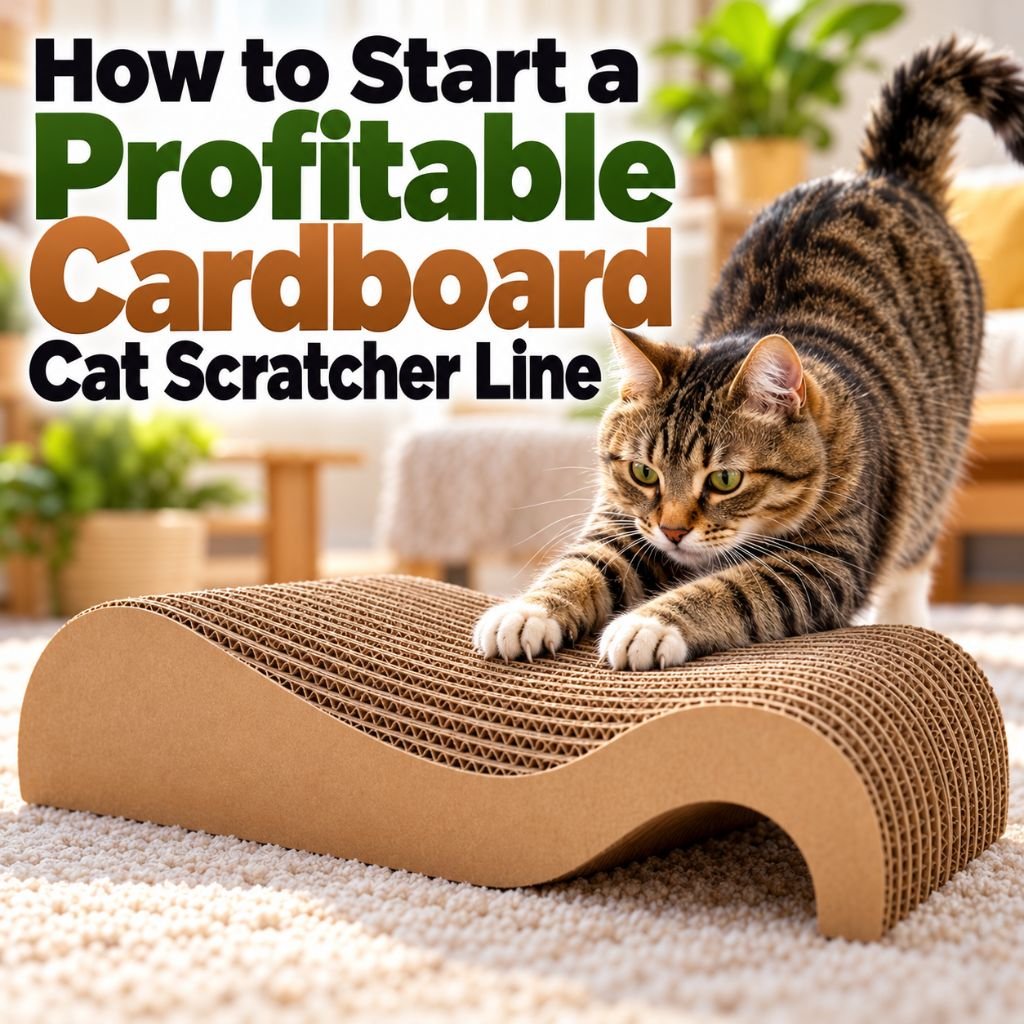
A cardboard cat scratcher wears out by design. Each week, the cat’s claws shred the top layer a little more. Sooner or later, the owner needs a new one. That simple fact is the business: a maker who sells the first cardboard cat scratcher well can also sell the replacement insert, again and again, to the same home.
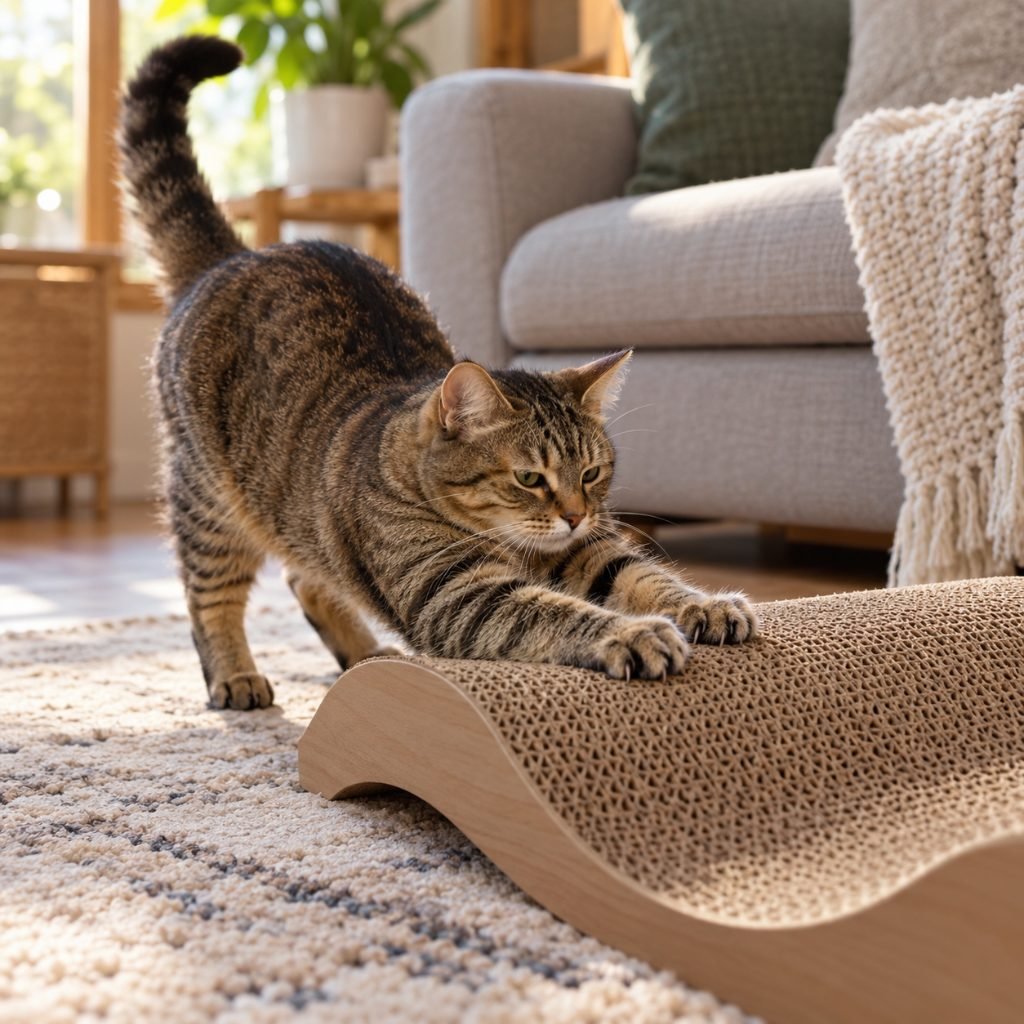
Two of the three starter products can share one cardboard block, so a single refill fits both. The repeat order then depends on that block being dense, fully cured and priced with every cost counted. Meanwhile, the third product, a sisal post, has to earn its own place beside them.
Why a Cardboard Cat Scratcher Business Runs on Refills
The first sale proves that someone liked the idea. The first refill order proves more: a cat used the product until it wore out, and the owner came back to you. For that reason, the share of buyers who come back for a refill is the number to watch in a cardboard cat scratcher line.
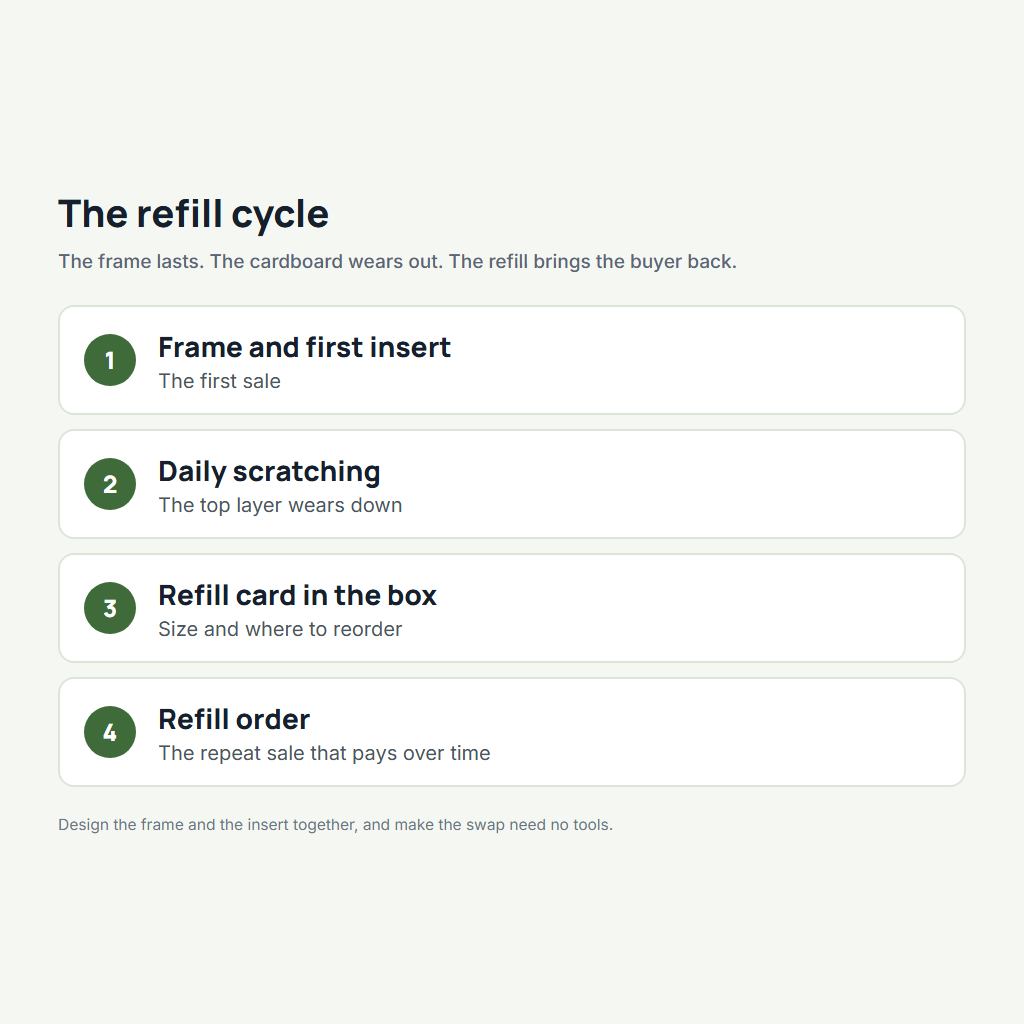
A refill insert is simply a new block that drops into the frame the owner already has. The frame lasts, while the cardboard wears out. Consequently, the refill becomes the product people buy again. In practice, the frame, the insert, the box and the price therefore need planning together from the first day.
What Cats Need From a Cardboard Cat Scratcher
Scratching is normal cat behavior, not a flaw to correct. According to Ohio State University’s Indoor Pet Initiative, cats scratch to stretch their muscles, shed old claw cuticle, sharpen their claws and leave scent marks. The ASPCA adds that cats scratch during play. A good scratcher gives the cat an approved place for all of this, close to where it already wants to scratch.
Two design rules follow from the same sources. First, the surface must be sturdy. The ASPCA says cats want a post that will not shift or collapse when used. Second, it must suit the cat’s preferred direction. For example, Ohio State notes that cats scratching couch corners may prefer a vertical post. Cats scratching rugs, in contrast, may prefer a horizontal mat. Therefore, a small line should offer both directions.
Three Products, One Refill Block
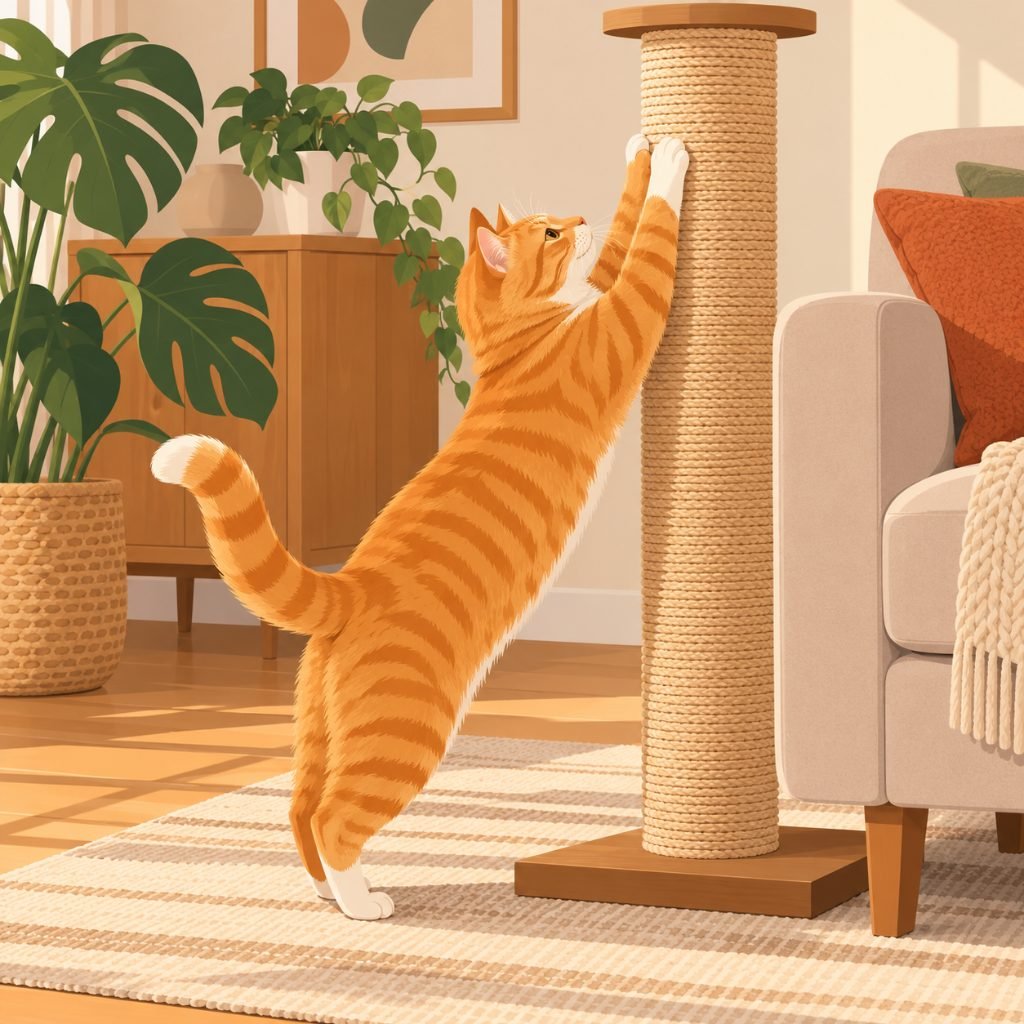
Start a cardboard cat scratcher line with three products. Two of them share the same cardboard block: a flat pad for cats that scratch rugs and floors, and an angled board for cats that like a slanted surface. The third is a vertical post wrapped in sisal on a stable base, for cats that stretch upwards. Ohio State, moreover, calls sisal ideal because it is satisfying to scratch and tough enough for repeated use.
Keeping one block size for the pad and the board therefore saves time and material. For example, the same insert can fit the flat tray and the angled frame. You then cut one strip width and stock one refill. In contrast, every new size adds a new cutting setting, a new box and a new refill to manage.
| Product | Suits cats that… | Main material |
|---|---|---|
| Flat pad | Scratch rugs and floors | Corrugated cardboard block |
| Angled board | Like a slanted surface | Cardboard block in a frame |
| Vertical post | Stretch up against furniture | Sisal rope on a stable base |
In addition, placement advice belongs with every product. Ohio State observes that cats often scratch near sleeping areas and room entrances. Therefore, a short card in the box can suggest those spots. That card helps the owner place the cardboard cat scratcher where the cat will actually use it.
From Strip to Cured Block: Making a Cardboard Cat Scratcher
Corrugated cardboard is the usual base, and the flute size, the height of the wavy layer inside the board, changes the feel of the surface. Thicker board gives a coarser edge, while thinner board packs more strips into each block. Therefore, test two or three board types on real cats before you buy in bulk. Keep notes on how quickly each one wears down.
Clean, dry board matters as much as thickness. For example, avoid boxes with heavy printing, tape, labels or food stains, because those end up on the scratching surface. Cardboard also absorbs moisture, so store it off the floor in a dry room. In addition, buy sisal rope that is natural and tightly twisted, and fix both ends firmly so the cat cannot pull them loose.
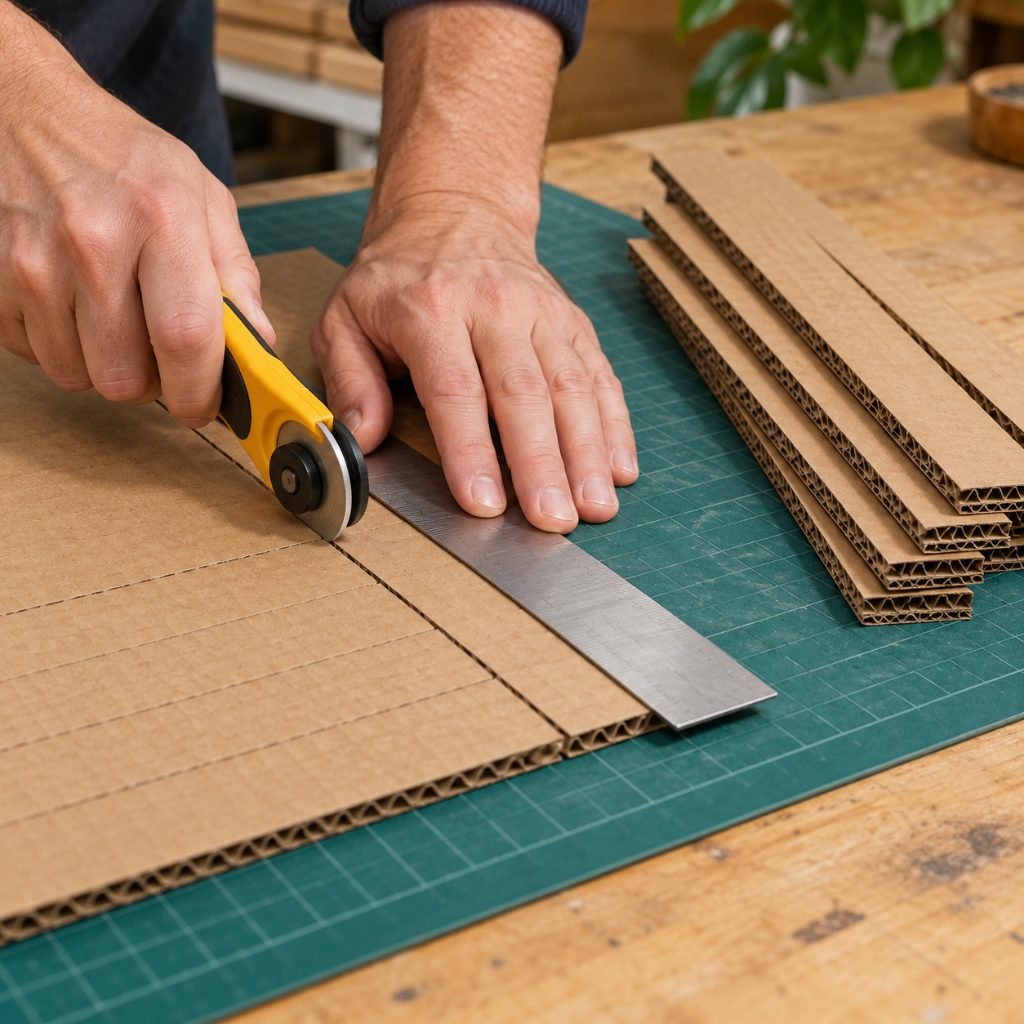
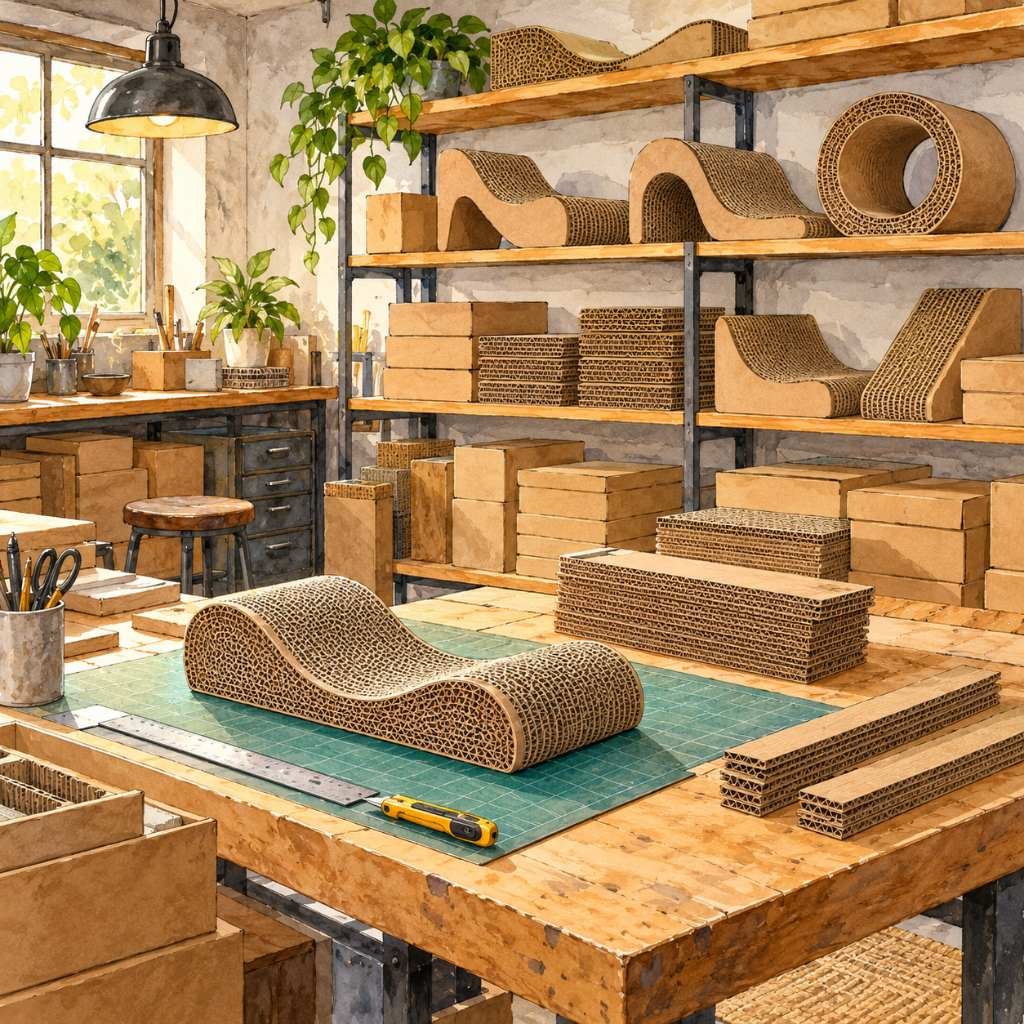
Every flat or angled cardboard cat scratcher starts the same way. First, you cut corrugated cardboard into strips of equal width. Next, you stand the strips on edge and glue them side by side into a tight block. The corrugated edges then become the scratching surface. The tighter you pack the strips, the longer the block lasts and the fewer loose pieces it sheds.
Consistency matters more than speed at the start. Mark a fixed strip width, and cut with a rotary cutter and cutting mat or a sharp blade and a steel ruler. Press each block while the glue sets. Then measure every finished block against the first good one. Any block that rocks on a flat table, or has gaps between strips, goes back for rework.
As an Amazon Associate, BeIN ADVISOR earns from qualifying purchases.
Glue deserves particular care, because cats put their faces and paws on a cardboard cat scratcher. Choose a glue whose maker states it is suitable for pet products, and let every block cure for the full time on the label before you pack it. A block that still smells of glue is not ready to sell.
In addition, finish the edges. Trim loose fibres, brush off cardboard dust, and check that no staples or sharp corners remain on the frame. If you add catnip, put it in a separate small bag. That way, the owner decides whether and when to use it. Small steps like these make a handmade product look professionally finished.
Cutting cardboard also creates dust and offcuts, so set aside a corner you can clean easily. Keep finished stock in closed boxes, away from damp walls and floors. Meanwhile, collect the offcuts separately, because clean scraps can go to paper recycling instead of the bin.
Designing the Frame and Insert Together
First, make the insert of a cardboard cat scratcher easy to swap without tools. A frame that needs a screwdriver, or an insert that sticks, turns a simple reorder into a chore. The sisal post, on the other hand, has no cardboard insert. Treat it as a separate product with its own price, rather than as part of the refill system.
Sell refills in a way that makes reordering easy. For instance, print the insert size and your contact details on a card inside every box. You can also offer refill packs of two or three, so a spare is ready when the first one wears down. Meanwhile, keep a short list of customers who bought frames. Contact them when their insert is likely to need replacing.
Pricing a Cardboard Cat Scratcher and Its Refill
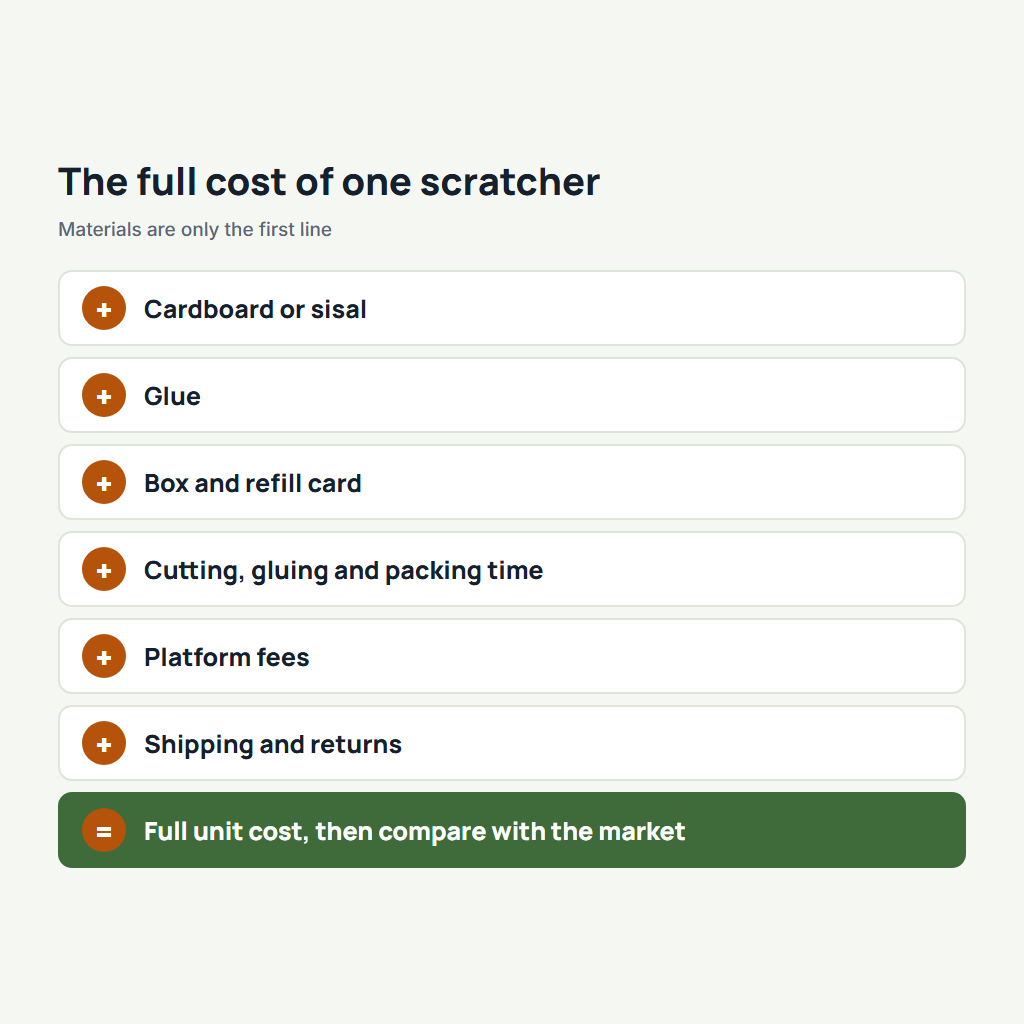
Materials are only part of the cost of a cardboard cat scratcher. One maker’s write-up on Boing Boing puts the materials for one homemade sisal post at about $15, most of it the rope. The same writer found that the homemade post cost more than simply buying one. Buying rope and cardboard in bulk, however, usually lowers material costs. Even so, labor, boxes, labels, shipping and returns often decide whether a unit makes money.
Therefore, work out the full cost of one unit before you set a price. Add materials, glue, the box and insert card, packing time and your share of the selling platform’s fees. Then compare the result with similar products on the market. For example, if a simple pad cannot carry its shipping cost, sell it in a bundle with a refill. Alternatively, limit it to local delivery.
Next, price the frame and the refill as a pair. The frame carries more cost on the first sale, because it includes the base, the box and more packing time. The refill, on the other hand, is light and quick to pack. Therefore, set a frame price that covers its full cost, and a refill price low enough to make reordering easy.
For example, a buyer who pays once for the frame may then reorder inserts several times. As a result, the refill margin matters more over time than the frame margin. However, a refill priced too low may not cover its own packing and shipping. In that case, sell refills in packs of two or three, so one parcel carries more value. In addition, review both prices after a few months, once you know how often buyers actually reorder.
Shipping Decides Where a Cardboard Cat Scratcher Sells
Shipping can cost more than a cardboard cat scratcher itself, so the box design shapes the sales channel early. Flat pads and refill inserts ship well because they are compact and light. Posts, in contrast, are tall and awkward. As a result, it often makes sense to sell posts locally and ship only pads and refills.
Local channels are a low-cost place to start. Pet shops, groomers, vets’ waiting rooms and weekend markets let buyers touch the product, and they remove shipping from the price. In addition, a local shop can stock refills, which brings the cat’s owner back to the same counter.
Online marketplaces, in contrast, reach more buyers, but bulky boxes make shipping expensive. Therefore, design the product to ship flat or nested where possible. The same lesson applies to a handmade souvenir business: a product that packs small travels further for less money.
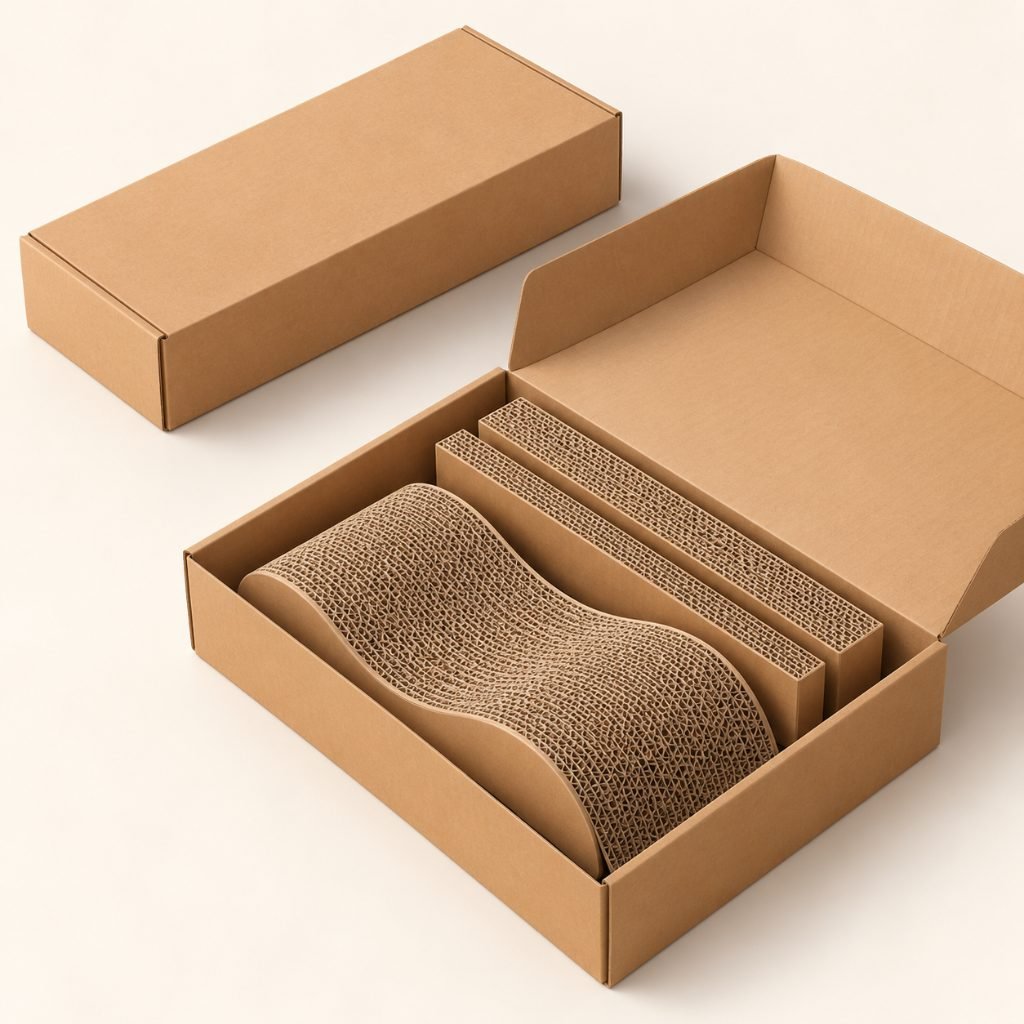
Similarly, choose a box that fits the product closely, with little empty space. For instance, nest two refill inserts in one sleeve, or ship a frame with one insert already in place. Then add the refill card and simple placement advice. A well-packed cardboard cat scratcher arrives clean, and the buyer is more likely to reorder.
Pet shops may ask for a wholesale price once local sales show demand. Before you agree, check that the wholesale price still covers materials, packing and your time. Similarly, agree who stocks the refills, because a shop that sells frames without inserts sends your repeat buyers elsewhere.
Photos and Listings That Show the Product in Use
Buyers want to see a cat using the cardboard cat scratcher, rather than a lone box on a white background. Therefore, photograph the product next to a sofa or rug, the places where owners see the problem. If you photograph customers’ cats, ask the owners first and keep their homes out of view. In addition, show the insert being swapped, so buyers understand the refill idea at a glance.
Similarly, write listings around the cat’s behavior. Say whether the product is horizontal, angled or vertical, and give its size. Then explain which kind of scratching it suits. Also state the materials plainly, including the type of glue, so careful owners do not need to ask.
Growing Without Breaking the Repeat Order
Grow only after cardboard cat scratcher refills start selling on their own. A rising share of repeat orders shows that buyers trust the product and use it until it wears out. At that point, a second frame design or a larger post can make sense. Before then, however, new designs mostly add stock that may not sell.
Bigger cutting or pressing tools come later as well. Add them when cutting time, not demand, limits how many units you can finish in a week. Similarly, a furniture flipping business grows by repeating what already sells. The same discipline keeps a small cardboard cat scratcher line healthy.
Four early mistakes break the repeat order. The first is launching many sizes at once, which multiplies boxes, cutting settings and refills. The second is packing blocks before the glue has fully cured. A third is selling a frame without a matching refill, which sends the owner to another brand when the cardboard wears out. Finally, a fourth is pricing from materials alone and forgetting packing time and shipping.
Ultimately, each of these mistakes ends in the same lost sale. For example, a buyer who cannot find a matching insert has no reason to come back. In contrast, a buyer who finds the refill card in the box already knows where to reorder.
The Refill Margin Is the Business
A cardboard cat scratcher frame is sold once, while the insert inside it can be sold many times to the same home. For that reason, the refill margin outweighs the frame margin over time. The frame price has to cover its full cost on the first sale. The refill, meanwhile, has to stay cheap enough to reorder and still pay for its own packing and shipping.
So build the first cardboard cat scratcher around one block size for the pad and the board. Then cost every insert down to the box and the platform fee, and price the refill so each parcel earns its place. If that sum works, each new home becomes a source of repeat orders. If it does not, more designs only add more stock.