
Four weeks is where most bottles get abandoned. Someone buys a niacinamide serum for large pores, checks the mirror daily, sees nothing, and decides it does not work. The ingredient is not the problem. It is one of the best-evidenced actives available without a prescription. However, it works on a timescale nobody advertises, and it fixes some complaints while barely touching others.
This article separates the two. It covers what the ingredient actually changes in skin, which strength is worth buying, and what the rest of the label tells you. Additionally, it explains where the serum belongs in a routine and what it can safely sit beside. The five types in section four are grouped by what they are built to do, not by brand.
No overnight results are promised here, because none exist. What follows is a realistic account of the timeline, the concentration question, and the handful of mistakes that waste a whole bottle. Consequently, you should finish this article knowing whether the ingredient suits your particular complaint before spending anything on it.
1. What a Niacinamide Serum Actually Does
Niacinamide is a form of vitamin B3. It acts on several fronts at once rather than solving a single problem. It supports the skin’s barrier, moderates oil production, calms visible redness, and interferes with the pigment-transfer process. That breadth is the reason it appears in so many products and also the reason expectations get muddled. As a result, the honest question is not whether it works but which of its effects you are actually buying it for. The two subsections below separate the fast effects from the slow ones.
1.1 The Barrier and Oil Control
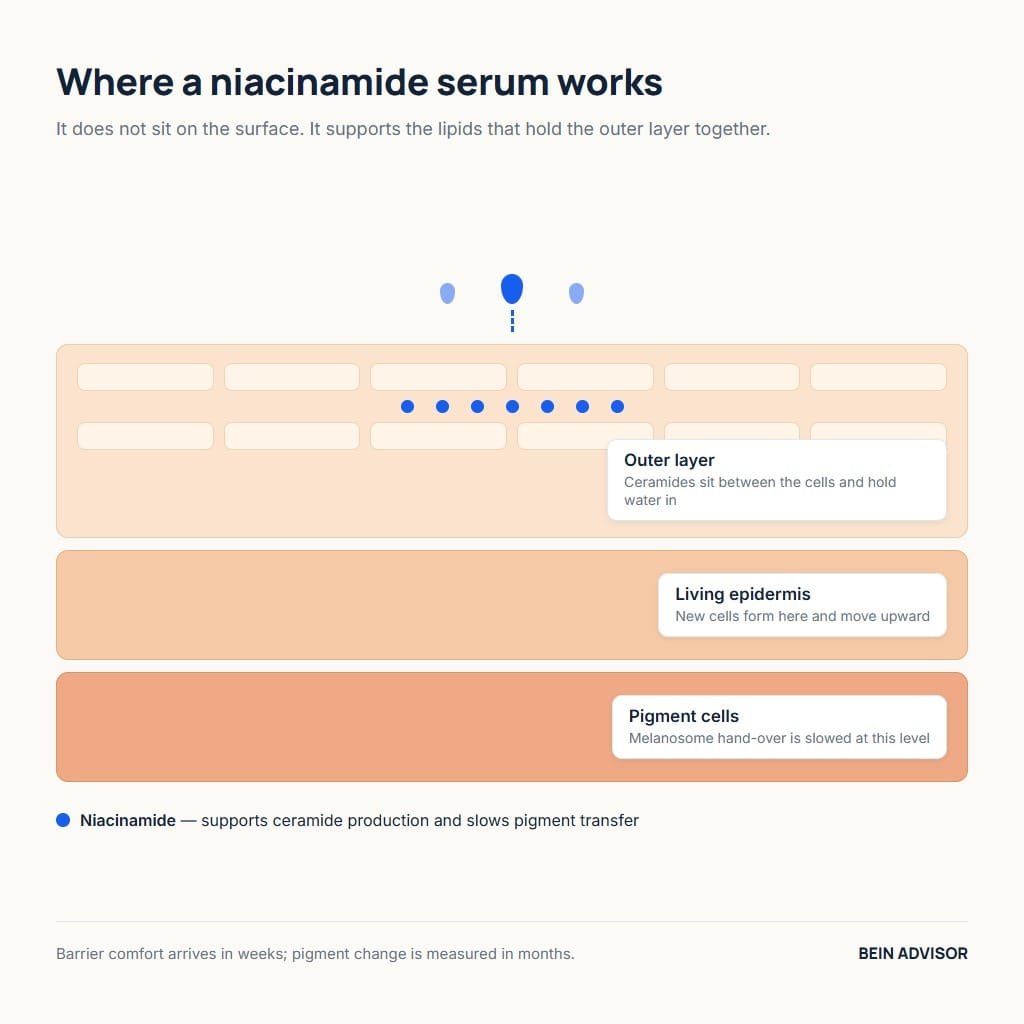
The barrier effect is the best-established one. Niacinamide supports the skin’s production of ceramides, the lipids that hold the outer layer together and keep water in. A barrier that holds water loses less of it through the day, which is why skin often feels less tight within a couple of weeks. Furthermore, this mechanism sits behind most of the ingredient’s other benefits. A weakened barrier is what makes skin reactive, flaky and irritable.
Oil control is the effect most people notice first. Skin that produces less surface oil looks less shiny by early afternoon, and pores appear smaller because they are less full. Note the wording: pores appear smaller, and their actual size does not change. For instance, anyone hoping to permanently shrink a pore will be disappointed. Anyone who wants their face to stop looking greasy by mid-afternoon usually will not. Managing that distinction is most of the satisfaction gap.
1.2 Pigmentation, and Why It Is Slow
Dark marks fade slowly. Niacinamide slows the handover of pigment from the cells that make it to the cells at the surface. It does not bleach anything already there. Existing pigment leaves only as those surface cells shed and are replaced, which takes months rather than weeks. A published review of the mechanism describes exactly this, slowing melanosome transfer between melanocytes and keratinocytes. Therefore the honest timeline for marks is long, and anyone quoting two weeks is selling something.
Two practical consequences follow from that mechanism. The first is that sunscreen decides whether any of it holds, because new sun exposure restarts the pigment production the serum is trying to slow. Skipping it makes the serum close to pointless for marks. Meanwhile, the second is that niacinamide maintains rather than corrects. It is better at stopping new marks forming than at erasing old ones. Deep or long-standing pigmentation usually needs a dermatologist, not a stronger bottle.
2. Choosing the Right Niacinamide Serum Strength
Concentration is the decision most shoppers get wrong, and they get it wrong in the same direction. The market sells strength as quality. A bottle marked ten percent therefore reads as better value than one marked five. Skin does not work that way, and past a certain point more of the active buys irritation rather than results. Consequently, the sensible approach is to start lower than the shelf suggests and move up only if nothing happens. The table below sets out what each band is realistically for.
2.1 Why a 5% Niacinamide Serum Is the Sensible Default
Around five percent is where most of the useful research sits. The barrier and oil effects are already reliable there. It is also the band that almost nobody reacts to, which matters when you are adding something to a routine that already contains other actives. For most people this concentration does everything they bought the product for. In addition, a well-tolerated serum you use daily beats a stronger one you abandon after a week of stinging.
Lower bands still earn their place. Two to four percent suits reactive skin, rosacea-prone skin, and anyone layering several actives already. The effect arrives more slowly, though it arrives. For example, take someone using a retinoid three nights a week. A gentle niacinamide serves them better than a strong one competing for the same tolerance budget. Start there, give it eight weeks, and only then consider moving up.
| Concentration | Best for | Trade-off |
|---|---|---|
| 2–4% | Reactive skin, rosacea, heavy routines | Slower, but almost never irritating |
| 5% | Most people, most complaints | The best evidence-to-tolerance balance |
| 10% | Oily skin that tolerated 5% with no result | Flushing and irritation become common |
| Above 10% | Little established benefit | Irritation rises without added effect |
2.2 When a Higher Percentage Backfires
Ten percent formulas are popular because the number sells, not because the extra five percent does much. Reports of flushing, stinging and small bumps rise noticeably in this band, particularly on skin that is already dry or compromised. The irony is that irritation damages the barrier the ingredient is meant to be rebuilding. As a result, a strong serum can leave skin worse than it found it, and the user blames niacinamide rather than the concentration.
There is a simple test for whether you need more. Use five percent daily for eight weeks with sunscreen every morning, and judge oil, texture and redness at the end rather than along the way. If nothing at all has shifted, a higher band is a reasonable next experiment. However, if you saw improvement and stopped early, the answer is patience rather than strength, and a second bottle of the same thing.
3. What to Read on a Niacinamide Serum Label
The percentage on the front tells you less than the rest of the ingredient list. What sits alongside the active decides how the serum feels, who it suits, and whether it plays well with the other things on your shelf. Packaging matters too, in ways that are easy to overlook at the point of purchase. Therefore a few seconds spent reading the back of the bottle prevents most disappointments. The two subsections below cover what to look for and what to be wary of.
3.1 The Supporting Ingredients That Matter
Zinc appears in many oil-control formulas and suits skin that is genuinely oily or breakout-prone. It can feel drying on anyone else, which is why the same product gets glowing and terrible reviews from different people. Hyaluronic acid and glycerin do the opposite job, pulling water into the surface layers and making the serum comfortable on dry skin. In contrast, a formula heavy on alcohol will feel lighter and dry faster while doing the barrier no favours.
Ceramides alongside niacinamide are a genuinely good pairing rather than a marketing one. The active supports the skin’s own ceramide production, and the formula supplies some directly, so the two work on the same target from different directions. Similarly, panthenol and centella are common calming additions that suit reactive skin. Fragrance is the ingredient most worth avoiding here, because the people most likely to buy this serum are the people most likely to react to it.
3.2 Packaging and What Ages Badly
Niacinamide is a stable active, which is one of its quiet advantages over vitamin C. It does not demand opaque glass or an airless pump to survive the month. A clear dropper bottle is perfectly adequate, and paying extra for elaborate packaging buys presentation rather than performance. Additionally, this stability is why the ingredient turns up in cleansers, moisturisers and sunscreens as well as serums.
One thing does go wrong on a shelf, and it is easy to spot. A degraded formula can develop a faint sour or fishy smell. That is a signal to stop using it rather than push through. Meanwhile, a serum that has turned cloudy or separated has usually been stored somewhere hot. For instance, a bottle left on a sunny bathroom windowsill for a summer is worth replacing rather than rescuing.
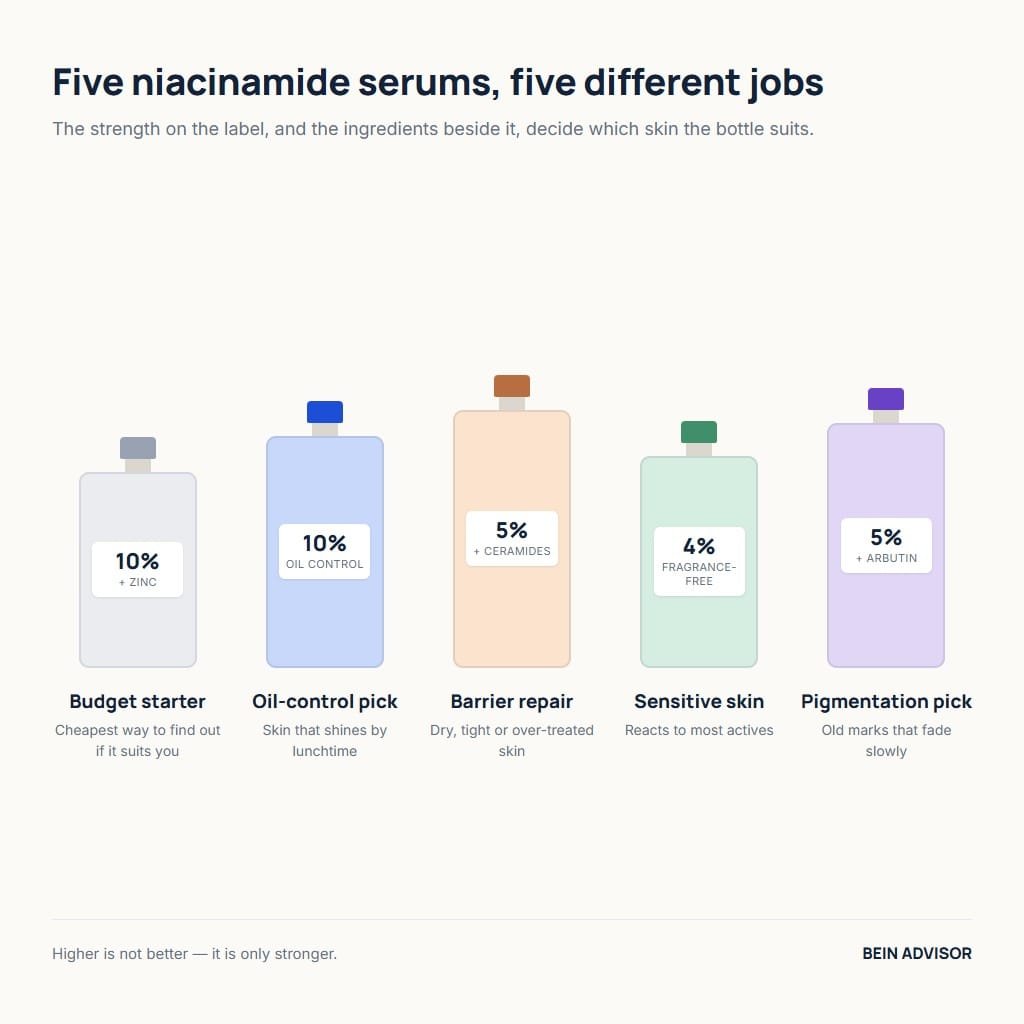
4. Five Niacinamide Serum Types Worth Knowing
These are grouped by the job the formula is built for, because that is what decides whether a bottle suits you. Brand names move in and out of stock and reformulate; the categories do not. Prices across this ingredient are unusually low. The budget end is therefore genuinely usable rather than a compromise. Our article on choosing a gentle, non-stripping cleanser covers the step that comes before it. Consequently, matching the type to your actual complaint matters more than spending more. Retailers such as iHerb and Amazon carry all five categories.
4.1 The Budget Starter
A plain, low-cost serum with a short ingredient list is where most people begin. The Ordinary’s Niacinamide 10% + Zinc 1% is the best-known example. Its appeal is obvious: it costs less than a sandwich and the label states exactly what is in it. The texture is slightly tacky and takes a moment to settle under other products. Furthermore, the zinc suits oily and breakout-prone skin far better than dry skin. And ten percent is not the gentlest place to start, despite being the cheapest.
Treat this category as a test rather than a commitment. Spending very little to find out whether the ingredient suits you is a sensible first move. If it does, you can decide later whether a more comfortable formula is worth the difference. However, dry or reactive skin often reacts here and concludes that niacinamide does not agree with it. What disagreed was the concentration and the zinc.
4.2 The Oil-Control Pick
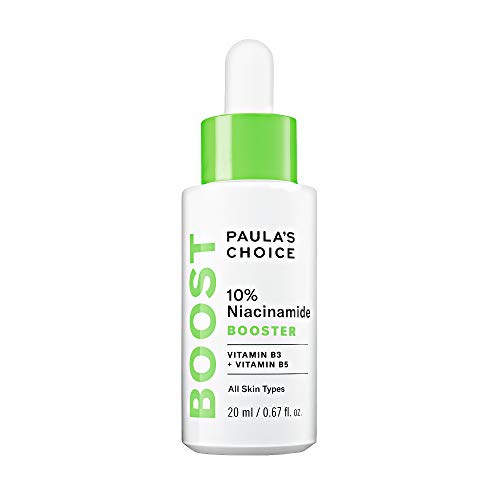
This category pairs a higher concentration with zinc and a light, fast-drying base. It is aimed squarely at skin that shines by lunchtime. Paula’s Choice 10% Niacinamide Booster is a well-established example, formulated to be layered into an existing routine rather than used alone. The texture disappears quickly, which matters if you wear makeup over it. In addition, formulas in this group are usually fragrance-free, since the skin that needs them is often also breaking out.
The trade-off is comfort on anything other than oily skin. Combination skin often does well applying this type only where it is needed. That also makes the bottle last considerably longer. Similarly, using it once daily instead of twice is usually enough for oil control. Meanwhile, dry patches are a signal to move to a different category rather than to persist and add more moisturiser on top.
4.3 The Barrier-Repair Pick
Here a moderate strength sits alongside ceramides, glycerin and often panthenol. The base is richer and behaves more like a light serum-cream. This is the group for skin that feels tight, flaky or over-exfoliated, and it is the one most people should have chosen instead of the budget starter. The formula supports the barrier from two directions at once. As a result it tends to feel comfortable immediately rather than after an adjustment period.
The cost is higher and the oil control is weaker, which is the correct trade for the skin this suits. Oily skin will find these formulas heavy and may prefer to keep them for winter only. For instance, someone whose skin turns tight and reactive in cold months and greasy in summer can reasonably run two different niacinamide serums across the year. That sounds indulgent and is usually cheaper than replacing a barrier you have damaged.
4.4 The Sensitive-Skin Pick
Low-concentration formulas in the two-to-five percent band, free of fragrance, alcohol and essential oils, make up this category. They are built for rosacea-prone and easily flushed skin, where the calming and barrier effects matter far more than oil control. Centella and allantoin are common companions. Therefore this is also the sensible starting point for anyone who has reacted badly to an active before, regardless of what that active was.
Expect the timeline to stretch. At these concentrations the barrier improvement is real but gradual, and pigmentation effects are slower still. In contrast to the high-strength formulas, nothing about this category is dramatic, which is precisely the point for skin that reacts to drama. Give it a full twelve weeks before judging, and keep using it afterwards, because the benefit fades when the serum stops.
4.5 The Pigmentation Pick
This category adds a second brightening active: alpha arbutin, tranexamic acid or a stabilised vitamin C derivative. On marks, niacinamide works better in company than alone. The logic is sound: each acts on a different stage of pigment formation and transfer. Consequently these formulas are the most expensive of the five and the slowest to show results. They are also the group where sunscreen stops being advice and becomes a condition of the product working at all.
Set expectations before buying. Post-acne marks respond reasonably well over months, sun-related patches more slowly, and melasma often needs medical treatment rather than any serum. Similarly, combining several brightening actives raises the irritation risk, so introduce one product at a time. Do you want a gentler route to the same territory? Our article on choosing a bakuchiol serum for sensitive skin covers a different active with a similar tolerance profile.

5. How to Use a Niacinamide Serum
Application is simple and hard to get badly wrong, which is another point in this ingredient’s favour. It sits comfortably in almost any routine and does not demand a particular time of day. The few rules that exist are about order and about what it shares a step with. Additionally, consistency matters far more here than technique, because the whole mechanism depends on daily use over weeks. The subsections below cover placement and layering.
5.1 Where the Niacinamide Serum Sits in a Routine
Apply it after cleansing and any water-based toner, and before your moisturiser. A few drops cover the whole face; more product does not mean more effect and simply takes longer to absorb. Morning or evening both work, and twice daily is fine for most formulas at moderate strength. Furthermore, if you use it in the morning, sunscreen goes on last and is not optional, particularly if marks are what you are treating.
Give the serum a moment to settle before the next step. Thirty seconds is enough, and it stops the tackier formulas pilling under a moisturiser or under makeup. If pilling still happens, the usual culprit is too much product rather than an incompatible one. As a result, halving the amount solves the problem more often than switching brands does.
5.2 What It Layers With, and What It Does Not
Niacinamide is unusually easy-going with other actives. It pairs well with retinoids and often reduces the dryness they cause, which is a genuinely useful combination rather than a marketing one. Hyaluronic acid, peptides and ceramides all sit alongside it without issue. Meanwhile, the old warning against combining it with vitamin C came from laboratory conditions that modern formulas do not reproduce. Most people use both without trouble.
A little caution is still sensible around strong exfoliating acids. Using a high-strength niacinamide immediately after a glycolic or salicylic treatment stacks two potential irritants in the same minute. Separating them by time of day solves it entirely: acid at night, niacinamide in the morning. In contrast, at low concentrations even this is rarely an issue, which is another argument for starting gentle.

6. Getting the Best Results From a Niacinamide Serum
Most disappointment with this ingredient traces back to two things: expecting the wrong effect, and stopping too early. Neither is a formulation problem, and neither is solved by buying something stronger. The timeline below is what the evidence and ordinary experience both support, and the mistakes after it are the ones that come up again and again. Ultimately, a cheap serum used correctly for three months outperforms an expensive one used erratically for three weeks.
6.1 A Realistic Timeline
The effects arrive in a predictable order, and knowing that order prevents most abandoned bottles. Comfort and reduced tightness come first, usually inside two or three weeks. Oil and shine settle next, over roughly four to eight weeks. Pigmentation is last by a wide margin and is measured in months. Therefore judging the serum at week four means judging it before its slowest and most-wanted effect has had any chance to appear.
| What changes | When to expect it | How to judge it |
|---|---|---|
| Tightness and flaking | Two to three weeks | How skin feels an hour after cleansing |
| Shine and visible pores | Four to eight weeks | Mid-afternoon, not first thing |
| Redness and reactivity | Six to twelve weeks | How often skin flares, not one day |
| Post-acne marks | Three months and beyond | Photographs, never the mirror |
6.2 The Mistakes That Waste a Niacinamide Serum
Starting at ten percent because it seemed like better value is the most common one. It accounts for a large share of the irritation stories attached to this ingredient. Adding it alongside two other new products on the same day is the second. When something goes wrong, you cannot tell which product caused it. Additionally, using it without sunscreen while treating marks cancels most of the benefit before it accumulates.
Two quieter mistakes cost just as much. The first is switching bottles every six weeks in search of a better one. That resets the clock each time, so the slow effects never arrive. The second is stopping once skin looks good, since the barrier and oil benefits fade when the serum does. Consequently the ingredient is best understood as maintenance you keep doing, not a course you complete.
Niacinamide Serum FAQ
Can I use it with vitamin C?
Yes, for almost everyone. The warning against it came from laboratory conditions that finished cosmetic formulas do not reproduce. If you are unusually reactive, use one in the morning and the other at night and the question disappears.
Does it help acne?
Indirectly, through reduced oil and calmer inflammation, and it is very good at fading the marks left behind. It is not a treatment for active or cystic acne on its own. Persistent breakouts need a dedicated treatment and often a doctor.
Is it safe during pregnancy?
It is generally regarded as one of the safer actives, and it is often suggested as an alternative to retinoids during pregnancy. That said, confirm anything you apply daily with your own doctor or midwife rather than with an article.
Conclusion: A Niacinamide Serum Is a Steady Worker
This is not a dramatic ingredient, and the products that promise otherwise are describing something else. A niacinamide serum quietly strengthens the barrier, takes the shine off by mid-afternoon, and slowly stops new marks forming. Buy five percent, use it every day, wear sunscreen, and photograph your skin at the start. Meanwhile, resist the two temptations that ruin the experiment: going stronger and switching bottles.
Match the type to your actual complaint and the rest follows. Oily skin wants zinc and a light base; tight, flaky skin wants ceramides; reactive skin wants a low concentration and no fragrance. Give whichever you choose a full twelve weeks before deciding. A niacinamide serum rewards the person who leaves it alone and lets it work far more than the one who keeps adjusting it.
Niacinamide Serums to Compare
As an Amazon Associate, BeIN ADVISOR earns from qualifying purchases.
These are cosmetic products, not medical treatments or guarantees of a particular result. Check the current Amazon listing, ingredients, seller, delivery terms, and price before buying. Patch-test new skincare and stop if persistent irritation appears.
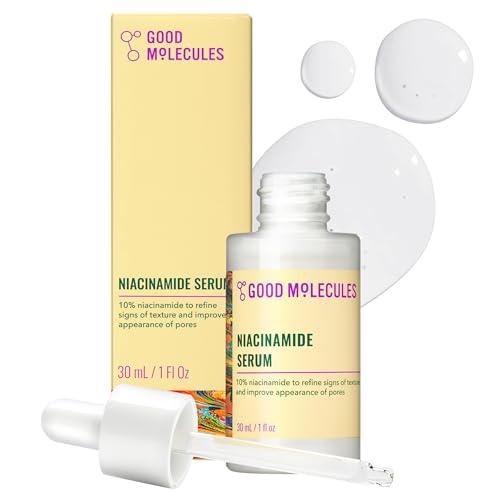
Good Molecules Niacinamide Serum 10%: The Amazon listing describes a 1 fl oz niacinamide serum for pore and texture concerns. It is a practical comparison point for readers considering a higher-strength formula, but the article’s tolerance guidance still applies.
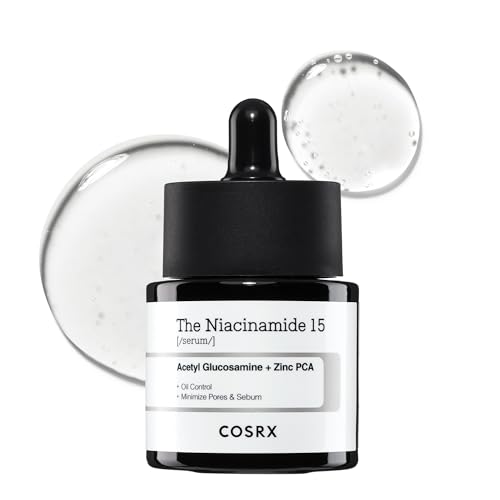
COSRX 15% Niacinamide Face Serum: The listing identifies a 0.67 fl oz, 15% niacinamide face serum. This is a stronger option to compare only after considering skin tolerance and the rest of the routine.
Paula’s Choice CLINICAL 20% Niacinamide Serum: The listing describes a 0.67 fl oz, fragrance-free serum marketed for discoloration and the look of large pores. At 20%, it belongs in the article’s high-strength comparison rather than as a default starting point.
Choose the lowest strength that fits your goal and that you can use consistently without stinging, burning, or worsening dryness.