
The car fails its inspection on a Tuesday, and the repair quote is $640. In one household, that bill goes on a credit card and stays there for a year. In another, it comes out of a savings account opened for exactly this moment. For that household, the only consequence is a balance to rebuild. That savings account is an emergency fund, and the gap between those two outcomes is the reason to build one.
The U.S. Consumer Financial Protection Bureau (CFPB) describes an emergency fund as a cash reserve set aside for unplanned expenses or financial emergencies. Its examples include car repairs, home repairs, medical bills and a loss of income. The definition sounds simple. However, many funds fail in practice for reasons the definition leaves open. Nobody decided what counts as an emergency, the money sat in the everyday account, or the balance was never rebuilt.
This guide closes each of those gaps in order. It starts with the rules that decide what the money is for. Then it sizes the emergency fund target and builds it in three milestones. After that, it covers where to keep the money and how to withdraw and refill it. Every amount below is an illustration; your own statements supply the real figures.
Decide What Your Emergency Fund Is For
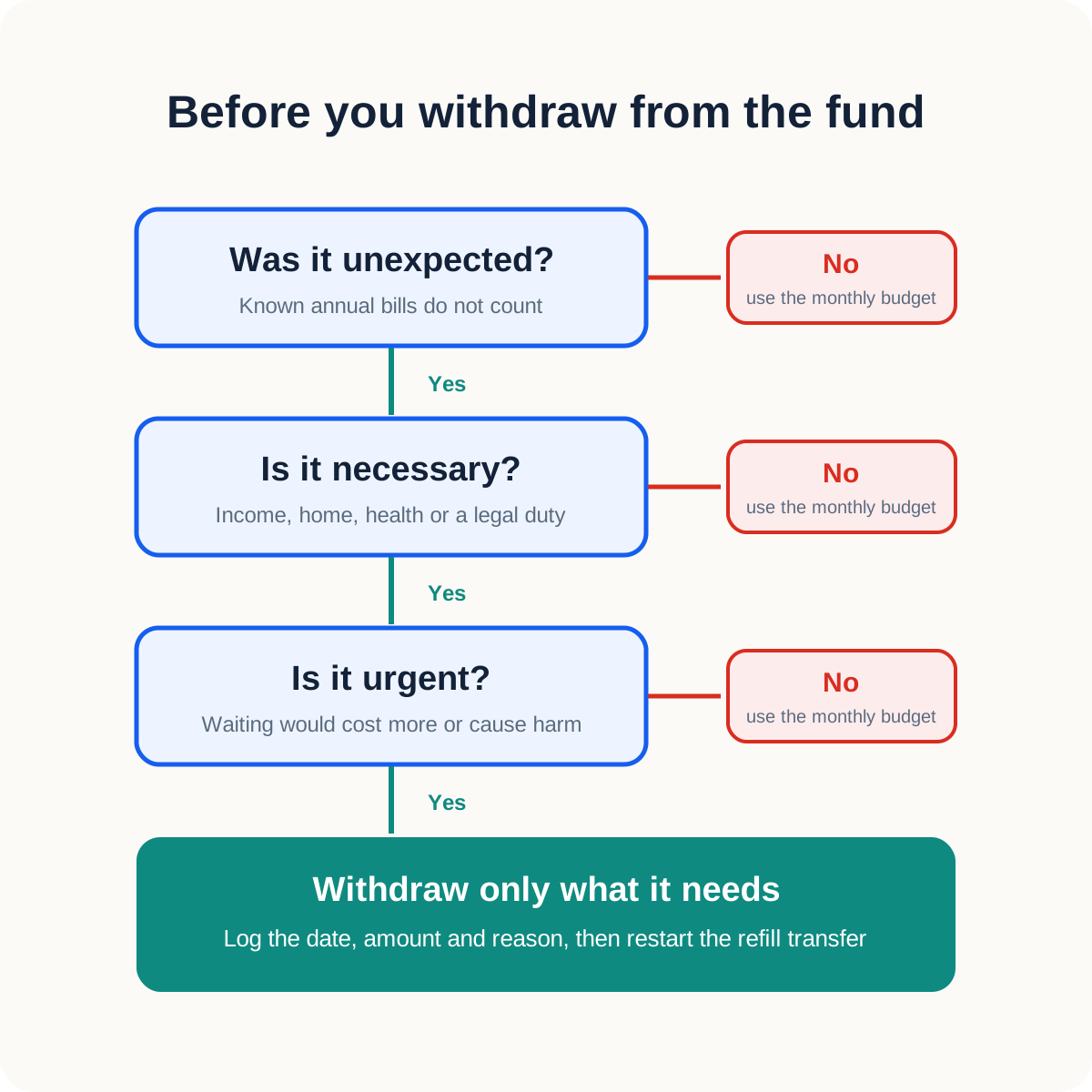
Write the rules before you save the first dollar. A fund without a definition slowly turns into a second spending account, because every purchase can be framed as urgent in the moment. Three tests keep the definition tight. The expense is unexpected, so a known annual bill does not qualify. It is necessary, meaning it protects your income, your home, your health or a legal obligation. And it is urgent, meaning waiting would cost more or cause harm.
The CFPB’s checklist for when cash is short offers a useful order for the necessary test. Protect your income first, then your shelter, then essential insurance and other assets, then legal obligations. A broken laptop you need for work passes. A new phone because the old one is slow does not.
| Situation | Unexpected? | Necessary? | Urgent? | Use the fund? |
|---|---|---|---|---|
| Car repair needed to reach work | Yes | Yes | Yes | Yes |
| Annual insurance premium | No, it is on the calendar | Yes | Depends | No, budget for it monthly |
| Medical bill after an accident | Yes | Yes | Usually | Yes |
| Holiday travel | No | No | No | No |
| Loss of your main income | Yes | Yes | Yes | Yes, for essential costs only |
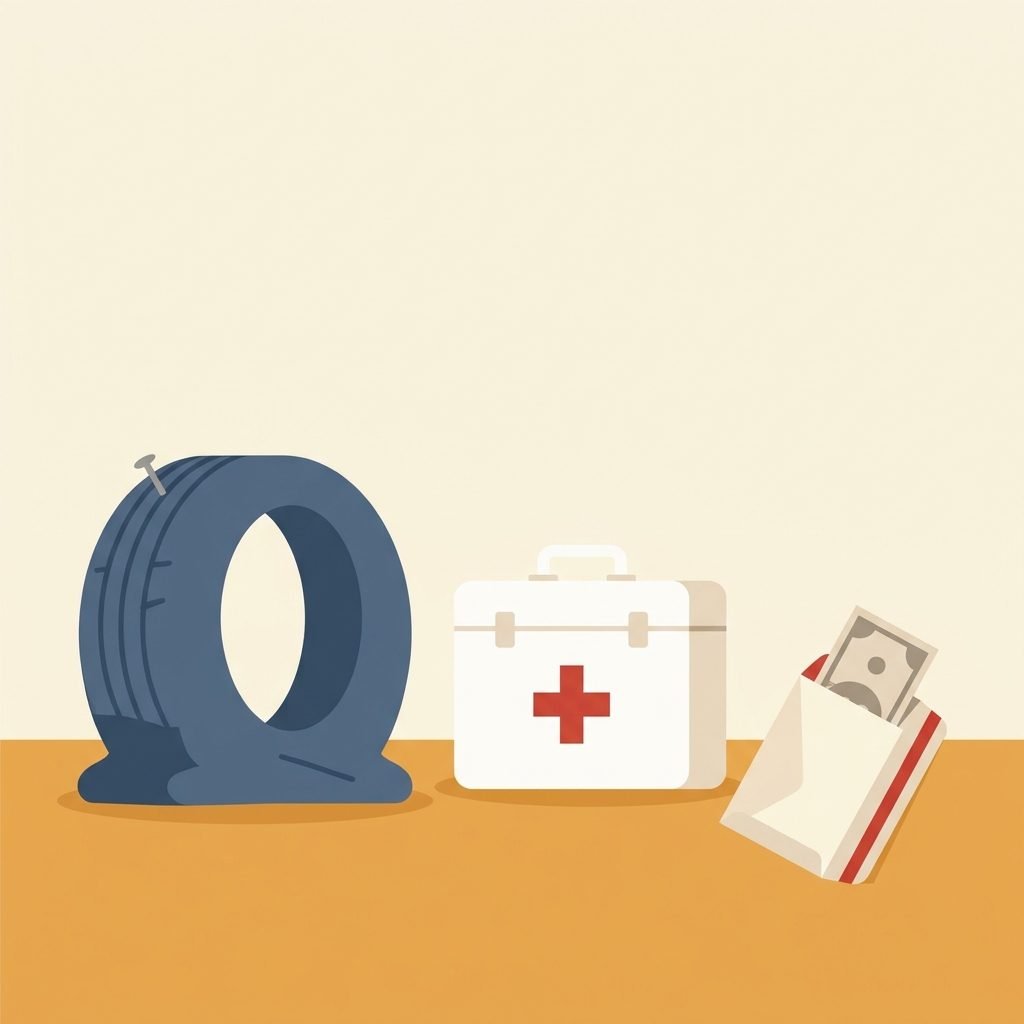
Predictable costs that arrive once a year, such as insurance premiums, school fees or car registration, need a separate sinking fund. Divide each one by twelve and set that amount aside monthly. Then the emergency fund stays reserved for surprises.
Size the Target in Months, Then in Money
Two numbers set the target, as our guide to building financial security explains. The first is your survival cost, meaning the monthly expenses that must be paid even in a crisis. The second is your months of runway, meaning how long a reserve lasts at that cost. Multiply your survival cost by the number of months that fits your situation, and you have the target.
Two reference points help. The Federal Deposit Insurance Corporation (FDIC), in its consumer guidance on saving for the unexpected, presents six months of living expenses as a general expert recommendation. A Federal Reserve household survey uses three months of expenses as one measure of financial resilience. Neither figure is a rule. Instead, they mark a common starting range, and your circumstances can move you below or above it.
| Your situation | Months to aim for | Why |
|---|---|---|
| Stable job, two incomes, no dependents | 3 | A second income covers part of any gap |
| Single income or one earner supporting others | 6 | There is no second income to fall back on |
| Irregular income, self-employed or commission-based | 6 to 9 | Low months arrive without warning |
| Niche field where finding a new job takes months | 9 to 12 | Runway must cover a longer search |
Suppose a household’s survival cost is $1,800 a month and it chooses six months. The target is $10,800. That figure can feel out of reach. Three milestones break it into steps.
Build the Emergency Fund in Three Milestones
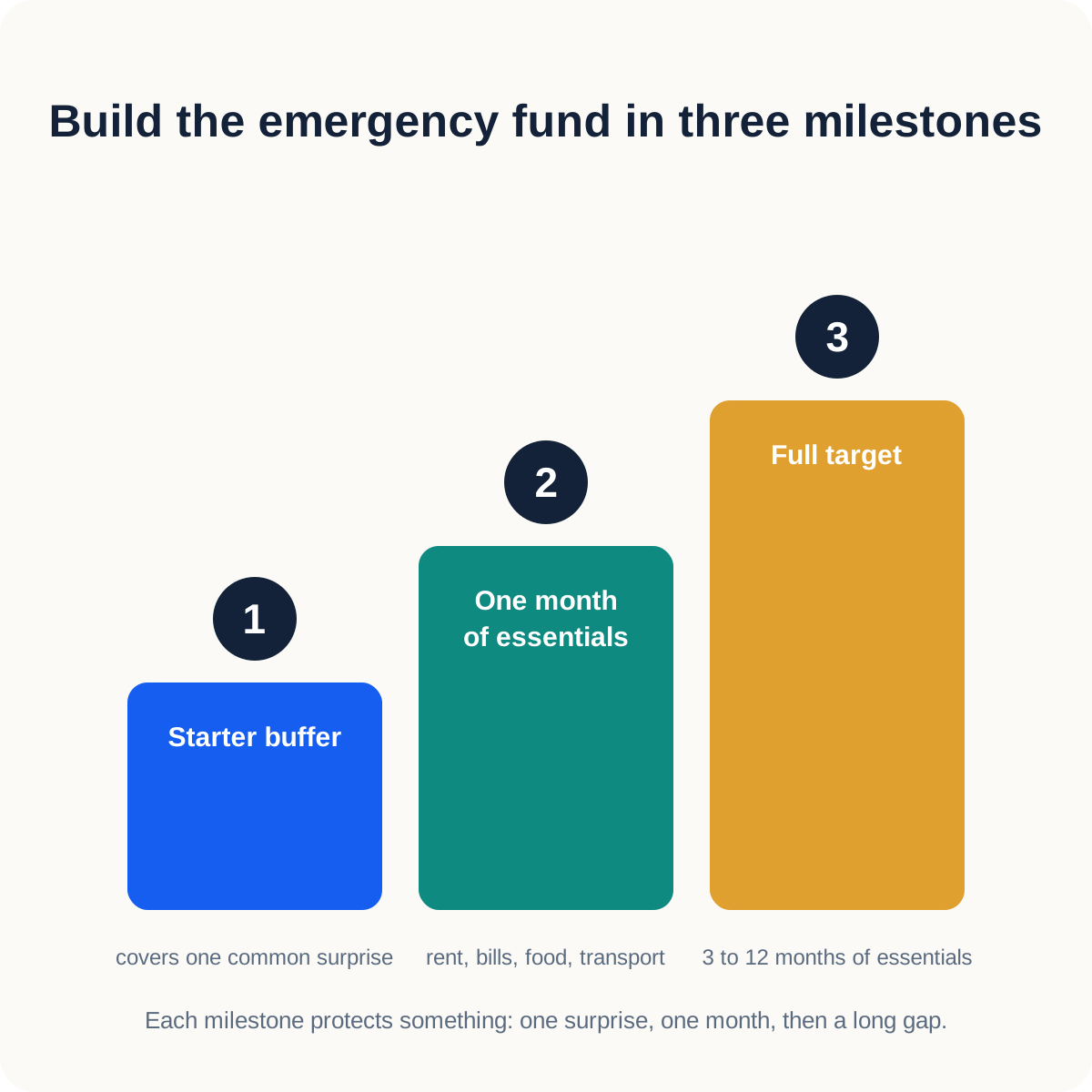
A single large target invites delay. Three smaller milestones work better, because each one changes what a surprise can do to you.

Milestone one: a starter buffer
Begin with an amount that covers one common surprise, such as a car repair or an urgent medical visit. To size it, look back over the past year and use the cost of a typical surprise as your guide. The CFPB notes that even a small amount can provide some financial security for people living paycheck to paycheck. This first buffer stops a minor problem from becoming new debt.
Milestone two: one month of essentials
Next, save one full month of survival cost, which is $1,800 in the example. At this point, a short gap in income or a large repair is much less likely to force a missed rent payment. This milestone also shows that you can keep saving the same amount every month.
Milestone three: the full target
Finally, grow the balance to the number of months you chose. This stage takes the longest, so automate it and review progress every three months rather than every week. Watching the balance too closely tends to produce either anxiety or early withdrawals.
Emergency Fund or Debt Payoff First?
High-interest debt costs money every month, so paying it down quickly makes sense. However, if every spare dollar goes to debt and nothing goes to savings, the next car repair goes on the credit card again. For that reason, many households build the starter buffer first, then send extra money to debt, then return to the full emergency fund target.
Throughout, keep paying at least the minimum on every debt. The CFPB warns that missed payments will have to be made up later. Once the starter buffer is in place, a structured method such as the debt snowball, which pays off the smallest balance first, can set the order of extra payments.
Where to Keep an Emergency Fund
The CFPB gives three conditions: keep the fund safe, accessible, and in a place where you are not tempted to spend it on non-emergencies. Each condition rules something out. Cash at home fails the safety test: as the CFPB notes, it can be stolen, lost or destroyed. A long-term deposit may fail the access test, because early withdrawal carries a penalty. Investments whose prices rise and fall fail it too, since you might have to sell at a bad moment. Finally, the everyday checking account fails the temptation test.
In practice, that usually points to a separate savings account at a regulated bank. Ideally, it pays some interest and allows transfers to your main account within a day or two. Give the account a plain name, such as “Emergency only”, and do not link a debit card to it. A little friction protects the balance from impulse spending.
| Option | Safe | Accessible | Low temptation |
|---|---|---|---|
| Cash kept at home | No | Yes | No |
| Everyday checking account | Yes | Yes | No |
| Separate savings account, no card | Yes | Yes, within a day or two | Yes |
| Long-term deposit with a withdrawal penalty | Yes | Limited | Yes |
| Investments with changing prices | Value can fall | Depends on selling | Yes |

Find the Money Without a Bigger Salary
Usually, the reserve grows from the income you already have. The CFPB names automatic recurring transfers as one of the easiest ways to save consistently. Schedule the transfer for the day after payday, so the money moves before daily spending can reach it. Before you schedule it, check that your checking balance can cover the transfer, which lowers the risk of the overdraft fees the CFPB warns about. When you cancel a subscription, add its monthly cost to the automatic transfer that same day.
Some employers can also split a paycheck between two accounts. Ask payroll whether part of your pay can go straight into the emergency account. That way, the saving happens before the money ever appears in your spending balance.
One-time money speeds things up. Tax refunds, cash gifts, bonuses or the proceeds from selling something you no longer use can complete a milestone in a single step. A simple rule works well: send a fixed share of every windfall, such as half, to the fund until you reach the target.
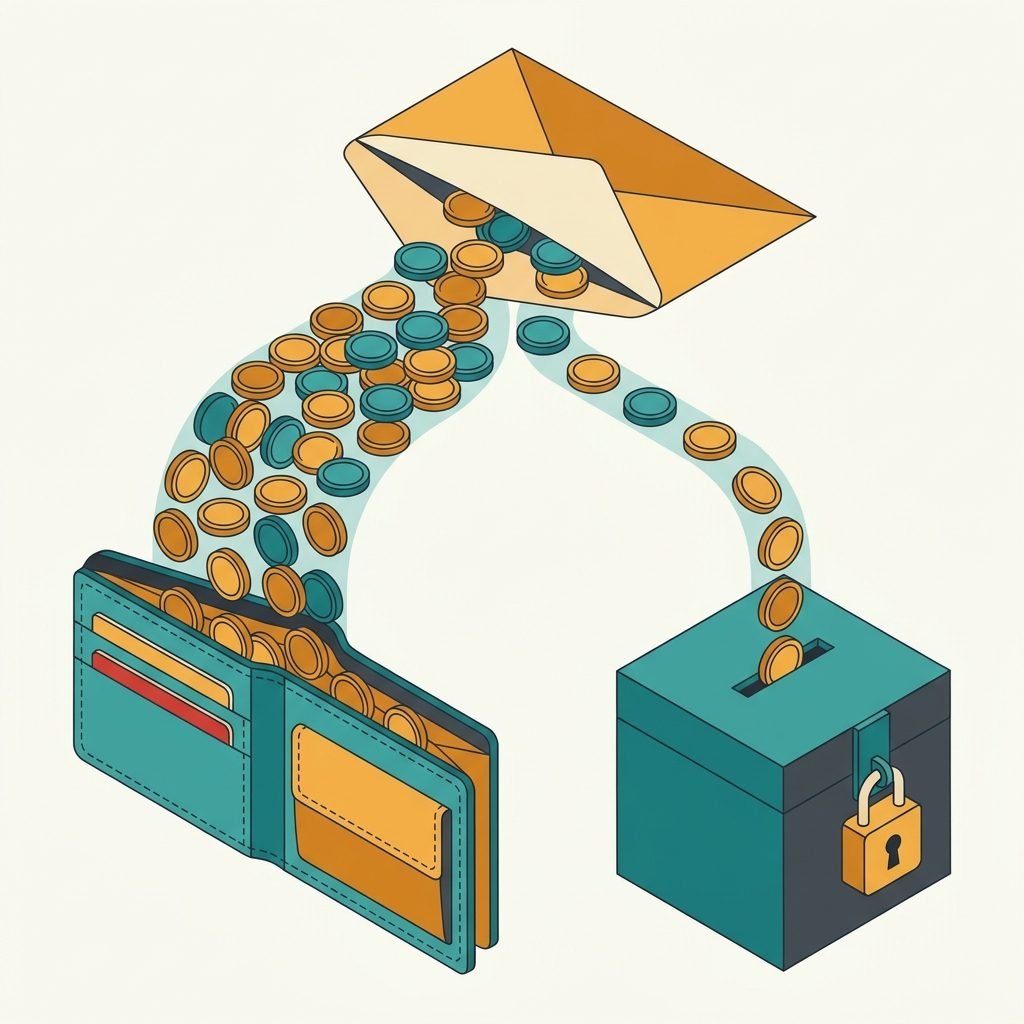
Four habits keep the money moving:
- Automatic transfer on the day after payday
- Split paycheck through payroll, if your employer offers it
- Half of every refund, gift or bonus until the target is reached
- Money from cancelled subscriptions, redirected on the same day
Withdrawal Rules for Your Emergency Fund
Decide in advance how a withdrawal happens, because under stress people tend to take more than the emergency needs. First, check the expense against the three tests from the start of this guide. Second, take only the amount the emergency requires. Third, write down what the money paid for and the date. That short record makes the refill plan concrete and shows patterns over time.
For a large or uncertain expense, wait one day before transferring the money if the situation allows it. During that pause, you may find a cheaper repair, a payment plan or an insurance claim that covers part of the cost. An emergency that cannot wait, such as a burst pipe or an urgent medical visit, needs no pause. If you lose your job, use the fund for essential costs only, and cut flexible spending the same week.
Couples who share expenses should also agree on who holds the fund and how withdrawals are approved. Our guide to splitting finances as a couple covers how to divide shared costs.
Refill the Emergency Fund After You Use It
The CFPB’s advice is direct: if you spend down the fund, rebuild it. A fund that is used once and never refilled leaves you exposed to the next surprise. Restart the automatic transfer immediately, even at a smaller amount, and add any one-time money until the balance returns to its previous level.
Aim to replace the withdrawal within six to twelve months. For example, a $640 withdrawal for a car repair can be replaced at about $55 a month over a year, or about $110 a month over six months. Choose the pace you can hold. If the withdrawal was large, such as several months of essential costs, rebuild the one-month milestone before anything else.
When Income Is Irregular or Prices Keep Rising
Irregular income needs its own rule. The CFPB’s income tracker classifies income as regular, irregular, seasonal or one-time, and notes that bills continue even when income does not. Plan your budget around the lowest realistic month rather than the average. In stronger months, send the surplus to the fund first. As a result, the good months pay for the weak ones.
Rising prices change the target too. The International Monetary Fund describes inflation as the rate at which prices increase over time, and notes that a fixed amount of money loses purchasing power. Therefore, recalculate your survival cost once a year and raise the target if it has grown. An emergency fund sized years ago may now cover fewer months than it used to.
Frequently Asked Questions
Is it better to keep the fund in cash at home?
Usually not. The CFPB points out that cash at home can be stolen, lost or destroyed. A small amount for a short power cut or a bank outage is reasonable, while the main emergency fund balance belongs in a separate regulated account.
Should I invest my emergency fund to earn more?
An emergency fund is insurance, so stability matters more than growth. Assets with changing prices may be worth less on the day you need them. Keep the reserve in a stable, accessible account and use other money for long-term goals.
Can I use the fund for a great deal on something I need anyway?
You already knew you needed the item, so the purchase fails the unexpected test, and a discount does not change that. Save for planned purchases in a separate account.
How often should I review the target?
Review your emergency fund target every three months alongside your budget. Recalculate it fully once a year or after any major change, such as a new job, a new child or a move.
Conclusion: Start Your Emergency Fund This Payday
An emergency fund works when four decisions are made in advance. They cover what counts as an emergency, how large the target is, where the money lives, and how it is rebuilt. None of them needs a higher salary, and you can make all four before your next payday.
Begin with the first milestone. Open a separate emergency fund account and schedule an automatic transfer for the day after your next payday. Then write your three withdrawal tests on the first page of your budget. When the starter buffer is full, move on to one month of essentials, then to the full target your situation calls for.