The best edX certificates are not automatically the most famous ones. A strong credential closes a skill gap, produces work you can explain, and fits your available time. Long programs can look impressive while leaving a learner with no project to show. Short verified courses can be more helpful when they solve a specific problem and lead to a visible result.
Five practical edX paths follow, sorted by learner profile rather than by prestige alone. For each route, you will see what it teaches, the evidence it produces, who it suits, and when to choose it. edX offers audit and verified options, but program certificates usually require verified course completion. Always read the active program page before paying because the course list, schedule, assessment rules, and price can change.
A certificate is evidence of completed learning, not a job guarantee, professional license, or substitute for a degree. Therefore, the strongest choice builds a project, improves a résumé line, or prepares you for the next step. Use this comparison as a filter, not as a promise that one institution fits everyone.
The same test works on other platforms. For example, the comparison of digital marketing courses on Coursera judges each course by workload and practice, and the Skillshare membership review shows how a project-based subscription differs from a verified certificate.
1. Choose the work before the best edX certificates
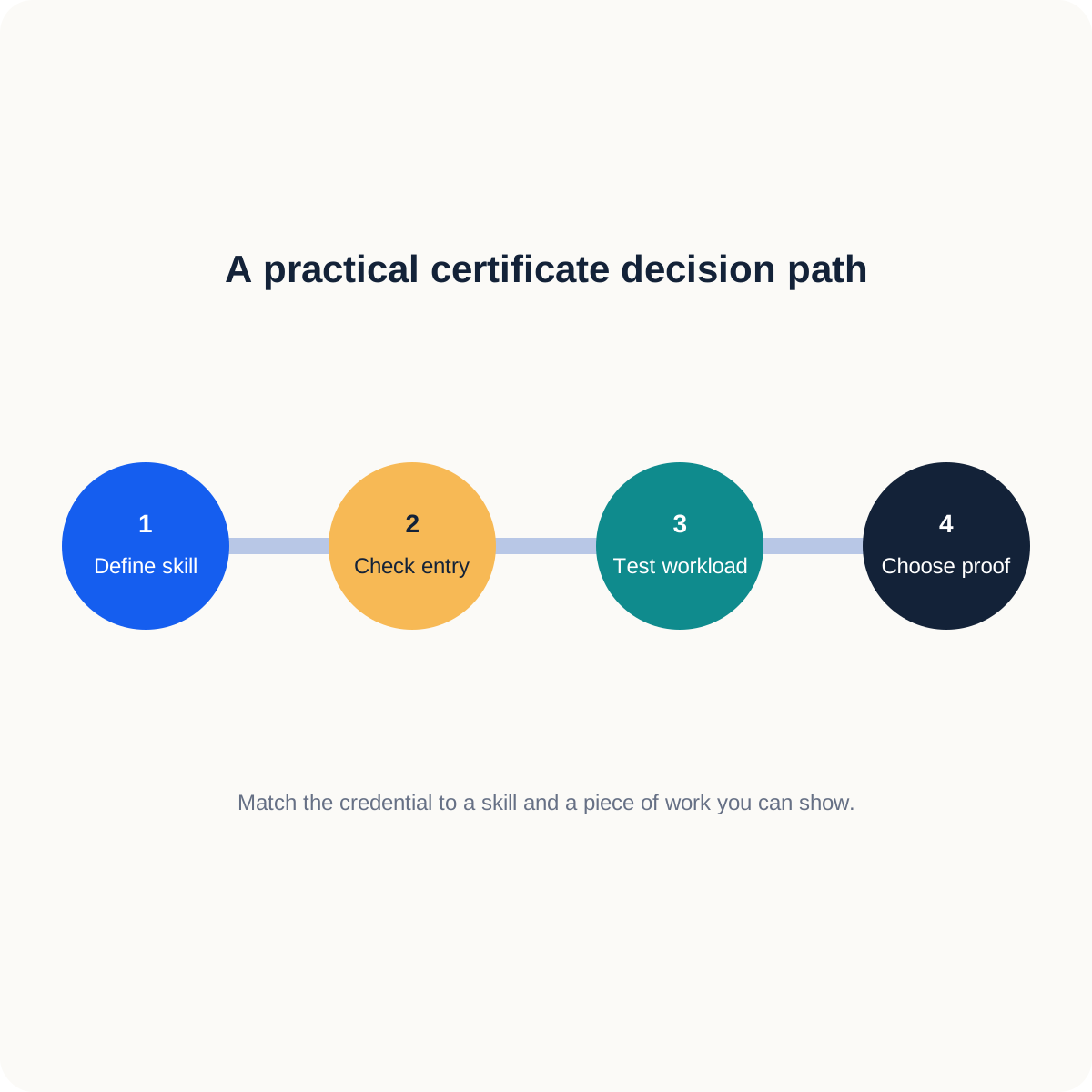
First, before opening the edX catalog, write the work you want to perform after studying. “I want a technology certificate” is too broad to guide a purchase. For instance, “I want to automate a report with Python,” “I want to build a data portfolio,” or “I want to understand computer-science fundamentals before applying to a technical program” gives you a testable direction. The best edX certificates become easier to compare when each one is judged against a job-like output.

| Your goal | Useful output | What to check first |
|---|---|---|
| Learn programming foundations | Small Python programs with explanations | Prerequisites, practice volume, and feedback |
| Enter data work | Cleaned dataset, notebook, charts, and a conclusion | SQL, Python, visualization, and capstone scope |
| Build computer-science confidence | A finished project and a clear explanation of design choices | Algorithms, problem solving, and project requirements |
| Move toward AI | A documented model or prototype with limits | Math, Python, machine-learning, and computing prerequisites |
Next, separate three decisions that are often mixed together. First, do you need knowledge, a verified credential, or both? Second, will an employer value the skill because the work is visible, or only because a logo appears on a résumé? Third, can you finish the learning path with the hours you actually have? Therefore, a program that takes longer than your available study window is not a better investment merely because it contains more courses.
2. Five best edX certificates by learner profile
The catalog changes, but these five routes represent useful categories of decision. The names below describe the program families and examples that edX presents; confirm the live page before enrollment. Their order is not a universal ranking. It moves from beginner programming to broader data work, foundational computer science, deeper data science, and focused artificial intelligence.
Georgia Tech: best edX certificates for Python beginners
This is the clearest starting point for a learner who wants programming fundamentals rather than a collection of disconnected tutorials. edX describes the Professional Certificate as a four-course, self-paced route built around computing in Python, including procedural programming, control structures, data structures, objects, and algorithms. Its beginner positioning makes it suitable for someone who needs a structured first step and is willing to solve problems repeatedly instead of watching videos passively.
Choose it when you want to automate a task, prepare for more advanced study, or build confidence with code. Do not choose it as a shortcut to a developer job. Your evidence should include small programs, a readable repository, and notes explaining how you tested edge cases. Review the official Georgia Tech program page for the current course sequence and requirements.
IBM Data Science: best edX certificates for data work
In contrast, the IBM route fits a learner who wants a broad, applied introduction to data science. edX describes a multi-course path that covers Python, data preparation, visualization, SQL, machine learning, notebooks, APIs, and a capstone. That breadth is useful when you want to understand the full path from a messy dataset to a defensible conclusion. However, it is also a serious workload, so it is a poor choice for someone who only needs a quick introduction to spreadsheets.
Therefore, the value of this path depends on the portfolio you build beside it. Keep one notebook for data cleaning, one visual report for a nontechnical reader, and one project that explains a model’s limits. A certificate without those artifacts is difficult to evaluate. Read the IBM Data Science page on edX and confirm the current course list before you plan your study calendar.

Harvard CS50: best edX certificates for foundations
A CS50-related route is useful for a learner who wants computer-science foundations with an AI direction. However, the important distinction is that an AI-labelled certificate is not the same as learning how to call an AI service. A strong foundation includes programming, algorithms, data structures, and the ability to explain why a solution works. Harvard’s CS50 certificate choices on edX cover different combinations, so compare the actual course package rather than relying on a headline.
Pick this route when you enjoy problem solving and want to understand the ideas beneath a tool. Expect frustration to be part of the learning process. Your proof can be a finished course project, a short technical explanation, and a reflection on an approach that failed before you repaired it. The edX CS50 comparison guide helps you distinguish the available certificate paths.
Harvard Data Science and the best edX certificates for depth
This route is better for a learner who wants more depth in statistics, data analysis, and the reasoning behind models. However, it should not be selected only because the Harvard name sounds strong. Compare the mathematics, programming, and project demands with your current background. For example, if your Python basics are weak, a foundation course may give you a better return before you start a longer data-science program.
The strongest artifact from this choice is a report that connects a question, a dataset, a method, uncertainty, and a decision. Do not hide the limitations in an appendix. A hiring manager or client needs to see whether you can explain the result in plain language. Use edX’s data-science certificate catalog to compare Harvard with IBM and other providers instead of assuming that every data program teaches the same skills.
A focused AI option among the best edX certificates
A focused AI certificate can make sense when you already have enough programming and quantitative knowledge to understand the examples. edX lists Google AI-related programs alongside university pathways. The right choice depends on whether you want machine-learning fundamentals, responsible use, model building, or an applied workflow. These are different outcomes even when the word “AI” appears in every title.
Use a prerequisite check before paying. Can you read Python? Can you work with data? Do you understand basic evaluation and the difference between a demo and a reliable system? If not, start with a foundation route. If yes, build an AI artifact with a clear input, output, evaluation method, and failure note. Browse the AI certificate area on edX and read each program’s requirements rather than selecting the most dramatic title.

| Path | Best fit | Portfolio proof | Do not expect |
|---|---|---|---|
| Georgia Tech Python | True beginners in programming | Tested Python exercises and a small automation | Immediate job readiness |
| IBM Data Science | Learners seeking broad applied data skills | Notebook, visual report, SQL work, and capstone | Mastery of every data role |
| Harvard CS50 AI route | Problem solvers building foundations | Finished project and design explanation | An AI shortcut without fundamentals |
| Harvard Data Science | Learners ready for deeper analysis | Statistical report with limitations | A substitute for a formal degree |
| Focused AI program | Existing technical learners with a clear AI use case | Evaluated prototype with failure cases | Guaranteed relevance for every employer |
3. Compare the best edX certificates by workload
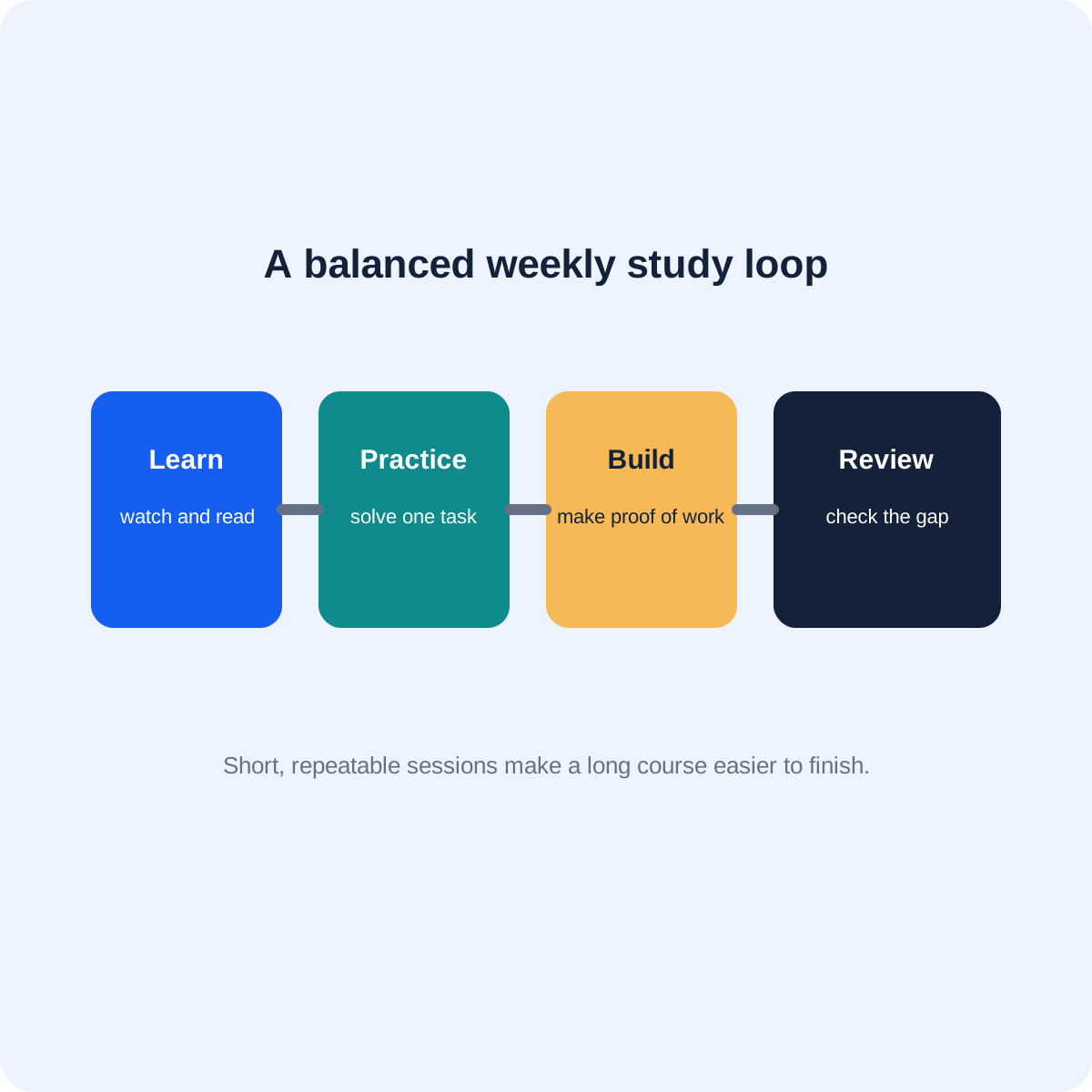
The best edX certificates differ less by their logos than by what they require from you. A self-paced course may be flexible but still demand regular practice. A program with many courses can create a stronger sequence but also increase the risk of stopping halfway. Read the estimated hours, assignment model, project requirements, and access rules together. A certificate is only useful if you can complete the work and retain enough understanding to discuss it.

Where audit access is offered, it lets you test the best edX certificates for fit before you pay. The verified track generally adds graded work, a verified credential, or continued access features, but the exact benefits depend on the active course. Some programs have deadlines, proctored assessments, or prerequisites. Never assume that “online” means unlimited time or that “self-paced” means effortless progress.
When comparing the best edX certificates, score the evidence before the branding: practice quality, feedback, project scope, assessment clarity, and the amount of support available when you are stuck. This simple comparison prevents a familiar logo from hiding a poor fit.
- Write a weekly study block that is smaller than your most optimistic schedule.
- Reserve time for assignments and projects, not only video lessons.
- Decide where your work will live before you start: a repository, notebook, report folder, or portfolio page.
- Check whether the program issues a course certificate or a program certificate and what completion requires.
- Ask whether any claimed academic credit transfers to your target institution; never infer transfer from the course title.
4. Turn a certificate into credible CV evidence
A résumé should not say only “completed one of the best edX certificates.” That sentence proves participation, but it does not show capability. Add the credential under education or professional development, then connect it to one or two artifacts. For example: “Completed a Python program and built a command-line report that validates input, handles missing values, and explains test cases.” Use short evidence after the credential. The wording must describe work you actually completed.
Keep the verified certificate link if edX provides a unique authenticating URL and ID. Use the issuing university or company accurately. Do not write “degree,” “licensed,” “accredited professional,” or “certified engineer” unless another authority actually granted that status. A university-backed certificate can strengthen a skill story, but it does not replace a regulated qualification. This is why the best edX certificates are presented beside work, not as a substitute for it.
In short, the best edX certificates become credible CV evidence only when the reader can move from the credential to the work. Add a short readme, a clear project title, the tools used, and one honest limitation. That makes the learning claim specific instead of decorative.

| Weak CV line | Stronger evidence-based version |
|---|---|
| Finished an AI certificate | Completed an AI pathway and documented a prototype’s inputs, evaluation, and failure cases |
| Expert in data science | Built a cleaned dataset, SQL queries, visual report, and model comparison as course projects |
| Python certified | Completed a verified Python course and published tested exercises with explanations |
| Harvard graduate | Completed the named HarvardX course or certificate on edX |
Share the work with context. A repository without a readme is hard to evaluate. Similarly, a chart without a question is decoration. A model without a baseline and limitation is a demo. Write a short page that states the problem, your method, what you learned, and what you would improve. That page can do more for your credibility than adding a fifth badge to a profile, even when the badge comes from the best edX certificates shortlist.
5. Choose the best edX certificates before you pay
Use the following filter for the best edX certificates on your shortlist. First, name the role or project. Next, list the prerequisites you already have and the ones you must learn first. Then identify the output you will publish or explain. Finally, confirm the active course page, the verified-track rules, the total price, the study pace, and the institution’s policy on any credit or recognition claim.
- Write one sentence describing the work you want to do after completion.
- Choose the smallest path that can teach that work properly.
- Check the syllabus for graded assignments, projects, exams, and prerequisite skills.
- Compare the credential type with the claim you plan to make on your CV.
- Reserve weekly study time and a recovery plan for difficult modules.
- Confirm the current fees, access period, refund terms, and certificate conditions on edX.
- Start a portfolio record on the first day, not after the final quiz.
If the answer to the output question is unclear, delay the purchase. Audit a course when possible, read its first module, and decide whether the exercises match your goal. If the path is too advanced, choose a foundation route. If it is too broad, choose a single course or narrower program. Spending less on the wrong credential is still a loss of time, so fit matters more than a temporary discount.
One final test separates the best edX certificates from attractive but unsuitable options. Can you name the first project, the first week’s study task, and the sentence you will use on your CV? If not, keep comparing until the answer is concrete.
Frequently asked questions
Are edX certificates the same as degrees?
In short, no. A certificate documents completion of a course or program. It does not become a degree or professional license because a university or company issued it. Some MicroBachelors and MicroMasters pathways may offer transferable credit, but you must verify the exact institution and transfer policy.
Can I study for free on edX?
Many edX courses offer an audit option, but access, assignments, deadlines, and certificate eligibility can differ. Read the active course page before assuming that the free route includes graded work or a verified credential.
Which certificate is best for a beginner?
A beginner in programming may prefer the Georgia Tech Python route because it builds fundamentals in a sequence. A beginner in data work may need a shorter introduction before attempting a broad data-science program. The best choice depends on the gap you must close first.
Will a certificate guarantee a job?
No. A certificate can support a learning story, but hiring also depends on projects, communication, experience, role requirements, and the employer. Treat the credential as one piece of evidence and build work that makes the skill easy to evaluate.
Conclusion: select the missing skill with the best edX certificates
The best edX certificates are the ones that match a clear task and leave you with evidence you can defend. Georgia Tech Python can give a beginner a structured programming foundation. IBM Data Science can support a broad applied portfolio. Harvard routes can deepen computer-science or data reasoning, while a focused AI program can help a prepared learner target a specific use case. None of these paths removes the need for practice.
Choose one missing skill, read the current program page, and define the project you will finish before you enroll. Then show the credential honestly beside the work it helped you create. That combination—a verified learning record plus understandable proof—is more useful than a badge selected only for its name.